This cozy mushroom soup gets big flavor by browning mushrooms in batches, then thickening with a quick roux (or cornstarch). Finish with cream or coconut mil...
Delishing
How to Reheat Roasted Chestnuts

Maya Brooks
Maya Brooks is a dedicated home cook and the lead recipe developer at Delishing, where she shares practical, foolproof meals for everyday life. With over a decade of hands-on kitchen experience, she specializes in creating approachable dishes that fit a variety of dietary needs and modern cooking methods. Maya is passionate about helping busy people get delicious, stress-free food on the table without needing formal culinary training.
Roasted chestnuts are one of those foods that feel magical straight from the heat, then a little less exciting once they cool. The good news is you can bring them back to life. The trick is choosing the right method for how your chestnuts are stored now: still in the shell, or already peeled.
I have learned (the slightly sad way) that chestnuts punish high heat and long reheats. They go from tender and sweet to dry and crumbly fast. So we are aiming for a quick warm-through, plus just enough moisture to keep them soft.
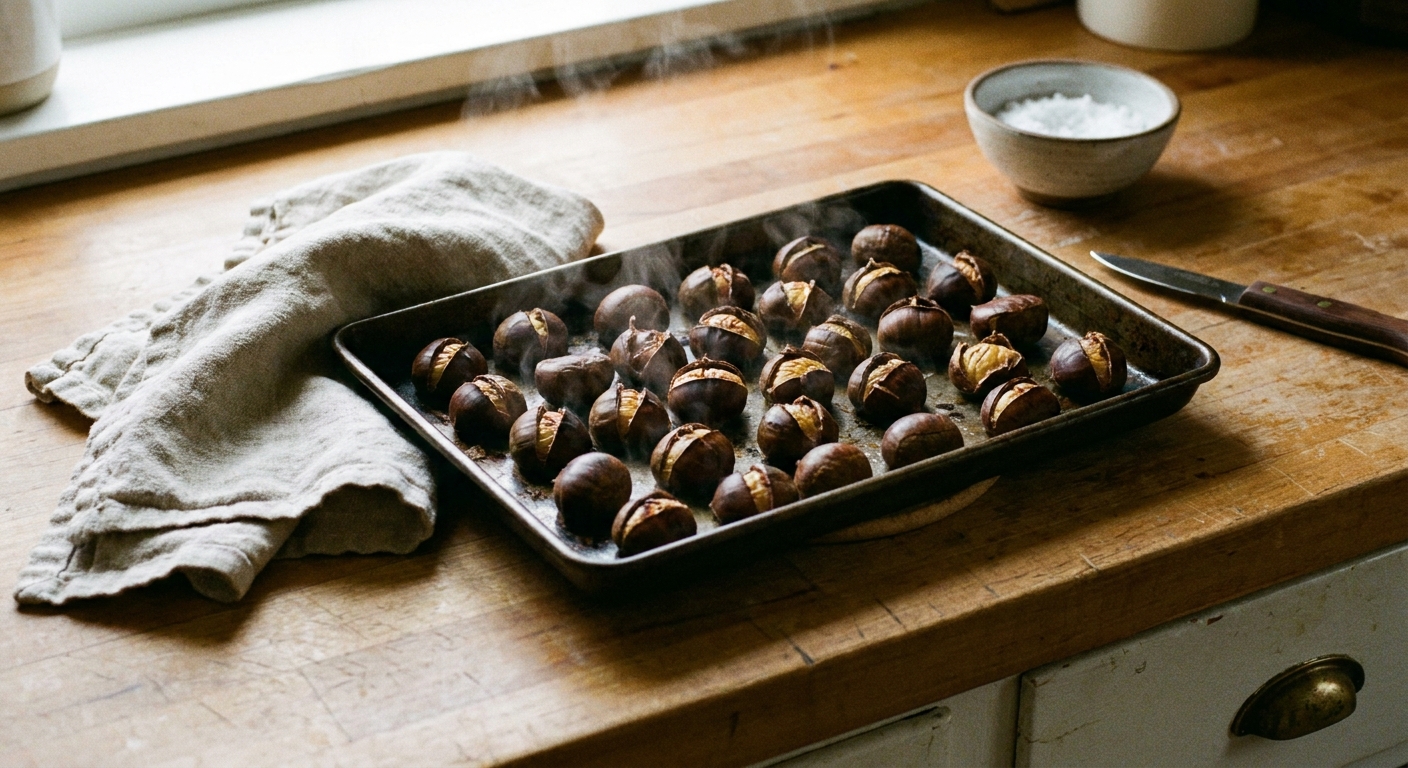
Before you reheat: in-shell or peeled?
In-shell roasted chestnuts reheat best with dry heat (oven or skillet). That return to heat helps the shells loosen again so peeling is easier.
Peeled roasted chestnuts need gentler heat and usually a touch of moisture. Once peeled, they dry out much faster.
If you have not roasted them yet, start here: How to Roast Chestnuts. If yours are packaged and already peeled, this guide is different from cooking jarred products, which I cover here: How to Cook Jarred Chestnuts.
Best method for in-shell: oven
This is my go-to when I want chestnuts that peel nicely and taste like they were just roasted. The oven warms them evenly, and a quick steam at the end keeps the insides tender.
Timing note: Chestnut size and how cold they are from the fridge changes the timing. Start checking at the low end and add a minute or two if needed.
How to do it
- Preheat to 350°F.
- Spread chestnuts in a single layer on a baking sheet.
- Reheat for 8 to 12 minutes, shaking the pan once halfway through.
- Optional but worth it: If they seem dry, add 1 tablespoon of water to the pan during the last 2 minutes to create a little steam. Do this carefully since the pan is hot and the water will sizzle.
- Rest 2 minutes, then peel while warm. Use a clean kitchen towel to protect your hands.
How to tell they are ready: The shells feel hot to the touch, and the chestnut inside feels pliable when you squeeze one gently (use a towel).
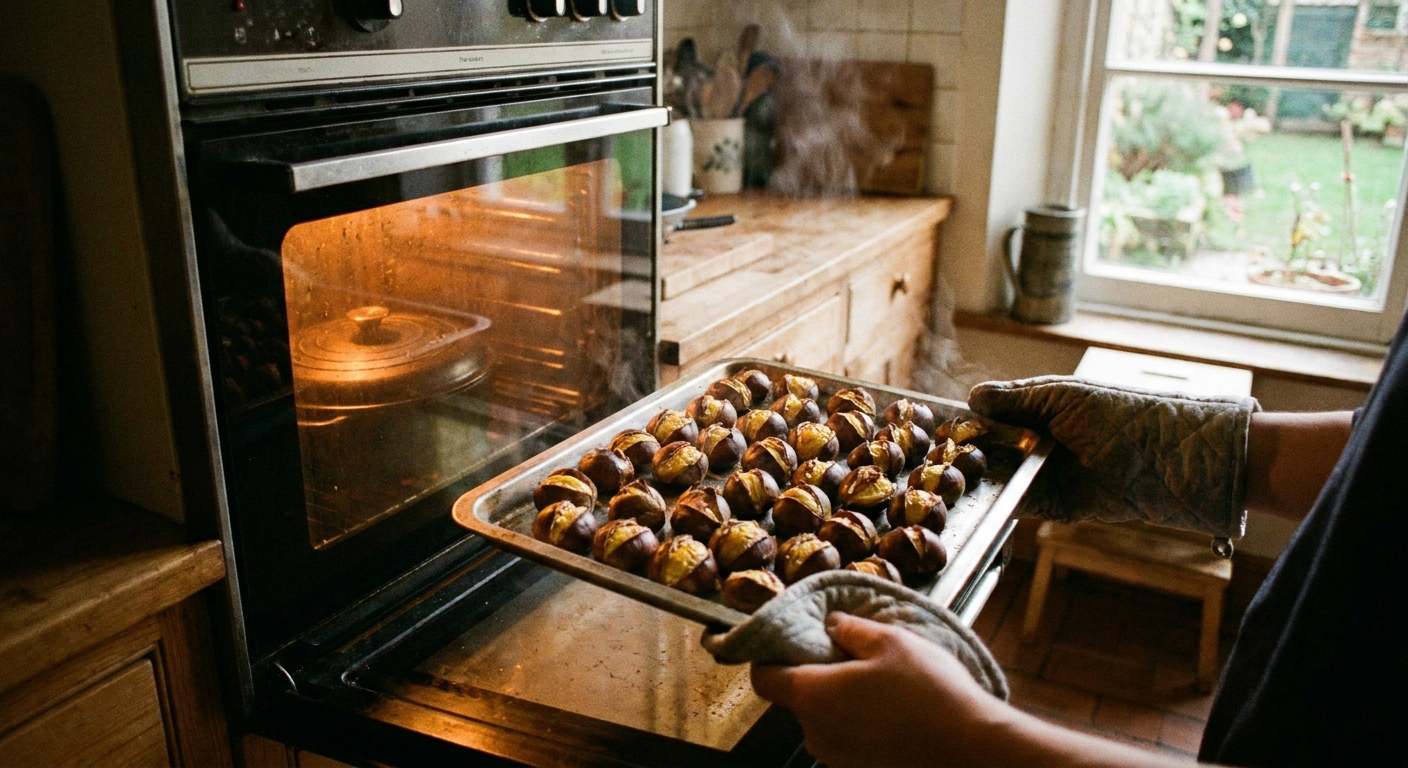
Fast method for in-shell: skillet
If you only have a handful to reheat, a skillet is faster than preheating the oven. You can also add a teaspoon or two of water at the end to steam them briefly, which helps with peeling.
Timing note: If your chestnuts are large or very cold, plan on the full 8 minutes. Keep them moving so the shells do not scorch.
How to do it
- Heat a dry skillet over medium heat.
- Add chestnuts in a single layer.
- Warm 5 to 8 minutes, shaking or stirring often.
- Steam (optional): Add 1 to 2 teaspoons water, cover with a lid, and steam 30 to 60 seconds.
- Peel while warm.
Tip from my notebook: If you smell anything like “burnt popcorn,” your heat is a little too high. Drop it to medium-low and keep them moving.
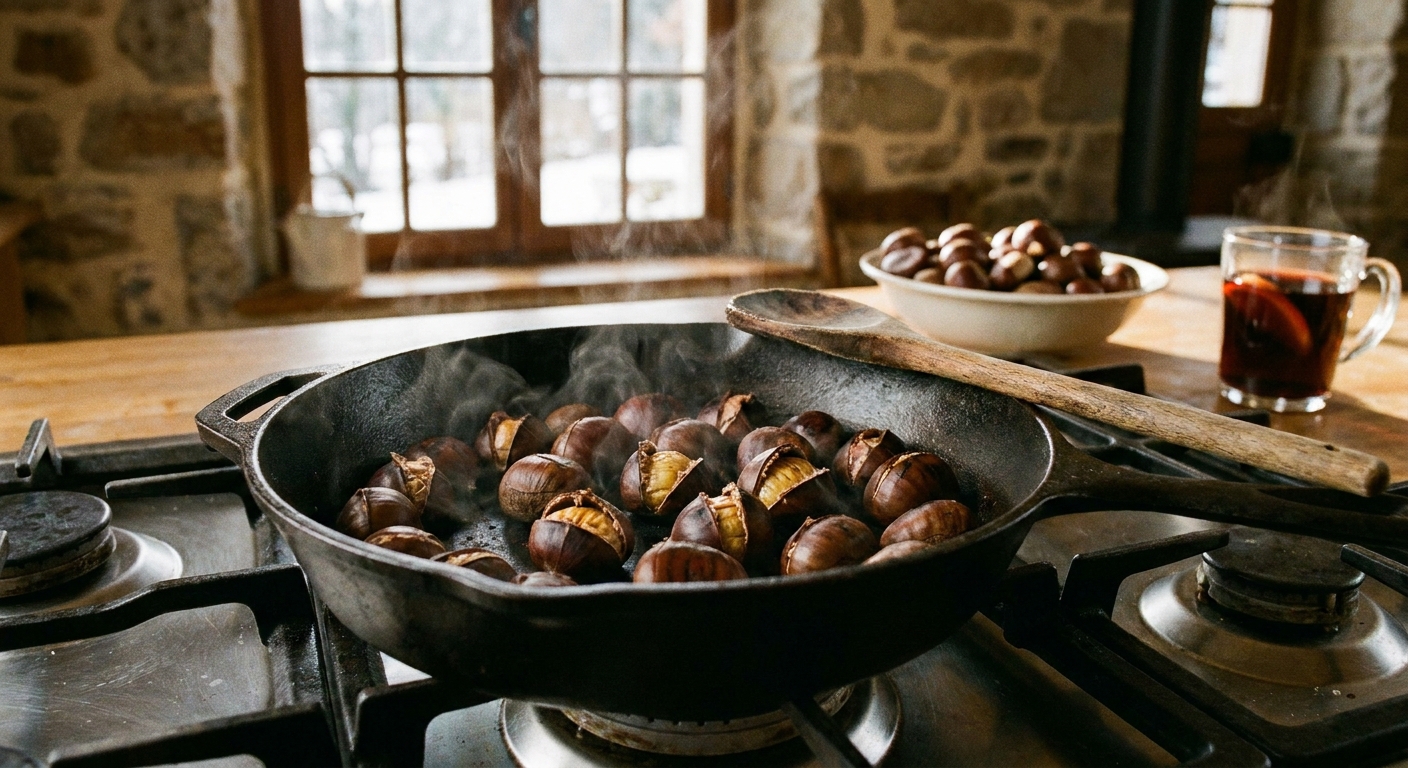
Gentle methods for peeled chestnuts
Peeled chestnuts are already exposed, so they lose moisture quickly. Your best friend here is a short reheat plus a tiny bit of steam.
Timing note: Start with the shortest time listed. The moment they are warm, stop. Hot chestnuts turn dry fast.
Option 1: Oven
- Preheat to 300°F.
- Spread peeled chestnuts on a small baking dish or sheet pan.
- Add moisture: Sprinkle 1 to 2 tablespoons water over the pan (or cover the dish with foil).
- Heat 6 to 10 minutes, just until warm.
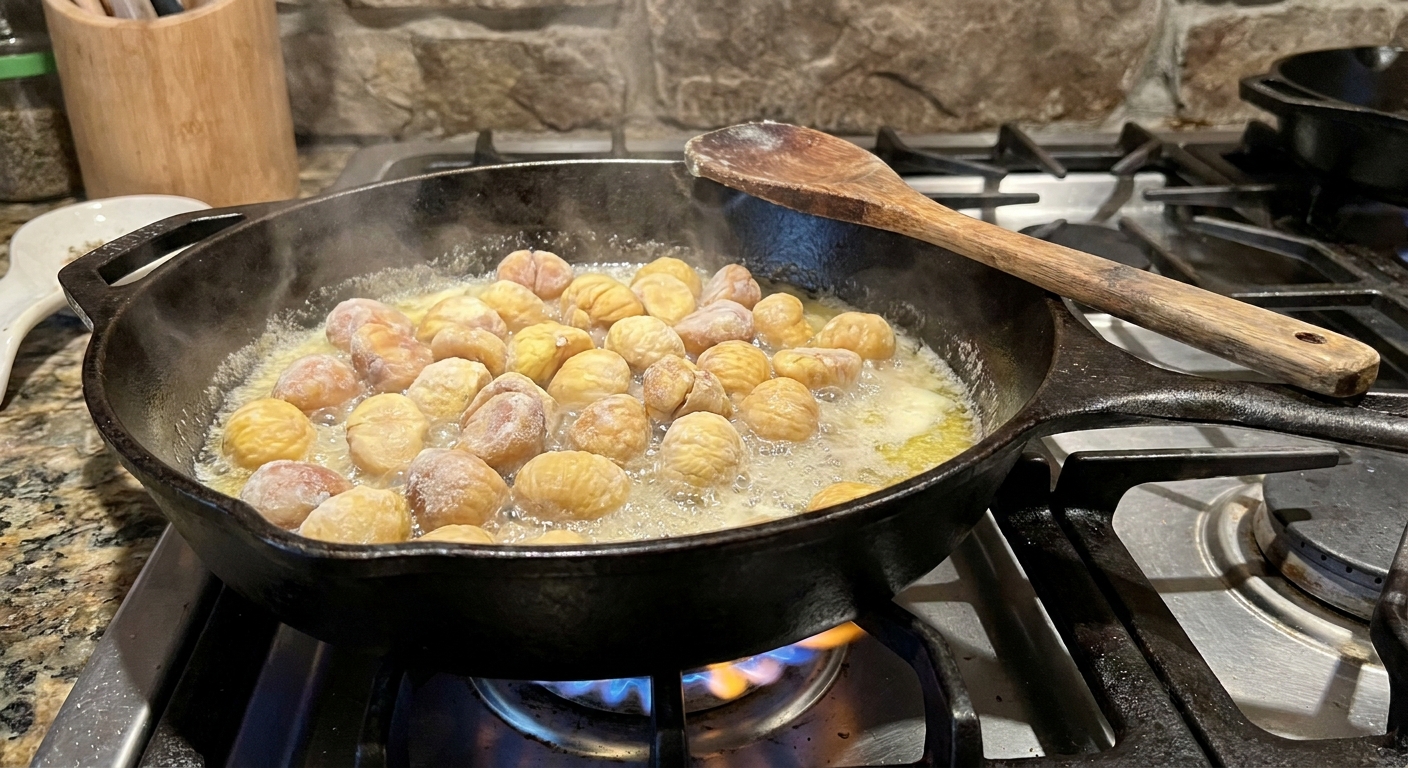
Option 2: Skillet steam
- Add peeled chestnuts to a skillet with 1 tablespoon water.
- Cover and warm over medium-low heat for 2 to 4 minutes, shaking once or twice.
- Uncover for 30 seconds if you want to evaporate excess water.
Option 3: Microwave
The microwave can work, but it is easy to overdo and end up with dry, tough chestnuts.
- Place peeled chestnuts in a microwave-safe bowl.
- Add 1 teaspoon water and cover loosely.
- Microwave in 10 to 15 second bursts, stirring between rounds, until just warm.
Microwave rule: Stop when they are warm, not hot. Chestnuts keep cooking from residual heat.
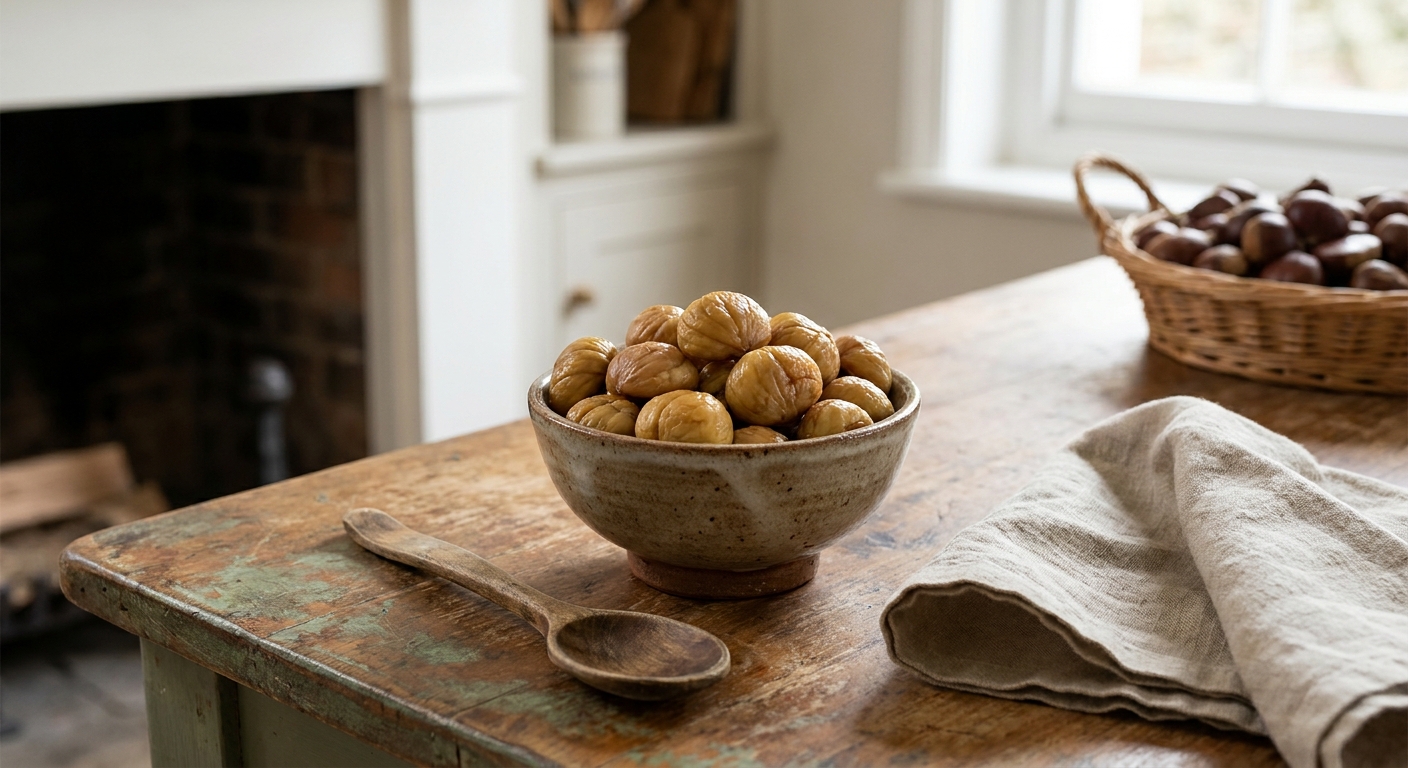
Optional: air fryer reheat
If you love your air fryer, it is great for a quick warm-up, but it can dry chestnuts out if you walk away. I keep the temp moderate and the time short.
How to do it
- Preheat to 300°F (or run it empty for 2 to 3 minutes).
- Reheat in-shell chestnuts for 3 to 5 minutes, or peeled chestnuts for 2 to 4 minutes.
- Shake the basket halfway through.
- Check early and add 1 minute only if needed.
If you want a full walk-through for roasting (not just reheating), see Air Fryer Chestnuts.
How long do peeled roasted chestnuts keep?
For best texture, I try to eat peeled roasted chestnuts within 3 to 4 days when refrigerated in an airtight container. After that, they tend to turn dry and mealy.
How to store them so they dry out less
- Cool completely, then refrigerate in an airtight container.
- Press a piece of parchment or plastic wrap directly onto the chestnuts before closing the lid to reduce air exposure.
- If you have them, add a very slightly damp paper towel in the container (not wet, and keep it from directly soaking the nuts). This helps with moisture, especially if your fridge runs dry.
Can you freeze roasted chestnuts?
Yes. Freezing is the easiest way to keep that soft texture from slipping away in the fridge.
- Freeze peeled chestnuts (whole or chopped) in a freezer bag, pressed flat.
- Thaw overnight in the fridge, then reheat gently using the peeled methods above.
- Shortcut: Reheat from frozen in a covered skillet with a splash of water over medium-low heat until warm.
If you are wondering about storing raw chestnuts (different situation), I cover that here: How to Store Fresh Chestnuts. If you are not sure whether what you have is still good, check: How to Tell if Chestnuts Have Gone Bad.
Quick troubleshooting
My reheated chestnuts are dry
- Next time, use lower heat and a shorter time. Start checking early.
- For peeled chestnuts, always add a little moisture and cover to trap steam.
- Try using dry chestnuts in recipes where texture is less obvious, like Chestnut Soup or Chestnut Stuffing.
The shells are still hard to peel
- Reheat in-shell chestnuts a bit longer, then let them rest 1 to 2 minutes.
- Do the quick skillet steam step (a teaspoon of water, lid on for 30 to 60 seconds). That tiny burst of steam can help the inner skin release.
Can I reheat chestnuts more than once?
You can, but quality drops each time. I try to reheat only what we will eat in one sitting, especially for peeled chestnuts.
Serving ideas
- Simple snack: Warm chestnuts with a pinch of flaky salt.
- Sweet: Toss warm peeled chestnuts with a little butter and cinnamon.
- Savory: Chop and add to salads, or stir into holiday sides like Chestnut Risotto.
- Dessert direction: Use warmed peeled chestnuts for Chestnut Mont Blanc or Chestnut Pure.