Not sure if your chestnuts are still safe? Use these 5 quick checks—mold, sour smell, hollow rattle, dry or discolored nutmeat, and slime—plus simple storage...
Delishing
How to Store Fresh Chestnuts

Maya Brooks
Maya Brooks is a dedicated home cook and the lead recipe developer at Delishing, where she shares practical, foolproof meals for everyday life. With over a decade of hands-on kitchen experience, she specializes in creating approachable dishes that fit a variety of dietary needs and modern cooking methods. Maya is passionate about helping busy people get delicious, stress-free food on the table without needing formal culinary training.
I love buying a big bag of fresh chestnuts with the best intentions, then realizing they are still sitting on the counter when I finally have time to roast them. Chestnuts are not like almonds or walnuts. They are more like a starchy, fresh ingredient. Treat them that way and you will get sweet, tender nuts instead of dry, moldy disappointments.
This guide covers how to store raw chestnuts in the fridge, what mold looks like, and the best way to freeze both raw chestnuts and peeled cooked chestnuts so they hold up for holiday cooking.
Quick storage rules
- Do not store fresh chestnuts on the counter for more than a day. The most common issue is drying out fast, and in humid kitchens they can spoil sooner than you expect.
- Fridge is your friend: aim to refrigerate them the same day you bring them home.
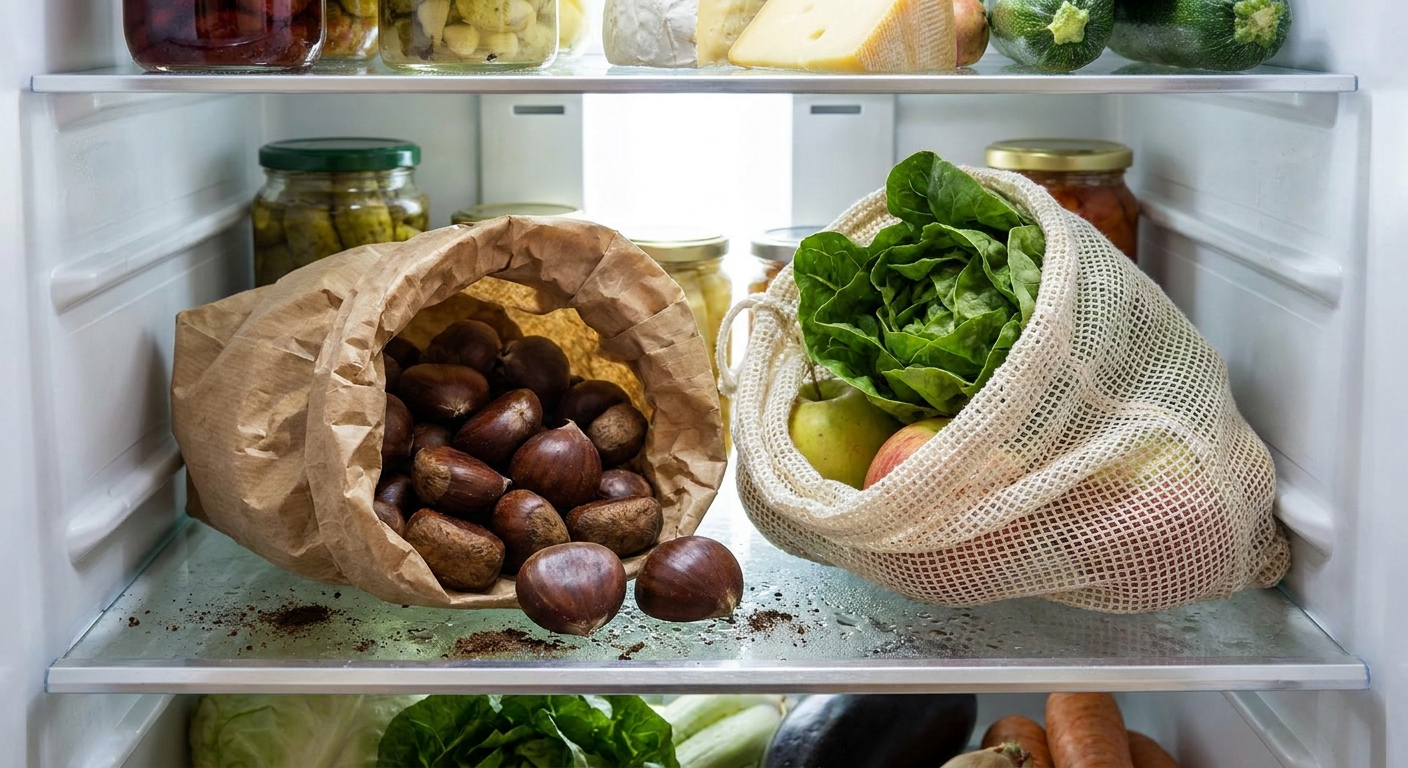
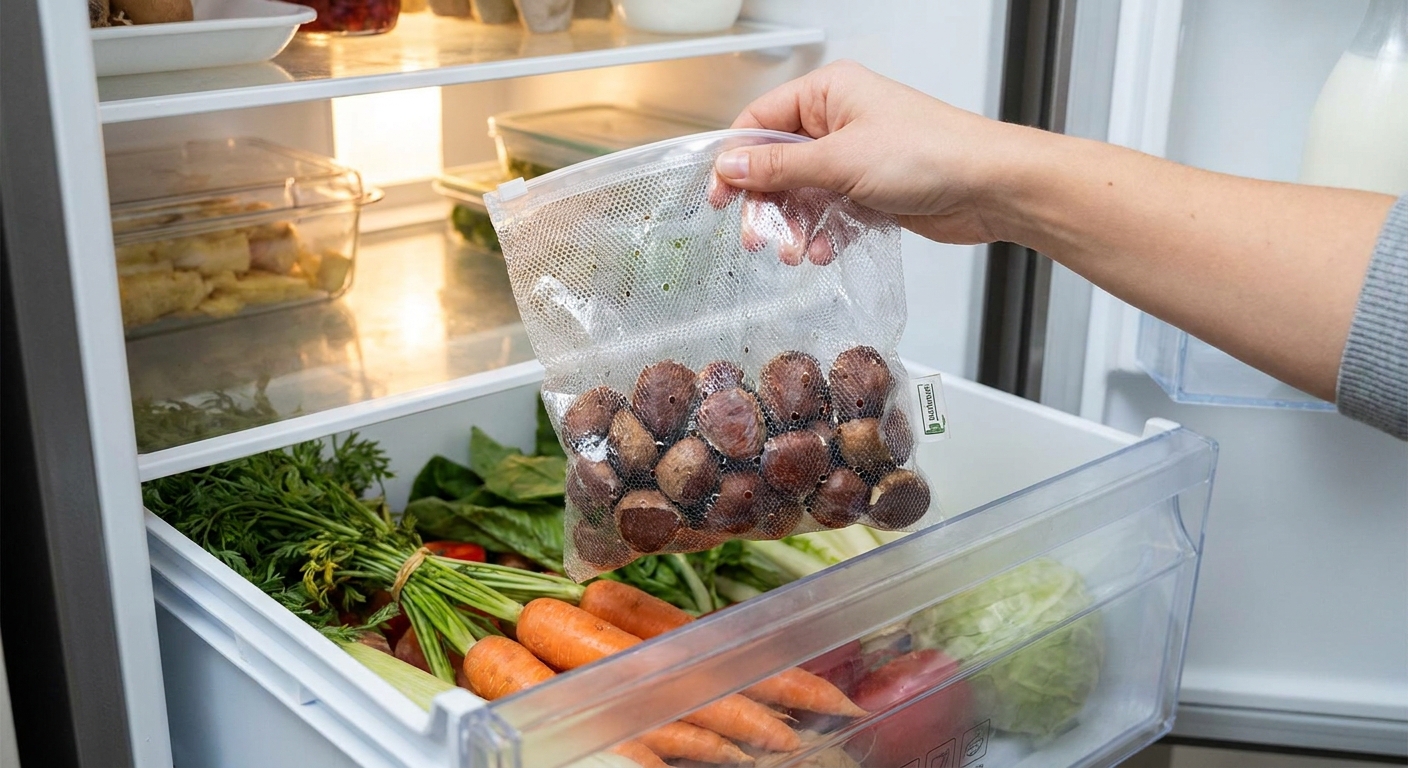
- Let them breathe: use a perforated bag or a loosely closed paper bag inside the crisper drawer.
- Dry is good: moisture trapped in a sealed plastic bag speeds mold.
- Check the bag every few days: one bad nut can take the whole batch with it.
- When in doubt, freeze: chestnuts freeze well, especially if you protect them from freezer burn.
How long do raw chestnuts last?
Realistic fridge life: plan on about 1 to 2 weeks for best quality if they are fresh when you buy them and you store them correctly. Occasionally, very fresh chestnuts can make it closer to 3 weeks, but I do not plan holidays around that.
On the counter: ideally same day only. At room temperature they dry out, get hard inside, and quality drops quickly. Mold is less of a “one day” problem and more of a “a few days in the wrong conditions” problem, especially if your kitchen runs warm or humid.
In the freezer: raw or cooked chestnuts keep their best quality for about 3 to 6 months when wrapped well. They are often still safe beyond that, but flavor and texture are the limiting factors. The better the packaging, the longer they stay worth eating.
How to store raw chestnuts in the fridge
This is the simplest, most reliable way I have found to keep chestnuts fresh without inviting mold.
Step-by-step
- Sort them quickly. Pick out any with cracks, pinholes, sticky spots, or obvious mold.
- Do not wash them. Extra water on the shell is not helping you here.
- Use a perforated bag. A produce bag with holes is perfect. If you only have a zip-top bag, leave it partly open and do not press all the air out.
- Add a dry paper towel (optional). If your fridge runs humid, a paper towel in the bag can absorb condensation.
- Refrigerate in the crisper drawer. Keep them away from very aromatic foods like cut onions or strong cheeses.
- Do a quick check every 3 to 4 days. Toss anything questionable immediately so it does not spread.
How to spot mold and other red flags
Chestnuts can look fine on the outside and be questionable inside, so I rely on a mix of visual cues, touch, and smell.
Signs to throw a chestnut away
- Visible mold: fuzzy white, green, or black patches on the shell.
- Soft spots: the shell feels spongy or gives when you press it.
- Weeping or sticky areas: any damp, tacky residue is a no for me.
- Sour or musty smell: fresh chestnuts smell mildly sweet or neutral, not funky.
- Holes or pinpricks: can indicate insect damage.
One more safety note: do not taste a “maybe” chestnut to decide if it is fine. If it smells off or looks moldy, it is done.
What about a little white film?
A dusty-looking surface can sometimes just be natural residue from handling and storage, but if it looks fuzzy, spreads, or comes with a musty smell, treat it as mold and discard those nuts. When mold shows up in a bag, I also re-check every chestnut and replace the bag.
Freezing raw chestnuts
If you are not roasting within a week, freezing is the low-stress move. Raw chestnuts freeze well, and you can thaw only what you need.
How to freeze raw chestnuts
- Sort and wipe. Remove any damaged nuts. Wipe the shells dry.
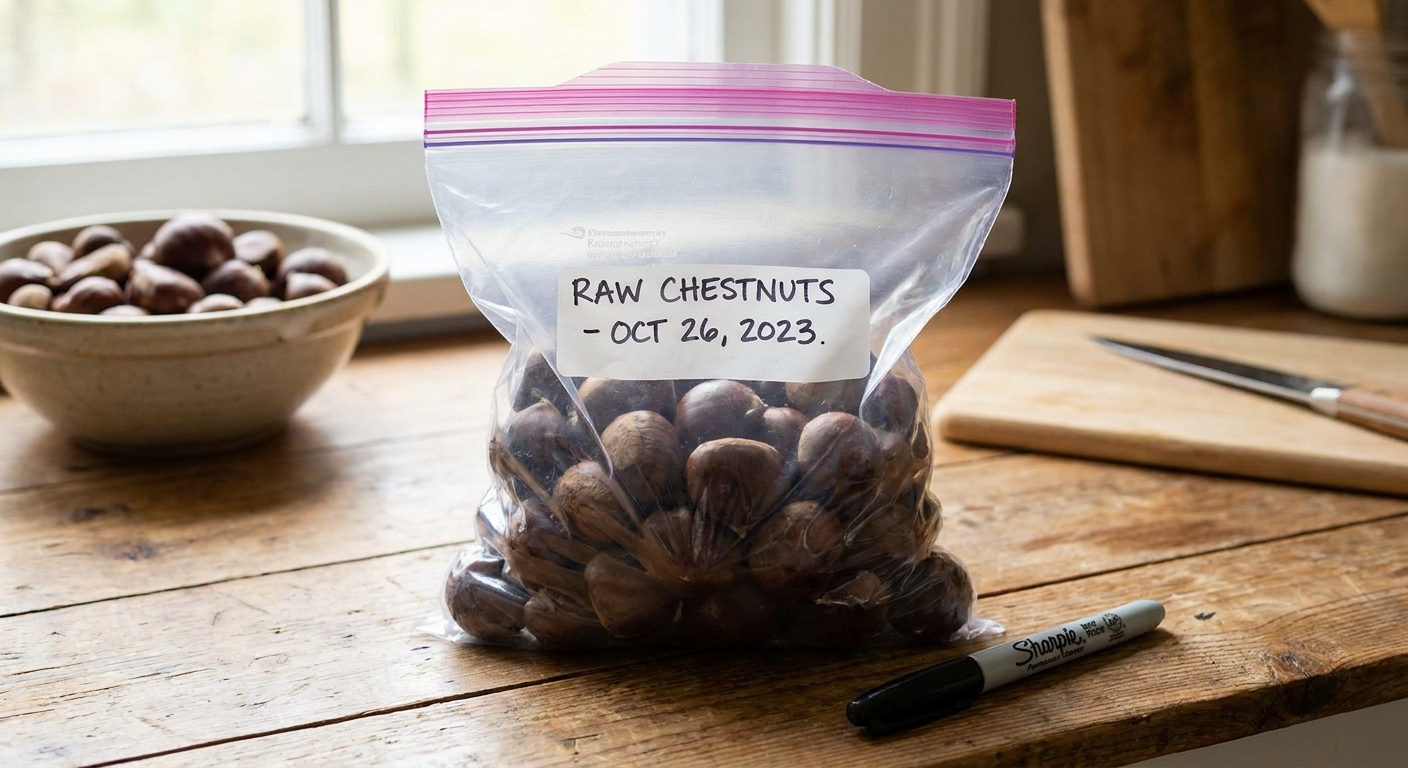
- Pack to prevent freezer burn. Put chestnuts in a thick freezer bag, press out as much air as you can, and seal. For extra protection, double-bag or vacuum seal if you have that option.
- Label and freeze. Use within 3 to 6 months for best texture.
Do you need to score them before freezing?
Not required. I usually score right before cooking because it is easier for me to keep track of what is raw versus prepped. If you do score first, freeze in a single layer until firm so the cuts do not get smashed, then bag them.
Storing scored chestnuts (short-term)
If you scored a batch and plans changed, store them in the fridge in a breathable bag and try to cook them within 1 to 2 days. Scoring exposes the nut to air, so it tends to dry out faster.
Freezing cooked chestnuts (peeled)
Peeled cooked chestnuts are gold for quick stuffing, soups, and holiday sides. The key is protecting their moisture and keeping them from absorbing freezer flavors.
Best method: flash-freeze, then pack airtight
- Cool completely. Warm chestnuts create condensation, which turns into icy crystals.
- Dry the surface. If they feel steamy or damp, pat gently with a paper towel.
- Flash-freeze. Spread peeled chestnuts on a parchment-lined sheet pan in a single layer and freeze until firm, about 1 to 2 hours.
- Pack airtight. Transfer to a thick freezer bag, press out air, and seal. For best protection, double-bag or vacuum seal.
- Freeze up to 3 months for best flavor, up to 6 months if well packed.
How to use frozen cooked chestnuts
You can thaw overnight in the fridge, or add them straight to hot dishes like soup or stuffing where they will warm through quickly. If they seem a little dry after thawing, a small pat of butter or a splash of broth brings them right back.
Thawing and food safety basics
- Thaw in the fridge for the safest, most consistent results.
- Use thawed raw chestnuts promptly, ideally within 24 to 48 hours.
- Do not refreeze chestnuts repeatedly. That is how you end up with mealy texture.
- If you see mold on thawed chestnuts, discard them. Do not rinse and “save” them.
If you are roasting next
Once your chestnuts are stored and ready to cook, follow my roasting instructions here: How to Roast Chestnuts. For a faster countertop option, you can also use an air fryer: Air Fryer Chestnuts.
If you are working with shelf-stable options instead of fresh, this guide is the right fit: How to Cook Jarred Chestnuts. And if you want to make sure you bought the right kind in the first place, I break it down here: Horse Chestnuts vs Sweet Chestnuts.
FAQ
Can I store fresh chestnuts in a sealed plastic bag?
I do not recommend it. Sealed plastic traps moisture and encourages mold. If plastic is all you have, leave the bag partly open or poke a few holes and keep them in the crisper.
Should I soak chestnuts before storing them?
No. Soaking is a cooking step some people use right before roasting, not a storage strategy. For storage, you want chestnuts cool and dry, with a little airflow.
How can I tell if chestnuts have dried out?
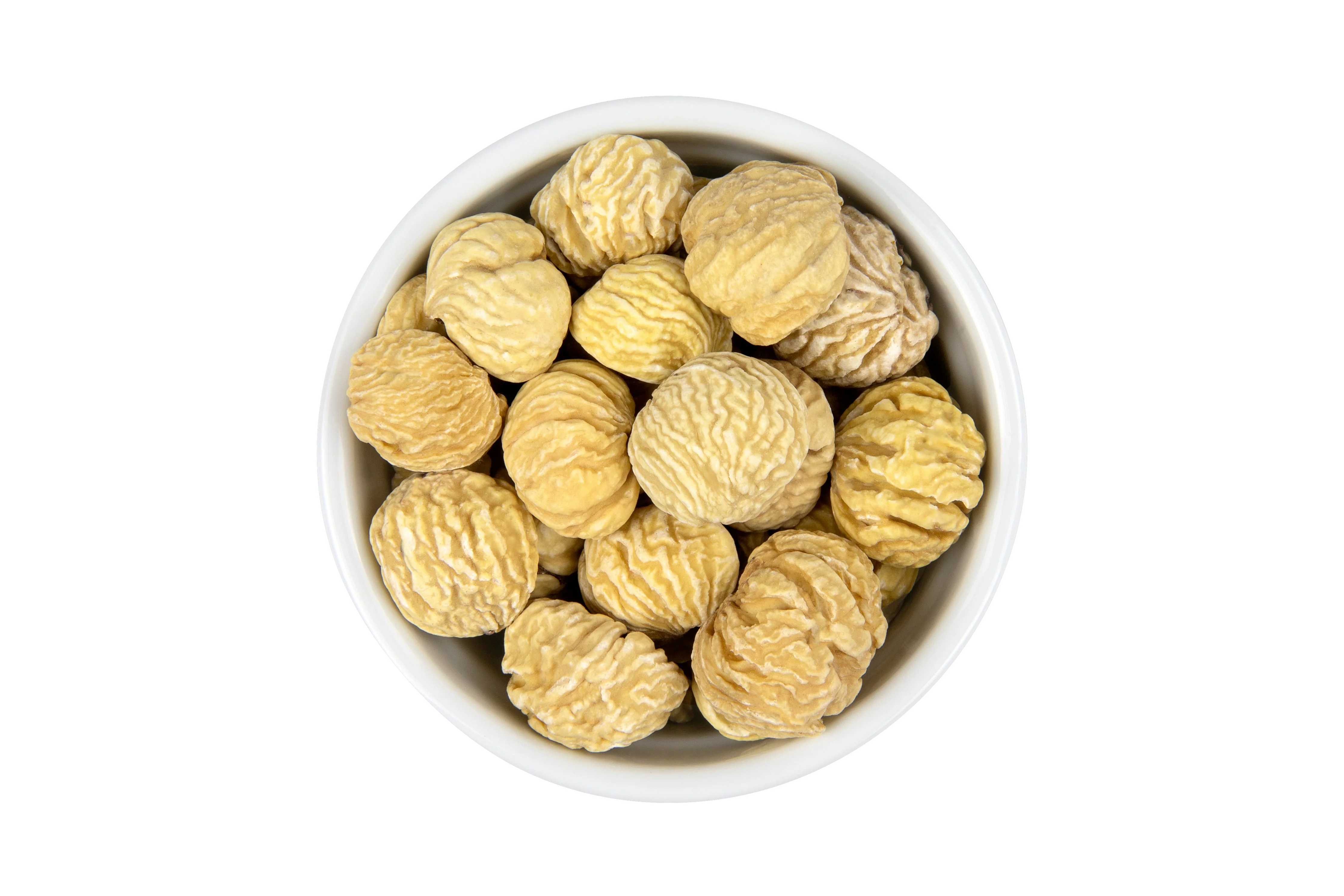
Dried-out chestnuts often feel lighter than you expect, and after cooking they can be chalky instead of creamy. If you squeeze the shell and it feels hollow-ish or rattly, that nut is usually past its prime.
Is it normal for chestnuts to have a little sprout?
A small sprout can happen with very fresh chestnuts stored a while. It is not automatically unsafe, but it often means they are aging and losing sweetness. I use those first. You can trim the sprout before cooking, and if the interior is shriveled, smells off, or shows any mold, discard it.