Delishing
Chestnut Stuffing

Stuffing is one of those dishes that can quietly make or break the whole holiday plate. When it’s good, nobody notices how simple it is. When it’s soggy or bland, everyone notices. This chestnut stuffing is my reliable, notebook-tested version: lots of sautéed onion and celery, plenty of herbs, stock to hydrate the bread without turning it mushy, and chopped chestnuts that stay pleasantly chunky.
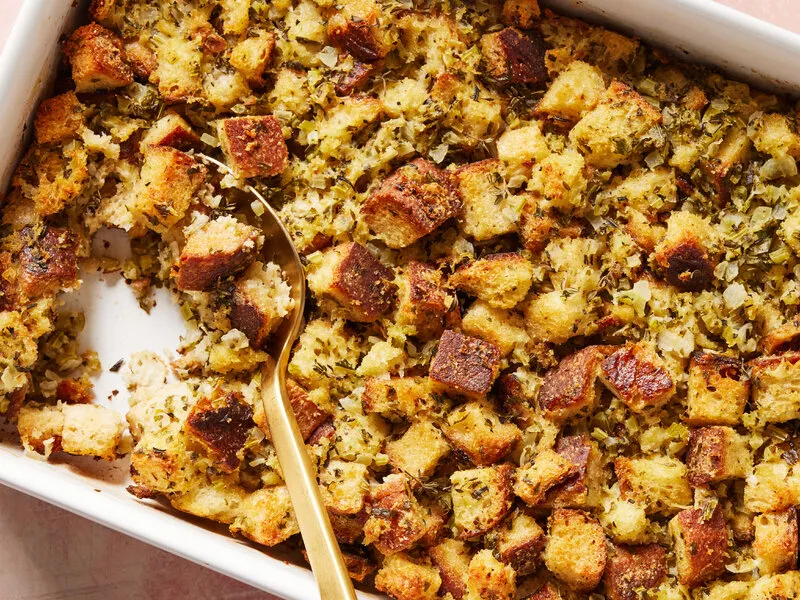
The secret weapon here is a make-ahead chill. After you toss everything together, you refrigerate it for a few hours or overnight. That rest gives the bread time to drink in the stock evenly, so the center bakes up tender and cohesive instead of wet. For the crisp, browned top, the uncovered baking time at the end is what really does it, and it helps if the dish is not ice-cold when it goes in the oven.
If you are wondering about the “right” level of moisture before it goes into the dish, this is the cue I use: the bread should feel saturated and heavy when you squeeze a handful, but there should not be liquid pooling in the bottom of the bowl.
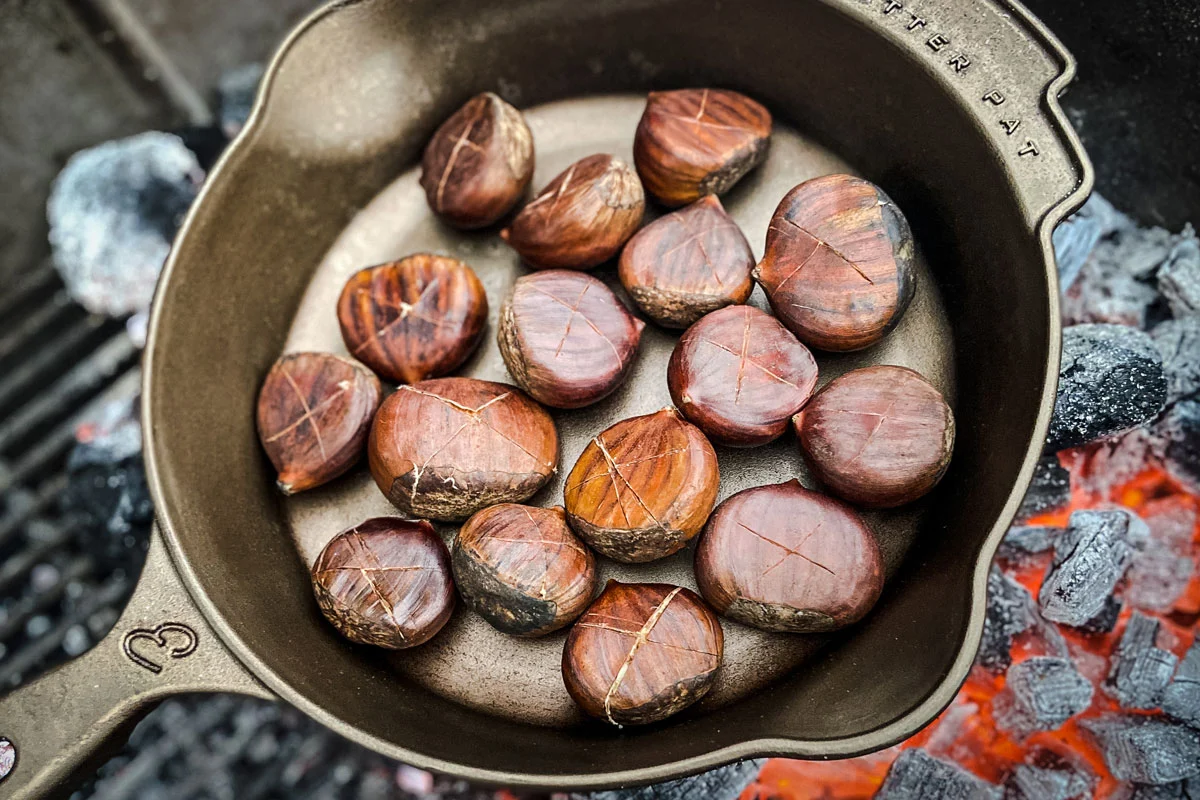
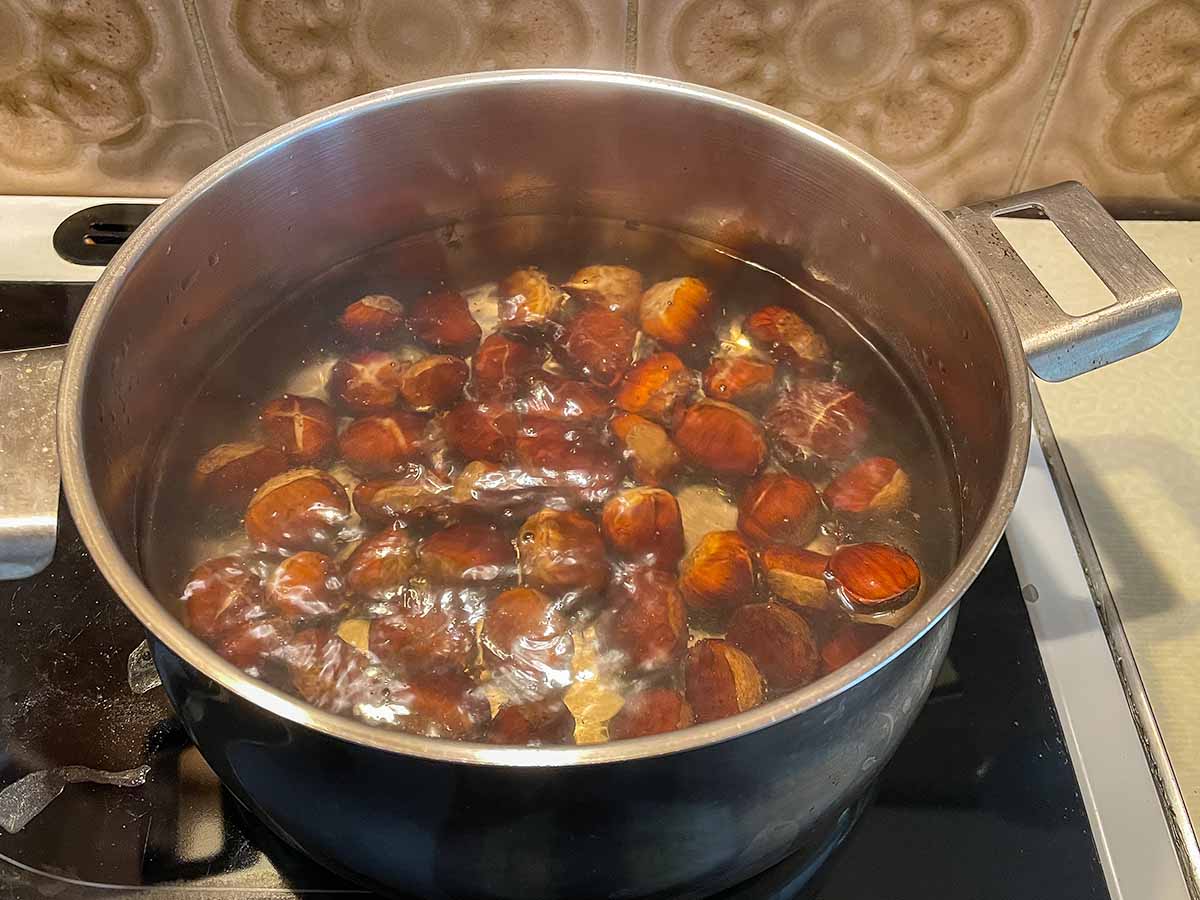
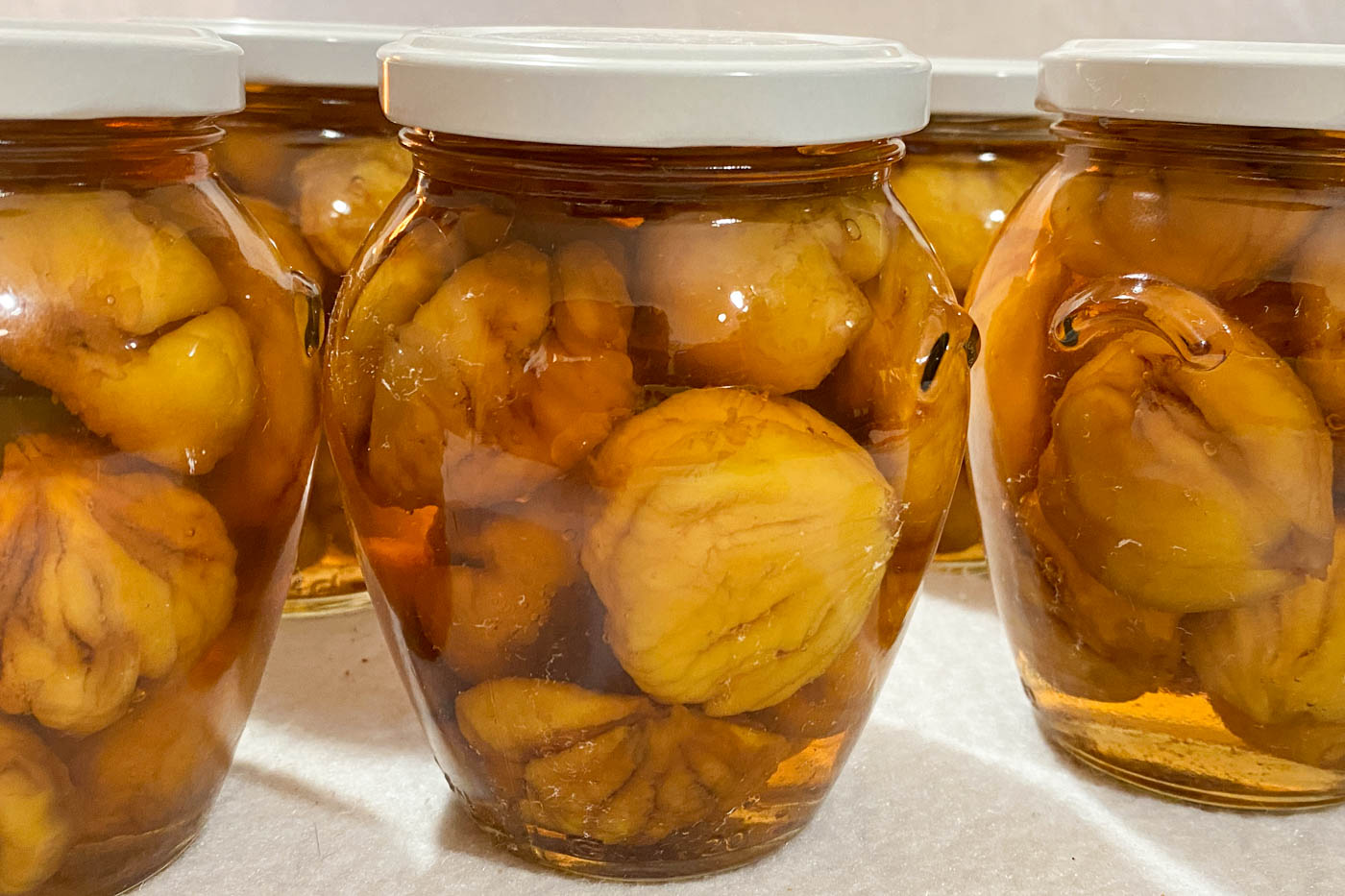
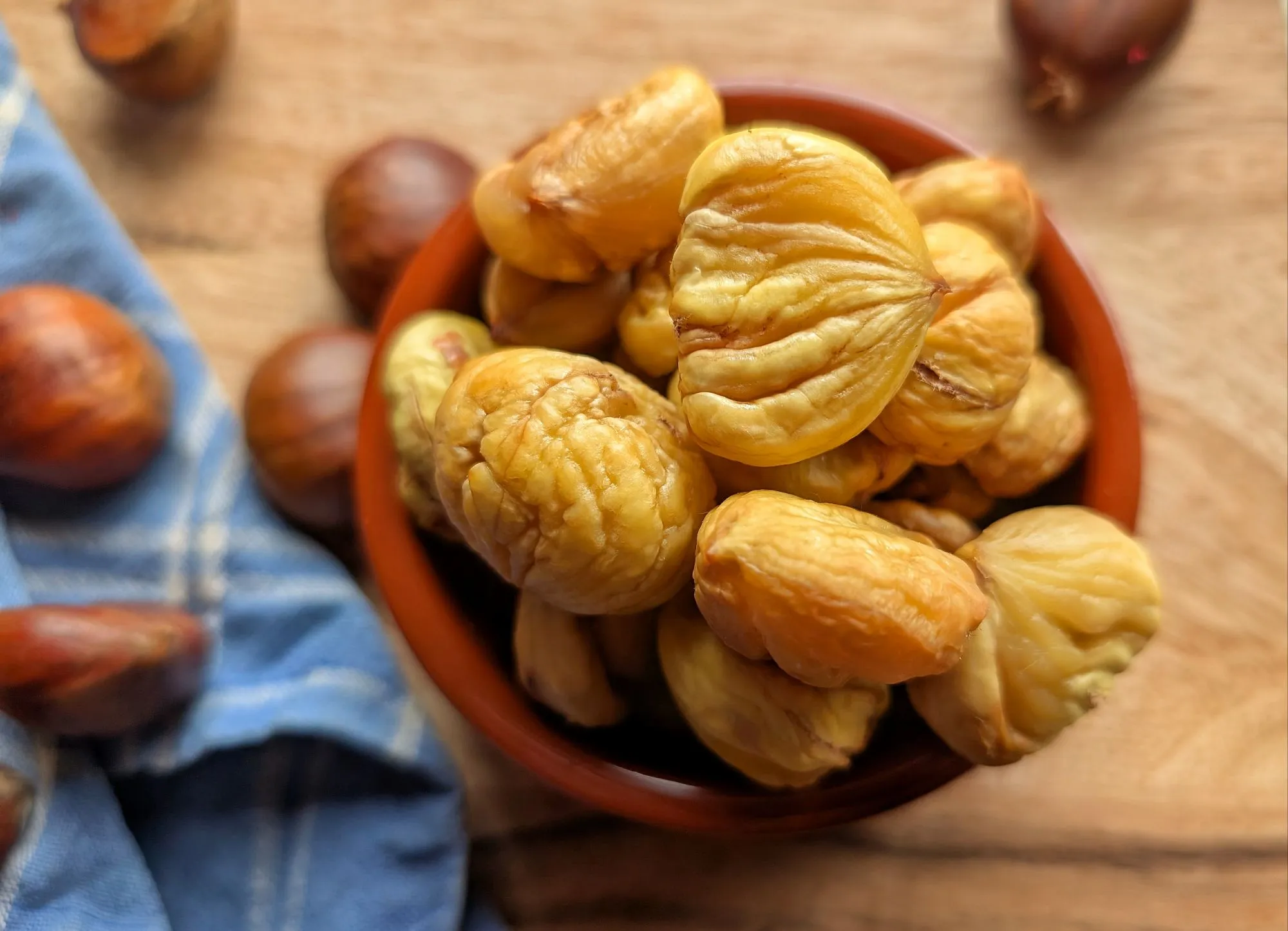
For the chestnuts, you can use cooked and peeled chestnuts that are sold vacuum-packed or in shelf-stable packs, or roast and peel your own first. I walk through that process here: How to Roast Chestnuts. Either way, keep the pieces fairly large so you actually taste them.
What to expect
- Texture: Tender and cohesive in the middle, crisp and browned on top
- Flavor: Savory herbs (sage and thyme), sweet onion, and nutty chestnuts
- Difficulty: Straightforward. The only real job is drying or toasting the bread and adding stock gradually so the mix is moist, not soupy.
Why this works
- Dried bread equals control. Using day-old or lightly toasted bread lets it absorb stock without collapsing into paste.
- Make-ahead chilling helps hydration. Resting the mixed stuffing in the fridge helps the liquid distribute evenly, so you do not get a dry edge and a wet middle.
- Chunky chestnuts stay distinct. Larger pieces keep their nutty bite instead of disappearing into the bread.
- Two-stage baking gives you the best top. Covered first to heat through and set, uncovered at the end to brown.
Ingredient notes
- Bread: Sturdy bread works best. Think country loaf, sourdough, or a bakery French loaf. Avoid very soft sandwich bread, which can go gummy.
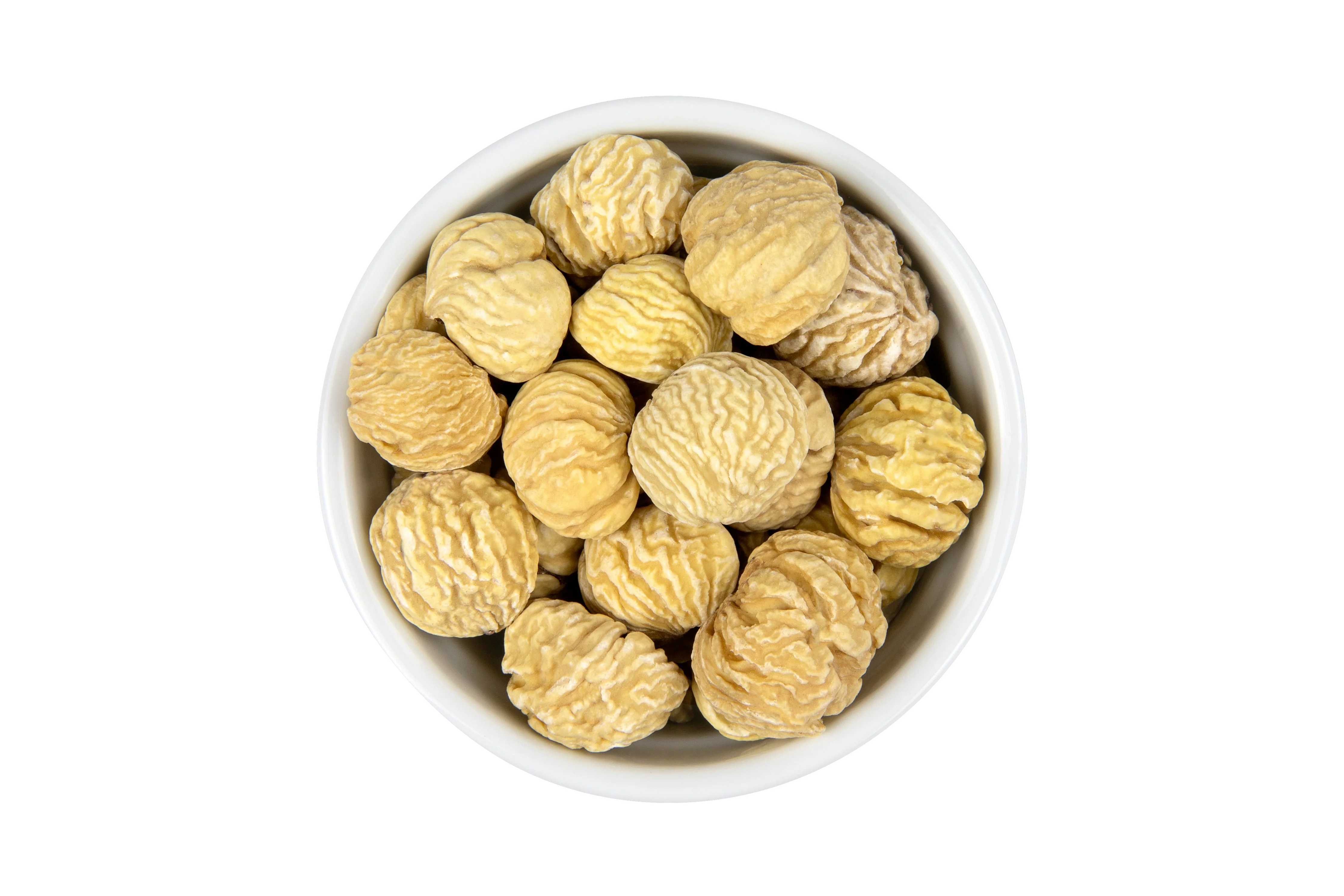
- Chestnuts: Use cooked, peeled chestnuts. Roasted and peeled homemade is great, but packaged roasted chestnuts work too. Chop them into 1/2-inch pieces so they stay chunky.
- Aromatics: Onion and celery are non-negotiable for classic stuffing flavor. Cut them small so they melt into the background.
- Herbs: Sage and thyme are the cozy baseline. Parsley adds freshness at the end.
- Stock: Use chicken or vegetable stock. Warm stock absorbs faster and more evenly.
- Eggs: Eggs help the center set. Without them, stuffing is more likely to scoop out in wet clumps.
- Butter: This is where a lot of the flavor lives. If you need to reduce, do it elsewhere first.
Equipment
- Large skillet
- Large mixing bowl
- 9x13-inch baking dish (or similar 3-quart casserole)
- Aluminum foil
- Chef’s knife and cutting board
Pro tips
- Toast the bread if it is fresh. Spread cubes on a sheet pan and bake at 300°F until dry on the outside, 15 to 25 minutes, stirring once. You are drying, not browning.
- Add stock gradually. The mix should look well-moistened but not soupy. Different breads drink differently.
- Press lightly into the dish. You want it cohesive, not packed tight like a meatloaf.
- Uncover at the end. That last blast uncovered is what gives you the browned, crisp top everyone fights over.
- Want extra-crisp? Bake in a wider dish so there is more surface area.
Substitutes
- Vegetarian: Use vegetable stock.
- Gluten-free: Use a sturdy gluten-free loaf, cubed and well-toasted. (GF bread often needs extra drying time.) For more GF dinner ideas, browse Gluten-Free Recipes.
- Butter swap: Use olive oil for sautéing, or a dairy-free butter. Flavor will change slightly, but it still works.
- Herbs: Dried herbs are fine when fresh are not available. Use about one-third the amount of dried compared to fresh.
Variations
- Sausage chestnut stuffing: Brown 8 ounces of breakfast sausage, remove, then sauté the vegetables in the drippings plus butter. Stir sausage back in before adding stock.
- Mushroom chestnut stuffing: Sauté 8 ounces sliced mushrooms until browned and dry, then proceed as written.
- Apple chestnut stuffing: Add 1 tart apple, peeled and diced, sautéed with the onion and celery until just tender.
- More herb-forward: Add rosemary, finely chopped, but go light. It can take over fast.
Serving ideas
- Serve alongside Roast Turkey with Cranberry Sauce without turning your stuffing day into a full turkey project.
- Pair with cozy mains like The Coziest Oven Pot Roast for a winter dinner that feels like a holiday even when it is not.
- Add something bright and crunchy on the side like Roasted Brussels Sprouts to balance the richness.
Storage
- Make-ahead (recommended): Assemble, cover tightly, and refrigerate 8 to 24 hours. Bake as directed, adding 5 to 10 minutes covered if it is going into the oven cold.
- Refrigerate leftovers: Cool, then cover and refrigerate up to 4 days.
- Reheat: Cover with foil and warm at 325°F until hot in the center. Uncover for the last few minutes to re-crisp the top.
- Freeze: Freeze baked stuffing tightly wrapped for up to 2 months. Thaw overnight in the fridge before reheating.
Common mistakes (and how to avoid them)
- Using bread that is too soft: Dry it out first. This is the difference between stuffing and bread mush.
- Chopping chestnuts too small: Tiny bits vanish. Keep 1/2-inch chunks so you get that chestnut bite.
- Pouring in all the stock at once: Add gradually. Stop when the bread is evenly moistened but not swimming.
- Skipping the rest time: Even 2 to 3 hours in the fridge helps the center bake up cohesive instead of wet.
- Baking uncovered the whole time: You will get a tough top before the middle heats through. Cover first, then uncover to brown.
FAQ
Can I make this stuffing the day before?
Yes, and it is my favorite way to do it. Assemble the stuffing in the baking dish, cover tightly, and refrigerate overnight. Bake the next day, adding a few extra minutes covered since it starts cold.
How much chestnut should I use so it stays chunky?
I like 8 ounces of cooked, peeled chestnuts chopped into 1/2-inch pieces. That amount gives you obvious chestnut pockets without turning the whole stuffing into a chestnut crumble.
How do I know the center is set?
The center should feel hot and mostly firm when you press lightly with a spoon. If you have an instant-read thermometer, aim for about 160°F in the middle since the stuffing contains eggs.
Can I bake this in a smaller dish?
You can, but a deeper stuffing takes longer to heat through and the top can brown before the center sets. If you use a smaller, deeper dish, plan on extra covered baking time.
Do I have to roast chestnuts myself?
No. Packaged roasted, peeled chestnuts are a great shortcut. If you want to do it from scratch, my full walkthrough is here: How to Roast Chestnuts.
Recipe: Chestnut Stuffing
Classic bread stuffing with onion, celery, herbs, and chunky chestnuts, chilled ahead for even absorption and baked until set with a browned top.
- 12 cups bread cubes (about 1-inch pieces), dried out (about 1 to 1 1/4 pounds)
- 8 tablespoons unsalted butter
- 1 large yellow onion, finely diced
- 3 celery stalks, finely diced
- 3 cloves garlic, minced
- 1 tablespoon chopped fresh sage (or 1 teaspoon dried sage)
- 2 teaspoons chopped fresh thyme (or 3/4 teaspoon dried thyme)
- 1 1/2 teaspoons kosher salt, plus more to taste
- 1/2 teaspoon black pepper
- 8 ounces cooked, peeled chestnuts, chopped into 1/2-inch pieces
- 1/2 cup chopped fresh parsley
- 2 large eggs
- 2 1/2 to 3 cups warm stock (chicken or vegetable)
- Preheat the oven to 350°F. Butter a 9x13-inch baking dish.
- If your bread is not already dry, spread the cubes on a sheet pan and bake at 300°F until the outside feels dry and slightly crisp, 15 to 25 minutes, stirring once. Cool briefly.
- In a large skillet over medium heat, melt the butter. Add the onion and celery and cook, stirring occasionally, until softened and translucent, 8 to 10 minutes.
- Add the garlic, sage, thyme, salt, and pepper. Cook 1 minute, stirring, until fragrant.
- In a large bowl, combine the dried bread cubes, chopped chestnuts, and parsley. Pour the warm vegetable mixture over the bread and toss to combine.
- In a small bowl, whisk the eggs. Drizzle the eggs over the stuffing mixture and toss well.
- Add 2 1/2 cups warm stock and toss. Let sit 2 minutes, then assess. The bread should feel evenly moistened but not soupy. Add up to 1/2 cup more stock if needed.
- Transfer the mixture to the prepared baking dish and spread evenly. Press very lightly to level the top without packing it down.
- Cover tightly with foil and refrigerate at least 2 hours or up to overnight.
- When ready to bake, keep the oven at 350°F. Bake covered for 35 minutes (add 5 to 10 minutes if baking straight from the fridge).
- Uncover and bake until the top is browned and the center is set and hot, 15 to 25 minutes more. Let rest 10 minutes before serving.
Notes: Different breads absorb stock differently. Add stock gradually and stop when the mixture is evenly moistened but not swimming. For the chunkiest chestnuts, keep pieces around 1/2 inch.