The Art of Roasting Veggies Roasting vegetables is a game-changer in the kitchen. It's easy, versatile, and can turn even the veggie-haters into fans. Pop…
Delishing
How To Roast Chestnuts

Maya Brooks
Maya Brooks is a dedicated home cook and the lead recipe developer at Delishing, where she shares practical, foolproof meals for everyday life. With over a decade of hands-on kitchen experience, she specializes in creating approachable dishes that fit a variety of dietary needs and modern cooking methods. Maya is passionate about helping busy people get delicious, stress-free food on the table without needing formal culinary training.
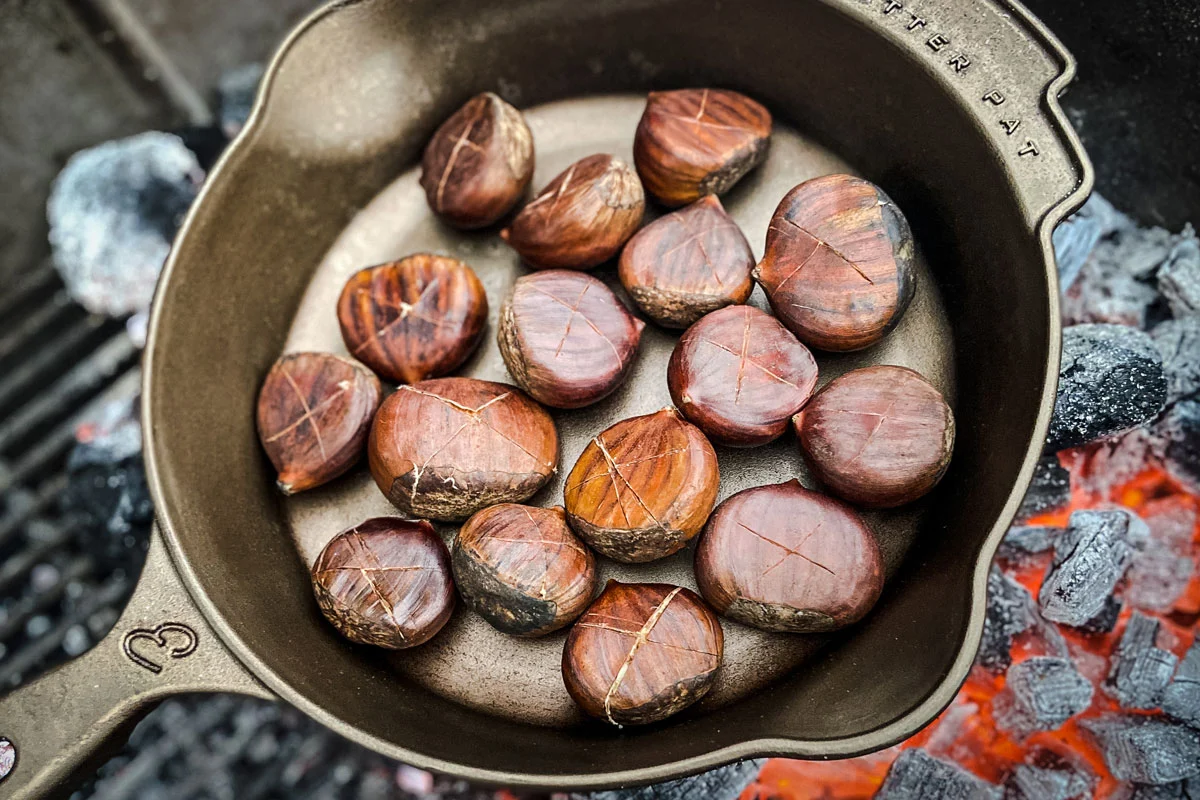
Roasted chestnuts are one of those simple kitchen projects that feel a little magical. They are warm, mildly sweet, and nutty, and they make your whole kitchen smell like cozy season. The trick is not fancy equipment. It is two things: scoring the shells properly and peeling them while they are still hot.
I learned this the hard way after roasting a batch, letting them cool while I finished dinner, and then fighting every sticky inner skin like it was personally mad at me. Now I treat chestnuts like a timing game: roast, steam, peel. You will win.
Before you start
Choose the right chestnuts
- Look for heavy, firm nuts with glossy shells. Heavy usually means they are fresher and less dried out.
- Avoid cracked shells or any that feel lightweight or sound hollow when you shake them.
- Toss any that look moldy or smell off. If a chestnut is rock-hard and feels dried out, it will usually roast up tough.
- Plan a flexible amount. For a snack, I usually estimate 4 to 8 chestnuts per person, depending on size (they vary a lot).
What you need
- Fresh chestnuts (in the shell)
- A small sharp paring knife or a serrated knife
- Cutting board and a kitchen towel (for grip)
- Baking sheet (oven method) or a heavy skillet (stovetop method)
- Oven mitts
- Clean kitchen towel or a bowl covered with a towel (for steaming)
How to score chestnuts
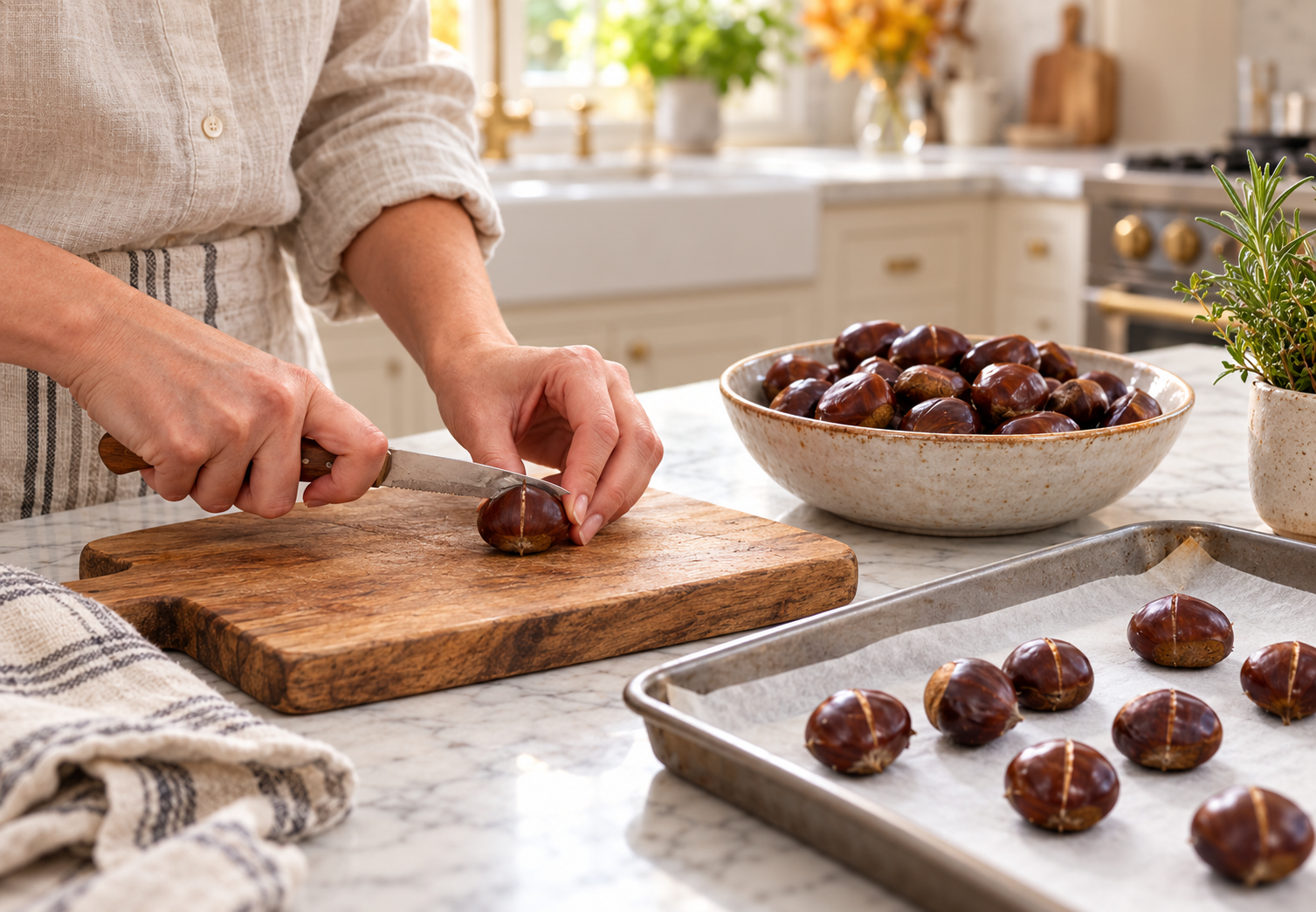
Chestnuts have a hard outer shell and a papery inner skin. Scoring gives steam a way to escape and makes them possible to peel. It also reduces the chance of a messy pop in the oven.
The safest, easiest scoring method
- Rinse and dry the chestnuts. Water on the shell makes them slippery.
- Set one chestnut on a cutting board with the flatter side down so it does not roll.
- Hold it with a kitchen towel for extra grip and to protect your fingers.
- Cut an X on the rounded side of the shell, about 3/4 inch wide. Cut through the shell, but do not go deep into the nut.
- Keep your fingers clear and always cut away from your hand. Chestnut shells can be tough and the knife can slip if you rush.
- Repeat with the remaining chestnuts.
Tip from my notebook: If your knife keeps skidding, switch to a small serrated knife. The tiny teeth bite into the shell more easily.
Important warning about unscored chestnuts
Do not roast chestnuts without scoring them. The shell can trap steam and cause the chestnut to burst while roasting. Even if it does not fully explode, it can crack unpredictably and make a mess in your oven or pan.
One more safety note: Only roast chestnuts you bought for eating. If you are ever tempted to forage, know that horse chestnuts are not edible.
Oven roasted chestnuts
Temperature and timing
Roast at 425 F for 20 to 30 minutes, depending on size and freshness.
Step-by-step
- Preheat the oven to 425 F.
- Arrange the scored chestnuts on a baking sheet in a single layer, cut side up.
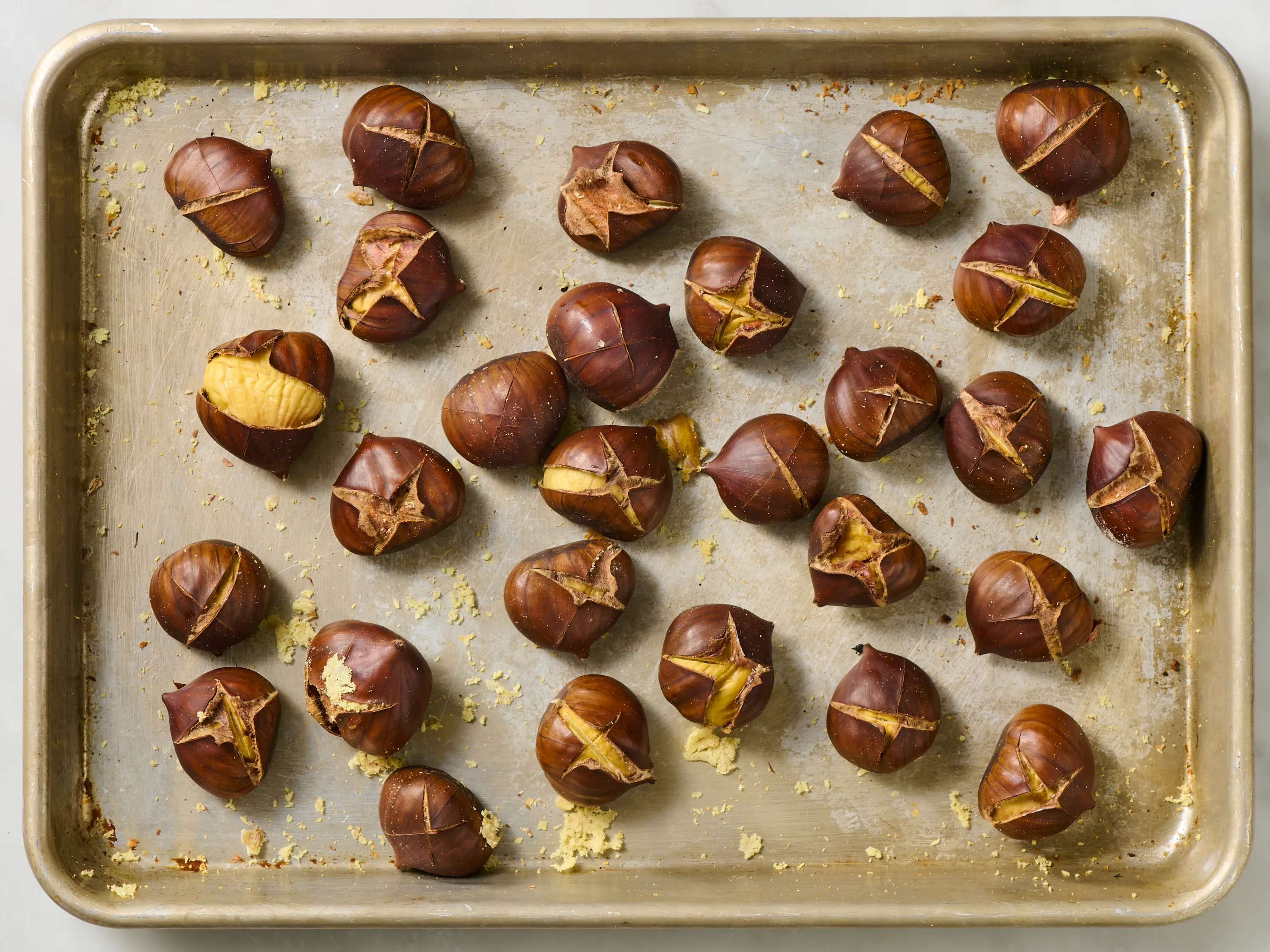
- Roast for 20 minutes, then start checking. You are looking for shells that have peeled back at the X and nuts that look slightly golden at the opening.
- Roast 5 to 10 minutes more as needed.
- Steam immediately: tip the hot chestnuts into a bowl and cover tightly with a clean kitchen towel for 10 minutes. This step makes peeling dramatically easier.
How to tell they are done
- The X is opened wide and the shell is curling back.
- The chestnut inside looks tender and slightly browned at the edges.
- When you peel one, the nut should be soft and creamy, not crunchy.
Skillet roasted chestnuts
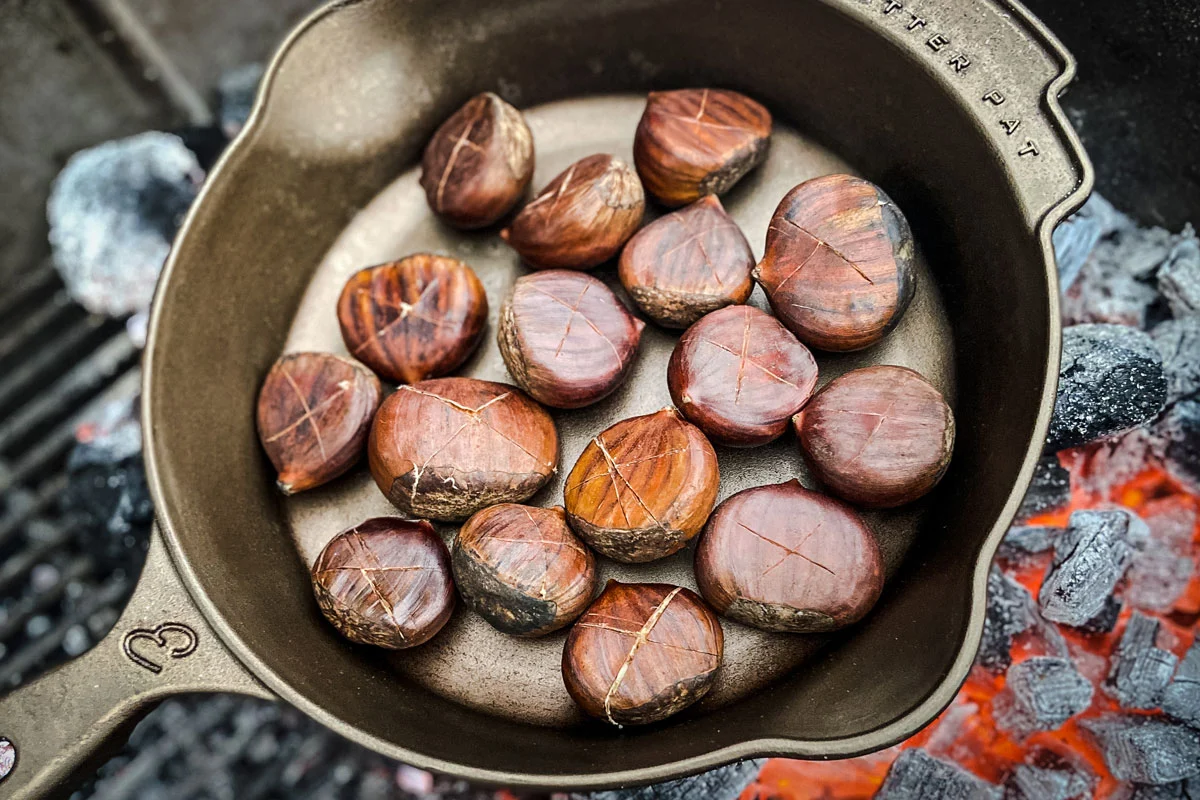
If you do not want to heat the oven, you can roast chestnuts in a heavy skillet. This method takes a little more hands-on attention because you need to shake and stir often to prevent scorching.
Step-by-step
- Preheat a heavy skillet (cast iron is great) over medium heat for 2 to 3 minutes.
- Add the scored chestnuts in a single layer, cut side up if possible.
- Cover the pan with a lid to trap heat and help them cook through.
- Roast for 15 to 25 minutes, shaking the pan or stirring every 2 to 3 minutes. If they are browning too fast, reduce heat to medium-low.
- When the shells open at the X and the nuts smell sweet and toasty, move them to a bowl.
- Steam under a towel for 10 minutes, then peel while hot.
Quick note: You may get a few charred spots with skillet roasting, and that is fine. Just avoid letting them burn heavily, which turns the flavor bitter.
How to peel chestnuts
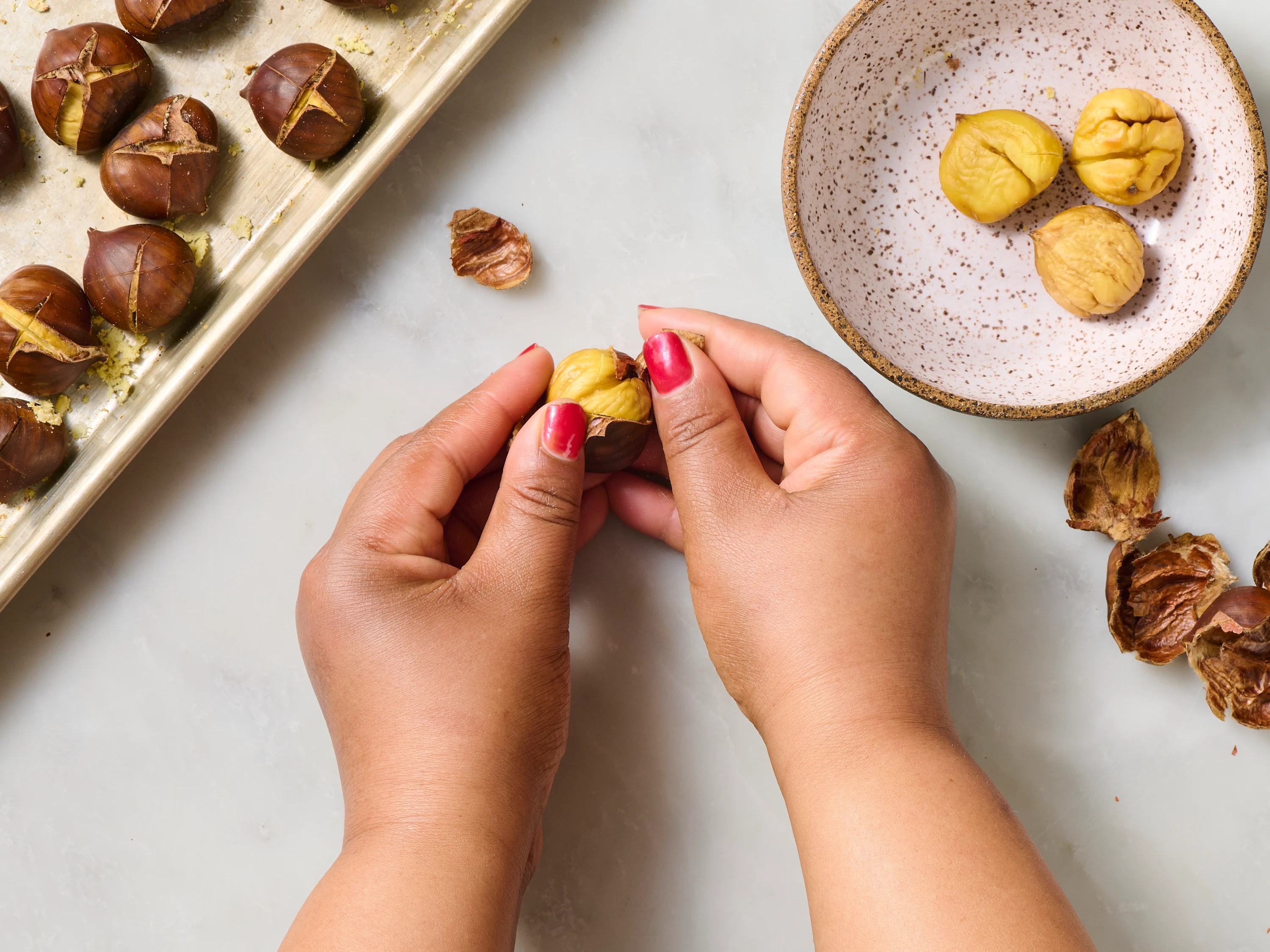
Peeling is where most people get frustrated, so here is the simple rule: peel them as soon as you can comfortably handle them. Warm chestnuts release from the shell and inner skin much more easily than cooled ones.
My no-drama peeling routine
- Keep the chestnuts covered with a towel and peel a few at a time. This keeps the rest hot and steamy.
- Start at the X and pull back the shell.
- Remove the inner skin (the thin papery layer) right away. If it sticks, that chestnut likely cooled too much or needs a minute more of steaming.
- If a batch cools before you finish, rewarm them in a 350 F oven for 5 minutes, then cover again to steam.
Tip: If you only have time to peel part of the batch, peel what you will eat now and store the rest in the shell. You can rewarm and peel later.
Storage and reheating
How to store roasted chestnuts
- Room temperature: If you are serving them the same day, keep peeled chestnuts loosely covered for a few hours.
- Refrigerator: Store peeled roasted chestnuts in an airtight container for up to 3 to 4 days. Seal them tightly because they dry out quickly, and the texture gets less tender as the days pass.
- Freezer: Freeze peeled chestnuts in a freezer bag for up to 2 to 3 months. They are best sooner rather than later for the sweetest flavor and best texture. Thaw in the fridge overnight.
Best way to reheat
- Oven: 350 F for 5 to 8 minutes (best for keeping them from getting soggy).
- Skillet: Medium-low heat for a few minutes, shaking often.
- Microwave: Works in a pinch, but they can turn a little chewy. Use short bursts.
Troubleshooting
Why are my chestnuts hard inside?
They likely needed more time. Chestnuts vary a lot in size and moisture. Roast them a bit longer and make sure you are steaming before peeling.
Why are they impossible to peel?
Usually one of these: the score was too shallow, they cooled before peeling, or they were older and drier. Next time, cut a clear X through the shell and peel while hot under a towel.
Some opened, some did not. What now?
Pop the stubborn ones back in the oven for 5 to 8 minutes. If they still will not open, the score may not have cut through the shell. Carefully rescore and roast a few minutes more.
What to serve with them
Roasted chestnuts are fantastic as a snack, but I also love them as a little warm side nibble on cozy nights. Pair them with soups, salads, or a simple roast dinner.
- Alongside something hearty like lentil soup
- With a comfort-food bowl of clam chowder with bacon
- Next to a holiday-style main like roast turkey with cranberry sauce