Boiling chestnuts is the simplest way to get soft, moist chestnuts for snacking, purees, and stuffing. Learn how to score, simmer until tender, and peel whil...
Delishing
How to Cook Dried Chestnuts

Maya Brooks
Maya Brooks is a dedicated home cook and the lead recipe developer at Delishing, where she shares practical, foolproof meals for everyday life. With over a decade of hands-on kitchen experience, she specializes in creating approachable dishes that fit a variety of dietary needs and modern cooking methods. Maya is passionate about helping busy people get delicious, stress-free food on the table without needing formal culinary training.
Dried chestnuts are one of those pantry ingredients that feel a little mysterious until you cook them once. They are peeled, fully dried, and surprisingly sturdy, which means they do not behave like fresh chestnuts in the shell or the already-cooked ones that come in jars. In most cases, you can bring them back to life in two steps: a soak, then a gentle simmer. If your package directions differ, follow those, since brands can vary.
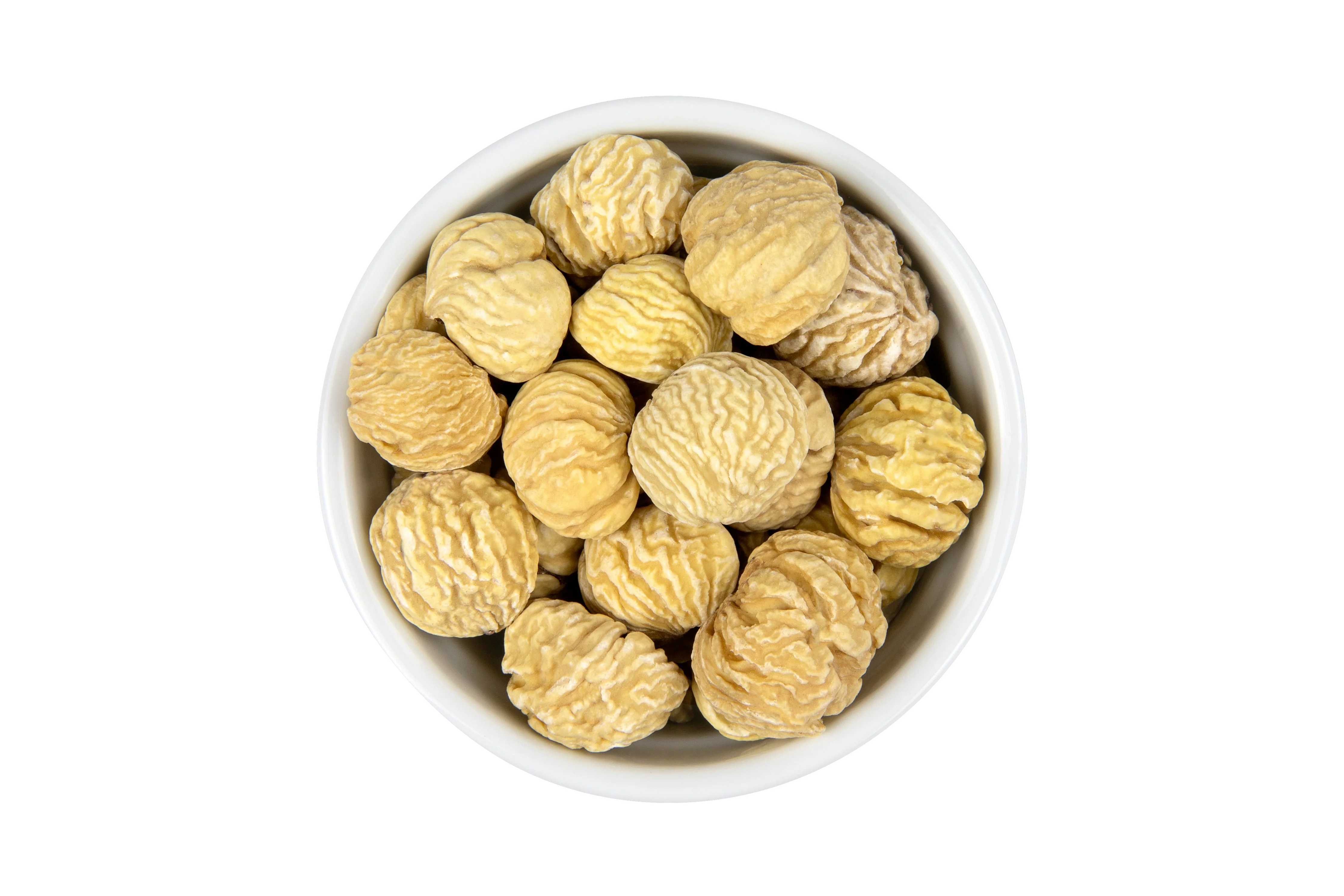
What you are starting with
It helps to know which type of chestnut you bought, because the cooking method changes a lot.
Dried peeled chestnuts
These are chestnuts that have been peeled and dehydrated until hard and lightweight. They need rehydration and then cooking to become tender. They are ideal for soups, stuffings, pilafs, and desserts where you want sweet, nutty pieces that hold their shape.
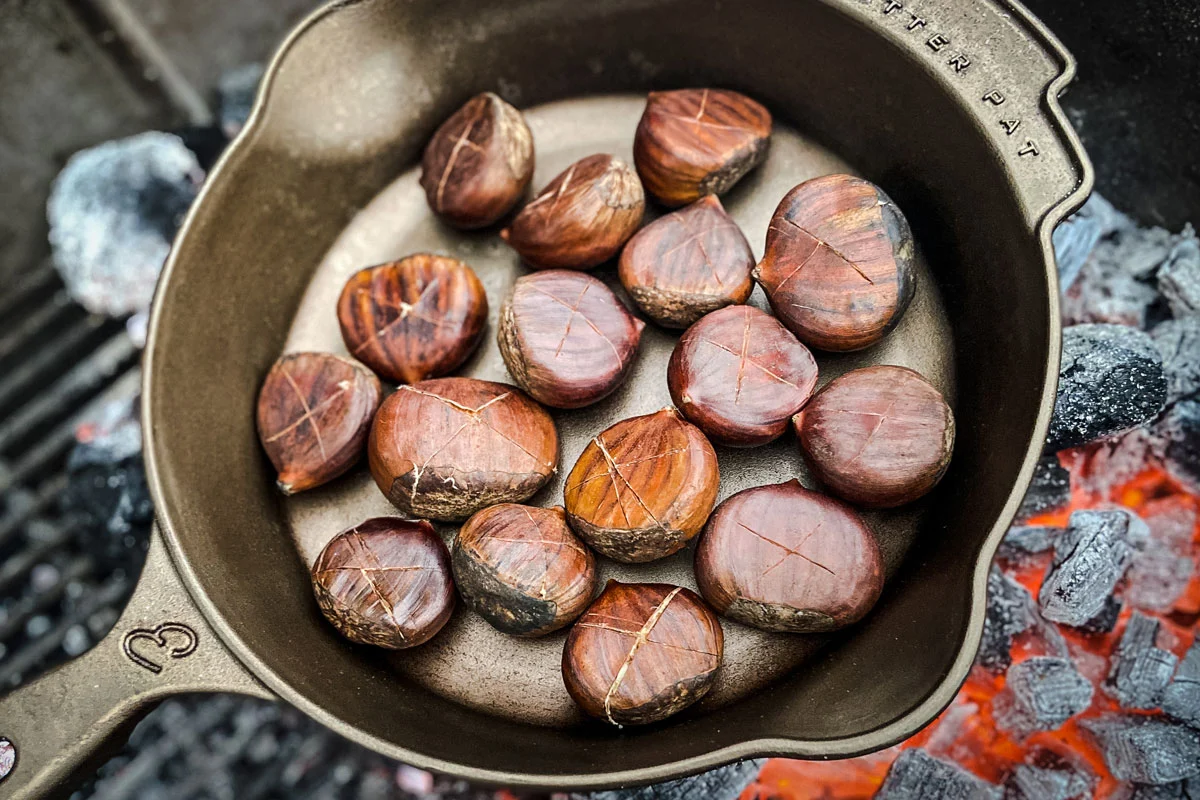
Fresh chestnuts in the shell
These are raw nuts with a hard shell and a papery skin inside. They are usually cooked by roasting or boiling and then peeled. If that is what you have, head to How to Roast Chestnuts or Boiled Chestnuts.
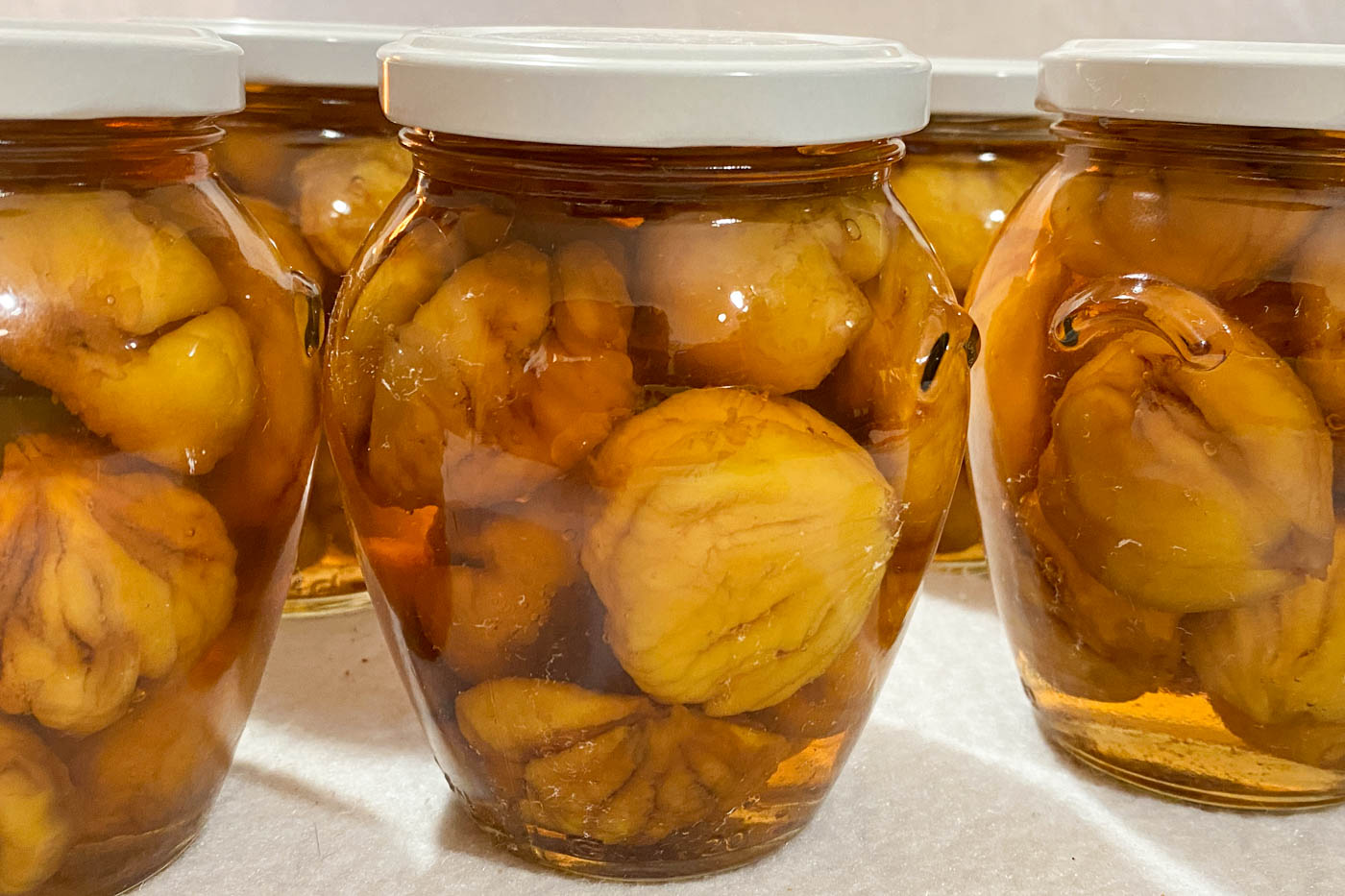
Jarred chestnuts (already cooked)
Jarred chestnuts are typically packed in liquid and are already cooked. You are mostly warming or lightly simmering them, not rehydrating them. For that, see How to Cook Jarred Chestnuts.
Soak and simmer method
This is the most reliable method in my kitchen because it gives you tender chestnuts without turning them mushy. It works for any amount, just keep them fully submerged during the soak and covered with water during the simmer.
What you need
- Dried peeled chestnuts
- Water (enough to cover)
- A saucepan with a lid
- A fine-mesh strainer
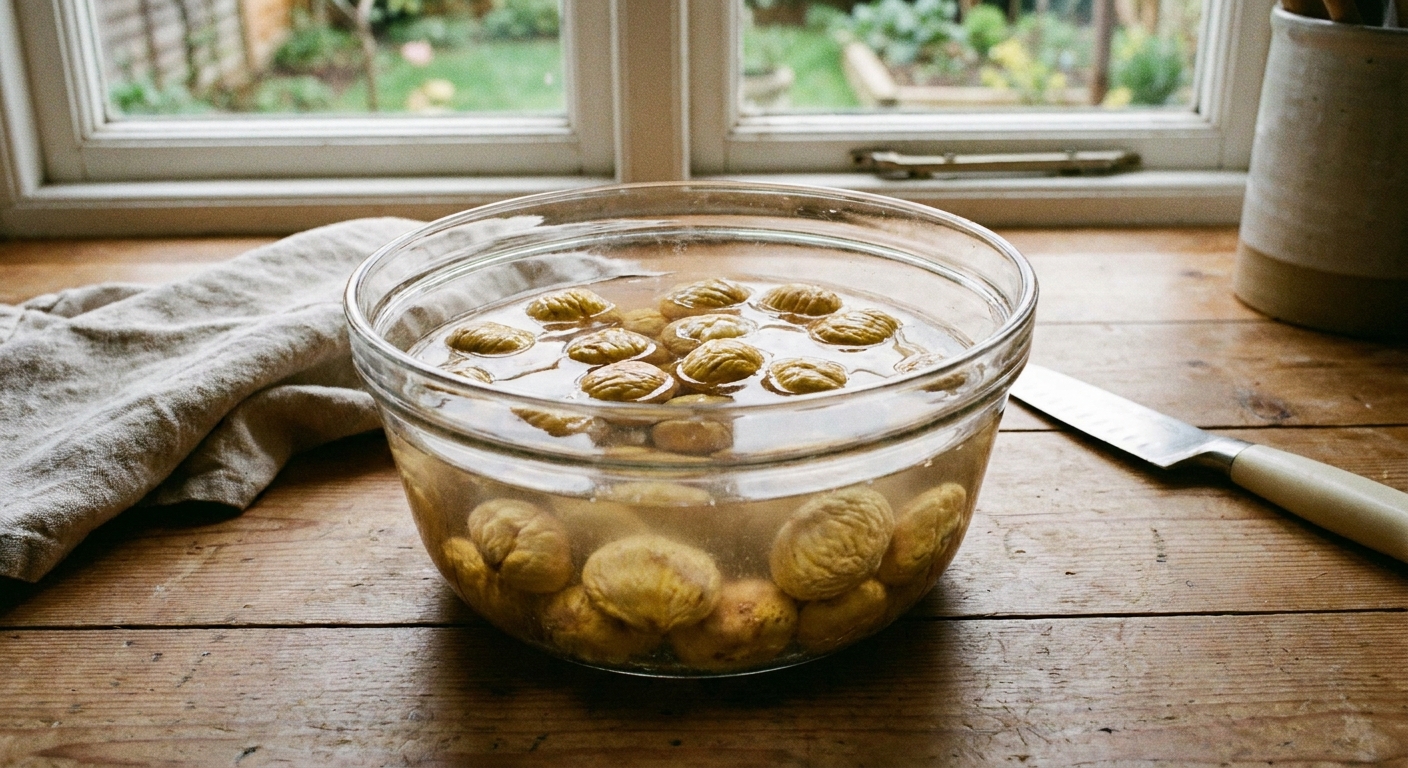
Step 1: Soak
Soak time: 8 to 12 hours (overnight is easiest).
- Place the dried peeled chestnuts in a bowl.
- Cover with plenty of cool water. They will expand, so give them room.
- Soak 8 to 12 hours. If your kitchen runs warm, soak in the fridge, especially for longer soaks.
- Drain and rinse.
If the soak water looks very dark, go ahead and give the chestnuts an extra rinse. You can also refresh the water once during soaking, but it is optional.
Quick-soak option: If you forgot to soak, cover the chestnuts with boiling water and let them sit for 1 hour, then drain. This works in a pinch, but the overnight soak tends to cook more evenly.
Step 2: Simmer until tender
Simmer time: 25 to 45 minutes, depending on the brand, size, and how dry they were to begin with.
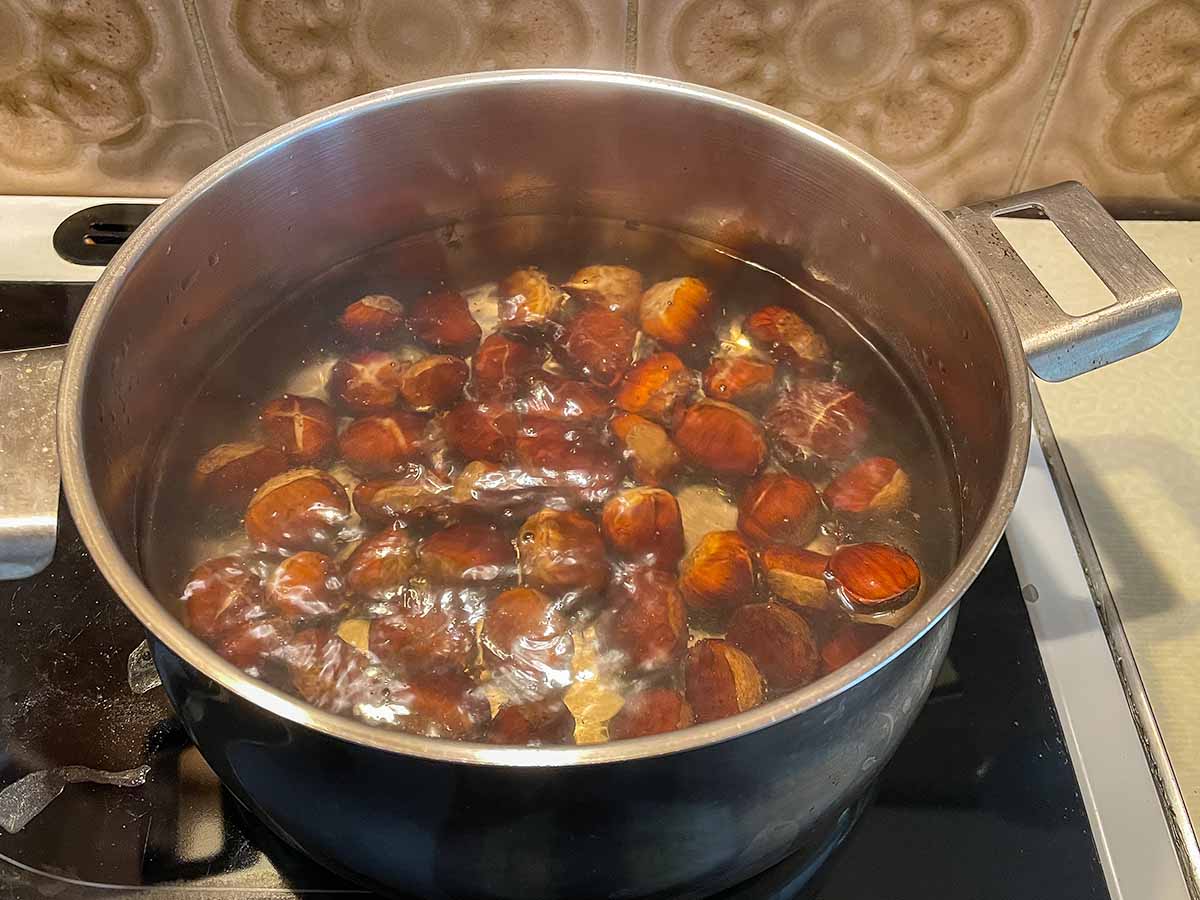
- Add soaked chestnuts to a saucepan and cover with fresh water by about 1 inch.
- Bring to a boil, then immediately reduce to a gentle simmer.
- Partially cover with a lid and simmer 25 to 45 minutes.
- Start checking at 25 minutes. You want them tender all the way through, not crunchy in the center.
- Drain and use as desired.
How to tell they are done: A chestnut should cut easily with a knife and mash smoothly with a fork. If the center is still chalky or firm, simmer 5 to 10 minutes more and test again. Texture note: even when fully tender, dried chestnuts can be a bit more delicate and crumbly than freshly roasted chestnuts, and that is normal.
Optional flavoring: If you are using the chestnuts for a savory dish, you can simmer them with a bay leaf or a smashed garlic clove. For sweeter uses, a strip of citrus peel works nicely. I keep the liquid unsalted either way and season later.
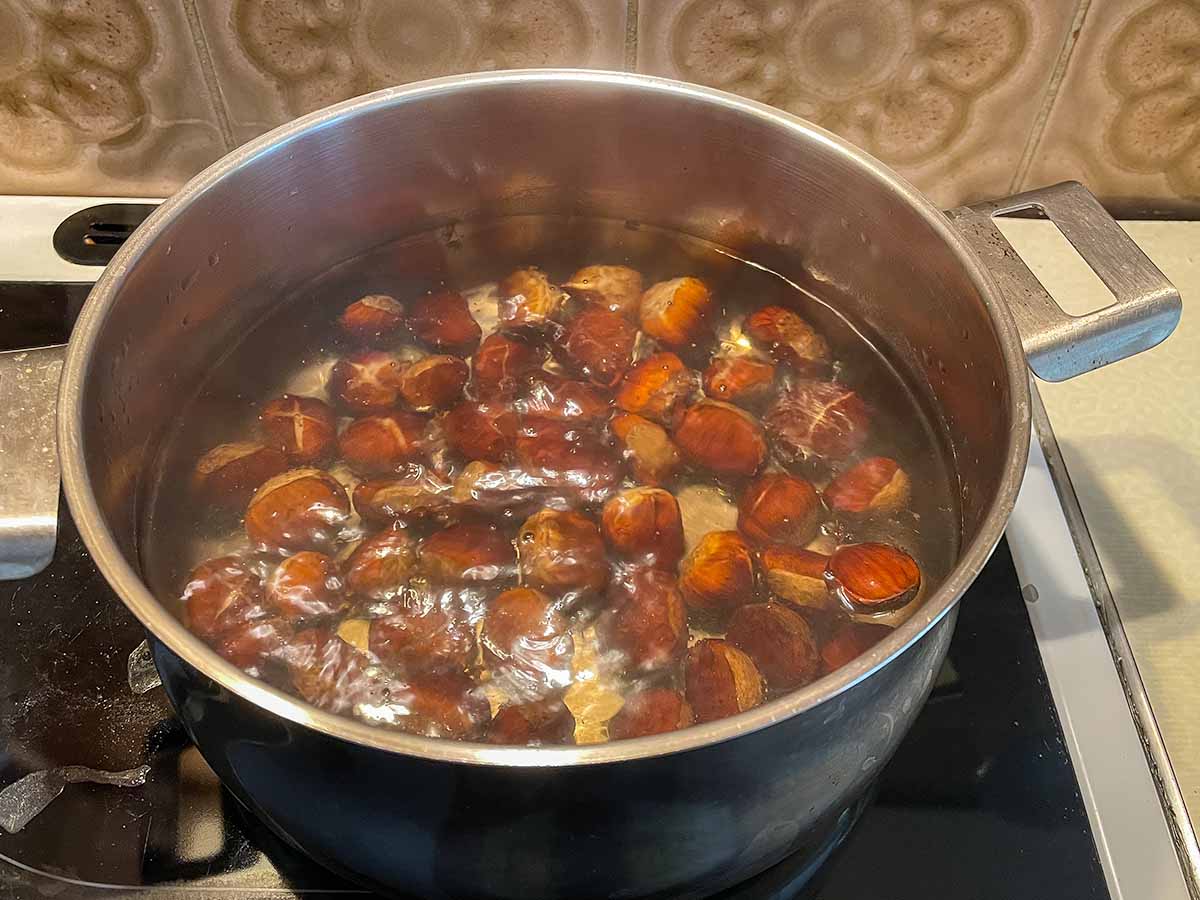
Salt at the end
I know it is tempting to salt the water like pasta water, but with dried chestnuts I prefer adding salt after they are tender. In my experience, salting early can leave the outside tasting seasoned while the center still needs time. Once they are cooked and drained, season them to taste, or let your recipe handle the seasoning.
What to do with cooked dried chestnuts
Once cooked, dried chestnuts are mildly sweet, starchy, and delicate. Here are a few easy ways to use them right away.
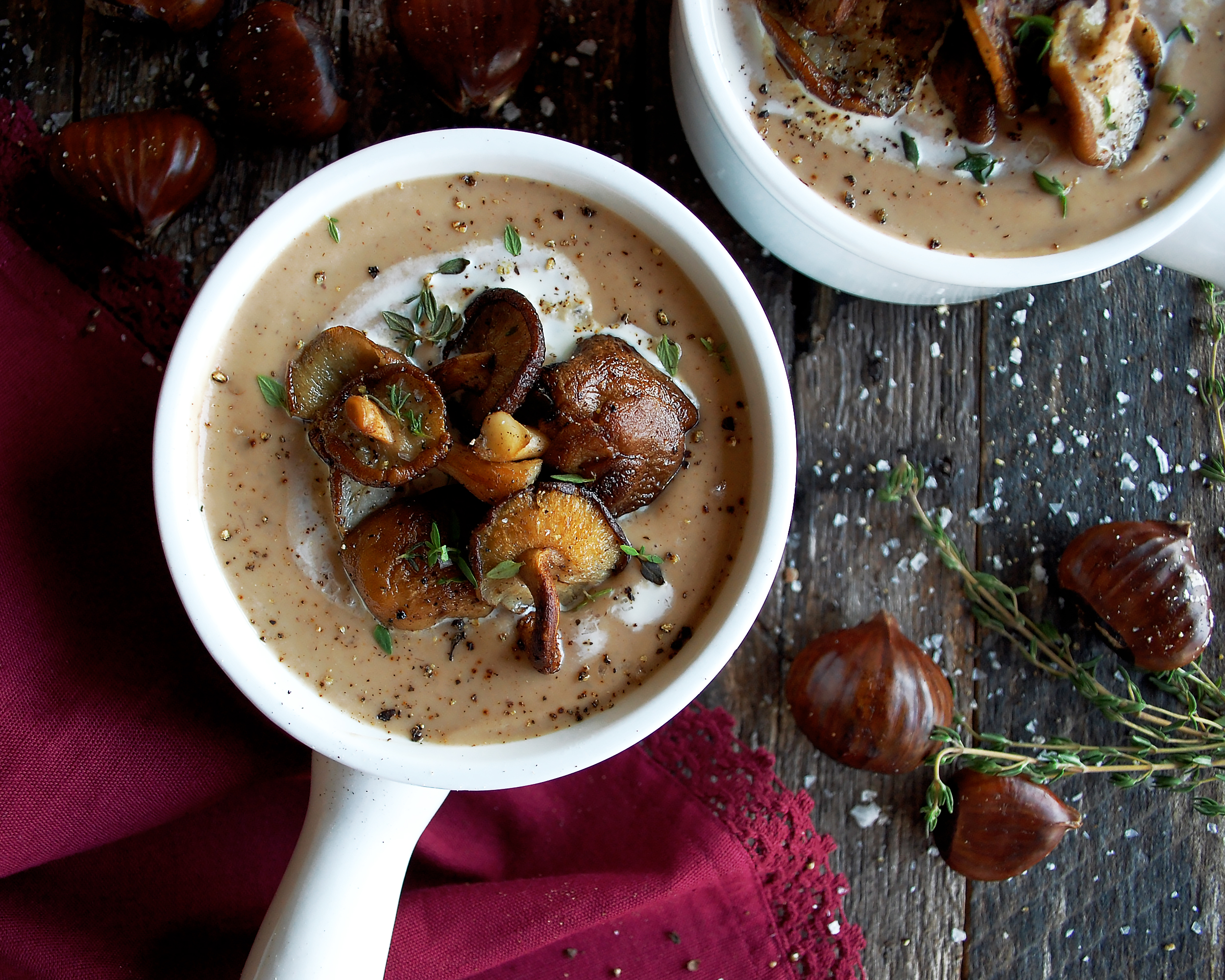
- Soup: Stir into a brothy vegetable soup or a creamy blend. They add body the way potatoes do.
- Stuffing vibes: Chop and fold into stuffing-style mixtures with herbs and sauteed onions.
- Salads and grain bowls: Toss warm chestnuts into couscous, quinoa, or roasted vegetable bowls.
- Dessert: Simmered chestnuts can be sweetened and pureed for fillings and spreads.
If you want meal ideas for busy nights, browse Easy Recipes or Dinner Recipes.
About the simmer liquid: It can be lightly sweet and starchy. I usually discard it, but if you are making soup, you can use a splash as part of the broth.
Troubleshooting
My chestnuts are still hard after simmering
They likely needed more time or a longer soak. Keep simmering in 10-minute increments. If they are older or very dry, they can take closer to 60 minutes.
They turned crumbly or broke apart
They were probably fully tender and simmered a bit too long at too high of a boil. Next time, keep it at a gentle simmer and start checking earlier.
The cooking water looks brown
Normal. Dried chestnuts can tint the water. Drain and rinse if you are serving them on their own.
Storage
Refrigerator: Let cooked chestnuts cool completely, then store in an airtight container for up to 4 days.
Freezer: Freeze cooked chestnuts in a freezer-safe bag or container for up to 3 months. Thaw overnight in the fridge and warm gently with a splash of water or broth.
FAQ
Do I have to soak dried chestnuts?
For the best texture, yes. You can quick-soak, but skipping the soak usually leads to uneven cooking and tough centers.
Can I cook dried chestnuts in broth instead of water?
You can, especially if you plan to use them in a savory dish. Just keep the salt light until the end, since broth can reduce and concentrate.
Are dried chestnuts the same as roasted chestnuts?
No. Roasted chestnuts start as fresh nuts in the shell and are cooked and eaten right away. Dried chestnuts are dehydrated and need soaking and simmering before they are tender.