Delishing
Boiled Chestnuts

When I want chestnuts that are soft enough to puree, easy to chop into stuffing, or simply satisfying to snack on, I boil them. It is a low-stress, weeknight-friendly method that gives you a tender, moist nut without babysitting the oven or worrying about scorched shells.
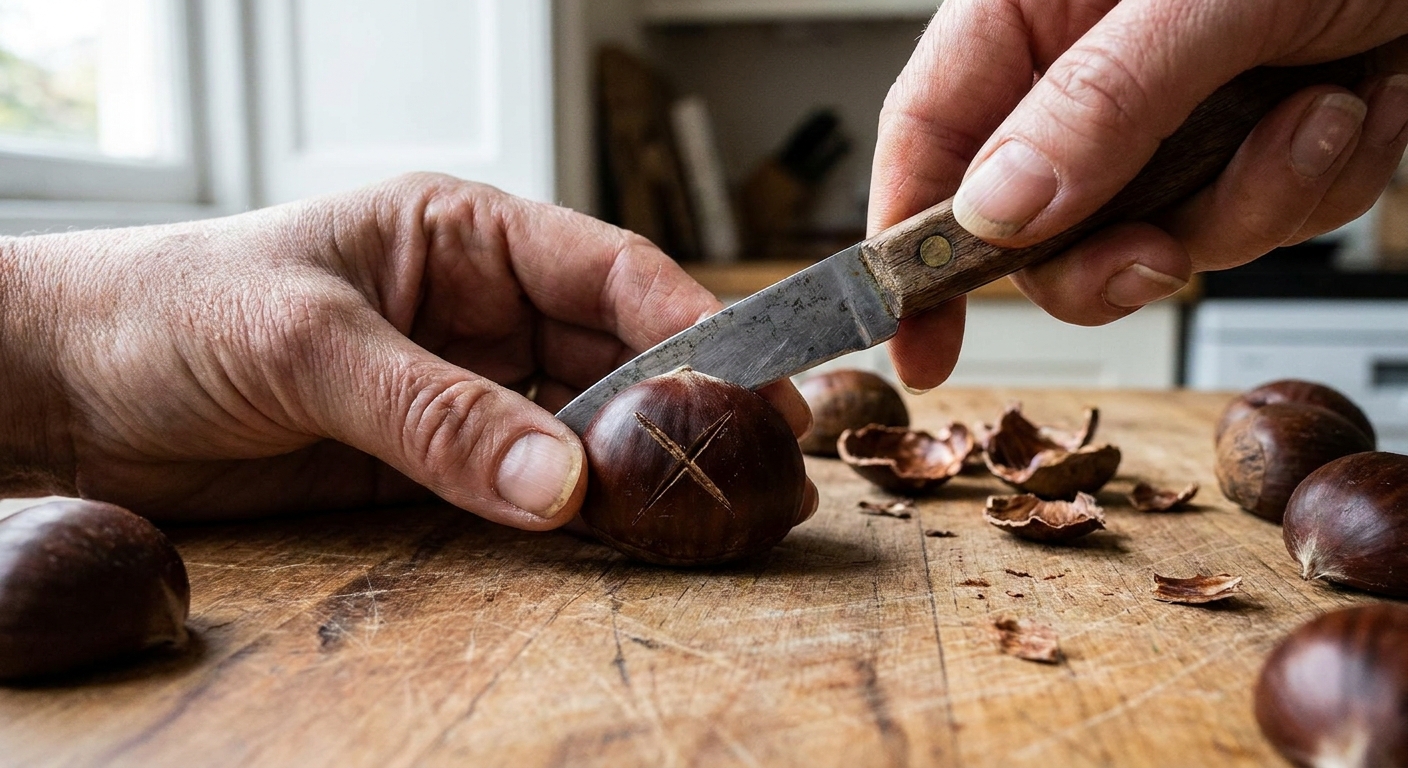
The keys are simple but specific: score the shells so they do not burst in the pot and so they peel more easily, then simmer until tender. Cook time depends on size, but the doneness cue is the same: the shell starts to pull back at the score and a knife tip slides in easily.
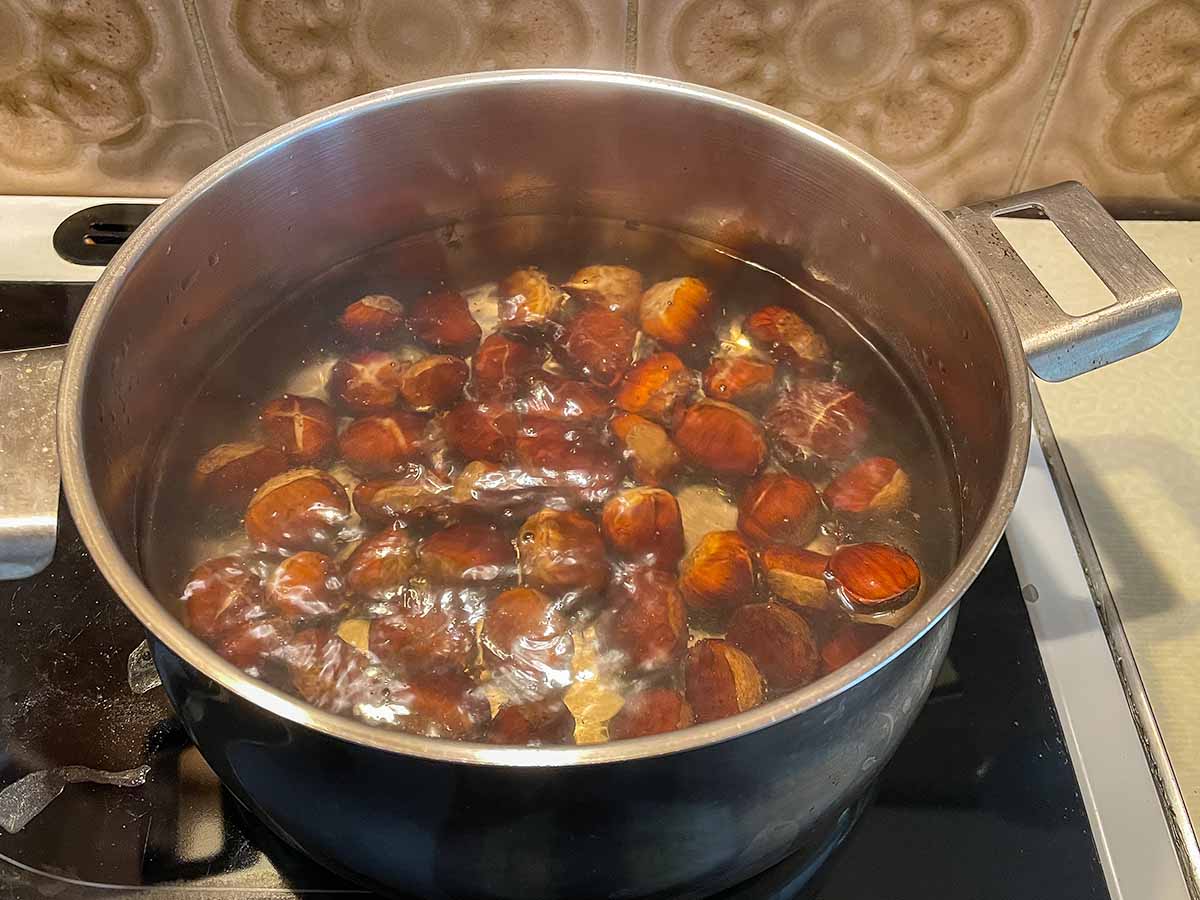
If you are doing a big batch, I sometimes use a very quick ice bath, just long enough to stop carryover cooking. Then I drain well and start peeling right away, before the chestnuts cool down completely. If I need to slow down, I peel in small batches and keep the rest warm so the inner skin stays cooperative.
The goal is tender, buttery chestnuts, and that comes down to gentle simmering, not overcooking, and draining well so they do not sit in hot water.
If you are looking for a dry, roasted chestnut flavor and texture, that is a different method entirely. For that, head over to How to Roast Chestnuts. This page is all about boiling for a softer result that plays well in recipes after peeling.
Why this works
- Scoring prevents blowouts and helps peeling. A clean cut through the shell gives pressure a path and makes it easier to remove both the shell and the papery inner skin.
- Gentle simmer equals tender chestnuts. A steady simmer cooks the nut through without violently jostling them and tearing the cuts wider than needed.
- Timing by size keeps texture on target. Smaller nuts get tender fast, while jumbo chestnuts need a longer simmer to soften for pureeing.
- Peeling warm is not optional. As chestnuts cool, the inner skin clings tight. Warm nuts release much more cleanly.
- An ice bath helps with large batches. It stops carryover cooking quickly so you can peel at your pace and keep the texture tender, not mushy.
Ingredient notes
Fresh chestnuts
Look for chestnuts that feel heavy for their size, with glossy shells and no pinholes or moldy spots. If they rattle when you shake them, they are usually dried out inside and will be tougher to peel.
Water
Plain water works perfectly. You can salt the water if you plan to snack on them, but it is not required for good texture.
Salt (optional)
A small amount seasons the nuts lightly. If you are using the chestnuts in a sweet recipe later, feel free to skip it.
Equipment
- Small sharp paring knife for scoring
- Cutting board (a damp towel under it helps prevent slipping)
- Medium to large pot with lid
- Slotted spoon or spider strainer
- Large bowl for an ice bath (especially for big batches)
- Clean kitchen towel to hold warm chestnuts while peeling
Pro tips
- Score on the flat side. Chestnuts usually have one flatter side and one rounded side. Scoring the flatter side helps stabilize the nut and makes a cleaner cut.
- Cut through the shell, not deep into the nut. You want to pierce the hard outer shell. If you cut too deep, the nut can crumble more when peeled.
- Simmer, do not hard boil. A rolling boil can bang the chestnuts around and make the score split too far, which encourages waterlogging.
- Peel in small batches. Scoop out 6 to 10 chestnuts at a time, wrap them in a towel, and peel while they are hot to warm. Leave the rest in the hot water so they stay peel-friendly.
- For pureeing, cook a touch longer. If your goal is a mashable texture, let the chestnuts go until a knife tip slides in easily with little resistance.
Substitutes
- No fresh chestnuts? Vacuum-packed cooked chestnuts are the closest shortcut for recipes. They are already peeled and soft. Canned chestnuts can work in purees, but they tend to be softer and sometimes slightly metallic tasting.
- No ice? Run cold water in a large bowl and refresh it a couple of times. It is not as fast as a true ice bath, but it still slows cooking.
Variations
- Lightly salted snack chestnuts: Salt the cooking water, then toss peeled warm chestnuts with a pinch of flaky salt.
- Herb-scented boiling liquid: Add a bay leaf and a few thyme sprigs to the water for a subtle savory aroma, especially nice if you plan to chop them into stuffing.
- Softer for puree: Simmer until very tender, then peel and puree while still slightly warm for the smoothest result.
Serving ideas
- Eat plain: Warm, peeled chestnuts with a pinch of salt.
- Chop and fold into sides: Add to sautéed mushrooms, rice, or roasted vegetables for a sweet, nutty bite.
- Blend into soups: Puree with broth for a naturally creamy texture.
- Add to salads: Rough-chop and toss into a fall salad with apples and greens.
If you are building a cozy dinner spread, chestnuts pair beautifully with simple roast-style mains like Roast Chicken with Lemon Thyme.
Storage
Peeled boiled chestnuts
- Refrigerator: Store peeled chestnuts in an airtight container for up to 4 days. If they seem dry, add a barely damp paper towel to the container.
- Freezer: Freeze peeled chestnuts in a zip-top bag with the air pressed out for up to 3 months. Thaw in the fridge overnight.
Unpeeled boiled chestnuts
I do not recommend storing them unpeeled. Once cooked, they become harder to peel as they cool and sit.
Common mistakes
- Not scoring deeply enough: If you only scratch the surface, steam and water cannot get in properly, and the shell and inner skin will cling like glue.
- Boiling too aggressively: A hard boil can make chestnuts waterlog and split unevenly. Keep it at a steady simmer.
- Trying to peel them cold: This is the number one frustration point. Peel while warm, and keep the rest hot in the pot.
- Overcooking a small batch: Tiny chestnuts can turn pasty if simmered too long. Start checking early and pull them when they are just tender.
- Skipping the ice bath for big batches: When you cook a lot at once, the chestnuts keep steaming in their shells. A quick chill helps lock in a better texture.
FAQ
Do I really have to score chestnuts before boiling?
Yes. Scoring helps them cook evenly and makes peeling possible. It also reduces the chance that a chestnut pops open messily in the pot.
How do I know when boiled chestnuts are done?
The shell will start to curl back at the score, and a paring knife tip should slide into the nut easily. For chopping, you want tender but not falling apart. For pureeing, cook until very soft.
Why are my chestnuts hard and dry inside?
They were likely older and dehydrated before cooking. Fresh chestnuts feel heavy and do not rattle. Also make sure you simmer long enough for the size you have.
Why is the inner skin sticking so badly?
This usually happens when chestnuts cool down before peeling, or when the score was too shallow. Keep cooked chestnuts warm and peel in small batches.
Can I boil chestnuts ahead of time for a recipe?
Yes. Peel them, cool completely, then refrigerate in an airtight container. If you are pureeing, you can puree first and refrigerate the puree.
Boiled chestnuts are soft, sweet, and easy to use in recipes once peeled. This method focuses on proper scoring, simmer timing by size, and peeling while warm. An optional ice bath is included for large batches to stop cooking quickly.
Prep Time: 10 minutes
Cook Time: 15 to 35 minutes
Total Time: 25 to 45 minutes
Servings: About 4 (from 1 pound, peeled yield varies)
- 1 pound fresh chestnuts
- Water, enough to cover chestnuts by 1 to 2 inches
- 1 teaspoon kosher salt (optional)
- Ice and cold water, for an ice bath (optional, recommended for large batches)
- Rinse and sort. Rinse the chestnuts. Discard any with mold, pinholes, or a strong off smell.
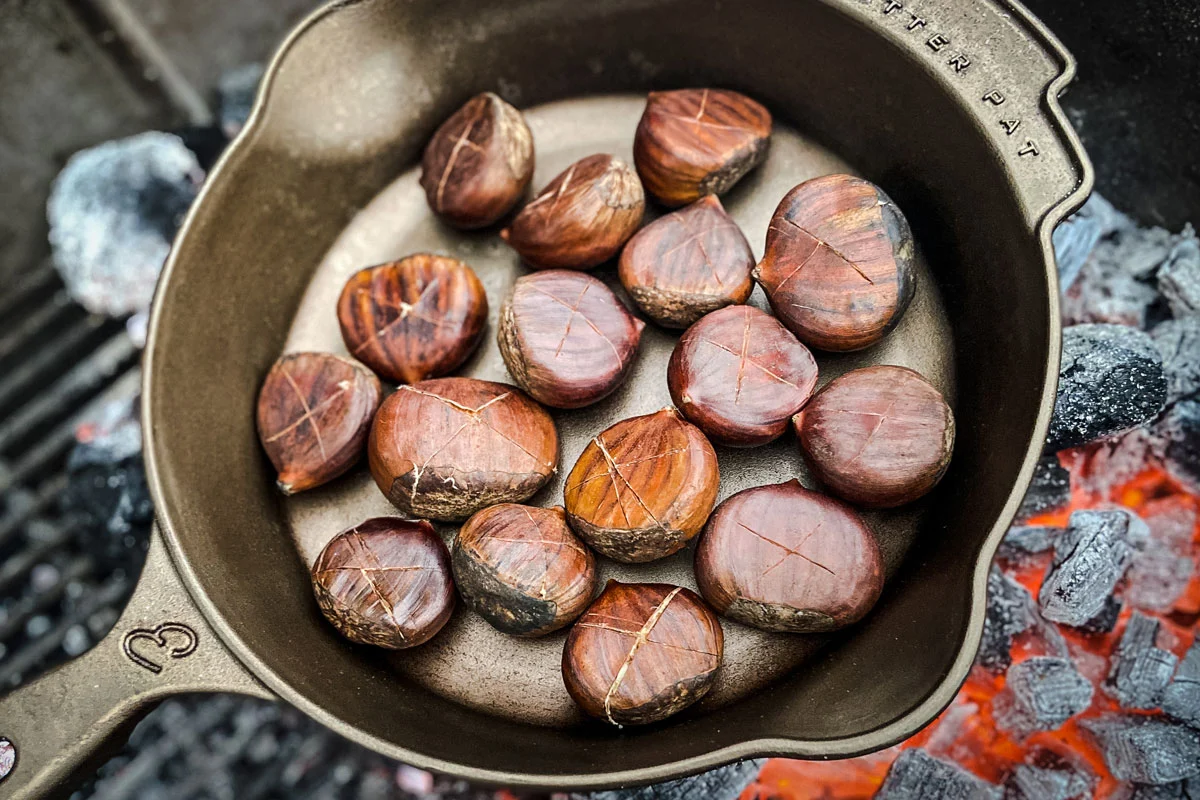
- Score the shells. On the flat side of each chestnut, use a sharp paring knife to cut a large X through the shell. Aim to pierce the shell cleanly without cutting deeply into the nut.
- Start the pot. Add scored chestnuts to a medium or large pot and cover with water by 1 to 2 inches. Add salt if using. Bring to a boil over high heat.
- Simmer gently. Reduce heat to maintain a steady simmer (not a violent boil) and partially cover with a lid.
- Cook by size, checking early. Simmer until chestnuts are tender and the shell begins to pull back at the score, using these time ranges as a guide:
- Small: 15 to 20 minutes
- Medium: 20 to 25 minutes
- Large: 25 to 30 minutes
- Jumbo: 30 to 35 minutes
- Optional ice bath for a large batch. If you are cooking a lot and want to stop the cooking quickly, drain the chestnuts and immediately transfer them to an ice bath for 1 minute, then drain well.
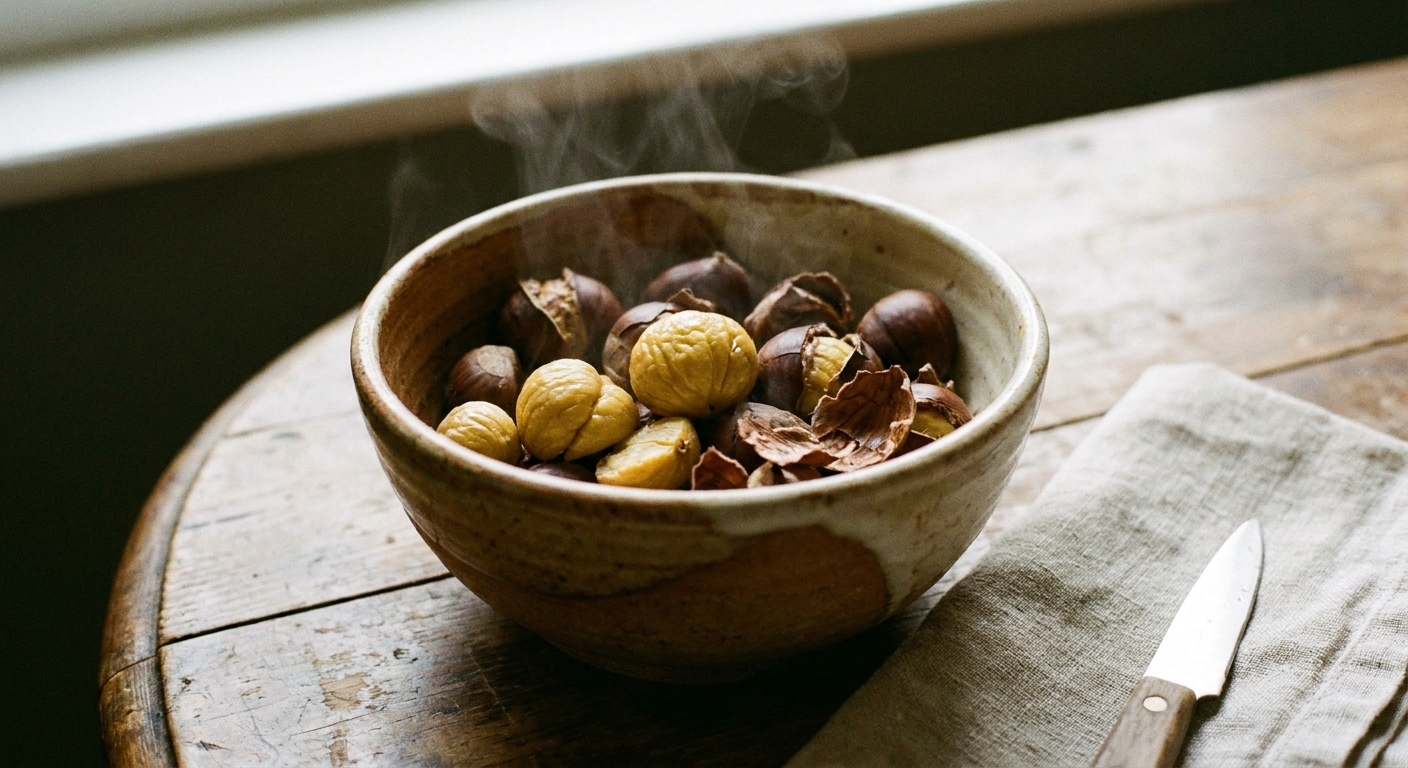
- Peel while warm. Scoop out 6 to 10 chestnuts at a time (or keep the rest warm in the pot if you did not ice-bath). Wrap the warm chestnuts in a clean towel for a minute, then peel off the shell and remove the papery inner skin. Work while they are hot to warm for the easiest peeling.
- Use or cool. Eat warm, chop for recipes, or let peeled chestnuts cool completely before refrigerating or freezing.
- Peeling strategy that saves sanity: If peeling gets difficult, your chestnuts are cooling. Re-warm them by dipping in hot water for 30 to 60 seconds, then continue.
- Yield note: The peeled amount varies a lot depending on size and freshness. If you need a precise amount for a recipe, buy extra.
- Texture target: Boiled chestnuts are naturally softer than roasted. That is ideal for purees and chopping into dishes, and still great for snacking if you like a tender bite.