Delishing
Instant Pot Chestnuts

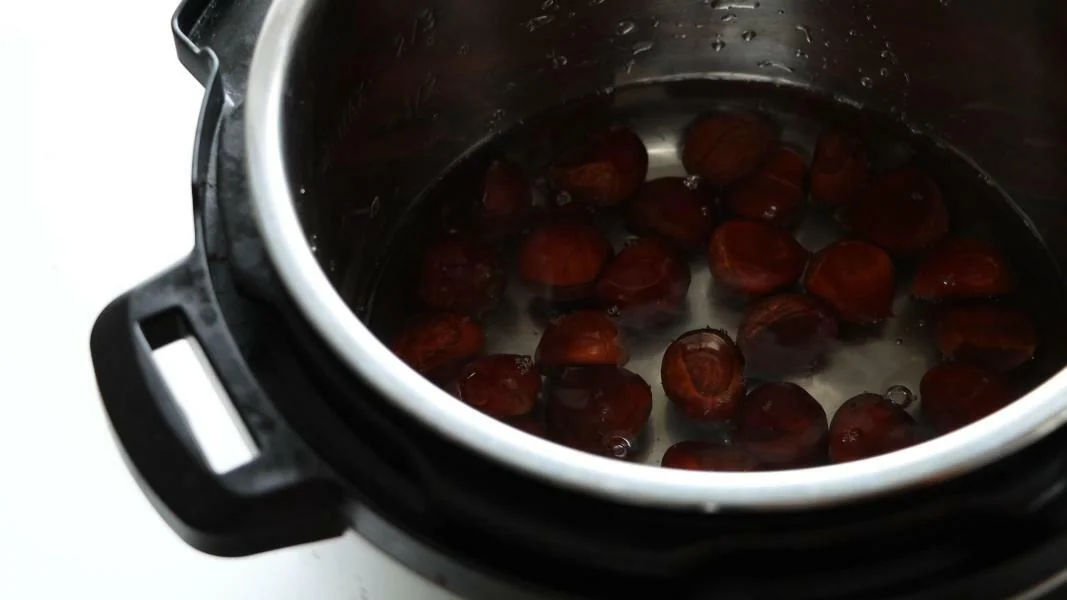
If you love the cozy flavor of chestnuts but hate the peeling part, the Instant Pot is your new best friend. This method is all about easy peeling, not a crisp roasted shell or toasty crunch. You get tender chestnuts with that naturally sweet, earthy taste, ready for tossing into stuffing, blending into soup, or snacking straight from the bowl.
This guide is for fresh, in-shell sweet chestnuts (the kind you score). If you are ever unsure what you are looking at, it is worth brushing up on horse chestnuts vs sweet chestnuts before cooking.
I started making chestnuts in the pressure cooker after one too many “I’ll just roast these quickly” weeknights turned into a stubborn peeling session. Pressure cooking won me over because it often loosens the shell and inner skin, especially when the chestnuts are fresh, properly scored, and you peel them while they are still warm.
If you are looking for a more classic roasted flavor and drier texture, head over to How To Roast Chestnuts. If you want other quick methods for weeknights, my Microwave Chestnuts and Boiled Chestnuts guides are great backups.
What to expect
- Texture: tender and moist, perfect for recipes
- Flavor: sweet and nutty, but less toasted than roasting
- Peeling: easiest when peeled warm, right after cooking
- Best use: stuffing, soups, purees, baking, or casual snacking
- Peeling success depends on: freshness, a deep score, and peeling while warm
Safety note on scoring
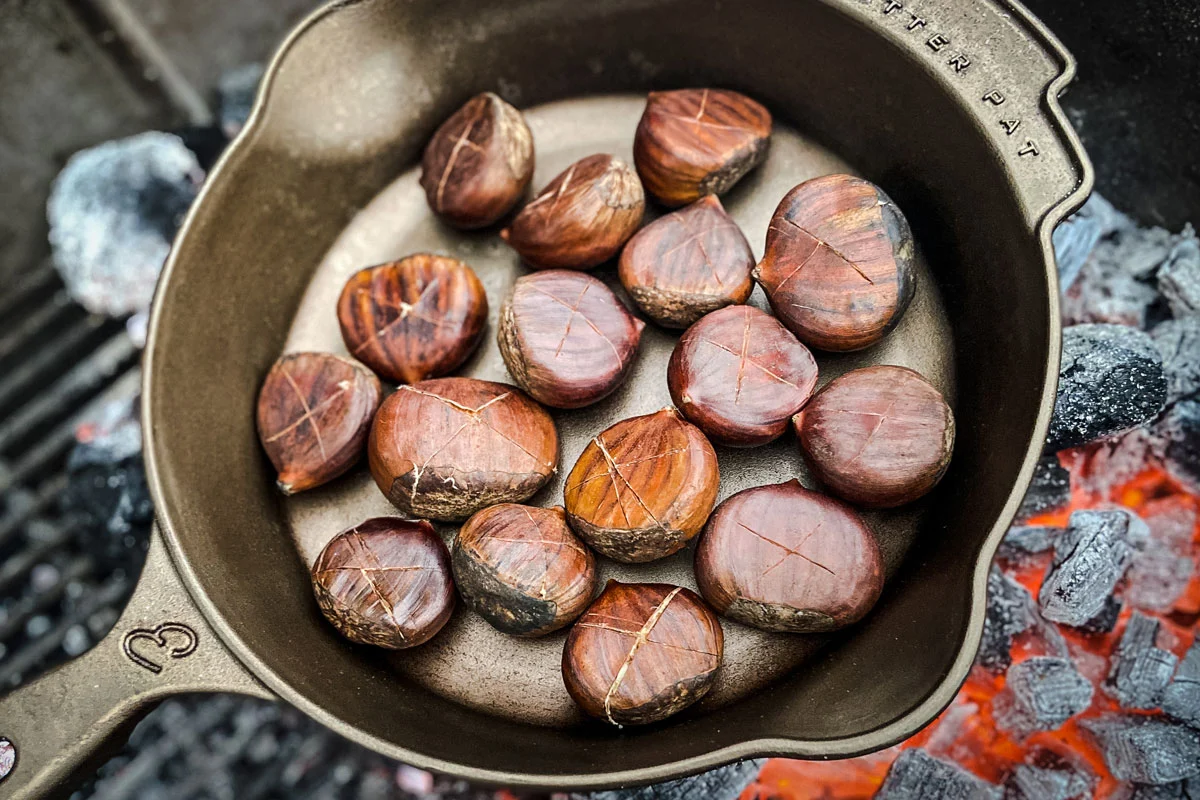
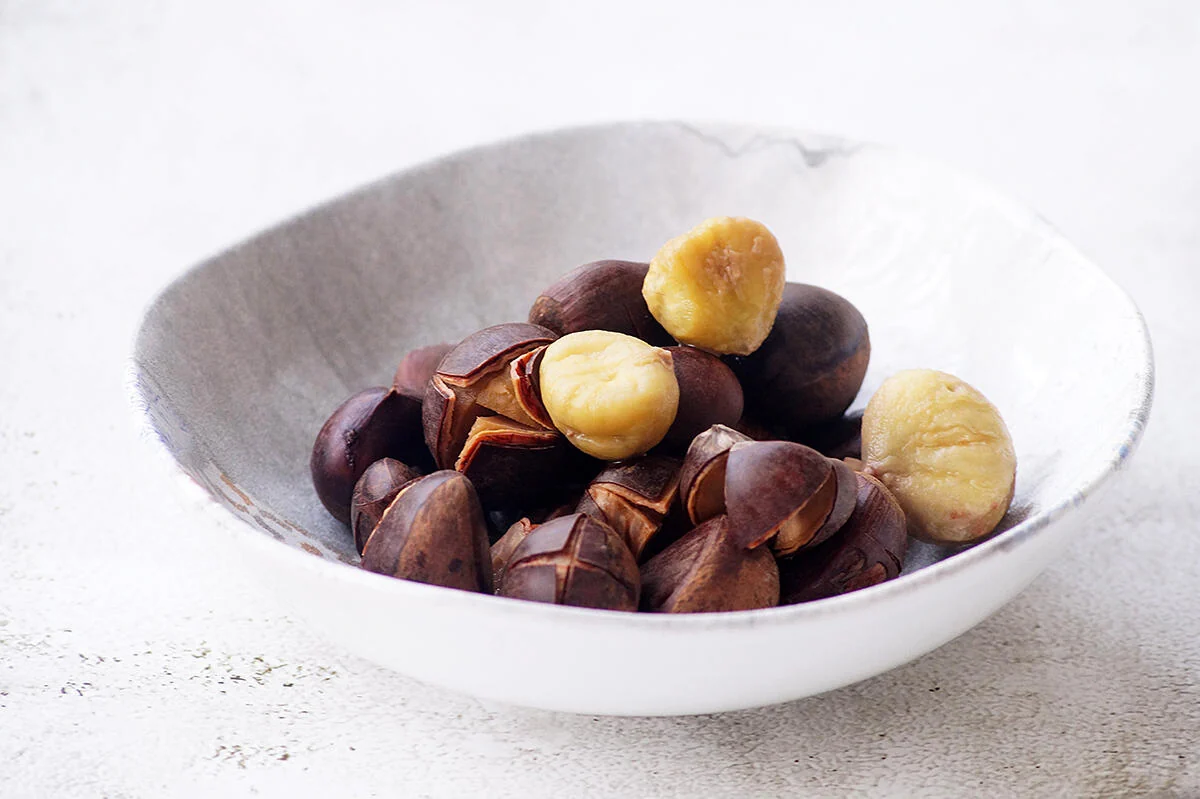
Score fresh, in-shell chestnuts before cooking them. A simple, deep X through the shell gives steam a place to escape and also helps the shell and inner skin release later. I like using a small serrated knife and working on a kitchen towel to keep the nut from slipping.
Why this works
- Steam does the hard part: Pressure cooking forces hot steam into the scored shell, loosening the shell and the papery inner skin.
- Trivet setup: Keeping the chestnuts above the water prevents waterlogging and helps them cook evenly.
- Quick release timing: Releasing pressure promptly helps you peel while the chestnuts are still hot and cooperative.
- Warm peel strategy: Chestnuts become dramatically harder to peel as they cool. This method is built around peeling right away.
Ingredient notes
Fresh chestnuts
Buy chestnuts that feel heavy for their size with glossy shells and no rattling. If they feel light or you hear a hollow rattle, they are likely dried out, which makes peeling harder.
If you are unsure what to look for, my guide on how to buy fresh chestnuts is the checklist I use at the store.
Water
You only need a small amount to create steam. Think “steam generator,” not “boil.” This recipe uses 1 cup, which is enough for most 6-quart Instant Pots to come to pressure reliably.
Optional: pinch of salt
Not required, but a pinch of salt in the water can lightly season the chestnuts and makes them taste a bit more rounded if you plan to snack.
Equipment
- Instant Pot or similar electric pressure cooker
- Metal trivet or steamer rack that fits your cooker
- Small sharp knife or serrated paring knife for scoring
- Kitchen towel (helps grip and keeps chestnuts steady while scoring)
- Bowl and a clean towel to keep cooked chestnuts warm while you peel
Pro tips
- Score deeper than you think: You want to cut through the shell, not just scratch it. A confident X makes peeling easier.
- Do not overload: Chestnuts can be stacked, but for the easiest peel, keep to a single, loose layer when possible so steam circulates.
- Peel in batches: Keep the rest covered with a towel while you peel a handful. Warm chestnuts peel, cool chestnuts fight back.
- Use gloves if you need to: They are hot right after quick release. Thin food-safe gloves or a clean kitchen towel helps.
- Stuck inner skin? Dip the chestnut briefly in the hot cooking water, then try again while it is still hot and steamy.
Substitutes
- Frozen chestnuts: If they are already peeled, you can pressure-cook on the trivet for 1 minute with quick release just to heat through. If they are unpeeled, peeling results vary and cook time can be inconsistent.
- Jarred chestnuts: These are usually already cooked and peeled. For best handling, use my how to cook jarred chestnuts guide instead of pressure cooking.
- Dried chestnuts: They need rehydration first. See how to cook dried chestnuts.
Variations
- Extra-tender for puree: Add 1 additional minute at high pressure if your chestnuts are large and you want them very soft for blending.
- Lightly sweet: Stir 1 teaspoon of sugar into the water for subtly sweeter chestnuts (nice for desserts).
- Warm spice vibe: Add a small cinnamon stick to the water for a gentle aroma. The flavor is mild but cozy.
Serving ideas
- Holiday prep: Chop and fold into chestnut stuffing.
- Soup night: Blend into chestnut soup for instant creamy body.
- Smooth puree: Turn them into chestnut puree for desserts or savory sides.
- Simple snack: Toss warm peeled chestnuts with a little butter and flaky salt.
Storage
Refrigerator
Store peeled chestnuts in an airtight container for up to 4 days.
Freezer
Peeled chestnuts freeze well. Cool completely, freeze in a single layer on a tray, then transfer to a freezer bag and freeze for up to 3 months.
Reheating
Warm gently in the microwave in short bursts or simmer briefly in a small amount of water. Avoid blasting them too long or they can turn tough at the edges.
Common mistakes (and how to fix them)
- Not scoring, or scoring too shallow: The shells will cling. Score a clear X through the shell before cooking.
- Letting them cool before peeling: This is the big one. Peel while warm, keeping the rest covered so they stay hot.
- Expecting a roasted crust: Pressure cooking gives tender chestnuts, not a toasted exterior. For that, use Air Fryer Chestnuts or roasting.
- Cooking too long: If they are very soft and crumbly, reduce cook time by 1 minute next batch.
- Chestnuts taste dry or woody: They were likely old or dehydrated. Next time, choose heavier nuts and store properly. My how to store fresh chestnuts guide helps a lot.
FAQ
How long do you pressure cook chestnuts in the Instant Pot?
For fresh chestnuts, I get the best peelable, tender results at 6 minutes on High Pressure, followed by a quick release.
Should I natural release or quick release?
Quick release works best for peeling because it gets you to the “peel while warm” window faster. A long natural release lets the chestnuts cool down and the inner skin tends to cling.
Do I have to use a trivet?
Yes, I strongly recommend it. Chestnuts sitting in water can cook unevenly and get waterlogged. The trivet keeps them steaming, not boiling.
Why are some still hard after cooking?
Usually it is one of three things: the chestnuts are very large, they were dried out to begin with, or the cooker did not fully come to pressure. Put them back in for 1 to 2 minutes at High Pressure with quick release.
Can I eat chestnuts raw?
Chestnuts are typically eaten cooked. If you are curious about safety and texture, see Can You Eat Chestnuts Raw?
Recipe
Instant Pot Chestnuts made for maximum easy peeling. Pressure-cooked on a trivet with water, then peeled warm for the smoothest results.
Prep Time: 10 minutes
Cook Time: 6 minutes (plus time to come to pressure)
Total Time: about 25 minutes
Servings: about 4 (as a snack)
- 1 pound fresh chestnuts
- 1 cup water
- Pinch of salt (optional)
- Score the chestnuts. Using a small sharp knife, cut a deep X on the flat side of each chestnut, cutting through the shell. (Take your time and use a kitchen towel to help grip if needed.)
- Add water and trivet. Pour 1 cup water (and a pinch of salt, if using) into the Instant Pot insert. Place the trivet inside.
- Load the chestnuts. Add the scored chestnuts on top of the trivet. They can be in a loose pile, but do not pack them tightly.
- Pressure cook. Lock the lid and set the valve to Sealing. Cook on High Pressure for 6 minutes.
- Quick release. When the cook time is up, carefully perform a quick release. When the float valve drops, open the lid.
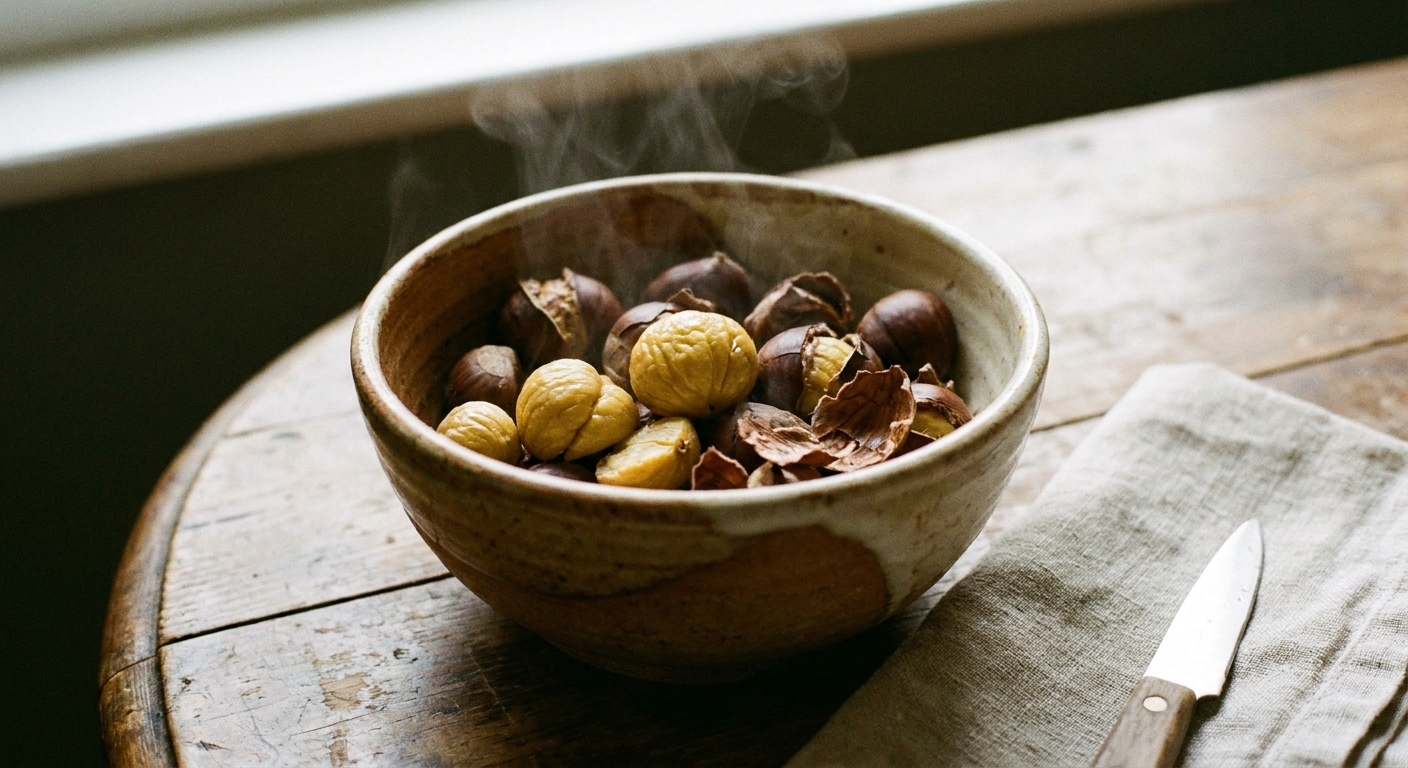
- Peel while warm. Transfer chestnuts to a bowl and cover with a clean towel to hold heat. Peel as soon as you can comfortably handle them, removing both the outer shell and the papery inner skin.
- Serve or use in recipes. Enjoy warm as a snack, or cool completely before chopping for stuffing, soup, or puree.
Note: Peeling is easiest when the chestnuts are still warm. If you get interrupted, re-warm stubborn-to-peel chestnuts by dipping them briefly in the hot cooking liquid, then peel again.