Delishing
Chestnut Tart

Chestnut tart is my idea of a quietly impressive dessert. It looks bakery-level, but it is built on two very manageable wins: a crisp, blind-baked pastry shell and a chestnut filling that bakes up thick, smooth, and sliceable. No tricky water baths. No wobble anxiety. Just a warm, nutty, lightly sweet filling that sets like a soft ganache-meets-frangipane vibe.
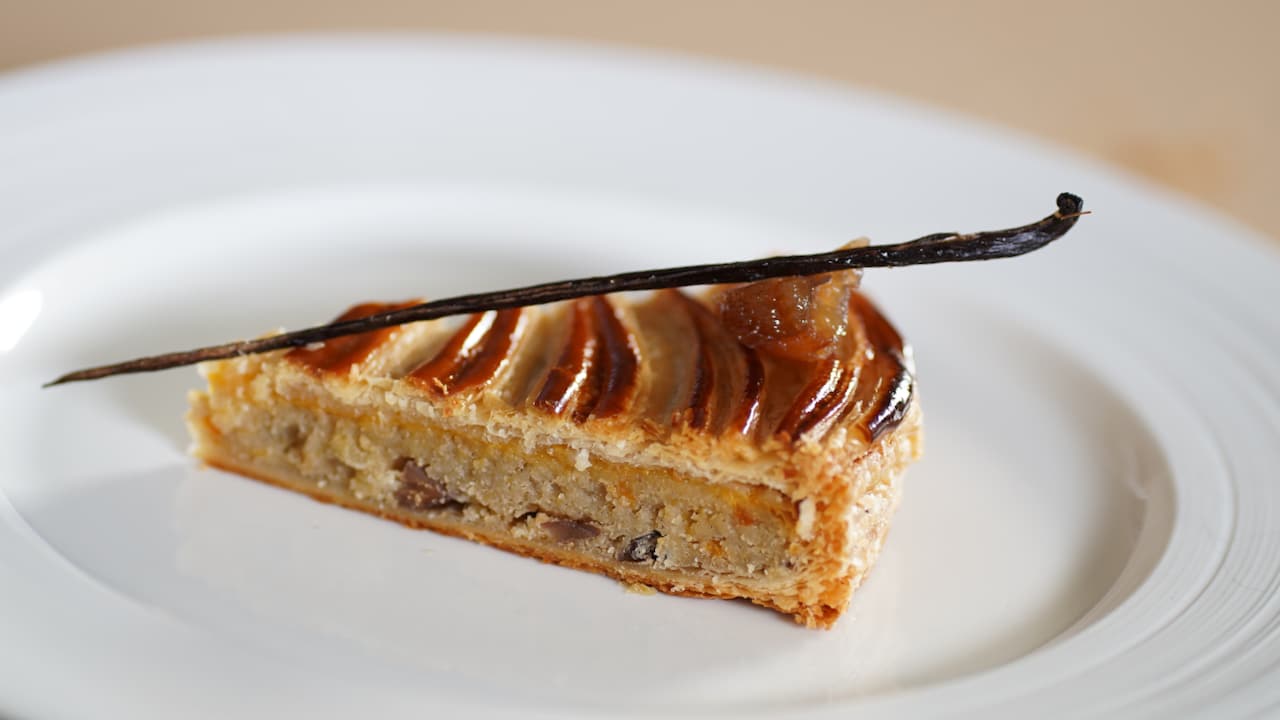
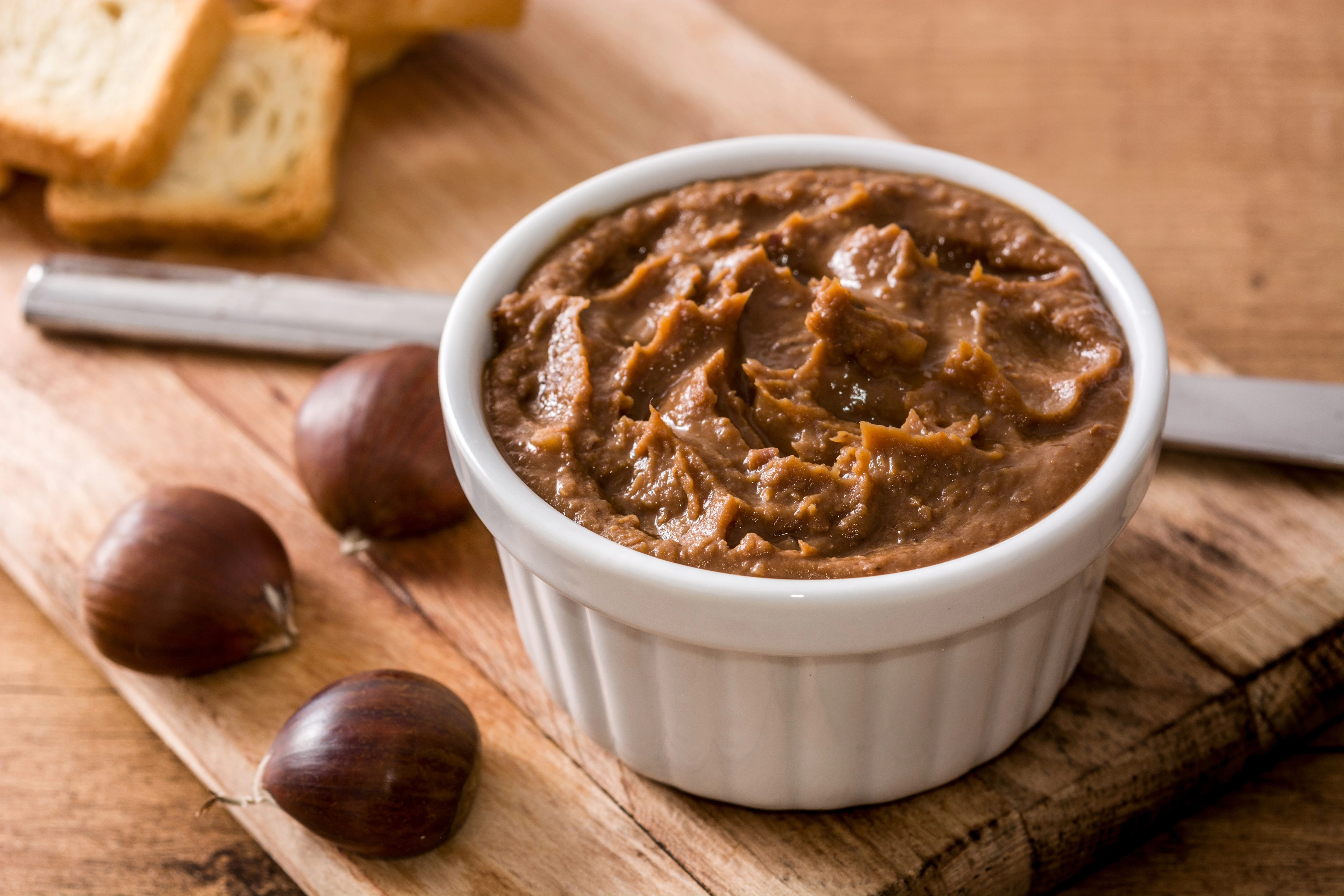
If you have ever roasted fresh chestnuts and then wondered what to do with them besides snacking, this tart is the answer. You can use homemade chestnut puree or make life easy with jarred chestnut spread. Either way, I will walk you through blind baking, how the filling sets, bake time, doneness cues, and the simplest way to slice it neatly.
Here is the quick timing snapshot so you can plan: the crust blind-bakes for about 25 to 28 minutes total, then the filled tart bakes for 28 to 35 minutes at a slightly lower temperature. The hardest part is the patience window, because it really does need a full cool to slice clean.
If you need a refresher on prepping whole nuts, start with our guide to how to roast chestnuts before you bake.
What makes this tart different
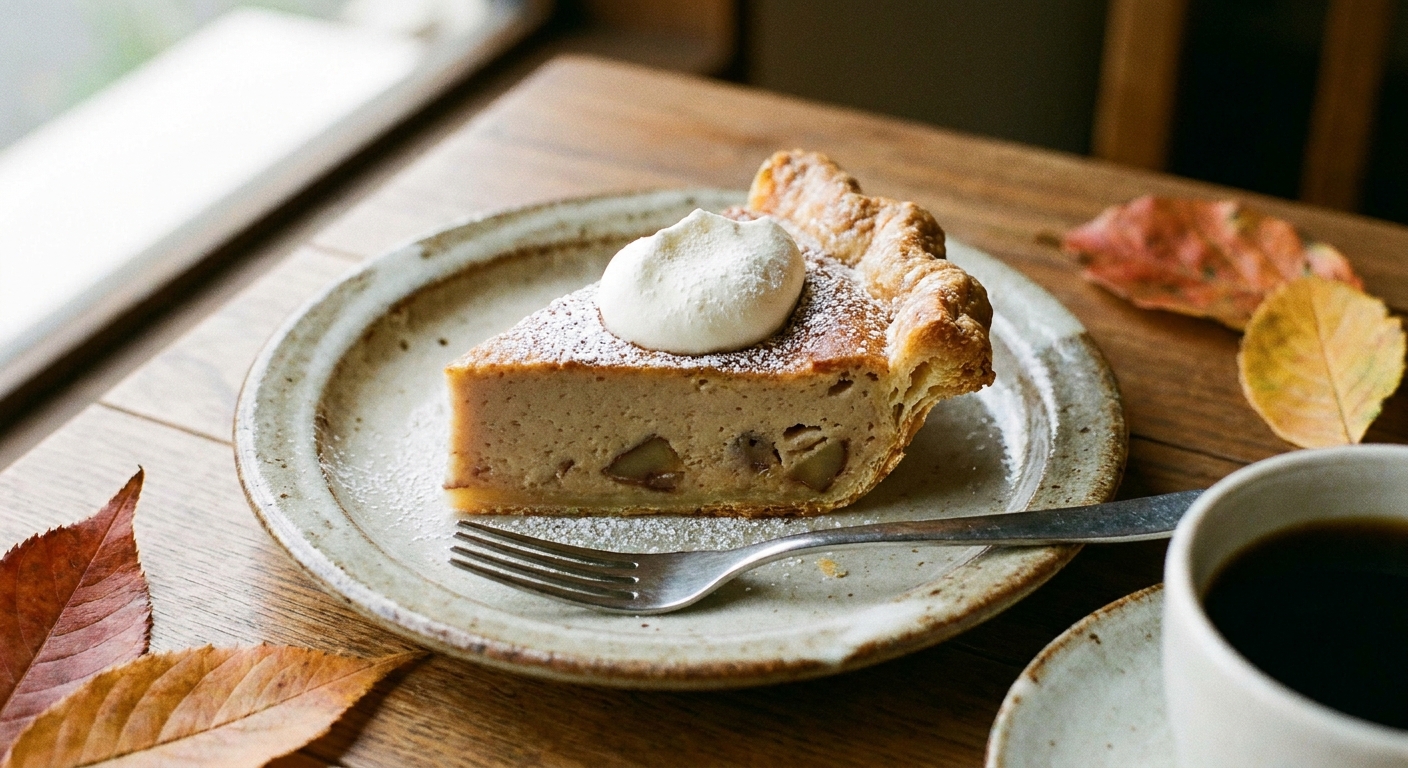
Think of this as a pastry tart with a thick chestnut filling that sets from a combination of eggs, dairy, and chestnut solids. It bakes into a cohesive slice rather than a jiggly pie. The flavor is gently sweet, earthy, and a little vanilla-forward, with a buttery shell that keeps each bite from feeling heavy.
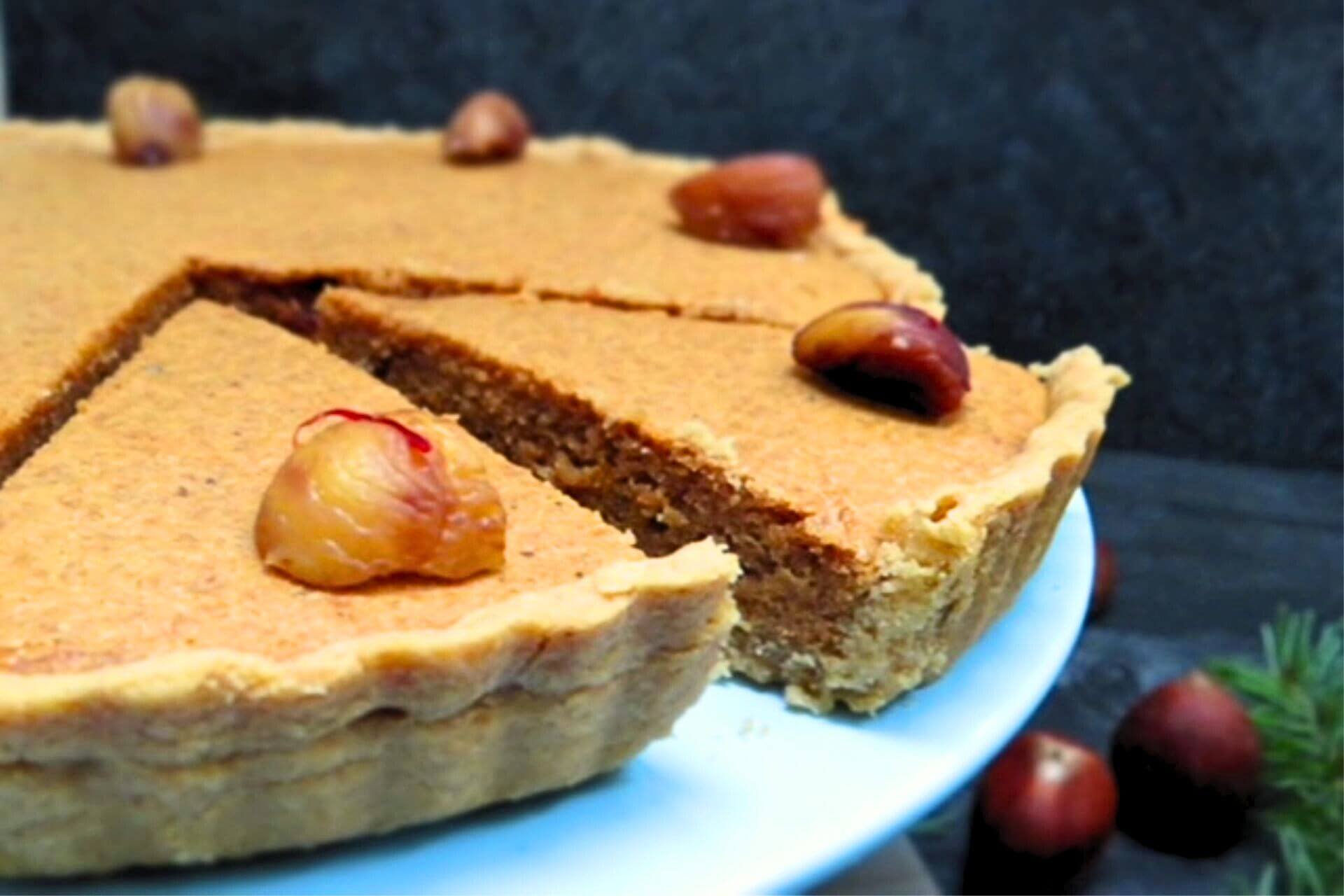
How the filling sets
Chestnuts are naturally starchy, and chestnut puree is thick on its own. In the oven, the eggs coagulate and the starches tighten, turning the filling from a spoonable batter into a soft, dense set. That means two things for you:
- It can look done before it is fully set. The top may look matte while the center still needs a few minutes.
- It finishes setting as it cools. You want the tart to cool completely before slicing for the cleanest edges.
Blind baking in plain English
Blind baking simply means baking the crust before adding the filling. This tart needs it because the filling is thick and insulating, and an unbaked crust can stay pale or soggy.
You will partially bake the crust with weights to keep the bottom flat, then finish a short bake without weights so the base turns lightly golden. That extra step is what makes the shell crisp enough to slice cleanly.
Doneness cues
Ovens vary, so I use a couple of cues at once:
- Edges are set. The outer 1 to 2 inches should look firm and slightly puffed.
- Center passes the gentle shake test. The center should move just a little, like a soft set gel, not ripple like liquid.
- Top looks matte. A glossy wet sheen usually means it needs more time.
- A thin knife check works. A paring knife inserted about 1 inch from center should come out mostly clean with a bit of creamy residue, not wet batter.
If you overbake, the filling can crack. It still tastes great, but I would rather pull it when it is just set and let carryover heat do the rest.
How to slice it neatly
For sharp, bakery-style slices, treat this tart like a chill-then-cut situation. Cool it fully, then refrigerate it for 30 to 60 minutes so the filling firms up. Use a long, sharp knife and wipe the blade between cuts. If you want extra-clean edges, run the knife under hot water, wipe it dry, and slice, repeating as needed.
Why this recipe works
- Blind-baked crust prevents a soggy bottom and keeps the edges crisp.
- Chestnut puree plus eggs creates a reliable set that slices clean once cooled.
- A little flour adds insurance for structure without making the filling bready.
- Moderate oven temperature helps the tart set evenly so the top stays smooth.
Ingredient notes
- Chestnut puree: Use unsweetened chestnut puree for full control of sweetness. If using sweetened chestnut spread, reduce the added sugar in the recipe notes below.
- Butter: Melted butter gives richness and a plush texture.
- Eggs: Whole eggs set the filling. Room temperature eggs blend more smoothly.
- Heavy cream (or half-and-half): Cream makes the filling silky. Half-and-half works, but the tart will be slightly less rich.
- Vanilla and salt: Chestnuts love both. Do not skip the salt, it sharpens the flavor.
- Flour: Just a small amount helps the filling set into neat slices.
Equipment
- 9-inch tart pan with removable bottom
- Rolling pin
- Mixing bowls
- Whisk
- Fine-mesh sieve (optional, for extra-smooth filling)
- Pie weights or dried beans for blind baking
- Parchment paper
- Cooling rack
- Sharp chef’s knife for slicing
Pro tips
- Freeze the shaped crust for 15 minutes before blind baking. It helps the sides hold their shape.
- Use enough weights. You want weights to reach up the sides a bit, not just cover the bottom.
- For the smoothest filling, whisk thoroughly, then pass through a fine-mesh sieve into the crust.
- Protect the crust edge if needed. If the rim browns too fast, loosely tent the edge with strips of foil near the end.
- Cool completely before slicing. This is the difference between clean slices and a smudgy center.
Substitutes
- Store-bought crust: A refrigerated pie crust can work in a tart pan. Press it in carefully, dock well, and still blind bake.
- Chestnut spread instead of puree: Use the same amount, but reduce sugar to 0 to 2 tablespoons depending on sweetness.
- Half-and-half for cream: Fine substitute, slightly lighter texture.
- Gluten-free option: Swap the all-purpose flour in the filling for a 1:1 gluten-free flour blend. For the crust, use your favorite gluten-free tart dough and follow the same blind-bake approach.
If you are out of chestnuts entirely, see our guide on substitutes for chestnuts for flavor ideas, but keep in mind that the texture will change.
Variations
- Chocolate chestnut tart: Add 3 tablespoons unsweetened cocoa powder to the filling and increase sugar by 1 tablespoon.
- Citrus twist: Add 1 teaspoon orange zest to the filling for a brighter finish.
- Rum or brandy: Add 1 to 2 teaspoons for a holiday vibe.
- Whole-chestnut texture: Fold in 1/2 cup chopped cooked chestnuts for a more rustic bite.
Serving ideas
- Dust lightly with powdered sugar right before serving.
- Add a spoonful of whipped cream or lightly sweetened creme fraiche.
- Serve with coffee or a cozy drink like our roasted chestnut latte.
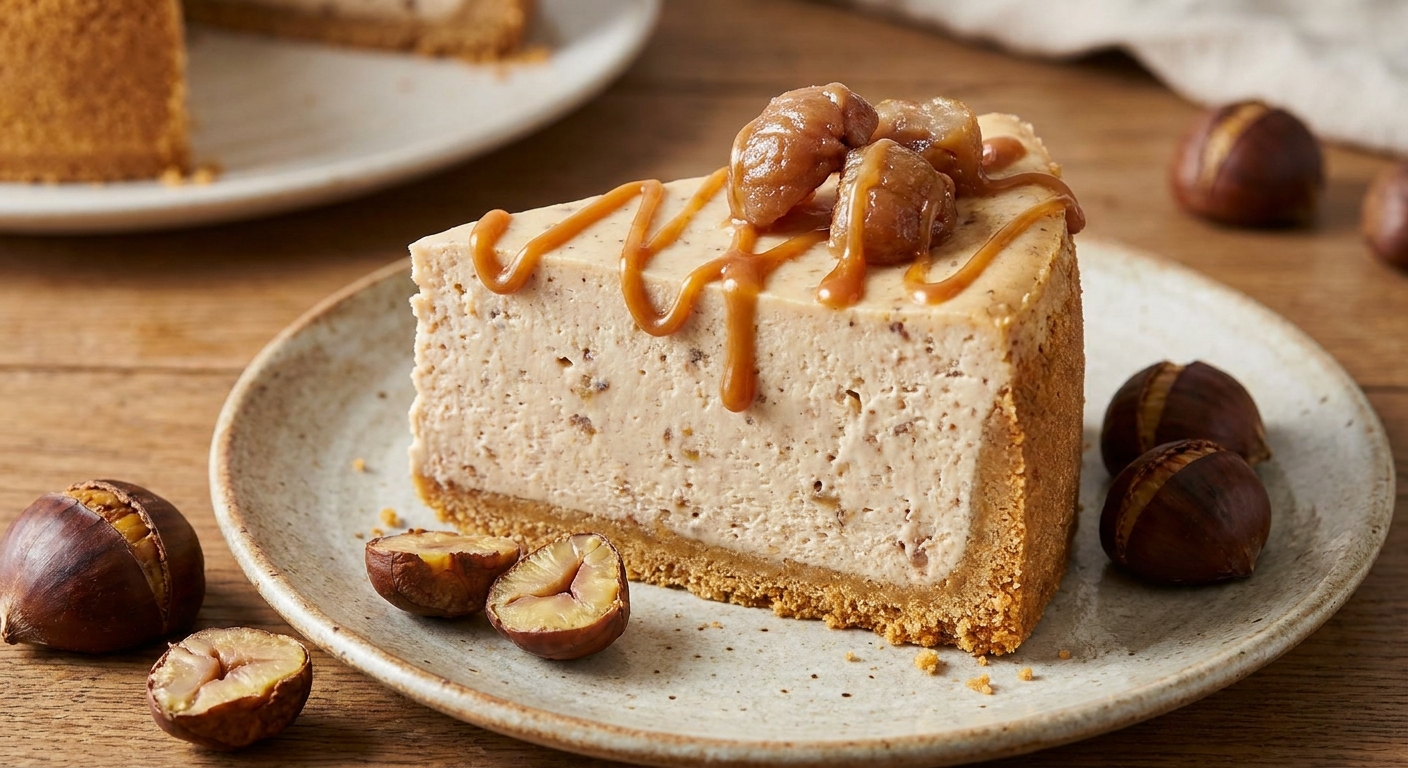
- For extra texture, top with a few candied chestnuts right before serving.
Storage
- Room temperature: If your kitchen is cool, the tart can sit covered for a few hours for serving.
- Refrigerator: Cover and refrigerate up to 4 days. The crust softens slightly over time, but it is still delicious.
- To serve after chilling: Let slices sit at room temperature for 15 to 20 minutes for the best texture.
- Freezing: Freeze well-wrapped slices up to 2 months. Thaw overnight in the fridge.
Common mistakes to avoid
- Skipping blind baking: This is the fastest route to a soggy bottom.
- Underbaking the shell after removing weights: That short second bake is what dries and browns the base.
- Overmixing aggressively: Whisk until smooth, but do not whip in lots of air, which can cause puffing and cracks.
- Slicing warm: The filling will smear. Cool completely, then slice.
- Not salting the filling: Chestnuts can taste flat without a little salt.
FAQ
Can I make this tart ahead?
Yes. It is actually better after it cools and has time to fully set. Bake it up to 1 day ahead and refrigerate, then bring to cool room temperature for serving.
How do I know when it is done baking?
The edges should be firm, the top should look matte, and the center should only wobble slightly when you gently shake the pan. If the center ripples like liquid, it needs more time.
Why did my tart crack?
Cracks usually mean it baked a bit too long or at too high a temperature. Pull it when the center still has a small wobble, and cool it gradually on a rack.
Can I use fresh roasted chestnuts?
Absolutely. Cook and peel them first, then blend into a puree. If peeling is giving you trouble, our troubleshooting guide on why chestnuts will not peel can help.
What is the cleanest way to slice a chestnut tart?
Chill the tart for 30 to 60 minutes, use a long sharp knife, and wipe the blade between cuts. For extra-clean edges, run the knife under hot water and wipe it dry before each slice.
Recipe: Chestnut Tart
A crisp pastry tart shell filled with a smooth, warmly sweet chestnut filling that bakes up set and sliceable.
Prep Time: 30 minutes
Cook Time: 45 minutes
Total Time: 1 hour 15 minutes, plus cooling
Servings: 10 slices
Ingredients
- 1 (9-inch) tart crust dough, homemade or store-bought
- 2 cups (about 500 g) chestnut puree, unsweetened
- 1/2 cup (100 g) granulated sugar
- 3 large eggs
- 1/2 cup (120 ml) heavy cream
- 4 tablespoons (56 g) unsalted butter, melted and cooled slightly
- 1 teaspoon vanilla extract
- 1/4 teaspoon fine salt
- 2 tablespoons all-purpose flour
- Powdered sugar, for serving (optional)
Instructions
- Heat the oven: Arrange a rack in the lower third of the oven. Preheat to 375 F (190 C).
- Shape the crust: Roll the tart dough into a circle about 12 inches wide. Press into a 9-inch tart pan with removable bottom, pushing into corners and trimming the excess. Dock the bottom all over with a fork. Freeze for 15 minutes.
- Blind bake with weights: Line the crust with parchment paper and fill with pie weights or dried beans, making sure weights reach up the sides. Bake 18 minutes.
- Finish blind baking: Carefully lift out the parchment and weights. Bake the crust 7 to 10 minutes more, until the bottom looks dry and the edges are just starting to turn light golden. Reduce oven temperature to 350 F (175 C).
- Mix the filling: In a large bowl, whisk chestnut puree and sugar until smooth. Whisk in eggs one at a time. Whisk in cream, melted butter, vanilla, and salt. Sprinkle in flour and whisk until fully incorporated. For an extra smooth filling, pass through a fine-mesh sieve.
- Fill the shell: Set the tart pan on a rimmed baking sheet. Pour filling into the warm crust and smooth the top.
- Bake: Bake at 350 F (175 C) for 28 to 35 minutes, until the edges are set and slightly puffed and the center has only a small wobble when gently shaken. The top should look mostly matte, not wet or glossy.
- Cool completely: Cool the tart in the pan on a rack for at least 2 hours. For the cleanest slices, refrigerate 30 to 60 minutes before slicing.
- Unmold and slice: Remove the outer ring of the tart pan. Slice with a sharp knife, wiping the blade between cuts. Dust with powdered sugar if you like.
Notes
- If using sweetened chestnut spread: Use 2 cups spread and reduce granulated sugar to 0 to 2 tablespoons, tasting the mixture before adding more.
- Doneness check: If you see rippling in the center, bake 3 to 5 minutes longer and check again.
- Make-ahead: Bake up to 1 day ahead. Cover and refrigerate, then let stand 15 to 20 minutes before serving.