Delishing
Candied Chestnuts

Candied chestnuts are one of those sweets that feel like a tiny luxury: whole chestnuts turned glassy and jewel-like in a vanilla-scented syrup, then dried until the surface is set and glossy and the center stays creamy. If you have ever bought marrons glacés and thought, “There is no way I can do that at home,” I promise you can. You just need patience, gentle heat, and a plan that fits into real life.
I developed this version for home kitchens that do not have a pastry production schedule. The classic approach uses repeated short simmers in syrup, with long rests in between. Those rests are not dead time. They are when the chestnuts slowly drink in sweetness. Each time you warm the pot, the syrup also tightens a little as it reduces, and the sugars keep migrating into the chestnuts as they cool.
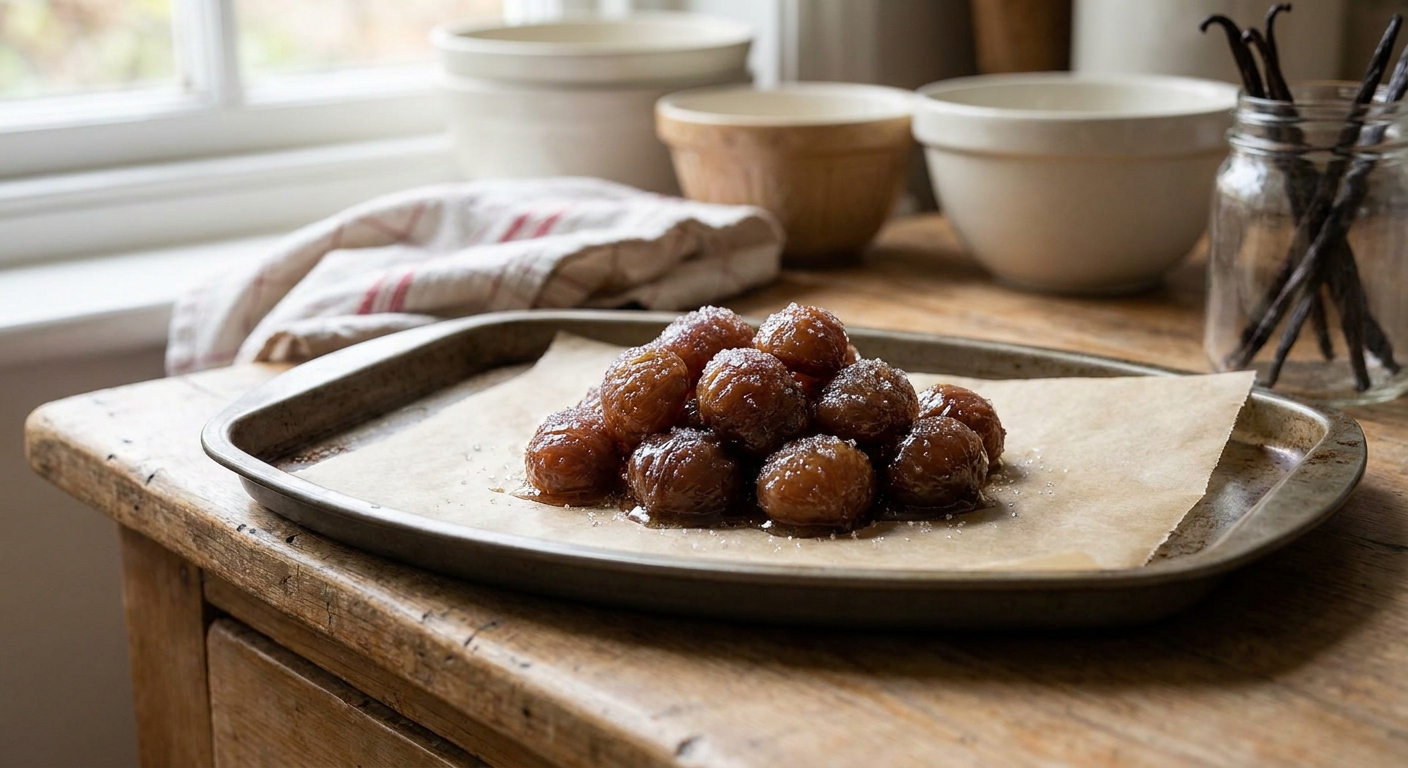
You will find a realistic timeline in the recipe card, plus the exact cue I use to call them done without cracking one open: lift a chestnut and watch the syrup. When it clings in a thin, shiny coat instead of running off like water, you are in the right zone. If you like a backup check, the syrup should also feel lightly tacky between clean fingertips once it cools slightly, not watery.
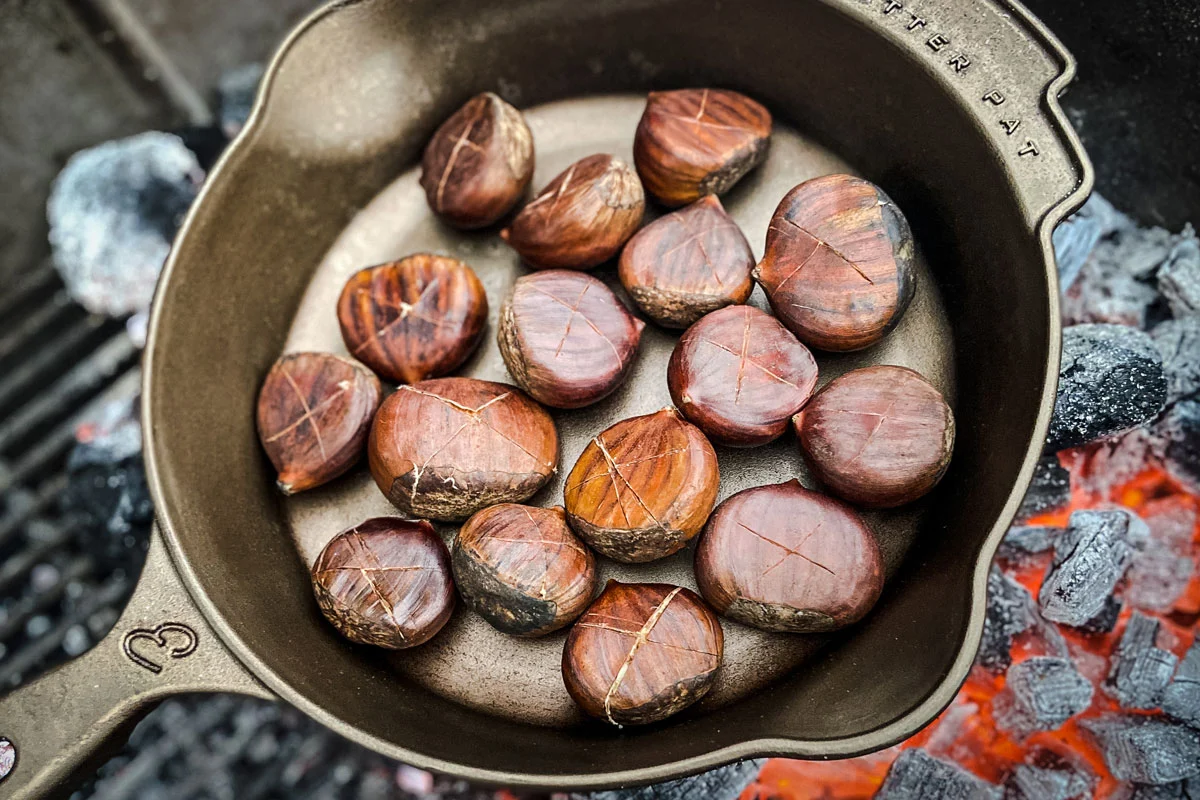
If you are starting from fresh chestnuts, I recommend reading a quick primer first, mainly for handling and prep confidence: How To Roast Chestnuts. If you already have peeled chestnuts, you are in the fast lane.
What to Expect
This is a low-drama recipe, but it is not a one-hour project. You are trading active effort for time. The payoff is a chestnut that tastes deeply chestnut-forward, evenly sweet, and beautifully glossy with a thin, even glaze.
- Texture: tender and creamy inside, lightly set and glossy on the outside
- Flavor: sweet, nutty, subtly vanilla, with optional citrus warmth
- Best use: gifts, dessert boards, chopped into cakes, or eaten with coffee like a treat you “accidentally” keep walking past
A few make-or-break basics, right up front: keep the heat gentle, avoid stirring (swirl the pot instead), and keep the chestnuts fully covered with syrup during the rests so they do not dry out and crack. For me, “covered” means the pot has a lid on it once everything is back at room temperature.
Time and Planning
I like this project because it fits around normal life. Most of the time is hands-off, and the active moments are short. Expect a couple of brief stove sessions spread over a few days, plus an unhurried drying window at the end. The recipe card lays it out in order so you can follow it without guessing.
Why It Works
- Gentle poaching first: Fully tender chestnuts are less likely to crack later, and they absorb syrup evenly.
- Short simmers, long soaks: The soaking time does the heavy lifting. The repeated heat cycles tighten the syrup gradually without turning it into hard candy.
- Low simmer protects the nuts: A hard boil makes chestnuts bang into each other and fall apart. We keep the heat calm and the pot undisturbed.
- Drying is the finish line: That final rest is what turns sticky syrup into the classic glossy coating.
Ingredient Notes
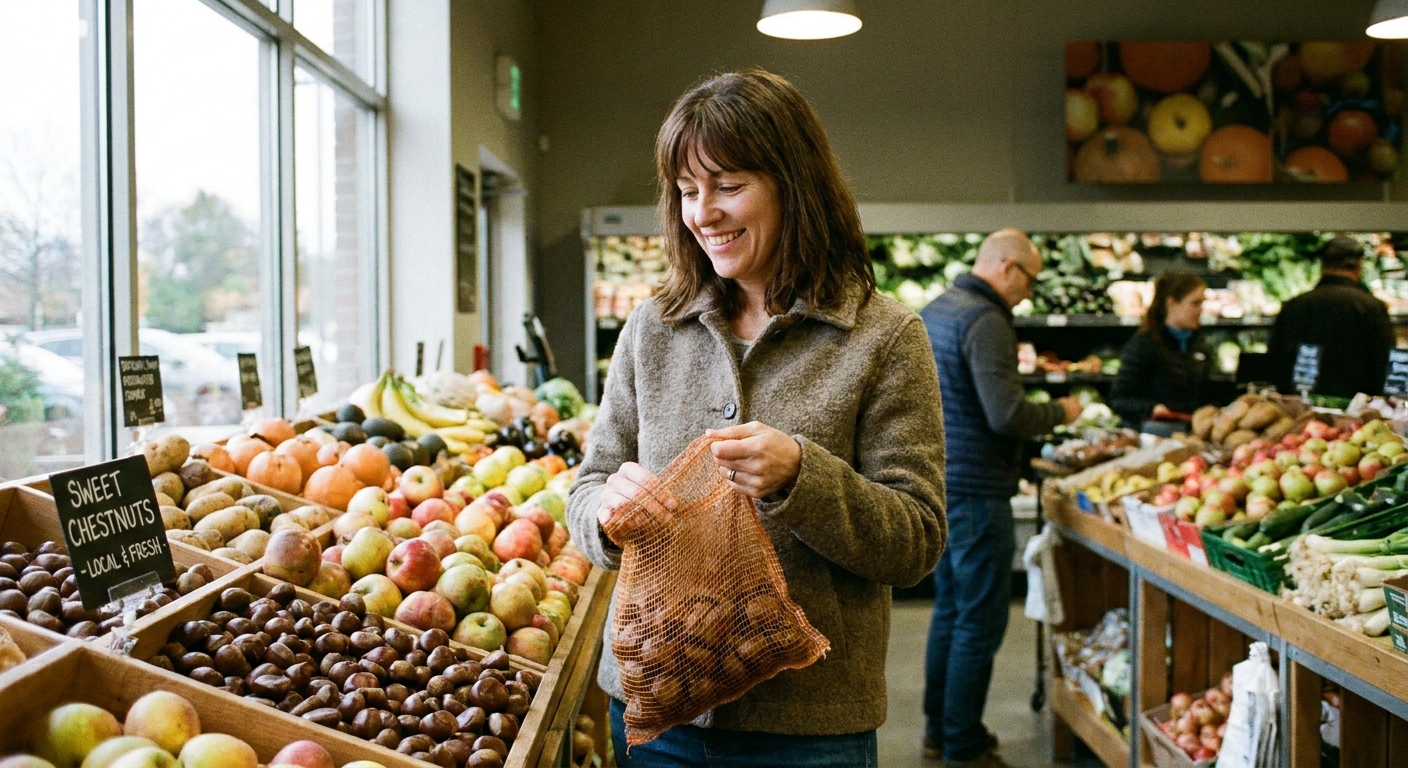
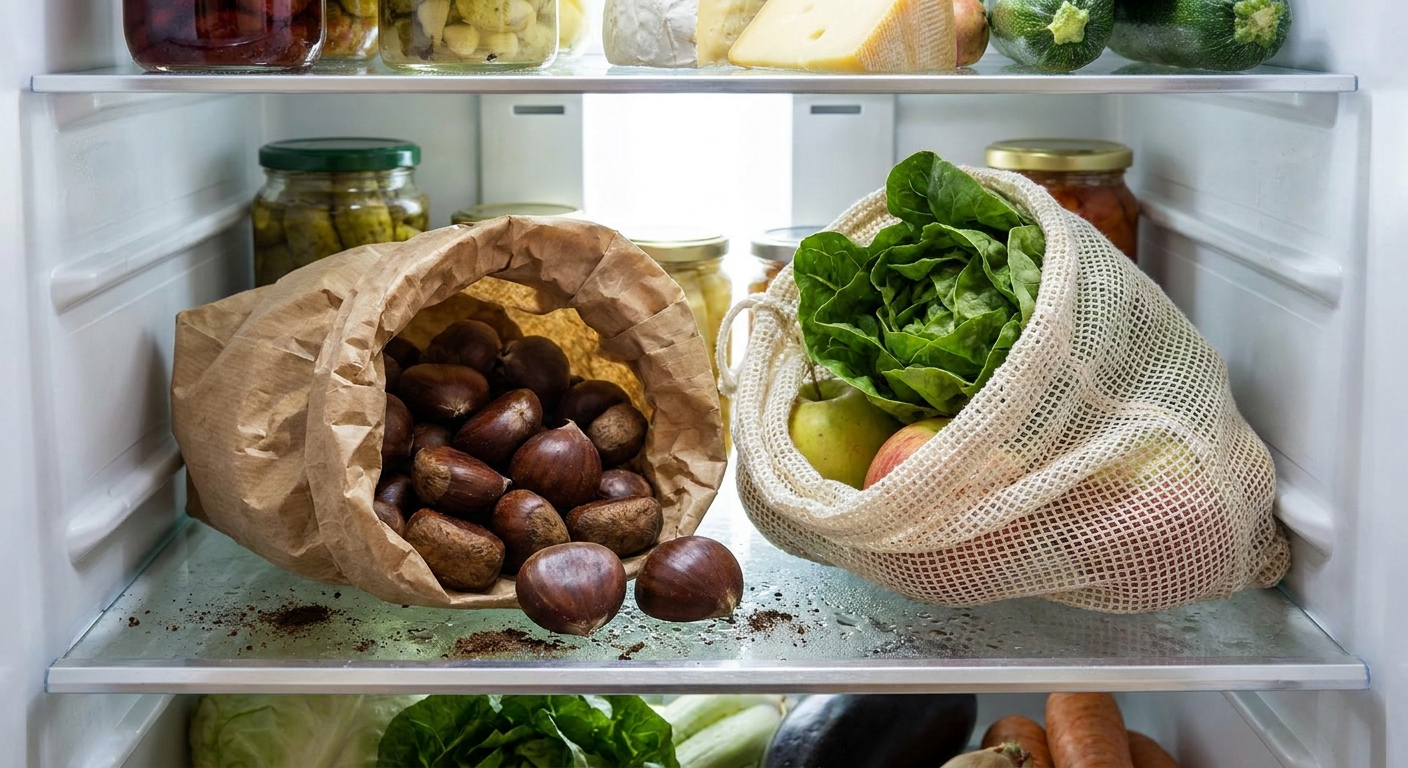
- Peeled chestnuts: Use the best peeled chestnuts you can find, whole if possible. Fresh is wonderful, but high-quality vacuum-packed or jarred peeled chestnuts also work. If you are starting from fresh, read How To Buy Fresh Chestnuts and How To Store Fresh Chestnuts so you begin with sweet, healthy nuts.
- Sugar: Plain granulated sugar gives the cleanest flavor and the shiniest finish.
- Water: This is a syrup recipe, so measure it. Eyeballing is where crystallization sneaks in.
- Vanilla: A split vanilla bean is classic, but vanilla extract works too. Add extract off heat to protect its flavor.
- Optional glucose or light corn syrup: A small amount helps prevent crystallization and keeps the coating smooth. It is optional, but if you have it, I recommend it for first-timers.
- Optional citrus peel: A strip of orange peel makes the whole pot smell like the holidays, without turning the chestnuts into orange candy.
Equipment
- Wide, heavy-bottomed saucepan: A wider pot lets the chestnuts sit in a mostly single layer, which reduces breakage.
- Fine-mesh strainer or slotted spoon: For lifting chestnuts out gently.
- Wire rack and rimmed baking sheet: For drying without pooling syrup underneath.
- Parchment paper: Insurance against sticking.
- Instant-read thermometer (optional): Helpful for confidence, not required.
Pro Tips
- Handle like raspberries: Chestnuts get fragile once tender. Stir as little as possible. Instead, swirl the pot gently when needed.
- Keep them submerged: If a few pop up above the syrup line, spoon syrup over them so they do not dry out and crack.
- Crystallization prevention: Dissolve sugar completely before the first simmer. Avoid splashing syrup up the sides of the pot. If you see crystals forming on the side, wipe with a clean wet pastry brush.
- Doneness cue you can trust: When a chestnut lifted from the syrup looks glossy and slightly translucent on the surface and the syrup clings in a thin coat, it is ready to dry. If it looks matte and the syrup runs off like water, it needs another short simmer and soak.
- Save the syrup: You will have extra chestnut-vanilla syrup. Stir it into coffee, drizzle over ice cream, or sweeten oatmeal.
Substitutes
- Vanilla bean: Swap for 2 teaspoons vanilla extract, stirred in after the final simmer, off heat.
- Glucose or corn syrup: If you do not have it, skip it. Just be extra careful not to stir aggressively and to dissolve the sugar fully.
- Fresh peeled chestnuts: Use vacuum-packed or jarred peeled chestnuts when fresh are out of season. If using jarred, rinse briefly and pat dry before starting.
Variations
- Dark rum vanilla: Add 1 to 2 teaspoons dark rum off heat at the very end.
- Orange spice: Add a wide strip of orange peel and a small cinnamon stick during the early simmers, then remove before drying.
- Chocolate-dipped: Once fully dried, dip one end in melted dark chocolate and let set on parchment. This turns them into an instant gift-box situation.
Serving Ideas
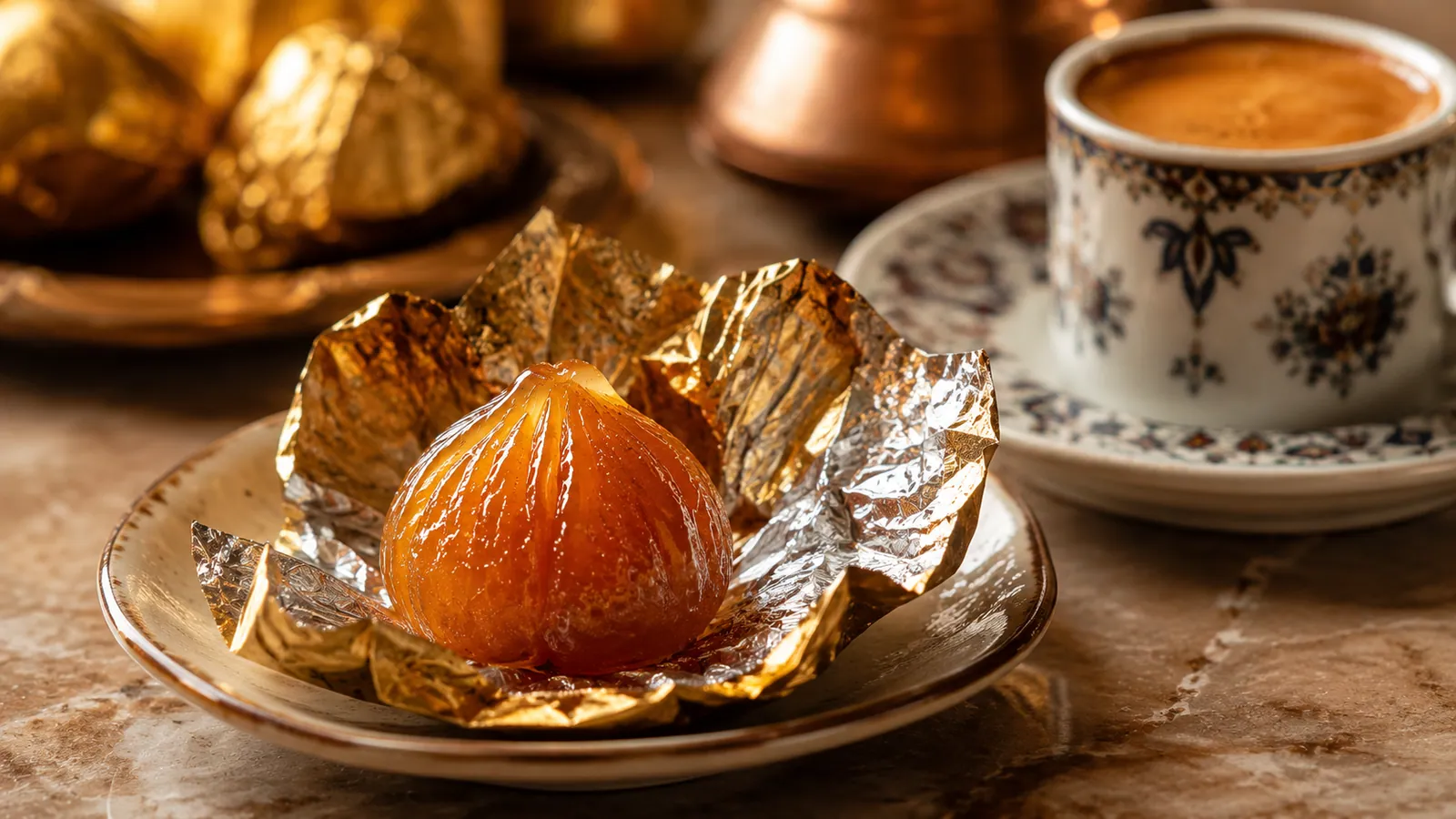
- Serve with espresso or strong coffee as a one-sweet-bite dessert.
- Chop and fold into whipped cream for an easy chestnut dessert spoon.
- Dice and sprinkle over vanilla bean panna cotta, like my Vanilla Bean Panna Cotta.
- Use as a garnish for holiday cakes, or tuck into a dessert board with fruit and dark chocolate.
Storage
Room temperature: Once fully dry, store candied chestnuts in an airtight container in a cool, dry place for up to 1 week. Place parchment between layers to prevent sticking.
Refrigerator: Refrigeration can make the coating tacky from moisture. I only use the fridge if your kitchen is very warm. If you refrigerate, keep them tightly sealed and let them come to room temperature before serving.
Freezer: Freeze in an airtight container with parchment between layers for up to 2 months. Thaw overnight in the fridge, then bring to room temperature. If they seem slightly sticky after thawing, let them air-dry on a rack for 30 to 60 minutes.
Food safety note: These are high-sugar, low-moisture once dried, but treat them like a confection. If they smell fermented, look wet, or develop visible mold, discard.
Common Mistakes
- Boiling too hard: A rolling boil breaks chestnuts. Keep it at a gentle simmer and swirl, do not stir.
- Skipping the tender-poach: If the centers are not fully tender before candying, the outside will glaze while the inside stays dry and mealy.
- Rushing the schedule: The soaks matter. You can do fewer simmer cycles, but the chestnuts will be less evenly candied and less glossy.
- Drying on a flat plate: Syrup pools underneath and you get sticky bottoms. Use a rack set over a sheet pan.
- Overcooking the syrup at the end: If the syrup gets too hot and too concentrated, it can seize into crystals or harden into a thick sugar crust. Gentle heat wins.
FAQ
Are candied chestnuts the same as marrons glacés?
Marrons glacés are the classic French style of candied chestnuts, usually made with large, premium marron chestnuts. This home version uses the same core technique, repeated syrup infusions, with a schedule that works in a normal kitchen.
How do I know they are done without breaking one open?
Lift one with a slotted spoon. The surface should look glossy and slightly translucent, and the syrup should cling in a thin layer instead of sliding off like water. As a backup cue, the syrup should feel lightly tacky as it cools on a spoon, not thin and watery. When you set the chestnut on a rack, it should look shiny and tacky, not wet.
Can I start from roasted chestnuts?
You can, but it is not ideal. Roasting can dry the surface and create cracks that fall apart during candying. If you do start from roasted, choose very gently roasted chestnuts and handle them carefully. For prepping fresh chestnuts, see How To Roast Chestnuts.
Why did my syrup crystallize?
Crystallization usually happens from undissolved sugar, aggressive stirring, or sugar crystals on the sides of the pot. Wiping down the sides with a wet pastry brush and adding a little glucose or corn syrup can help.
Can I make these in one day?
You can shorten the process, but you will give up the deep glossy finish and even sweetness. If you only have one day, do the tender-poach and then two short simmers with long soaks in between, as long as your schedule allows.
Recipe Summary
Whole peeled chestnuts gently poached, then candied in a vanilla syrup over several short simmers and long soaks until glossy, then dried until the coating is set.
Ingredients
- 1 lb (about 450 g) whole peeled chestnuts
- 3 cups (710 ml) water, plus more as needed
- 2 cups (400 g) granulated sugar
- 1 vanilla bean, split (or 2 tsp vanilla extract, added off heat at the end)
- 1 tbsp glucose syrup or light corn syrup (optional, helps prevent crystallization)
- 1 wide strip orange peel (optional)
- Pinch of fine salt
Instructions
- Poach the chestnuts until fully tender. Put the peeled chestnuts in a wide saucepan and cover with 3 cups water. Bring to a gentle simmer over medium heat, then reduce to low to maintain a calm simmer. Cook 10 to 20 minutes, until the chestnuts are tender all the way through. Doneness cue: a thin knife slips in easily with little resistance, and the chestnut feels creamy, not chalky.
- Drain carefully. Pour the chestnuts into a fine-mesh strainer. Handle gently to keep them whole. Rinse the saucepan if needed to remove any starchy residue.
- Make the syrup. Return the saucepan to the stove. Add 3 cups water, sugar, vanilla bean (if using), optional glucose or corn syrup, optional orange peel, and a pinch of salt. Warm over medium heat, stirring just until the sugar fully dissolves and the syrup looks clear.
- Start the candying cycle (Day 1). Add the drained chestnuts to the syrup. Bring to a very gentle simmer. Do not boil hard. Simmer 5 minutes, then turn off the heat. Let the chestnuts cool in the syrup to room temperature, then cover with a lid and let soak at least 8 hours or overnight at cool room temperature.
- Day 2: Repeat gentle simmers. Bring the pot back to a gentle simmer. Simmer 5 minutes, then turn off the heat and cool completely to room temperature. Cover with a lid and rest again. If your schedule allows, repeat once more later the same day. If not, do just one simmer and continue on Day 3.
- Day 3: Final simmer to a glossy coating. Bring the pot back to a gentle simmer and simmer 5 to 8 minutes. Doneness cue: the syrup clings to the chestnuts in a thin glossy layer, and a lifted chestnut looks shiny and slightly translucent on the surface. Backup cue: the syrup should feel slightly tacky as it cools on a spoon, not watery. If using vanilla extract instead of a bean, remove the pot from heat and stir in the extract now.
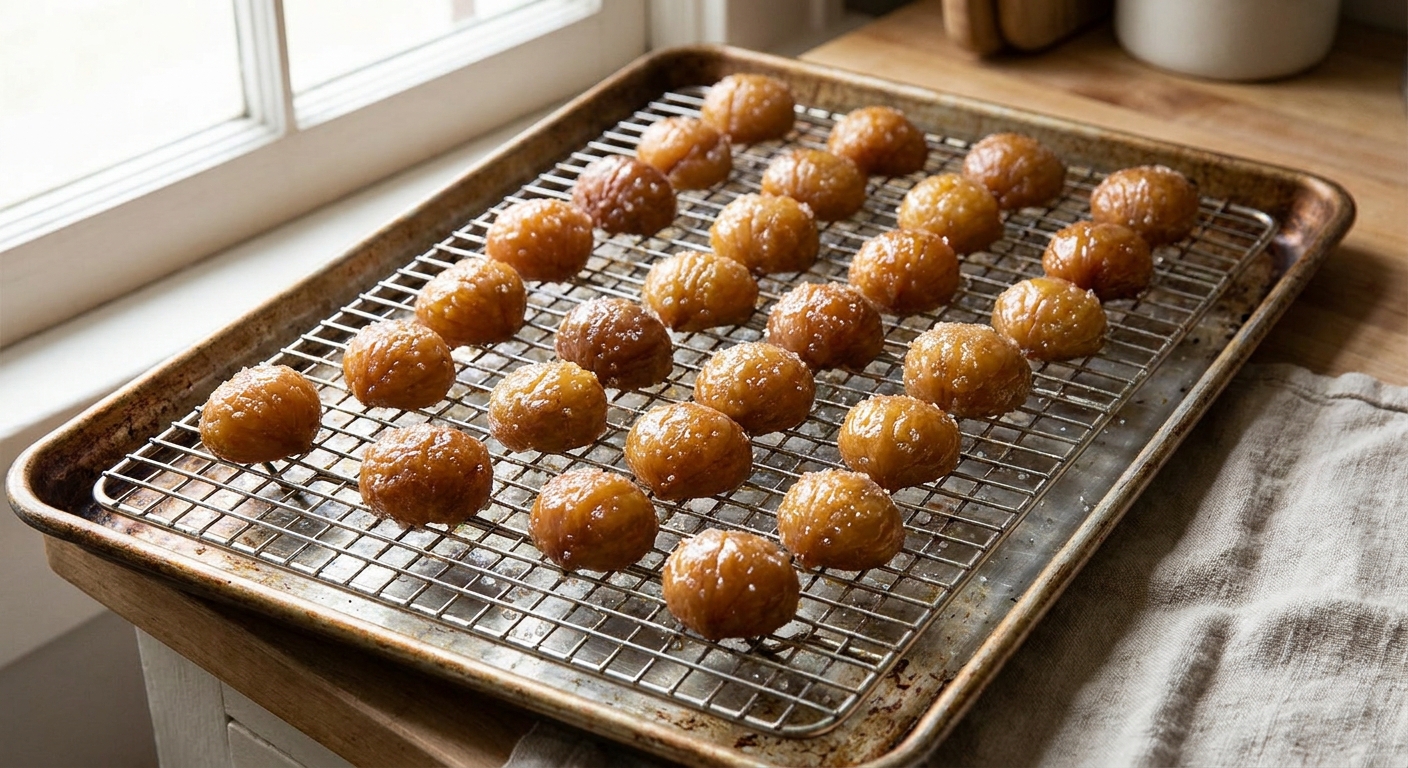
- Dry the chestnuts. Using a slotted spoon, lift chestnuts out one at a time and set them on a wire rack placed over a rimmed baking sheet lined with parchment. Let dry at room temperature 2 to 4 hours, or until the surface is no longer sticky to the touch and looks glossy and set.
- Optional second dry for extra gloss. For a firmer finish, let them dry overnight, uncovered, in a cool, dry spot. If your kitchen is humid, cover loosely with a clean towel.
- Store. Once fully dry, store in an airtight container with parchment between layers.
Notes
- Be gentle: Swirl the pot instead of stirring to prevent breakage.
- Extra syrup: Strain and refrigerate leftover syrup for coffee, pancakes, or drizzling over desserts.
- Humidity matters: If your coating stays tacky, extend drying time on the rack.