Delishing
Chestnut Cheesecake

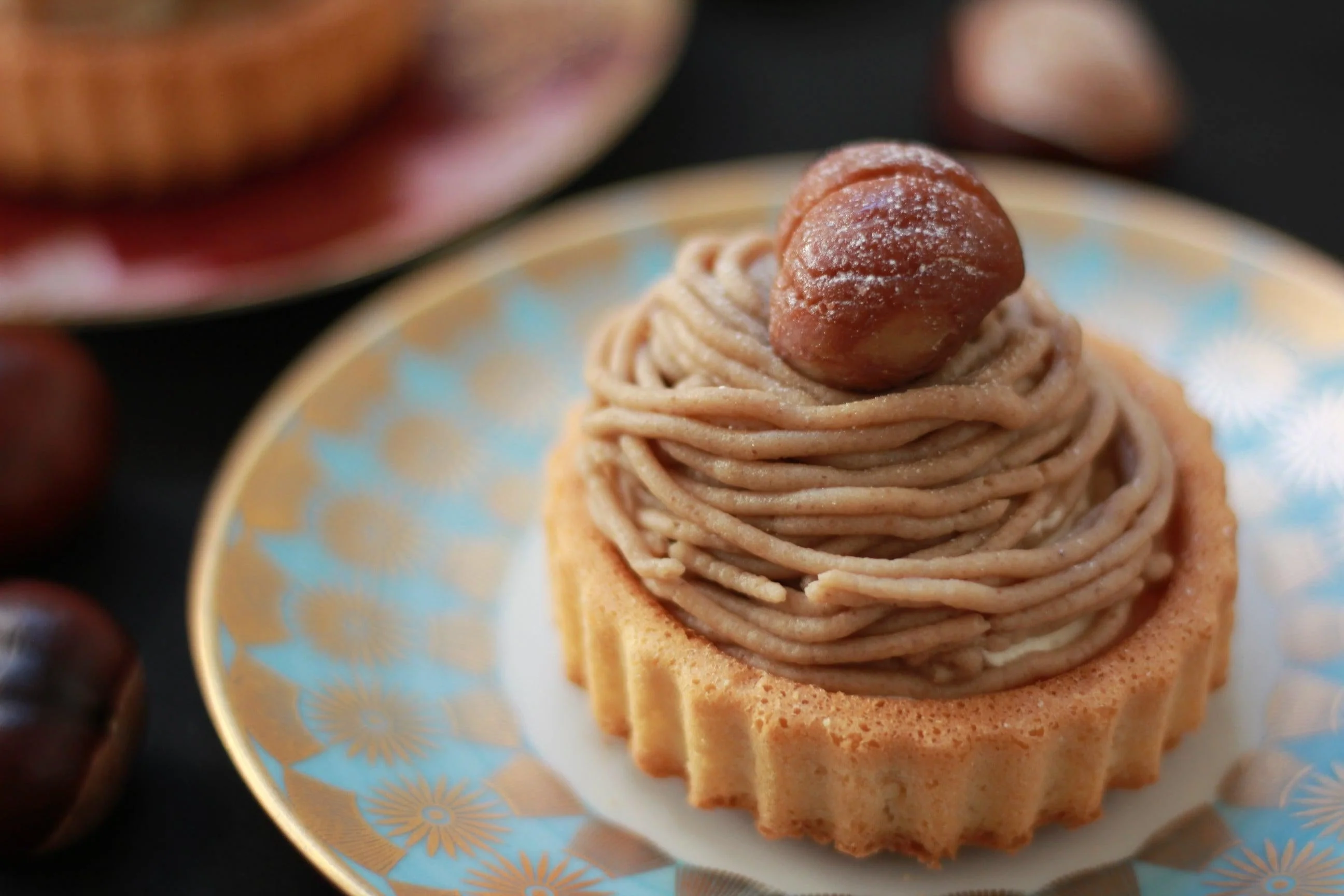
Chestnut desserts have this quietly fancy vibe, like you planned weeks ahead, even if you really just grabbed a jar of sweetened chestnut puree on a busy grocery run. This chestnut cheesecake is my favorite kind of holiday baking project: it looks impressive, it slices like a dream after a good chill, and it tastes like warm vanilla and caramelized nuts wrapped up in the creamiest cream cheese filling.
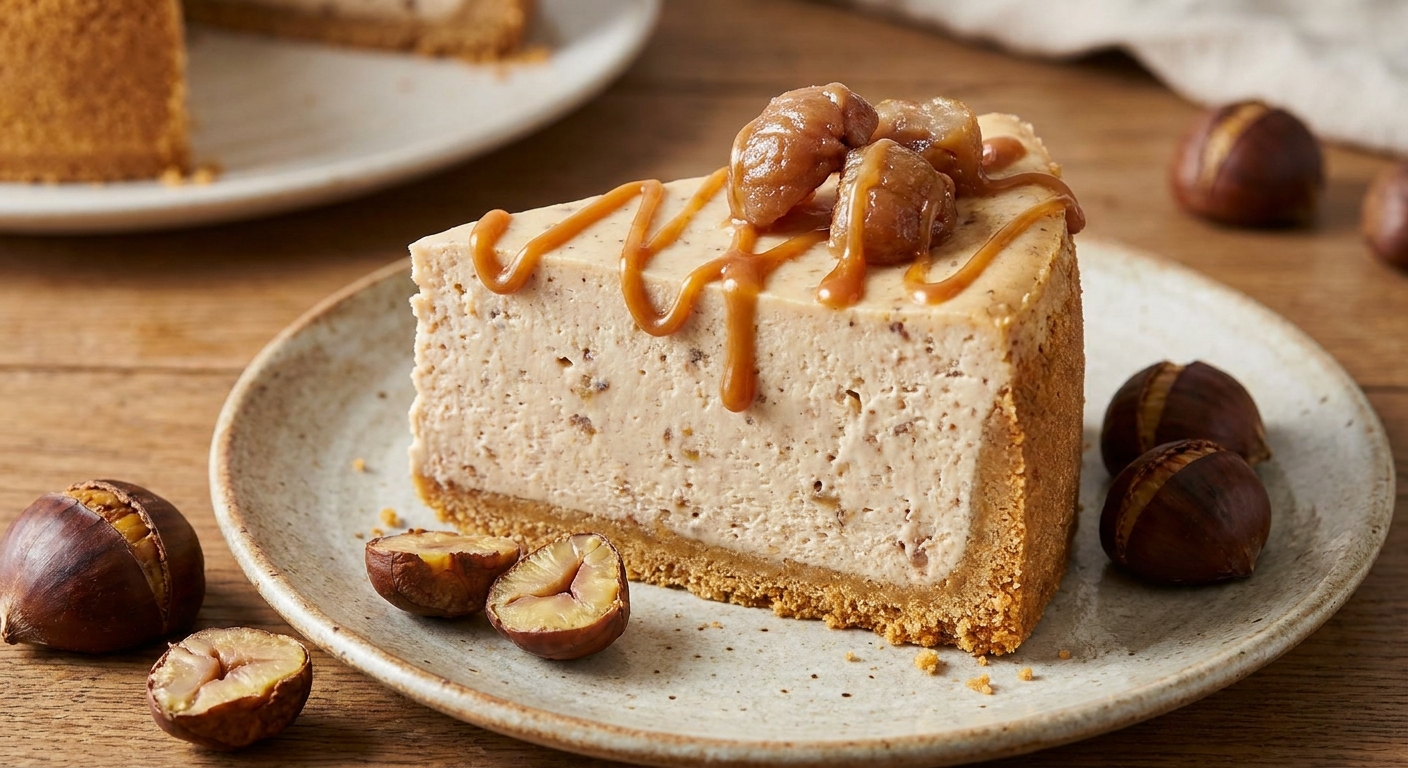
Here is the game plan. You will press a buttery graham crust into a springform pan, whip up a silky batter with sweetened chestnut puree, then bake it low and slow with a water bath setup, which helps keep the top smoother and reduces cracking. I will also walk you through my favorite doneness check: the jiggle test. You are looking for set edges with a center that still wobbles like set Jell-O, which is one of the simplest ways to avoid overbaking (one of the most common reasons cheesecake turns dry, puffs, or cracks).
One quick shopping note: for this recipe, I mean sweetened chestnut puree, which is often labeled chestnut spread or creme de marrons. If you are starting with fresh chestnuts, you can roast and peel them ahead of time, then turn them into puree. My step-by-step guide here makes it much less intimidating: How To Roast Chestnuts.
Why this recipe works
- Chestnut puree adds flavor without grit. Sweetened chestnut puree blends into the batter for a smooth, naturally nutty cheesecake.
- Low, gentle baking helps prevent curdling. Cheesecake is basically a custard. Lower heat helps it set evenly.
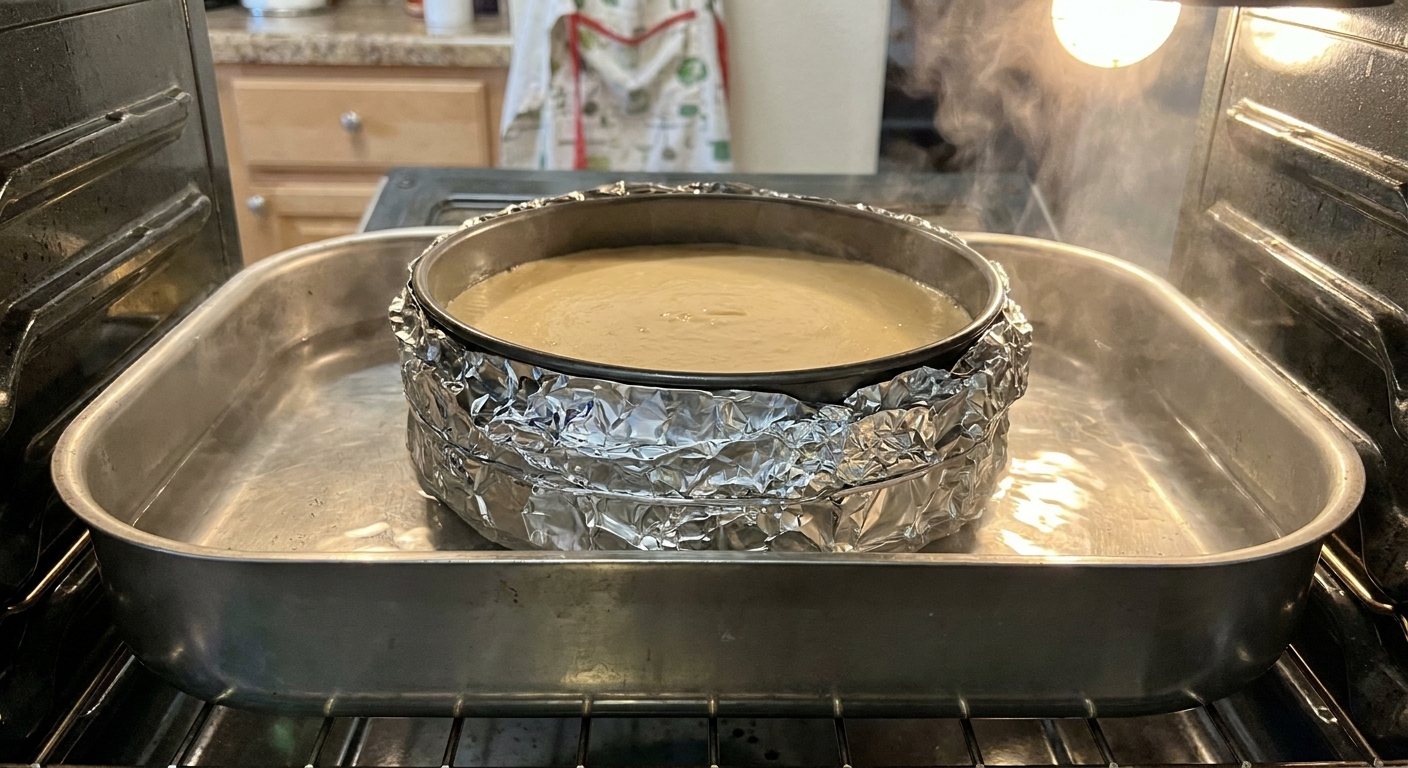
- A water bath buffers the heat. Steam and the surrounding water keep the edges from overcooking before the center sets.
- The jiggle test beats the toothpick test. A cheesecake is done when the outer ring is set and the center still has a controlled wobble.
- Overnight chilling guarantees clean slices. The texture firms up as it cools, so you get neat wedges instead of creamy slumps.
Ingredient notes
Sweetened chestnut puree
Look for sweetened chestnut puree, sometimes labeled chestnut spread or creme de marrons. It should be thick and spoonable. If you only have unsweetened chestnut puree, you can use it, but you will need to increase the sugar to taste and expect a slightly more earthy flavor.
Cream cheese
Use full-fat block cream cheese, not whipped and not the kind in a tub. Let it soften to room temperature so it mixes smoothly and you do not end up with stubborn lumps.
Eggs
Room-temperature eggs incorporate more evenly, which helps with a smooth, uniform bake.
Sour cream
This adds tang and keeps the texture plush. Full-fat is best.
Graham crackers
Classic and cozy. You can also use digestive biscuits or vanilla wafer crumbs, but keep the crumb amount the same.
Vanilla and salt
Both are essential here. Vanilla lifts the chestnut flavor. Salt keeps the cheesecake from tasting one-note sweet.
Equipment
- 9-inch springform pan (at least 3 inches tall)
- Roasting pan large enough to hold the springform for the water bath
- Heavy-duty aluminum foil to wrap the pan and help prevent leaks
- Stand mixer or hand mixer for a smooth batter
- Fine-mesh sieve (optional) if your chestnut puree is slightly coarse
- Instant-read thermometer (optional) for an extra doneness check
Pro tips for a tall, crack-free cheesecake
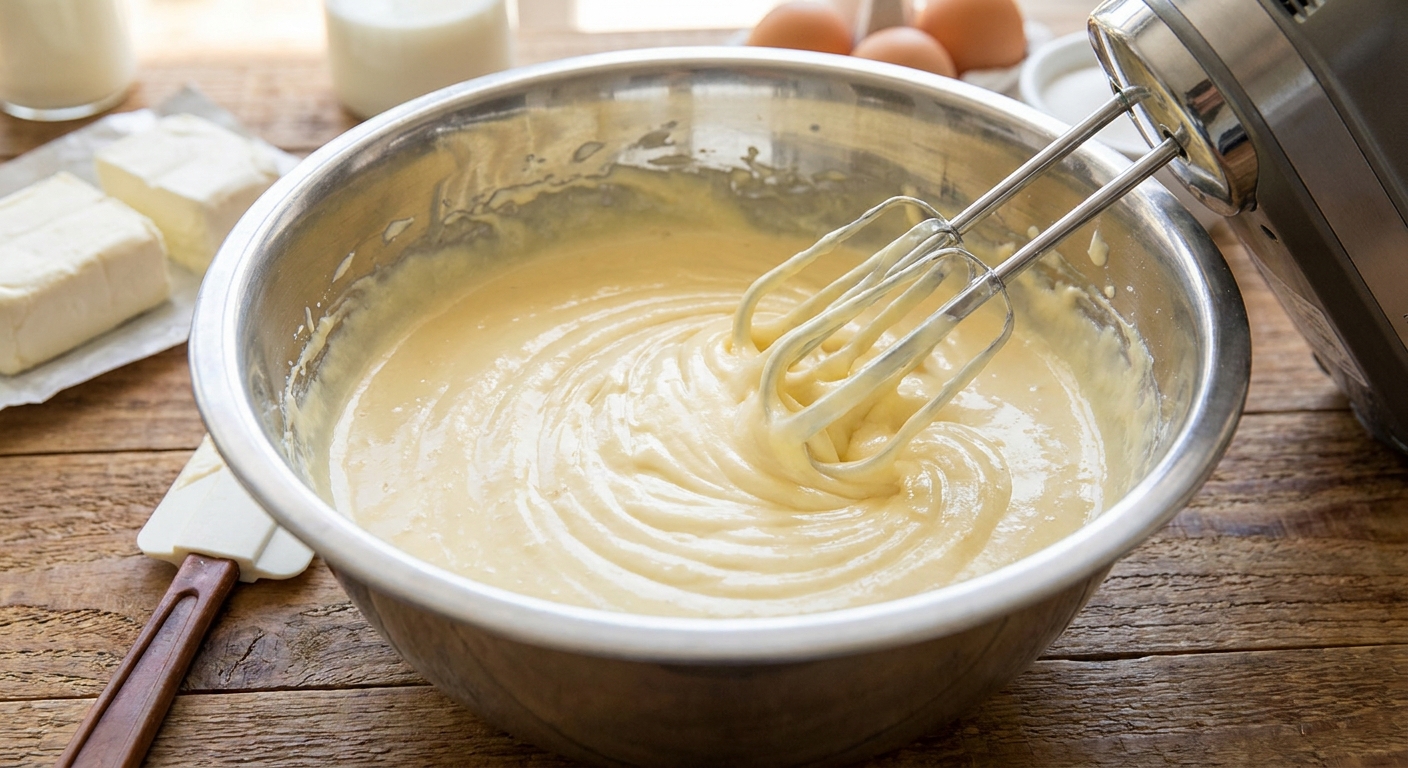
- Mix on low once you add eggs. Overmixing whips in air, and air bubbles expand in the oven and can cause cracking.
- Wrap the springform pan well. Use two layers of heavy-duty foil up the sides of the pan. Water-bath leaks are heartbreaking.
- Use hot water in the bath. Hot water helps the oven recover temperature quickly so the cheesecake bakes steadily.
- Do the jiggle test. Tap the side of the pan. You want the outer 2 to 3 inches set, and the center to wobble like set Jell-O, not ripple like soup.
- Cool gradually. Sudden temperature changes can contribute to cracking. Let it sit in the turned-off oven with the door cracked, then cool at room temp before chilling.
- Chill overnight for clean slices. Minimum 8 hours. I know it is hard to wait, but it pays off.
Substitutes
- Crust: Swap graham crackers for vanilla wafers or digestive biscuits (same crumb weight or volume). For a gluten-free crust, use gluten-free graham crackers.
- Sour cream: Full-fat Greek yogurt works well and keeps the tang.
- Chestnut puree: If you cannot find it, you can make your own from roasted chestnuts blended with a little sugar and cream, then strain if needed. Roasting guidance here: How To Roast Chestnuts.
Variations
- Chocolate chestnut cheesecake: Add melted dark chocolate to the batter and finish with cocoa powder or chocolate curls.
- Bourbon chestnut cheesecake: Add a splash of bourbon for a deeper, caramel-like note.
- Spiced chestnut cheesecake: Add cinnamon and a pinch of nutmeg for a holiday feel.
- Chestnut swirl top: Reserve a few tablespoons of chestnut puree, warm it slightly, then swirl it into the top before baking.
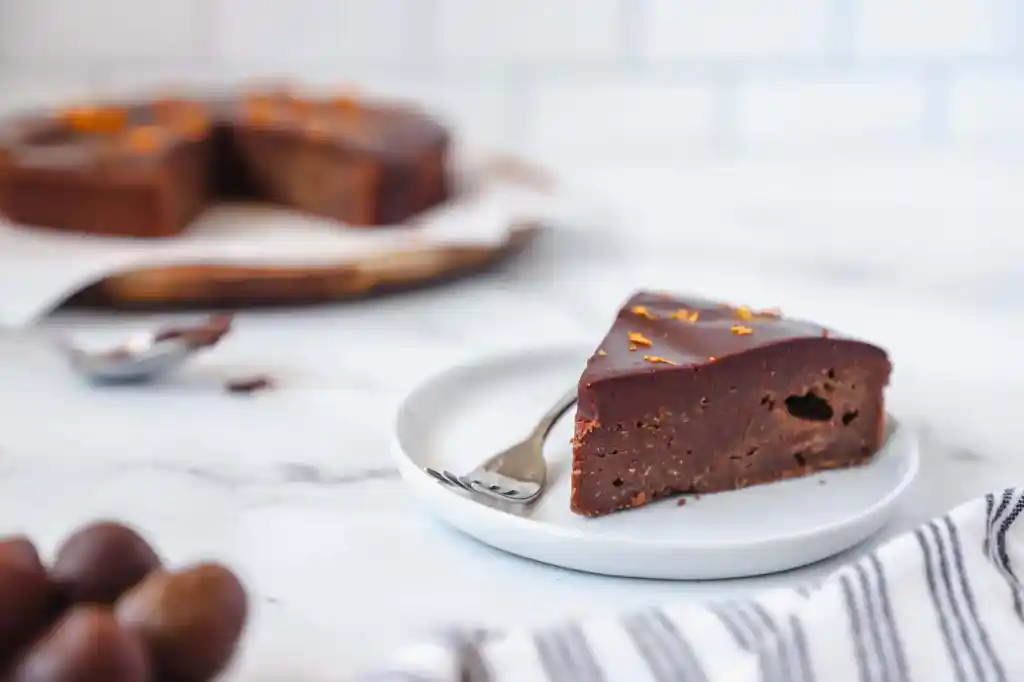
If you love the chocolate and chestnut combination, this is another cozy dessert to try: Chocolate Chestnut Cake.
Serving ideas
- Classic: Serve chilled with softly whipped cream and a drizzle of honey or caramel.
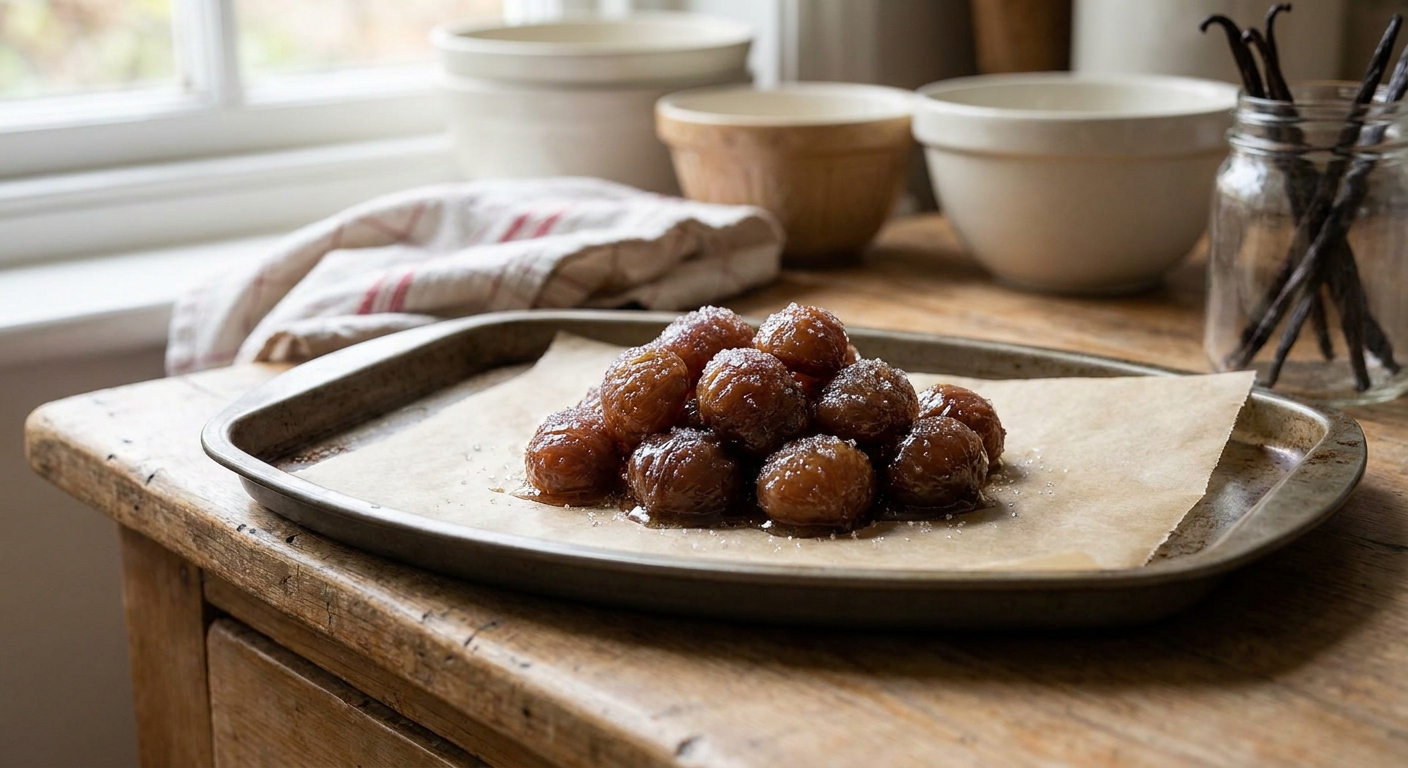
- Holiday-style: Top with candied chestnuts for crunch and shine. See: Candied Chestnuts.
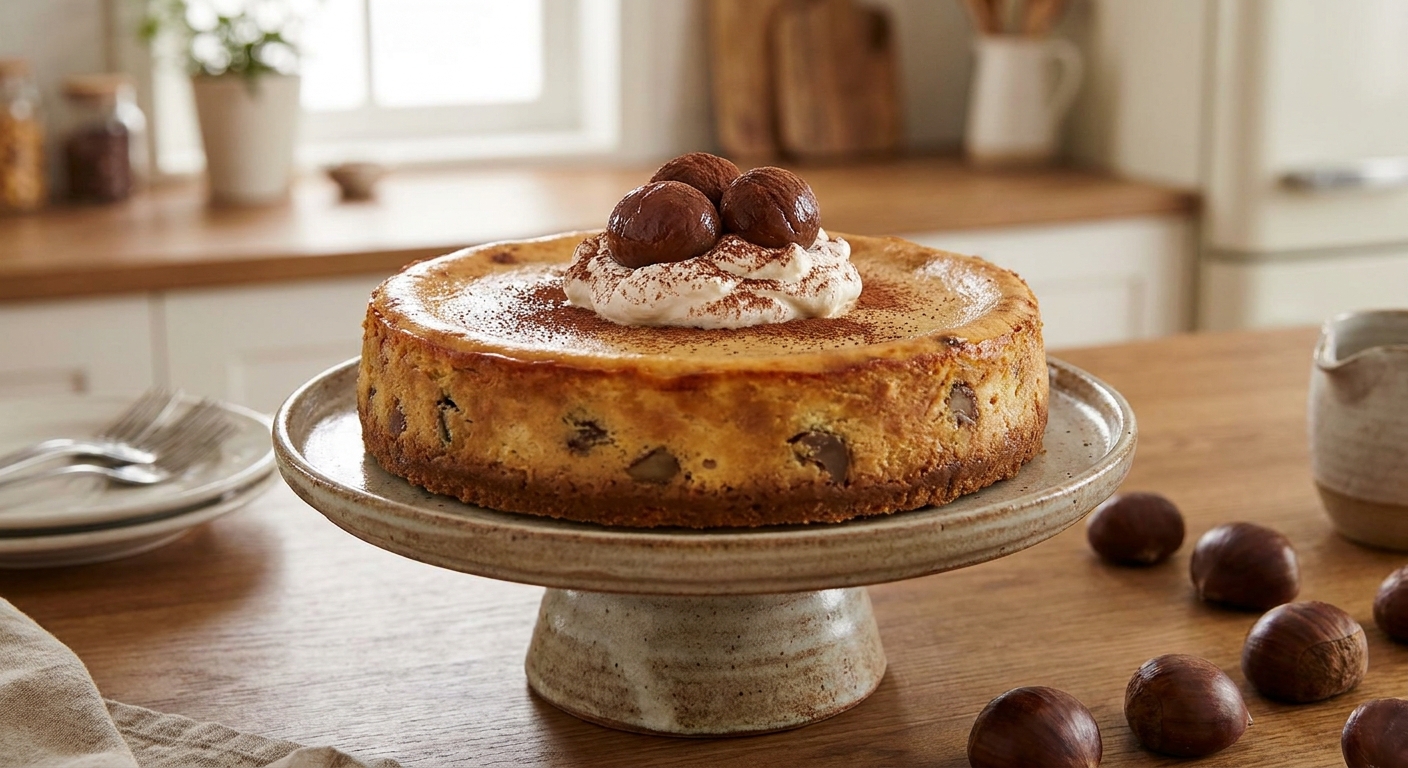
- Elegant: Dust with powdered sugar and add a few shaved chestnuts or chocolate shavings.
- Bright contrast: Serve with tart berries on the side to cut the richness.
Storage
- Refrigerator: Store covered for up to 5 days. Cheesecake picks up fridge smells easily, so wrap it well.
- Freezer: Freeze slices on a sheet pan until firm, then wrap tightly and freeze up to 2 months. Thaw overnight in the fridge for the best texture.
- Make-ahead: This is an ideal bake-the-day-before dessert. It actually improves after a full overnight chill.
Common mistakes to avoid
- Baking until the center is fully firm. That usually means it is overbaked. Trust the jiggle and the carryover setting as it cools.
- Using cold cream cheese. It leads to lumps you cannot fix later without overmixing.
- Skipping the foil wrap in a water bath. Even a small leak can make the crust soggy.
- Opening the oven repeatedly. Big temperature swings can cause cracking and uneven rise.
- Slicing too soon. Warm cheesecake is delicious, but it will not slice cleanly. Chill it fully.
FAQ
How do I know when cheesecake is done?
Use the jiggle test. The edges should look set and slightly puffed, and the center should wobble as one piece when you gently tap the pan. If you use a thermometer, aim for about 150 to 155 F in the center. It will continue to set as it cools.
Do I have to use a water bath?
You do not have to, but it is the most reliable way to encourage a smoother top and a creamier texture. If you skip it, bake low and slow and expect a slightly higher chance of cracking.
My cheesecake cracked. Is it ruined?
Not at all. It will still taste amazing. Cover the top with whipped cream, candied chestnuts, or a dusting of powdered sugar and call it a design choice.
Can I make this with homemade chestnut puree?
Yes. Just make sure it is very smooth. If it is even a little coarse, press it through a fine-mesh sieve before mixing into the batter.
Recipe
Chestnut Cheesecake with a buttery graham crust, sweet chestnut puree folded into the filling, and a gentle water bath bake for a smooth, tall slice.
Prep Time: 25 minutes
Cook Time: 1 hour 20 minutes
Total Time: 10 hours 30 minutes (includes cooling and chilling)
Servings: 12 slices
- For the crust
- 2 cups graham cracker crumbs
- 1/4 cup granulated sugar
- 1/2 teaspoon fine salt
- 8 tablespoons unsalted butter, melted
- For the filling
- 32 ounces full-fat block cream cheese, softened to room temperature
- 1 cup granulated sugar
- 1/4 teaspoon fine salt
- 2 tablespoons all-purpose flour
- 1 cup sweetened chestnut puree (chestnut spread), at room temperature
- 1 tablespoon vanilla extract
- 1/2 cup sour cream, at room temperature
- 4 large eggs, at room temperature
- To bake
- Hot water, for the water bath
- Prep the pan. Heat the oven to 325 F. Lightly grease a 9-inch springform pan. Wrap the outside of the pan with two layers of heavy-duty foil, bringing the foil all the way up the sides to help prevent water from leaking in.
- Make the crust. In a bowl, mix the graham cracker crumbs, sugar, salt, and melted butter until the texture looks like wet sand. Press firmly into the bottom of the prepared springform pan, then press a little way up the sides. Bake for 10 minutes, then cool on a rack while you make the filling.
- Start the filling. Reduce the oven temperature to 300 F. In a large bowl (or stand mixer bowl), beat the cream cheese on medium speed until completely smooth, scraping down the bowl as needed.
- Add dry and flavoring ingredients. Beat in the sugar, salt, and flour until combined and smooth. Add the chestnut puree and vanilla and mix until fully blended.
- Add sour cream. Mix in the sour cream just until smooth.
- Add the eggs gently. Add the eggs one at a time, mixing on low speed after each addition just until incorporated. Scrape the bowl and give the batter a final brief mix on low. Do not overmix.
- Set up the water bath. Pour the batter into the cooled crust and smooth the top. Place the springform pan into a large roasting pan. Set the roasting pan on the oven rack, then carefully pour hot water into the roasting pan until it comes about halfway up the sides of the springform pan.
- Bake low and slow. Bake for 70 to 85 minutes, or until the edges are set and the center still jiggles like set Jell-O when you gently tap the pan. If using a thermometer, the center should read about 150 to 155 F.
- Cool gradually. Turn off the oven, crack the oven door, and let the cheesecake cool in the oven for 1 hour.
- Cool and chill. Remove the cheesecake from the water bath and take off the foil. Cool to room temperature, about 1 to 2 hours. Cover and refrigerate at least 8 hours, ideally overnight.
- Slice cleanly. Run a thin knife around the edge, then release the springform ring. Slice with a sharp knife wiped clean between cuts.
Notes
- Chestnut puree texture: If your puree is slightly coarse, press it through a fine-mesh sieve before adding it to the batter for the smoothest cheesecake.
- No roasting pan? A large, deep baking dish can work as long as it fits the springform pan with room around it for water.
- Plan ahead: Cheesecake needs time. The overnight chill is what gives you tidy slices and a fully set center.
Nutrition