Delishing
Chocolate Chestnut Cake

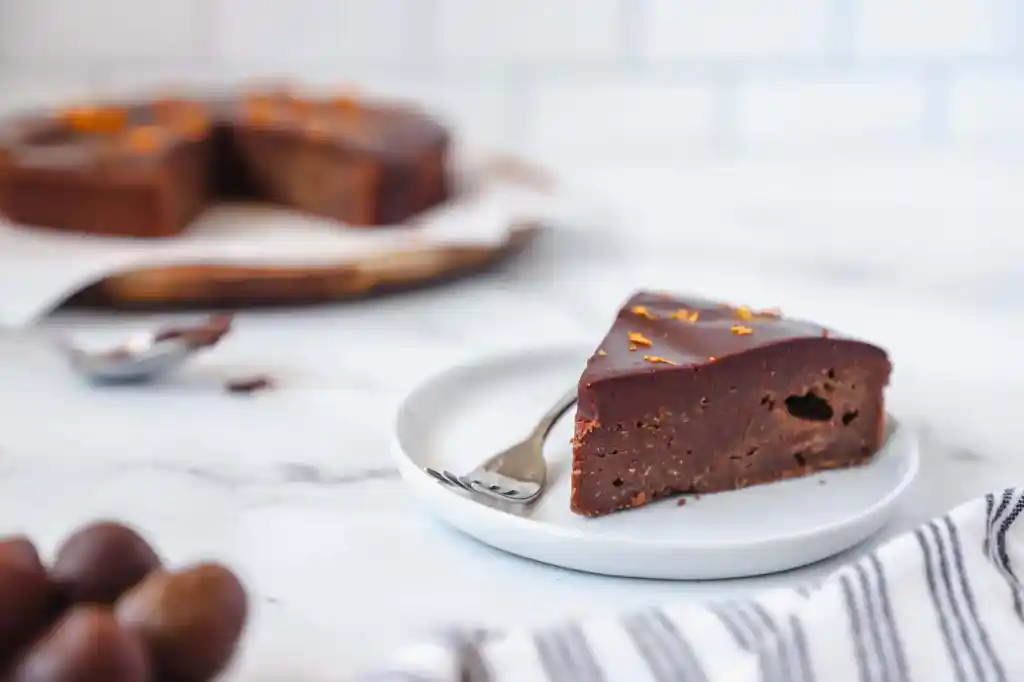
Chocolate meets chestnut
This is the cake I make when I want something that feels fancy but behaves like a weeknight recipe. Chestnut puree gives you that naturally sweet, cozy flavor and a plush, dense crumb. Chocolate takes it into full holiday dessert territory without making it fussy.
It bakes up as a rich round cake that slices cleanly once cooled, and it is one of those rare desserts that tastes even better the next day. If you have ever made a chocolate cake that turned out dry, you are going to love this one. Chestnut puree helps keep it moist and fudgy in a way that is hard to fake with flour-based cakes.
What to expect
This batter is thicker than a standard boxed cake mix. Think brownie batter that loosens a bit once you fold in the chestnut puree. That thickness is a good sign because it means the cake will bake up fudgy and sturdy.
For doneness, skip the "perfectly clean" toothpick goal. You want a few moist crumbs clinging to the tester, and the top should look set with tiny cracks around the edges. You may also notice the edges pulling slightly from the pan. The cake will firm up as it cools, so do not overbake it trying to get a bone-dry tester.
Pan note, because it matters: an 8-inch round gives you a taller slice and usually needs the longer end of the bake time. A 9-inch bakes a little faster and looks a bit more torte-like.
Chestnut shortcuts
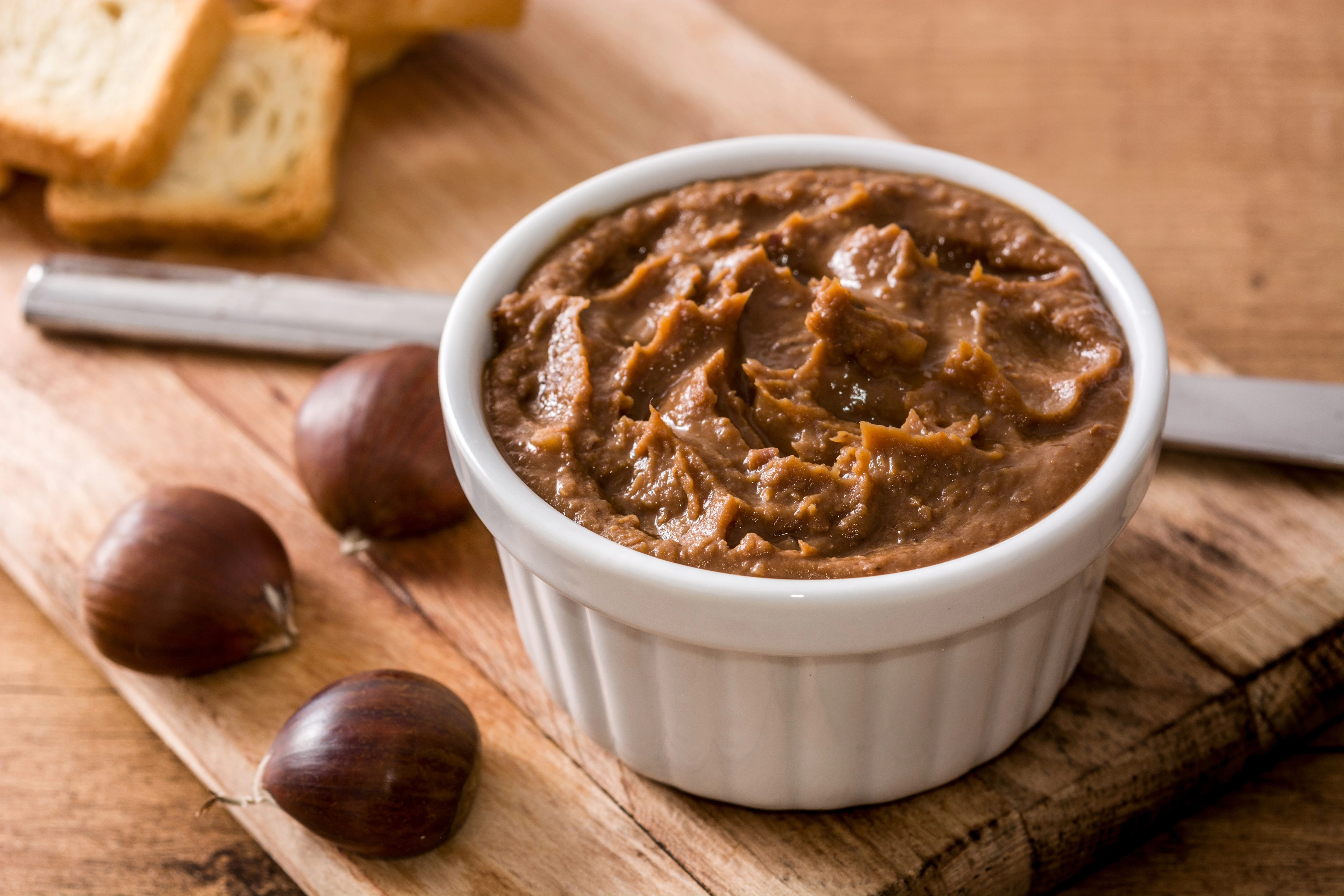
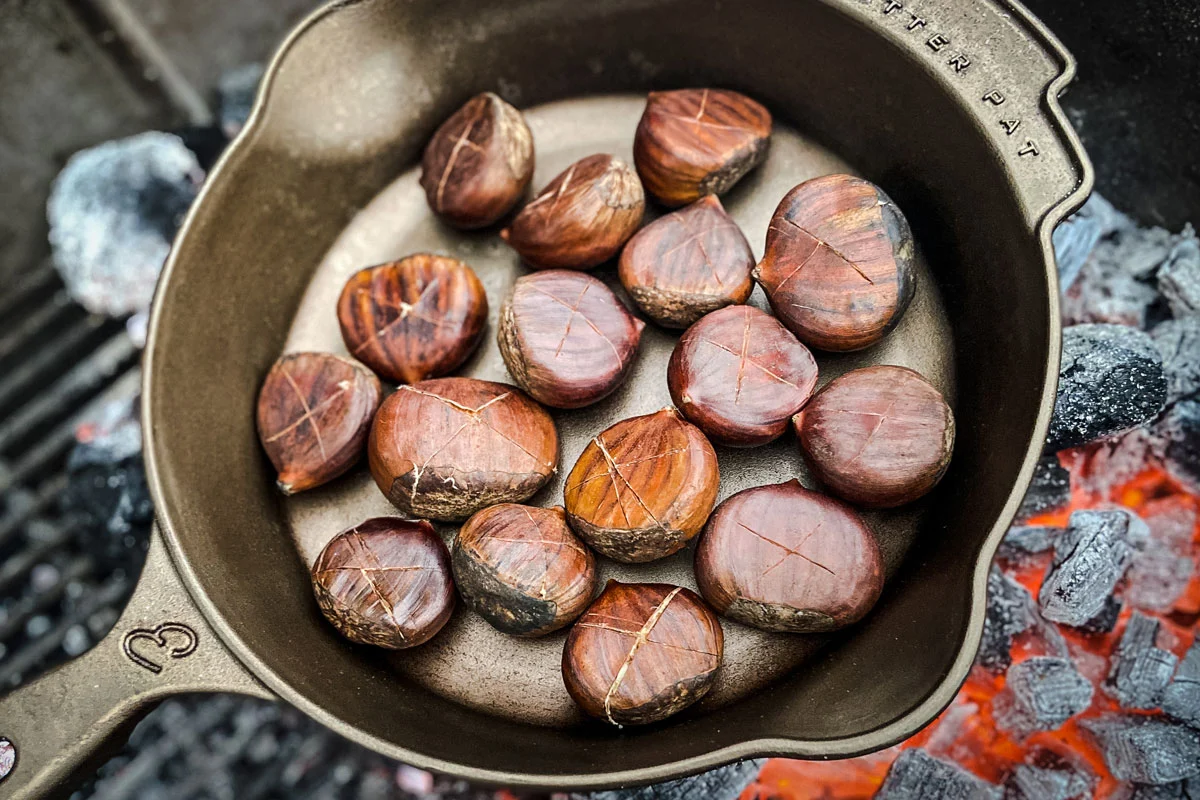
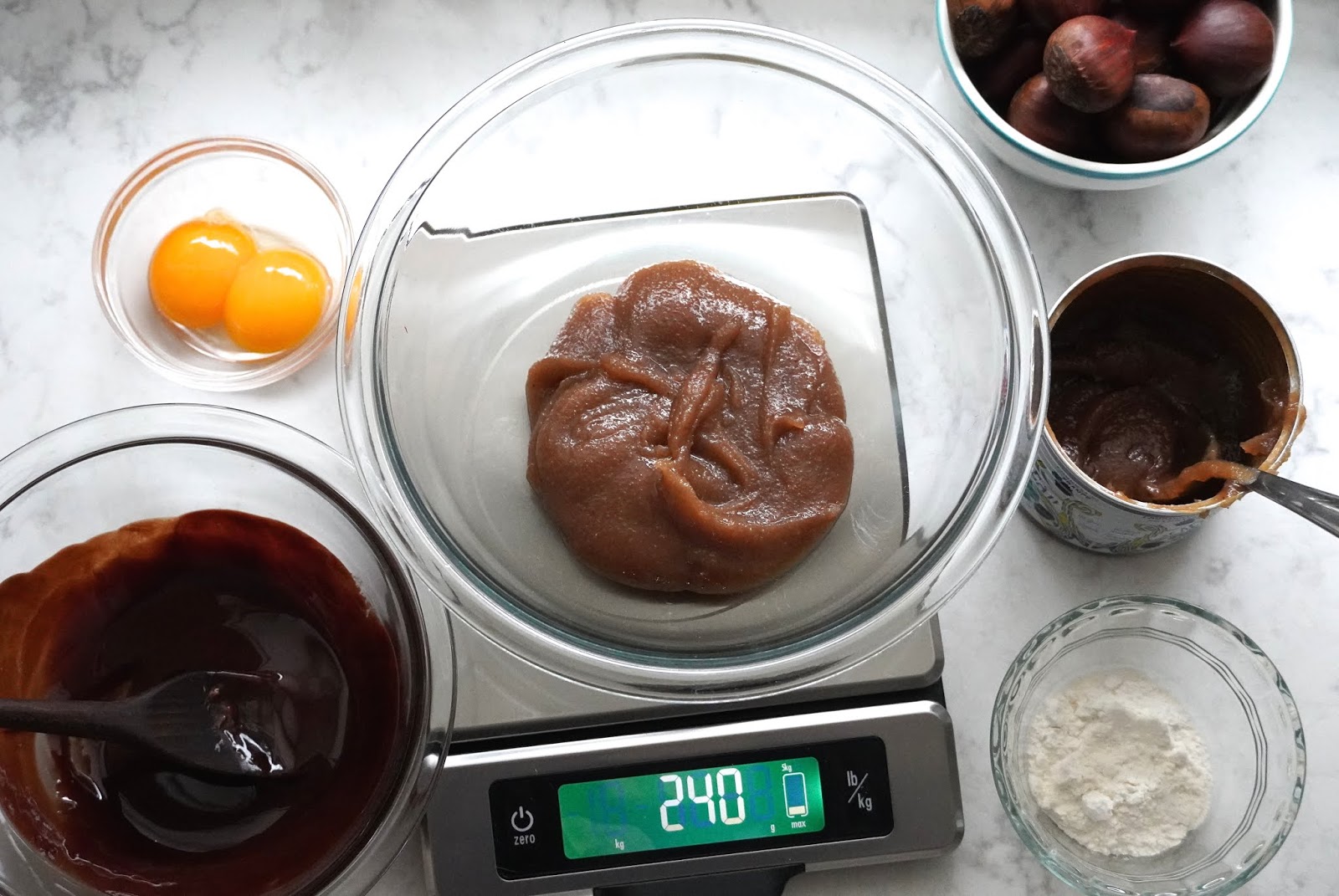
I developed this recipe to work with shelf-stable unsweetened chestnut puree. That is not the same thing as sweetened chestnut spread or chestnut cream, which can make the cake much sweeter. If you need help starting from whole nuts, my How To Roast Chestnuts post walks you through it. You can also start from cooked chestnuts and blend into puree. See Chestnut Puree for a reliable method.
Finish it your way
When I am in a hurry, I dust the cooled cake with cocoa powder and call it done. When I want the dramatic version, I pour a quick ganache over the top and let it drip naturally. Either way, this is a great make-ahead cake. Once it is fully cool, keep it covered at room temperature, and it stays even better the next day.
Why it works
- Chestnut puree adds moisture and structure. It creates a naturally dense, tender crumb that reads as luxurious, not heavy.
- Butter plus cocoa makes the chocolate flavor rounder. Cocoa gives deep flavor without needing melted chocolate in the batter.
- A thick batter prevents a dry bake. You are aiming for brownie-like thickness so the cake stays fudgy after cooling.
- The doneness cue is realistic. Moist crumbs on the tester and a set top keep you from overbaking.
Ingredient notes
- Chestnut puree: Use unsweetened puree if possible. If yours is sweetened, reduce the sugar slightly and taste the batter. For more guidance, see Chestnut Puree.
- Unsweetened cocoa powder: Natural or Dutch-process both work here. Dutch-process will taste smoother and look darker.
- Butter: This recipe is best with real butter for flavor. Salted is fine. Just reduce added salt a pinch.
- Eggs: Room temperature eggs mix in faster and help the cake bake evenly.
- Heavy cream (for ganache): Full-fat cream makes the simplest, glossiest finish. If you skip ganache, a cocoa dusting is perfect.
Equipment
- 8-inch or 9-inch round cake pan
- Parchment paper for lining the bottom
- Mixing bowls
- Whisk and rubber spatula
- Fine-mesh sieve (for cocoa dusting, optional)
- Wire rack for cooling
Pro tips
- Line the pan. A parchment round on the bottom makes this cake stress-free to unmold.
- Watch batter thickness. If your puree is very stiff, the batter can look almost scoopable. That is okay. If it is so thick it will not spread, add 1 to 2 tablespoons milk to loosen.
- Do not chase a clean toothpick. Pull the cake when the tester shows moist crumbs, not wet batter.
- Cool completely before ganache. If the cake is warm, ganache will slide right off and soak in unevenly.
Substitutes
- For chestnut puree: There is not a perfect 1:1 substitute for flavor. If you must, pumpkin puree will mimic moisture and texture, but it will taste like chocolate pumpkin cake.
- For heavy cream (ganache): Full-fat coconut milk can work for a dairy-free ganache. Use the thick part from a well-chilled can.
- For butter: A plant-based butter substitute works, but choose one meant for baking.
- For gluten-free needs: This cake is naturally gluten-free if you use a gluten-free labeled cocoa and confirm your chestnut puree has no additives. For another gluten-free dessert idea, try Gluten-Free Chocolate Cake.
Variations
- Orange-chocolate: Add 1 teaspoon orange zest to the batter and a splash of orange extract to the ganache.
- Espresso-chocolate: Add 1 to 2 teaspoons instant espresso powder to the cocoa for a deeper chocolate flavor.
- Holiday crunch: Sprinkle chopped roasted chestnuts or toasted hazelnuts over the ganache before it sets.
Serving ideas
- Serve thin slices with lightly sweetened whipped cream.
- Add fresh berries for contrast.
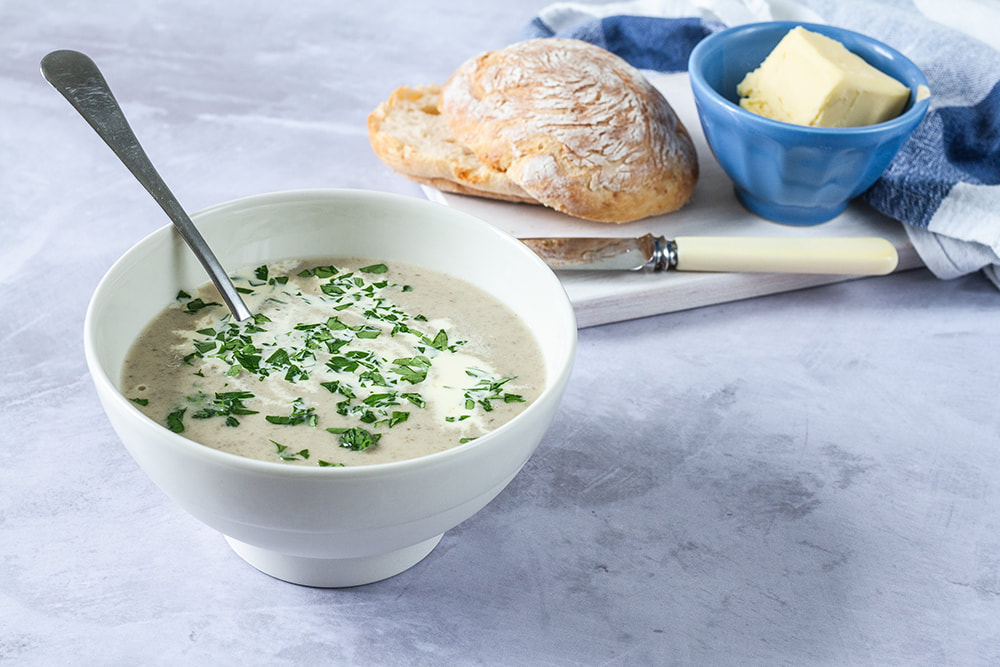
- For a full holiday spread, pair it after something cozy like Chestnut Soup or alongside a dessert buffet with Classic Tiramisu.
Storage
- Room temperature: Store covered for up to 2 days.
- Refrigerator: Store airtight up to 5 days. Let slices sit at room temperature 20 to 30 minutes for the best texture.
- Freezer: Freeze individual slices wrapped well up to 2 months. Thaw overnight in the fridge, then bring to room temp.
Common mistakes
- Overbaking for a clean tester: This is the number one way the cake turns dry. Moist crumbs are the goal.
- Using warm ganache on a warm cake: It will soak in and look dull. Cool the cake completely first.
- Skipping the parchment: This cake is tender and likes to cling to the pan. Line the bottom and grease the sides.
- Assuming all chestnut puree is the same: Some are sweetened and some are not. Taste and adjust sugar if needed.
FAQ
Is chocolate chestnut cake supposed to be dense?
Yes. Think fudgy and plush, not airy. Chestnut puree naturally creates a tighter crumb, and that is part of the charm.
What should the batter look like?
Thicker than typical cake batter, closer to brownie batter. It should mound slightly when you lift the spatula, then slowly relax back into the bowl.
How do I know it is done without overbaking?
Look for a set top with small cracks near the edges, edges that may pull slightly from the pan, and a tester that comes out with moist crumbs. If you see wet batter, give it a few more minutes.
Can I make it ahead?
Absolutely. The flavor deepens overnight. Bake the cake, cool it, cover it, and add ganache the next day if you want the prettiest finish.
Can I use homemade chestnut puree?
Yes, and it is delicious. If you are starting from whole chestnuts, use How To Roast Chestnuts as your first step, then blend into puree.
Recipe: Chocolate Chestnut Cake
A rich, round chocolate chestnut cake with a fudgy crumb, finished with a quick ganache or a simple cocoa dusting. Expect a thick batter and a moist-crumb doneness cue so you do not overbake.
- Prep Time
- 20 minutes
- Cook Time
- 30 to 38 minutes
- Total Time
- 1 hour 30 minutes
- Servings
- 10 slices
Ingredients
- 6 tablespoons (85 g) unsalted butter, plus more for greasing the pan
- 3/4 cup (150 g) granulated sugar
- 3 large eggs, at room temperature
- 1 cup (240 g) unsweetened chestnut puree
- 1/2 cup (50 g) unsweetened cocoa powder
- 1/2 teaspoon fine salt
- 1 teaspoon vanilla extract
- 1/2 teaspoon baking powder
- 1/4 cup (60 ml) milk, only if needed to loosen a very thick batter
- Ganache (optional): 4 oz (115 g) semisweet chocolate, finely chopped
- Ganache (optional): 1/2 cup (120 ml) heavy cream
- Cocoa dusting option: 1 to 2 tablespoons cocoa powder, for sifting over the cooled cake
- Optional garnish: chopped roasted chestnuts
Instructions
- Heat oven to 350°F (177°C). Grease an 8-inch or 9-inch round cake pan. Line the bottom with parchment, then grease the parchment.
- In a large bowl, cream the butter and sugar until smooth and slightly fluffy, about 1 to 2 minutes.
- Add the eggs one at a time, mixing well after each addition.
- Add the chestnut puree and vanilla and mix until fully combined. The mixture may look thick and creamy.
- Sift in the cocoa powder, salt, and baking powder. Fold or mix just until no dry cocoa remains. The batter should be thick, like brownie batter. If it is so thick it will not spread in the pan, mix in milk 1 tablespoon at a time until it becomes spreadable.
- Scrape the batter into the prepared pan and smooth the top.
- Bake until the top looks set and a toothpick inserted into the center comes out with moist crumbs (not wet batter), 30 to 38 minutes. The edges may pull slightly from the pan.
- Cool in the pan for 15 minutes, then run a thin knife around the edge and turn the cake out onto a wire rack. Peel off parchment and cool completely.
- For ganache (optional): Place chopped chocolate in a heatproof bowl. Heat heavy cream just until steaming and small bubbles form around the edges, 1 to 2 minutes. Pour over chocolate, let sit 2 minutes, then whisk until glossy and smooth.
- Pour ganache over the completely cooled cake, letting it drip naturally down the sides. Let set 20 to 30 minutes before slicing. Garnish with chopped roasted chestnuts if you like.
- For cocoa dusting instead: Sift cocoa powder over the completely cooled cake. Slice and serve.
Notes
- Sweetened chestnut puree: If your puree is sweetened, reduce sugar to 1/2 cup (100 g) and adjust to taste next time.
- Pan size: An 8-inch pan yields a taller cake and may need the full bake time. A 9-inch pan bakes a bit faster.
- Doneness cue matters: A completely clean toothpick usually means this cake is overbaked.