Roast chestnuts the easy way with oven or skillet directions, safe scoring tips, and the steam-and-peel trick for shells that actually come off. Includes sto...
Delishing
How to Grill Chestnuts

Maya Brooks
Maya Brooks is a dedicated home cook and the lead recipe developer at Delishing, where she shares practical, foolproof meals for everyday life. With over a decade of hands-on kitchen experience, she specializes in creating approachable dishes that fit a variety of dietary needs and modern cooking methods. Maya is passionate about helping busy people get delicious, stress-free food on the table without needing formal culinary training.
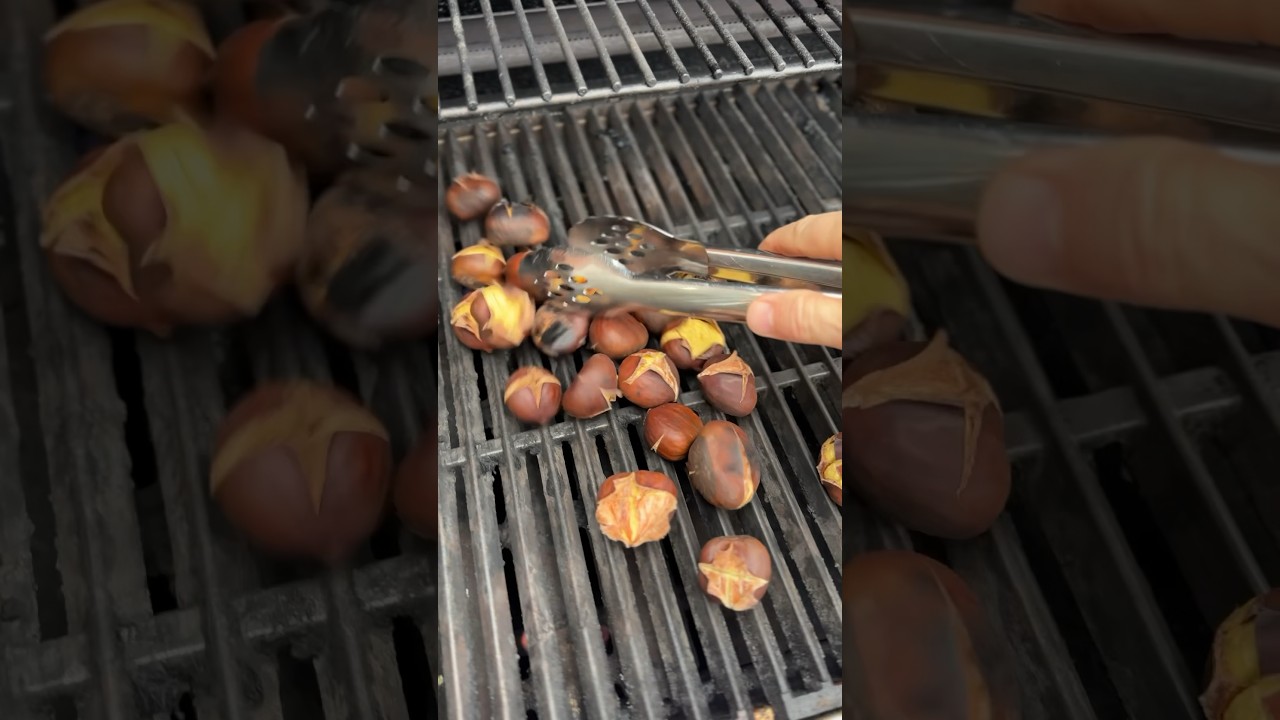
When I want that cozy roasted-chestnut flavor but I already have the grill going, I skip the oven and roast them right on the grate. The key is simple: score them well, use the lid (you are basically turning your grill into a little outdoor oven), and do most of the cooking over indirect heat so they cook through without turning into tiny charcoal rocks.
This guide is specifically for roasting fresh chestnuts on a covered gas or charcoal grill grate. No pans, no fireplace setups, no smoker schedules.
Before you start
Maya note: Make sure you are using edible sweet chestnuts, not horse chestnuts. If you have ever wondered about the difference, this quick guide helps: Horse Chestnuts vs Sweet Chestnuts.
Chestnuts are starchy and moist inside, with a hard shell and a papery inner skin. They need two things to be enjoyable:
- A deep score so steam can escape and the shells can open.
- Steady heat plus a covered environment so the interiors soften before the outsides scorch.
If you have never prepped fresh chestnuts before, my full walkthrough on scoring and basic roasting is here: How to Roast Chestnuts. Then come back for the grill-specific setup below.
What you need
- Fresh chestnuts (not jarred or canned)
- Small sharp knife (paring knife works well)
- Grill tongs
- Large bowl and a clean kitchen towel (for peeling)
Nice to have: heat-resistant gloves for peeling, because the best time to peel is when they are still warm.
How to score chestnuts
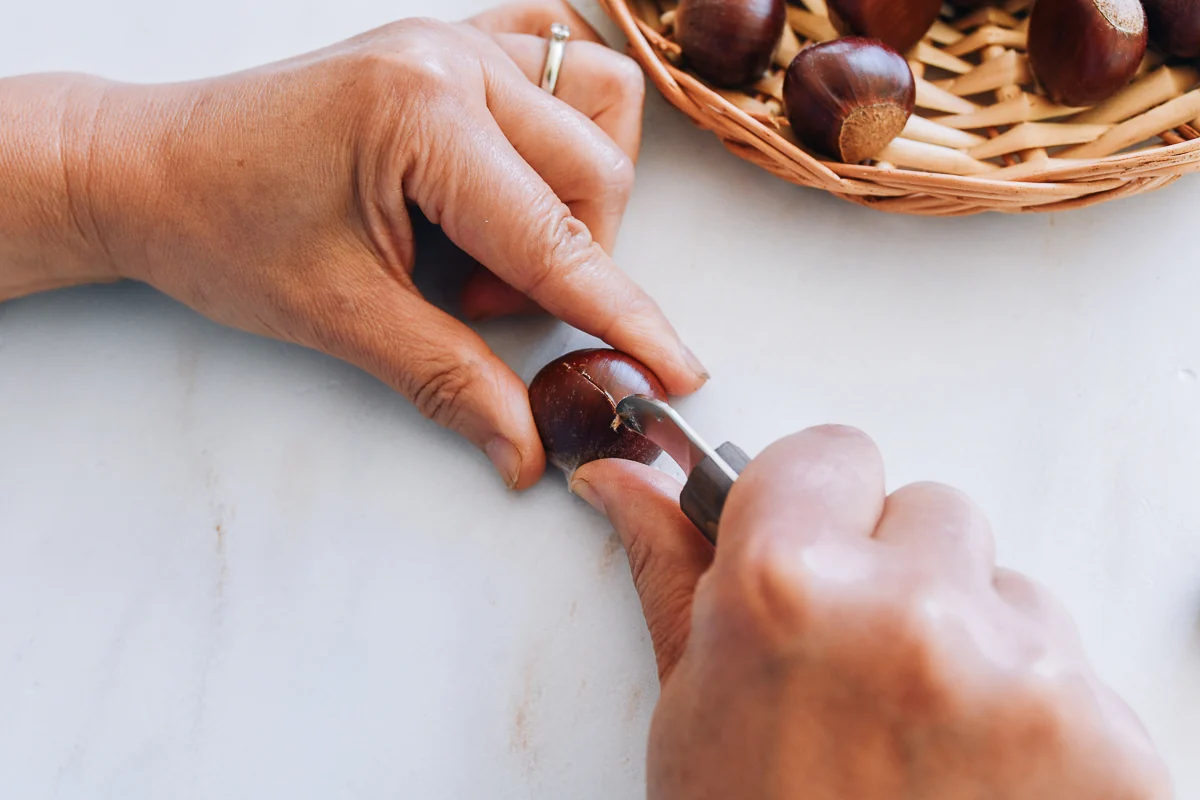
Scoring is non-negotiable. It prevents pressure buildup and makes peeling possible.
Best scoring method
- Place a chestnut on a cutting board (flat side down so it does not roll).
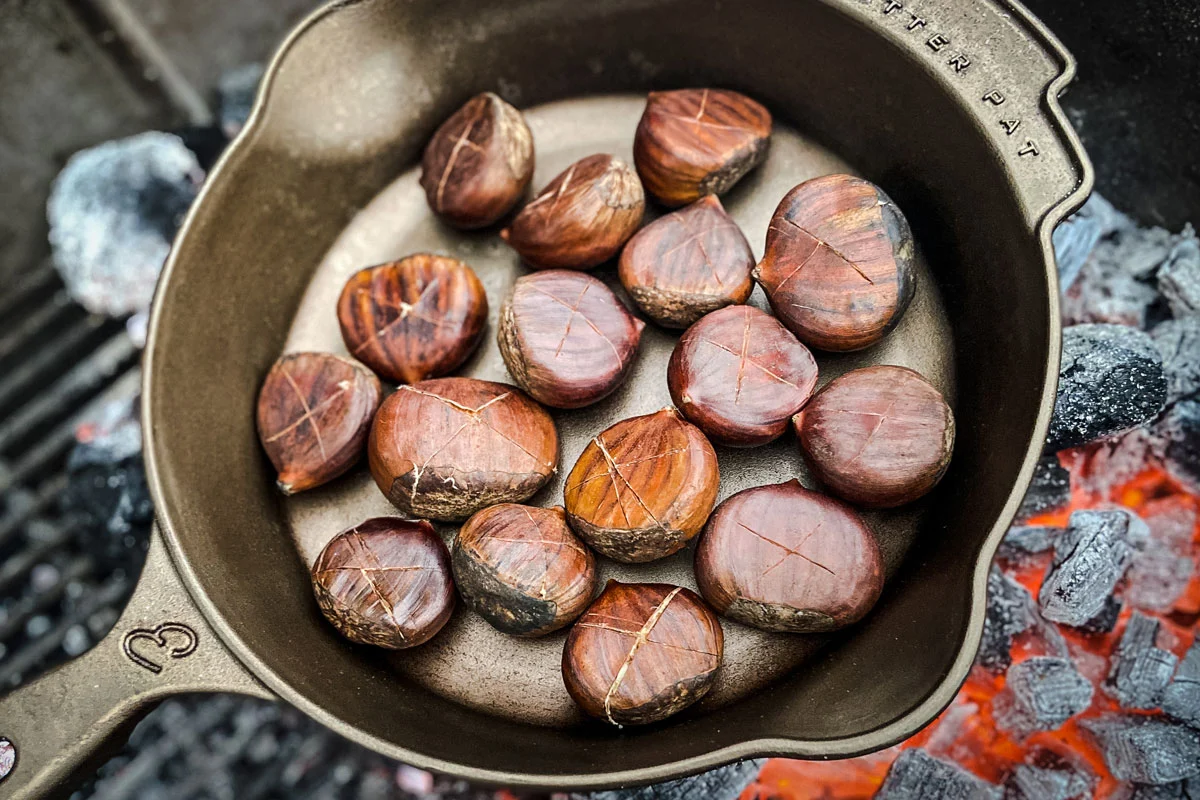
- Cut a large X across the rounded side, about 3/4 to 1 inch wide.
- Cut through the shell. Aim to just nick the nut underneath, but do not stress if you go a little deep.
Maya note: If your X is tiny or shallow, the shells will not open and you will be fighting them later. I would rather you be a little bold with the knife than too cautious.
Grill setup
Chestnuts do best with a two-stage approach:
- Direct heat (brief): to get the shells to split and start blistering.
- Indirect heat (most of the time, covered): to gently cook the insides until tender.
Gas grill
- Preheat with the lid closed for 10 to 15 minutes.
- Aim for medium-high overall. On many grills, that often lands around 400 to 450°F, but treat the number as a starting point, not a promise.
- Create a two-zone fire: one side on medium-high, the other on low or off.
Charcoal grill
- Light charcoal and let it ash over.
- Bank coals to one side for a hot zone and leave the other side coal-free for an indirect zone.
- Cover with the lid and try to stabilize in a medium-high range (often around 400 to 450°F if your grill has a thermometer).
Maya note: Chestnuts love a stable, covered heat. Lid-up grilling is not dangerous here, it just makes temps swing and creates more hot spots.
How to grill chestnuts
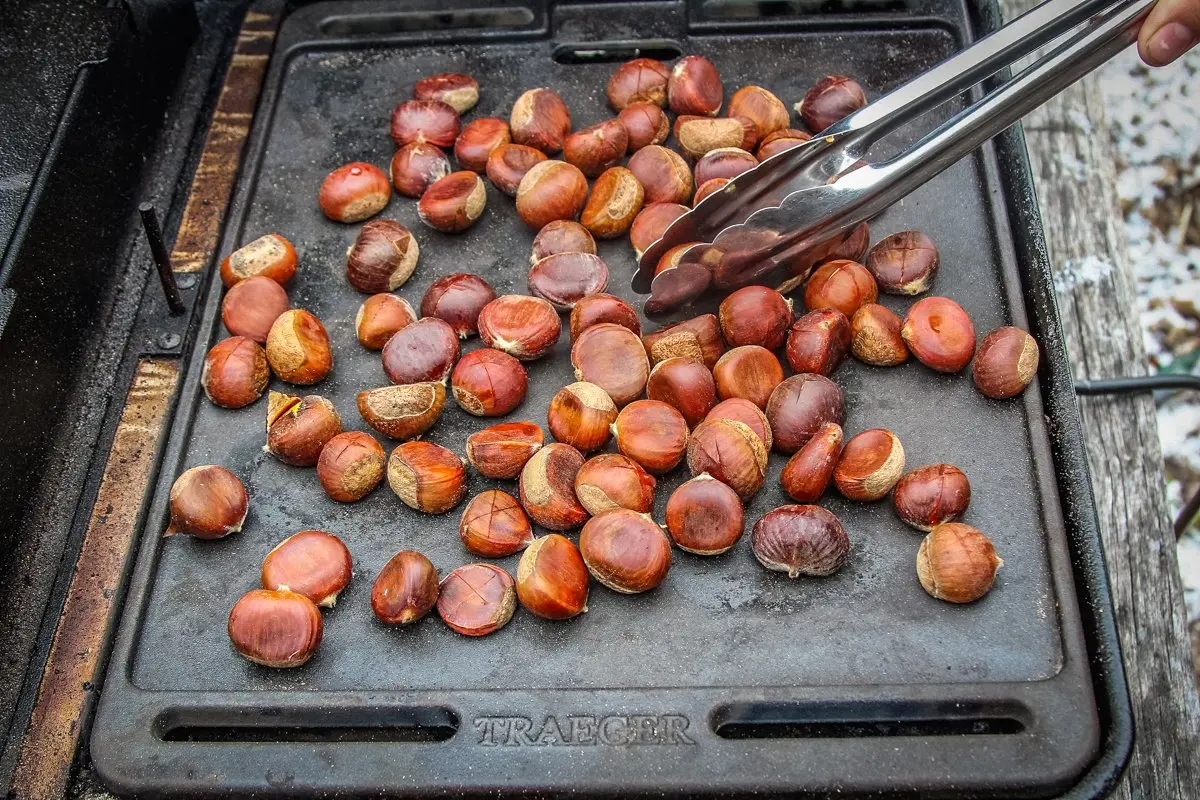
- Preheat, then lightly oil the grates. The safest way is a paper towel with a little oil, held with tongs. (Do this quickly and carefully because oil can smoke on hot grates.)
- Set the chestnuts cut-side up over direct heat. Close the lid. This quick blast helps the X open.
- Grill briefly over direct heat, then move. Start checking at 2 minutes and plan on 2 to 5 minutes total, just until you see splitting and light blistering.
- Move to indirect heat. Keep them in a single layer, and do not overload the space. Chestnuts roll, so I like to set each one with its flatter side down and nestle them close together so they stay put.
- Close the lid and finish over indirect heat. Expect 10 to 20 minutes depending on size and grill behavior. Turn every 5 or so minutes and start checking early.
- Pull when they are truly tender. Total cook time is often 12 to 25 minutes (small nuts on the low end, big ones on the high end).
Maya note: If you have mixed sizes, pull the smaller chestnuts as soon as they are done and leave the big ones to finish. That alone prevents half your batch from becoming dry little rocks.
Doneness cues
Forget precision here. Chestnuts vary a lot by size and freshness, and grills vary even more. I use a handful of signs together:
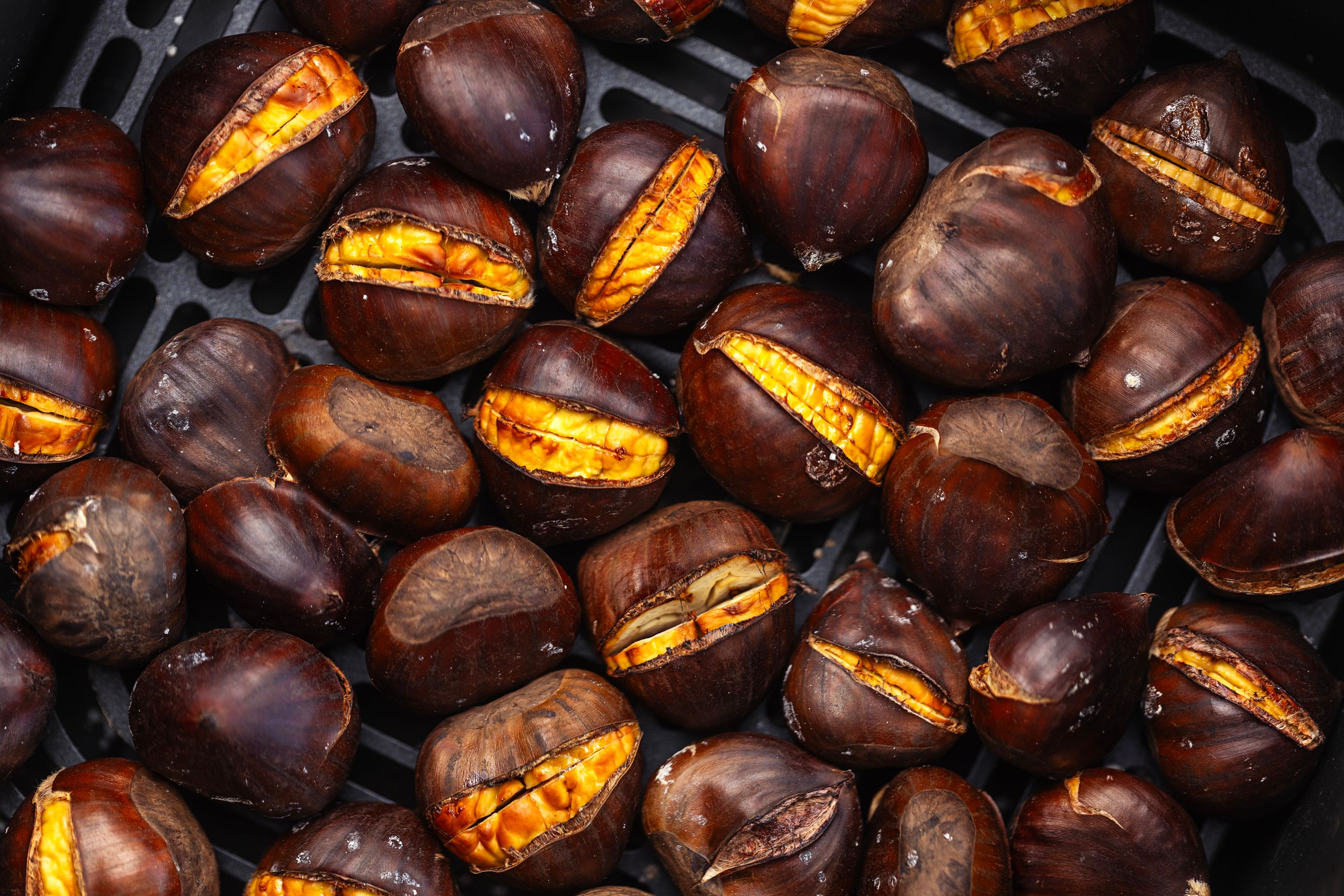
- The X is opened up and the shell is curling back.
- When you squeeze with tongs, the nut feels slightly yielding (not hard like a pebble).
- Peeling is easy, and the nut inside is tender throughout (not chalky or crunchy in the center).
- The aroma shifts from raw and starchy to sweet and nutty.
I skipped internal-temperature targets on purpose. Between the hard shell and the small size, a thermometer tends to be more annoying than helpful here.
Avoid burnt shells
These are the two most common grill chestnut problems, and they usually come from the same cause: too much direct heat for too long.
If the shells are getting black fast
- Move them to indirect heat sooner.
- Lower the hot side slightly (gas) or spread coals out a bit (charcoal).
- Keep the lid closed as much as possible to avoid big temperature swings.
If the insides are still hard
- They need more time over indirect heat with the lid on.
- Make sure your X score is deep enough. Shallow scoring can keep the shell clamped down and slow things along.
- Large chestnuts simply take longer. Start checking early, then keep going until tender.
How to peel them
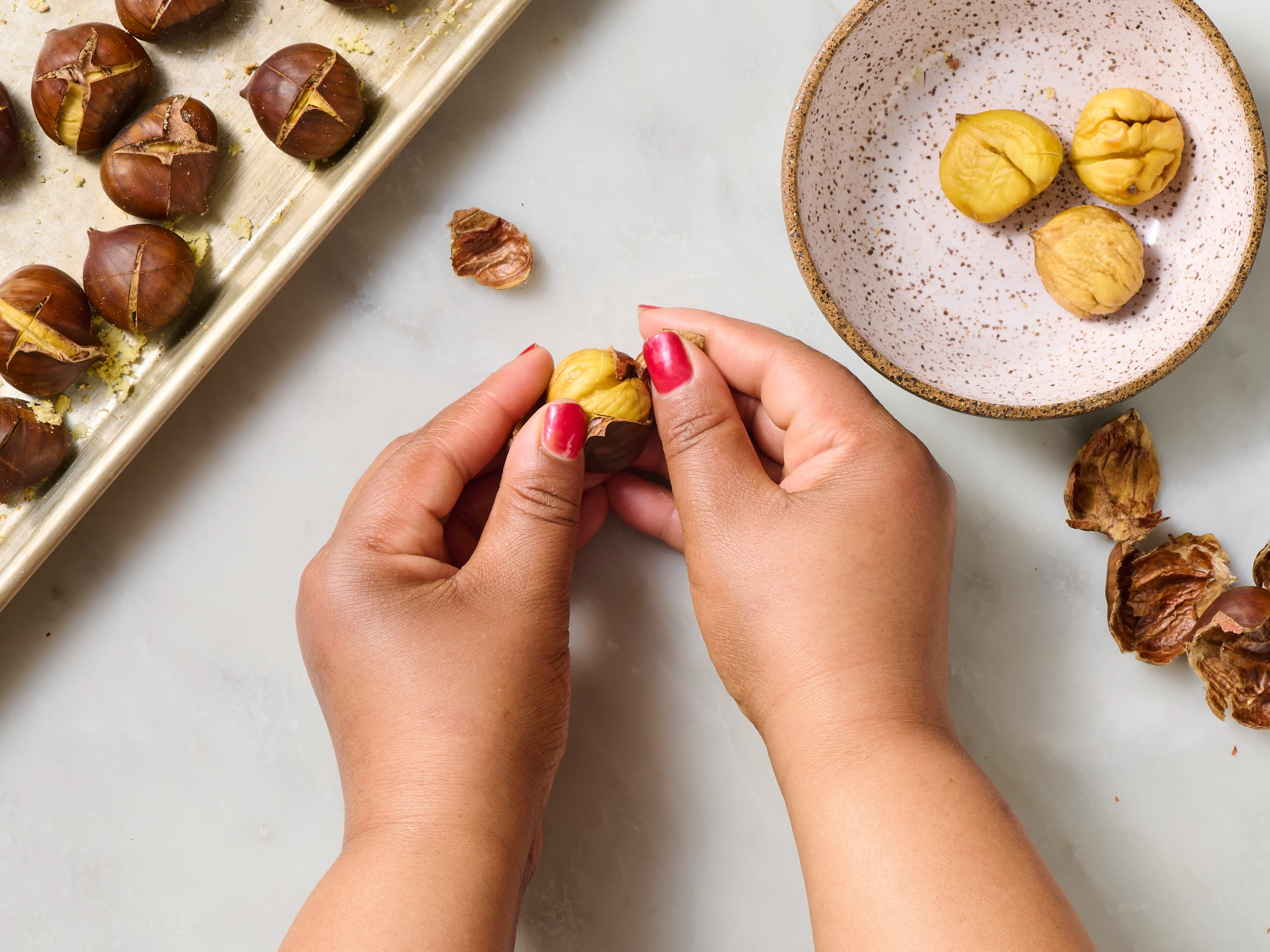
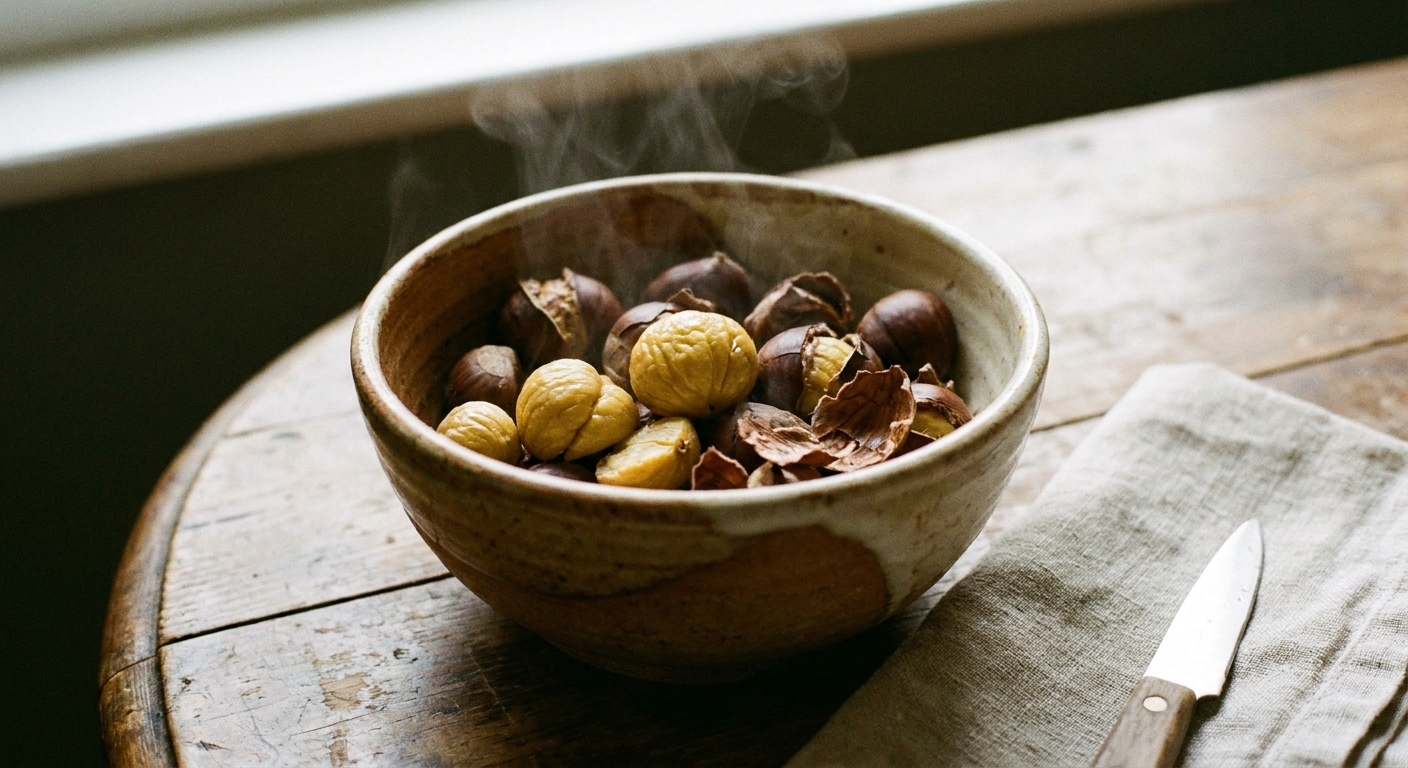
Peel chestnuts while they are still warm. This is the single most important peeling rule. As they cool, the inner skin clings tighter and peeling turns into a frustrating craft project.
My towel-steam method
- Dump hot grilled chestnuts into a bowl.
- Cover with a clean kitchen towel and let them sit 5 to 8 minutes.
- Peel one at a time: remove the hard shell first, then rub off the papery inner skin.
Maya note: If a batch cools down before you finish peeling, put a few back on indirect heat for 2 to 3 minutes to rewarm them, then peel again.
How many to grill
For snacking, I usually plan:
- 4 to 6 per person if they are part of a bigger spread.
- 8 to 10 per person if chestnuts are the main snack.
If you want a more detailed breakdown, see: How Many Chestnuts Per Person.
Serving ideas
Grilled chestnuts are sweet, earthy, and a little smoky. I love them:
- As-is with flaky salt and a pat of butter
- Chopped and tossed into a warm salad
- Folded into stuffing: Chestnut Stuffing
- Pureed into soups for a creamy, naturally thick texture: Chestnut Soup
Storage and reheating
Short-term storage
Store peeled chestnuts in an airtight container in the refrigerator and try to use them within 3 to 4 days. If anything smells off, tastes stale, or shows mold, toss it. Chestnuts are moist, and they do not age gracefully.
Reheating
Rewarm gently over indirect grill heat with the lid closed for a few minutes, just until hot. High direct heat can dry them out fast.
If you are starting with fresh, unroasted nuts and want to keep them in good shape before grilling, this helps: How to Store Fresh Chestnuts.
Troubleshooting
They did not open at the X
Your cuts were likely too shallow or too small. Next time, make the X wider and cut firmly through the shell. On the grill, start them over direct heat just long enough to encourage splitting, then move to indirect.
They taste bitter
The papery inner skin was not fully removed, or the nuts were past their prime. If you suspect freshness, check: How to Tell If Chestnuts Have Gone Bad.
Some are perfect and some are raw
That is usually a combo of grill hot spots and mixed sizes. Sort by size if you can, keep them in a tight single layer so they do not roll into hotter zones, and turn them on a schedule so you are not guessing.
More methods
If grilling is not in the cards, Delishing has other appliance-specific guides:
For nutrition details and what to expect from a serving, see: Roasted Chestnut Nutrition.