Delishing
Steamed Chestnuts

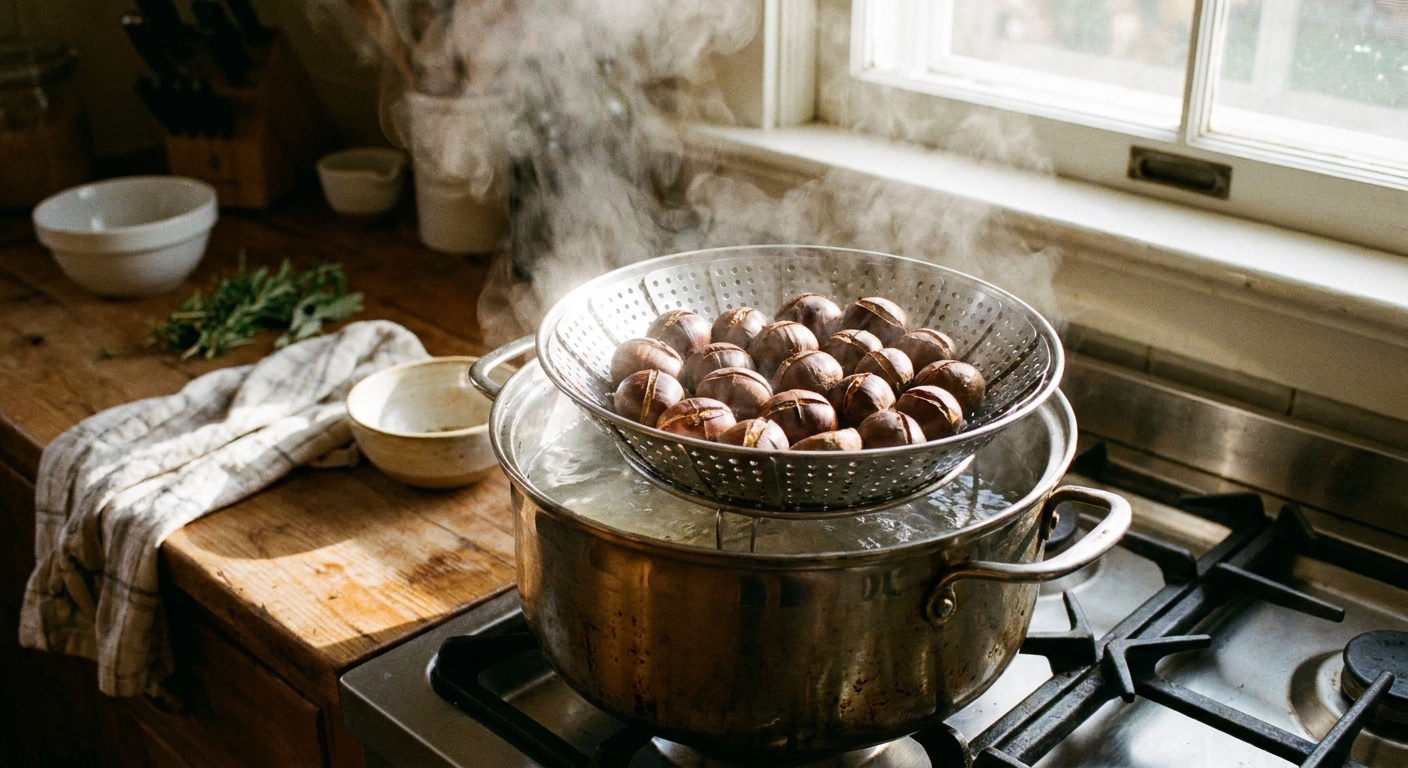
The no-fuss way to peel chestnuts
When I want chestnuts that peel without a wrestling match, I steam them. You still get that cozy, sweet chestnut flavor, but the shells and that stubborn inner skin often loosen up in a way that feels almost unfairly helpful. This is the method I reach for when I am prepping a big batch for stuffing, soup, or a snack bowl on the counter.
A quick note up front: always score chestnuts before steaming. It gives steam a way in, helps the peel release, and it also prevents the occasional burst in the pot. (It only takes a minute, and it is worth it.)
The key is simple: keep the chestnuts above the water and steam them just until the centers are tender. Then peel while they are still warm. If you are doing a big peel session, I like an optional quick ice bath, just long enough to make them easier to handle, not so long that they fully chill. You are still aiming to peel them warm.
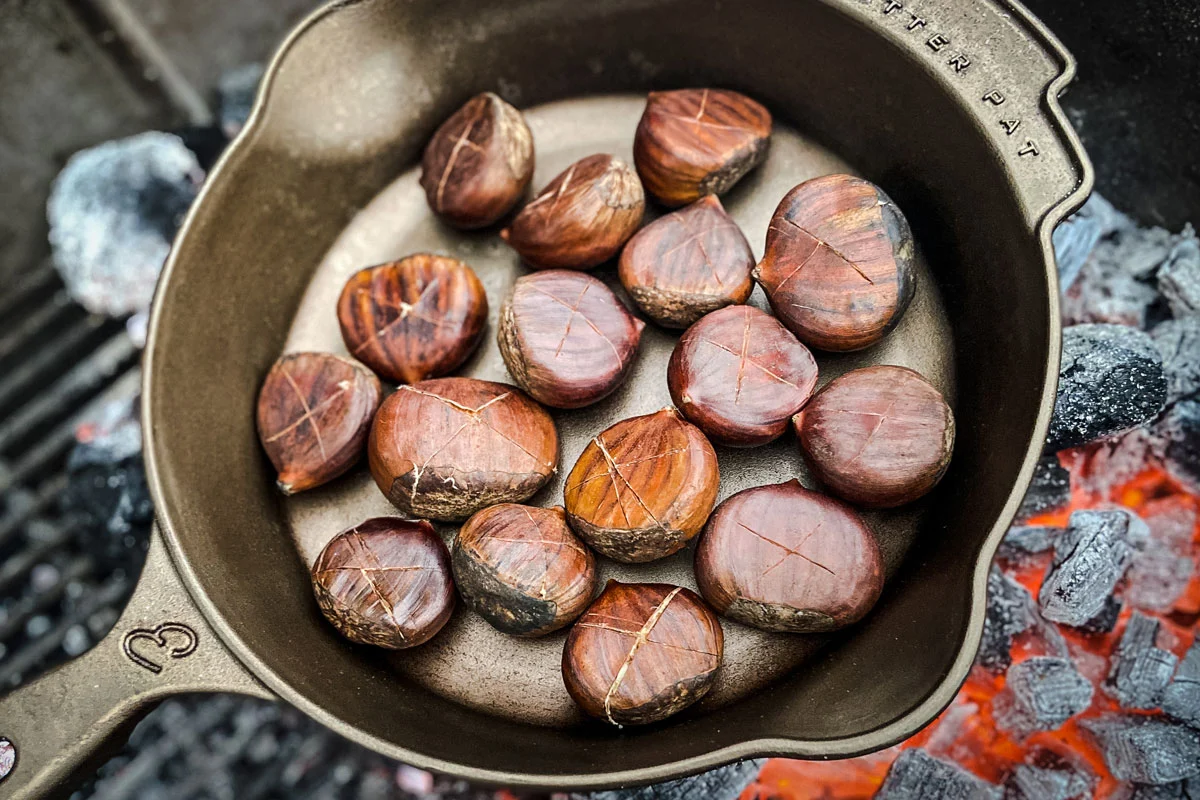
If you are curious about dry-heat flavor and blistered shells, you can also check out How To Roast Chestnuts. For this page, we are sticking with simple stovetop steaming in a pot with a basket.
Why this works
- Steam keeps the nuts moist, so the interiors turn tender without drying out.
- Chestnuts sit above simmering water, which helps loosen shells while avoiding waterlogged flavor.
- Scoring gives steam a path in and prevents the shells from bursting unpredictably.
- A short ice bath helps with big batches by halting cooking and making them easier to handle while you peel.
Ingredient notes
Fresh chestnuts
Look for chestnuts that feel heavy for their size, with glossy shells and no visible mold. Very light chestnuts are often dried out inside. If yours have been sitting a few days, a quick rinse is fine, just dry them well before scoring so they do not slip.
Water
This is just for the pot. The chestnuts should not touch it.
Optional: salt
Salting the steaming water lightly can season the chestnuts subtly, but it is not required.
Equipment
- Large pot with a lid
- Steamer basket or steaming insert that holds chestnuts above the waterline
- Sharp paring knife for scoring
- Large bowl for an ice bath (helpful for big batches)
- Clean kitchen towel to grip hot chestnuts while peeling
Pro tips
- Score on the rounded side. I prefer a single long slash across the rounded belly (not the flat side). It is easier to get your knife in and it opens nicely as the shell expands.
- Cut through the shell, not deep into the nut. You want a confident cut, but not a gouge.
- Keep the water at a steady simmer. If it boils hard and splashes, the chestnuts can get wet and cook unevenly.
- Peel warm. Chestnuts are friendliest when warm. If they cool down while you work, re-steam for 1 to 2 minutes to rewarm.
- For a large peel session, use an ice bath briefly. A quick dip cools the shells so you can handle them, without chilling them so much that peeling becomes harder. Drain well and start peeling right away.
Substitutes
- Steamer basket swap: If you do not have a steamer basket, a metal colander that fits inside your pot and sits above the water can work, as long as you can still cover with a lid. Keep the chestnuts out of the water.
- No ice bath: Skip it if you are doing a small batch. Just peel with a towel while they are warm.
Variations
- Sweet snack bowl: Toss peeled chestnuts with a tiny pinch of salt and a small knob of butter while warm.
- Herby finish: Drizzle with olive oil and sprinkle with rosemary or thyme for a savory nibble.
- Kitchen prep mode: Steam, peel, then chop for chestnut stuffing or fold into a creamy base for chestnut soup.
Serving ideas
- Serve warm with a sprinkle of flaky salt.
- Chop and stir into chestnut risotto.
- Puree for a smooth spread or dessert filling using chestnut puree ideas.
- Add to holiday sides like chestnut stuffing.
Storage
- Refrigerate: Store peeled chestnuts in an airtight container in the fridge and use within 3 to 4 days.
- Freeze: Freeze peeled chestnuts in a zip-top freezer bag, pressed flat, for up to 3 months. Thaw overnight in the fridge.
- To rewarm: Gently warm in a covered pan with a splash of water, or steam for a couple of minutes just until heated through.
If you are storing unpeeled fresh chestnuts, see How To Store Fresh Chestnuts for practical timing and tips.
Common mistakes
- Letting the chestnuts touch the water: That turns this into a different cooking method and can dull the flavor. Keep them elevated.
- Not scoring (or scoring too timidly): A good cut helps steam penetrate and makes peeling possible.
- Oversteaming: Chestnuts can get mealy if they go too long. Start checking early and pull them when tender.
- Waiting too long to peel: The inner skin tends to cling as they cool. Peel while warm for best results.
FAQ
How do I know when steamed chestnuts are done?
They are done when the scored shell curls back a bit, and a chestnut feels tender all the way through when you pinch it (use a towel) or pierce the cut edge with the tip of a paring knife. The nut inside should be creamy and not chalky.
Do I have to peel them right away?
For easiest peeling, yes. If you cannot, cover the hot chestnuts with a towel to hold warmth while you work in batches, or give them a quick 1 to 2 minute re-steam to loosen things again.
Why is the papery inner skin sticking?
Usually it is either undercooked (steam a few more minutes) or the chestnuts cooled too much. Warmth is your best helper here.
Can I steam a big batch at once?
Yes, as long as steam can circulate. Do not pack them in a tight mound. If needed, steam in two rounds.
Should I soak chestnuts before steaming?
I do not find it necessary for fresh chestnuts. A thorough score and steady steam do the heavy lifting.
Steamed Chestnuts
Fresh chestnuts steamed above simmering water until tender and easy to peel, with an optional ice bath for comfortable big-batch peeling.
- 1 pound fresh chestnuts
- 2 to 3 inches water (for the pot)
- 1 teaspoon kosher salt (optional)
- Ice and cold water (optional, for an ice bath)
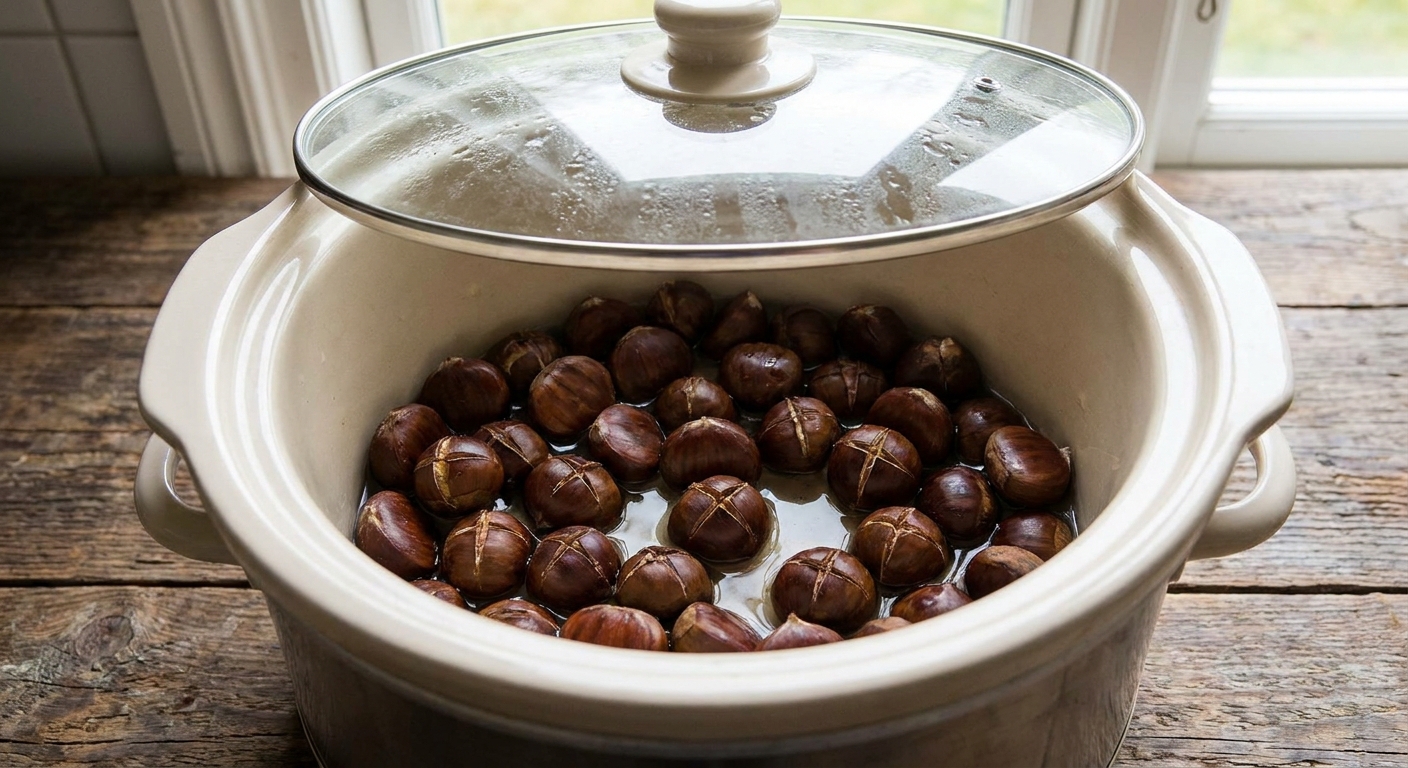
- Score the chestnuts. Rinse and dry the chestnuts. Using a sharp paring knife, cut a long slash across the rounded side of each chestnut (cut through the shell). Work carefully and keep your fingers out of the knife path.
- Set up the steamer. Add 2 to 3 inches of water to a large pot (and the salt, if using). Insert a steamer basket or steaming insert, making sure the water sits below the basket so the chestnuts will not touch the water.
- Bring to a simmer. Cover the pot and bring the water to a steady simmer over medium-high heat.
- Steam. Add the scored chestnuts to the steamer basket in a single layer as much as possible. Cover and steam until the shells pull back at the cuts and the chestnuts are tender, 20 to 30 minutes. Start checking at 20 minutes.
- Optional ice bath for big batches. If you are peeling a lot at once, transfer the hot chestnuts to a bowl of ice water for about 60 seconds, then drain well. This cools the shells enough to handle while keeping the nuts warm-ish for peeling.
- Peel while warm. Peel off the hard shell and the papery inner skin. Use a clean kitchen towel to hold hot chestnuts and protect your fingers. If the inner skin clings, return stubborn chestnuts to the steamer for 2 to 3 minutes, then try again.
- Doneness cue. A properly steamed chestnut is creamy and tender all the way through, with no crunchy or chalky center. Serve warm or use in your recipe.
Notes
- Keep them above the water: This method is steaming, not submerging. Make sure the waterline stays below the basket throughout cooking.
- Steam time varies: Size and freshness matter. Large chestnuts can take closer to 30 minutes.
- Peeling tip: Chestnuts are easiest to peel warm. If they cool, a quick re-steam loosens the skins again.