Delishing
Tri-Tip Wellington

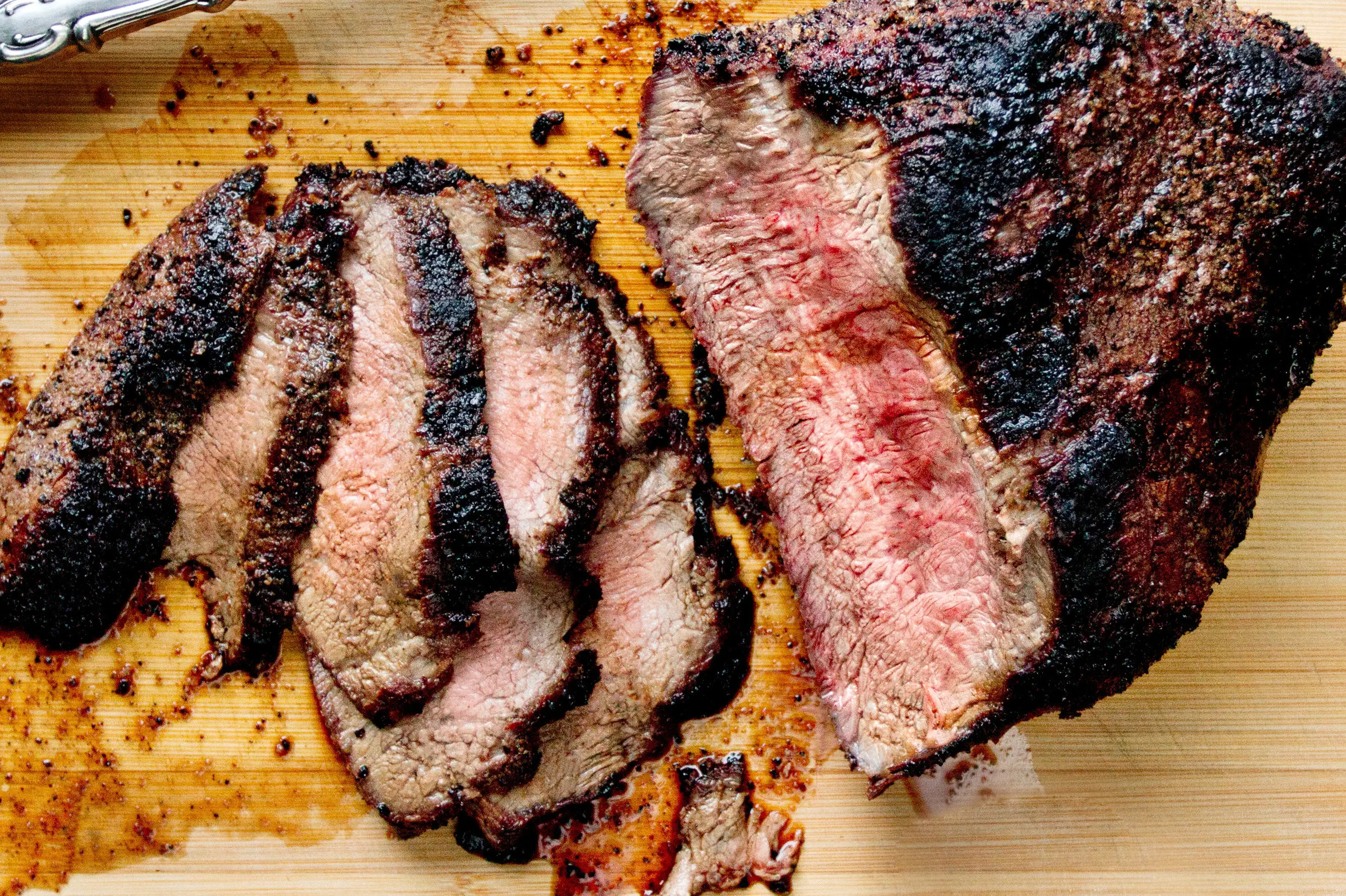
When I want something that feels wildly impressive but still weeknight-friendly with a little planning, I reach for a Wellington-style bake. Classic beef Wellington can be fussy (and pricey), so I started testing a tri-tip version in my own kitchen notebook. Tri-tip is deeply flavorful and usually easier on the budget than tenderloin, and its shape tucks into a snug pastry wrap beautifully. The one catch is that tri-tip can turn chewy if you slice it wrong, so plan to cut across the grain (and yes, the grain changes direction on the roast).
This recipe follows the non-negotiables that make any Wellington successful: dry the duxelles until it is truly paste-like, cool everything so the pastry stays flaky, chill the fully wrapped roast until the pastry feels firm to the touch, and rest before slicing so the juices stay where they belong. Those steps are also your best defense against the usual Wellington problems, like a soggy bottom or butter leaking out of warm pastry.
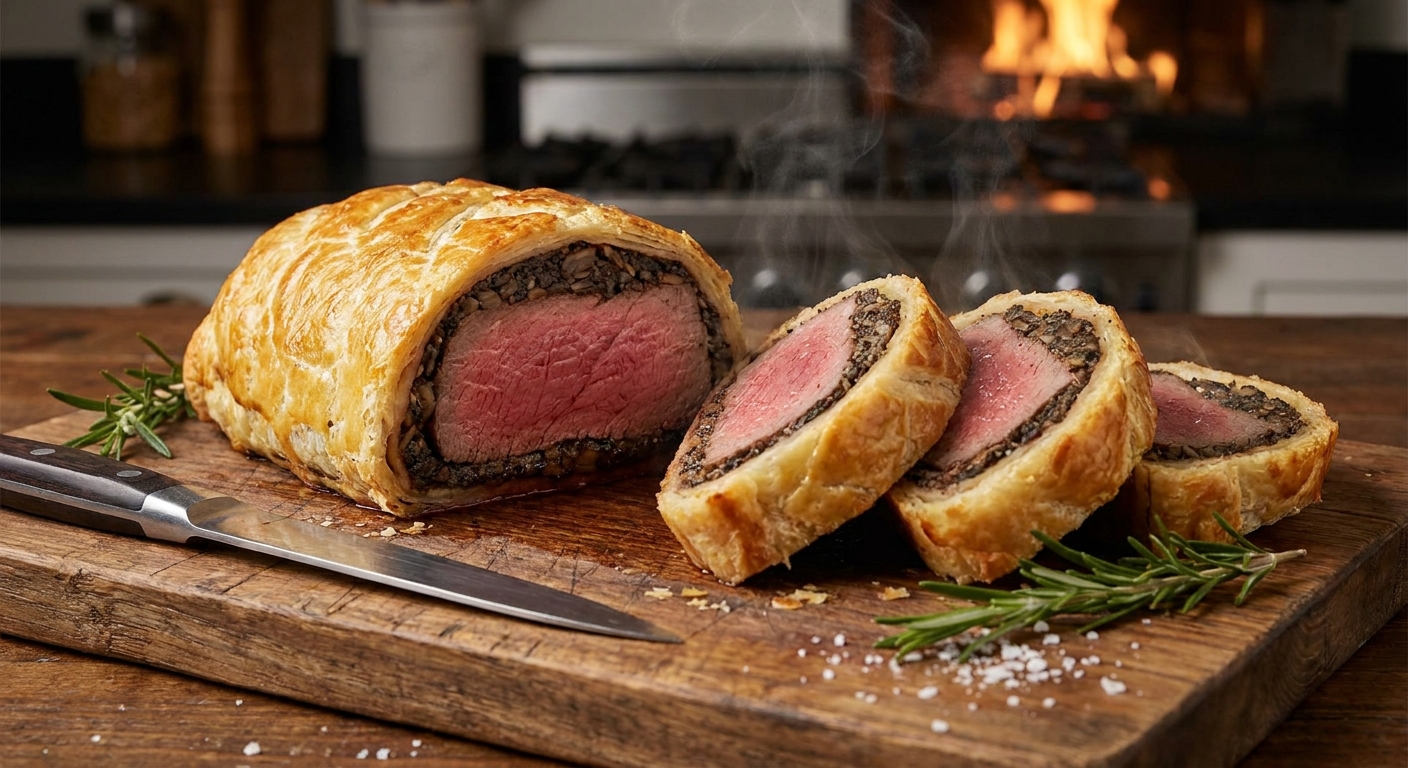
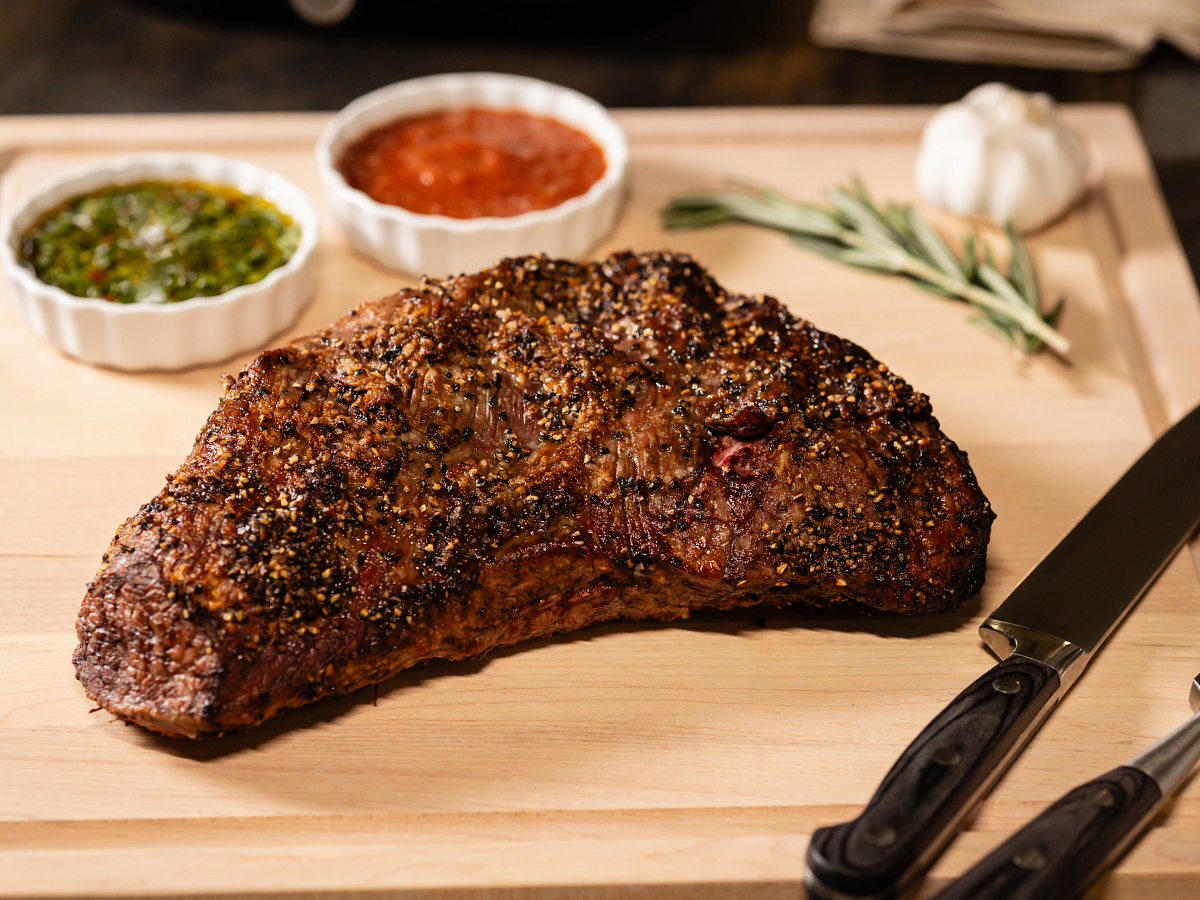
If you are new to cooking tri-tip, it also helps to understand the cut and its grain so your final slices are tender. I keep my notes for that over on what part of the cow is tri-tip, and if you want a more traditional, unwrapped roast for another night, my go-to is tri-tip roast.
Doneness targets (use a thermometer)
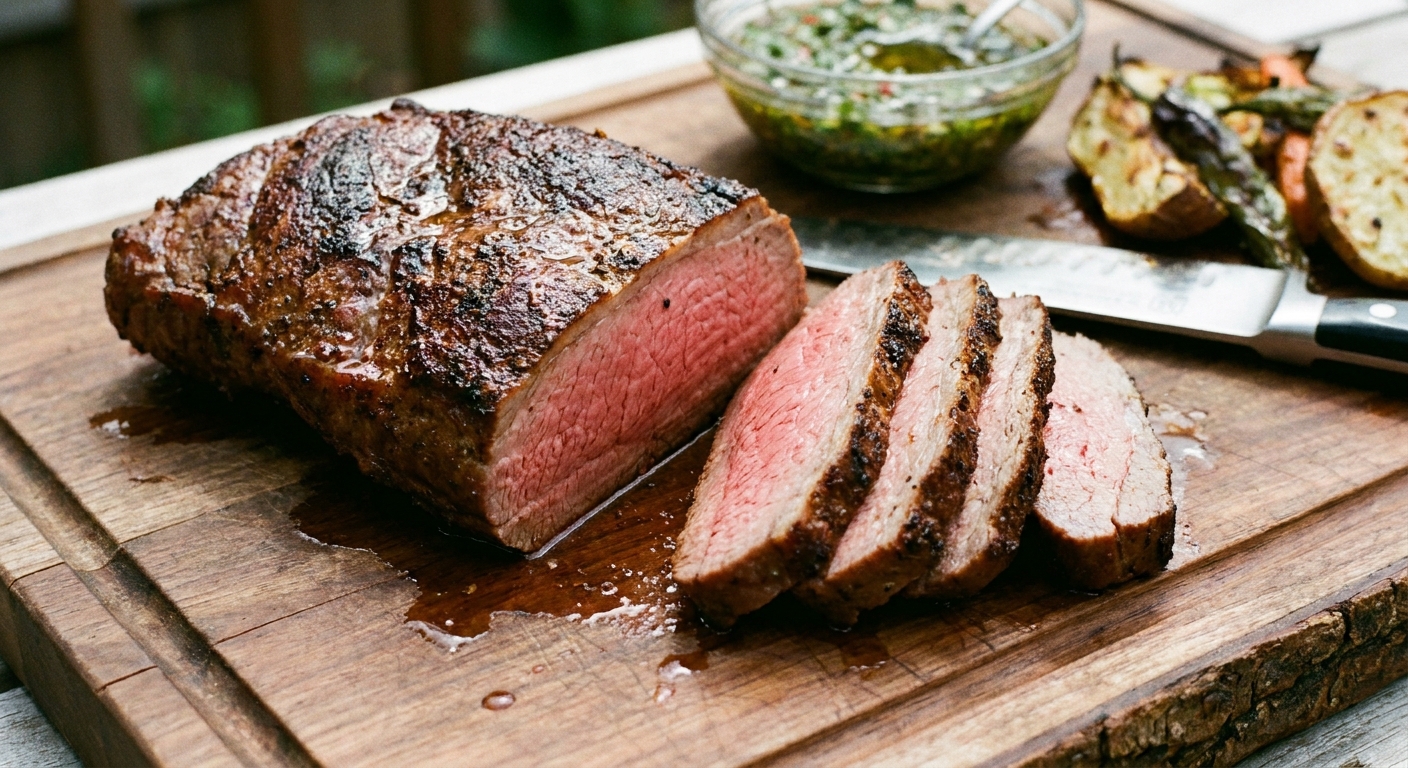
Because the beef is wrapped in pastry, you cannot rely on looks alone. Pull the Wellington when the center hits your target temperature, then rest it so carryover heat does the last bit of work. Carryover can vary (often 5 to 10°F) depending on thickness and how long it stayed in the oven, so start checking early.
- Rare: pull at 120°F, rest to 125°F
- Medium-rare (my favorite for Wellington): pull at 125 to 130°F, rest to 130 to 135°F
- Medium: pull at 135°F, rest to 140 to 145°F
Tip from my many “why is my pastry perfect but my beef overdone” tests: medium-rare is the sweet spot here. The longer you chase a higher final temp, the more time the pastry spends in the oven, and the more juice the meat tends to lose.
What to expect
You will do a quick sear for flavor, cook down mushrooms into a concentrated duxelles, wrap the tri-tip tightly in pastry, chill the whole package until firm, then bake hot until deeply golden. Plan for a short rest before slicing, and use a very sharp knife (a slicing knife or a serrated knife with gentle, light sawing) so the crust stays crisp and clean.
Why it works
- Searing first builds a flavorful crust on the beef without trying to brown it through pastry.
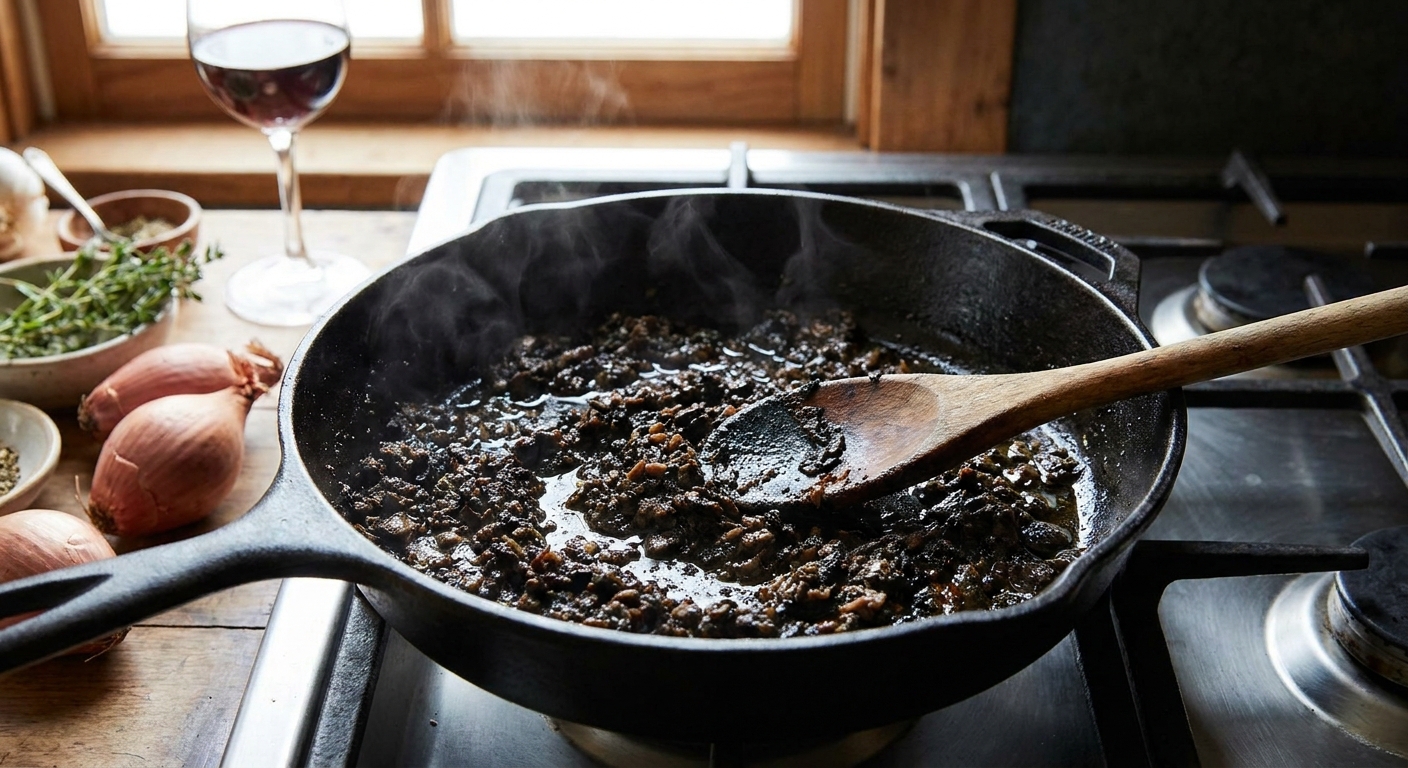
- Properly dried duxelles prevents the number-one Wellington issue: a soggy bottom and gummy layers.
- Chilling the wrapped roast firms everything up so the pastry holds its shape and bakes flaky instead of slumping.
- Thermometer doneness keeps the tri-tip juicy, even though the exterior is insulated by mushrooms and pastry.
- Resting before slicing gives juices time to redistribute, which means cleaner slices and less leakage into the crust.
Ingredient notes
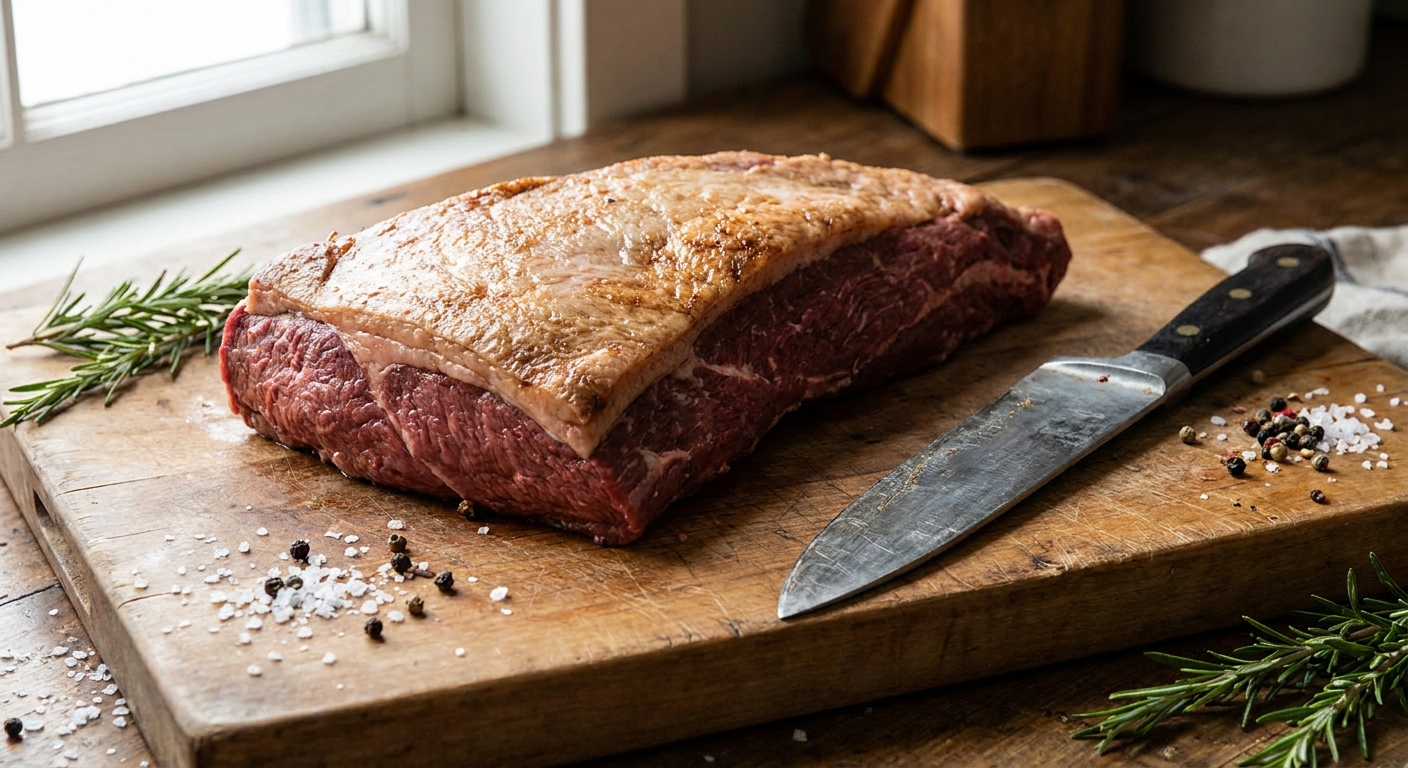
- Tri-tip: Look for a 2 to 2 1/2 pound tri-tip roast with good marbling. If you need help trimming silverskin or excess fat, see how to trim a tri-tip.
- Mushrooms: Cremini (baby bella) are my go-to because they cook down deeply and are easy to find. White mushrooms work, too. If you use wild mushrooms, chop very finely and expect them to release a lot of water.
- Shallot and garlic: These are optional but highly recommended for a more rounded, savory duxelles.
- Thyme: Fresh is lovely, dried works in a pinch. Keep it subtle so it supports the beef.
- Dijon mustard: Brushed on after searing, it adds tang and helps the mushroom layer cling.
- Puff pastry: Store-bought all-butter puff pastry gives the best rise and flavor. Keep it cold and work quickly.
- Egg wash: The shine and deep golden color come from egg wash. Do not skip it.
Equipment
- Large heavy skillet (cast iron works great) for searing and cooking duxelles
- Chef’s knife and cutting board
- Instant-read thermometer (essential)
- Rimmed baking sheet
- Parchment paper
- Plastic wrap (for chilling and tightening the wrap)
- Pastry brush (for egg wash)
- Optional: wire rack for airflow under the Wellington
Pro tips
- Cook the duxelles until it stops steaming. In my tests, “looks dry” is not dry enough. You want a thick paste that pulls from the pan and leaves very little residue behind.
- Cool everything fully before wrapping. Warm duxelles equals melted butter in the pastry, and that equals leaks.
- Wrap tightly and chill. The chill time is not just convenience. It sets the shape so the pastry bakes up, not out.
- Vent the pastry. A few small slits on top let steam escape so the layers stay flaky.
- Use temperature, not time, for the beef. Ovens vary and tri-tip thickness varies. The thermometer keeps you in control.
Substitutes
- Mustard: Swap Dijon for whole-grain mustard for more texture, or use a thin layer of prepared horseradish for extra bite.
- Herbs: Rosemary or tarragon are great, but use a lighter hand than you would with thyme.
- Mushrooms: Any mix works if you chop finely and cook out moisture thoroughly.
- Puff pastry: Puff pastry is the classic choice for a Wellington crust. If you are set on a pie dough approach, I would treat it like a different recipe and use all-butter flaky pie crust as your starting point, with a longer bake and different texture expectations.
Variations
- Prosciutto layer: Add a thin prosciutto wrap between duxelles and pastry for extra flavor and a moisture barrier. Overlap slices slightly so there are no gaps.
- Red wine duxelles: Deglaze the pan with a splash of red wine after the mushrooms give up their liquid, then cook it completely dry again.
- Mini Wellingtons: Cut tri-tip into thick, even portions, sear quickly, then wrap individually for faster baking and easier serving.
If what you really want is a tied, stuffed tri-tip roll without pastry, that is a different preparation and bake style. I keep those as their own recipe pages, like tri-tip skewers or other stuffed formats rather than mixing methods here.
Serving ideas
- Something fresh and crisp: A simple green salad with a sharp vinaigrette cuts the richness.
- Classic sides: Try skillet fried potatoes or roasted broccoli.
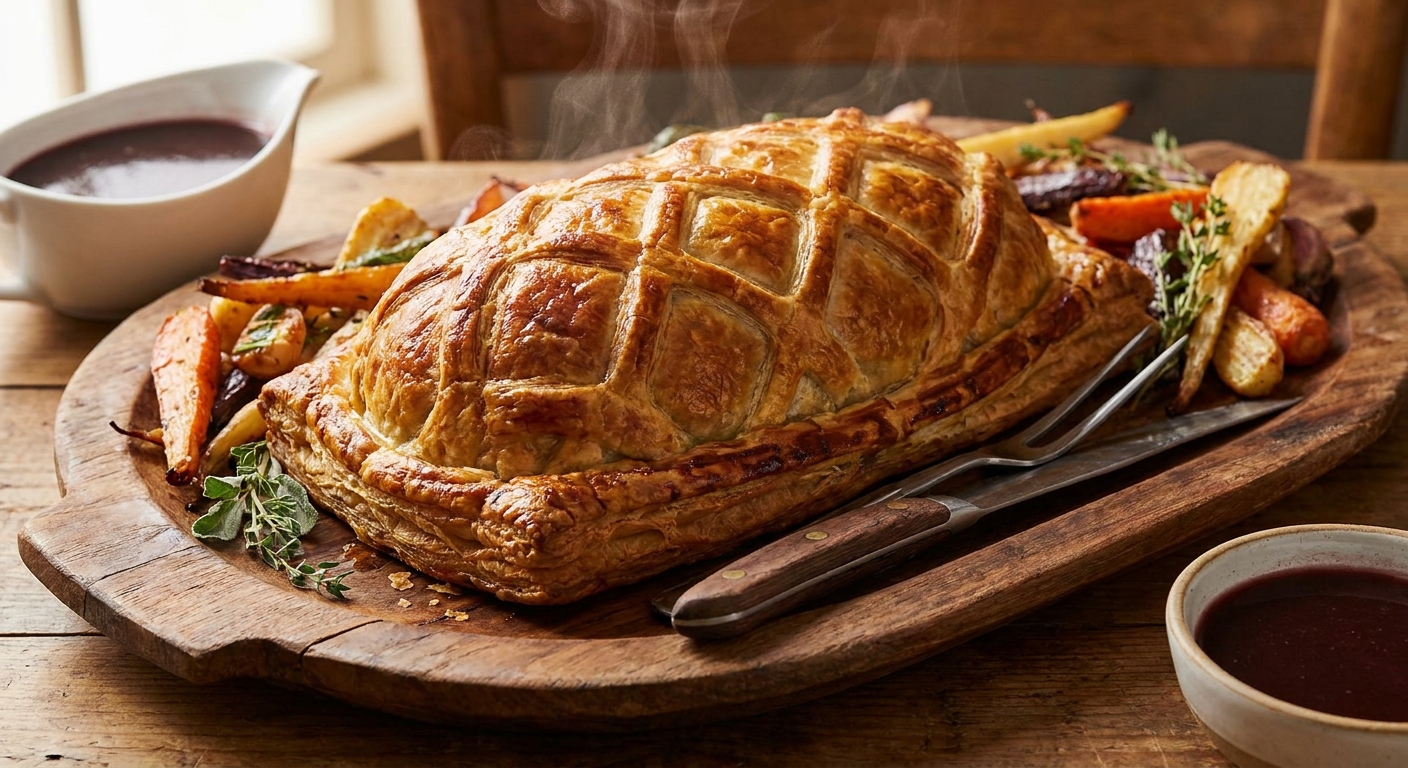
- Sauce options: A quick pan sauce from the searing skillet, a peppercorn cream sauce, or a horseradish yogurt sauce all pair well.
- For a steakhouse-style plate: Add skillet caramelized onions on the side.
Storage
- Refrigerate: Store leftovers airtight for up to 3 days. The pastry will soften in the fridge, which is normal.
- Reheat: Warm slices on a baking sheet in a 350°F oven until heated through. This keeps the pastry crisper than the microwave.
- Freeze: I do not love freezing baked Wellington because the pastry texture suffers. If you want to get ahead, it is better to prep components (duxelles cooked and chilled, beef seared and chilled) a day early, then assemble and bake fresh.
Common mistakes
- Undercooking the duxelles: The pastry cannot stay crisp if the mushroom layer is watery.
- Skipping the chill: Warm pastry slumps, leaks butter, and bakes up dense instead of flaky.
- Over-searing: You are only building color and flavor. A hard, long sear can push the interior temperature up before baking even starts.
- Guessing doneness: Use an instant-read thermometer. It is the difference between rosy and dry.
- Slicing too soon: Resting is not optional. Slice early and the juices will flood the cutting board and soften the crust.
FAQ
Is tri-tip tender enough for Wellington?
Yes, as long as you cook it to medium-rare or medium and slice across the grain. Tri-tip has great beefy flavor and stays juicy when you do not overcook it.
Do I need a prosciutto layer?
No. Prosciutto can help block moisture and adds a salty layer, but you can get excellent results with well-cooked, cooled duxelles and a tight wrap.
Why chill the wrapped Wellington before baking?
Chilling firms the beef and the duxelles and keeps the pastry cold. That helps the pastry puff and brown properly, and it helps the log keep a neat shape.
How do I keep the bottom from getting soggy?
Dry duxelles, cold pastry, and a hot oven are the big three. Baking on parchment on a preheated sheet pan can also help set the bottom crust faster.
Can I assemble it ahead?
You can assemble and chill it for a few hours before baking. For best texture, bake the same day you wrap it.
Recipe
A foolproof tri-tip Wellington with a deeply savory mushroom duxelles, a golden puff pastry crust, and an easy thermometer guide for perfect doneness. Includes chilling before baking and a proper rest for clean, juicy slices.
Prep time: 45 minutes
Cook time: 45 minutes
Total time: 2 hours 40 minutes
Servings: 6
- 1 (2 to 2 1/2 pound) tri-tip roast
- 2 1/2 teaspoons kosher salt, divided
- 1 teaspoon black pepper
- 2 tablespoons olive oil, divided
- 1 tablespoon unsalted butter
- 1 medium shallot, finely minced
- 2 garlic cloves, minced
- 1 1/2 pounds cremini mushrooms, very finely chopped
- 2 teaspoons fresh thyme leaves (or 3/4 teaspoon dried thyme)
- 2 tablespoons Dijon mustard
- 1 sheet puff pastry (about 14 ounces), thawed in the refrigerator
- 1 large egg
- 1 tablespoon water
- 1 tablespoon all-purpose flour, for rolling
- Season and dry the beef. Pat the tri-tip very dry with paper towels. Season all over with 2 teaspoons kosher salt and the black pepper. Let sit at room temperature for 20 minutes while you prep the pan.
- Sear the tri-tip. Heat 1 tablespoon olive oil in a large skillet over medium-high heat until shimmering. Sear the tri-tip 2 to 3 minutes per side, turning to brown all surfaces, including the edges. Transfer to a plate to cool completely (refrigerate to speed this up). Do not wipe out the skillet.
- Cook the duxelles until paste-like. Reduce heat to medium. Add the remaining 1 tablespoon olive oil and the butter. Add the shallot and cook 1 to 2 minutes until softened. Add the garlic and cook 30 seconds. Add the chopped mushrooms, thyme, and the remaining 1/2 teaspoon kosher salt. Cook, stirring often, until the mushrooms release their liquid and then that liquid fully evaporates, 15 to 25 minutes total. Keep cooking until the mixture is very thick and paste-like and the pan looks mostly dry.
- Cool the duxelles completely. Spread the mushroom mixture onto a plate or baking sheet in a thin layer and refrigerate until fully cool, about 20 minutes.
- Coat with mustard. When the tri-tip is cool, brush the Dijon mustard all over the surface.
- Set up for wrapping. Lay a large sheet of plastic wrap on the counter. Spread the cooled duxelles in an even rectangle about the length of the tri-tip.
- Wrap tightly and chill. Place the tri-tip on the duxelles and use the plastic wrap to roll the mushrooms around the beef, pressing and tightening as you go to form a compact log. Twist the plastic wrap ends like a candy wrapper to tighten. Refrigerate for 30 minutes.
- Prep the oven and egg wash. Heat the oven to 425°F. Line a rimmed baking sheet with parchment paper. In a small bowl, whisk the egg with the water to make an egg wash.
- Wrap in puff pastry. Lightly flour the counter and roll the puff pastry into a rectangle large enough to fully enclose the tri-tip log. Unwrap the chilled, mushroom-coated tri-tip and place it seam-side down on the pastry. Brush pastry edges with egg wash, then wrap the pastry snugly around the beef, sealing the seam and tucking the ends under. Transfer seam-side down to the prepared baking sheet.
- Chill the pastry-wrapped roast. Refrigerate the fully wrapped Wellington for 15 to 20 minutes to firm the pastry.
- Vent and egg wash. Brush the top and sides with egg wash. Cut 3 to 5 small slits on top to vent steam.
- Bake. Bake until the pastry is deeply golden brown and an instant-read thermometer inserted into the center of the beef reaches your target temperature, 30 to 45 minutes. Pull at 125°F for medium-rare (it will rise to about 130°F as it rests). If the pastry browns too quickly, loosely tent with foil.
- Rest before slicing. Let the Wellington rest on the baking sheet for 15 to 20 minutes. Slice with a sharp serrated knife and serve warm.
Make-ahead: You can cook and chill the duxelles up to 2 days in advance. You can also sear the tri-tip a day ahead, cool, and refrigerate. Assemble and bake the day you plan to serve for the best pastry texture.
Doneness guide: Rare pull 120°F, rest to 125°F. Medium-rare pull 125 to 130°F, rest to 130 to 135°F. Medium pull 135°F, rest to 140 to 145°F. Carryover varies, so start checking early.