Tri-tip doesn’t have to be intimidating. Get a deeply seasoned crust, a juicy medium-rare center, and step-by-step grill or oven directions—plus how to slice...
Delishing
What Part of the Cow Is Tri-Tip?

Maya Brooks
Maya Brooks is a dedicated home cook and the lead recipe developer at Delishing, where she shares practical, foolproof meals for everyday life. With over a decade of hands-on kitchen experience, she specializes in creating approachable dishes that fit a variety of dietary needs and modern cooking methods. Maya is passionate about helping busy people get delicious, stress-free food on the table without needing formal culinary training.
Tri-tip is one of those cuts that feels obvious once you’ve cooked it a few times and then suddenly confusing the moment you try to explain it. I have had plenty of grocery store moments where I’m staring at a label that says “sirloin tip” or “bottom sirloin” and thinking, okay, but where on the cow is this, and why does it slice so weird?
Let’s clear it up. Tri-tip is a specific muscle from the sirloin area, shaped like a triangle, and famous for having grain that changes direction. Once you know the anatomy, the labels and the slicing make a lot more sense.
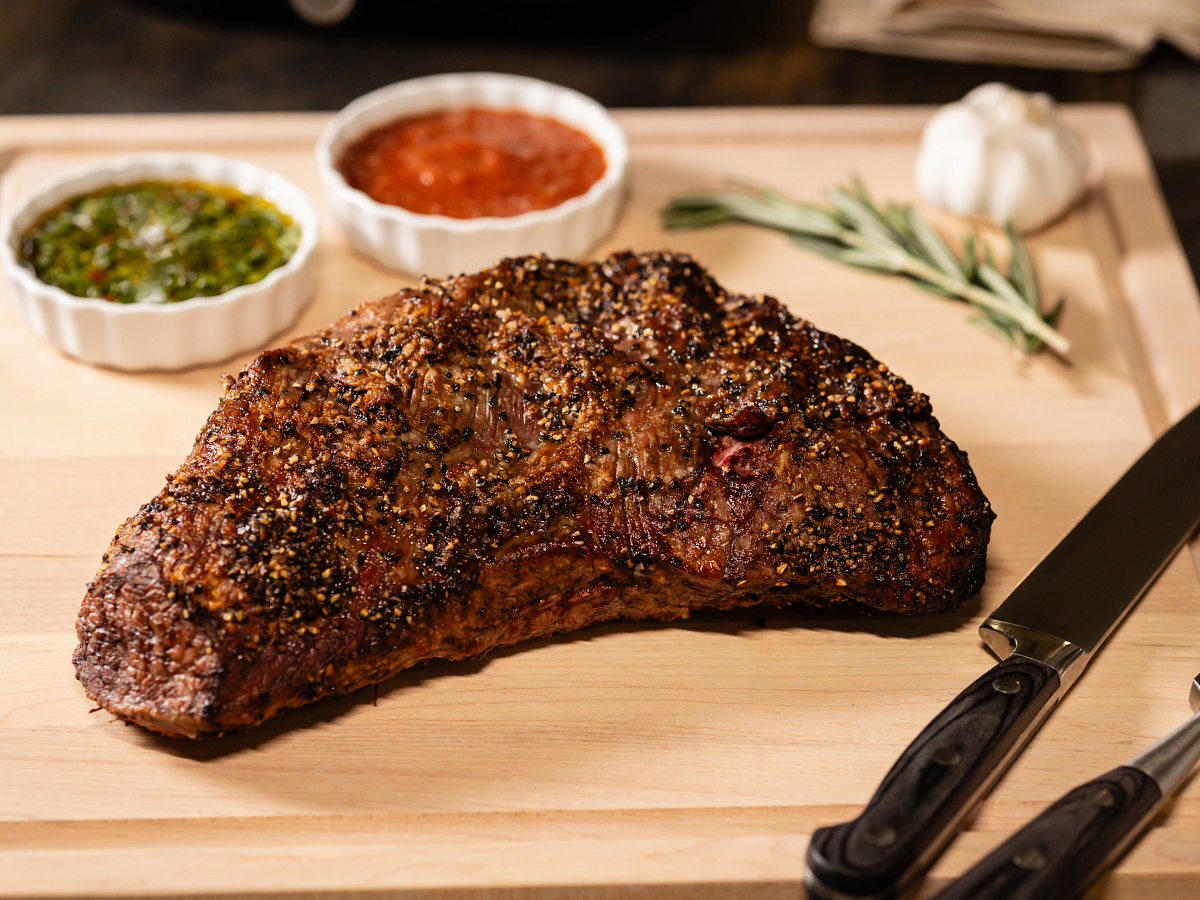
Tri-tip comes from the sirloin
Tri-tip is cut from the bottom sirloin, which sits in the hindquarter toward the back end near the hip. It’s below the top sirloin and closer to the round than the super-tender loin cuts.
That location explains a lot about how tri-tip behaves: it can be very flavorful, it can be tender when handled correctly, and it has muscle structure that rewards smart slicing.
If you already have one in your fridge and want the cooking and slicing steps (not just the anatomy), I walk through that on our tri-tip roast page.
What tri-tip is
Tri-tip is a distinct, triangular muscle that sits right at the edge of the bottom sirloin. In some butchering and anatomy references, it is often identified as the tensor fasciae latae, but the exact naming can vary depending on how a carcass is broken down.
What matters for home cooks is the practical part: it’s a real, consistent cut, not a random chunk of sirloin someone decided to package as a roast. And because it comes from an active part of the rear, it tends to have a beefy flavor and a pronounced grain, without being as tough as slow-cook-only cuts.
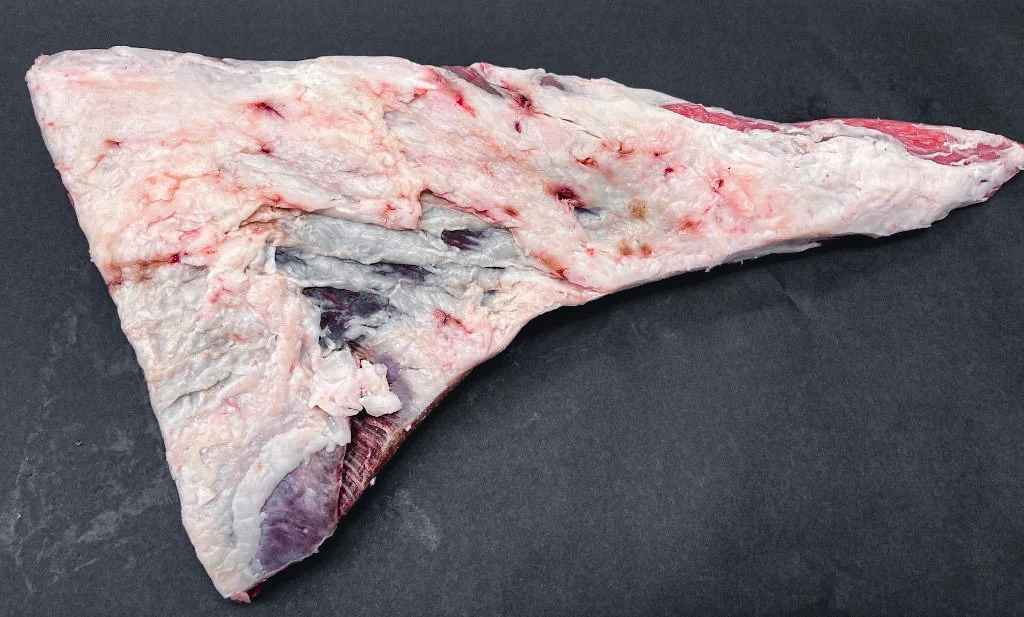
Why it is triangular
The name is not marketing fluff. Tri-tip is a wedge-shaped, three-pointed cut because of the way the muscle tapers and attaches in the sirloin.
- One end is thicker where the muscle is wider.
- It tapers to a point as the muscle narrows toward its attachment.
- The fat-cap side and the lean side are shaped by how it sits next to neighboring muscles.
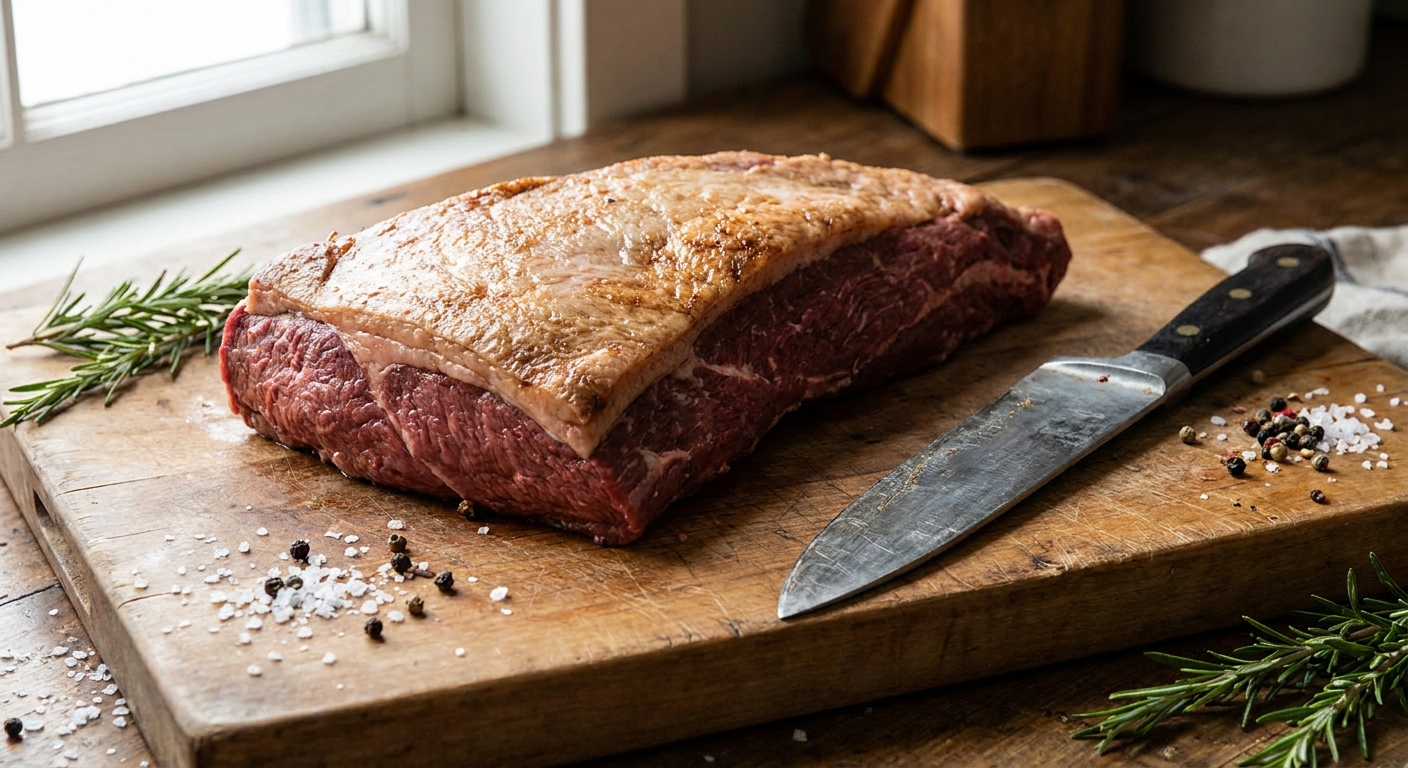
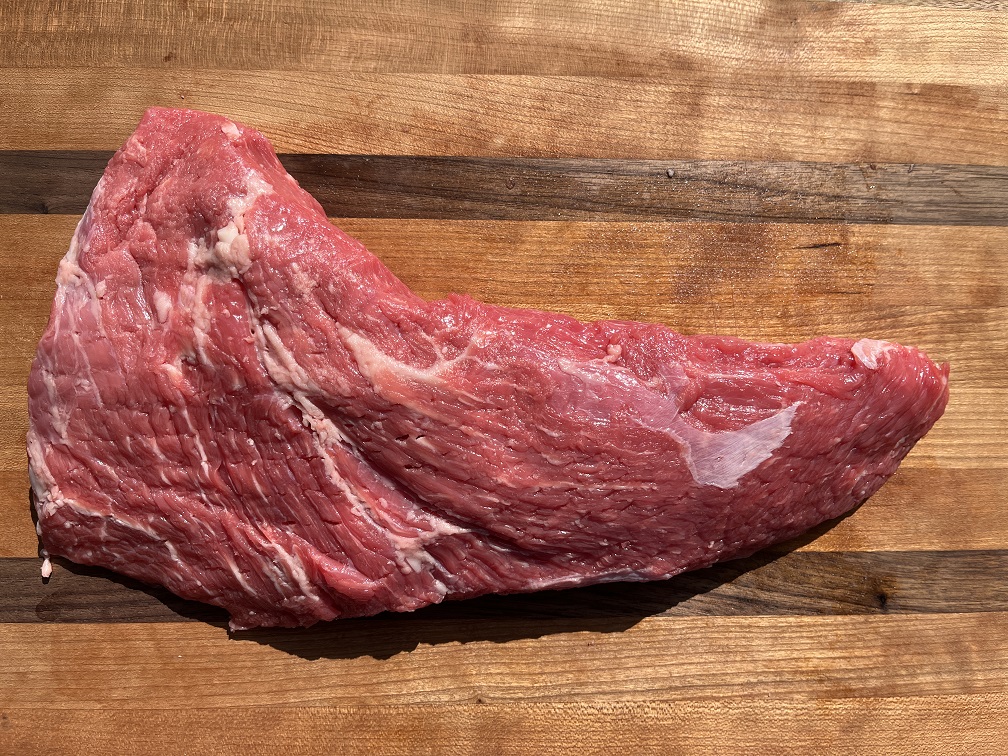
That natural shape is why a tri-tip roast usually looks like a small triangle or boomerang on the tray. Even if it’s been trimmed, the overall wedge shape tends to stay obvious.
Why the grain changes direction
This is the detail that matters most once the roast is cooked and resting on your cutting board.
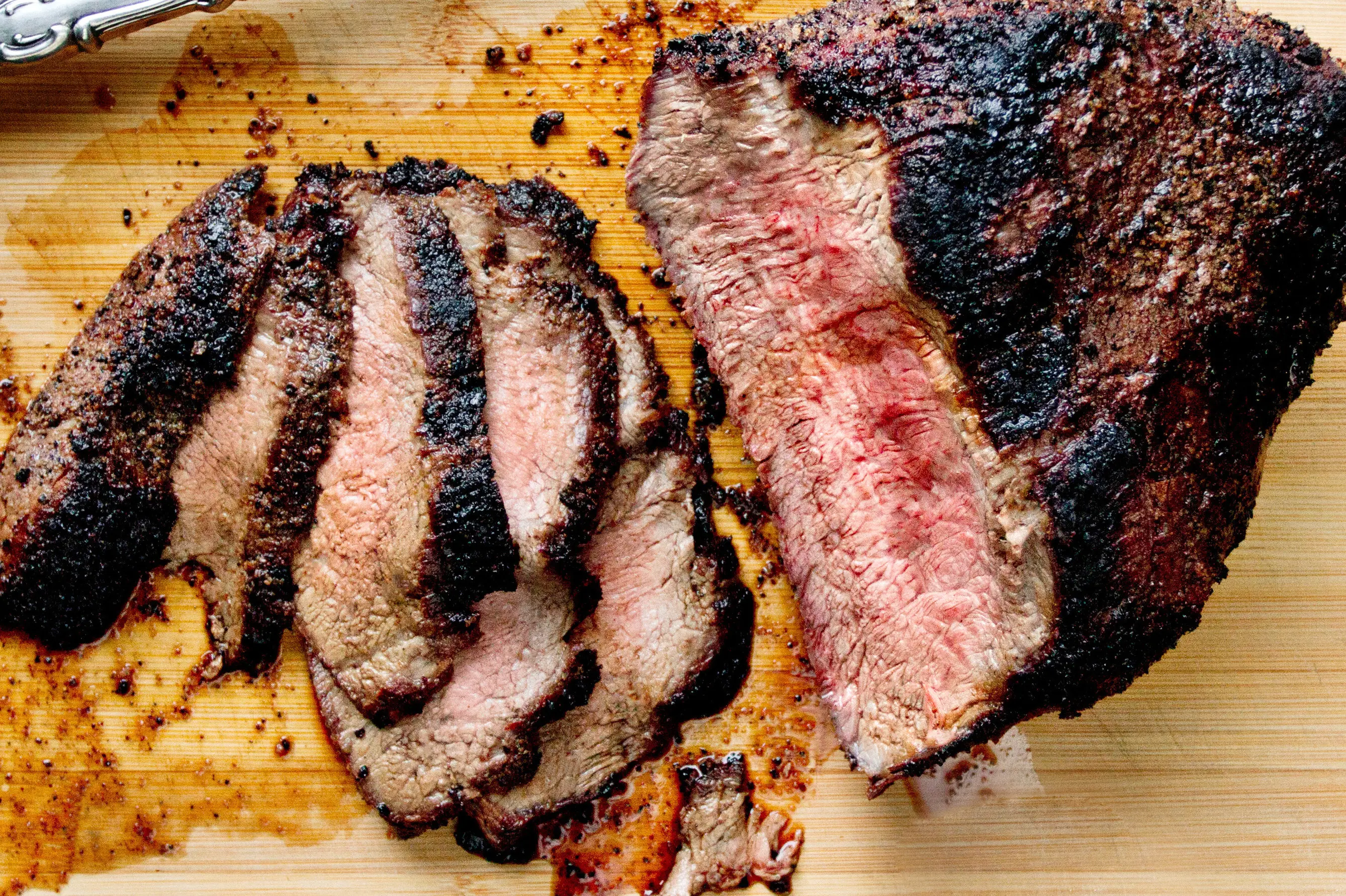
Tri-tip is known for having two grain directions because the muscle fibers change orientation across the roast. Instead of one uniform “with the grain” line from end to end, the fibers fan and pivot.
In plain English: part of the roast has fibers running one way, and another part has fibers running a different way. If you slice the entire thing in one direction, some of your slices will be cut with the grain, and they can taste chewier even if you cooked it perfectly.
Where the grain changes
Most tri-tips have a spot near the center where the grain “meets” and shifts. Home cooks often describe it like this: one side wants to be sliced one way, and the other side wants to be sliced almost perpendicular to it.
That is why you’ll hear the common advice to find the grain first, and sometimes to cut the roast into two pieces before slicing each piece against its own grain.
If you want a hands-on guide for prep, not anatomy, our how to trim a tri-tip article shows what to look for on the raw roast.
What you will see at the store
Different stores and regions use different labels, and sometimes the same words get used for totally different cuts. Tri-tip is commonly sold under names that reference either its shape, its location, or its “roast” format.
Common names
- Tri-tip roast
- Tri-tip
- Bottom sirloin tri-tip
- Bottom sirloin roast (sometimes tri-tip, sometimes another bottom sirloin cut)
- Triangle roast
Names that trip people up
You may also see the word sirloin on packages that are not tri-tip. That’s because “sirloin” is a larger section of the animal, not one single cut. Tri-tip is from sirloin, but not all sirloin is tri-tip.
Also, “tip” in a label does not automatically mean tri-tip. “Sirloin tip” is typically a different cut from a different area. If you are trying to sort those out, we cover the package-to-package differences in tri-tip vs sirloin tip and tri-tip vs top sirloin.
Size and how it is sold
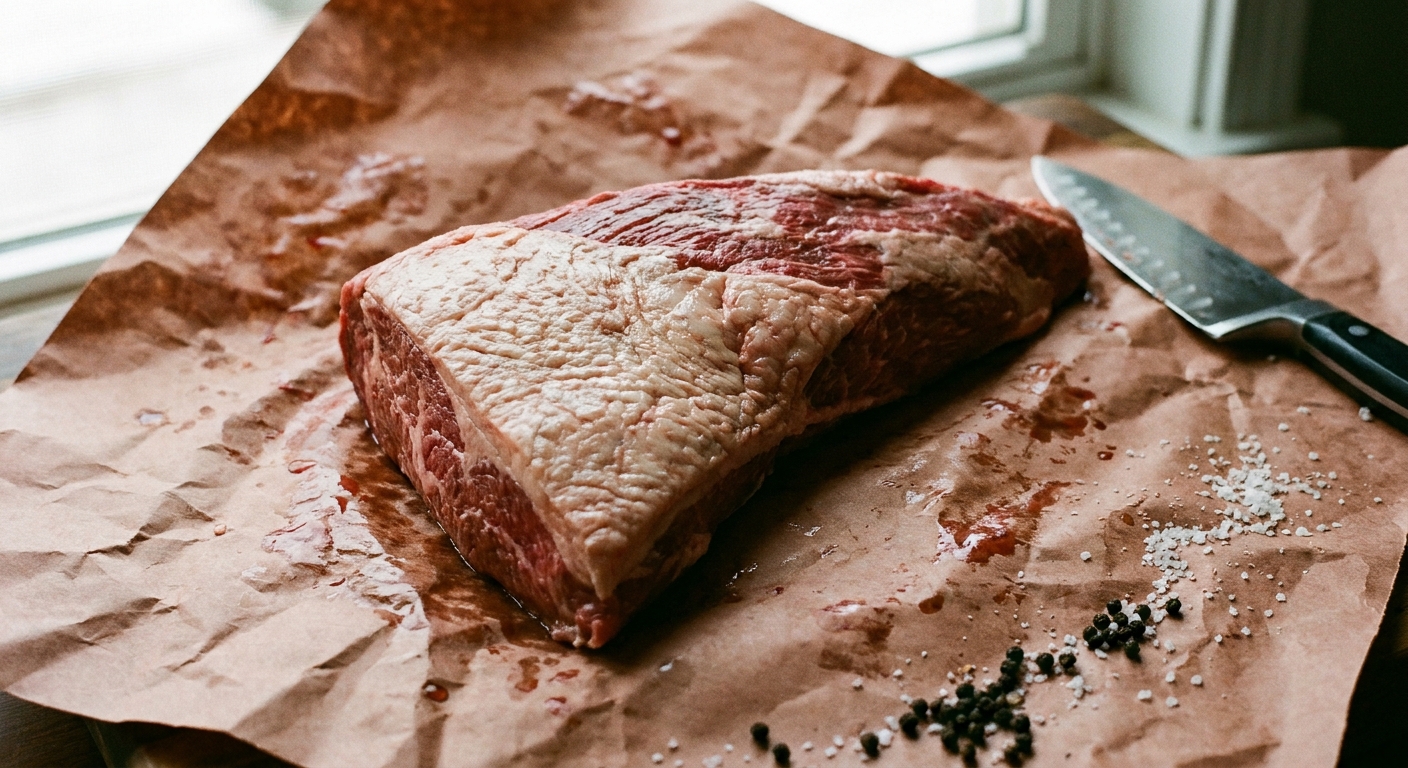
Tri-tip is usually sold as a small roast because that’s the natural size of the muscle. Most you’ll see in stores are roughly 2 to 4 pounds, and many come with at least a thin fat cap on one side (though trimming varies a lot by butcher).
You might see it:
- Untrimmed with a thicker fat cap and some silverskin.
- Trimmed with cleaner edges and a thinner cap.
- Cut into steaks (less common, but possible because the thick end has enough height).
What the anatomy means for cooking
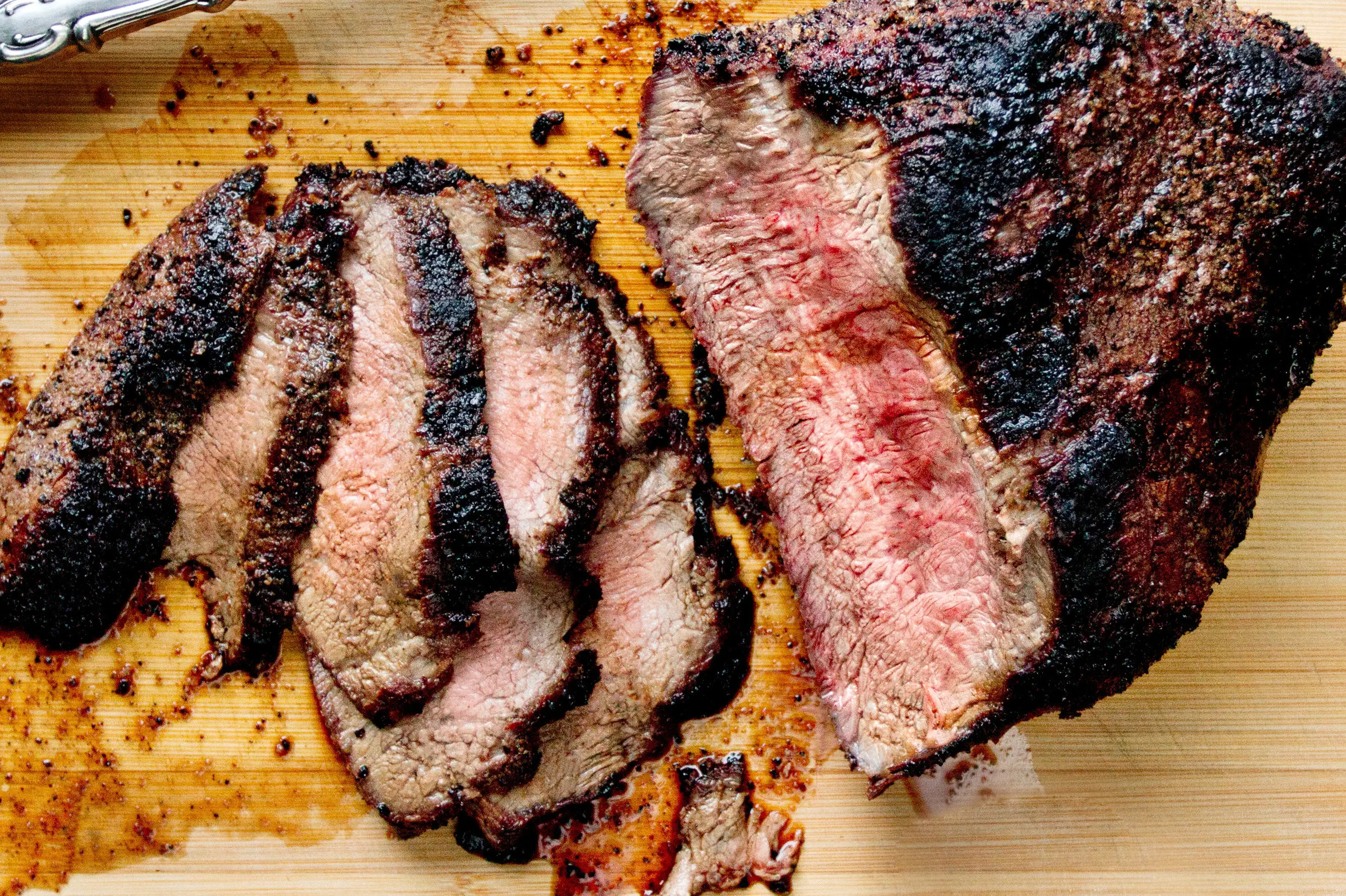
Because tri-tip is a single, fairly lean muscle with a noticeable grain, it usually eats best when you cook it to medium-rare to medium, let it rest, then slice thin against the grain. That combination is what turns a flavorful roast into tender slices instead of chewy ones.
Quick recap
- Location: Bottom sirloin area in the hindquarter near the hip.
- Shape: Naturally triangular because the muscle tapers.
- Grain: Often runs in two directions, so slicing takes a second of attention.
- Why it matters: Slicing against the grain is the difference between tender and tough.
FAQ
Is tri-tip a sirloin cut?
Yes. Tri-tip comes from the bottom sirloin area, which is part of the sirloin section. That’s why you’ll often see “bottom sirloin” in more detailed butcher labels.
Is tri-tip part of brisket or round?
No. Tri-tip is not from the brisket (front chest) and not from the round (rear leg). It sits in the sirloin area, closer to the hip.
Why does tri-tip have a point and a thick end?
That’s the natural taper of the muscle. One end is broader and thicker, and the other narrows down, which is why it’s so recognizable on the tray.
What is the biggest mistake people make with tri-tip?
Anatomy-wise, it’s assuming the grain runs one direction and slicing the whole roast the same way. Because the grain can change direction, tri-tip often needs a quick pause to identify the grain before you commit to slicing.