Delishing
Tri-Tip Pinwheels

If you have ever stared at a tri-tip and thought, “I love you, but you are shaped like a geometry problem,” pinwheels are your answer. You butterfly the roast, layer on a bold filling, roll it up like a jelly roll, and tie it tight.
Then you roast and slice into spirals that look fancy, but feel totally doable on a weeknight.
This is the kind of recipe I started making back when I was juggling a full-time job and a house full of different opinions about dinner. Pinwheels make everyone happy because each slice has a little bit of everything: beef, melty provolone, and a savory spinach and sun-dried tomato filling with a garlicky bite. (All the exact filling details are in the recipe card below, so you can build it without guessing.)
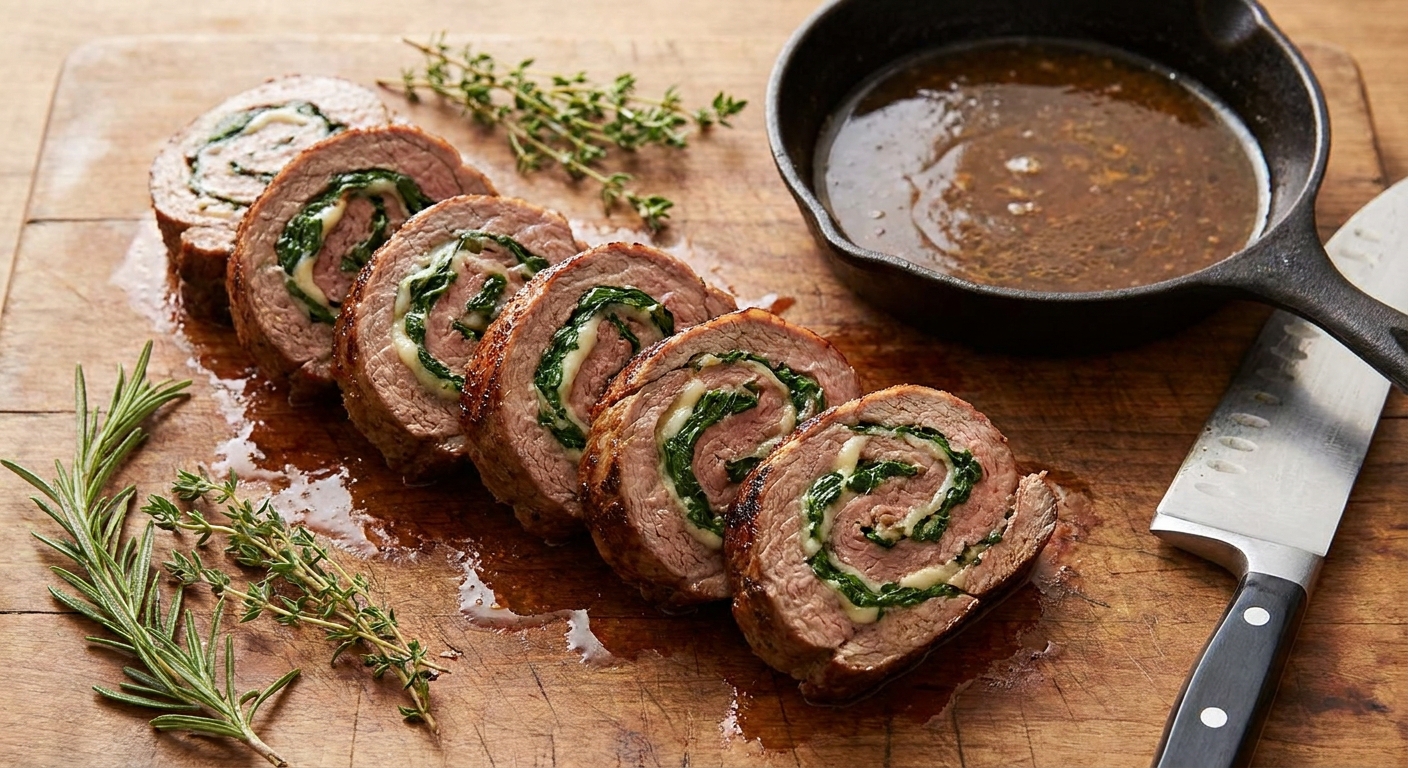
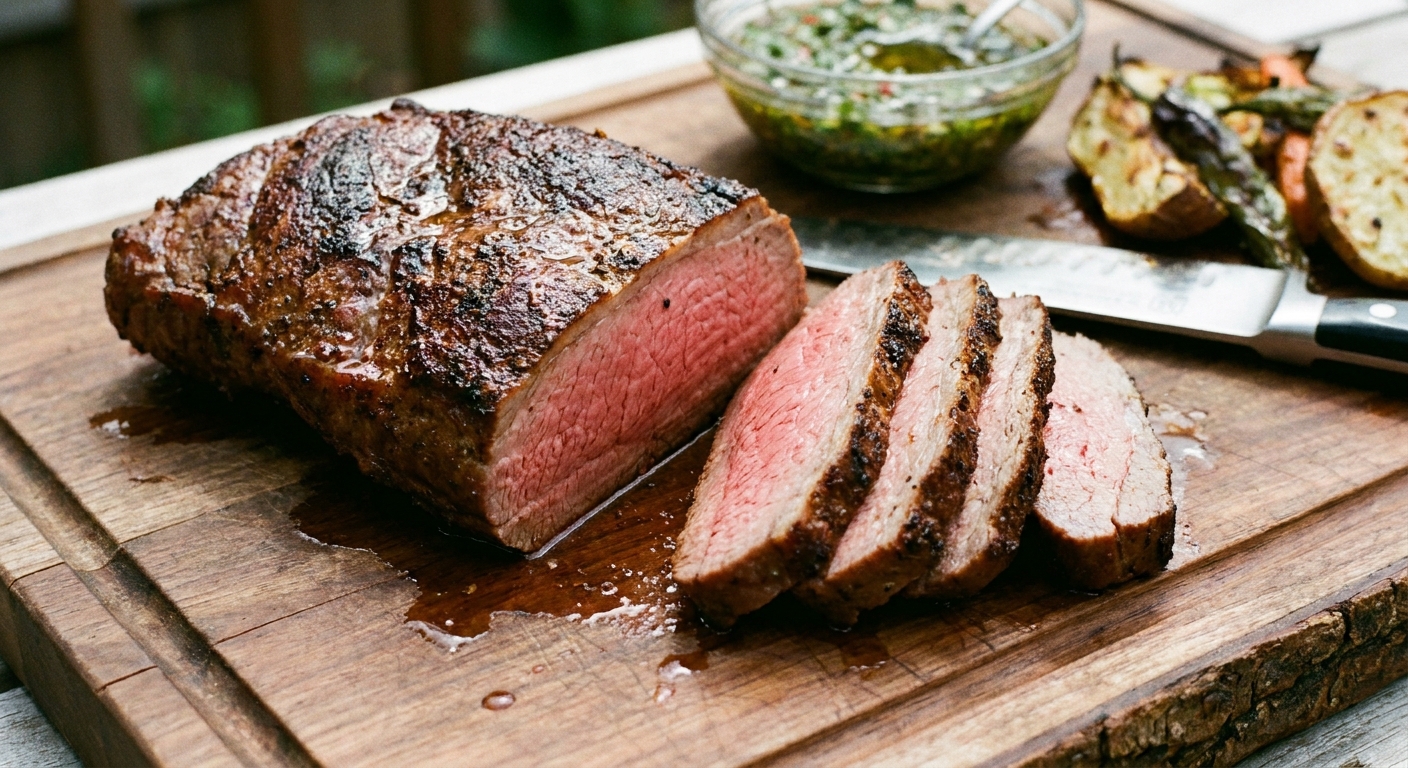
My doneness target here is 130 to 135°F for medium-rare after resting. That gives you tender slices without drying out the thinner edges. Plan on a 10 to 15 minute rest before slicing so the spirals stay neat and the juices stay where they belong.
And if you are nervous about the roll opening, do not worry. I walk you through a simple tie pattern plus a quick chill trick that helps the whole thing behave.
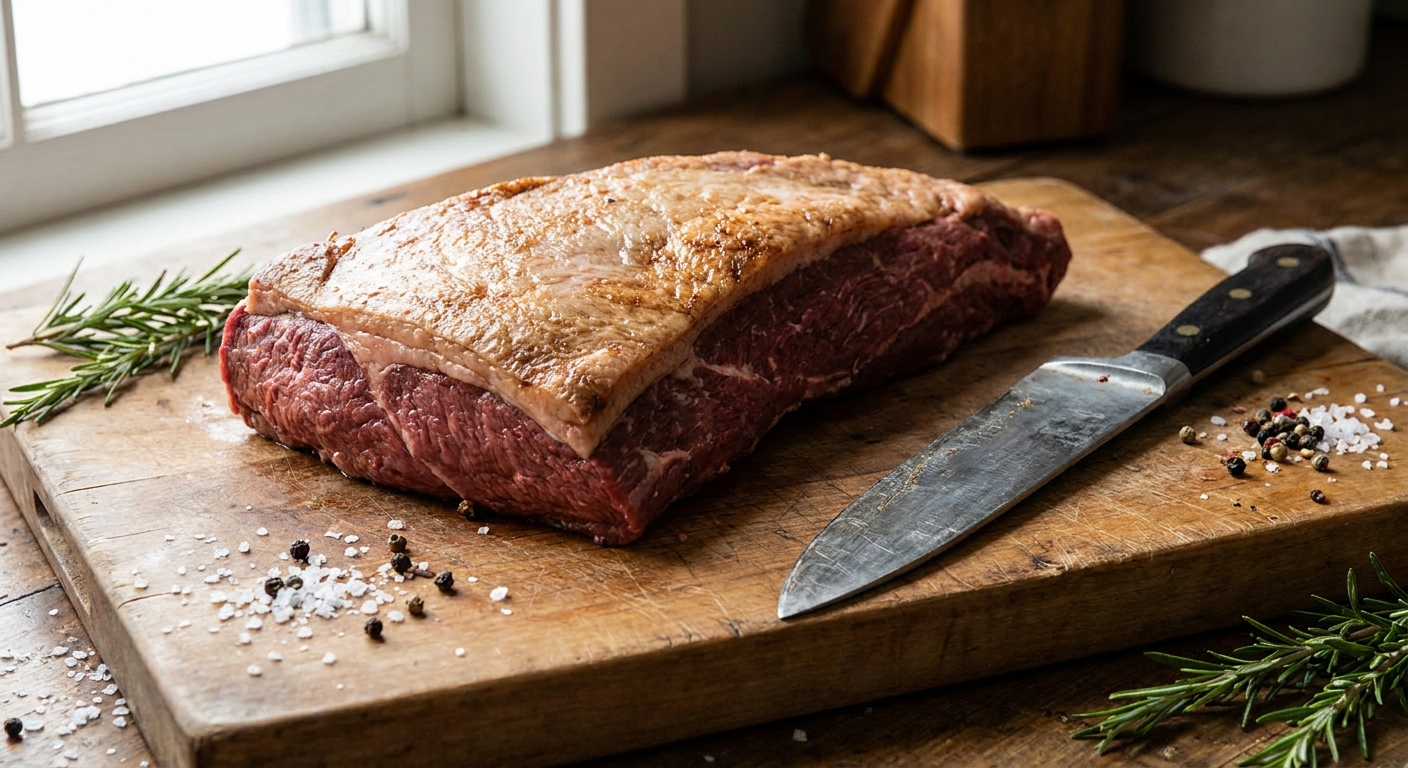
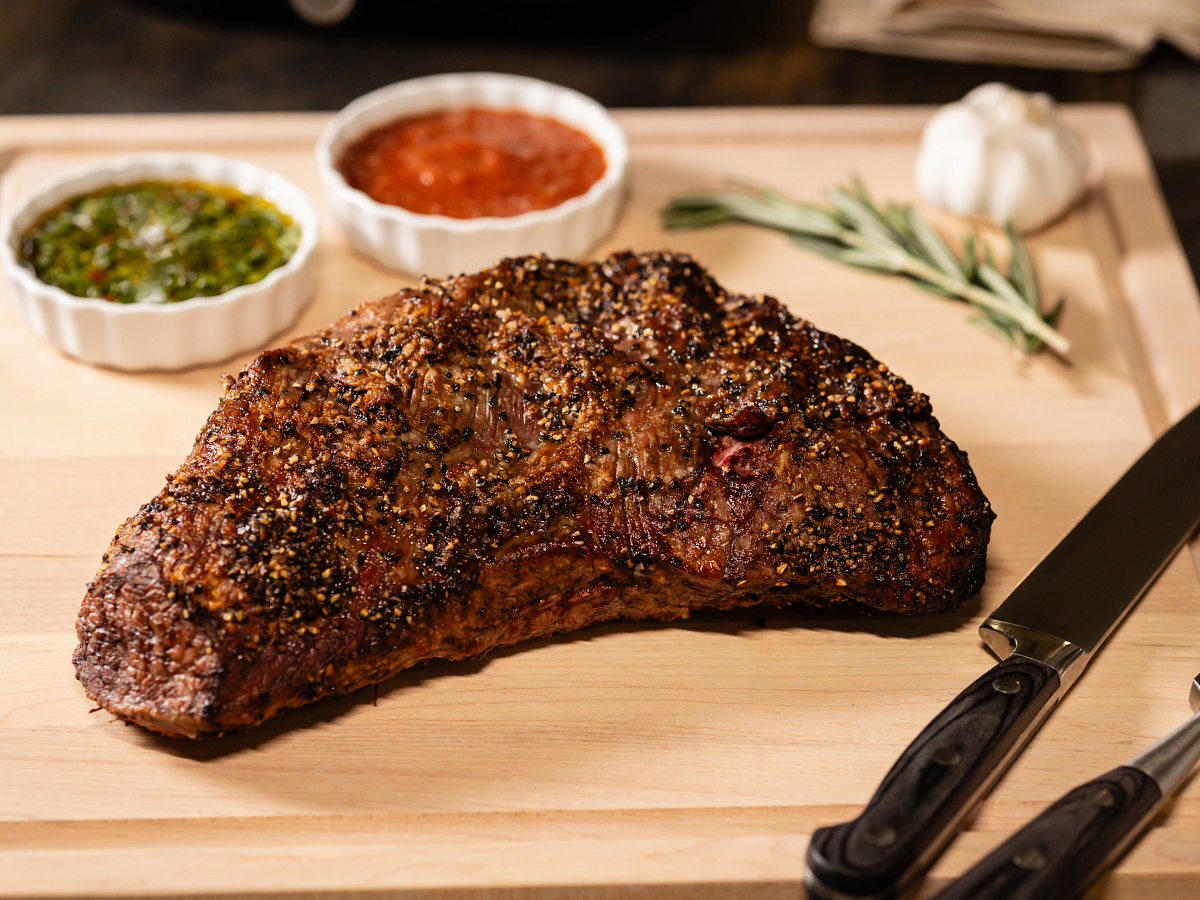
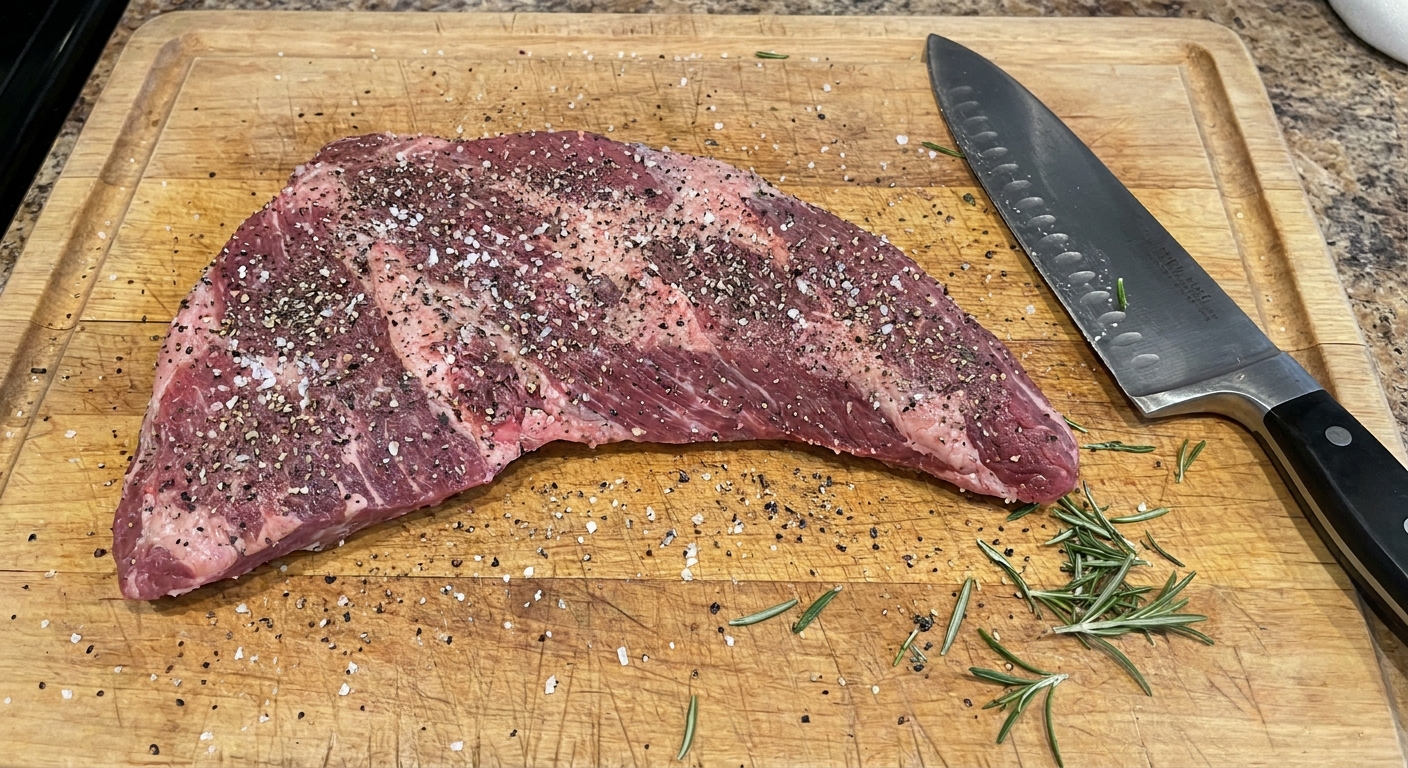
If you are new to the cut, you might also like my guide on what part of the cow is tri-tip and how to prep it on how to trim a tri-tip.
What you are making
Think of these as steakhouse-style spirals: a butterflied tri-tip rolled around a punchy filling, seared for color, roasted until juicy, then sliced into pinwheels. You can serve it like a roast, or plate it like individual medallions.
Doneness targets
- Rare: pull at 120°F, rest to about 125°F
- Medium-rare (recommended): pull at 125 to 130°F, rest to 130 to 135°F
- Medium: pull at 135°F, rest to about 140°F
- Medium to medium-well: pull at 140°F, rest to about 145°F
- Well-done: pull at 150°F, rest to about 155°F
Temperature labels vary a bit depending on who you ask, so I treat these as guideposts. (For example, some charts call 145°F “medium.” In a rolled roast like this, I find it tends to eat closer to medium-well.) The bigger rule is simple: cook to the temp you like and use the rest time to your advantage.
An instant-read thermometer is the stress-saver here. Probe into the thickest section of meat, not the center of the spiral where you might hit filling or an air pocket.
How to keep the roll closed
There are three small moves that make pinwheels stay pinwheels.
- Do not overstuff: Keep filling in an even, thin layer and leave a 1-inch border on the long edges.
- Roll tight, seam down: Roll from the long side like a jelly roll and set it seam-side down for tying and searing.
- Tie like a roast: Think of it like wrapping a classic pot roast. Make snug loops of butcher’s twine every 1 to 1 1/2 inches, tight enough to hold shape but not so tight it cuts into the meat. I like to tie the seam area first, then work outward. If you want extra insurance, run one long length of twine lengthwise and tie it to each loop.
Optional but helpful if your kitchen is warm or you are assembling ahead: once tied, chill the roast 15 to 30 minutes. It firms everything up so the roll holds its shape when it hits the hot pan.
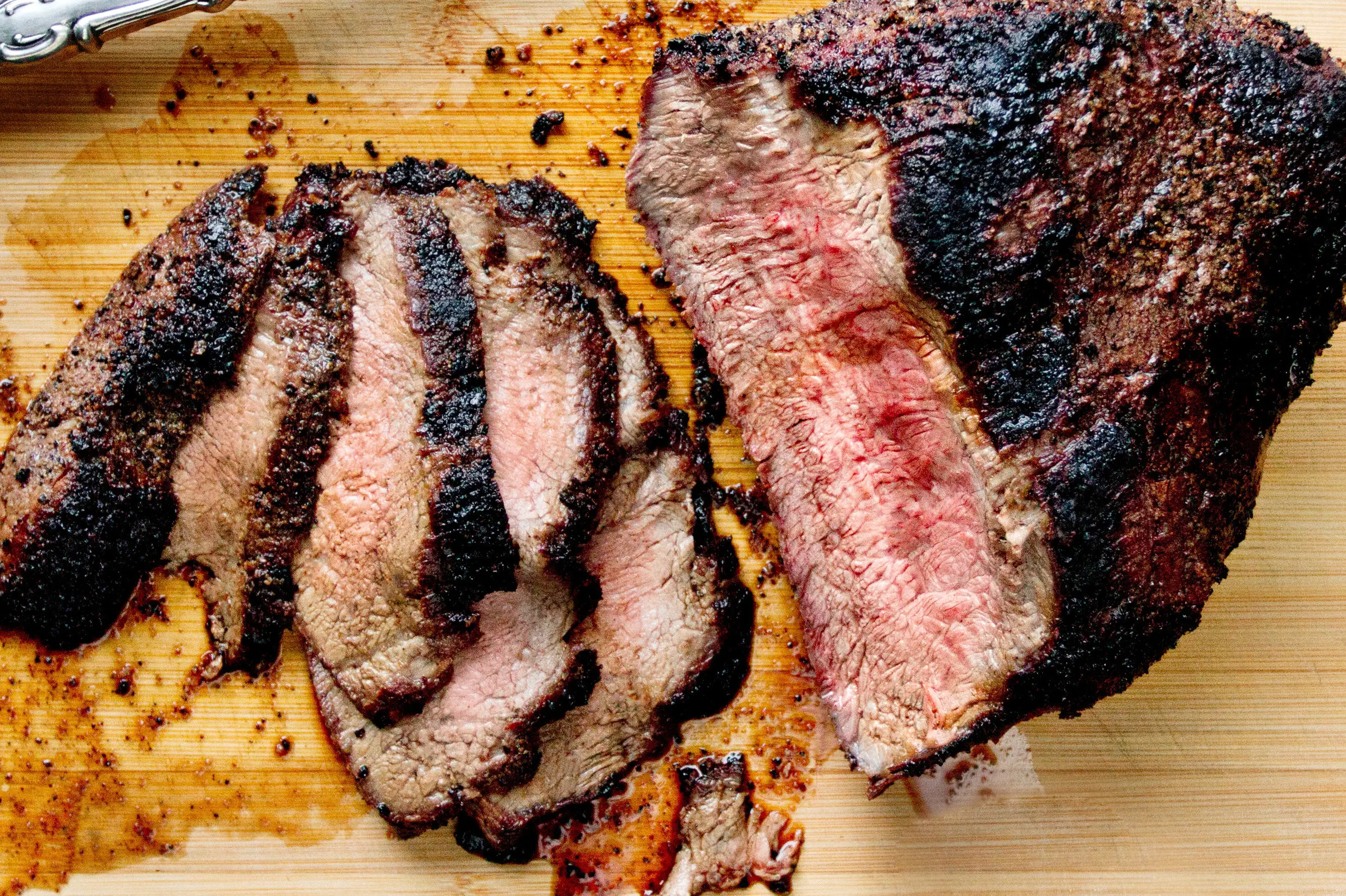
One more thing that matters more than people expect: slice across the grain wherever you can. Tri-tip grain can change direction, so after resting, take a second to look at the surface of the roll and cut each pinwheel so you are cutting across the fibers for the most tender bite.
Cook time will vary depending on the size of your tri-tip and how tightly it is rolled, so let the thermometer tell you when it is done.
Why this works
- Butterflying evens the thickness so the tri-tip cooks more consistently once it is rolled.
- A dry-ish filling (greens squeezed dry, chopped sun-dried tomatoes) keeps the spiral distinct instead of steamy and slippery.
- Sear then roast builds flavor fast, and roasting to temperature keeps the beef tender.
- Resting before slicing gives you cleaner pinwheels and juicier meat.
Ingredient notes
Tri-tip
A 2 to 2 1/2 pound tri-tip is the sweet spot for rolling. If yours is much smaller, it can be tricky to get enough spirals. If it is much larger, you may need more twine and a longer roast time.
Spinach
Frozen chopped spinach works beautifully, but it must be thawed and squeezed very dry. Any extra water is the enemy of a tight roll.
Sun-dried tomatoes
Oil-packed gives the best flavor and texture. Pat them a bit so the filling is not oily.
Cheese
Provolone melts smoothly and stays creamy inside the roll. Mozzarella also works, but it can be a little wetter.
Garlic and lemon
Garlic brings the savory punch. A little lemon zest perks up the filling without making it taste like “lemon steak.”
Equipment
- Sharp chef’s knife for butterflying
- Cutting board with a damp towel under it for stability
- Butcher’s twine and kitchen scissors
- Large oven-safe skillet or a rimmed sheet pan
- Instant-read thermometer
If you are shopping for basics, start with our equipment guides.
Pro tips
- Slice against the grain. Tri-tip grain changes direction. After resting, look closely and slice each pinwheel so you are cutting across the muscle fibers for tenderness.
- Use toothpicks only as a temporary helper. If you want, you can pin the seam with 2 to 3 toothpicks while you tie, then remove them before roasting.
- Brown the seam first. When searing, start seam-side down. It helps “seal” the roll and reduces the chance of it loosening.
- Rest 10 to 15 minutes. Slice too early and the spirals can slide and leak juice.
Substitutes
- Spinach: swap in kale (saute and squeeze dry) or Swiss chard.
- Sun-dried tomatoes: use roasted red peppers (very well drained and chopped) for a sweeter filling.
- Provolone: fontina, havarti, or sliced mozzarella.
- Breadcrumbs: gluten-free breadcrumbs work 1:1 if needed.
Variations
Italian-style
Add 1/2 teaspoon dried oregano to the filling and use shredded mozzarella plus a little grated Parmesan.
Southwest
Use pepper jack, add chopped green chiles, and swap the spinach for sauteed bell peppers and onions that have cooled completely.
Mushroom and herb
Saute chopped mushrooms until dry, then mix with parsley and thyme. Keep the mixture on the drier side so the roll stays tight.
Serving ideas
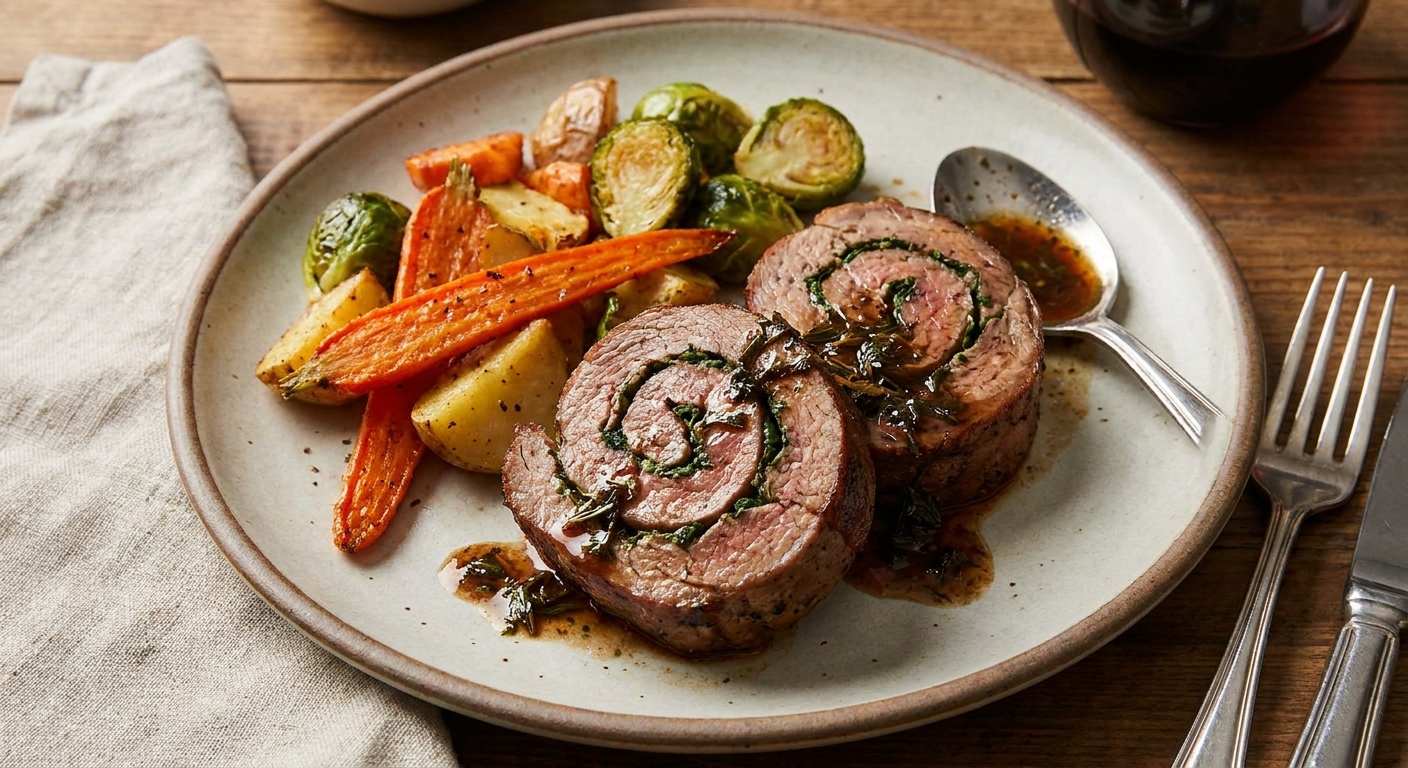
- Serve with skillet fried potatoes and a big green salad.
- Pair with a simple vegetable like roasted broccoli.
- Make it a sandwich situation the next day, inspired by our Santa Maria tri-tip sandwich.
Storage
- Refrigerate: Store sliced or whole pinwheels airtight for up to 4 days.
- Freeze: Freeze tightly wrapped slices for up to 2 months for best quality.
- Reheat: Warm gently, covered, in a 300°F oven until heated through. For more detailed timing, see how to reheat tri-tip.
Common mistakes
- Not drying the greens. Wet spinach makes the filling slide and can cause gaps in the spiral.
- Rolling from the short side. Roll from the long side for more, smaller pinwheels and a sturdier log.
- Spacing the twine too far apart. Every 1 to 1 1/2 inches is ideal. Big gaps invite the filling to push out.
- Cooking by time only. Use temperature, especially because size and how tightly the roll is tied changes the cook.
FAQ
Can I prep tri-tip pinwheels ahead of time?
Yes. You can butterfly, fill, roll, and tie up to 24 hours ahead. Keep it wrapped tightly in the fridge. Let it sit at room temperature for 20 to 30 minutes before cooking so it roasts more evenly.
Do I need to marinate the tri-tip first?
Not for this version. The filling brings plenty of flavor. If you love a marinated profile, use a light hand so the surface is not too wet. This is also why I keep the filling fairly dry.
How thick should I slice the pinwheels?
I like 3/4 to 1 inch thick. Thinner can fall apart, thicker can feel more like a stuffed steak than a pinwheel.
My tri-tip has grain going different directions. What do I do?
That is normal. After cooking, identify the direction of the grain on the slice surface and cut each pinwheel across the fibers. If you want a deeper dive on tri-tip handling, start with how to trim a tri-tip.
Tri-Tip Pinwheels
Butterflied tri-tip rolled with spinach, sun-dried tomatoes, garlic, and provolone, tied snug, seared, and roasted until juicy. Doneness target: 130 to 135°F after resting for medium-rare.
Prep time: 25 minutes
Cook time: 35 to 55 minutes
Total time: 1 hour 10 minutes (includes resting)
Servings: 6
- 1 tri-tip roast (2 to 2 1/2 pounds)
- 2 teaspoons kosher salt, divided (plus more to taste)
- 1 teaspoon black pepper
- 1 1/2 teaspoons garlic powder, divided
- 1 tablespoon olive oil, plus more if needed
- 1 (10-ounce) package frozen chopped spinach, thawed and squeezed very dry
- 1/2 cup oil-packed sun-dried tomatoes, finely chopped and patted dry
- 2 cloves garlic, finely minced
- 1 teaspoon lemon zest
- 1/2 teaspoon crushed red pepper flakes (optional)
- 1/3 cup breadcrumbs
- 6 to 8 slices provolone cheese (about 6 ounces)
- Butcher’s twine
- Heat the oven: Arrange a rack in the middle of the oven and heat to 400°F.
- Butterfly the tri-tip: Place the tri-tip on a cutting board with the thicker side closest to you. Using a sharp knife, slice horizontally through the thickest side to open it like a book, stopping about 1/2 inch before cutting all the way through so it stays attached. Open it flat. If needed, make a few shallow cuts to even out thick spots so it lays relatively flat.
- Season the meat: Sprinkle the opened tri-tip evenly with 1 1/2 teaspoons kosher salt, the black pepper, and 1 teaspoon garlic powder.
- Make the filling: In a bowl, mix the spinach, sun-dried tomatoes, minced garlic, lemon zest, red pepper flakes (if using), breadcrumbs, remaining 1/2 teaspoon kosher salt, remaining 1/2 teaspoon garlic powder, and 1 tablespoon olive oil until evenly combined.
- Fill and roll: Spread the filling over the tri-tip in an even layer, leaving a 1-inch border along the edges. Lay provolone slices over the filling. Starting from a long side, roll the meat up tightly into a log. Place seam-side down.
- Tie securely: Cut 5 to 7 lengths of butcher’s twine (about 10 to 12 inches each). Tie the roll at 1 to 1 1/2 inch intervals, pulling snug so the roll holds its shape without cutting into the meat. (Optional: Chill the tied roast 15 to 30 minutes for extra stability.)
- Sear: Heat a large oven-safe skillet over medium-high heat. Add a drizzle of olive oil if the pan is dry. Sear the roll seam-side down first for 2 to 3 minutes, then turn to brown the remaining sides, 6 to 8 minutes total.
- Roast: Transfer the skillet to the oven (or move the seared roll to a sheet pan). Roast until the thickest center reaches your target temperature: 125 to 130°F for medium-rare, about 25 to 40 minutes depending on thickness.
- Rest: Transfer to a cutting board and rest 10 to 15 minutes. The temperature should rise to about 130 to 135°F for medium-rare.
- Slice into pinwheels: Snip and remove twine. Slice into 3/4 to 1-inch thick pinwheels. Serve warm, spooning any pan juices over the top if you like.
- Keeping it closed: Do not skip the tight tying. If your filling seems loose, the 15 to 30 minute chill before searing makes a noticeable difference.
- Filling moisture check: Spinach should feel almost crumbly after squeezing. If it feels wet, squeeze again in a clean towel.
- Slicing tip: Use a sharp knife and confident downward slices so you do not mash the spiral.