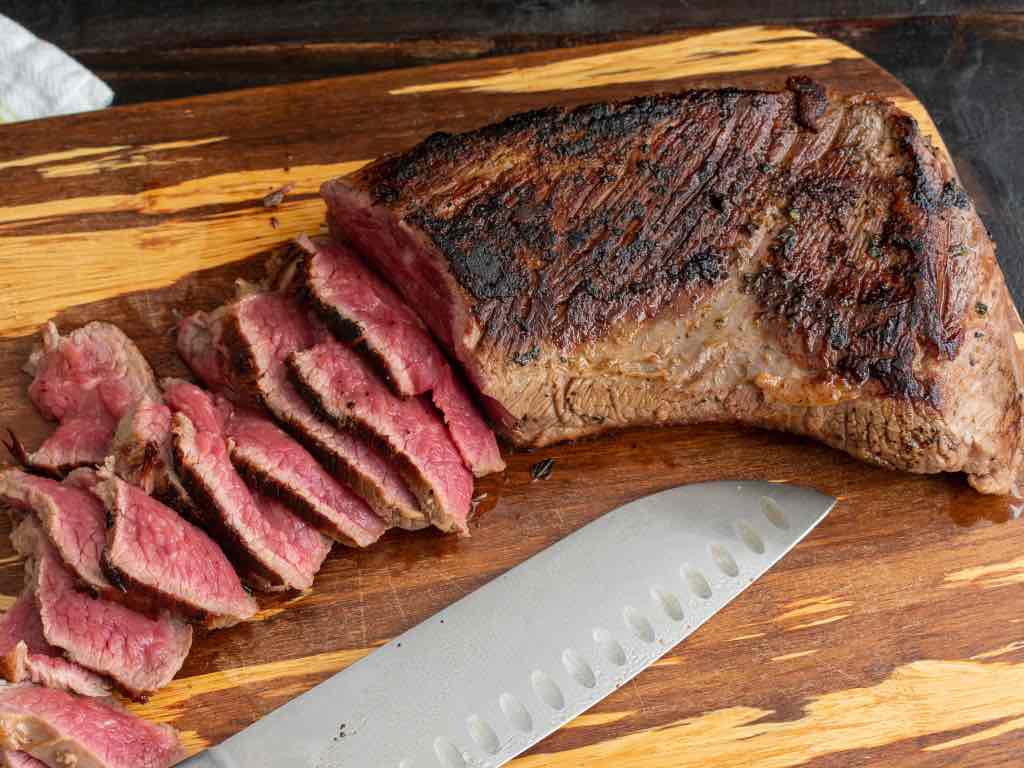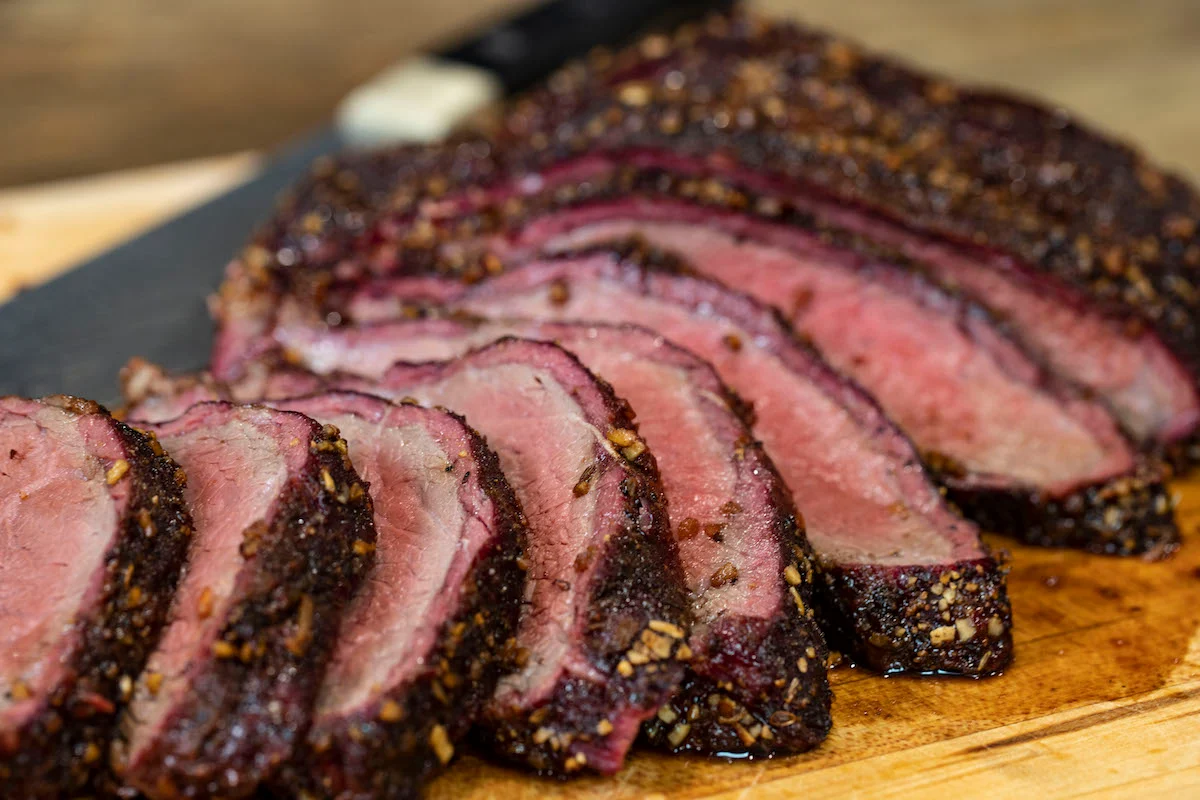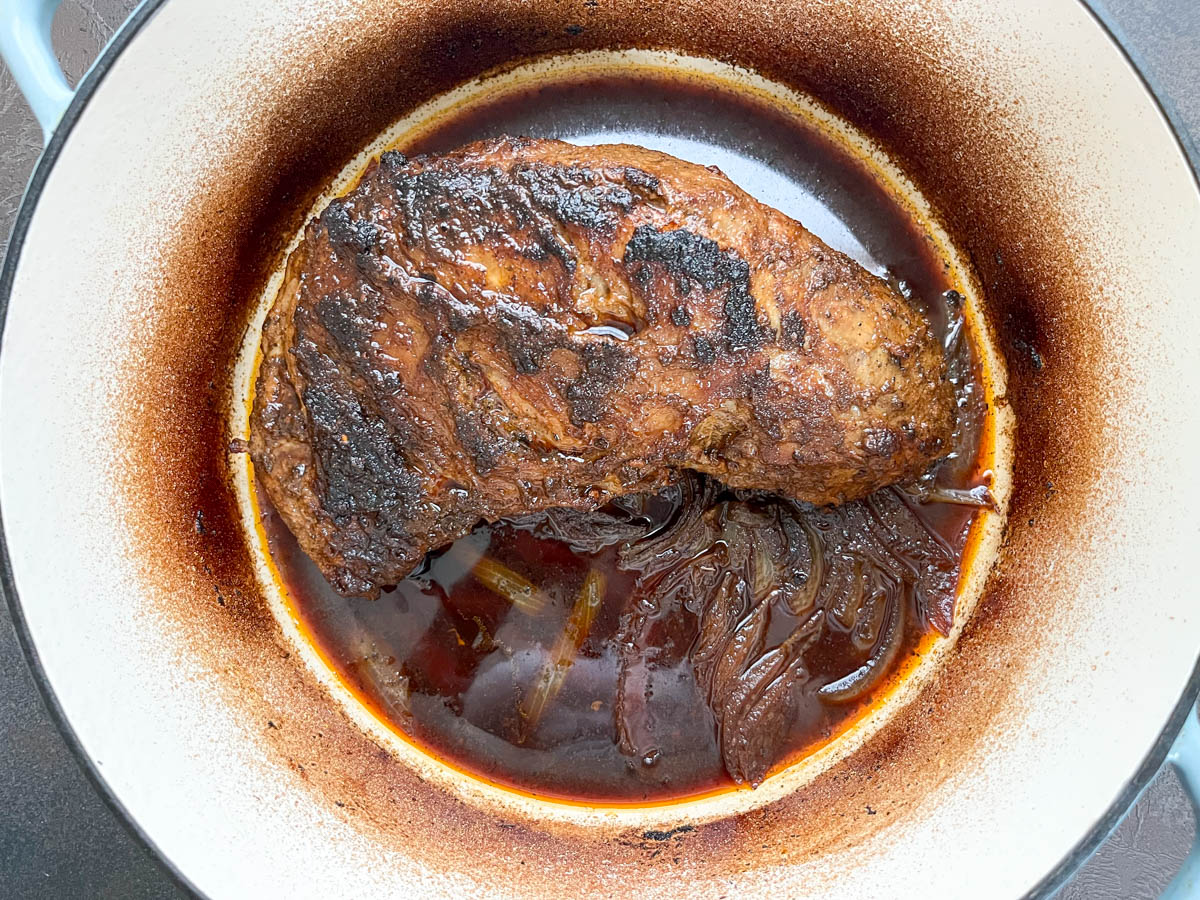
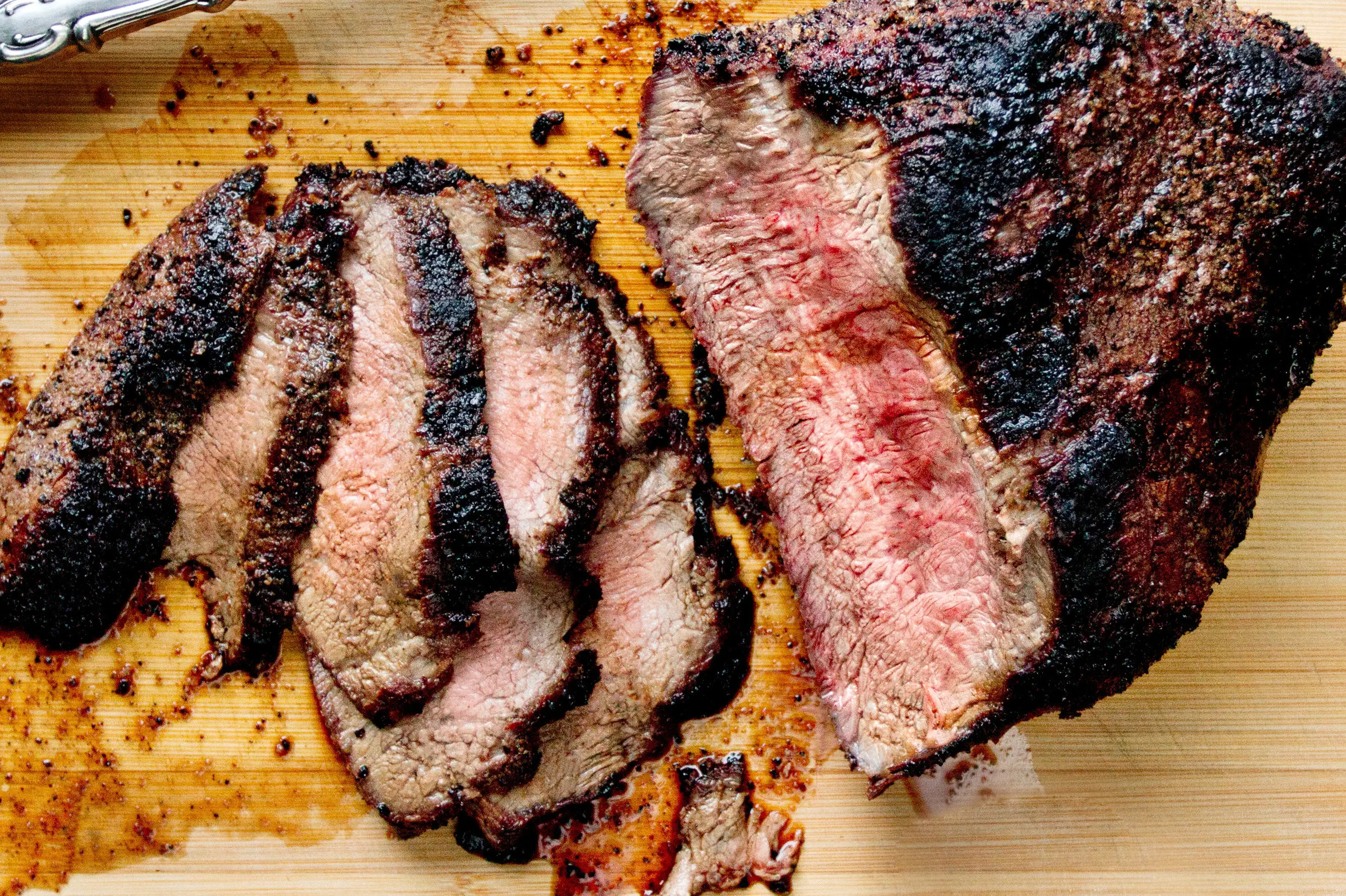
Tri-tip doesn’t have to be intimidating. Get a deeply seasoned crust, a juicy medium-rare center, and step-by-step grill or oven directions—plus how to slice...
Delishing
How to Reheat Tri-Tip

Maya Brooks
Maya Brooks is a dedicated home cook and the lead recipe developer at Delishing, where she shares practical, foolproof meals for everyday life. With over a decade of hands-on kitchen experience, she specializes in creating approachable dishes that fit a variety of dietary needs and modern cooking methods. Maya is passionate about helping busy people get delicious, stress-free food on the table without needing formal culinary training.
Reheating tri-tip without turning it gray and chewy is all about gentle heat and a little moisture. I learned this the hard way after microwaving beautiful medium-rare slices into something that tasted like regret. The good news: you do not need fancy equipment. You just need a low temperature, a cover, and a clear goal.
Your goal is not “hot steak.” Your goal is warmed tri-tip where the center stays pink and tender, with just enough heat to make it satisfying.
Quick safety note (because leftovers are a different game): The methods below focus on keeping tri-tip pink, which means reheating to “warm,” not piping hot. That works best when the tri-tip was cooked properly, cooled quickly, and stored safely in the fridge. If the meat sat out for more than 2 hours, smells off, or you are cooking for someone pregnant, older, or immunocompromised, it is smarter to reheat leftovers to a hotter temperature, even if that means losing some pink.
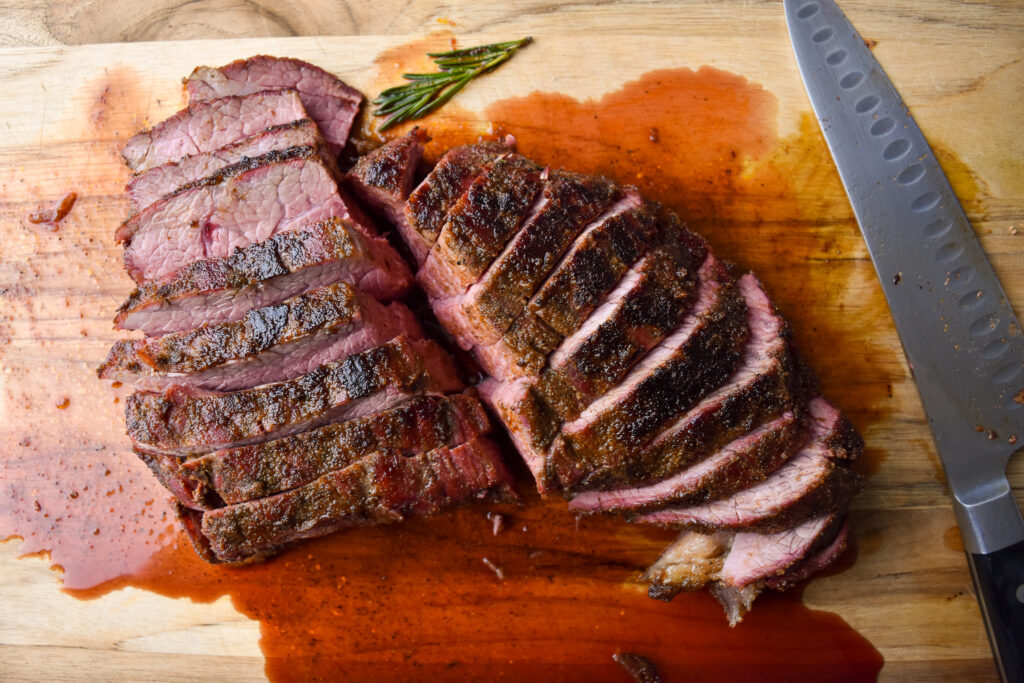
Best temperature target
For sliced medium-rare tri-tip, I aim to reheat until the thickest slice reaches about 110 to 120°F in the center. That will feel warm and pleasant, but it stays in the “do not overcook it” zone.
- 100 to 110°F: barely warmed, good for sandwiches
- 110 to 120°F: my sweet spot for dinner plates
- Above 125°F: the slices start trending toward a more cooked texture, and the dry-out risk rises fast
If you do not have a thermometer, use this visual cue: the slices should be warm and flexible, not sizzling, and the center should still look pink when you peek.
Timing note: The times below assume the tri-tip is coming straight from the refrigerator. If it is closer to room temp, it will warm faster, so start checking early.
How long it keeps
Cooked tri-tip keeps well in an airtight container in the refrigerator for 3 to 4 days. That is a standard guideline, not a guarantee. For best texture, I like to reheat within 1 to 2 days, especially if it was cooked to medium-rare, since it can dry out the longer it sits.
Storage tip from my notebook: Store slices with any collected juices. Those juices are basically free flavor and moisture insurance.
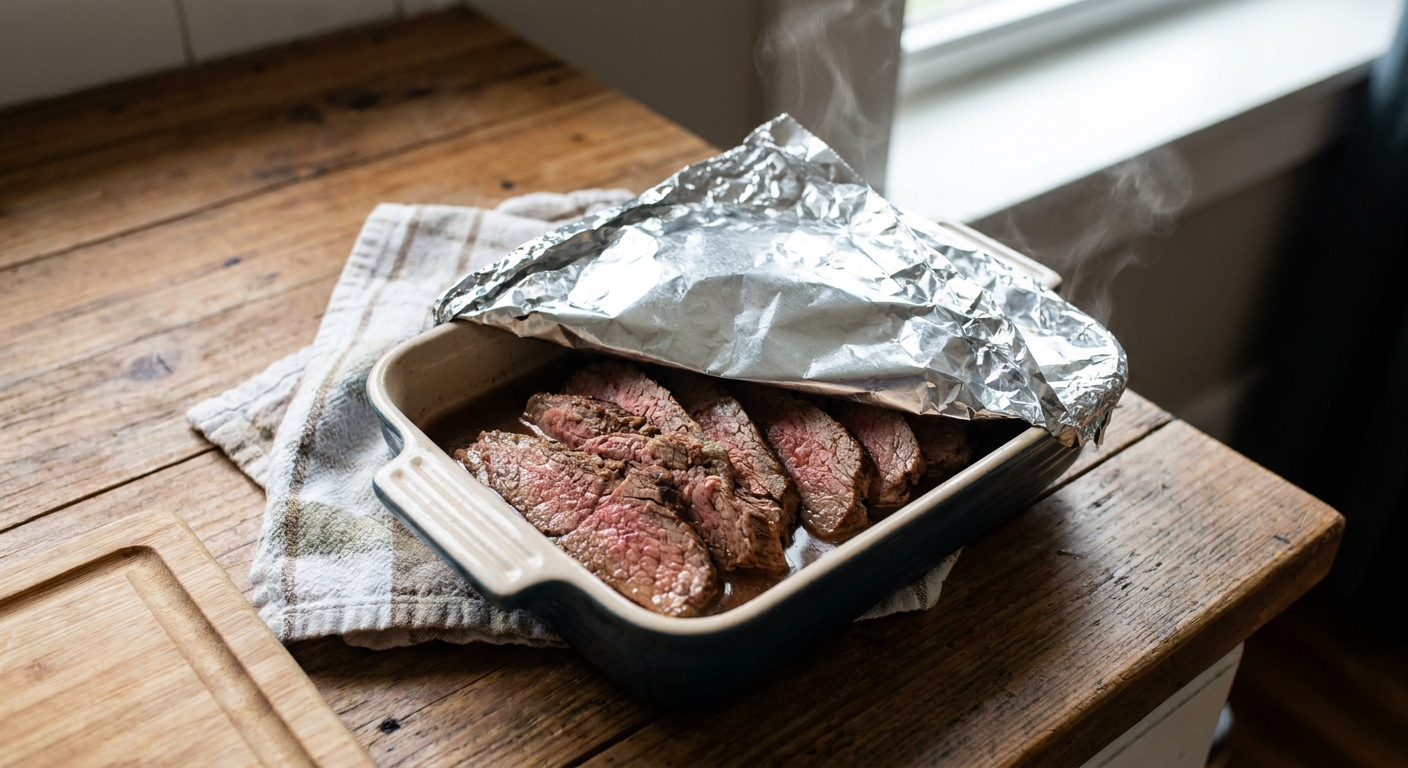
Low oven with broth
If you are reheating enough tri-tip for dinner, the oven is the most hands-off way to keep it tender.
What you need
- Sliced tri-tip
- Beef broth (or chicken broth, or even water in a pinch)
- Baking dish
- Foil (or a lid)
Steps
- Preheat the oven to 250°F. Low and slow prevents the outer edges from overcooking before the middle warms.
- Arrange slices in a baking dish. Overlap slightly, but do not pack them into a tight brick. You want a little space so heat and steam can move between slices.
- Add a splash of broth. Start with 2 to 4 tablespoons for a small dish, or just enough to lightly coat the bottom. Cold or warm broth both work. Cold just adds a minute or two.
- Cover tightly with foil. This traps moisture and keeps the heat gentle.
- Warm 10 to 15 minutes, then check. Thin slices may be ready closer to 8 to 10 minutes. Thicker slices may take 15 to 20 minutes.
- Stop when just warm. If you have a thermometer, aim for 110 to 120°F in the thickest piece.
My favorite finishing move: Spoon a little of the warm broth and pan juices over the slices right before serving.
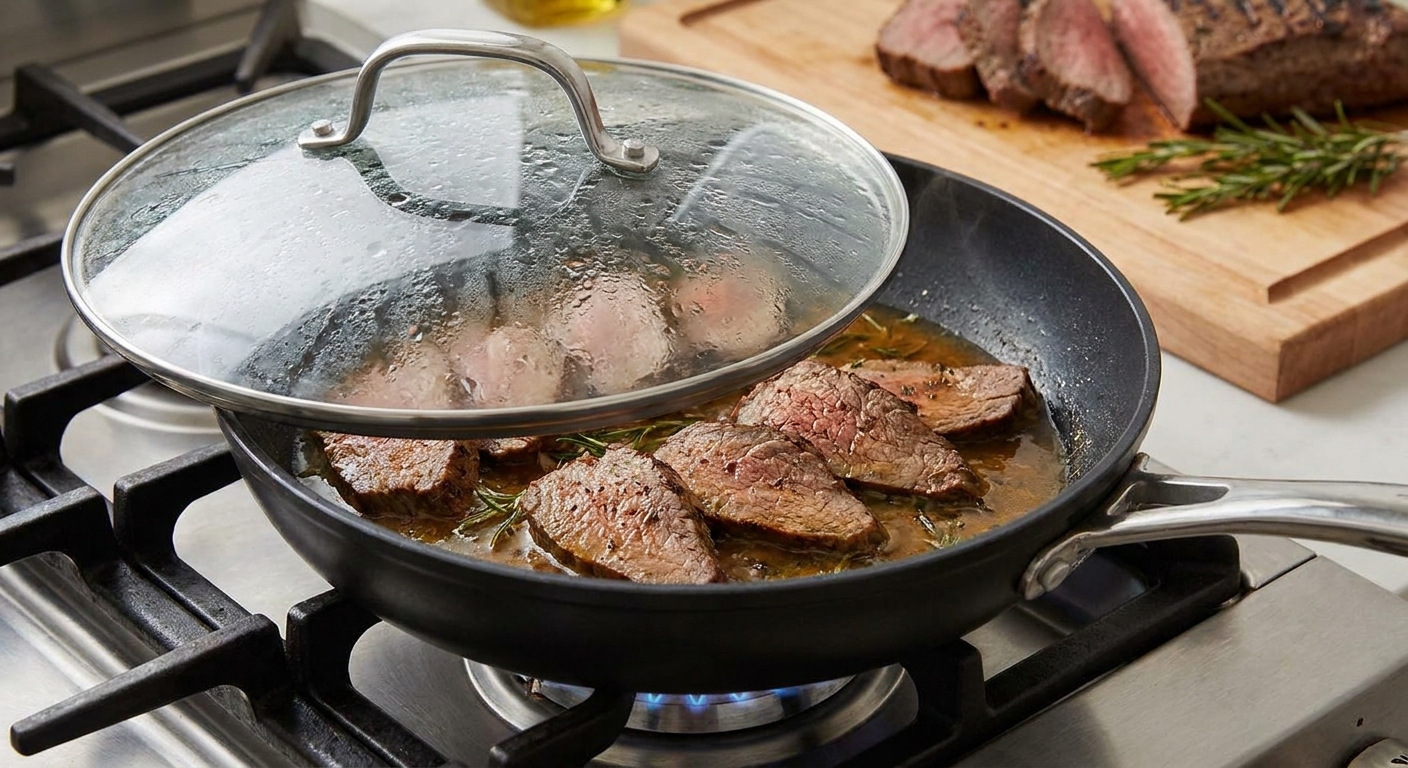
Covered skillet with broth
This is my weeknight method when I just need a quick plate. The covered skillet creates a mini steam chamber that warms the meat without aggressively cooking it.
Steps
- Choose a skillet large enough to hold the slices in a loose layer.
- Add broth: Pour in 2 to 3 tablespoons broth (or water). You want a thin layer on the bottom.
- Add the tri-tip slices and turn the heat to low.
- Cover with a lid and warm for 2 to 4 minutes.
- Flip once and warm another 1 to 3 minutes.
- Pull early. Residual heat keeps working after you turn off the burner.
If the broth evaporates before the slices are warm, add another tablespoon and keep the heat low. If you hear sizzling, your pan is too hot.
Reheating a whole piece
If your leftover tri-tip is still in a chunk (not sliced), you can reheat it gently without treating it like a raw roast.
- Preheat the oven to 250°F.
- Set the tri-tip on foil and add 1 to 2 tablespoons broth or any saved juices.
- Wrap tightly so it is sealed like a packet.
- Warm 20 to 35 minutes, depending on thickness, then check. You are looking for warm, not hot.
- Rest 5 minutes, then slice thinly against the grain for the most tender bite.
Microwave, if you must
I get it. Sometimes you just need warm tri-tip in under two minutes. The trick is lowering the power and using steam.
- Put slices on a microwave-safe plate in a loose layer.
- Add moisture: drizzle 1 to 2 teaspoons broth over the meat.
- Cover with a microwave-safe lid or a damp paper towel.
- Microwave at 30% to 50% power in 15 to 20 second bursts.
- Flip or rearrange between bursts, and stop as soon as the slices feel warm and flexible.
This will never be as even as the oven or skillet, but it will keep you out of the rubbery danger zone.
What to avoid
- High heat: It tightens the meat fibers fast and dries slices out.
- Reheating uncovered: Moisture escapes, and the edges overcook before the center warms.
- Long microwave blasts: Microwaves heat unevenly and can overcook the edges in seconds.
- Cooking leftovers like raw meat: Leftovers have a completely different clock. Gentle warming is the win.
Extra tips
Slice thickness matters
If your leftovers are in thick slabs, consider slicing them before reheating. Thin, even slices warm quickly and evenly, which protects that pink center.
Slice against the grain
Even perfectly reheated tri-tip can feel tough if it is sliced the wrong way. Look for the grain direction and slice across it for the most tender texture.
Use the right amount of liquid
Broth is ideal because it adds flavor, but you only need a splash. Too much liquid can leach flavor from the beef and make the texture feel boiled.
Season after reheating
A tiny pinch of salt or a squeeze of lemon after reheating can wake up leftovers. I keep it simple because tri-tip is already flavorful.
Serving ideas
- Quick steak plate: Serve with rosemary roasted sweet potatoes and a simple salad.
- Leftover steak sandwich: Pile warm slices into a toasted roll with a swipe of mayo and something crunchy.
- Steak night, minimal effort: Pair with garlic roasted vegetables for an easy, balanced dinner.
If you are cooking tri-tip from scratch next time, you might also like tri-tip roast and air fryer tri-tip.
FAQ
Can I reheat tri-tip and keep it medium-rare?
You can keep it pink, yes, especially if it was originally cooked medium-rare and you reheat gently. Aim for 110 to 120°F in the center of the thickest slice, and stop as soon as it is warm.
Is broth necessary?
It helps a lot. A tablespoon or two of broth creates steam, prevents the surface from drying, and gives you something tasty to spoon over the meat. Water works if that is what you have.
What if my tri-tip is already more done?
If your leftovers are closer to medium or well-done, moisture matters even more. Use the covered oven or covered skillet method with broth and keep the heat low to avoid drying it out.
Can I reheat frozen tri-tip slices?
For best texture, thaw overnight in the fridge, then reheat gently using one of the methods above. Trying to warm frozen slices directly often overcooks the outside before the middle softens.