Delishing
Smoked Chestnuts

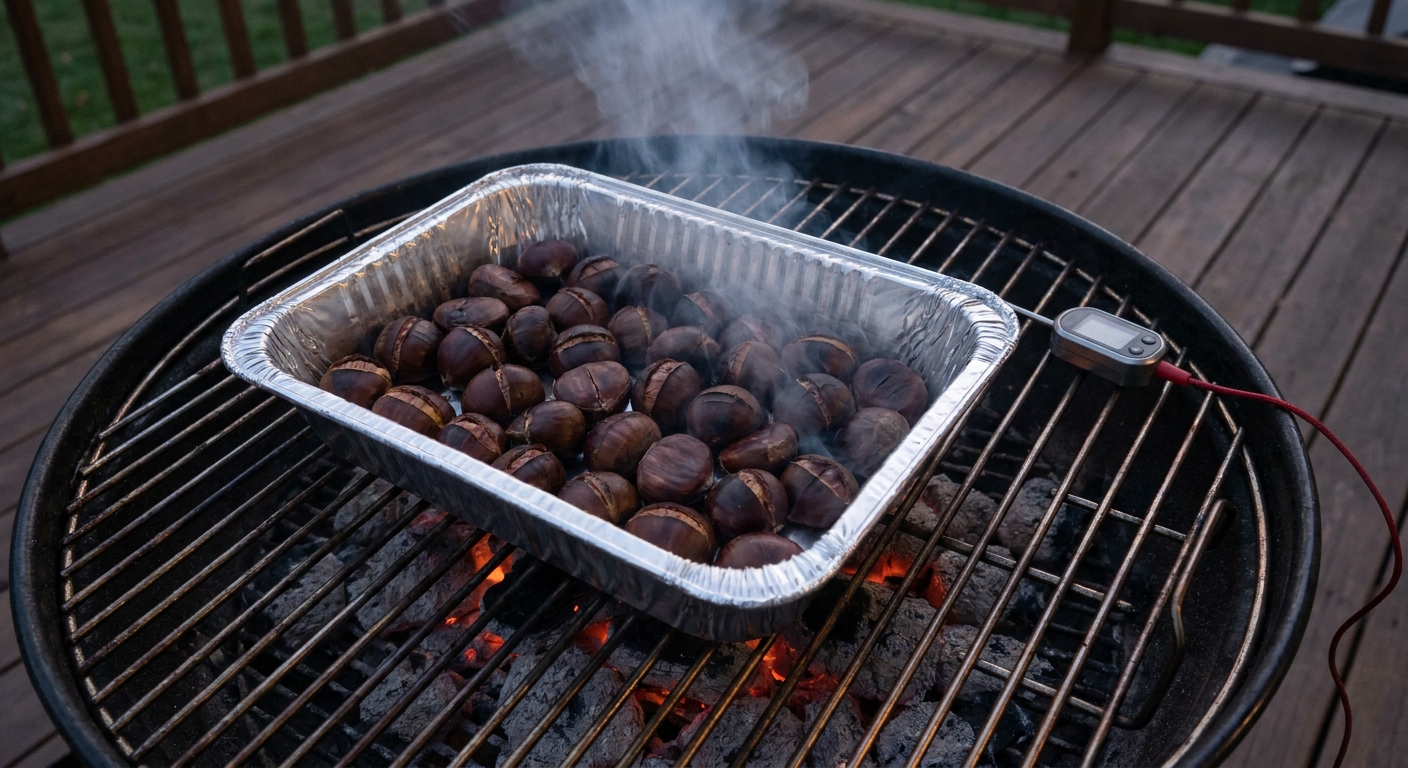
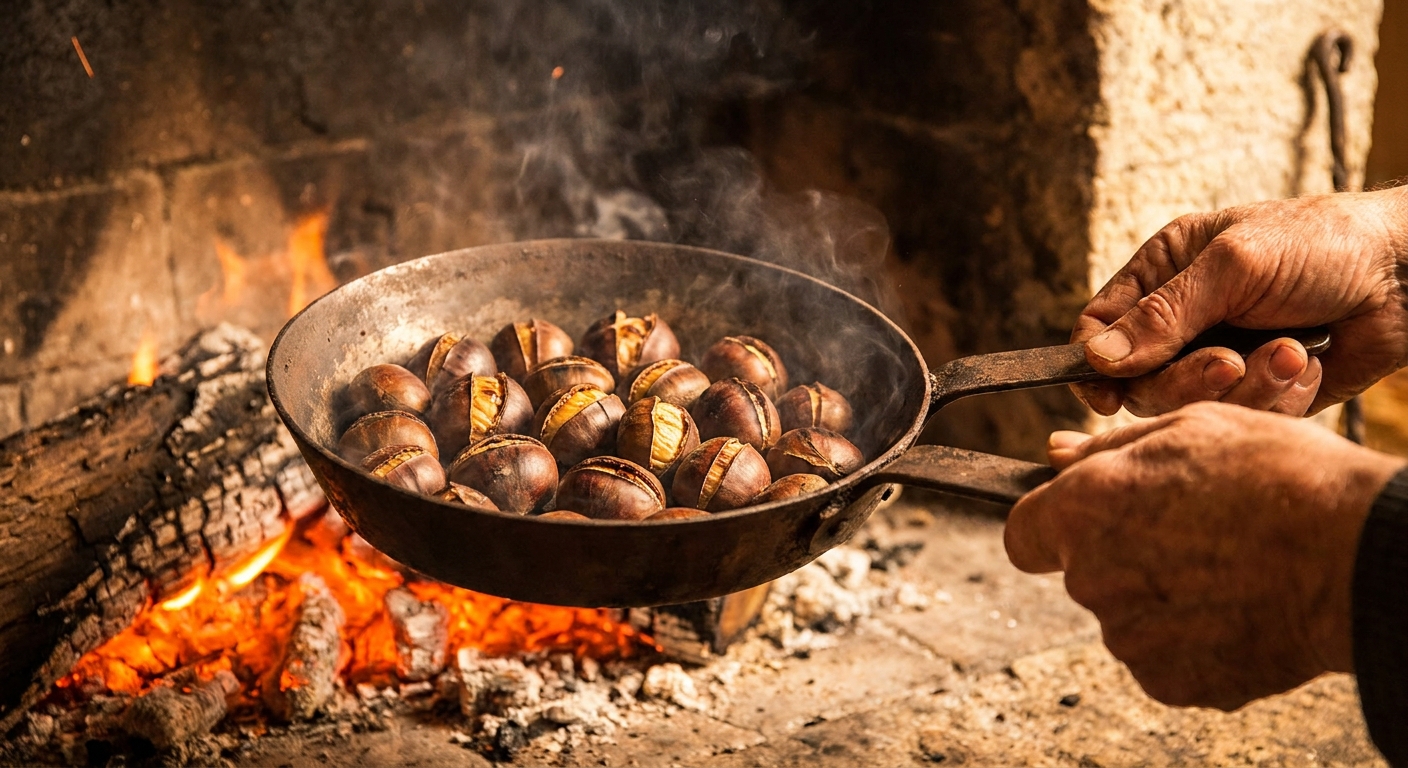
When I want chestnuts with that cozy, woodsy flavor but I do not want the high heat, fast roast approach, I go low and slow on the smoker. It is calmer, more forgiving, and it keeps the warmth, smoke, and mess outside, so your kitchen smells hardly at all compared to roasting indoors. The payoff is tender, sweet chestnut centers with a light kiss of smoke that works as a snack or as a head start for holiday stuffing.
This page is all about a low smoker schedule for fresh scored chestnuts: which wood to use, what pit temperature to hold, about how long it can take until the centers are truly tender, and the most important part: peeling them while they are still warm.
A quick note on what I mean by gentle smoke: you want thin, light smoke, not thick white clouds. Chestnuts can pick up smoke fast, and a little goes a long way.
If you like chestnuts in other methods too, you might also want our quicker options like air fryer chestnuts or the classic approach in how to roast chestnuts.
Low smoker schedule
- Wood choice: Apple or cherry (mild, slightly sweet). For a more savory smoke, use oak sparingly.
- Pit temperature: 225°F to 250°F
- Cook time: Often 60 to 90 minutes, depending on size, freshness, and your smoker
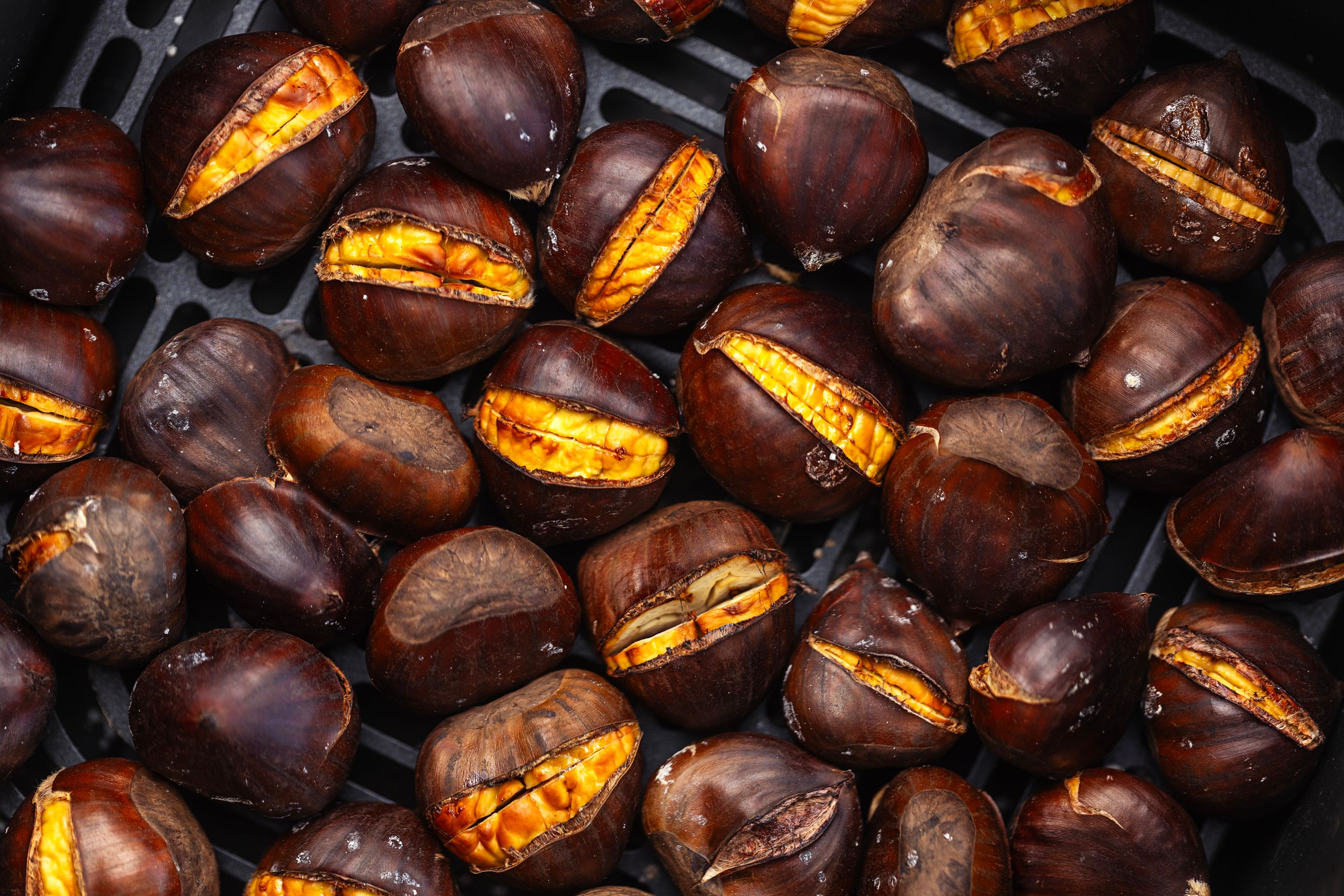
- Doneness cues: Shells may open at the score and peel easier, but the reliable test is to peel one carefully. The inside should be fully tender and creamy with no firm, chalky core.
- Peel plan: Finish with a short covered steam, then peel while warm for the easiest release.
What they taste like
Smoked chestnuts are naturally sweet and starchy, almost like a cross between a roasted potato and a mild nut. With mild fruitwood and light smoke, the flavor reads a little like warm caramel with a soft campfire note. If you go too heavy with strong wood, that sweetness gets buried fast, so apple or cherry is my default.
Why it works
- Low pit temperature keeps the centers creamy. Chestnuts can go dry and chalky when cooked too aggressively.
- Mild wood complements chestnuts instead of overpowering them. Apple or cherry adds aroma without tasting harsh.
- A covered pan plus a splash of water makes peeling realistic. A short steam step loosens the shell and the inner skin so you are not fighting each nut.
Ingredient notes
Fresh chestnuts
Buy sweet chestnuts meant for eating, not horse chestnuts. Fresh chestnuts should feel heavy for their size and have glossy shells with minimal wrinkles. Very old chestnuts can cook up mealy and can be harder to peel because the inner skin clings.
Need a quick refresher on varieties? See horse chestnuts vs sweet chestnuts and chestnuts vs water chestnuts.
Water
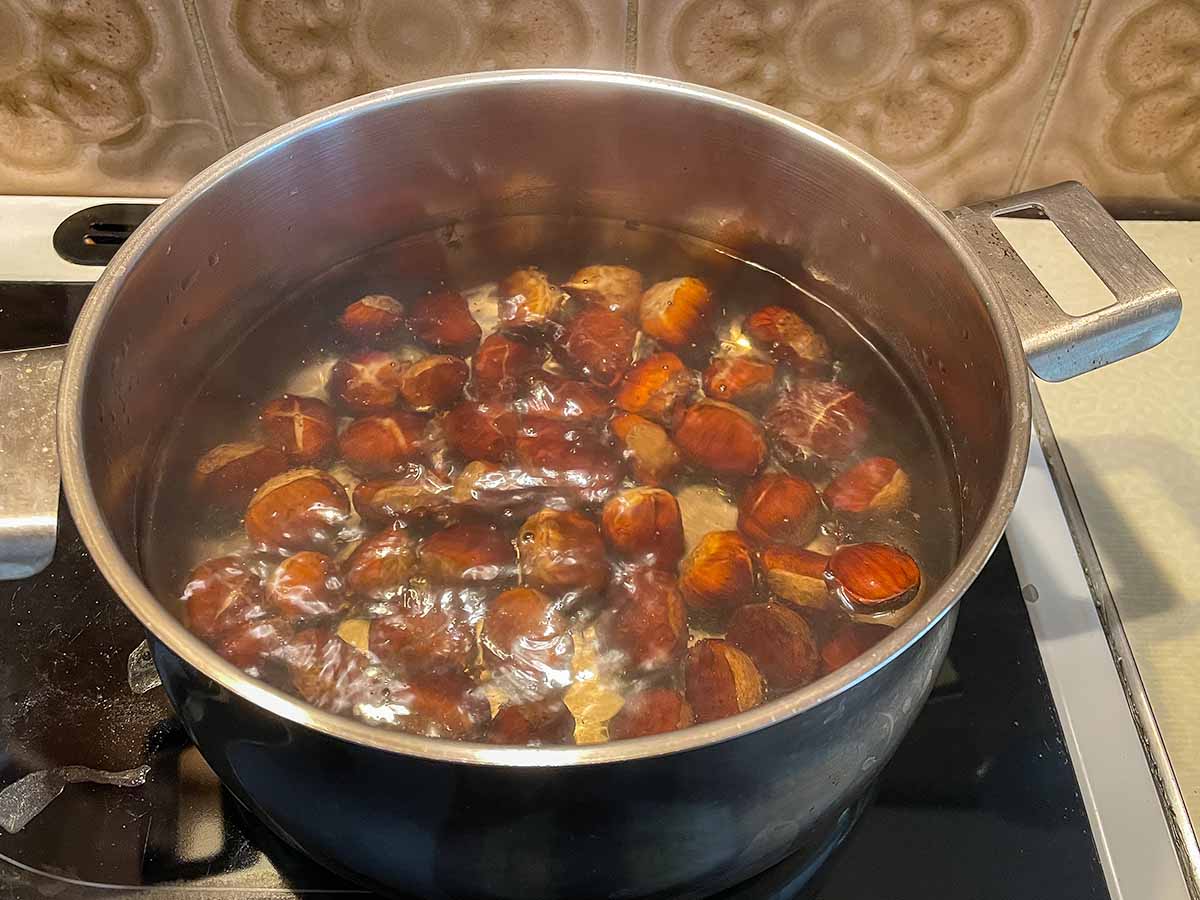
This is not for boiling. A small amount in the pan creates gentle steam during the finishing phase, which helps the shells and skins release.
Salt and butter (optional)
For snacking, I love finishing with a pinch of flaky salt and a tiny pat of butter while they are still warm. If the chestnuts are headed into stuffing, I usually leave them plain and season later.
Equipment
- Smoker or grill set up for indirect heat (pellet, charcoal, or gas)
- Instant read thermometer for monitoring pit temp
- Sharp paring knife to score the shells
- Foil pan or disposable aluminum pan (keeps them contained and makes the steam step easy)
- Foil to cover the pan near the end
- Clean kitchen towel for holding warm chestnuts while you peel
Pro tips
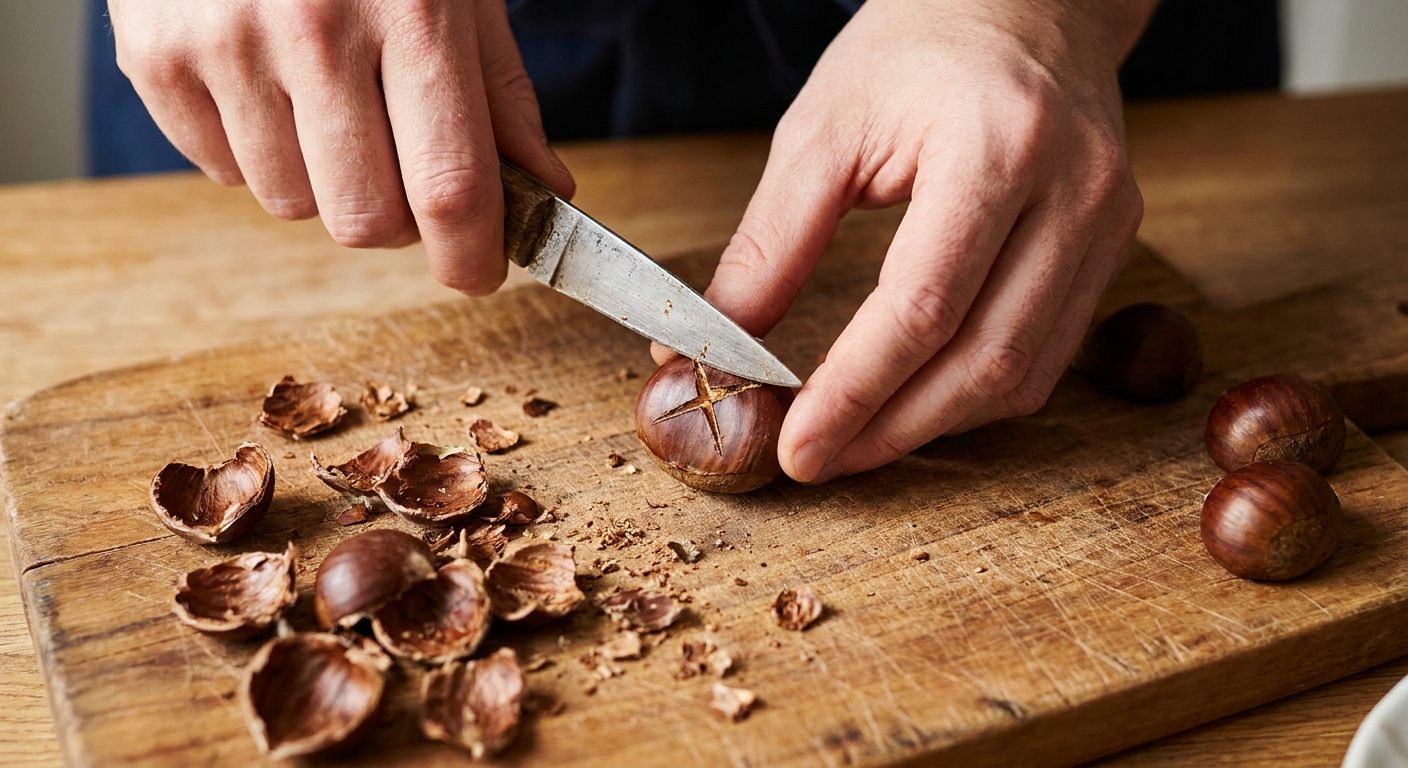
- Score deep enough. You want to cut through the shell and just into the chestnut. A shallow score tends to close back up and does not help peeling.
- Keep the smoke light. Chestnuts can take on smoke quickly. Thin, light smoke is the goal.
- Start uncovered, finish covered. Uncovered time gives smoke exposure. Covered time with a splash of water helps tenderness and peeling.
- Peel while warm, not hot. Give them a few minutes so you can handle them, then peel immediately.
- Work in batches. Keep peeled nuts under a towel while you peel the rest so they stay warm and cooperative.
Substitutes
- Wood: Swap apple or cherry for pecan (still fairly mild). If oak is all you have, use it sparingly and avoid adding extra chunks mid cook.
- No foil pan: Use a cast iron skillet set over indirect heat, then tent tightly with foil for the steam phase.
- No smoker: A covered grill set for indirect heat can mimic the same schedule. Use a small smoke tube or a foil packet of chips if needed, but keep it subtle.
Variations
Snack style
Toss warm peeled chestnuts with a pinch of salt and a little melted butter. For a sweet version, add cinnamon and a tiny drizzle of honey.
Stuffing ready
Leave them unseasoned, then roughly chop. They are excellent folded into classic stuffing mixes. Try them in our chestnut stuffing as a smoky twist.
Extra tender for soup
Extend the covered steam phase by 10 to 15 minutes until they are very soft, then puree into a soup base. Our chestnut soup is a great landing spot.
Serving ideas
- Warm snack: Serve right after peeling with salt and butter.
- Cheese board add on: Pair with sharp cheddar or a creamy blue.
- Stuffing mix in: Chop and stir into bread stuffing or wild rice stuffing.
- Salads: Toss chopped chestnuts into a fall salad with apples and bitter greens.
Storage
Refrigerator
Store peeled smoked chestnuts in an airtight container for up to 4 days.
Freezer
Freeze peeled chestnuts in a zip top freezer bag for up to 3 months. Thaw overnight in the fridge.
Reheating
Warm gently in a covered skillet with a splash of water, or in the microwave in short bursts. Avoid blasting them until scorching hot, which can turn them dry.
Common mistakes
- Not scoring enough. If the shells are barely cut, peeling will be miserable. Next time, cut deeper. For this batch, extend the covered steam step and peel under a towel to trap moisture.
- Using heavy smoke wood. Mesquite and strong hickory can overpower chestnuts quickly. If you already did it, use the nuts in stuffing or soup where other flavors can balance the smoke.
- Letting them cool before peeling. Rewarm the chestnuts covered with a splash of water until steamy, then peel immediately.
- Pit temp drifting too low. Below 200°F, they can take a very long time and dry out before they turn tender. Bring the pit back to 225°F to 250°F and finish covered.
FAQ
How do I know when smoked chestnuts are done?
The score often opens and the shell loosens, but the dependable test is to peel one carefully and check the center. A done chestnut is tender and creamy all the way through, with no firm or chalky core.
Do I have to soak chestnuts before smoking?
No. For this schedule, I do not soak. A soak can help prevent scorching in very hot roasts, but at 225°F to 250°F it is not necessary. The covered steam finish does the real work for tenderness and peeling.
What wood is best for smoked chestnuts?
Apple is my favorite for a gentle, slightly sweet smoke. Cherry is similar and a little richer. Oak works for a more savory profile, but use it lightly so the chestnuts do not taste bitter.
Can I smoke chestnuts for stuffing ahead of time?
Yes. Peel them, cool completely, then refrigerate up to 4 days or freeze up to 3 months. Chop and add to your stuffing during the bake so they warm through without drying out.
Smoked Chestnuts: A low smoke method for fresh chestnuts with a mild fruitwood aroma, tender centers, and a peel while warm finish. Great for snacking or chopping into stuffing.
- Prep Time
- 15 minutes
- Cook Time
- 60 to 90 minutes
- Total Time
- 1 hour 20 minutes to 1 hour 45 minutes
- Servings
- About 4 servings
- 1 pound fresh sweet chestnuts
- 2 to 3 tablespoons water
- Flaky salt, to taste (optional)
- 1 to 2 tablespoons butter, melted (optional)
- Preheat the smoker. Set your smoker or grill up for indirect cooking and preheat to 225°F to 250°F. Add a mild wood like apple or cherry. Aim for thin, light smoke, not heavy clouds.
- Sort, rinse, and dry. Discard any chestnuts with moldy spots, pinholes, or a hollow feel. Rinse the rest and pat very dry.
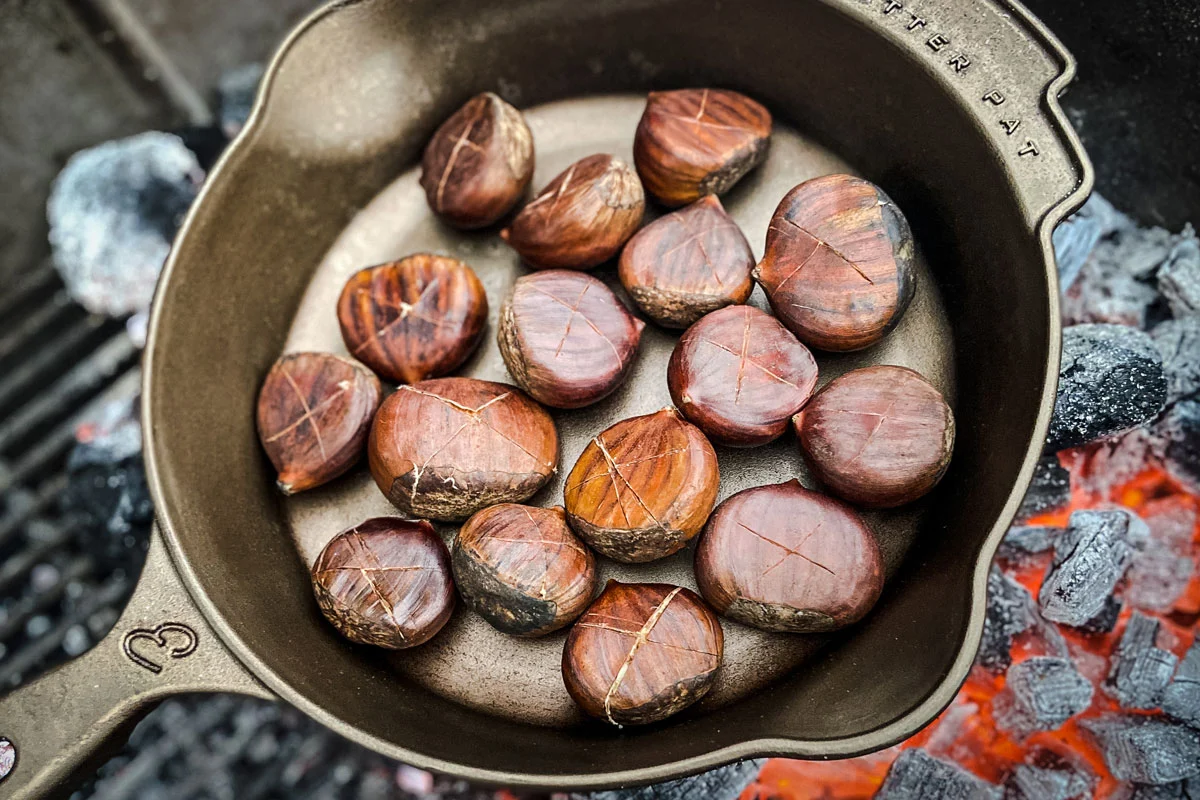
- Score the chestnuts. Using a sharp paring knife, cut a deep X on the flat side of each chestnut, cutting through the shell and just into the chestnut. Scoring is essential so steam can escape and the shells open for peeling.
- Load the pan. Put the scored chestnuts in a foil pan in a single layer. Leave the pan uncovered so smoke can circulate.
- Smoke uncovered for 45 minutes. Place the pan on the smoker and cook for 45 minutes, holding the pit at 225°F to 250°F.
- Add steam and cover. Carefully pour 2 to 3 tablespoons water into the pan, then cover the pan tightly with foil to trap steam.
- Finish until tender, 15 to 45 minutes. Continue cooking until the chestnut centers are tender, 15 to 45 minutes more depending on size and freshness. Start checking at the 60 minute total mark by removing one chestnut, letting it cool just enough to handle, peeling it carefully, and tasting. It should be fully tender and creamy with no firm, chalky core. (The shells may open at the score and peel easier, but always confirm the center is tender.) If it is still firm in the center, re-cover and keep cooking.
- Rest briefly. Remove the pan from the smoker. Keep the chestnuts covered for 5 minutes so they stay warm and steamy.
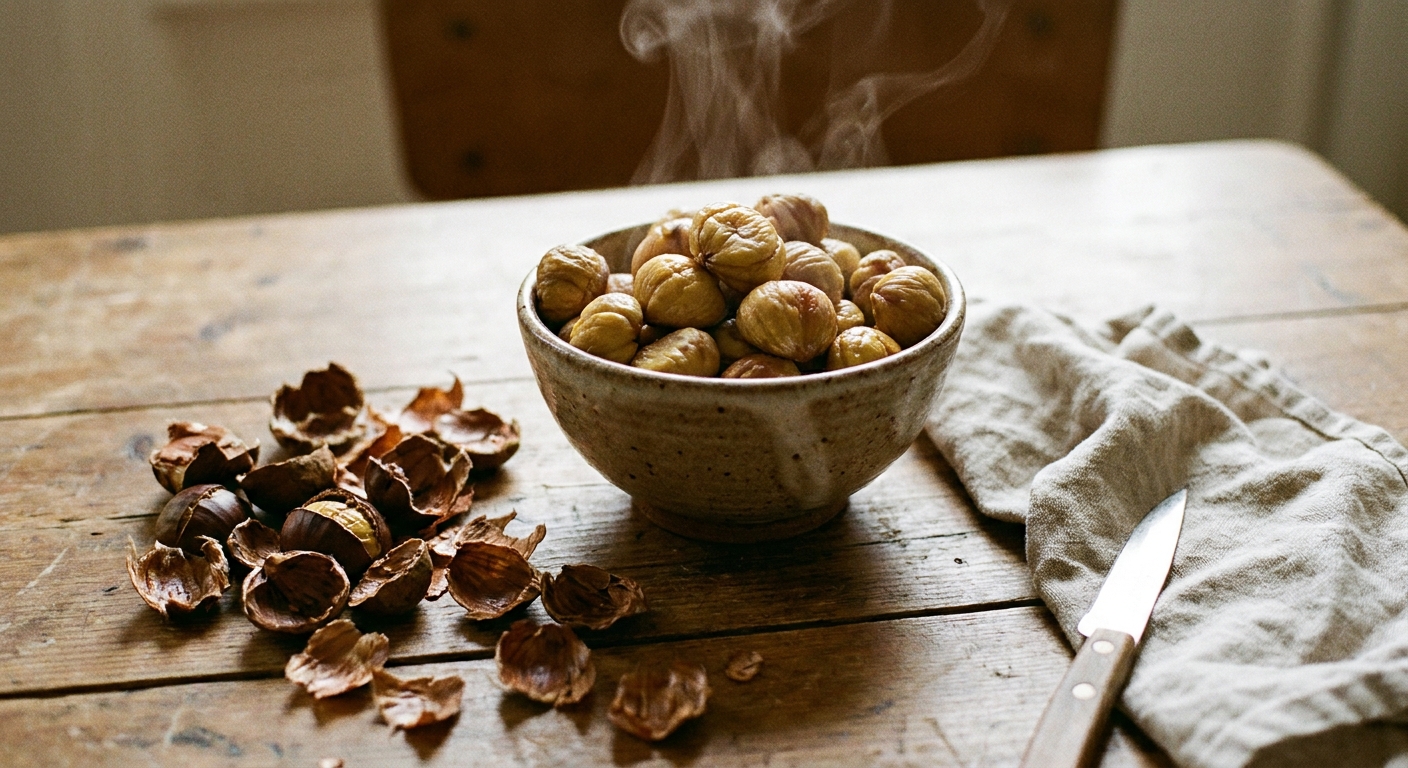
- Peel while warm. Working in batches, peel off the shell and papery inner skin while the chestnuts are still warm. Keep peeled chestnuts under a clean kitchen towel to hold warmth as you work. If they start getting hard to peel, re-cover the pan for 5 to 10 minutes to re-steam, then continue.
- Season (optional). For snacking, toss warm peeled chestnuts with melted butter and flaky salt to taste. For stuffing or soup, leave them plain and chop or puree as needed.
- Wood note: Chestnuts are delicate. If your smoker runs heavy smoke, use less wood than you would for meat.
- Doneness note: Shells often open at the score, but that alone does not guarantee they are done. Always peel one and check for a fully tender center.
- Peeling tip: Warm and steamy is the sweet spot. If they cool completely, the inner skin grabs on.