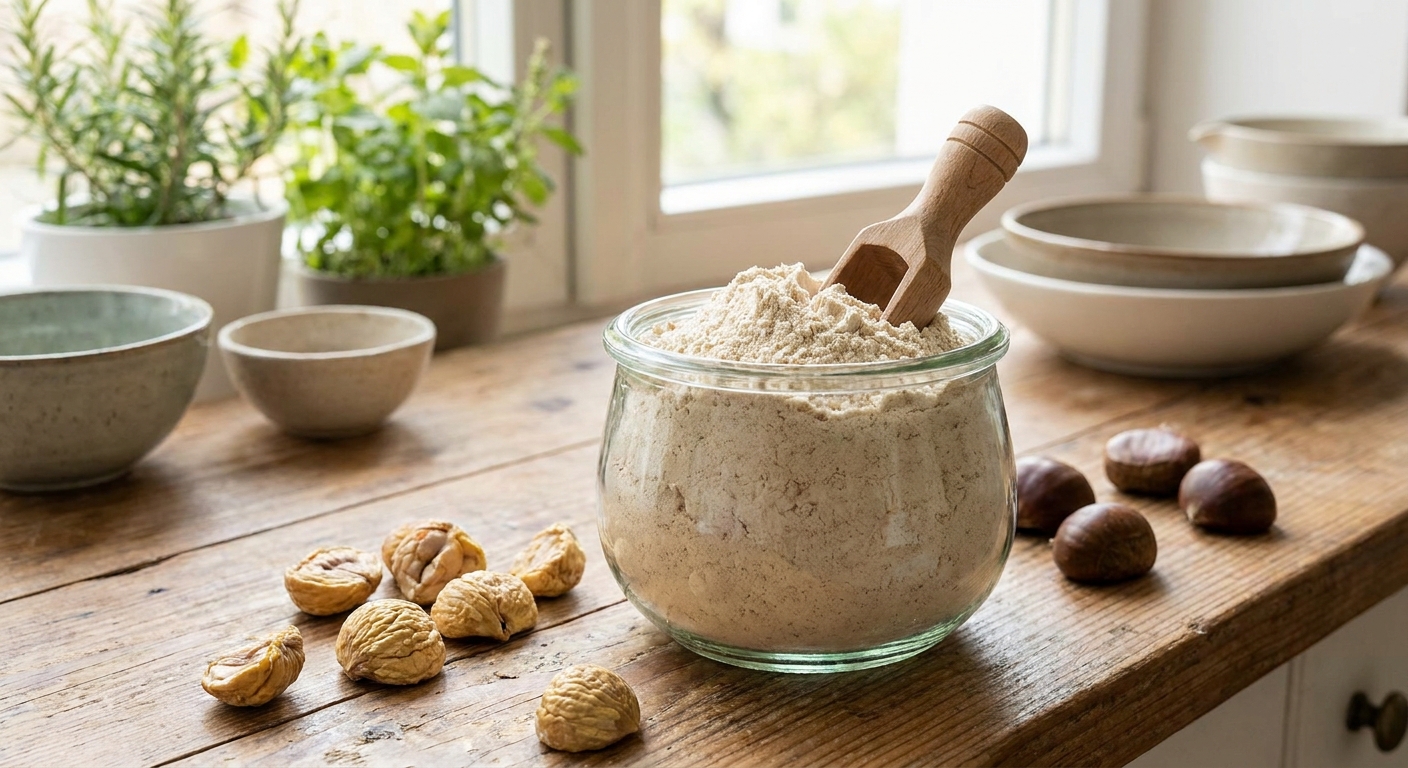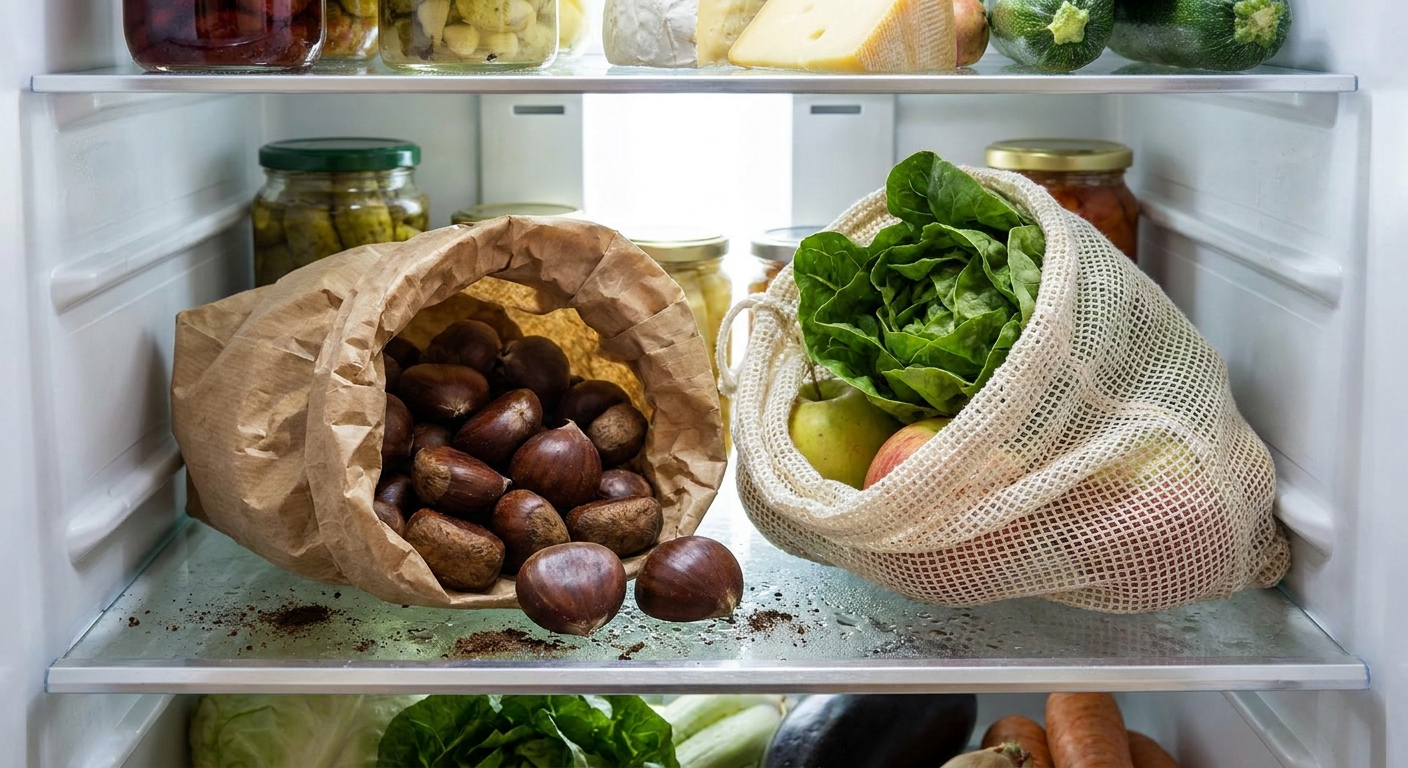
Dried chestnuts need rehydrating before they’re truly tender. Follow this simple soak-then-simmer method, plus a quick-soak option, doneness cues, troublesho...
Delishing
How to Dry Chestnuts

Maya Brooks
Maya Brooks is a dedicated home cook and the lead recipe developer at Delishing, where she shares practical, foolproof meals for everyday life. With over a decade of hands-on kitchen experience, she specializes in creating approachable dishes that fit a variety of dietary needs and modern cooking methods. Maya is passionate about helping busy people get delicious, stress-free food on the table without needing formal culinary training.
I love fresh chestnuts, but I do not always love their very short window of perfection. If you have a big haul, drying chestnuts is the easiest way to turn them into a pantry ingredient you can use later for cozy soups, stuffings, and holiday cooking. The goal is simple: remove enough moisture that the nuts become hard, lightweight, and stable at room temperature.
Before you start: drying vs roasting
Roasting chestnuts is for eating right away, while drying is for long-term storage.
- Roasted chestnuts are tender, steamy, and meant to be eaten warm. If that is what you want, use our How to Roast Chestnuts guide.
- Dried chestnuts become firm and hard, then get rehydrated and cooked later. Once you have dried nuts ready to use, follow How to Cook Dried Chestnuts.
What you need
- Fresh chestnuts (I recommend starting with 1 to 2 pounds so you can dry them in a single layer)
- Paring knife
- Rimmed baking sheet and parchment (oven method)
- Dehydrator trays (dehydrator method)
- Airtight jar or container for storage
If you are still shopping, our How to Buy Fresh Chestnuts guide helps you avoid dried-out or moldy nuts before you even get home.
Choose chestnuts for drying
Drying will not fix a questionable chestnut, so I do a quick sort first.
- Skip any nut with soft spots, pinholes, cracks, or a sour or musty smell.
- Pick chestnuts that feel heavy for their size, which usually means they are still nice and moist inside.
Prep the chestnuts (do not skip this)
You have two good options. Both work. Choose based on how you plan to dry them.
Option 1: Peel first (best for fastest drying)
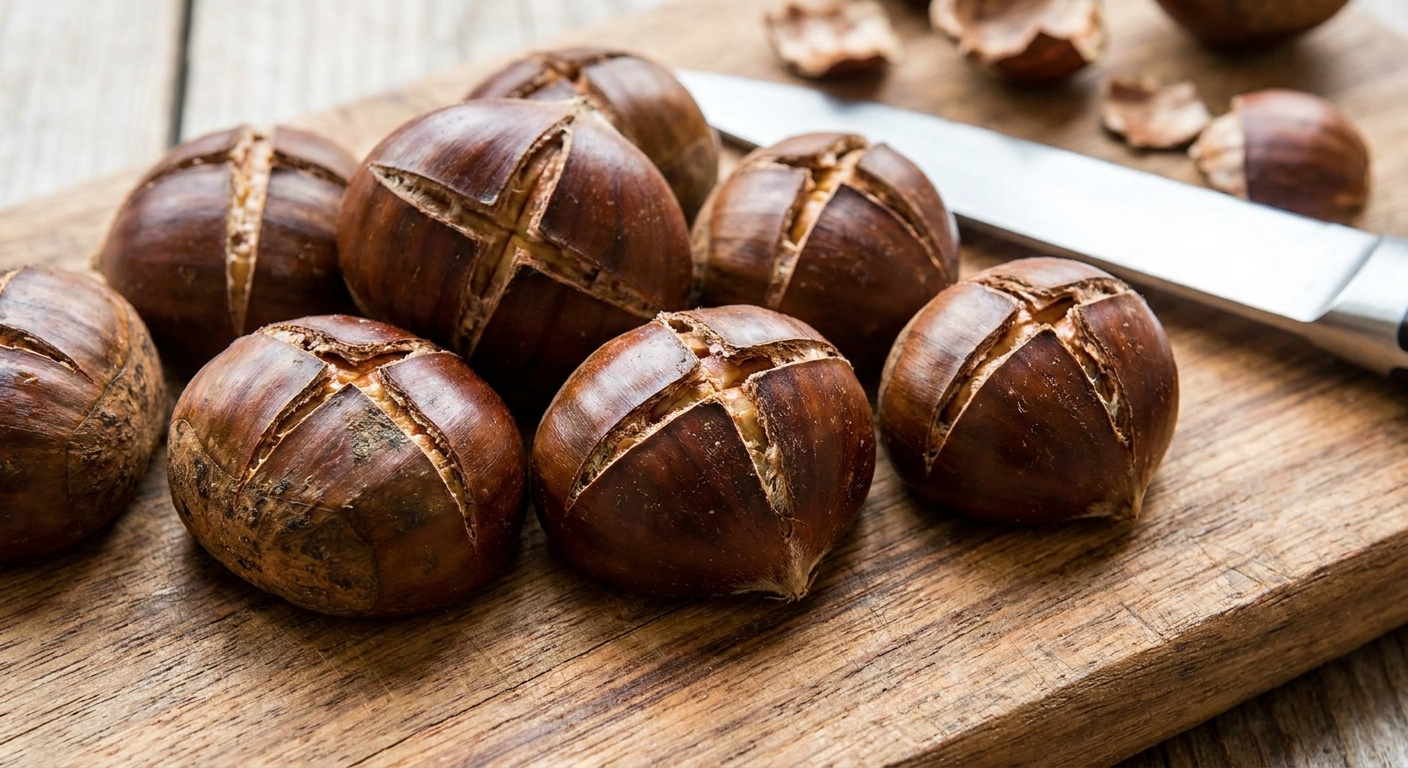
- Score each chestnut with an X on the flat side.
- Warm them briefly to loosen the shells (roast or boil just until peeling is manageable).
- Peel off both the hard shell and the papery inner skin.
- Pat dry with a towel so you are not loading extra surface moisture into the oven or dehydrator.
This is the route I take when I want predictable, even drying and fewer surprises later.
Option 2: Dry scored, unpeeled chestnuts (slower, but works)
You can dry chestnuts in their shells if you cut a deep X first, but it takes longer and the final peel still needs to happen later. I only do this when I am short on time upfront and I am fine with a longer dry.
Oven method (low and slow)
This is my go-to because everyone has an oven, and you can do a solid batch at once.
Temperature and timing
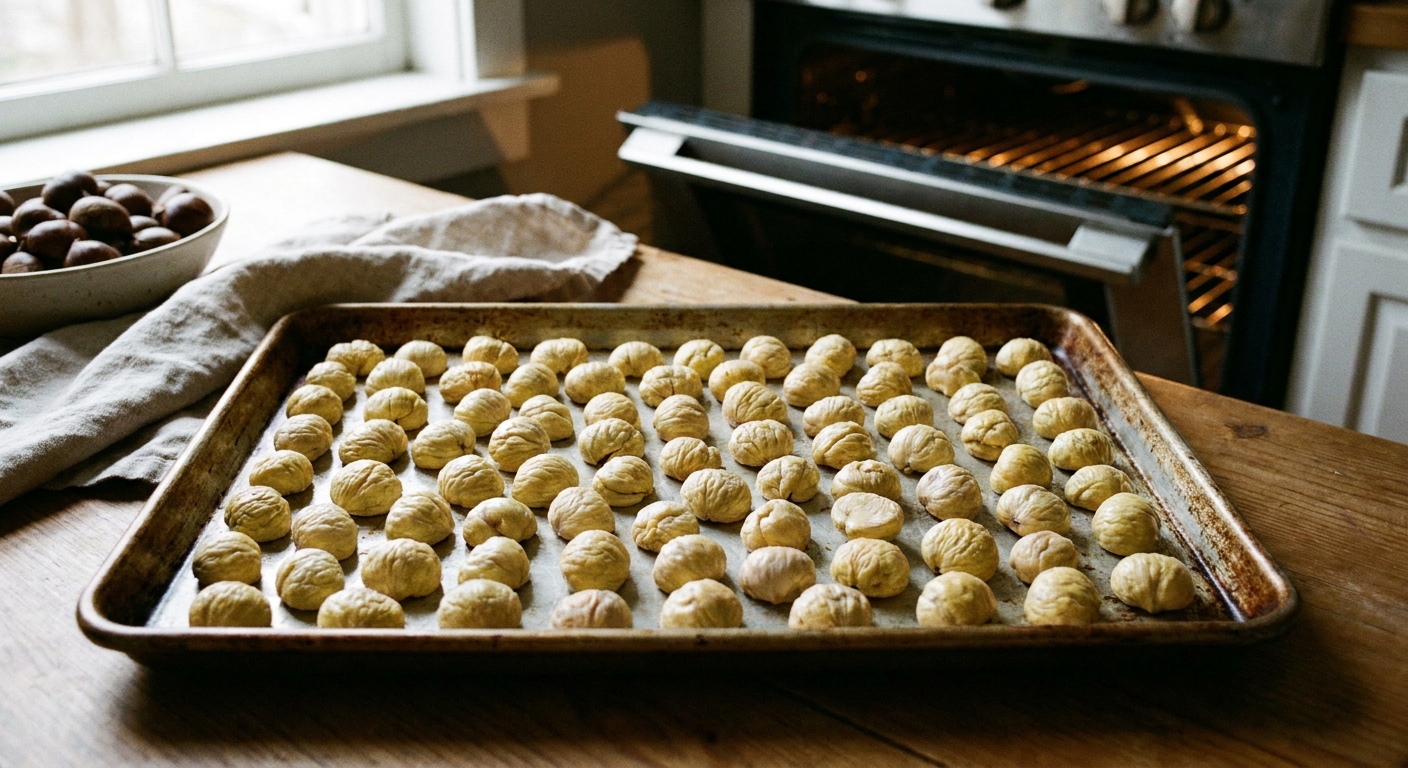
- Oven temp: 200°F (95°C)
- Time (estimate): 4 to 6 hours for peeled chestnuts, 6 to 10+ hours for unpeeled, scored chestnuts
These times are starting points, not a promise. Size, how wet the nuts are, and how your oven vents all change the timeline. Doneness is the real endpoint.
Step-by-step
- Heat the oven to 200°F (95°C).
- Spread chestnuts in a single layer on a parchment-lined rimmed baking sheet. Do not pile them up.
- Dry until hard, stirring or flipping every 60 to 90 minutes for even drying.
- Cool completely on the tray before storing.
If your oven runs hot, check early and often. If you have convection, use it for better airflow. Some cooks crack the oven door slightly to help moisture escape, but only do that if it is safe in your kitchen and appropriate for your oven.
Doneness cue
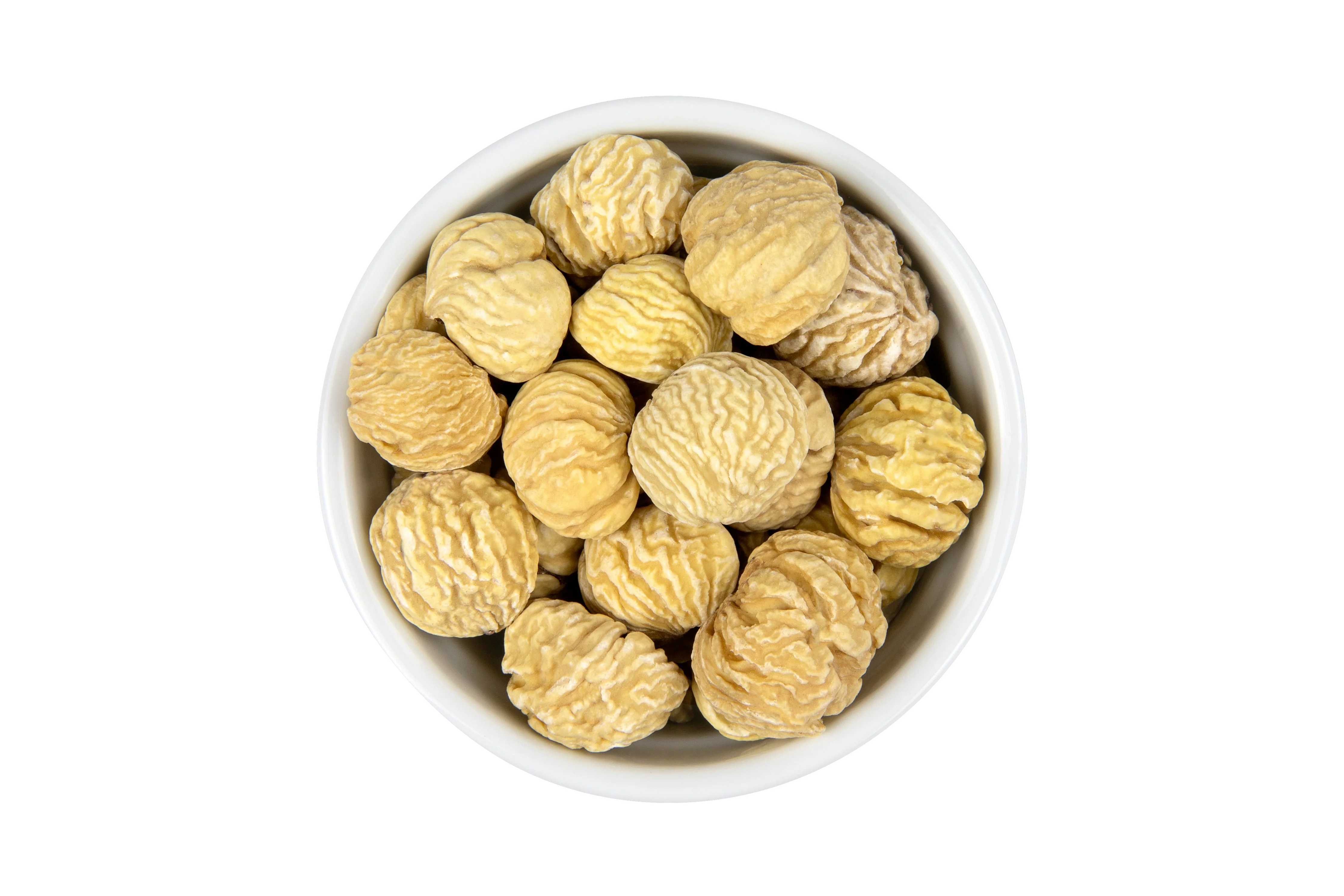
Dried chestnuts should feel hard all the way through, not just on the surface. They will also feel noticeably lighter once fully dry. A quick test: let a few cool, then cut one in half. The center should look dry and firm, not creamy, damp, or tacky. Once cooled, there should be no give when you squeeze one.
If you are unsure, keep going. Under-dried chestnuts spoil much faster than over-dried ones.
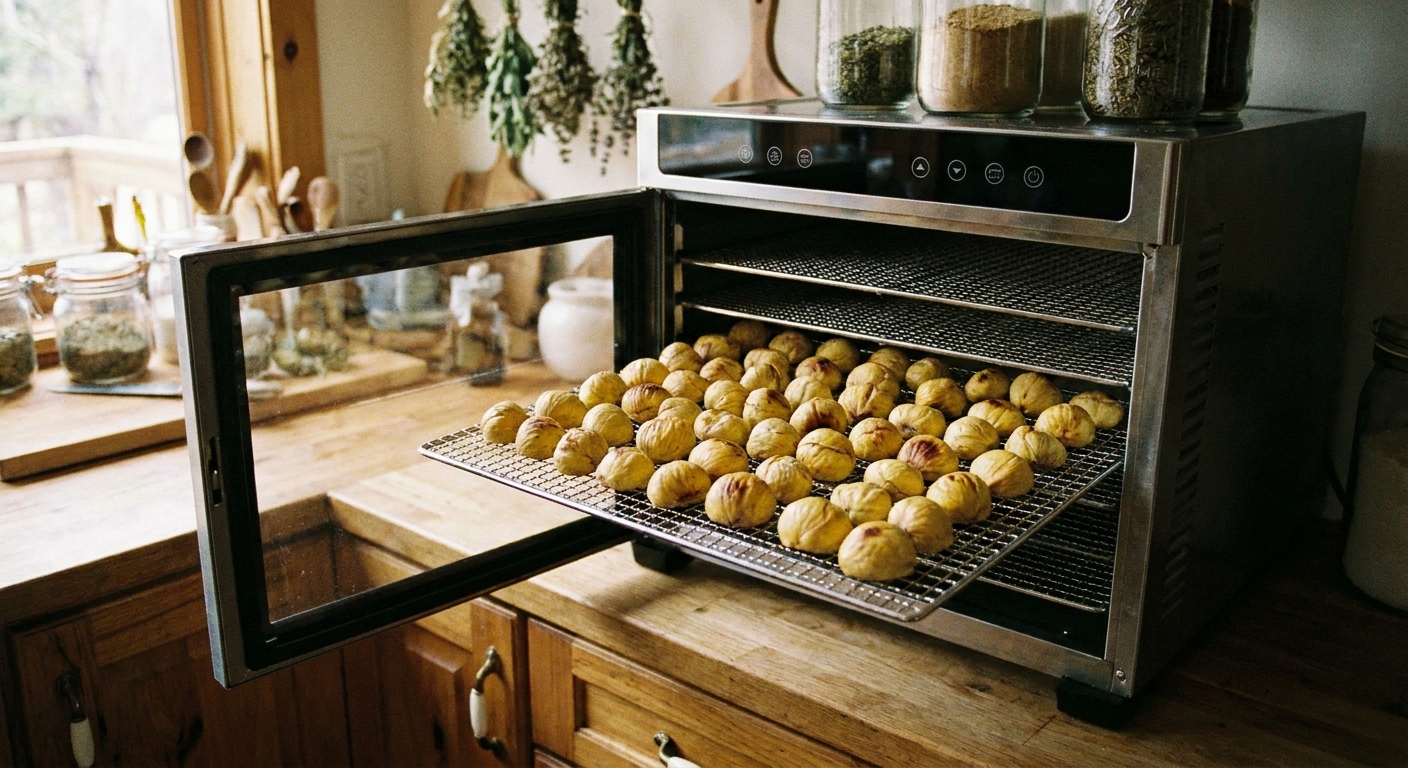
Dehydrator method (most consistent)
If you have a dehydrator, it does a beautiful job here with less babysitting.
Temperature and timing
- Dehydrator temp: 135°F to 145°F (57°C to 63°C)
- Time (estimate): 8 to 14 hours for peeled chestnuts (varies by size and moisture)
Just like the oven method, treat the clock as guidance and use the doneness test above as your finish line.
Step-by-step
- Arrange peeled chestnuts in a single layer on dehydrator trays.
- Dry at 135°F to 145°F until fully hard, rotating trays if your machine dries unevenly.
- Cool completely before packing.
How much dried chestnuts you will get
Chestnuts carry a lot of water, so the volume shrinks noticeably.
- From 1 pound fresh chestnuts in shell, expect roughly 6 to 10 ounces peeled depending on size and how stubborn the shells and inner skins are.
- After drying, that peeled amount often drops to roughly 4 to 6 ounces dried.
Do not worry if your yield is not exact. The bigger win is having shelf-stable chestnuts ready when you need them.
How to store dried chestnuts
Storage is where drying pays off, but only if you keep moisture out. Any leftover moisture or a humid kitchen will shorten shelf life.
Room temperature (best for most kitchens)
- Cool chestnuts completely.
- Store in an airtight jar or container in a cool, dark pantry.
- For best quality, use within up to 6 months.
Freezer (best for longest storage)
If you want to lock in quality for longer, freeze dried chestnuts in an airtight container or freezer bag. They keep well for up to 12 months. This is also a great option if your home tends to be humid.
My favorite extra step
If I am even slightly unsure whether a batch is fully dry, I freeze it. That one habit has saved me from more than one sad jar of chestnuts.
Food safety and quality checks
How to avoid mold
- Do not store until the chestnuts are fully cool. Warm nuts create condensation inside the jar.
- Do not rush drying. The center must be dry, not just the outside.
- If you see any condensation in the first 24 hours, dump the nuts back onto a tray and dry longer.
How to tell if chestnuts have gone bad
If dried chestnuts smell musty, look fuzzy, or feel at all soft or tacky after storage, toss them. For more detailed signs, see How to Tell If Chestnuts Have Gone Bad.
Common problems (and how to fix them)
They look dry outside but feel a little flexible
They are not done. Dry longer and test again after cooling. Chestnuts can trick you while warm.
They browned in the oven
Your oven likely runs hot. Lower the temperature if possible and start checking earlier. Convection can also help dry more gently by moving moisture out faster.
They dried unevenly
Make sure they are in a single layer, and stir or flip periodically. In a dehydrator, rotate trays if needed.
The inner skin is driving me crazy
You are not alone. Peeling is easiest when chestnuts are warm. If you need a refresher on handling and storing fresh nuts before you peel, bookmark How to Store Fresh Chestnuts.
How to use dried chestnuts
Dried chestnuts are meant to be rehydrated and cooked before you eat them. They are fantastic in soups, stuffing, and purées.
One important heads-up: they get rock hard. Do not toss dried chestnuts into a blender or food processor until they are fully rehydrated and soft, or you can damage your blades.
What to do next
When you are ready to bring them back to life, follow How to Cook Dried Chestnuts for rehydrating and cooking steps.
If you are working with fresh chestnuts today and want something to snack on right away, head to How to Roast Chestnuts.