Delishing
Chocolate Covered Chestnuts

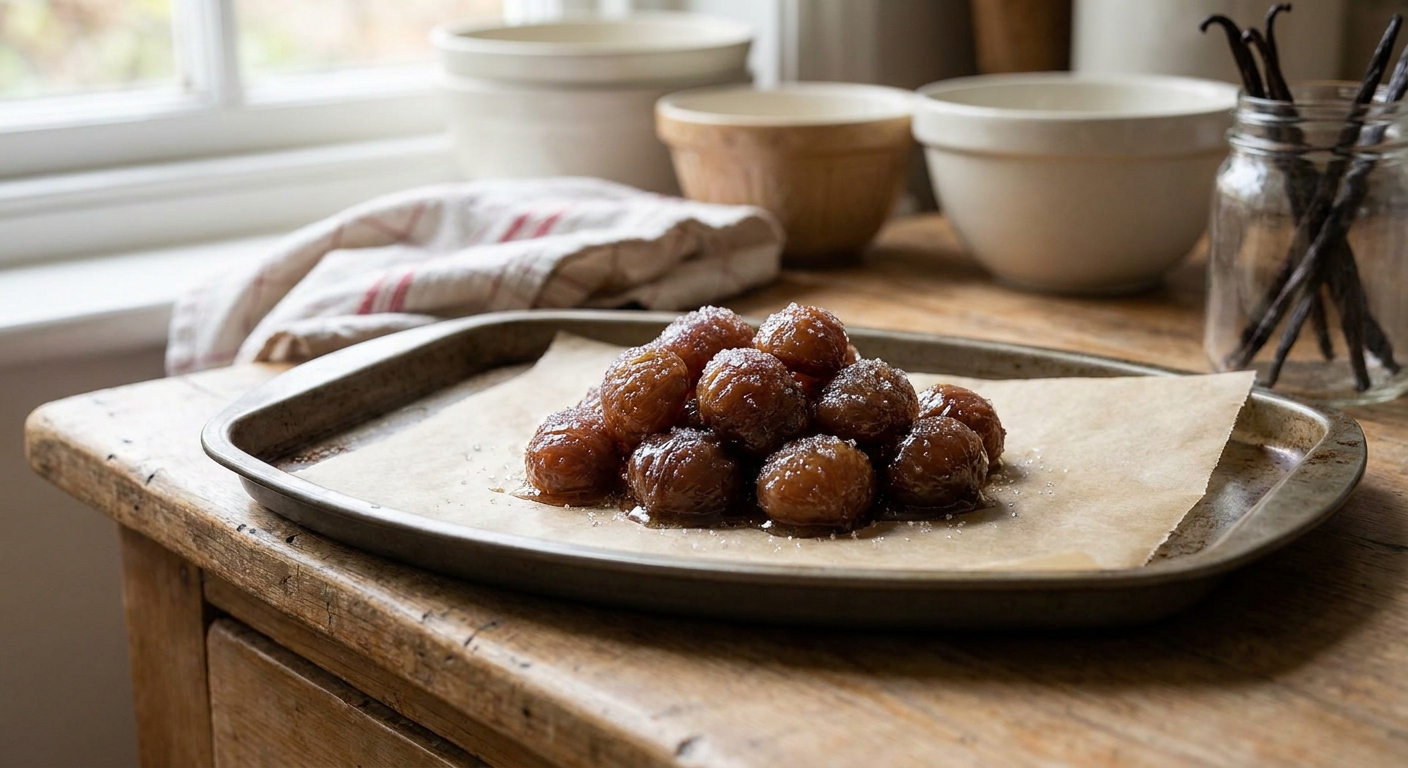
These chocolate covered chestnuts are my favorite kind of kitchen win: they look like a fancy candy shop treat, but the method is genuinely low-stress once you know two little secrets. Secret one is dry, room-temperature chestnuts. Secret two is properly tempered chocolate, which is what gives you that clean snap and a finish that stays firm at room temperature.
Chestnuts are naturally moist and a little starchy, which is why they can “weep” over time, meaning moisture migrates to the surface. That extra moisture usually shows up as tackiness, streaking, soft patches, or chocolate that loosens and slides. In very humid conditions, that same moisture can also trigger sugar bloom, the dusty, grainy look that happens when moisture dissolves sugar on the surface and it recrystallizes as it dries. Fat bloom is a different issue and is more about tempering and temperature swings, which is why I keep the chocolate method steady and avoid big hot-to-cold changes.
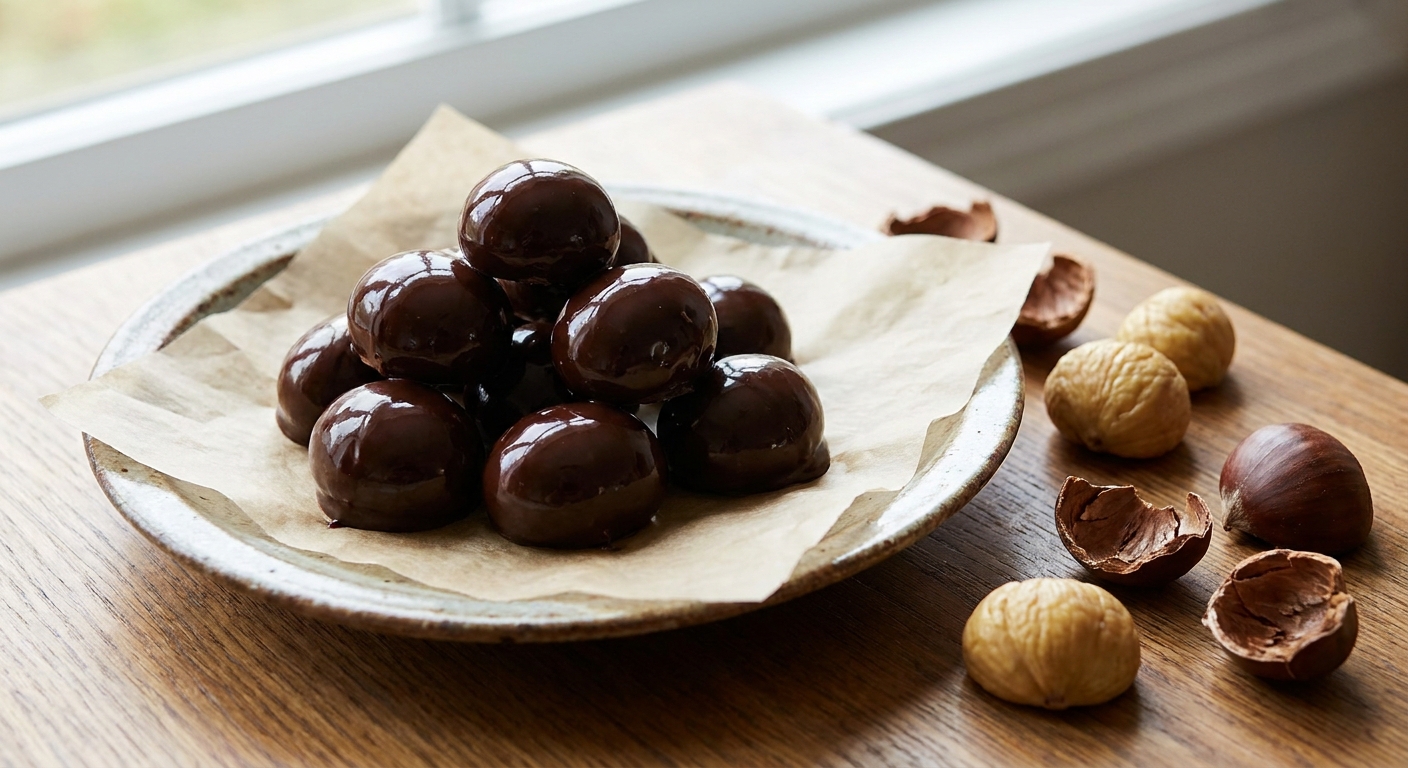
In practice, “dry” just means the chestnuts feel dry to the touch: after peeling, I pat them well and let them sit out briefly so any surface moisture has time to evaporate. And “cool and steady” means letting the chocolate set in a comfortable room-temperature spot, ideally around 65 to 70 F, rather than bouncing in and out of the fridge where condensation can form.
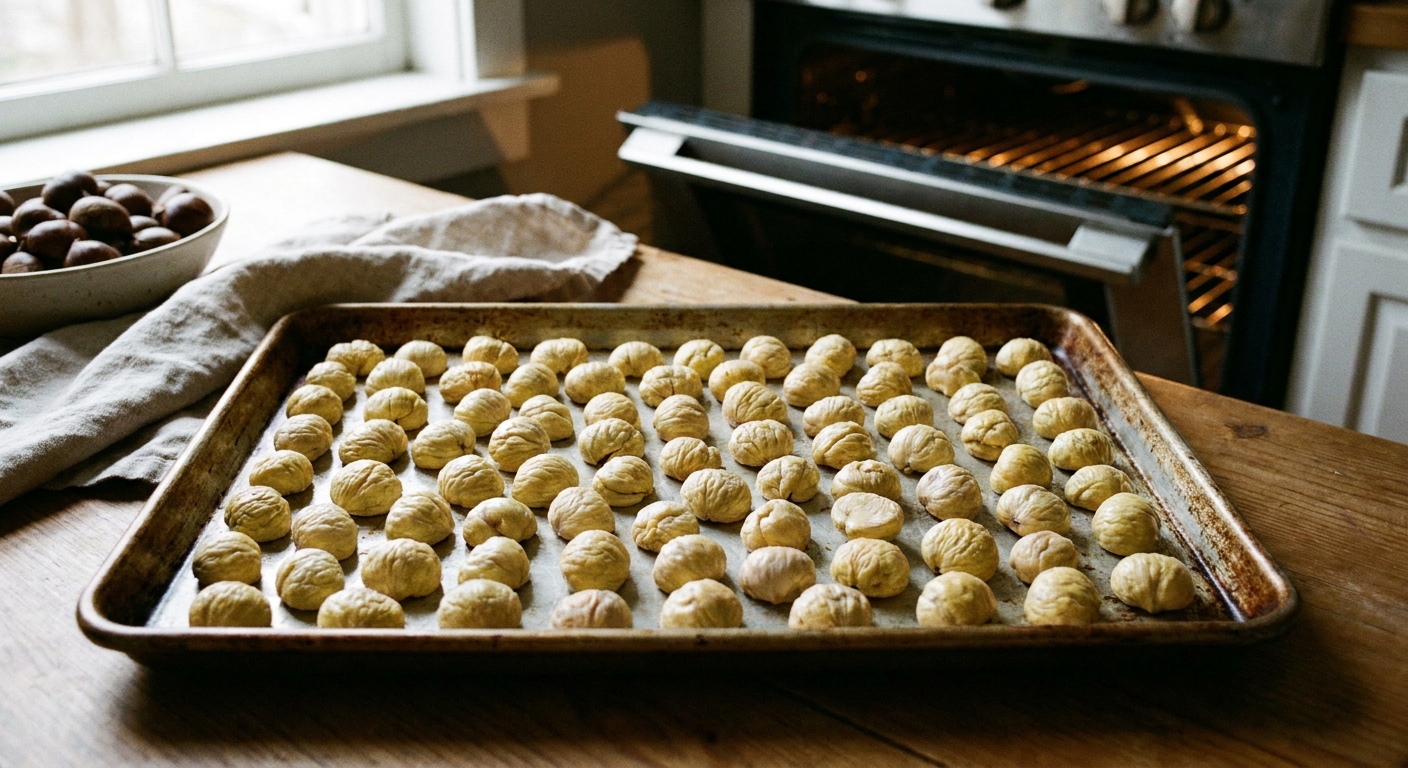
If you still need to cook and peel your chestnuts first, start with my How to Roast Chestnuts guide, then come right back here for the chocolate dip.
Why it works
- Drying step prevents weeping: letting cooked, peeled chestnuts air-dry (and optionally giving them a quick warm-up) reduces surface moisture so the chocolate adheres and stays crisp.
- Tempered chocolate gives a clean snap: when chocolate crystallizes properly, it sets shiny and firm at room temperature instead of tacky or streaky.
- Simple dipping setup: a fork or dipping tool plus parchment makes this doable on a weeknight without specialized candy equipment.
Ingredient notes
Cooked, peeled chestnuts
Use whole chestnuts that are cooked and fully peeled, with the papery inner skin removed. Roasted chestnuts work great. Vacuum-packed, jarred, or frozen cooked chestnuts can also work, but they often carry more surface moisture, so the drying step matters even more.
Chocolate
Choose a chocolate you actually enjoy eating plain. Dark (60 to 70 percent), milk, or semi-sweet all work. If you use chocolate chips, know they are designed to hold their shape and can set a little softer and duller. Chopped bar chocolate or couverture melts more smoothly.
Coconut oil (optional)
A small amount can thin chocolate for easier dipping. It does not replace tempering, but it can help you get a more even coat.
Flaky salt (optional)
A tiny pinch on top makes the chestnut flavor pop and keeps these from tasting one-note sweet.
Equipment
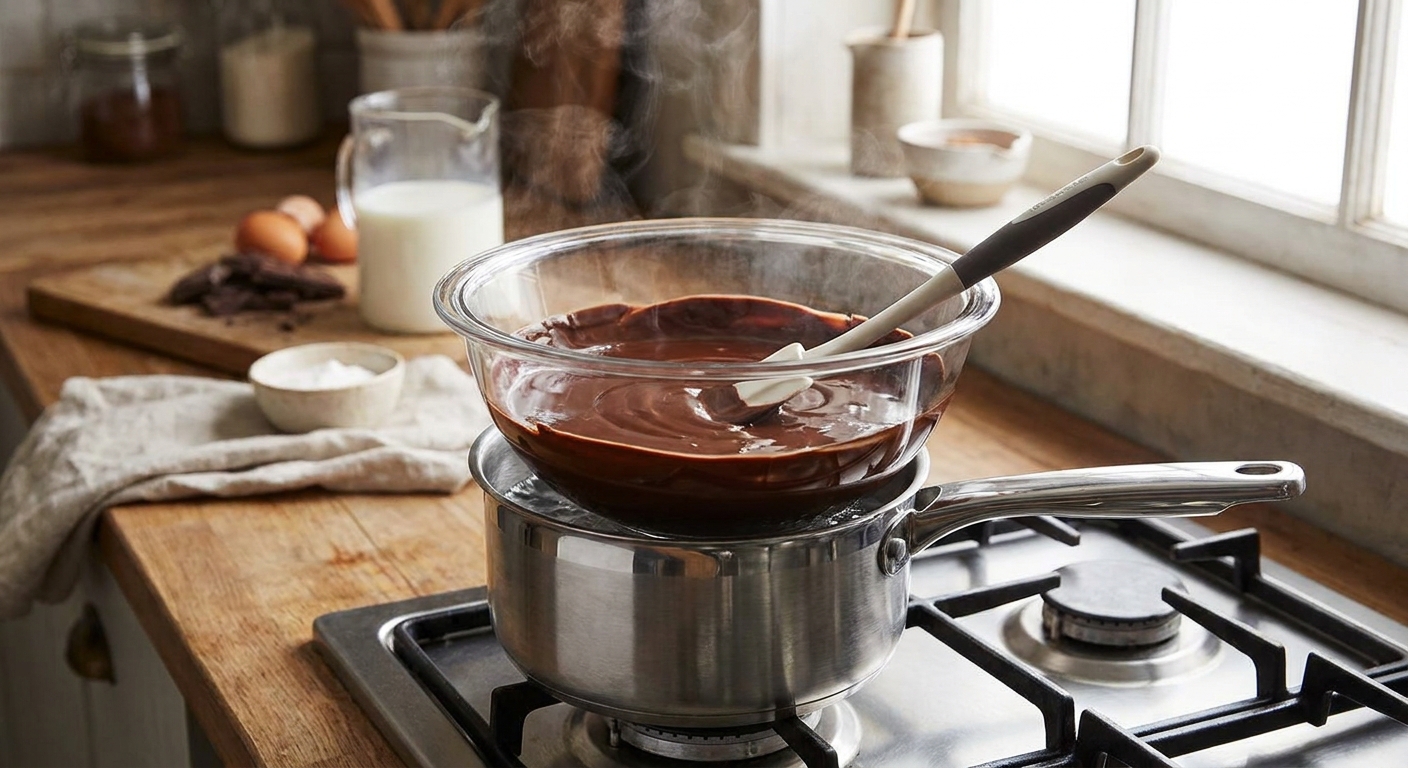
- Small saucepan and heatproof bowl (double boiler setup) or microwave-safe bowl
- Parchment paper or silicone baking mat
- Fork, small offset spatula, or chocolate dipping tool
- Instant-read thermometer (optional but helpful for clean tempering)
- Sheet pan
Pro tips
How to stop chestnuts from weeping
- Dry them after peeling: spread cooked, peeled chestnuts on a towel or paper towels and let them sit at room temperature until the surface feels dry, not tacky.
- Warm, then cool: if your chestnuts feel very moist (common with packaged chestnuts), warm them briefly in a dry skillet over low heat, shaking often, just until steam is gone and they smell nutty. Then cool completely before dipping.
- Never dip cold-from-the-fridge chestnuts: condensation is the enemy. Dip chestnuts at room temperature.
Set cue you can trust
Chocolate is set when it looks uniformly matte or lightly glossy (depending on chocolate type) and feels firm to a gentle tap. When you pick one up, the chocolate should not fingerprint or smudge. At normal room temp, that typically takes about 20 to 40 minutes. If your kitchen is warm, it can take longer.
Best environment for setting
A cool room (about 65 to 70 F) is ideal. If you must use the fridge, chill briefly and then move them back to room temperature once set to reduce condensation.
Easy tempering method (my weeknight version)
Melt about two-thirds of your chopped chocolate gently, then take it off the heat and stir in the remaining one-third until smooth. This “seed” method encourages stable crystals for a better snap and shine.
Substitutes
- Chestnuts: This recipe is written for whole cooked chestnuts. If yours are broken, you can still dip them, just expect a more rustic look.
- Chocolate type: Dark, milk, and white chocolate all work. White chocolate is the most finicky with overheating, so melt extra gently.
- Coconut oil: Substitute refined coconut oil for neutral flavor, or skip it if your chocolate is flowing well.
Variations
- Salted dark chocolate: sprinkle a few flakes of salt right after dipping.
- Orange twist: rub a little orange zest into the sugar-free surface of the chestnuts after drying, then dip. Keep it light so the chocolate still adheres.
- Nut crunch: roll freshly dipped chestnuts in finely chopped toasted hazelnuts or almonds, then set on parchment.
Serving ideas
- Add to a holiday cookie platter for a naturally gluten-free sweet.
- Serve after dinner with coffee, espresso, or hot cocoa.
- Use as a garnish for chestnut desserts like chestnut ice cream or chestnut Mont Blanc.
Storage
Room temperature (best for snap)
Store in an airtight container in a cool, dry spot for 2 to 3 days. Separate layers with parchment.
Refrigerator (only if your kitchen is warm)
Refrigerate in an airtight container for up to 1 week. Let them sit at room temperature 10 to 15 minutes before serving for the best texture. Avoid frequent in-and-out temperature swings, which can cause condensation and dull chocolate.
Freezer
Freeze in a sealed container with parchment between layers for up to 1 month. Thaw in the refrigerator, then bring to room temperature before serving to reduce condensation.
Common mistakes
- Skipping the drying step: the number one reason chocolate slides off or turns sticky later.
- Overheating chocolate: scorched chocolate turns grainy and thick. Melt low and slow.
- Dipping chestnuts that are too cold: condensation forms and ruins adhesion.
- Setting in a humid area: humidity encourages bloom and soft set. Choose the coolest, driest spot you have.
- Moving them before they are set: if the bottoms smear, wait longer. The set cue is “no fingerprints.”
FAQ
Do I have to temper the chocolate?
For the shiny, snappy finish you see in candy shops, yes. The good news is you do not need a complicated setup. The seed method in the instructions is my simplest way to get stable chocolate without turning this into a full candy project.
Why is liquid seeping out of my chestnuts?
Chestnuts hold water, and after cooking that moisture can migrate outward. Dry the peeled chestnuts thoroughly, and if they are especially moist, warm them briefly in a dry pan to drive off surface moisture. Always cool completely before dipping.
Can I use packaged cooked chestnuts?
Yes. Just plan to dry them longer and consider the quick dry-skillet warm-up, because packaged chestnuts often have more surface moisture than freshly roasted.
My chocolate looks dusty or streaky. What happened?
That is usually bloom. Sugar bloom can happen when moisture hits the chocolate, and fat bloom is more about tempering and temperature swings. They are still safe to eat, just less glossy. For the next batch, dry the chestnuts well and use the seed tempering method.
Chocolate Covered Chestnuts
Whole cooked chestnuts dipped in melted chocolate, set until firm, then stored for quick, elegant bites. Includes a drying step to prevent weeping and keep the coating crisp.
- 12 to 16 whole cooked, peeled chestnuts (room temperature)
- 8 oz (225 g) good-quality chocolate, chopped (dark, milk, or semi-sweet)
- 1 tsp refined coconut oil (optional, for thinning)
- Flaky salt (optional)
- Dry the chestnuts. Spread the cooked, peeled chestnuts on a clean towel or paper towels. Let them air-dry until the surface feels dry to the touch. If the chestnuts seem very moist (common with packaged chestnuts), warm them in a dry skillet over low heat for a few minutes, shaking often, just until steam is gone and they smell lightly nutty. Cool completely to room temperature before dipping.
- Prep your setting station. Line a sheet pan with parchment paper. Keep the chestnuts nearby, plus a fork or dipping tool.
- Melt the chocolate gently. Set up a double boiler by placing a heatproof bowl over a saucepan with barely simmering water (do not let the bowl touch the water). Add about two-thirds of the chopped chocolate and stir until mostly melted. Remove from heat, add the remaining one-third, and stir until smooth. If using, stir in the coconut oil until fully melted and combined.
- Dip the chestnuts. Drop one chestnut into the chocolate, turn to coat, then lift with a fork. Tap the fork gently on the bowl rim to let excess chocolate drip off.
- Set on parchment. Place the dipped chestnut on the parchment-lined pan. If using flaky salt, add a tiny pinch on top right away, before the chocolate starts to set.
- Let the chocolate set fully. Leave at cool room temperature until the coating is firm and does not smudge when touched. Set cue: the surface looks uniform and feels dry and hard. If your kitchen is warm, you can chill the tray briefly just until firm, then return the chestnuts to room temperature.
- Store. Once completely set, transfer to an airtight container, separating layers with parchment.
Notes
- Weeping prevention: The chestnuts must be dry and room temperature before dipping. Moisture and condensation are the main causes of chocolate slipping or turning sticky.
- Chocolate setting: If the coating stays tacky at room temperature, your kitchen may be too warm or humid, or the chocolate may not be tempered. Chill briefly to set, then store cool and dry.