Learn how to reverse sear tri-tip for an even rosy center and a crackly browned crust. Includes exact pull temps from rare to well-done, resting time, and ov...
Delishing
Tri-Tip Internal Temperature

Maya Brooks
Maya Brooks is a dedicated home cook and the lead recipe developer at Delishing, where she shares practical, foolproof meals for everyday life. With over a decade of hands-on kitchen experience, she specializes in creating approachable dishes that fit a variety of dietary needs and modern cooking methods. Maya is passionate about helping busy people get delicious, stress-free food on the table without needing formal culinary training.
Tri-tip is one of those cuts that can feel “mysterious” until you nail the temperature. It is lean enough to dry out if you overshoot, but it can be marbled enough to be unbelievably juicy when you pull it at the right moment. I keep a simple tri-tip internal temperature chart in my kitchen notebook, because at 5:00 PM I do not want to do math or guess, especially with the thick end versus thin end situation.
Tri-tip internal temperature chart (pull temp vs finished temp)
For tri-tip, I recommend thinking in two temperatures:
- Pull temperature: what you want to see on the thermometer before you take it off the heat.
- Finished temperature: what it will land at after resting, thanks to carryover cooking.
Carryover varies with roast size, cooking method, and how hot the exterior gets, but tri-tip often rises about 5 to 10°F while resting. With very high-heat searing or larger roasts, it can be more.
| Doneness | Pull temperature | Finished temperature after rest | What it looks and feels like |
|---|---|---|---|
| Rare | 120 to 125°F | 125 to 130°F | Very red center, very soft |
| Medium-rare | 125 to 130°F | 130 to 135°F | Warm red center, juicy and tender |
| Medium | 135 to 140°F | 140 to 145°F | Pink center, firmer bite |
| Medium-well | 145 to 150°F | 150 to 155°F | Faint pink, noticeably firmer |
| Well-done | 155 to 160°F | 160°F+ | Little to no pink, driest result |
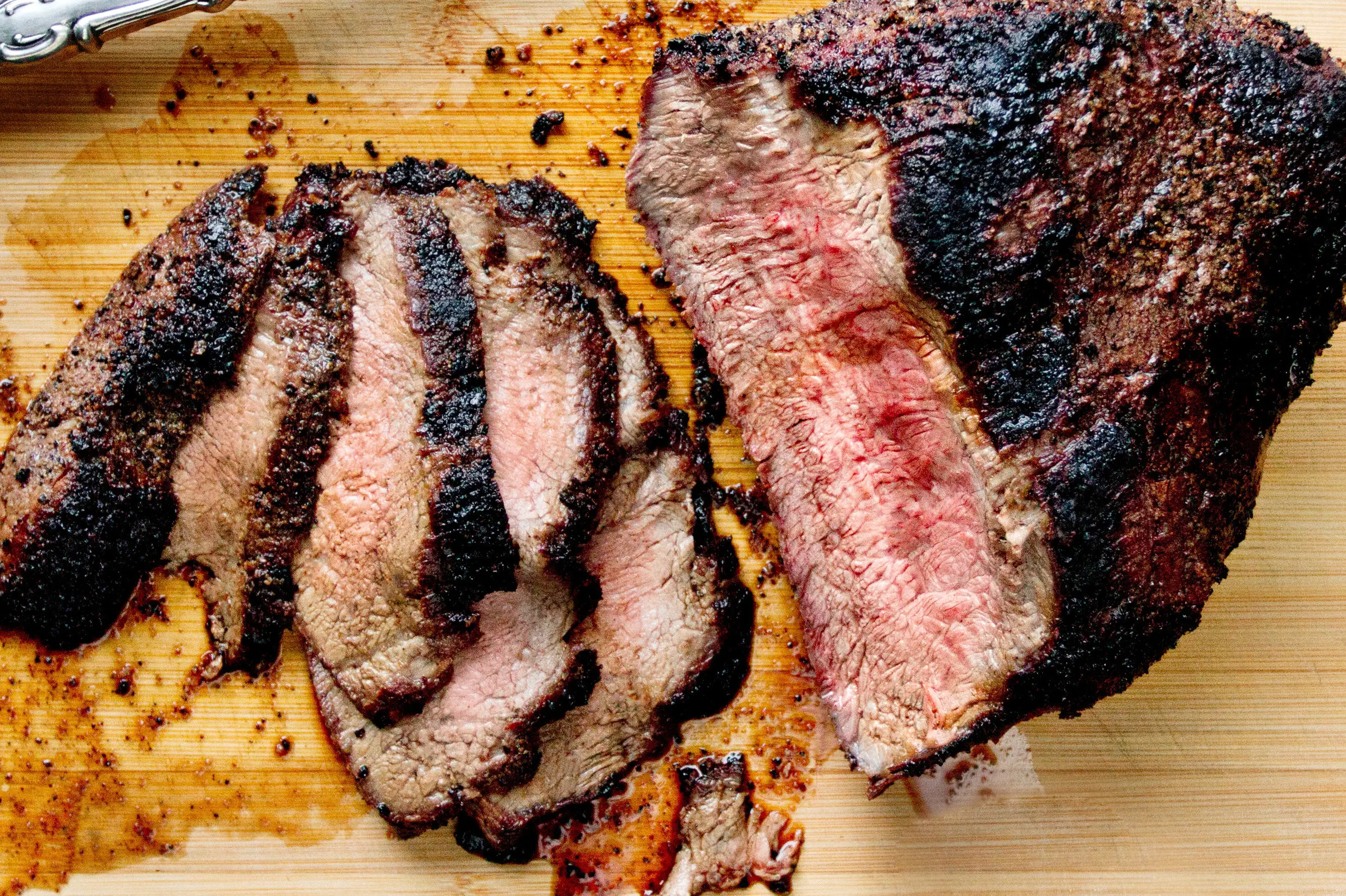
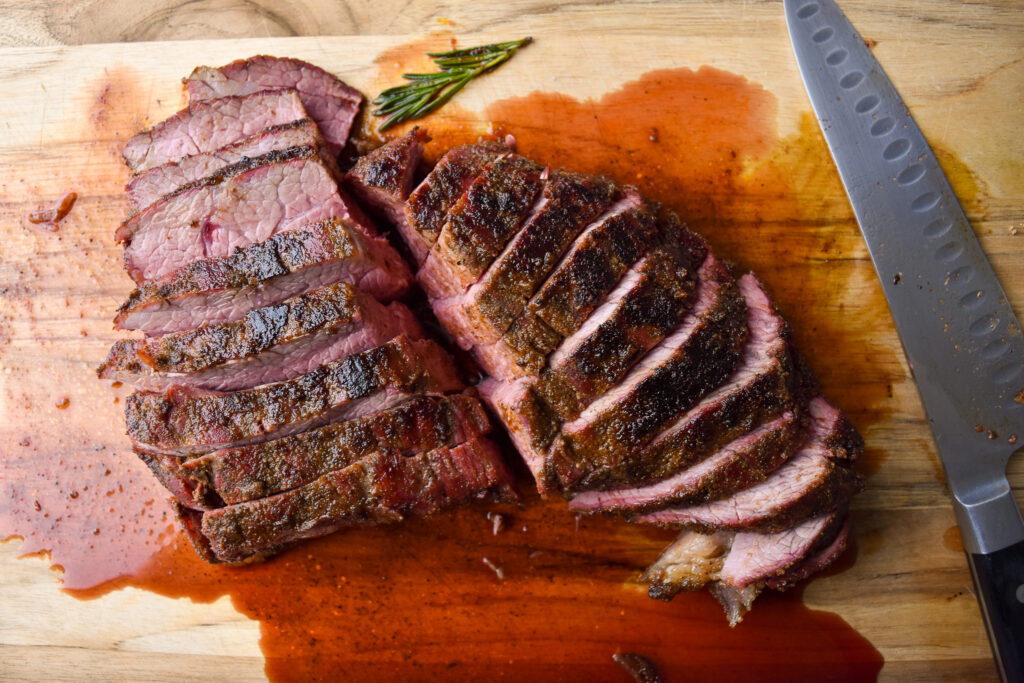
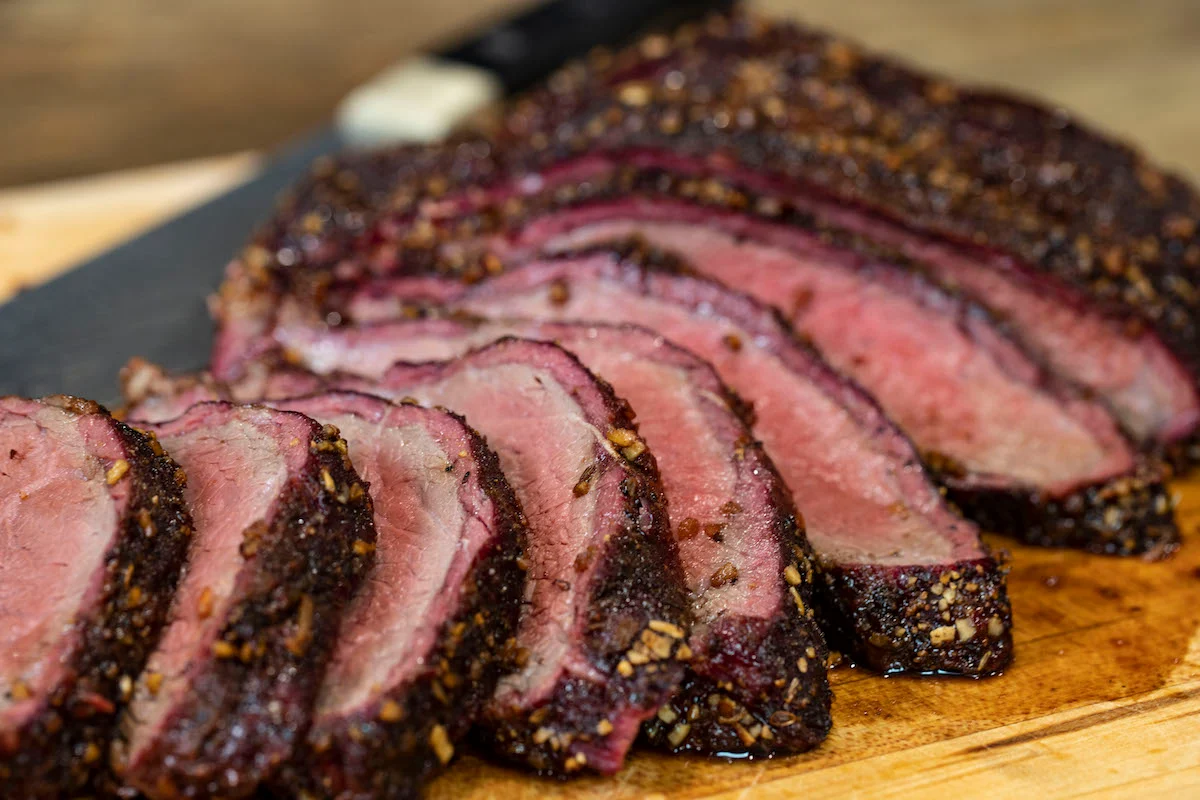
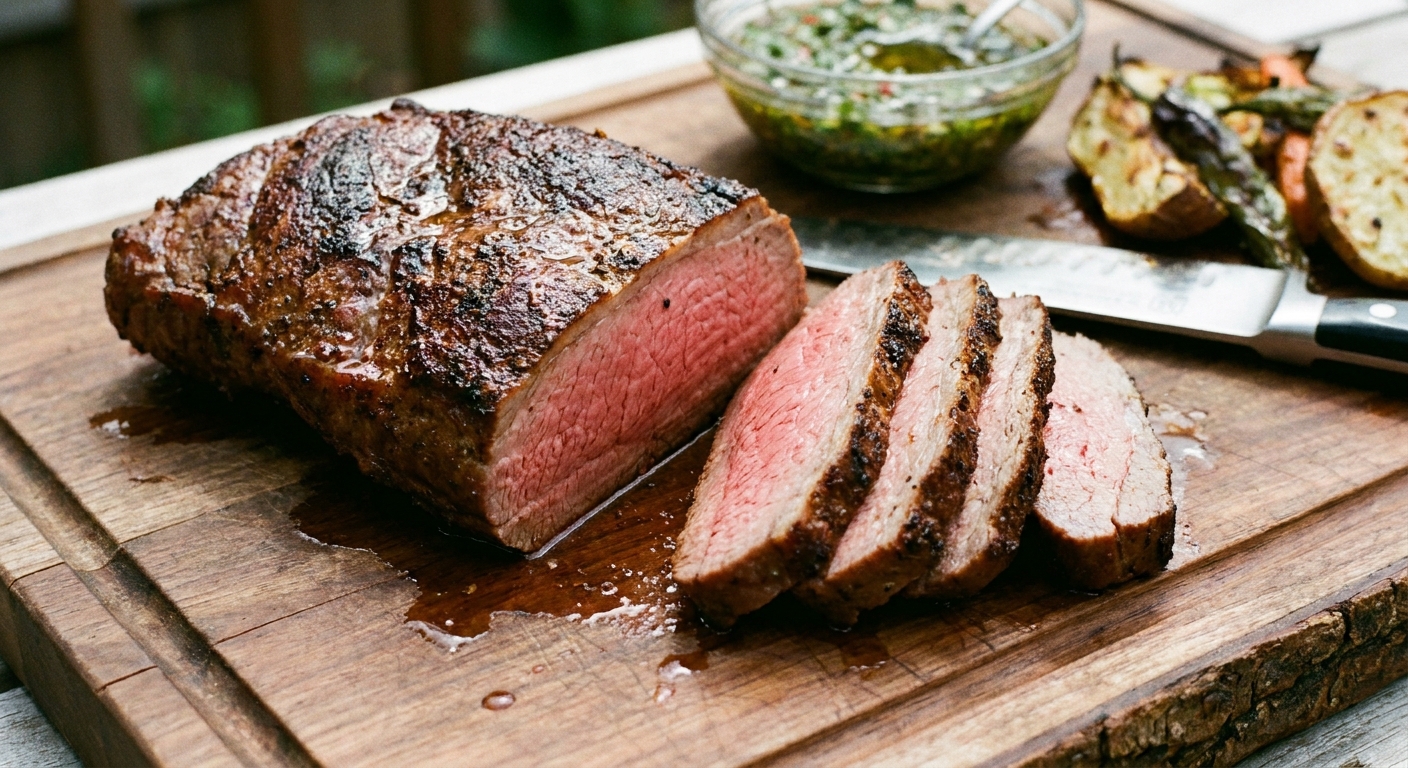
My everyday target: Pull at 128 to 130°F at the thickest part for a finished medium-rare that still slices beautifully.
Why tri-tip temperature can be tricky
Tri-tip is a tapered roast. One end is thick and rounded, the other end narrows to a thinner tip. That shape is the whole reason people get mixed results.
- The thin end finishes first because there is less mass to heat through.
- The thick end lags behind and usually determines when you should pull the roast, especially if you want the majority of slices to be medium-rare.
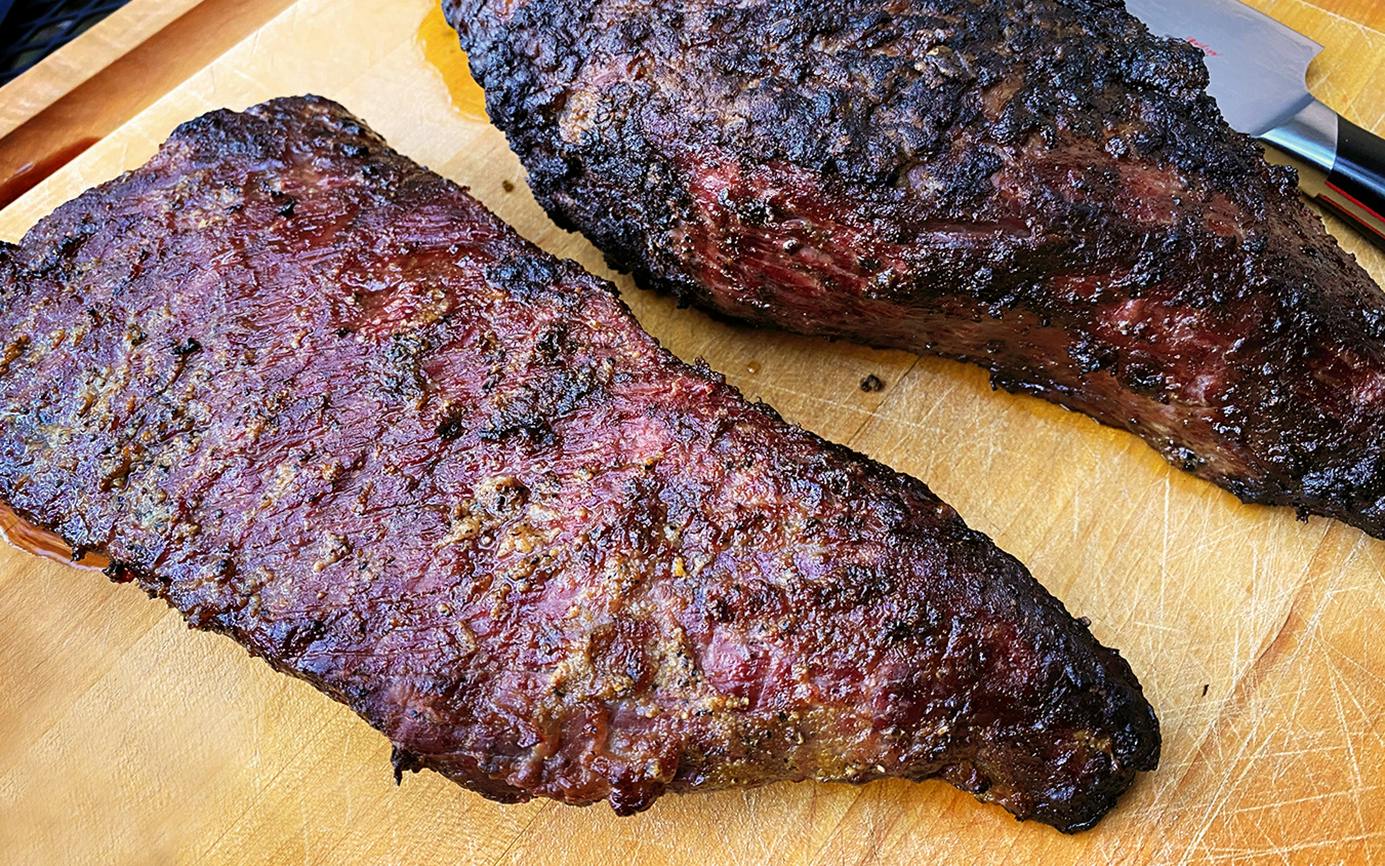
In real life, that often means you get a nice range across one roast: thinner-end slices trend more done, thick-end slices trend less done. It is not a failure. It is a feature, especially if your table likes different levels of doneness.
If your tri-tip frequently eats tougher than expected, temperature is one piece of the puzzle, but slicing direction matters too. This is why I recommend also bookmarking Why Is My Tri-Tip Tough?.
Where to put the thermometer in a tri-tip roast
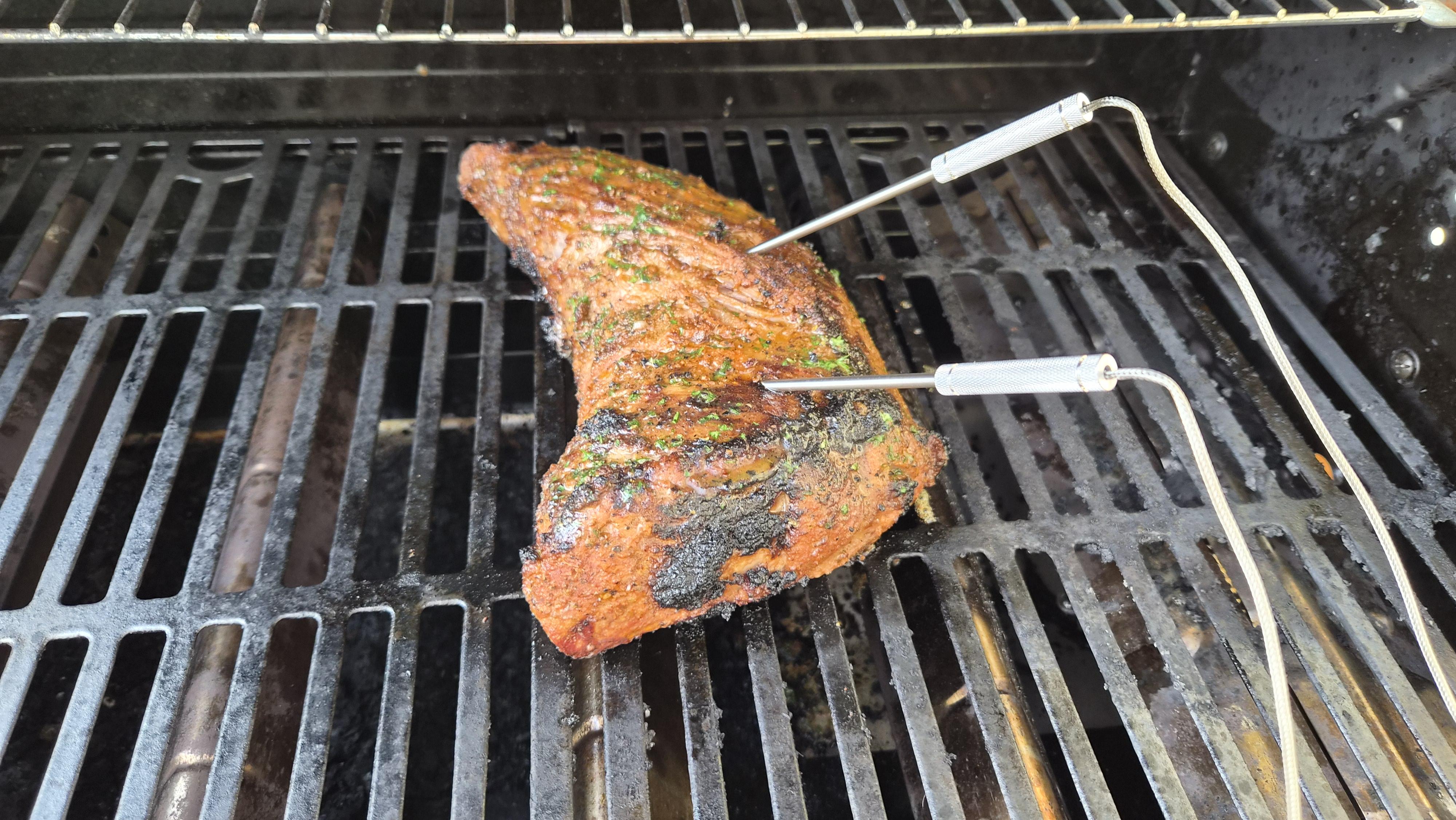
The goal is to measure the coldest, thickest interior, not the hottest outer layer and not a pocket of fat.
The best placement
- Find the thickest part of the roast.
- Insert the thermometer probe into the center of that thick section, aiming for the middle from the side (not straight down from the top if you can avoid it).
- If the roast is uneven, angle the probe as needed so the tip lands in the true center.
- Stop when the tip of the probe is in the center. If you push through too far, you can end up reading closer to the far side, which is warmer.
What to avoid
- Do not touch the pan or grill grate with the probe tip. Contact with hot metal gives a falsely high reading.
- Avoid big pockets of fat or air gaps, which can give misleading readings.
- Do not rely on the thin tip for the done decision unless you intentionally want the whole roast more cooked.
If you are using an instant-read thermometer
Take multiple readings. I like to check:
- the center of the thick end (this is the number that decides pull time)
- the middle
- the thin end (helpful to know how much range you will have)
Carryover cooking: why you pull tri-tip early
Carryover cooking is simply the roast continuing to cook off-heat. The outside of the meat is hotter than the center, and as it rests, that heat moves inward until the temperature equalizes.
For tri-tip, the main reasons carryover matters are:
- It prevents overshooting. If you cook to the final temperature on the heat source, you will likely end up past it after resting.
- It improves juiciness. Resting gives the meat’s juices time to redistribute. Slice too early and they run out onto the board.
Rule I actually use: If you want a finished 135°F medium-rare tri-tip, you should usually pull it around 128 to 130°F and rest it.
How long to rest: I aim for 10 to 15 minutes, or until the temperature stops climbing. (If you did a hard sear at the end, expect a bigger rise.)
Need help with the big picture roast? My full method (with timing, seasoning, and cooking options) lives here: Tri-Tip Roast.
What if the thick end is under but the thin end is done?
This is the most normal tri-tip scenario. In my kitchen, I handle it one of two ways:
- Embrace the gradient: Slice and serve, and let people choose slices from the thick or thin end based on preference.
- Slice strategically: If someone wants more well-done pieces, serve them from the thin end. If someone wants rarer, serve from the thick end.
If you routinely need the roast to be one consistent doneness throughout, you may prefer cooking approaches that reduce the temperature gap between the surface and the center. Our Reverse Sear Tri-Tip guide is a good next read, and it tends to reduce the thick-end versus thin-end drama. The target internal temps in this article still apply.
Quick FAQ
What internal temperature should tri-tip be for medium-rare?
Pull at 125 to 130°F, then rest to finish around 130 to 135°F.
Is it safe to eat tri-tip at 130°F?
Food safety depends on a combination of temperature and time, plus safe handling. Tri-tip is a whole-muscle cut of beef, which is generally lower risk than ground beef, but it is not zero risk.
If you are cooking for anyone who is pregnant, immunocompromised, elderly, or very young, I would lean toward at least medium (or use a time and temperature approach) and stick to solid food safety basics like keeping raw meat cold, avoiding cross-contamination, and using a clean thermometer.
Why did my tri-tip jump in temp after I pulled it?
That is carryover cooking. A bigger-than-expected rise usually comes from a very hot exterior, a hard finishing sear, a larger roast, or pulling a little late for your target. Resting longer does not prevent the rise, but it does let the temperature finish climbing and even out before you slice.
My tri-tip is at the right temp but still chewy. Why?
Two common causes are slicing with the grain and overcooking past medium (lean meat tightens up as it cooks). This troubleshooting guide can help: Why Is My Tri-Tip Tough?.