Delishing
Tri-Tip Fried Rice

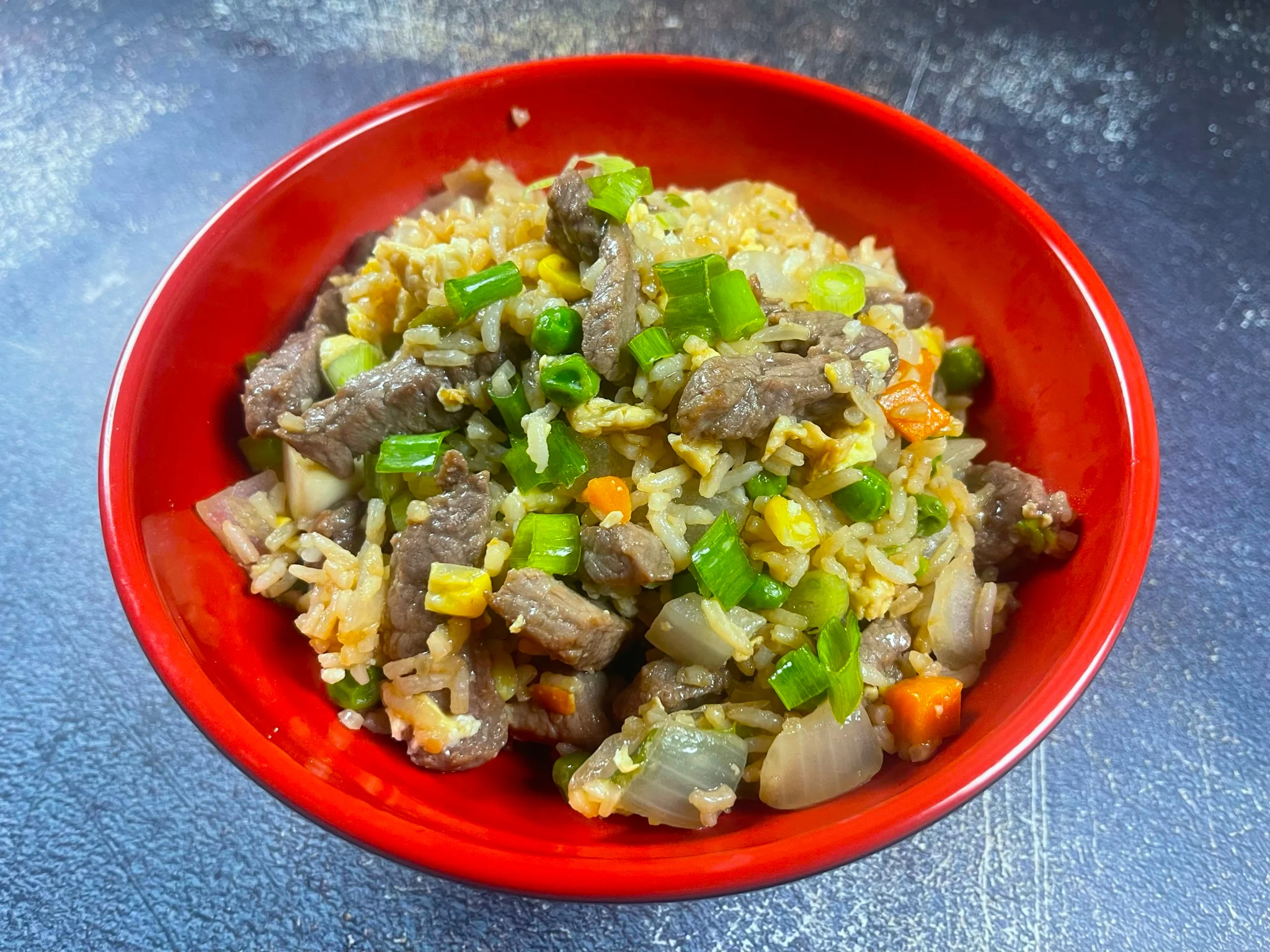
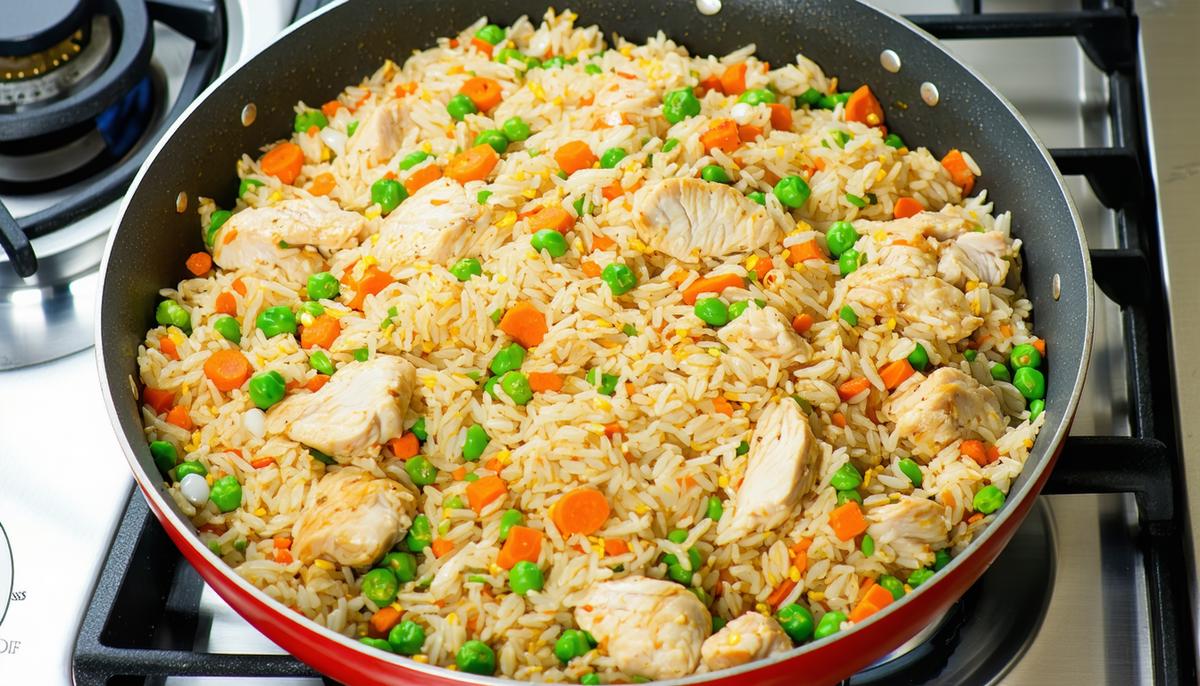
Tri-tip fried rice is my favorite kind of leftover magic: yesterday’s beef turns into a dinner that tastes like it came from your best takeout spot, but it is simple enough for a weeknight. The key is very doable: chilled rice, a hot pan, and a pantry soy-sesame sauce that coats every grain.
I started making this when I realized tri-tip night and fried rice night can be the same night, especially when the what’s-for-dinner question hits hard. If you have leftover tri-tip roast, you are already halfway there. This recipe is designed for cooked tri-tip, diced small so you get a little beef in more bites. Starting from raw works too, but leftovers are the whole point and the best shortcut.
In this recipe, you will cook the egg first, then build layers. You give the already-cooked tri-tip a very quick sear, just 30 to 60 seconds per side, to re-crisp the edges, then pull it out so it stays juicy. After that, you stir-fry the vegetables, toast the rice, and add the sauce at the end so everything stays crisp instead of steaming into mush. If all you have is fresh rice, you can still make it work by spreading it out to cool quickly, then chilling it so it dries a bit before it hits the pan.
What to expect
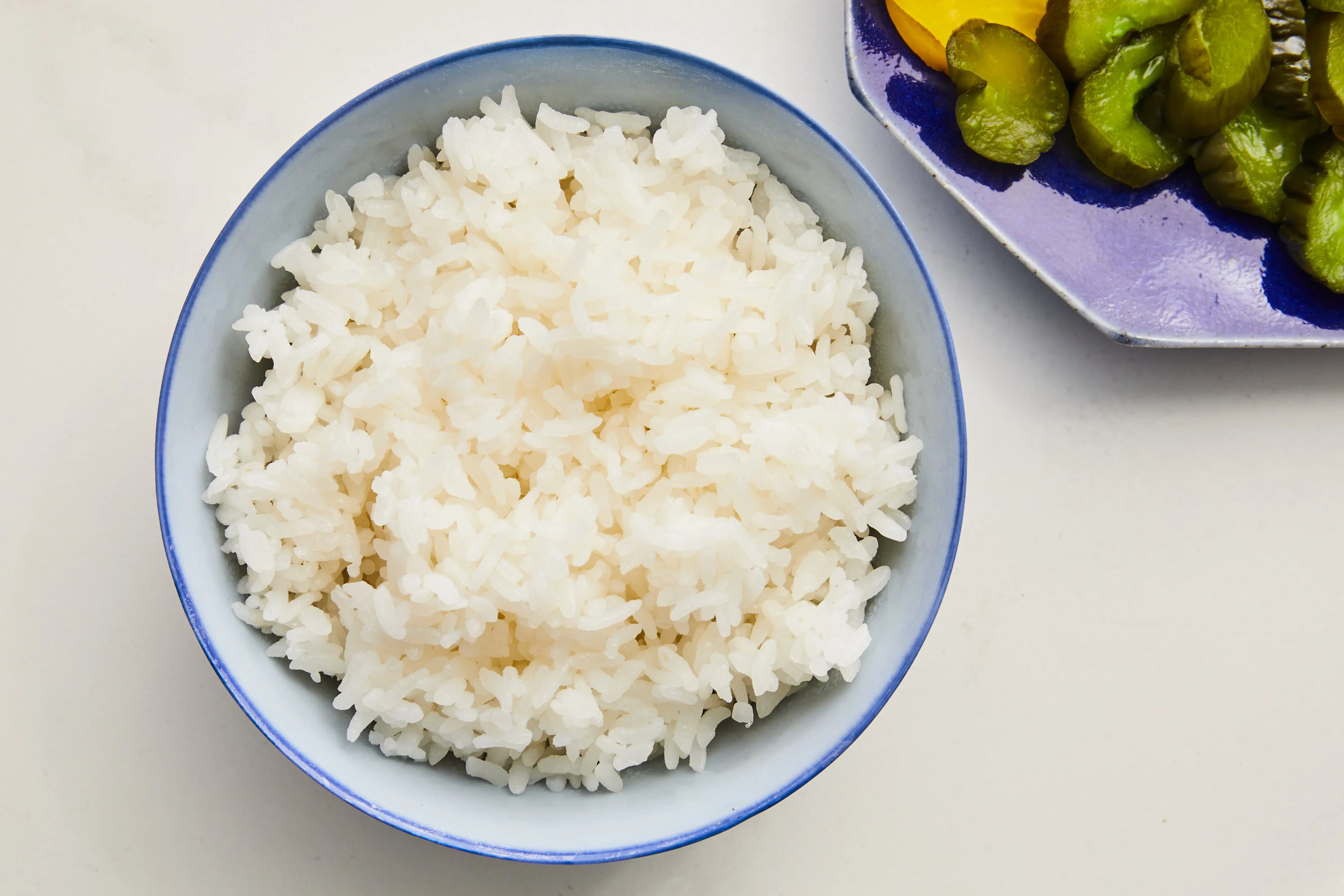
- Chilled rice that fries instead of clumping: day-old is great, but any cooked long-grain rice that is cooled and separated works. Jasmine is especially good.
- Juicy tri-tip, not chewy: a lightning-fast sear to crisp the edges, then it comes out of the pan and goes back in at the end only to warm through.
- Egg ribbons and crisp-tender vegetables: added in the right order so they keep their texture.
- Balanced sauce: salty, toasty, and lightly sweet, with sesame and garlic doing the heavy lifting.
If you need tri-tip first
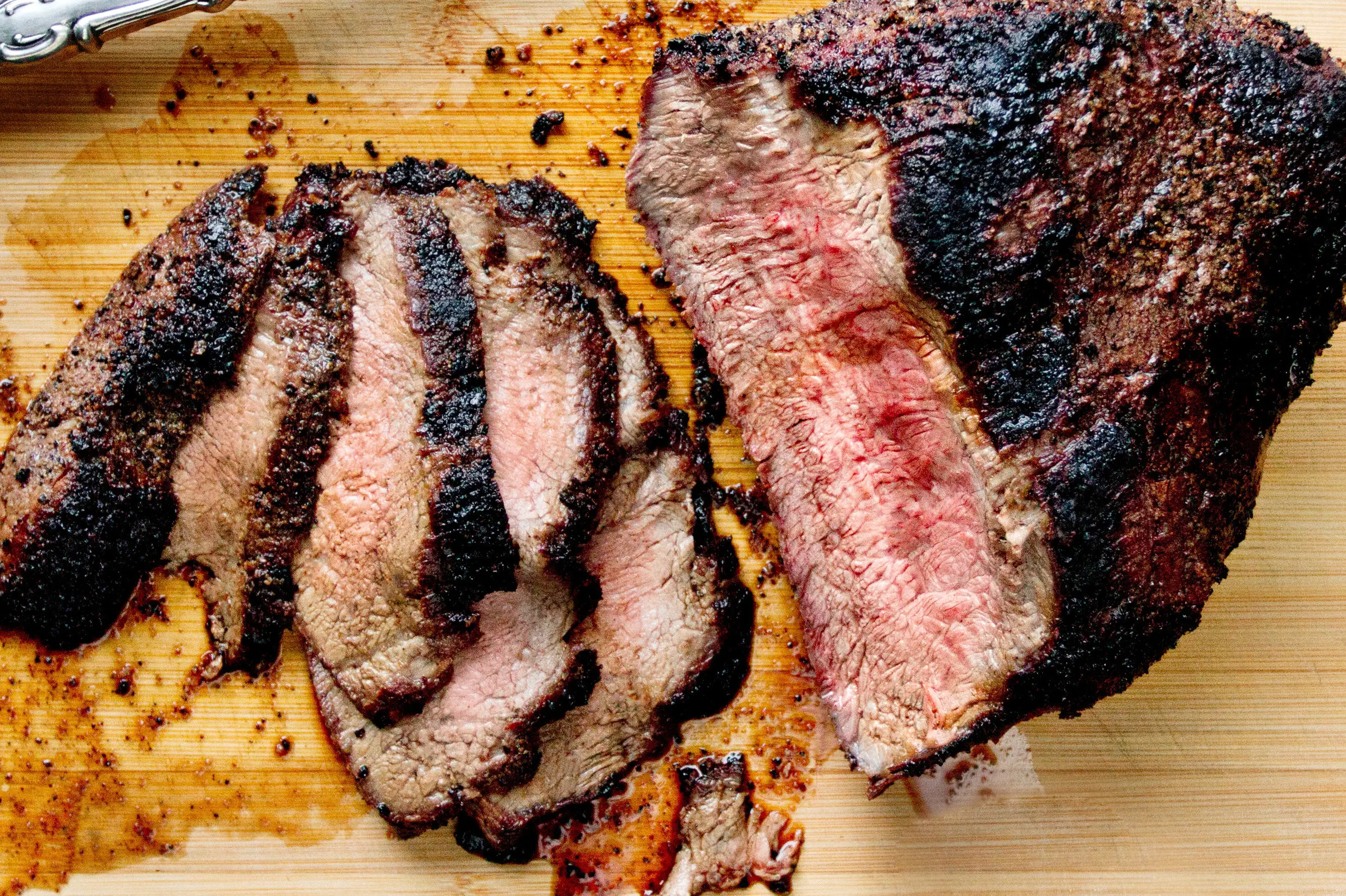
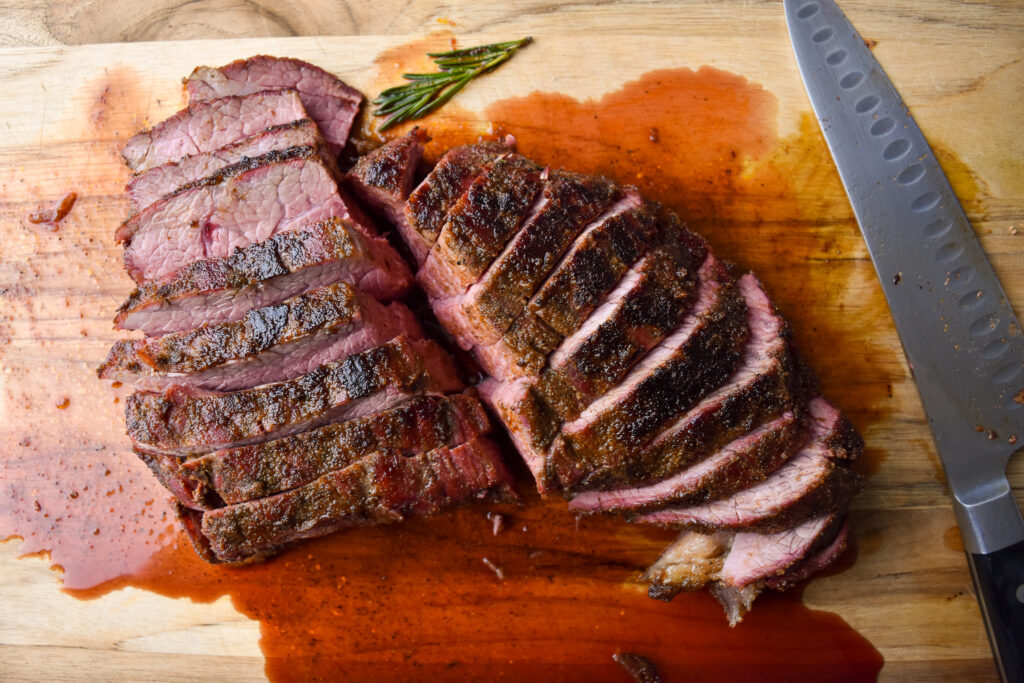
If you are starting from raw tri-tip, cook it using your favorite method, then cool it before dicing or slicing for fried rice. I like to reference tri-tip internal temperature for doneness targets, and if you are troubleshooting chewiness, why is my tri-tip tough? is a helpful quick read. For best texture in fried rice, slice against the grain first, then dice into bite-size pieces. That said, if you have leftover cooked tri-tip in the fridge, that is the ideal starting point here.
Why it works
- Cold rice equals separate grains. Fresh, hot rice is steamy and soft, which turns gummy in the pan. Chilled rice dries slightly, so it fries.
- Cooking in stages prevents soggy fried rice. Egg first, then tri-tip, then vegetables, then rice, then sauce. Each ingredient gets the heat it needs.
- A hot wok or skillet creates real toastiness. You want contact with the pan, not a gentle simmer.
- Sauce goes in at the end. Adding sauce too early makes the rice wet and the vegetables limp.
Ingredient notes
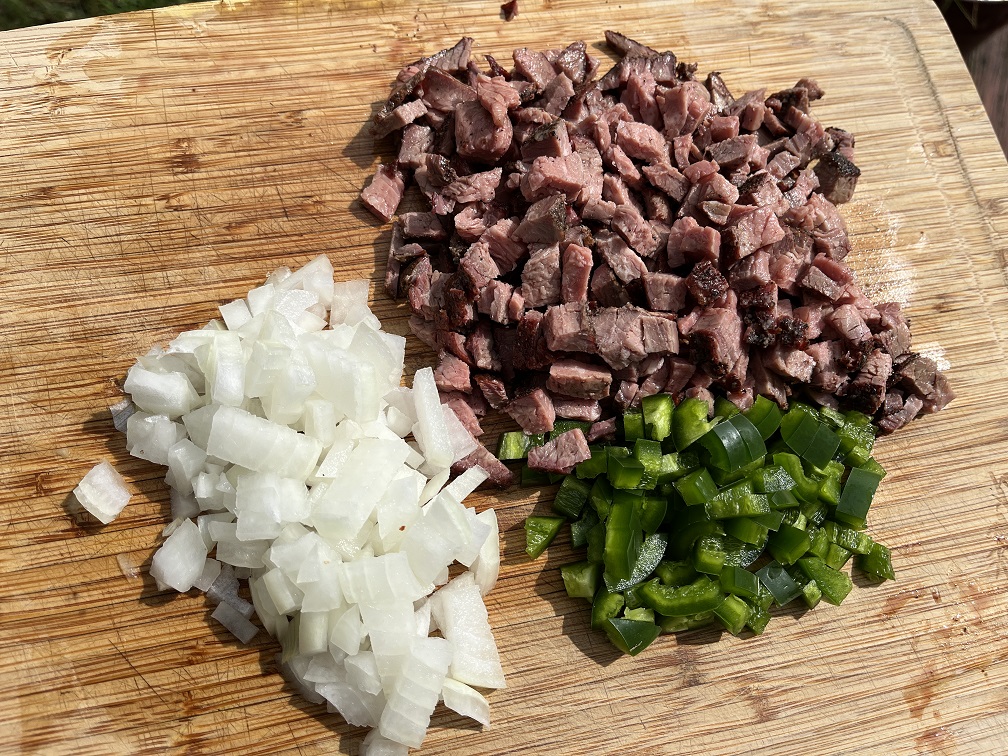
- Tri-tip: Leftover tri-tip is ideal. If it is cold from the fridge, it will sear quickly and stay juicy. Slice against the grain, then dice.
- Rice: Long-grain white rice is my default, but jasmine is especially good here. Cook it ahead and chill, uncovered or loosely covered, until cold.
- Vegetables: Use a mix of quick-cooking vegetables like peas, carrots, corn, diced bell pepper, or shredded cabbage. Keep the pieces small so they cook fast.
- Eggs: Two eggs give you enough egg in every bite without turning the dish into scrambled eggs with rice.
- Soy sauce: Use regular soy sauce for the deepest flavor. If you are sensitive to salt, choose low-sodium and adjust at the end.
- Sesame oil: Toasted sesame oil is a finishing flavor. A little goes a long way, and it can taste bitter if burned, so it is added late.
- Aromatics: Garlic and ginger make it taste like a restaurant version. If you only have one, choose garlic.
If you need a gluten-free version, swap in tamari or certified gluten-free soy sauce, and consider peeking at our gluten-free fried rice for extra label-checking tips.
Equipment
- Wok or large skillet: A wok is great, but a 12-inch skillet works beautifully. Cast iron gives excellent browning, nonstick is easiest for egg.
- Wide spatula: Helps press rice into the pan for better toasting.
- Small bowl: For mixing the sauce so you can add it quickly at the end.
- Sharp knife and cutting board: For cleanly slicing tri-tip against the grain.
If you are shopping for a new pan, our nonstick pans ranked worst to best can help you pick one that actually performs on weeknights.
Pro tips
- Break up the rice before it hits the pan. Use clean hands or a fork to separate clumps while it is still cold.
- Do not crowd the pan. If your skillet is not huge, cook in two batches. Crowding steams the rice and you lose that fried texture.
- Let the rice sit for 20 to 30 seconds between stirs. Constant stirring prevents browning. You want some toasty spots.
- Pull the tri-tip out after a quick sear. Cooked beef only needs to warm through at the end. Leaving it in the whole time can dry it out.
- Taste at the end. Salt levels vary across soy sauces. Adjust with a splash more soy sauce, a pinch of salt, or a squeeze of lime.
Substitutes
- No sesame oil: Finish with a drizzle of olive oil plus a sprinkle of toasted sesame seeds, if you have them.
- No oyster sauce: Use hoisin (slightly sweeter) or just skip it and add an extra teaspoon of soy sauce.
- No fresh ginger or garlic: Use 1/4 teaspoon garlic powder and 1/4 teaspoon ground ginger, added with the sauce, not directly to the hot pan.
- Want gluten-free: Use tamari or gluten-free soy sauce and check any add-ins like hoisin.
- Lower sodium: Use low-sodium soy sauce and brighten with rice vinegar or lime.
Variations
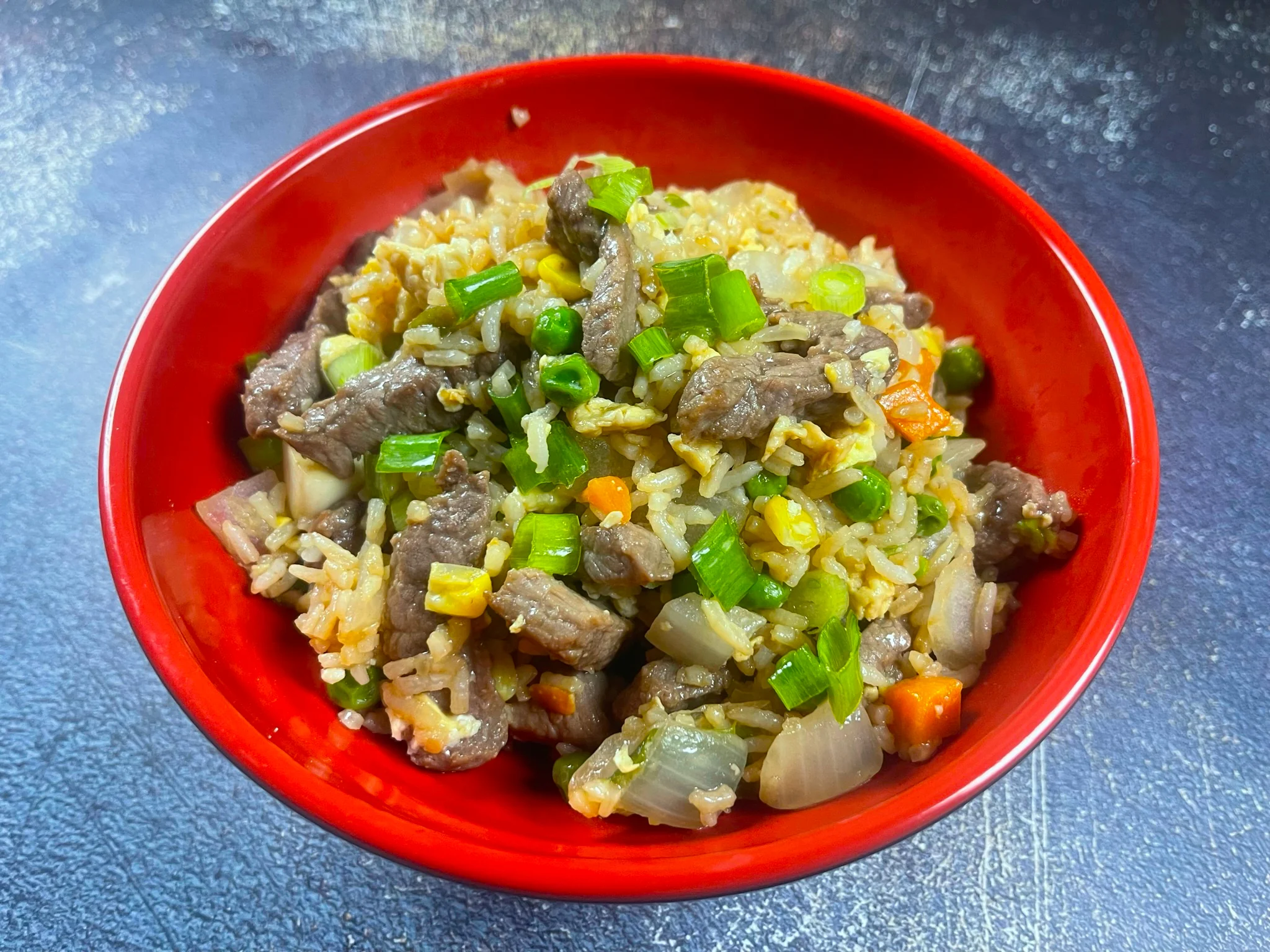
- Spicy tri-tip fried rice: Add chili crisp or sambal to the sauce, or finish with sriracha.
- Pineapple tri-tip fried rice: Add drained pineapple chunks near the end for sweet, caramelized pops.
- Kimchi tri-tip fried rice: Stir-fry chopped kimchi with the vegetables and finish with extra sesame oil.
- Extra-veg version: Add shredded cabbage or diced zucchini, but cook off moisture before adding rice.
- Egg-forward: Add a third egg, or top each bowl with a jammy fried egg.
Serving ideas
- Make it a full spread: Serve with simple sides like roasted broccoli or roasted chickpeas for crunch.
- Sauce on the side: Offer extra soy sauce, chili crisp, or a squeeze of lime.
- Turn it into lunch: Pack in single portions and reheat quickly. It holds up well.
If you are planning a tri-tip dinner and want ideas beyond rice, our what to serve with tri-tip roundup is a great menu-builder.
Storage
- Refrigerate: Cool promptly and store in an airtight container for up to 4 days.
- Reheat: Best in a skillet over medium-high heat with a splash of water to loosen, or microwave in short bursts, stirring in between.
- Freeze: You can freeze fried rice for up to 2 months. Thaw overnight in the fridge for best texture, then reheat in a hot skillet.
If your tri-tip is still raw and you are planning ahead, see how to freeze tri-tip for safe storage basics.
Common mistakes (and quick fixes)
- Gummy rice: The pan was not hot enough or the rice was too fresh. Fix by spreading rice on a sheet pan to cool and dry, then fry in batches.
- Dry tri-tip: It cooked too long in the skillet. Next time, sear briefly and add it back at the end just to warm through.
- Soggy vegetables: Too much moisture or overcrowding. Push vegetables to the edges, increase heat, and let liquid evaporate before adding rice.
- Salty fried rice: Too much soy sauce. Fix with an extra cup of rice or a handful of unsalted vegetables, or balance with a squeeze of lime.
- Egg disappears: It was chopped too fine or overcooked. Cook egg quickly, remove, and fold in at the end in larger pieces.
FAQ
Do I have to use day-old rice?
Day-old is best, but you can make same-day rice work. Cook it, spread it on a sheet pan, and chill it until cold and dry to the touch, at least 30 to 45 minutes.
Should I slice or dice the tri-tip?
For fried rice, I prefer small dice so you get a bit of beef in more bites. Slice against the grain first, then dice.
When do I add the egg?
Cook it first, remove it, and fold it back in at the end. That keeps it tender and prevents it from overcooking while you fry the rice.
Can I make this without a wok?
Yes. A large skillet works great. The real requirement is high heat and enough surface area to avoid steaming.
What if my tri-tip is already sauced or heavily seasoned?
Go lighter on the soy sauce at first and taste at the end. If your tri-tip has a sweet glaze, skip the brown sugar or honey in the sauce.
Tri-Tip Fried Rice
Fast, savory fried rice with diced tri-tip, crisp-tender vegetables, egg ribbons, and a glossy soy-sesame sauce. Built for leftovers and busy weeknights.
- Prep time
- 15 minutes
- Cook time
- 12 minutes
- Total time
- 27 minutes
- Servings
- 4
Ingredients
- 4 cups cooked long-grain white rice, chilled (about 2 cups uncooked)
- 2 cups cooked tri-tip, diced into 1/2-inch pieces
- 2 large eggs, lightly beaten
- 2 tablespoons neutral oil (avocado, canola, or grapeseed), divided
- 1 cup frozen peas and carrots (no need to thaw)
- 1/2 cup diced yellow onion
- 1 red bell pepper, diced
- 3 cloves garlic, minced
- 1 teaspoon fresh ginger, grated (optional)
- 3 tablespoons soy sauce (or tamari)
- 1 tablespoon oyster sauce (optional but recommended)
- 1 tablespoon rice vinegar
- 1 teaspoon toasted sesame oil
- 1 teaspoon brown sugar or honey (optional, for balance)
- 2 to 3 green onions, thinly sliced
- Black pepper, to taste
- Sesame seeds, for serving (optional)
Instructions
- Mix the sauce. In a small bowl, stir together soy sauce, oyster sauce (if using), rice vinegar, toasted sesame oil, and brown sugar or honey (if using). Set aside.
- Prep the rice. Break up the chilled rice with clean hands or a fork so the grains are as separated as possible.
- Cook the egg. Heat a wok or large skillet over medium-high heat. Add 1 teaspoon oil, then pour in the beaten eggs. Scramble until just set, 30 to 60 seconds. Transfer to a plate.
- Sear the tri-tip. Add 1 teaspoon oil to the hot pan. Add the diced tri-tip in an even layer and let it sit undisturbed for 1 to 2 minutes to brown. Toss for 30 seconds, then transfer to a plate. (This keeps it juicy.)
- Stir-fry the vegetables. Add 1 tablespoon oil. Add onion, bell pepper, and peas and carrots. Stir-fry until the onion is translucent and the vegetables are crisp-tender, about 3 minutes. Add garlic and ginger and cook 30 seconds, just until fragrant.
- Toast the rice. Add the remaining 2 teaspoons oil, then add the chilled rice. Stir to combine with the vegetables, then press the rice into the pan in a flat layer. Let it cook undisturbed for 20 to 30 seconds, then stir. Repeat 2 to 3 times until the rice looks a bit toasted and is heated through, about 3 to 4 minutes.
- Add sauce and finish. Pour the sauce around the edges of the pan, then toss everything well to coat the rice evenly. Add the tri-tip and scrambled egg back in, plus most of the green onions. Toss just until warmed through, about 1 minute.
- Taste and serve. Season with black pepper and add more soy sauce if needed. Top with remaining green onions and sesame seeds, if using. Serve hot.
Notes
- Best rice texture: Chilled rice is the biggest difference-maker. If your rice is fresh, spread it on a sheet pan and chill until cold before frying.
- Batch cooking: If your skillet is smaller than 12 inches, cook in two batches so the rice fries instead of steaming.
- Tri-tip size: This recipe is flexible. Use 1 1/2 to 3 cups cooked tri-tip depending on what you have.