Tri-tip comes from the bottom sirloin near the hip. Learn why it’s naturally triangular, why the grain changes direction, and how to slice it against the gra...
Delishing
Where to Buy Tri-Tip

Maya Brooks
Maya Brooks is a dedicated home cook and the lead recipe developer at Delishing, where she shares practical, foolproof meals for everyday life. With over a decade of hands-on kitchen experience, she specializes in creating approachable dishes that fit a variety of dietary needs and modern cooking methods. Maya is passionate about helping busy people get delicious, stress-free food on the table without needing formal culinary training.
I love tri-tip because it feels like a special-occasion cut without the special-occasion fuss. The only problem is that depending on where you live, it can be either wildly easy to find or weirdly invisible. I have had plenty of “I swear it was here last week” moments at the meat case, so consider this your calm, no-panic roadmap for tracking it down and choosing a good one.
Why tri-tip can be hard to find
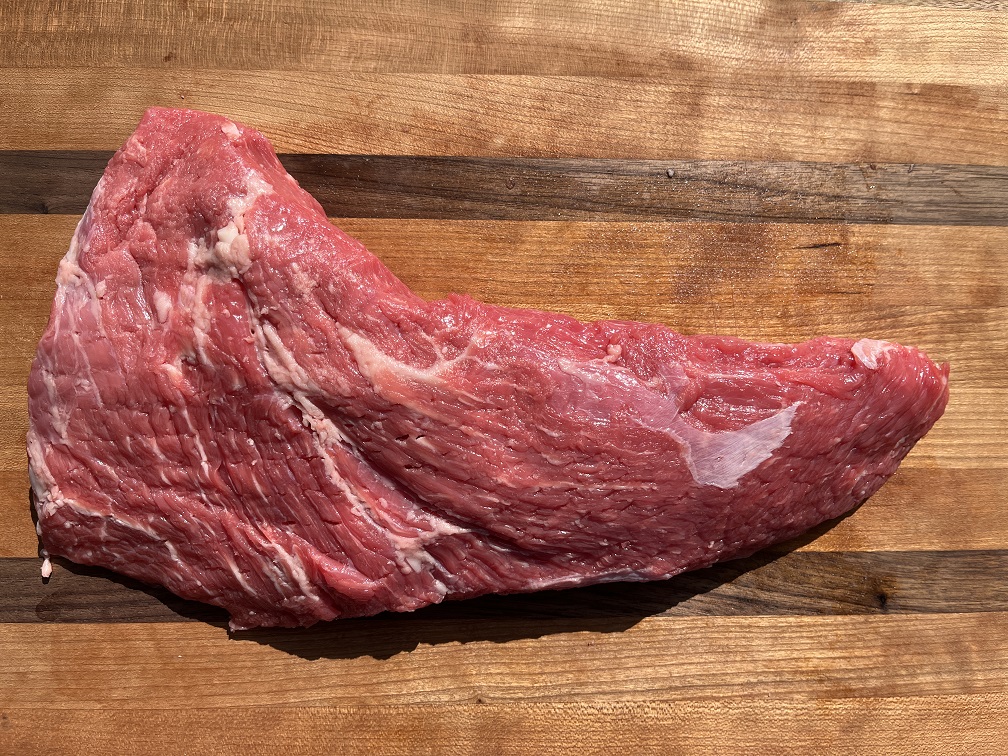
Tri-tip is a specific cut from the bottom sirloin, commonly identified as the tensor fasciae latae muscle. In some regions, especially parts of the West Coast, it is a regular in the beef case. In other areas, it is more of a butcher-counter item, or the bottom sirloin may be fabricated into other products before it ever reaches the display.
You do not need to be a meat expert to buy it, but you do need two things: (1) the right places to look and (2) the right words to ask for when the label is not obvious.
Best places to buy tri-tip
Here is where I look first, plus what you are most likely to see once you get there.
1) Grocery stores (start with the bigger ones)
Large supermarkets and regional chains are your best bet because they move enough beef to stock less common cuts. Look in the beef roast section first, then check any “value packs” or “family packs,” and finally the service butcher counter.
- Where it’s usually stocked: near sirloin roasts, top sirloin, and chuck roasts
- When it’s easiest to find: weekends, holiday grilling seasons, and during store promotions
- Tip from my notebook: if the shelf tag is missing, ask the butcher counter to check the back. Tri-tip is often kept in the cooler and put out in small batches.
2) Warehouse clubs
Warehouse clubs commonly carry tri-tip in larger packs, sometimes already seasoned. The value can be great if you are feeding a group or you do not mind freezing one for later.
- What you’ll see: 2-packs, big cryovac bags, or pre-marinated options
- Good for: families, meal prepping, entertaining
- Watch for: “seasoned” versions if you want plain beef. They can be delicious, but they limit how you season later.
3) Butcher shops (the most reliable option)
If you want tri-tip with the least hassle, a butcher shop is your best bet. Even if it is not in the case, they can often cut it to order or tell you which day they break down sirloins.
- Best reason to go: you can ask for the size you want and choose trimmed vs untrimmed
- What to ask: “Do you have tri-tip roast?” and if not, “Can you cut one from the bottom sirloin?”
4) Online meat sellers
Ordering tri-tip online is a good option if it is consistently unavailable where you live, or if you want a specific grade. Look for sellers who ship frozen or well-chilled, vacuum-sealed, with clear weight ranges and delivery timing.
- Pros: reliable availability, wider choice of grades
- Cons: shipping cost, you cannot visually inspect before purchase
- What to look for: vacuum-sealed packaging, clear handling and storage instructions, and a stated weight (not just “average size”).
What to ask for if you don’t see “tri-tip” on the label
Labeling is the biggest reason shoppers think a store “doesn’t have it.” Tri-tip can be presented with different names, or it might be broken down into other items.
Use these phrases at the butcher counter
- “Do you have a tri-tip roast?”
- “Is there any bottom sirloin tri-tip in back?”
- “If you don’t have it today, what day do you cut bottom sirloin?”
- “Do you have it unseasoned?” (important at warehouse clubs and some supermarkets)
Other names you might see
Depending on the store, tri-tip can show up under sirloin terminology. If you want the full background on where it comes from and common butcher naming, see What Part of the Cow Is Tri-Tip?.
- Bottom sirloin roast (sometimes it will specify tri-tip, sometimes not)
- Tri-tip with regional branding (often “Santa Maria” style when pre-seasoned)
- Sirloin tip is not the same cut, even though the names sound similar
If your store insists they do not carry tri-tip, ask if they carry bottom sirloin and whether they can special order it. Many can, especially if you give them a day or two.
How to pick a good tri-tip package
Size and weight
Tri-tips are often in the 1.5 to 3 pound range, but you will absolutely see larger ones at warehouse clubs. A smaller one is not automatically lower quality, but very tiny tri-tips can be harder to slice cleanly later. If you are planning portions, I break it down in How Much Tri-Tip Per Person.
Color
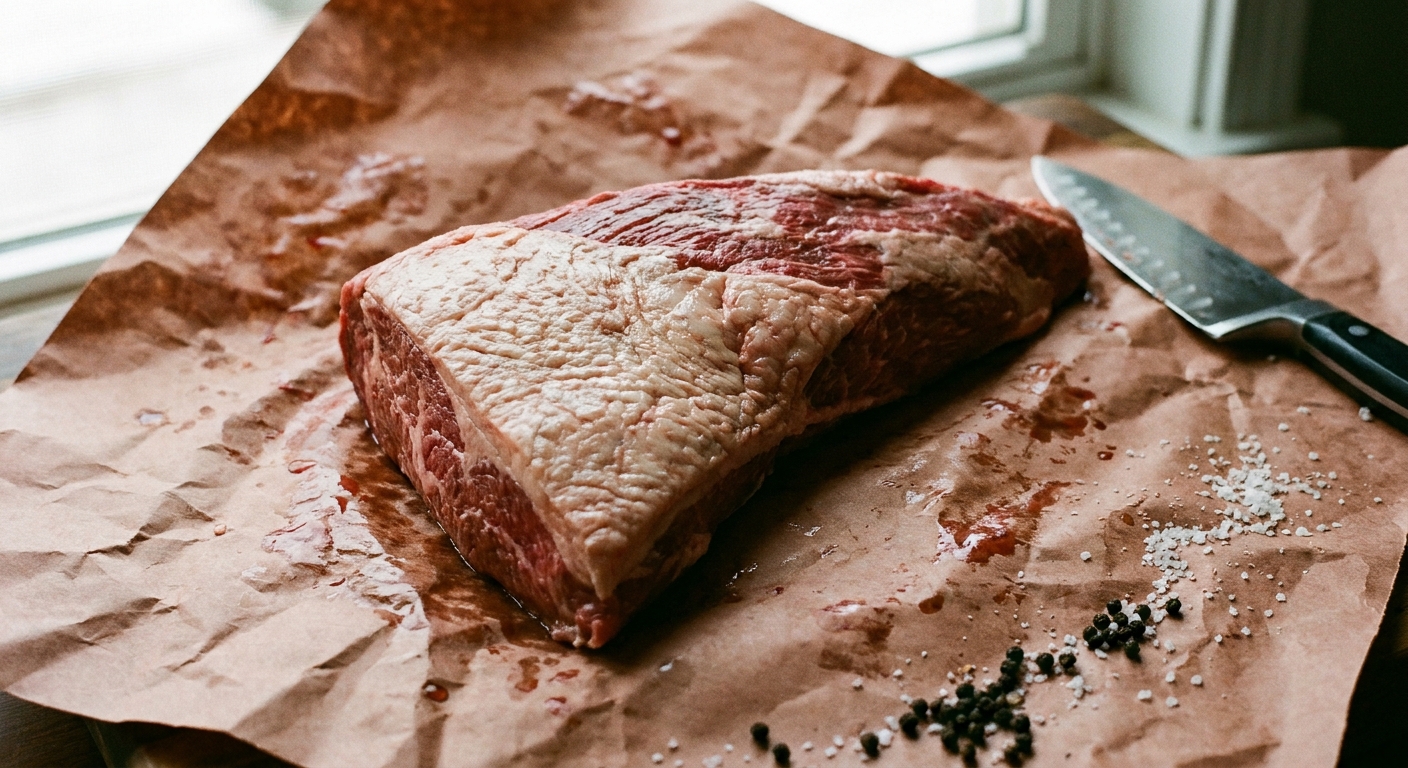
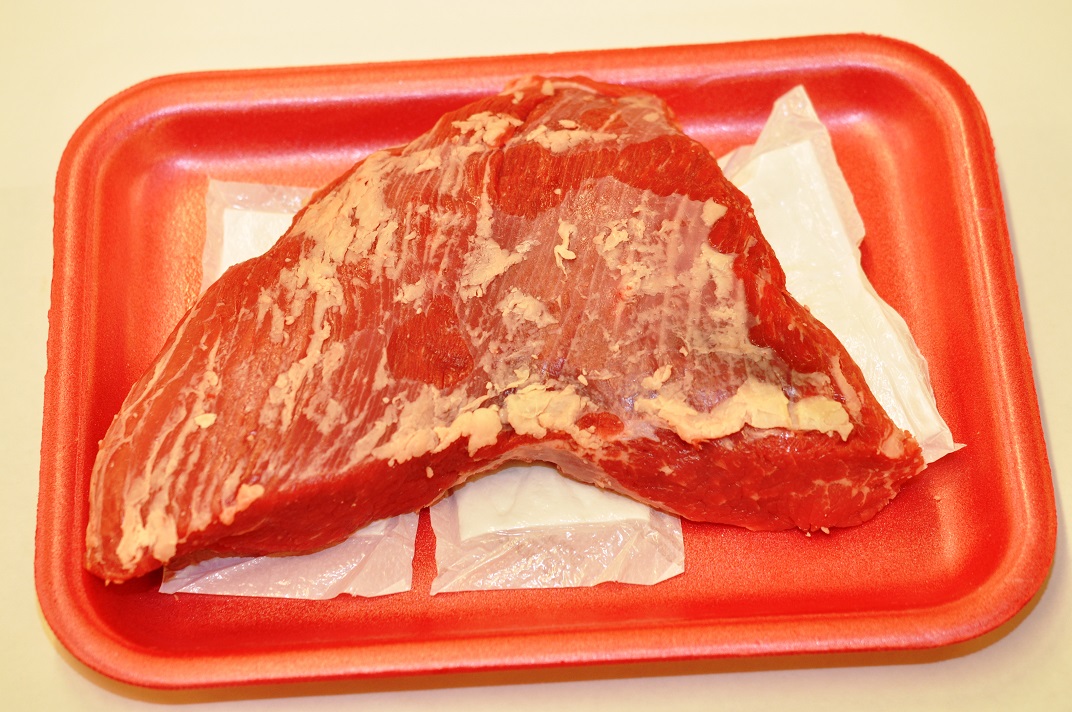
- Look for: a healthy red color in tray-packed beef, or a darker purplish-red in vacuum-sealed beef
- Quick reality check: if it is vacuum-sealed, it often brightens after you open it and give it a few minutes of air
- Avoid: gray or dull brown patches throughout (a little darkening in spots can happen from packaging, but overall it should look fresh)
Marbling
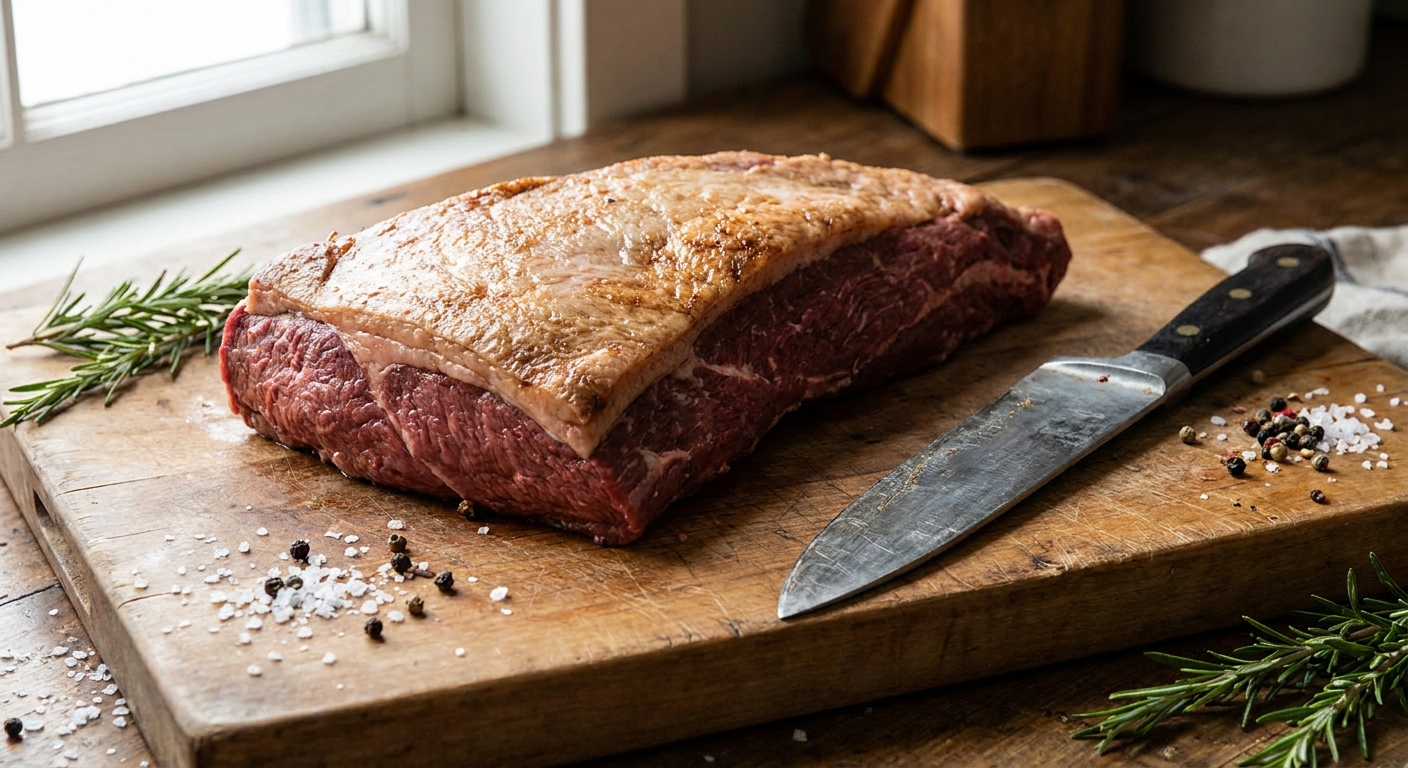
Marbling is those thin white lines of fat inside the meat. More marbling usually means better eating quality. You do not need extreme marbling, but you do want to see some fine streaks, especially through the thickest part.
Fat cap: trimmed vs untrimmed
You will see tri-tip sold both ways:
- Trimmed: less work at home, often a bit more expensive per pound
- Untrimmed: you get more control, but you may need to remove excess fat and silver skin yourself
If you are unsure, a moderate fat cap is a nice middle ground. As a visual guide, I consider “moderate” to be enough to cover the surface without looking excessively thick or waxy. If you want help identifying what should be removed (and what can stay), bookmark How to Trim a Tri-Tip.
Shape and grain
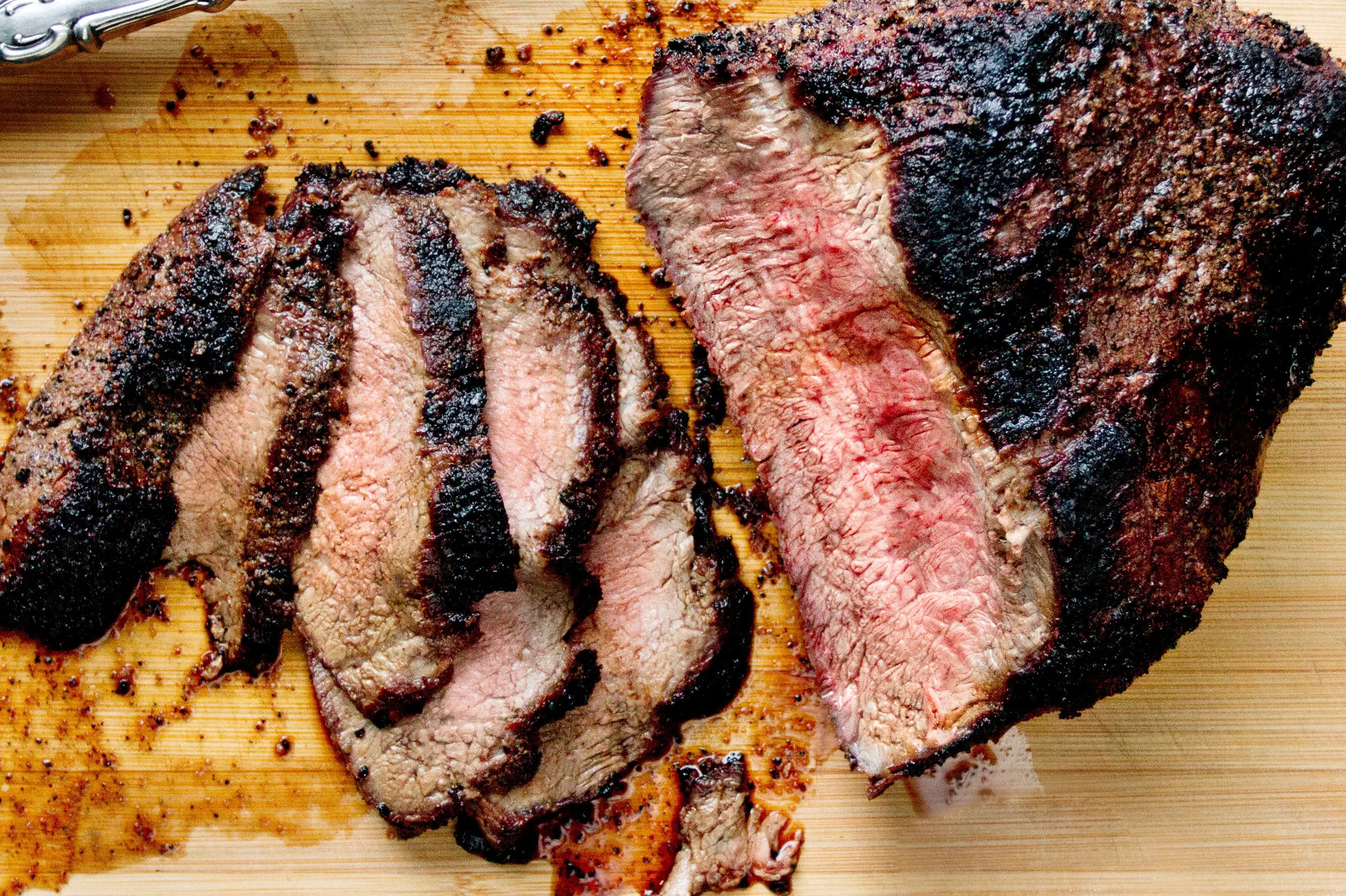
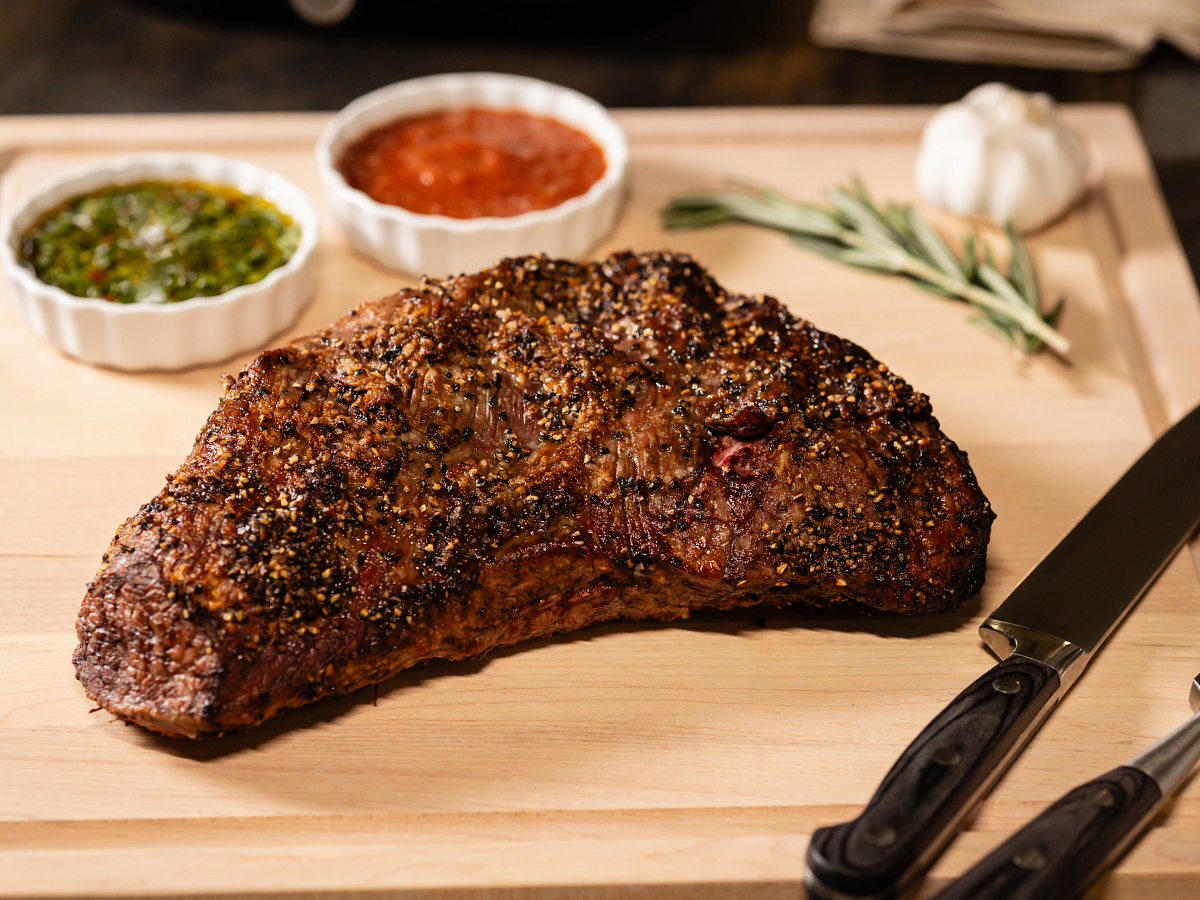
Tri-tip is a little famous for having grain that changes direction across the roast. That is more of a slicing issue than a buying issue, but it helps to choose a piece with a clear triangular shape and a thicker “center” so you have room to turn the roast and slice across the grain in sections later. If you have ever wondered why your slices felt chewy even when the temperature was right, this is often the reason.
Packaging and dates
- Vacuum-sealed (cryovac): great for freshness and freezing, may look darker because of lack of oxygen
- Overwrapped tray packs: convenient, easy to inspect, but best used sooner
- Note on smell: when you first open a vacuum-sealed package, a slight “sealed-in” odor can happen and should dissipate quickly. If it smells truly sour or rotten, trust your instincts.
- Date check: choose the latest sell-by date when possible, and make sure the package has no tears or excessive liquid
Budget and grading tips
Tri-tip pricing depends heavily on region and season. If you are choosing between grades:
- USDA Choice is the sweet spot for most home cooks.
- USDA Select can be leaner. Not a deal-breaker, but it is less forgiving.
- USDA Prime tends to have more marbling and a higher price tag.
If labels are unclear, ask the butcher what grade it is. They can usually tell you, or at least tell you what they are packaging from that day.
If you can’t find tri-tip at all
Do this in order, because it saves time.
- Check the butcher counter and ask if they have it in back.
- Ask what day they cut bottom sirloin and come back then.
- Call a local butcher shop and ask if they can cut or order one.
- Look online if availability is consistently poor in your area.
If you are planning a specific tri-tip recipe and need a backup plan, it helps to understand how tri-tip compares to similar cuts. These may help you decide what to swap in a pinch: Tri-Tip vs Flank Steak and Tri-Tip vs Top Sirloin.
Quick tri-tip buying checklist
- Look for about 1.5 to 3 pounds for most needs (bigger packs are common at warehouse clubs)
- Choose healthy-looking color for the package type (vacuum-sealed may look darker at first)
- Look for some marbling through the thickest part
- Decide on trimmed vs untrimmed (a fat cap is normal)
- Avoid packages with tears or lots of pooled liquid
- If it is missing, ask for tri-tip or bottom sirloin at the counter