Tri-tip doesn’t have to be intimidating. Get a deeply seasoned crust, a juicy medium-rare center, and step-by-step grill or oven directions—plus how to slice...
Delishing
Tri-Tip vs Flank Steak

Maya Brooks
Maya Brooks is a dedicated home cook and the lead recipe developer at Delishing, where she shares practical, foolproof meals for everyday life. With over a decade of hands-on kitchen experience, she specializes in creating approachable dishes that fit a variety of dietary needs and modern cooking methods. Maya is passionate about helping busy people get delicious, stress-free food on the table without needing formal culinary training.
I have bought the wrong steak on autopilot more than once, usually at 5:12 PM when I am trying to get dinner moving and the package labels all start to blur together. Tri-tip and flank steak can both look like “big, flat beef,” but they behave very differently once heat hits them. Once you know what to look for, you can tell them apart in seconds and choose the one that matches your plan for the night.
Quick ID: tell them apart fast
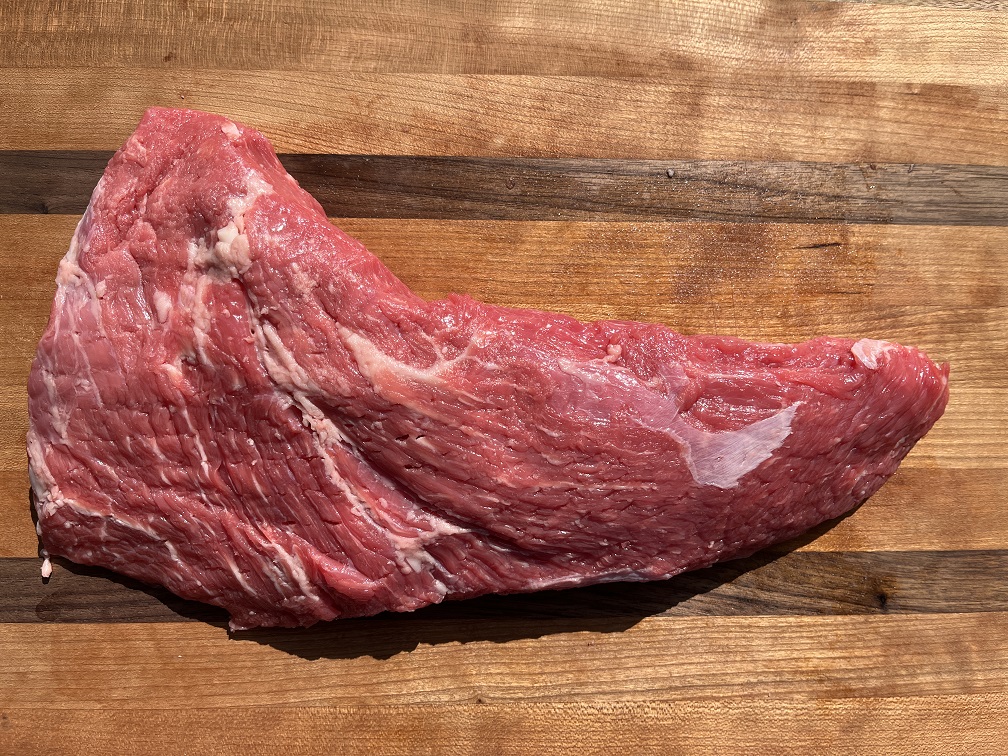
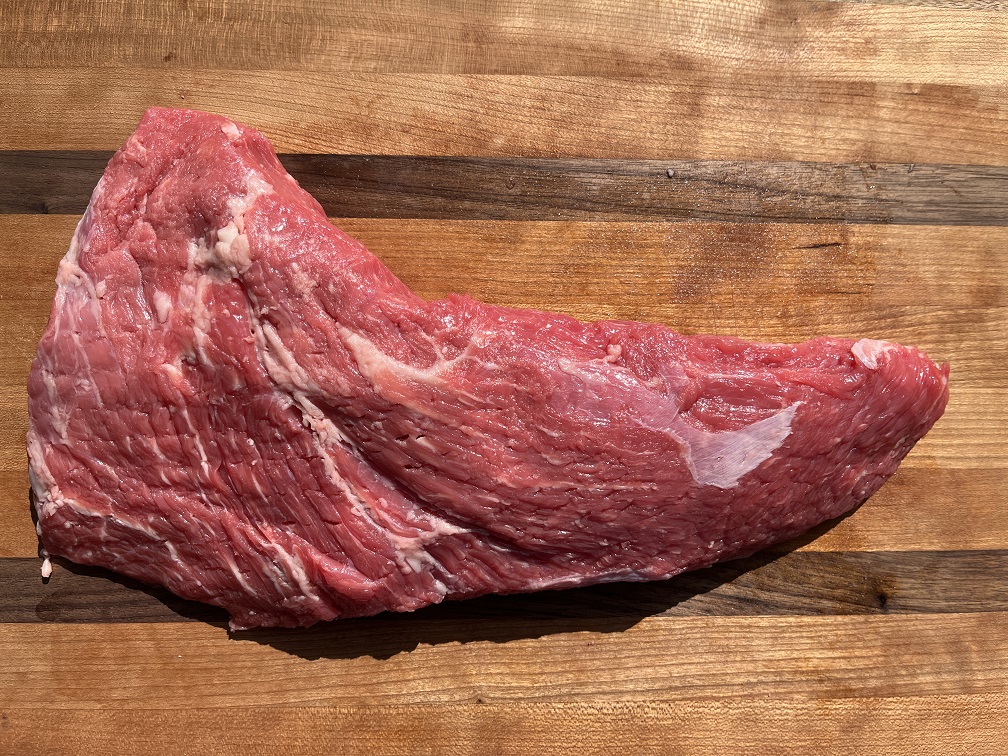
Tri-tip (bottom sirloin)
- Shape: A thick triangle or boomerang shape.
- Thickness: Often about 1.5 to 3 inches at the thickest point, depending on size and trim.
- Fat: Often has a noticeable fat cap on one side.
- Label clues: “Tri-tip,” “bottom sirloin tri-tip,” sometimes marketed as “Santa Maria style tri-tip.”
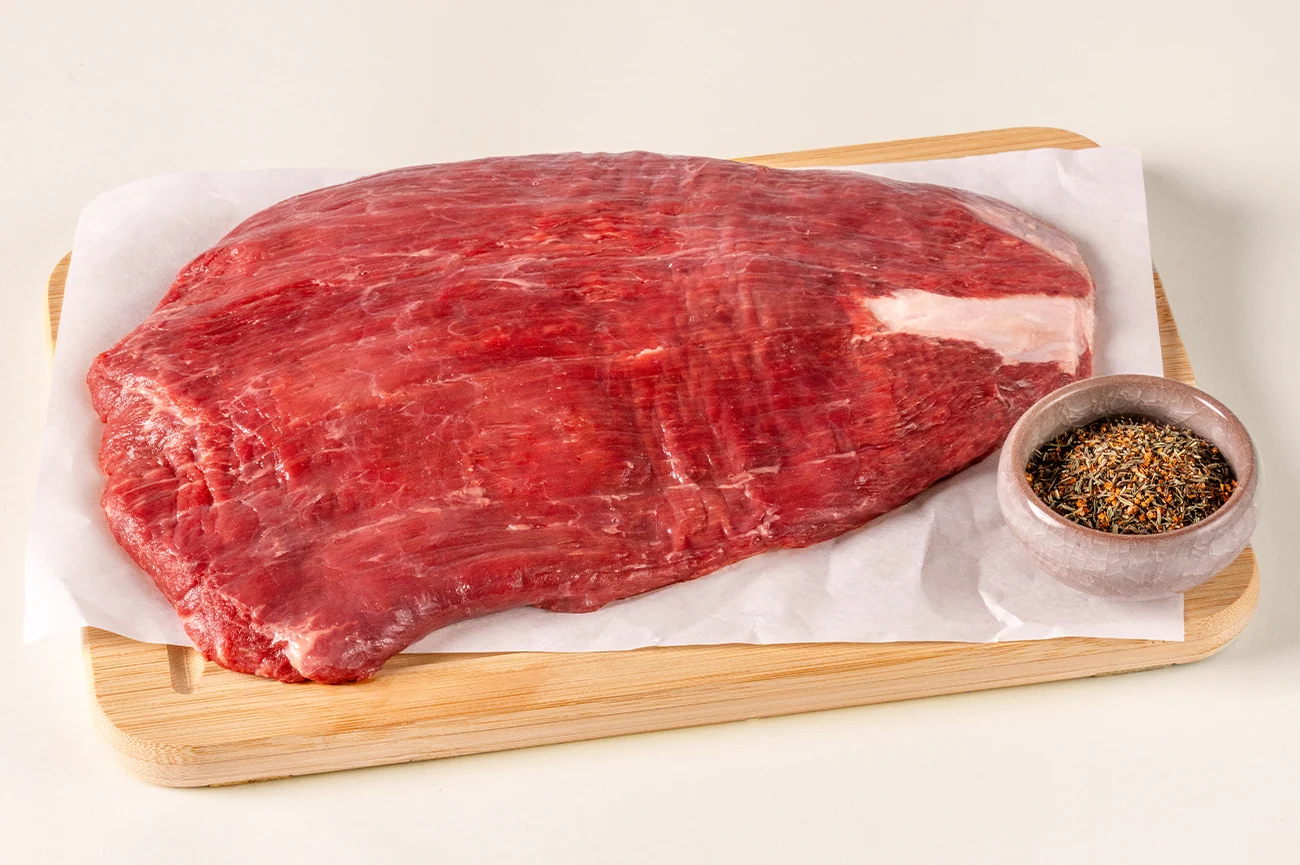
Flank steak
- Shape: A long, flat, wide rectangle or oval.
- Thickness: Thin and even, usually about 1/2 to 1 inch thick.
- Fat: Very lean with minimal external fat.
- Label clues: “Flank steak.” You might also see “London broil” nearby, but that is usually a cooking method or store label that can refer to several cuts, not a specific synonym for flank.
If you are holding a thick triangular roast, it is tri-tip. If you are holding a thin, wide sheet of beef, it is flank.
Shopping reality check: tri-tip is commonly around 2 to 3 pounds and feeds a small crowd. Flank is often closer to 1.5 to 2 pounds and is great for 3 to 4 servings, especially when sliced for tacos or bowls.
Grain and tenderness
This is the biggest practical difference for home cooks. Both cuts can be tender, but only if you respect the grain.
Tri-tip grain
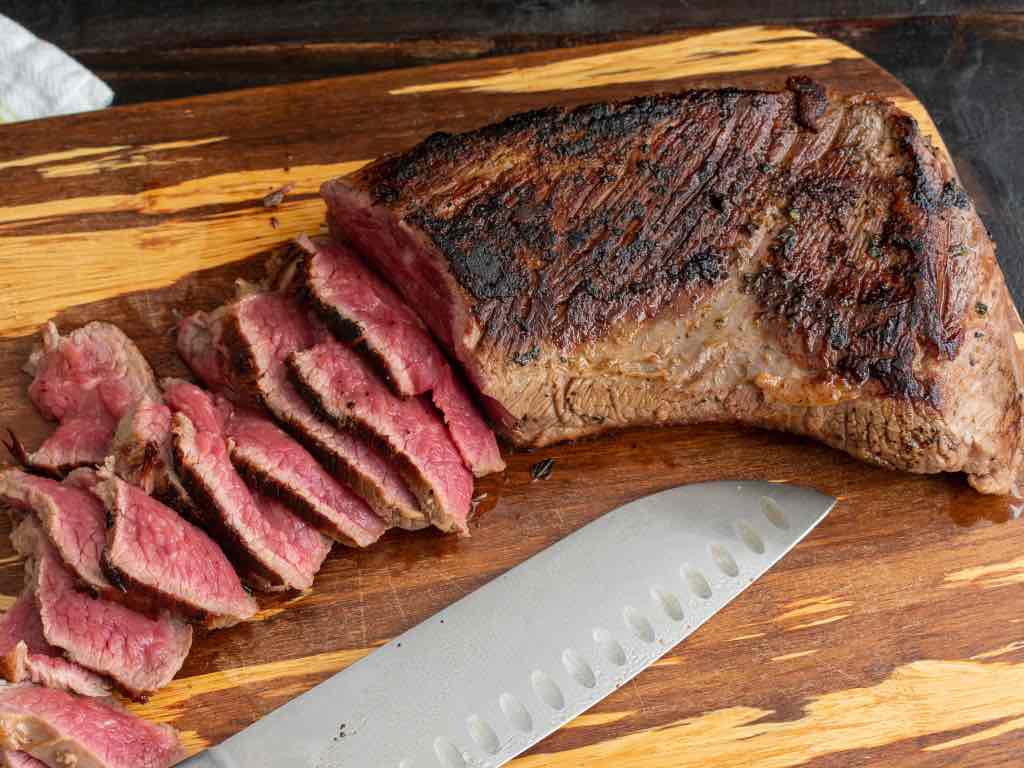
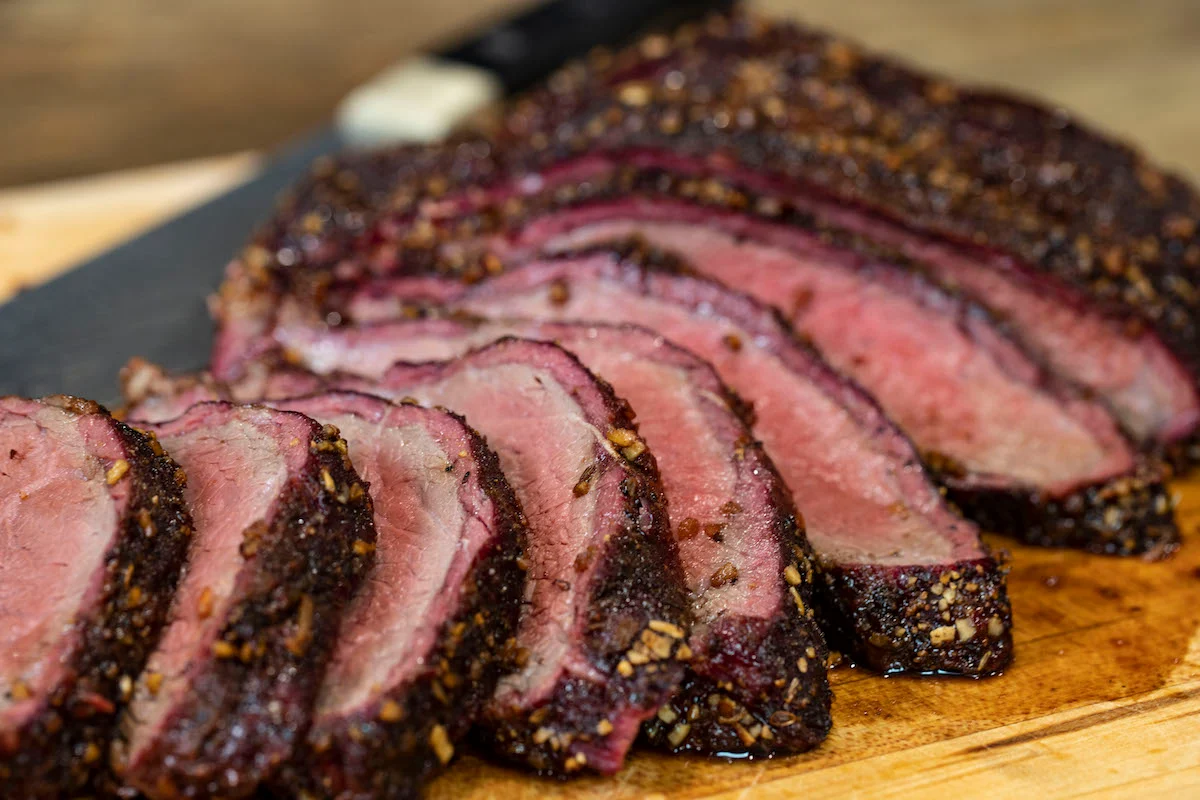
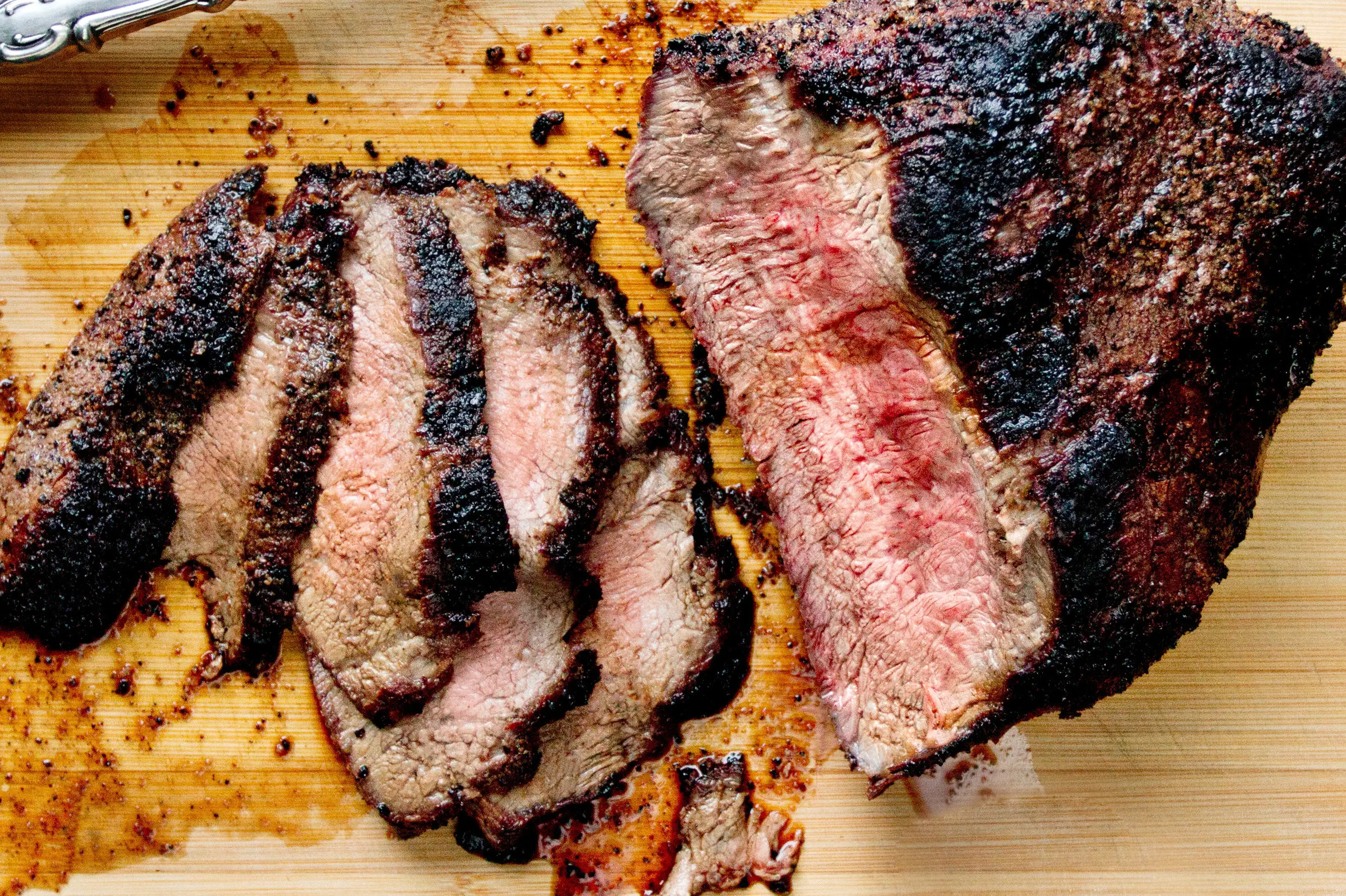
Tri-tip has grain that changes direction across the roast. That is why tri-tip can be juicy and steak-like when cooked as a whole piece, but it can turn oddly chewy if you slice it like you would slice a strip steak.
My quick cue: look for the long lines in the meat, then slice perpendicular to those lines. Because the direction shifts, I usually cut the tri-tip into two sections where the grain changes, then slice each section against the grain.
Flank steak grain
Flank has a very obvious, long grain running in one direction. It is lean and can get chewy fast if sliced with the grain. The reward is that, when you slice it correctly (thin, against the grain), it eats like a dream and makes perfect fajita strips.
Extra-easy trick: after resting, slice it on a slight bias (at an angle) against the grain for wider, more tender pieces.
Marinade and flavor
If you love a punchy marinade, flank steak is usually the better short-notice choice.
- Flank steak: Because it is thinner and has prominent muscle fibers, the marinade flavor is more noticeable in a short window. Marinades mostly season the surface, but with flank that surface seasoning goes a long way. In my kitchen notebook, flank is my “marinade does the heavy lifting” cut. Even 30 to 60 minutes helps, and a few hours is great.
- Tri-tip: Tri-tip can absolutely be marinated, but it is thicker, so the biggest impact stays closer to the outside unless you give it a long soak. Tri-tip shines with a dry rub and a good sear, then you let the beefy flavor do its thing.
Busy-night tip: If you only have time for a quick marinade window, flank will taste more transformed than tri-tip.
Cook time and temp
These two cuts ask for totally different pacing.
Flank steak
Flank is a hot and fast steak. Because it is thin, it can go from perfect to overdone quickly.
- Grill or cast-iron: A few minutes per side over high heat.
- Temp target: I pull it around 125 to 130°F for medium-rare, or closer to 135°F if you prefer medium, then rest and slice thin against the grain.
Tri-tip
Tri-tip is more like a small roast that happens to be grill-friendly. It often does best with a two-zone setup: sear over direct heat, then finish over indirect heat until your target temperature.
- Temp target: I aim to pull around 125 to 130°F for medium-rare, or 135 to 140°F for medium, then rest before slicing.
If you want the full method for cooking tri-tip with confidence, I keep everything in one place here: Tri-Tip Roast. If you are using an air fryer instead, this is the guide I use at home: Air Fryer Tri-Tip.
Best cut for fajita strips
Flank steak wins for fajitas, hands down.
- It is naturally shaped for long, clean strips.
- It cooks quickly, so you can have sizzling steak fajitas on the table fast.
- When you slice it thinly against the grain, the chew is tender and satisfying instead of rubbery.
Tri-tip can be used for fajitas if it is what you have, especially if you cook it to medium-rare or medium and slice carefully against the changing grain. But if your plan is “quick fajita strips,” flank is the easier, more predictable choice.
Flavor and texture
- Tri-tip: Beefy, juicy, more tender in thicker slices. Feels like a “real steak dinner” cut, especially when served as slices with a simple side.
- Flank steak: Beefy but leaner, best when marinated or paired with a sauce. Texture is great when sliced thin, and it is excellent in tacos, salads, rice bowls, and fajitas.
Swap guide
If you came for one cut and only see the other, here is how I would pivot without overthinking it.
- If your recipe needs fast cooking and thin slicing: Choose flank steak.
- If your recipe needs a whole roast-style piece to slice and serve: Choose tri-tip.
- If you want steak for sandwiches later: Either works, but flank needs extra attention to slicing thin against the grain. Tri-tip tends to stay juicy for leftovers.
And if you are deciding between similar labeled packages, these Delishing comparisons may help you sort out the meat-case naming chaos: Tri-Tip vs London Broil and Tri-Tip vs Sirloin Tip.
My pick for a fast dinner
If speed is the priority, I pick flank steak. It cooks quickly, takes on bold surface flavor in a short marinade window, and slices naturally into tender strips for fajitas or bowls.
If you have a little more time and want a steakhouse-style platter with leftovers that stay juicy, tri-tip is absolutely worth it. But for the classic weeknight question, “What can I cook fast that still feels like a real dinner?”, flank steak is the reliable winner.
FAQ
Are tri-tip and flank steak the same cut?
No. Tri-tip comes from the bottom sirloin and is a thick triangular roast. Flank steak comes from the abdominal area and is long, flat, and lean.
What doneness works best for each?
For the best texture, I usually aim for medium-rare to medium for both, then rest and slice against the grain. Flank can be perfectly enjoyable at medium if you slice it thin, but it gets tougher the further past that you go because it is so lean.
Why does tri-tip sometimes seem chewy even when it is not overcooked?
Slicing is usually the culprit. Tri-tip’s grain changes direction, so you may need to cut it in two where the grain shifts, then slice each section against the grain.