Tri-tip doesn’t have to be intimidating. Get a deeply seasoned crust, a juicy medium-rare center, and step-by-step grill or oven directions—plus how to slice...
Delishing
How Much Tri-Tip Per Person

Maya Brooks
Maya Brooks is a dedicated home cook and the lead recipe developer at Delishing, where she shares practical, foolproof meals for everyday life. With over a decade of hands-on kitchen experience, she specializes in creating approachable dishes that fit a variety of dietary needs and modern cooking methods. Maya is passionate about helping busy people get delicious, stress-free food on the table without needing formal culinary training.
Tri-tip is one of my favorite “feeds a crowd without making me panic at 5:00 PM” cuts. It is flavorful, quick to cook compared to bigger roasts, and forgiving. The only part that tends to trip people up is the shopping math: How much tri-tip per person?
Here is the simplest way I plan it in my kitchen notebook: decide whether tri-tip is the main event or part of a bigger spread, then buy based on raw oz per adult and a realistic cooked yield.
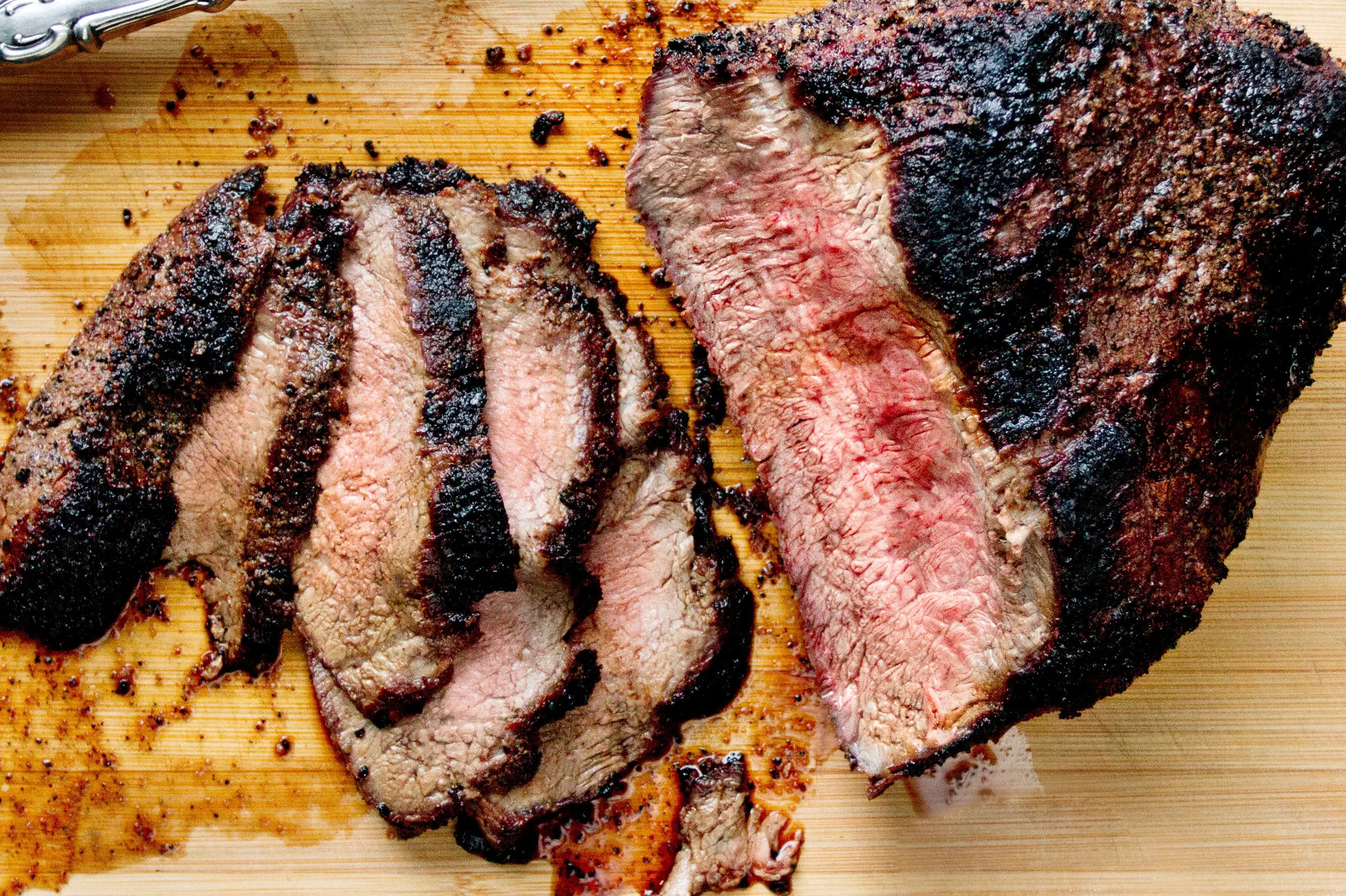
The quick answer (raw and cooked)
For most dinners, plan on 8 oz raw tri-tip per adult. That typically lands you in the sweet spot after shrinkage, slicing, and the inevitable “someone went back for seconds.”
- Standard serving: 8 oz raw per adult (about 5.5 to 6.5 oz cooked)
- Big appetites or light sides: 10 to 12 oz raw per adult (about 7 to 9.5 oz cooked)
- Hearty sides or tri-tip is not the only protein: 6 oz raw per adult (about 4 to 4.75 oz cooked)
Typical cooked yield: tri-tip usually loses 20 to 30 percent of its weight during cooking, depending on doneness and how much surface fat or silver skin gets trimmed. Well-done roasts tend to land closer to the higher end of that loss range.
How much does a 2-pound tri-tip feed?
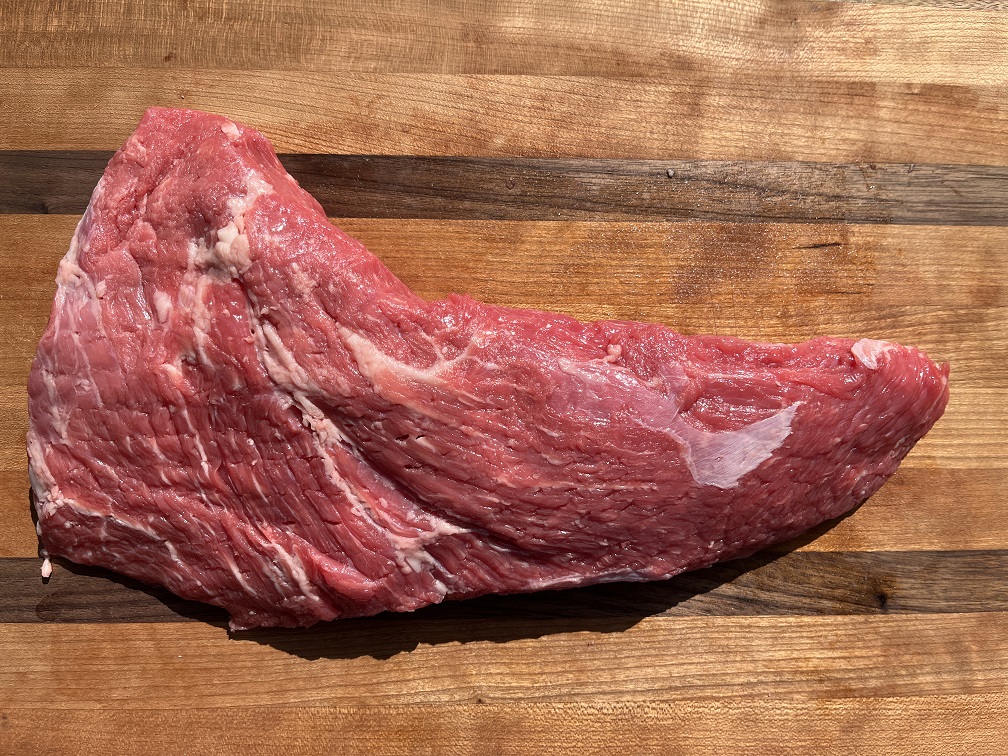
A 2-pound tri-tip roast (32 oz raw) is a very common size. Here is the practical way to think about it using the guidelines above.
Estimated cooked meat: about 1.4 to 1.6 lb cooked (roughly 22 to 26 oz cooked) after shrinkage.
| Serving style | Portion assumption | How many adults a 2 lb roast feeds |
|---|---|---|
| Standard dinner | 8 oz raw per adult | 4 adults |
| Hearty sides or buffet | 6 oz raw per adult | 5 adults (sometimes 6 if sides are very filling) |
| Big appetites or leftovers desired | 10 to 12 oz raw per adult | 2 to 3 adults |
If you are feeding a mix of adults and kids, I usually count kids as half an adult portion unless you know you have teen athletes in the house.
A simple tri-tip calculator (no stress)
Use this formula when you are standing at the meat case:
Total tri-tip to buy (in pounds) = (Number of adults × raw oz per adult) ÷ 16
My default is 8 oz per adult.
Example
You are feeding 7 adults, tri-tip is the main, sides are normal.
- 7 × 8 oz = 56 oz raw
- 56 ÷ 16 = 3.5 lb raw
That might mean two smaller roasts rather than one giant one, which is often easier to cook evenly.
Portion chart: how many pounds of tri-tip to buy
These numbers assume 8 oz raw per adult. (In most stores, tri-tip roasts are commonly sold around 2 to 3 lb, so I usually round up to the closest roast size available.)
| Adults | Raw tri-tip to buy | About how many 2 lb roasts |
|---|---|---|
| 2 | 1 lb | 1 roast (you will have leftovers) |
| 3 | 1.5 lb | 1 roast (you will have a little extra) |
| 4 | 2 lb | 1 roast |
| 5 | 2.5 lb | 1 to 2 roasts (depends on what is in the case) |
| 6 | 3 lb | 2 roasts |
| 8 | 4 lb | 2 roasts |
| 10 | 5 lb | 3 roasts |
| 12 | 6 lb | 3 roasts |
Shopping tip I learned the hard way: if the roasts available are oddly sized, round up. It is much easier to repurpose leftovers than it is to fix “we are out of meat” once everyone is seated.
How to scale based on sides and leftovers
If your sides are hearty
When the table is loaded with filling sides, you can comfortably drop to 6 oz raw per adult. Think:
- mac and cheese, potatoes, or rice pilaf
- lots of bread or rolls
- multiple substantial salads (pasta salad counts here)
If you need a side idea, my Classic Creamy Potato Salad is one of the most reliably “everyone eats it” options.
If you want planned leftovers
For leftovers that actually feel like a second meal, plan 10 to 12 oz raw per adult, especially if you want enough for sandwiches or steak salads.
Leftover tri-tip is fantastic tucked into tacos or burrito bowls. If you are thinking along those lines, my Burrito Bowl is an easy blueprint for using sliced beef.
If tri-tip is one of several proteins
If you are doing tri-tip plus another main, I plan 4 to 6 oz raw per adult and slice the tri-tip thinly so it goes farther on a platter.
Why tri-tip portions can feel tricky
Two things make tri-tip serving sizes a little less obvious than, say, burgers.
- Shrinkage: you lose moisture and some fat during cooking, so raw weight does not equal cooked weight.
- Slicing style: thin slices make a roast feel abundant; thick slices make it disappear fast.
One more small thing that matters: trimming. If your roast has a thick fat cap or a strip of silver skin that you trim heavily before cooking, your final edible yield will be a little lower. That is another reason I like to give myself a small cushion when I shop.
If you are cooking tri-tip for the first time, I recommend checking out my cooking instructions here: Tri-Tip Roast. This page is all about buying the right amount. That roast page keeps the seasoning and cook-time details in one place so you are not bouncing between tabs.
FAQ
How many oz of tri-tip per person for sandwiches?
For sandwiches, I plan 4 to 6 oz cooked per adult. That usually means 6 to 8 oz raw per adult, depending on how generously you slice and how many other fillings you are offering.
Is tri-tip enough for 6 people?
One 2 lb tri-tip is usually enough for 4 adults at a standard dinner. For 6 adults, I would buy about 3 lb total, which is often two roasts.
What if my roast is 2.5 to 3 lb?
That is great for 5 adults at the standard 8 oz raw guideline, or 6 adults if sides are hearty.
Should I buy one big tri-tip or two smaller ones?
If you have the choice, I like two smaller roasts for groups. They cook more evenly, you can pull one earlier if people like different doneness, and you have a little insurance if one roast cooks faster than expected.