Delishing
Slow Cooker Tri-Tip

Tri-tip is one of those cuts that can feel like it has two personalities. Roast it hot and fast and you get rosy slices. Braise it low and slow and it becomes something else entirely: savory, beefy, and weeknight-friendly, but only if you treat it like the cut it usually is, usually leaner than chuck and a lot less forgiving.
I learned this the hard way during a stretch of 5:00 PM chaos when I tried to slow-cooker tri-tip the same way I do chuck. Chuck has the fat and collagen to forgive you. Tri-tip can have some marbling, but it does not bring the same built-in insurance. It needs enough liquid to braise gently, plus aromatics that actually flavor the braise (onion and garlic are my non-negotiables) so it tastes rich without relying on melted fat.
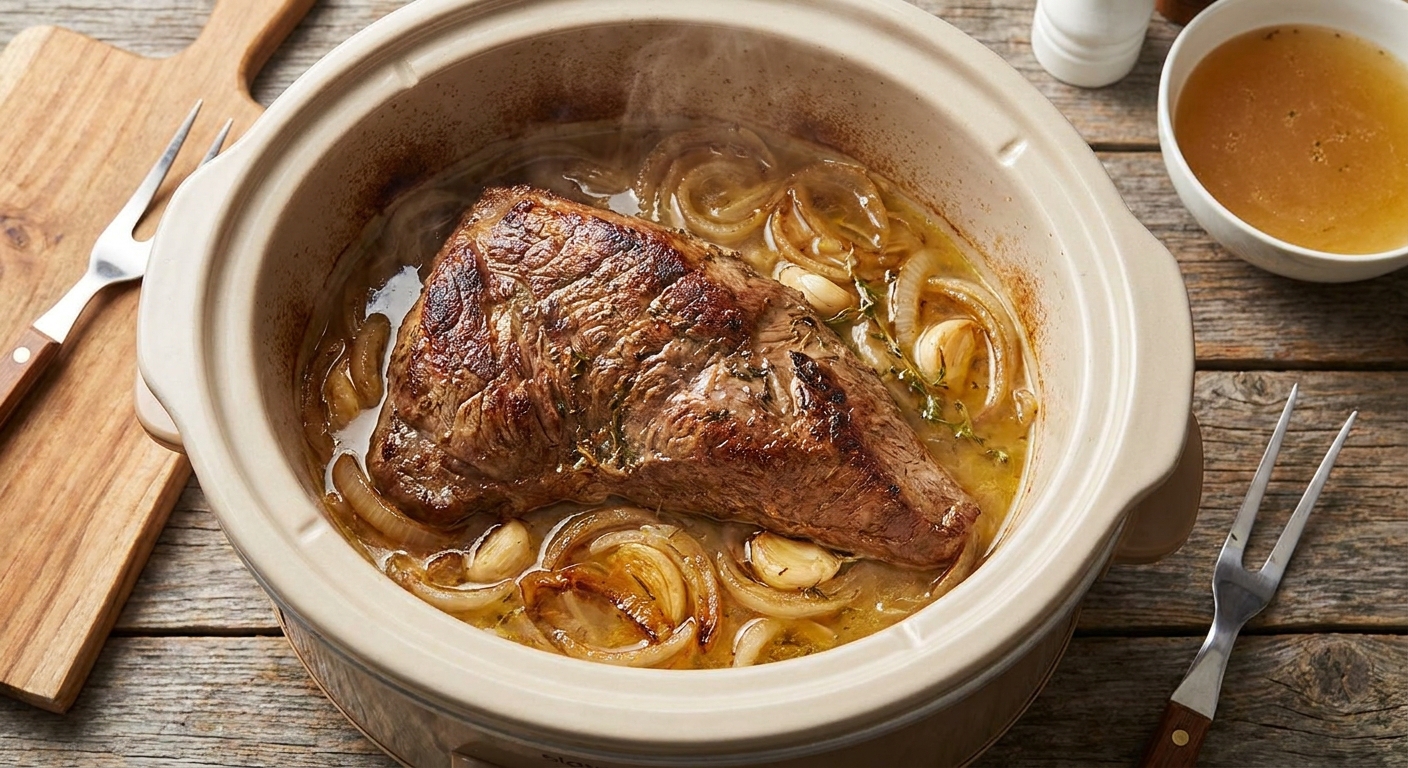
This recipe gives you two finish options depending on what your day looks like: a sliceable tri-tip you can serve like a simple Sunday supper, and a longer cook for shreddable beef for tacos, bowls, and sandwiches. The difference is time, yes, but it is also resting the meat before you cut into it and using the pot liquid on purpose at the end, either as a light au jus for slices or as a moisture boost for shredded beef. (In general: sliceable means it yields to a fork but stays cohesive, shreddable means it pulls apart without a fight.)
If you love hands-off dinners, you might also like my cozy slow-style comfort foods like Instant Pot pulled pork or a true oven braise like The Coziest Oven Pot Roast. Tri-tip is a different animal, so the method here is calibrated specifically for a leaner roast.
Liquid level matters
For a slow cooker braise, you want a moist environment with steady gentle heat. For lean tri-tip, too little liquid can let onion and garlic bits concentrate, cling to the sides, and stick or burn around the edges, especially in a hotter-running cooker. Too much liquid can wash out flavor and leave you with "boiled beef" vibes. My sweet spot is to add enough onion-garlic liquid to come roughly 1/3 of the way up the meat after the onions go in. Cooker shape and roast size matter here, so treat that level as a guide, not a hard line in the sand.
One safety note: do not tilt a hot slow cooker insert. If you want to double-check the level, do it before you turn it on. Or use a spoon to nudge the onions aside near the edge so you can see where the liquid line hits the roast.
Sliceable or shreddable
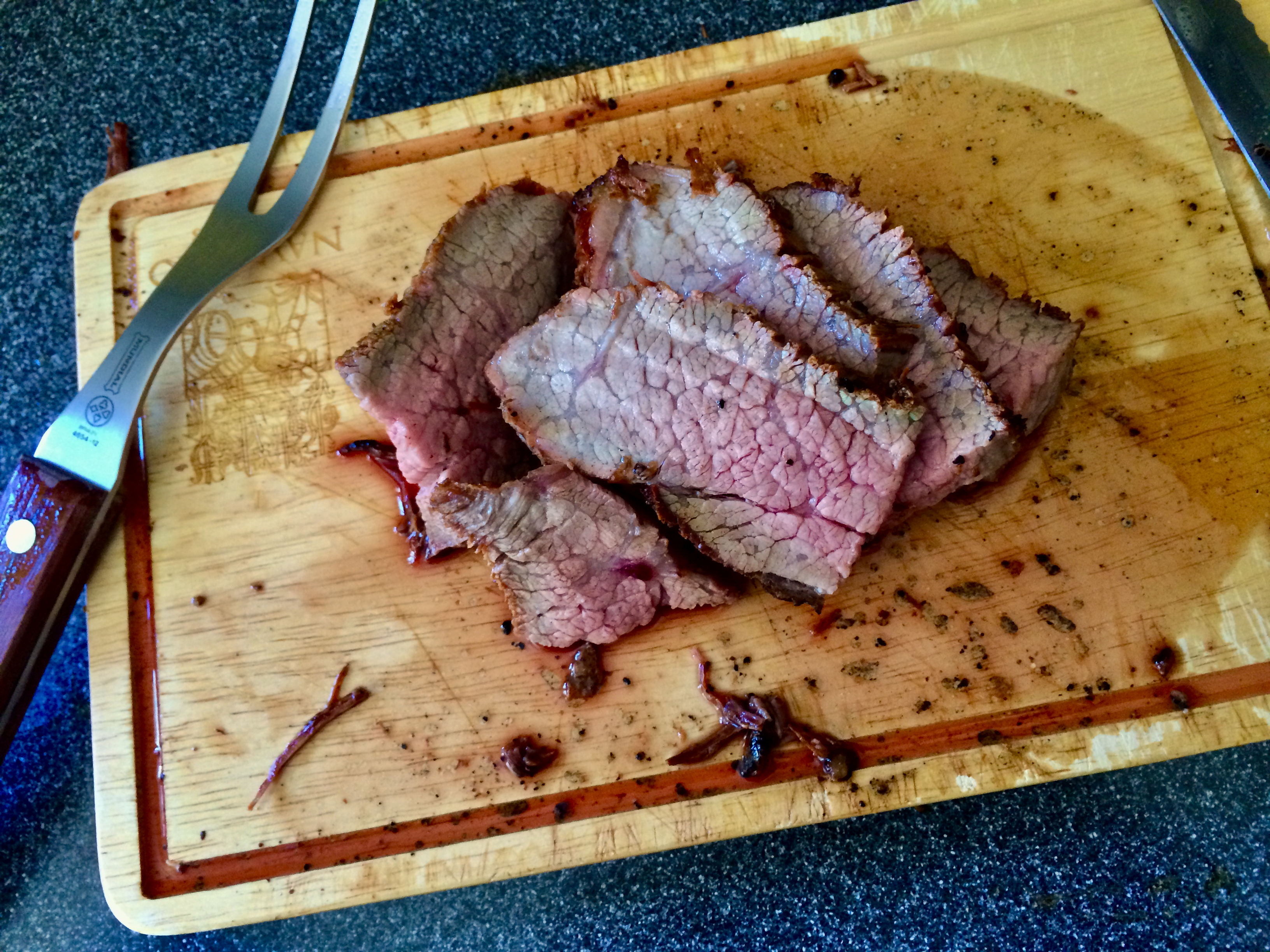
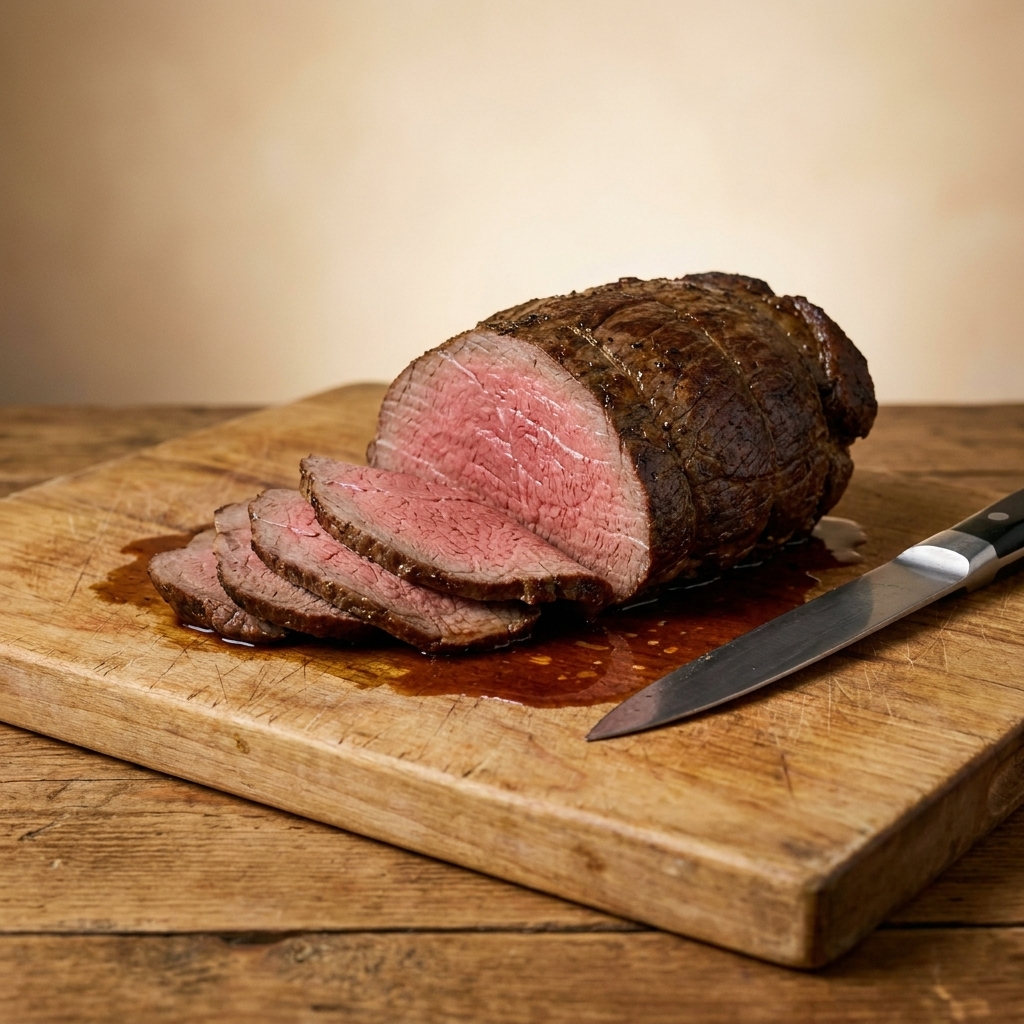
Sliceable setting is for serving like roast beef. You are cooking until it is tender but still holds together, then resting and slicing against the grain. Expect braised beef with clean slices, not medium-rare tri-tip.
Shreddable setting is for tacos, sandwiches, rice bowls, and meal prep. You are cooking longer, until the meat pulls apart easily with a fork. Because tri-tip is lean, the best move is tossing the shredded beef back into a little defatted pot liquid so it stays juicy.
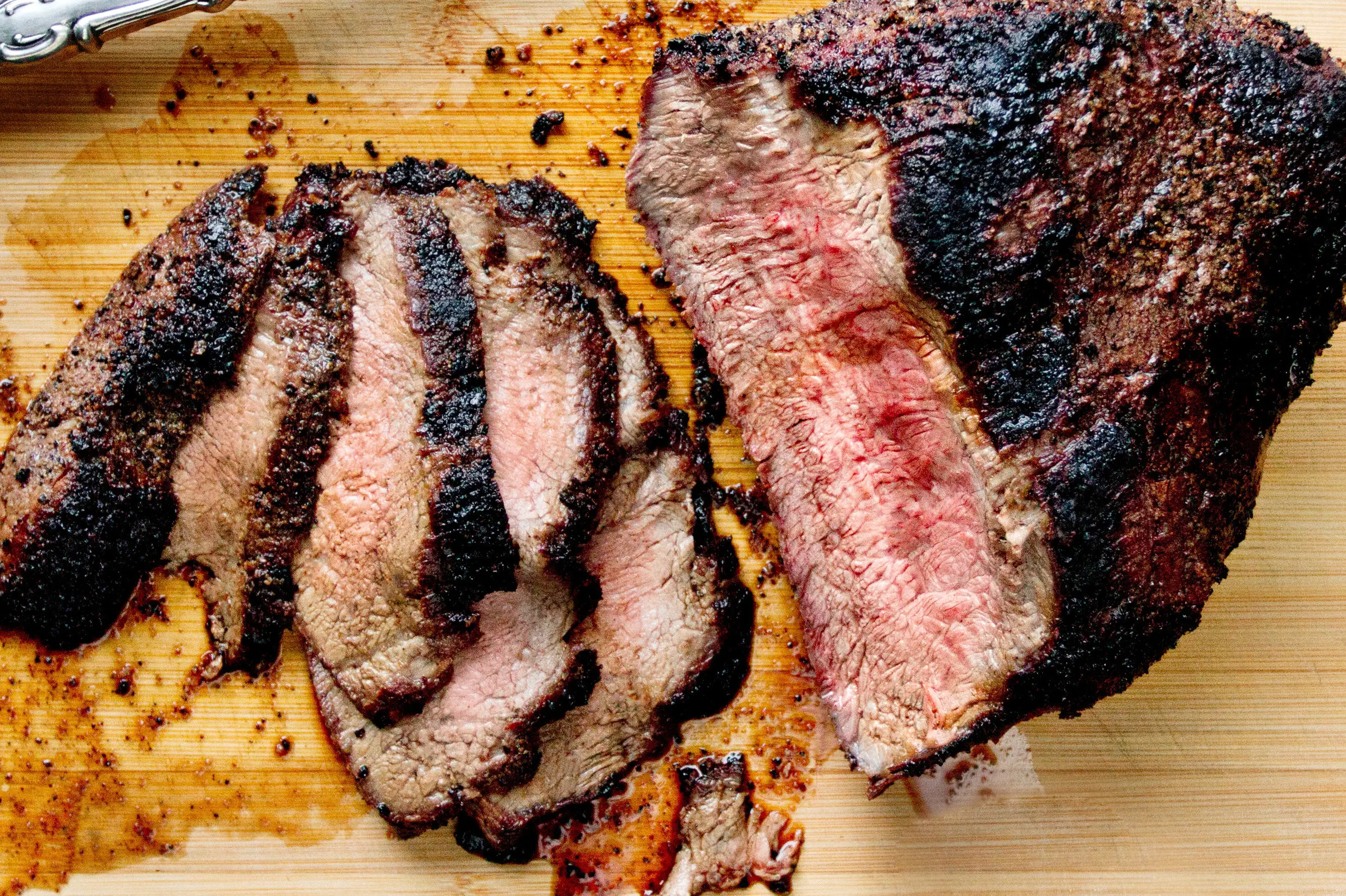
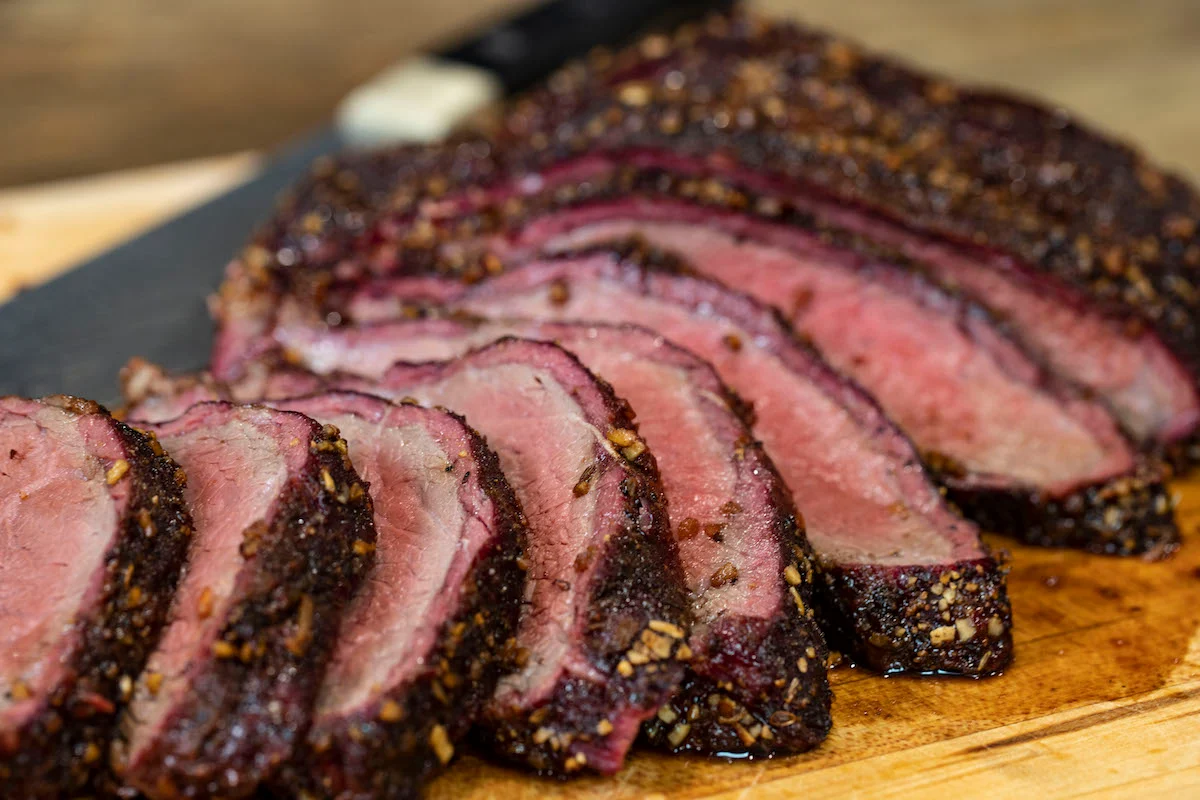
Quick slicing tip that saves a lot of regret: tri-tip grain often changes direction. Before you slice, look for the shift in the lines of the muscle fibers, and rotate the roast as needed so you are always cutting across the grain.
Why it works
- Onion and garlic build body without heaviness. Tri-tip does not give you the same gelatin-rich broth as chuck, so we create a flavorful base with aromatics, broth, and a small amount of tomato paste.
- Controlled liquid level keeps it braising, not boiling. Keeping the liquid around one-third up the roast gives you tender meat and concentrated flavor.
- Two timings, two textures. You can stop earlier for sliceable beef or cook longer for shreddable, without changing the ingredient list.
- A quick sear adds real roast flavor. It is optional, but that browned crust makes the finished dish taste far more "all day" than "set it and forget it."
Ingredient notes
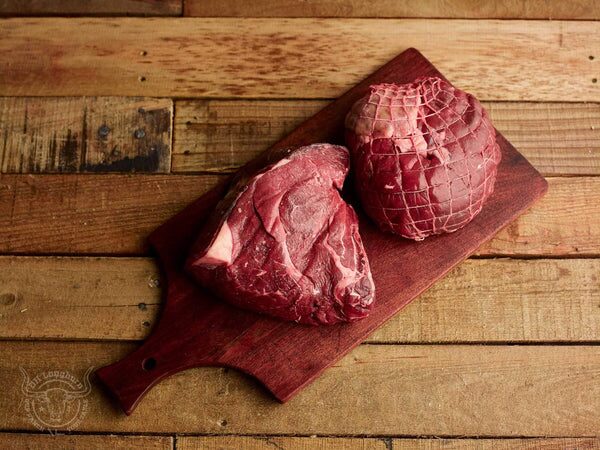
- Tri-tip roast: Look for a roast in the 2 to 3 pound range. If it is much larger, it can take longer to become tender, and if it is much smaller it can overcook quickly on High.
- Onion: One large onion, thickly sliced, becomes the flavor base and a built-in side.
- Garlic: Fresh cloves are best here. Slow cooking softens any sharpness.
- Beef broth: Use low-sodium if you can. It gives you more control when you reduce or season at the end.
- Worcestershire sauce: Adds depth without making the pot liquid taste like a steak marinade.
- Tomato paste: Just a little for color and savoriness. This keeps the sauce from tasting flat, especially with a lean cut.
- Cornstarch (optional): For a quick gravy-style finish if you want something spoonable over potatoes or rice.
Equipment
- Slow cooker: 6-quart works best for a 2 to 3 pound tri-tip.
- Large skillet: For searing (optional but recommended).
- Instant-read thermometer: Helpful for the sliceable finish so you can pull it when it is tender but not falling apart.
- Fine-mesh strainer: Optional, if you want a smooth sauce.
- Fat separator or a spoon: To skim fat from the pot liquid before serving.
Pro tips
- Cut against the grain, always. Tri-tip grain changes direction. After resting, look closely and slice where the fibers run, then rotate the roast if the grain shifts.
- Rest even for braises. For sliceable tri-tip, rest 10 to 15 minutes before slicing so the juices settle.
- Do not drown the roast. If your slow cooker is smaller and the liquid climbs too high, remove a little broth. You want a braise, not a soup.
- For shreddable beef, rehydrate on purpose. After shredding, toss the meat with some defatted cooking liquid. Lean beef needs that final insurance policy.
- Reduce for extra flavor. If the sauce tastes a little thin, simmer it in a saucepan for 5 to 10 minutes to concentrate.
Substitutes
- No Worcestershire: Use 2 teaspoons soy sauce plus 1 teaspoon apple cider vinegar.
- No beef broth: Use chicken broth with an extra teaspoon of tomato paste for deeper flavor.
- Onion sensitivity: Use the green parts of scallions added at the end and replace sliced onion with fennel (it cooks sweet and mild).
- Gluten-free: Make sure your Worcestershire is gluten-free, or use tamari instead. Cornstarch is naturally gluten-free.
Variations
- Southwest shreddable: Add 1 teaspoon ground cumin and 1 teaspoon smoked paprika to the rub. Finish with lime juice and chopped cilantro.
- Italian-style: Add 1 teaspoon dried oregano and a pinch of red pepper flakes. Serve with a spoonful of pot liquid over pasta or polenta.
- French onion vibes: Double the onion, cook on Low, then thicken the pot liquid into a glossy gravy and serve over mashed potatoes.
Serving ideas
- Sliceable: Serve with roasted vegetables like garlic roasted vegetables and something starchy to catch the sauce.
- Shreddable: Pile into tacos, stuff into baked potatoes, or build bowls with rice and beans. My go-to "use up the fridge" bowl is inspired by this burrito bowl.
- Sandwich night: Warm slices in a little pot liquid and serve on rolls with onions from the cooker.
Storage and reheating
- Refrigerate: Store beef in an airtight container for up to 4 days. Keep some pot liquid with it so it stays moist.
- Freeze: Freeze sliced or shredded beef with a bit of cooking liquid for up to 3 months. Thaw overnight in the fridge.
- Reheat: Warm gently on the stovetop or in the microwave with a splash of broth or reserved cooking liquid. Lean beef can tighten up if overheated, so go low and slow.
Common mistakes (and how to fix them)
- It is dry: You likely cooked on High too long or served it without resting. Slice thinly against the grain and serve with extra pot liquid. If shredding, toss meat with warm cooking liquid before serving.
- It tastes bland: Salt at the end, especially if you used low-sodium broth. A teaspoon of Worcestershire or a small splash of vinegar can wake up the whole pot.
- It is tough: It may be undercooked for the texture you want. Keep cooking on Low in 30 to 60 minute chunks until it relaxes. Tough and dry can look similar, so test with a fork: if it resists, it needs more time.
- The sauce is thin: Reduce it on the stove, or thicken with a cornstarch slurry as written in the recipe notes.
FAQ
Can I put tri-tip in the slow cooker raw?
Yes. It will still cook through and become tender. That said, a quick sear adds a lot of flavor, especially with a lean cut. If you can spare 8 to 10 minutes, it is worth it.
How long do I cook tri-tip in the slow cooker on Low?
For a 2 to 3 pound roast, plan on 4 to 5 hours on Low for sliceable and 6 to 7 hours on Low for shreddable. Start checking early because every slow cooker runs a little different.
How long on High?
For sliceable, plan on about 2 1/2 to 3 1/2 hours on High. For shreddable, about 4 to 5 hours on High. High is convenient, but Low gives you a wider window before the meat overcooks.
What internal temperature should tri-tip be for sliceable slow-cooker results?
For sliceable braised tri-tip, I like pulling it around 190 to 195°F when it is fork-tender but still holds together. Unlike dry-heat tri-tip, this is not about medium-rare. It is about collagen softening enough to feel tender.
Do I need to add potatoes or carrots?
No, and I often do not. Adding lots of vegetables can raise the liquid level and dilute the sauce. If you want veggies in the pot, add them in a single layer under the roast and keep the liquid around one-third up the meat.
Slow Cooker Tri-Tip (Sliceable or Shreddable)
A lean-cut-friendly slow cooker braise with an onion-garlic pot liquid. Choose the shorter cook for sliceable roast beef style results, or go longer for tender shreddable beef.
Prep Time: 15 minutes
Cook Time: 3 to 7 hours
Total Time: 3 hours 25 minutes to 7 hours 25 minutes
Servings: 6
- 1 (2 1/2 to 3 lb) tri-tip roast
- 2 tsp kosher salt
- 1 tsp black pepper
- 1 tsp garlic powder
- 1 tsp smoked paprika (optional)
- 2 tbsp olive oil (for searing, optional but recommended)
- 1 large yellow onion, thickly sliced
- 6 garlic cloves, smashed and roughly chopped
- 1 1/2 cups low-sodium beef broth
- 2 tbsp Worcestershire sauce
- 1 tbsp tomato paste
- 1 tbsp apple cider vinegar (or red wine vinegar)
- 2 bay leaves
- 2 tsp cornstarch mixed with 2 tbsp cold water (optional, to thicken sauce)
- Season the tri-tip. Pat the tri-tip dry with paper towels. In a small bowl, mix salt, pepper, garlic powder, and smoked paprika (if using). Rub seasoning all over the roast.
- Sear (optional but recommended). Heat olive oil in a large skillet over medium-high heat. Sear the tri-tip 2 to 3 minutes per side until deeply browned. Transfer to a plate.
- Build the onion-garlic base. Scatter sliced onion in the bottom of a 6-quart slow cooker. Add garlic on top. Place the tri-tip on the onions.
- Add braising liquid. Whisk together beef broth, Worcestershire, tomato paste, and vinegar. Pour it around the roast (not directly over the top). Add bay leaves. The liquid should come about 1/3 of the way up the roast. If it is higher due to a smaller cooker, remove a little liquid.
- Cook for sliceable tri-tip. Cover and cook on LOW 4 to 5 hours or HIGH 2 1/2 to 3 1/2 hours, until the meat is fork-tender but still holds together. For a helpful checkpoint, start looking for tenderness around 190°F internal temp.
- Cook for shreddable tri-tip. Cover and cook on LOW 6 to 7 hours or HIGH 4 to 5 hours, until it pulls apart easily with a fork.
- Rest and slice or shred. Transfer tri-tip to a cutting board. Rest 10 to 15 minutes. For sliceable: slice thinly against the grain. For shreddable: shred with two forks.
- Finish the pot liquid. Skim excess fat from the surface. Taste and adjust seasoning. If you want a thicker sauce, pour liquid into a saucepan, bring to a simmer, whisk in cornstarch slurry, and simmer 1 to 2 minutes until glossy.
- Serve. Spoon onions and sauce over sliced beef. For shredded beef, toss the meat with a few spoonfuls of defatted pot liquid before serving to keep it juicy.
Note 1 (grain direction): Tri-tip grain often changes direction. Before slicing, look closely at the muscle fibers and rotate the roast as needed so every slice is cut against the grain.
Note 2 (timing reality check): Slow cookers vary. Use the times as a range and rely on the texture cue: sliceable means tender but cohesive, shreddable means it pulls apart easily.
Note 3 (sauce control): If the sauce tastes diluted, reduce it on the stove for 5 to 10 minutes instead of adding more salt right away.