Delishing
Roasted Brussels Sprouts With Chestnuts

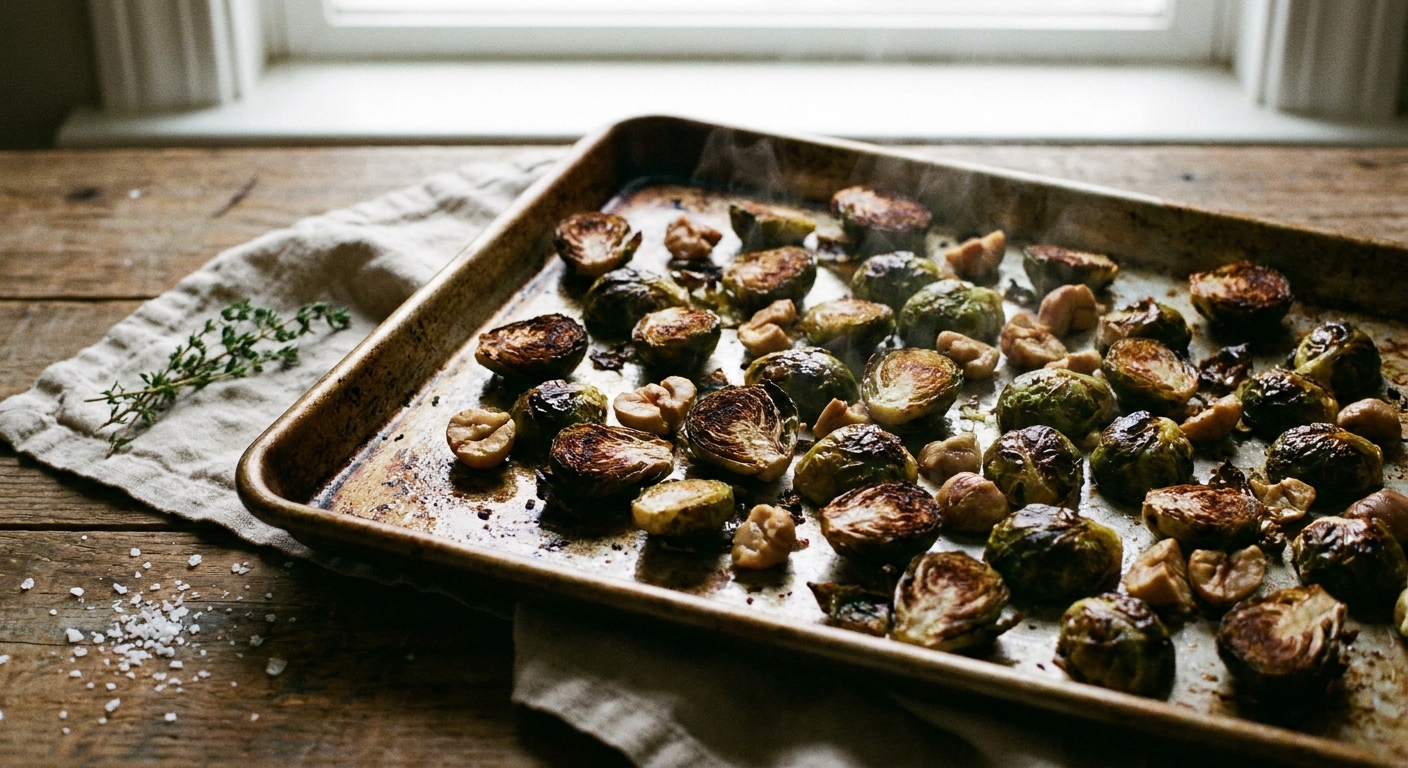
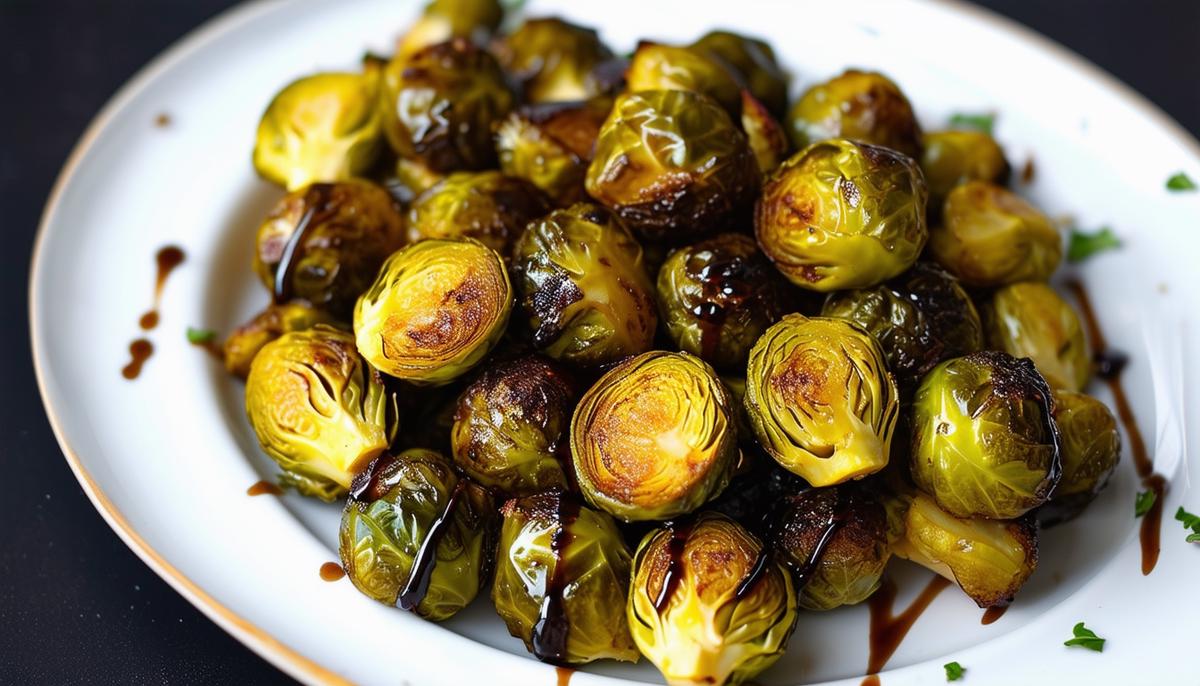
When I need a side dish that feels a little holiday special but still behaves on a weeknight, I reach for this sheet-pan combo: deeply browned Brussels sprouts and buttery, tender chestnuts. It’s simple, it’s cozy, and it solves a very real problem in my kitchen notebook: sprouts want high heat for caramelized edges, but peeled chestnuts can turn dry and chalky if they roast the full time right alongside them.
The trick is timing. The sprouts go in first so they get that bronzed, almost chip-like edge, then the chestnuts join partway through to warm through and soak up flavor without getting tough. No stovetop juggling, just one pan and a hot oven.
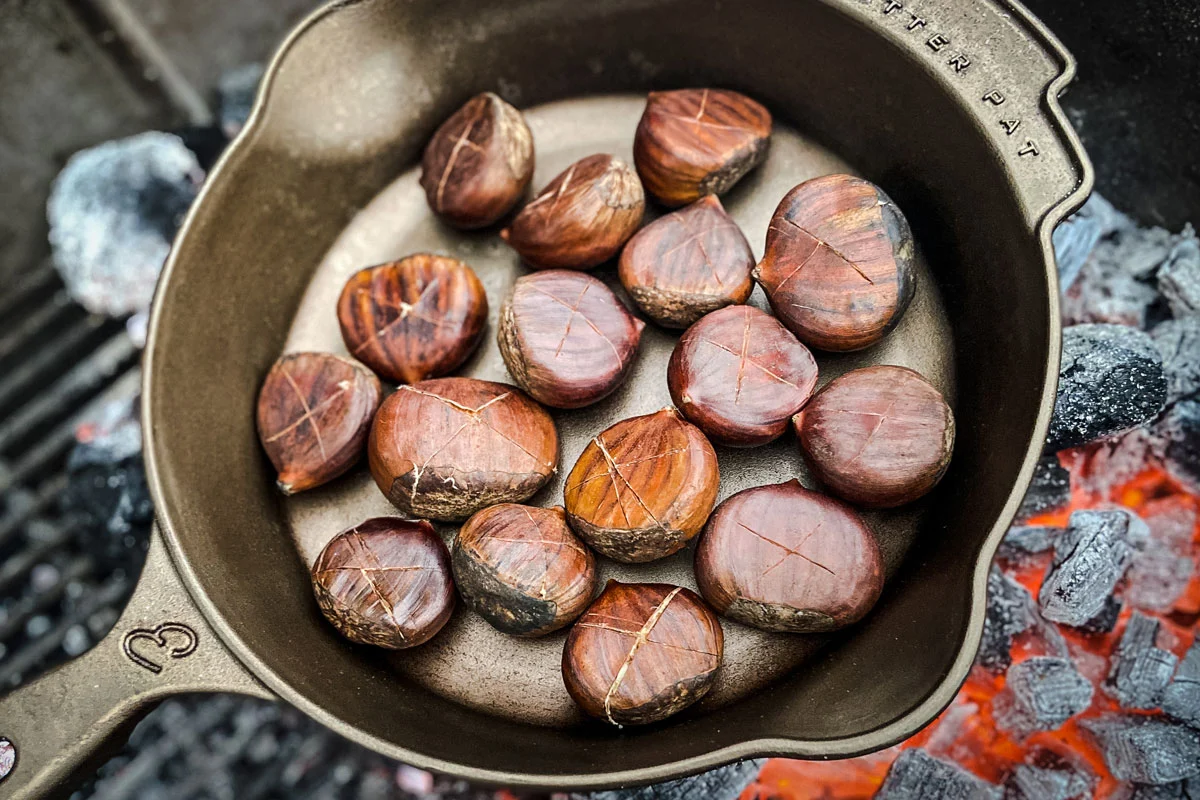
Flavor-wise, think olive oil, salt, pepper, and garlic, with an optional squeeze of lemon at the end that makes everything taste brighter and a little sweeter. For chestnuts, plain peeled cooked chestnuts are ideal here, either vacuum-packed or jarred. If you’re starting with fresh chestnuts, I recommend roasting and peeling them ahead of time. My step-by-step method is here: How to Roast Chestnuts.
Why this works
- High heat equals browning. Roasting at 425°F gives Brussels sprouts enough heat to caramelize and crisp.
- Chestnuts go in later. Adding them after the first toss keeps them tender and prevents drying.
- A simple salt cue keeps you from underseasoning. If you cannot smell the salt and pepper when you toss the pan, you probably need a little more.
Ingredient notes
- Brussels sprouts: Look for tight, bright-green sprouts. If they vary in size, halve the medium ones and quarter the very large ones so everything finishes together.
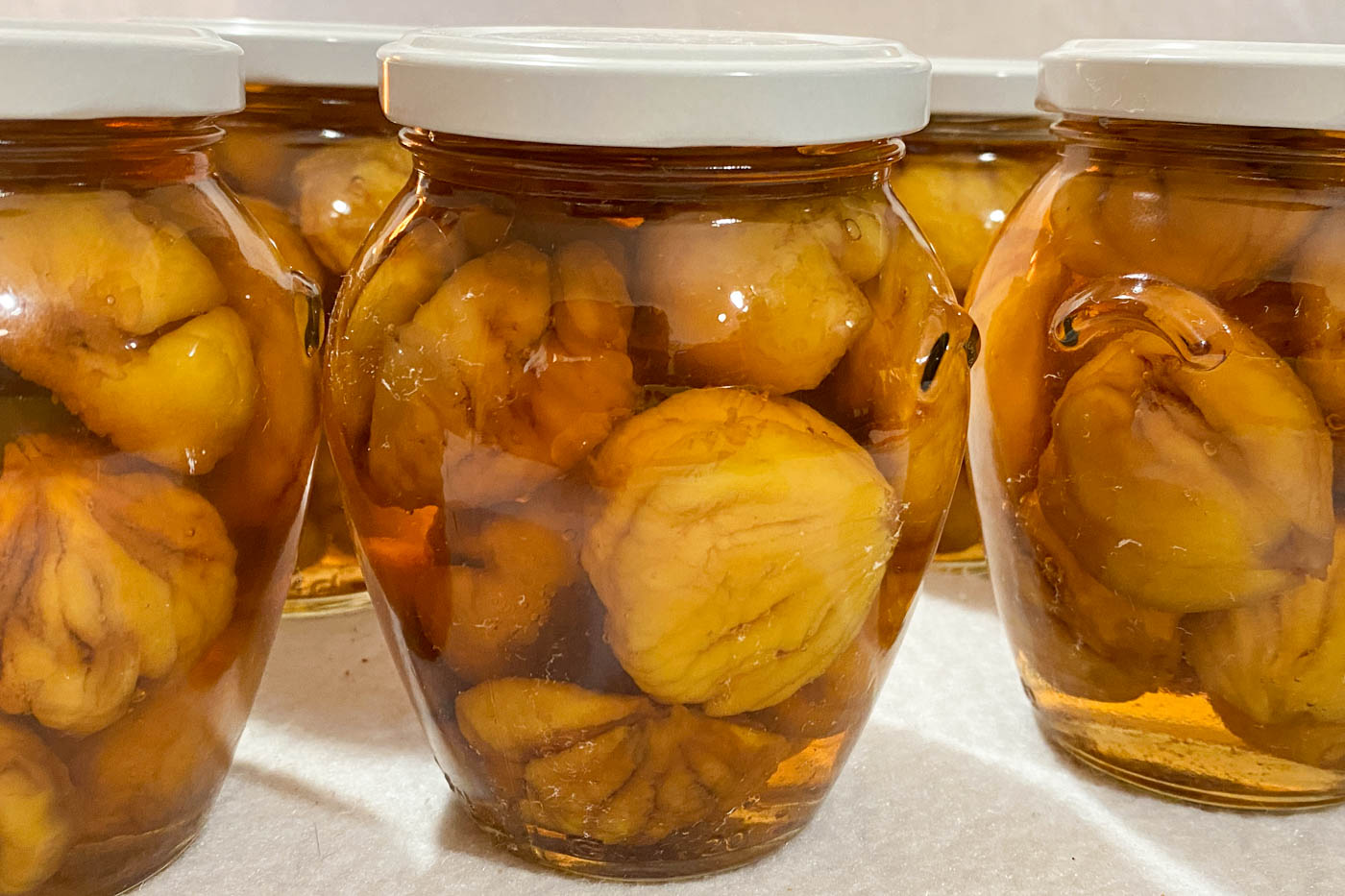
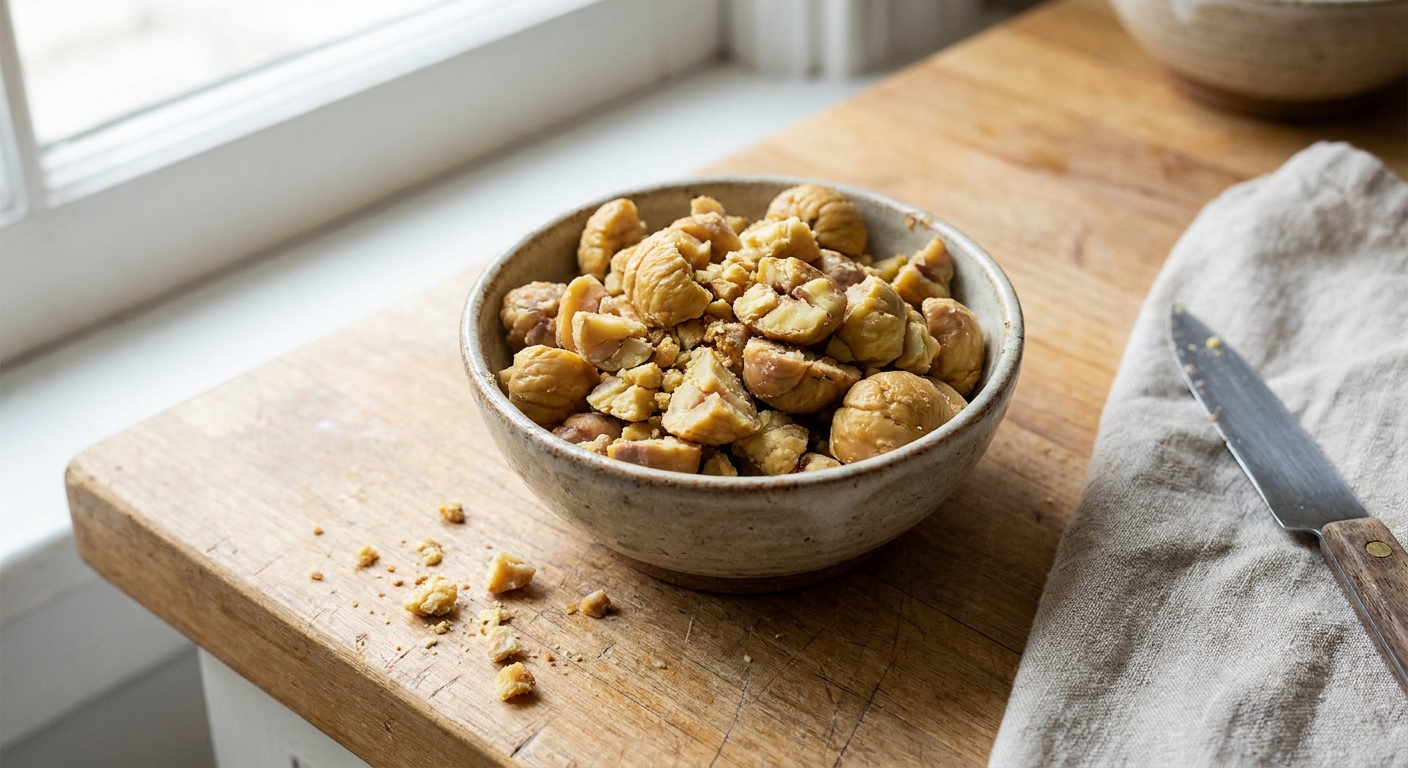
- Chestnuts (peeled): Pre-cooked, peeled chestnuts (vacuum-packed or jarred) are the easiest here. If you roast your own, peel while warm for the least frustration. For help, see How to Roast Chestnuts.
- Olive oil: You need enough to lightly coat the cut sides so they brown instead of steam. Two tablespoons is a good starting point, add another teaspoon if the pan looks dry.
- Garlic: Add it late or it can scorch. This recipe adds it with the chestnuts.
- Acid (optional but recommended): A squeeze of lemon at the end makes the sprouts taste sweeter and the chestnuts nuttier.
Equipment
- Rimmed sheet pan (half sheet)
- Parchment paper (optional, for easier cleanup)
- Large mixing bowl
- Chef's knife and cutting board
- Spatula for tossing
Pro tips
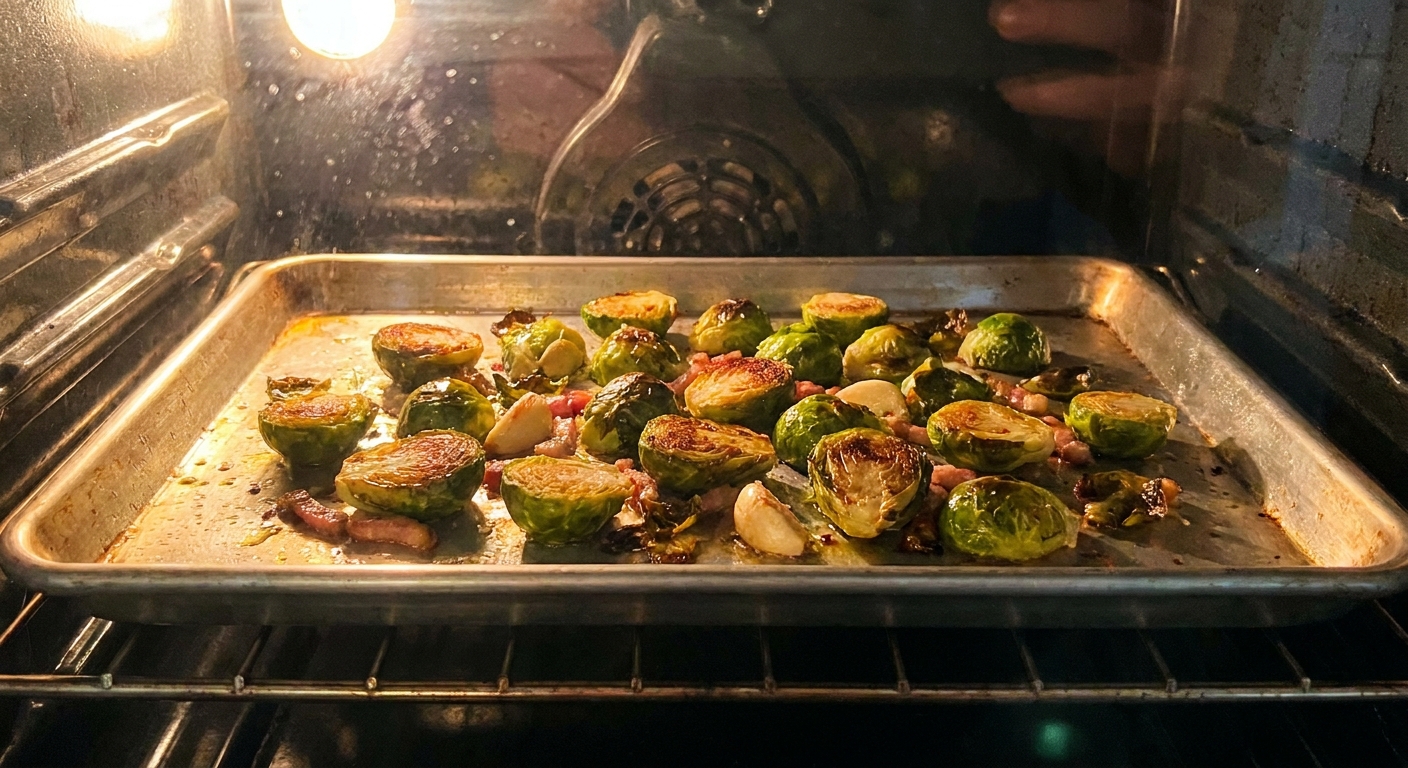
- Cut-side down is your browning hack. After you toss, nudge as many sprouts as you can so the cut side is flat against the pan.
- When to toss: Toss once at about the 15-minute mark, then add chestnuts and toss again. This is the sweet spot for browning without tearing the leaves to shreds.
- Salt cue you can trust: After the final toss, take a quick sniff over the pan. You should catch the scent of pepper and salt. If it smells like “just vegetables,” add a small pinch of salt and toss again.
- Do not crowd the pan. If sprouts are piled, they steam and stay pale. Use two pans if needed.
- Chestnut size matters. Break chestnuts into 3/4-inch pieces so they warm through fast but do not crumble into dust.
Substitutes
- Olive oil: Melted butter or avocado oil both work well.
- Lemon: Swap in 1 to 2 teaspoons balsamic vinegar added at the end.
- Garlic: Use 1/2 teaspoon garlic powder, tossed with the sprouts at the start, if fresh garlic tends to burn in your oven.
- Chestnuts: If you cannot find chestnuts, hazelnuts or pecans are tasty but will roast faster and get crunchier. Add them in the last 5 to 7 minutes only.
Variations
- Maple-Dijon: Whisk 1 tablespoon maple syrup with 1 teaspoon Dijon and an extra pinch of salt. Toss with the hot sprouts and chestnuts right after roasting.
- Parmesan: Finish with 1/3 cup finely grated Parmesan while everything is hot so it melts into the edges.
- Herby: Add 1 tablespoon chopped fresh parsley or thyme right before serving.
- Spicy: Add 1/4 to 1/2 teaspoon crushed red pepper flakes with the garlic and chestnuts.
Serving ideas
- Serve alongside a cozy main like The Coziest Oven Pot Roast.
- Pair with simple chicken like Baked Chicken Thighs.
- Add to a holiday spread with a hearty side such as Santa Maria Pinquito Beans.
Storage and reheating
- Refrigerate: Store leftovers in an airtight container for up to 4 days.
- Reheat (best): Spread on a sheet pan and warm at 400°F for 6 to 10 minutes until hot and re-crisped at the edges.
- Reheat (quick): Microwave in 30-second bursts, but expect softer sprouts.
- Freezing: Not ideal. Brussels sprouts tend to get watery and chestnuts can become mealy.
Common mistakes to avoid
- Adding the chestnuts too early: They can dry out and turn firm. Add them after the first roast and toss.
- Under-oiling: A dry pan leads to dull, steamed sprouts. The cut sides should look lightly glossy before roasting.
- Crowding the pan: If sprouts overlap, they will not brown. Use a second pan if needed.
- Skipping the final taste: Brussels sprouts can handle more salt than you think, especially with chestnuts. Taste and adjust while hot.
FAQ
What temperature should I roast Brussels sprouts and chestnuts together?
425°F is my go-to. It is hot enough to brown the sprouts quickly. Since chestnuts are added later, they warm through without drying out.
When do I toss the pan?
Toss at about 15 minutes, then add the chestnuts and toss again. Roast until the sprouts are deeply browned and tender, usually another 10 to 15 minutes depending on size.
How do I know when the sprouts are done?
Look for dark brown edges on the outer leaves and a fork-tender center. If you taste one and it is still sharply bitter and crunchy inside, give it another 3 to 5 minutes.
Can I use fresh chestnuts?
Yes, but roast and peel them first, then use them like the pre-cooked peeled chestnuts in this recipe. This walkthrough helps: How to Roast Chestnuts.
Is this dish gluten-free and vegetarian?
Yes, as written it is naturally gluten-free and vegetarian.
Roasted Brussels Sprouts With Chestnuts
A simple sheet-pan side: Brussels sprouts roast first for deep browning, then tender chestnuts and garlic join the party so nothing dries out. Finish with lemon for brightness.
Prep time:
Cook time:
Total time:
Servings:
Ingredients
- 1 1/2 lb Brussels sprouts, trimmed and halved (quarter very large sprouts)
- 2 tbsp olive oil, plus more as needed
- 1 tsp kosher salt, plus more to taste
- 1/2 tsp black pepper
- 6 oz peeled cooked chestnuts, broken into 3/4-inch pieces
- 2 garlic cloves, finely minced
- 1 to 2 tsp fresh lemon juice (optional)
Instructions
- Heat the oven to 425°F. Set a rimmed sheet pan in the oven while it preheats, or line a cool sheet pan with parchment if you prefer easier cleanup.
- In a large bowl, toss the Brussels sprouts with the olive oil, salt, and pepper until lightly glossy.
- Carefully spread the sprouts on the sheet pan in a single layer, placing as many cut sides down as you can.
- Roast for 15 minutes, until the bottoms are well browned.
- Remove the pan and toss the sprouts. Add the chestnut pieces and minced garlic, then toss again to distribute.
- Return to the oven and roast 10 to 15 minutes more, until the Brussels sprouts are fork-tender with deep brown edges and the chestnuts are warmed through and tender.
- Taste and add another pinch of salt if needed. If using, finish with lemon juice and serve hot.
Notes
If your sprouts are very small, start checking for doneness after the chestnuts have been on the pan for about 8 minutes so they do not overbrown.