Delishing
Santa Maria Pinquito Beans

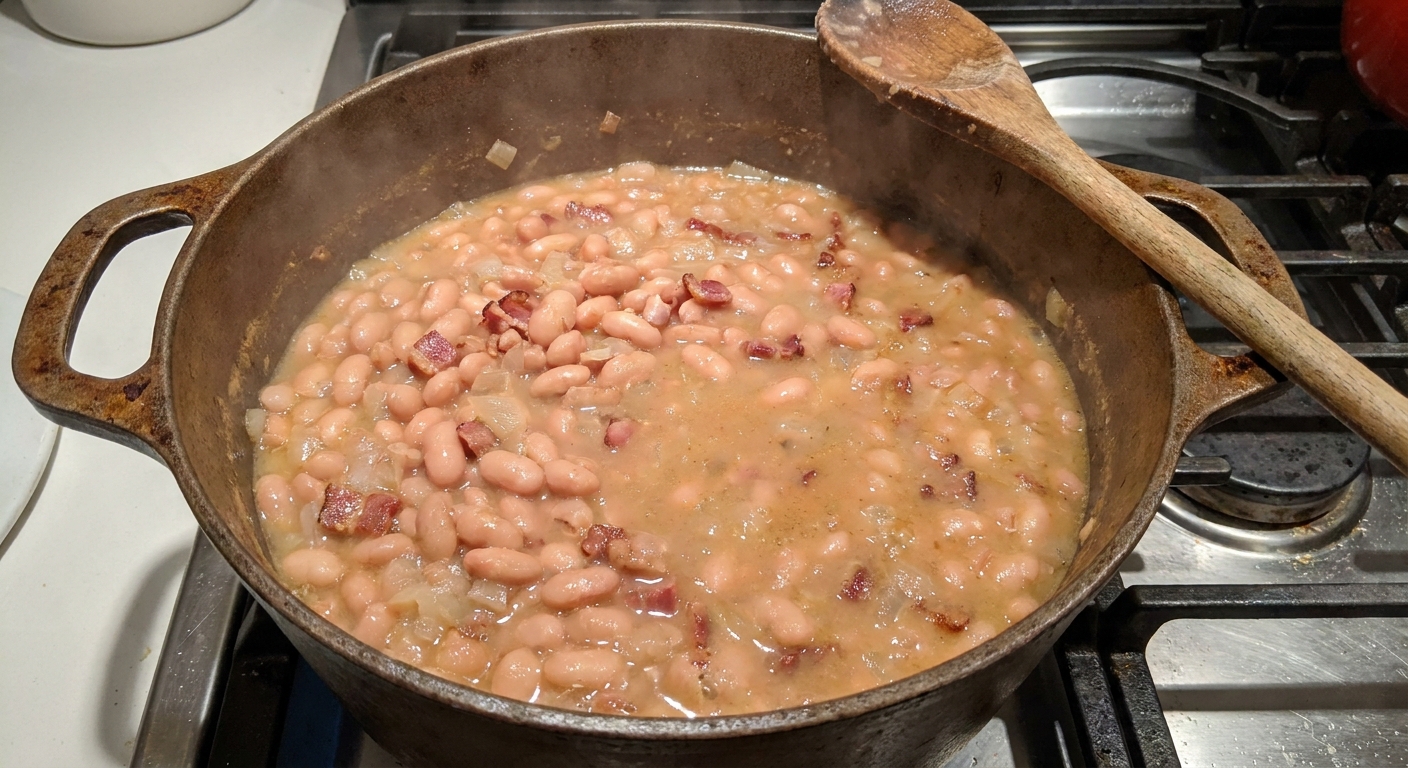
If you have ever had a real Santa Maria barbecue plate, you already know the tri-tip gets the glory, but the pinquito beans are what make the whole thing feel complete. They are those tiny, rosy little beans simmered low and slow with onion, garlic, mild green chiles, and just enough smoky pork to taste like you planned your life better than you did.
This is the version I make when I want that classic, creamy pot of beans that can hang out next to the grill without drama. The key is simple: a gentle simmer, steady stirring near the end, and seasoning toward the finish so you can dial in the salt once the broth concentrates. If your beans ever stay stubborn, it is often because they are older, the simmer is too timid, the pot went dry for a while, or something acidic got added too early.
I also included a no-pork variation that still tastes deep and smoky by leaning on smoked paprika and savory broth, plus exactly how long these beans hold for a barbecue plate so you can time dinner without that 5:00 PM panic. (And yes, you can soak them or skip it. This recipe works either way.)
What are pinquito beans?
Pinquito beans are a small bean with a pink-beige color (a little like a petite pinto) most closely associated with Santa Maria-style barbecue in California’s Santa Maria Valley on the Central Coast. They cook up creamy with a slightly sweet, nutty flavor, and they love aromatics like onion and garlic plus gentle heat from chiles.
Plan the BBQ timing
These beans are forgiving, which is exactly what you want when you are juggling a grill, side dishes, and hungry people hovering. Here is the rhythm I use:
- Active cooking: the last 20 to 30 minutes (stirring, seasoning, adjusting liquid).
- Hands-off simmer: most of the cook time, with an occasional stir.
- Holding for a barbecue plate: once creamy and tender, they can hold 2 to 3 hours on the lowest stove setting, or about 2 hours on a slow cooker “warm” or “low” setting as long as it keeps the pot at 140°F/60°C or hotter. (Some “warm” settings run cooler depending on the model and how full the cooker is, so a quick thermometer check is worth it.) Keep the lid slightly ajar so the pot does not thicken too aggressively and scorch, stir every 20 to 30 minutes, and add a splash of hot water or broth if they tighten up too much. If you are not holding them hot, cool and refrigerate within 2 hours.
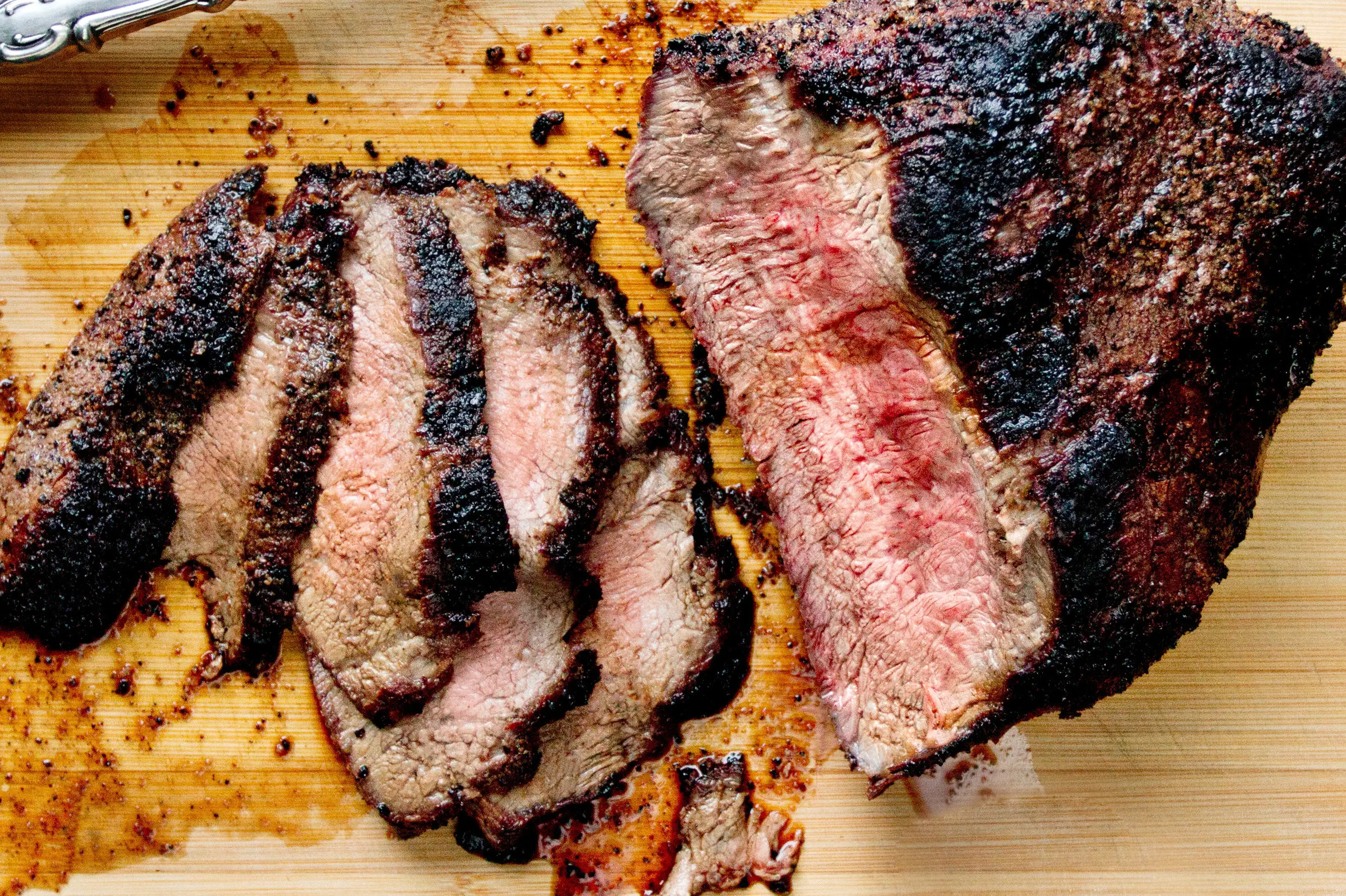
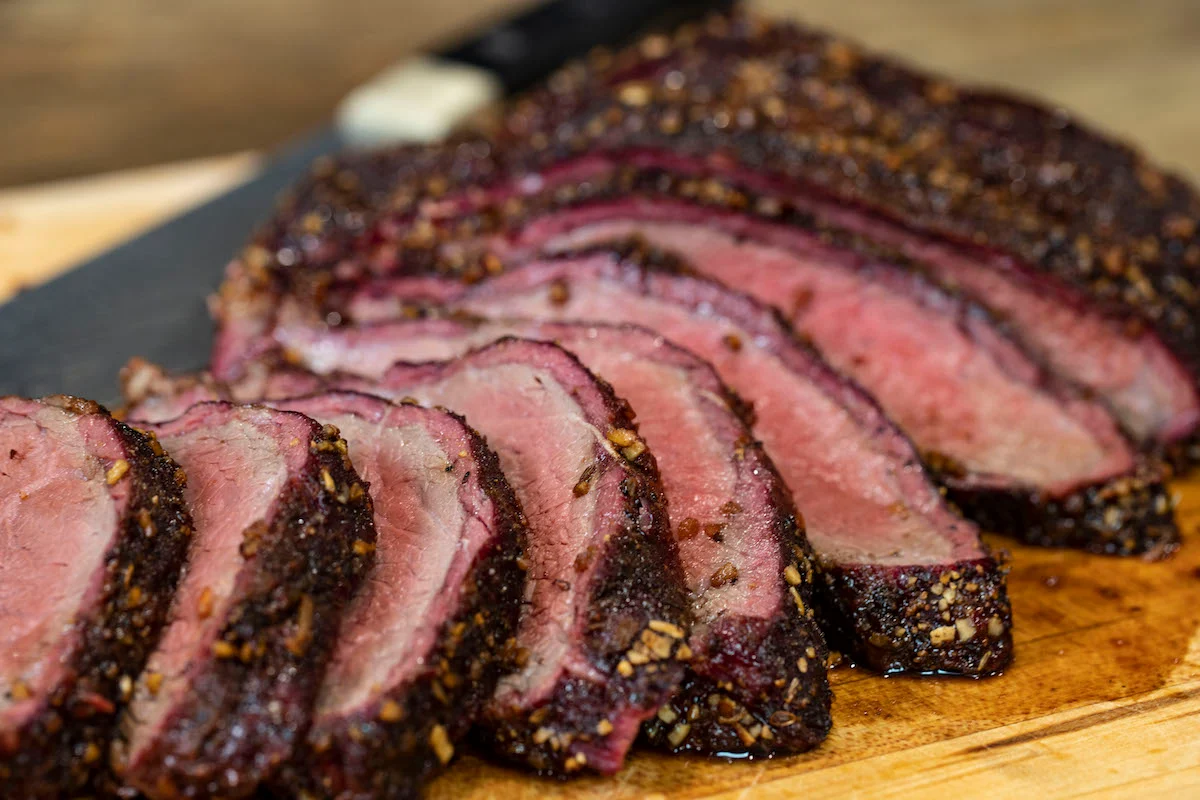
Serving with tri-tip? Try my tri-tip roast or take it outdoors with smoked tri-tip.
Why it works
- Seasoning control: Finishing with salt helps you land the flavor once the pot is reduced and concentrated.
- Gentle simmer: A quiet bubble keeps skins intact while the interiors turn creamy.
- Smoky flavor, your way: Bacon adds tradition, but smoked paprika and cumin carry the no-pork pot.
- Built-in flexibility: You can thin for a brothy side or simmer down for scoopable beans that stay put on a plate.
Ingredient notes
- Pinquito beans: Dried is best here. If you cannot find them, small dried pink beans or pinto beans work, but the texture will be slightly different.
- Bacon (optional): Use thick-cut if you have it. You want a little fat rendered for sautéing the onion.
- Onion and garlic: This is your base. Cook until soft, not browned, so the beans taste sweet and mellow.
- Green chiles: Canned diced green chiles give mild heat and classic flavor. If you like more kick, add a pinch of crushed red pepper.
- Spices: Cumin and smoked paprika create that “bbq side pot” vibe even if you skip pork.
- Broth or water: Water is traditional and totally fine. Broth adds a little extra body and is especially helpful for the no-pork version.
Equipment
- Large heavy pot or Dutch oven: Helps prevent scorching during the long simmer.
- Fine-mesh strainer: For rinsing and sorting beans.
- Wooden spoon: For stirring the bottom of the pot near the end.
- Ladle: For serving and for easy liquid adjustments.
Pro tips
- Sort your beans: It takes 60 seconds and saves you from crunching something that is not a bean.
- Keep the simmer calm: Rapid boiling can split skins and turn the pot starchy in a not-cute way.
- Stir more near the finish: Once beans are tender, stirring helps them release starch and turn creamy.
- Adjust thickness on purpose: Want them saucier for bowls? Add hot water. Want them scoopable for plates? Simmer uncovered 10 to 20 minutes.
- Taste, then salt: Salt in stages near the end, especially if you used broth or bacon, which both bring salt along for the ride.
Substitutes
- No pinquito beans: Use pinto beans as the easiest swap. Cooking time may vary slightly.
- No canned green chiles: Use 1 roasted poblano (peeled and chopped) or 1 to 2 teaspoons chili powder for warmth.
- No bacon: Use 1 to 2 tablespoons olive oil for sautéing, plus smoked paprika for that barbecue smokiness.
- Vegetarian broth: If going meatless, broth adds back some of the savory depth you lose without pork.
Variations
No-pork Santa Maria pinquito beans
Skip the bacon and sauté the onion in olive oil. Increase smoked paprika slightly and use vegetable broth instead of water. Finish with a squeeze of lime for brightness.
Richer pot
Add a ham hock or a small smoked turkey wing (if you do not mind a different kind of smoky). Simmer until the beans are tender, then remove the bone and shred any meat back into the pot.
Spicier pot
Add 1 minced chipotle in adobo (or 1 teaspoon adobo sauce) with the green chiles. This turns it into a smoky-spicy side that is amazing with grilled meat.
Serving ideas
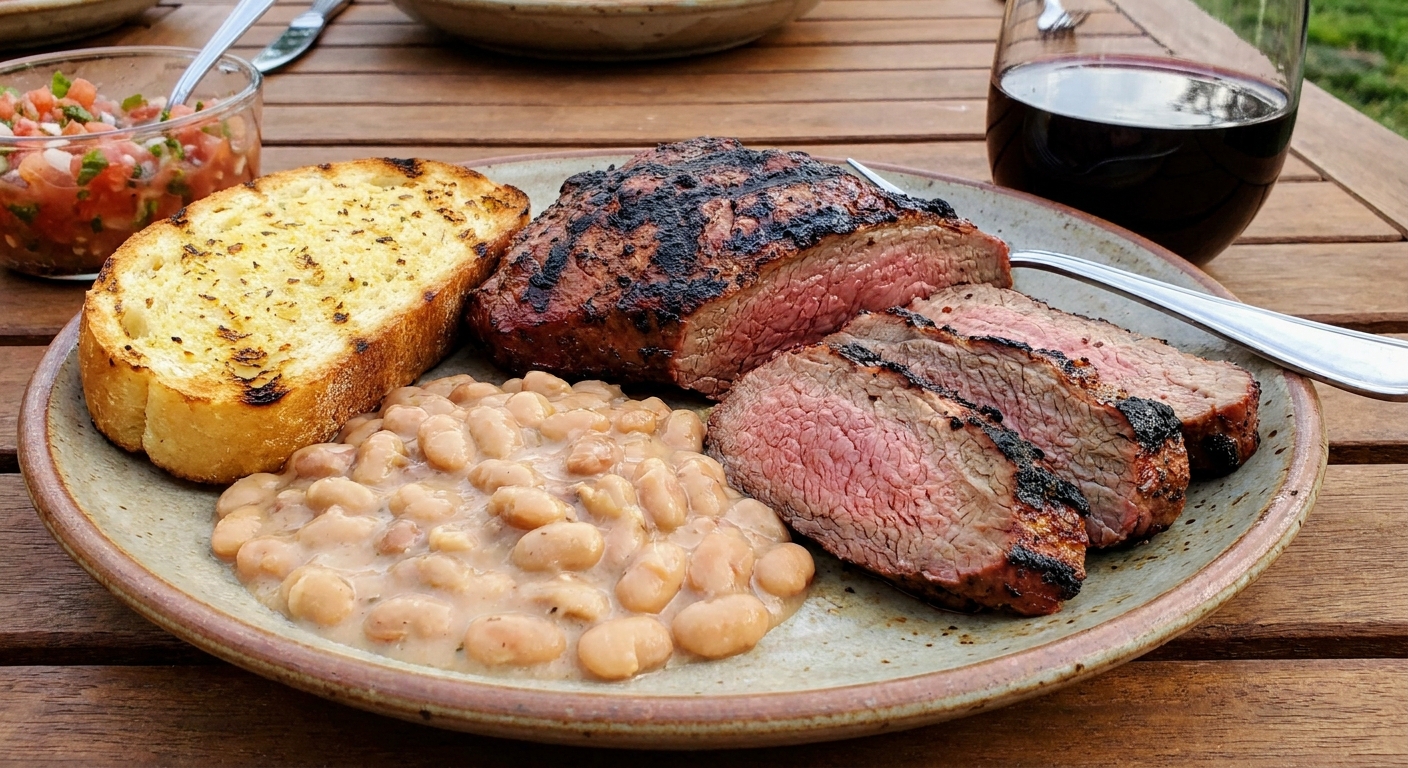
- Classic Santa Maria plate: Beans, grilled tri-tip, salsa, and garlic bread. Start with tri-tip roast if you are cooking indoors.
- Backyard barbecue spread: Serve with classic creamy potato salad and roasted Brussels sprouts if you want a hot veggie side.
- Weeknight bowl: Spoon beans over rice, top with avocado and a little pico. My shortcut-friendly homemade salsa is perfect here.
- Breakfast: Warm beans with scrambled eggs and tortillas for an easy, filling plate.
Storage and make-ahead
- Refrigerate: Cool, then store airtight for up to 4 days.
- Reheat: Warm gently on the stove with a splash of water or broth, stirring often as they loosen.
- Freeze: Freeze up to 3 months. Thaw overnight in the fridge for best texture.
- BBQ holding: For a party, keep the pot hot (aim for 140°F/60°C or hotter) on the lowest heat (or slow cooker on warm) and stir every 30 minutes. Add small splashes of hot liquid as needed.
Common mistakes
- Boiling hard: Can burst the beans and reduce them into a murky paste. Aim for a gentle simmer.
- Salting too early: The bigger issue is usually measuring, not tenderness. I prefer to add most of the salt near the end so I can season accurately once the liquid reduces.
- Letting the pot dry out: Beans need to stay submerged. If the liquid drops below the beans, add hot water right away.
- Not stirring near the end: This is when scorching happens. Stir more frequently once the pot thickens.
FAQ
Do I have to soak pinquito beans?
You do not have to, but soaking helps them cook more evenly and can shorten the simmer. If you forgot, you can still cook them, just plan for a longer simmer and keep extra hot water nearby.
Why are my beans not getting tender?
Most commonly, the simmer is too low, the pot is too dry, or the beans are older. Keep them at a steady gentle simmer, make sure they stay covered with liquid, and be patient. If you added acidic ingredients early (like a lot of tomato or vinegar), that can also slow softening.
How thick should Santa Maria beans be?
For a barbecue plate, I like them thick enough to mound on a spoon. If they get too thick, loosen with hot water. If they are too brothy, simmer uncovered until they tighten up.
Can I make these in a slow cooker?
You can, but I still recommend doing the onion, garlic, and spices in a skillet first for better flavor. Then slow cook until tender and finish with salt near the end.
Santa Maria Pinquito Beans
A creamy pot of Santa Maria-style pinquito beans simmered with onion, garlic, mild green chiles, and optional bacon. Includes an easy no-pork option.
Prep Time: 15 minutes
Cook Time: 2 hours 15 minutes
Total Time: 2 hours 30 minutes (plus optional soaking)
Servings: 8 (about 1/2 cup each)
- 1 lb dried pinquito beans (about 2 1/4 cups), sorted and rinsed
- 8 oz thick-cut bacon, chopped (optional)
- 1 medium yellow onion, finely diced
- 4 garlic cloves, minced
- 1 (4 oz) can diced green chiles
- 1 1/2 tsp ground cumin
- 1 tsp smoked paprika (use 1 1/2 tsp for no-pork)
- 1/2 tsp dried oregano
- 1/4 tsp black pepper
- 6 cups water or broth (use vegetable broth for no-pork), plus more as needed
- 1 1/2 to 2 tsp kosher salt, added near the end (to taste)
- 1 tbsp apple cider vinegar (optional, for finishing)
- Optional soak: Place the beans in a large bowl, cover with 2 inches of water, and soak 8 to 12 hours. Drain and rinse. (If not soaking, proceed and plan for a longer simmer.)
- Render bacon (optional): In a large heavy pot or Dutch oven over medium heat, cook the chopped bacon until the fat renders and the bacon is lightly crisp, 6 to 8 minutes. If skipping bacon, heat 1 to 2 tablespoons olive oil instead.
- Sauté aromatics: Add the onion and cook until softened, 5 to 7 minutes. Add garlic and cook 30 seconds, stirring so it does not brown.
- Add chiles and spices: Stir in the green chiles, cumin, smoked paprika, oregano, and black pepper. Cook 30 to 60 seconds to toast the spices.
- Simmer: Add the beans and 6 cups water or broth. Bring to a boil, then immediately reduce to a gentle simmer. Cover partially and simmer, stirring occasionally, until beans are tender and creamy. Soaked beans usually take 75 to 105 minutes. Unsoaked beans can take 2 to 3 hours. Add hot water as needed to keep beans submerged.
- Season late: Once the beans are tender, stir in 1 1/2 teaspoons kosher salt. Simmer 10 minutes, then taste and add more salt as needed.
- Adjust thickness: For thicker, scoopable beans, simmer uncovered 10 to 20 minutes, stirring more often as the pot thickens. For a saucier pot, add a splash of hot water or broth.
- Finish and serve: Stir in the apple cider vinegar if using. Serve hot.
No-pork option: Skip the bacon and sauté the onion in 1 to 2 tablespoons olive oil. Use vegetable broth and increase smoked paprika to 1 1/2 teaspoons.
Holding for barbecue: Keep beans on the lowest heat (or a slow cooker on warm) for 2 to 3 hours. Stir occasionally and add hot water or broth if they get too thick.