Delishing
Oven Pork Loin Roast

If you have ever pulled a pork roast from the oven and realized it is somehow both dry and bland, you are not alone. Pork loin is a fairly lean cut, although some roasts come with a nice fat cap, and it needs a few things to stay juicy: smart seasoning, a thermometer, and a real rest.
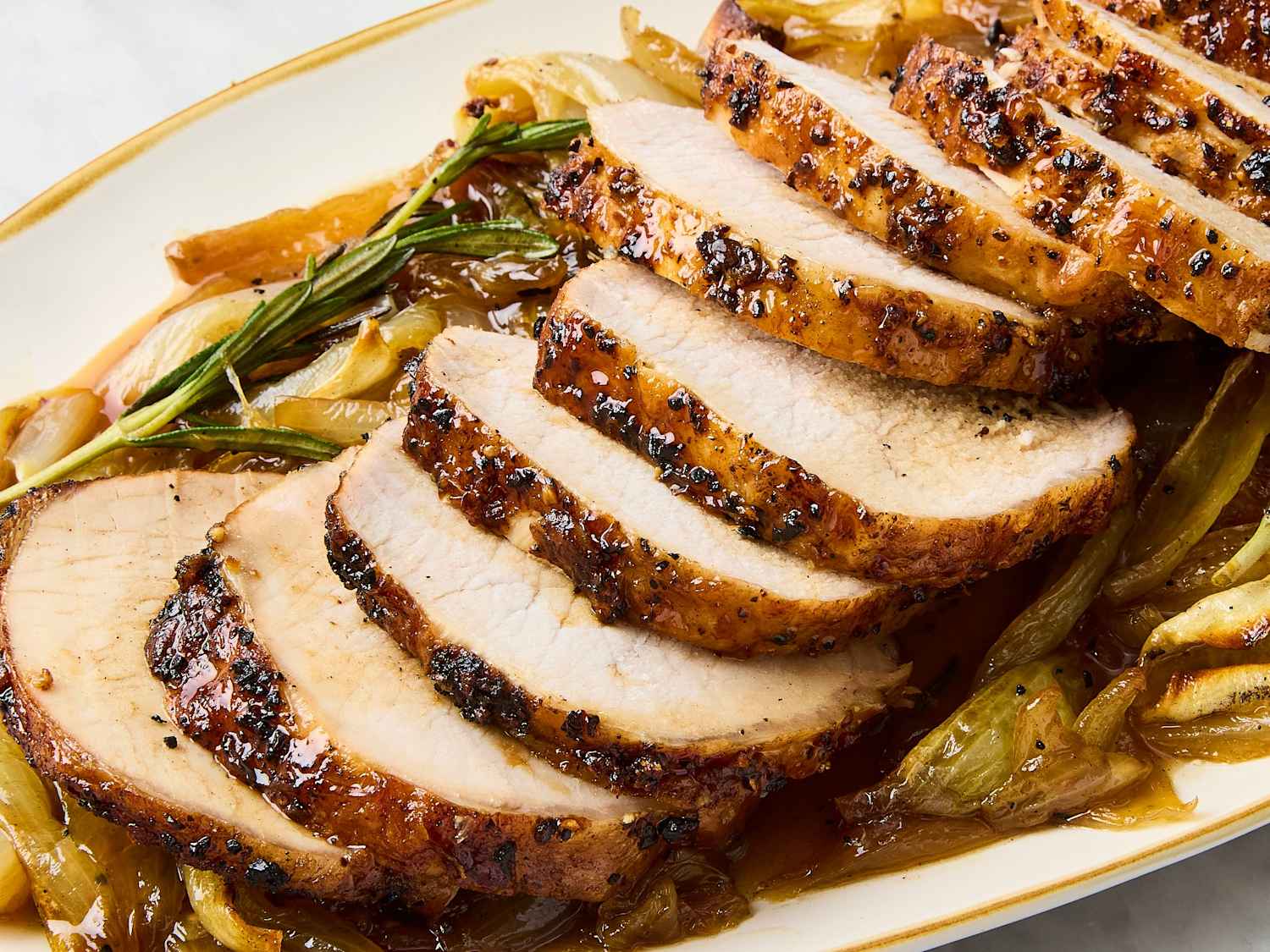
This oven pork loin roast is my go-to when I need dinner to feel a little “Sunday” without taking all Sunday. I season it boldly, roast it at 375°F, pull it when the thermometer hits 145°F in the thickest part (usually the center), and then rest it so the juices stay in the meat instead of flooding your cutting board. 145°F is the minimum safe final internal temperature for whole cuts of pork, and carryover cooking during the rest often nudges it a few degrees higher, which is exactly what I want.
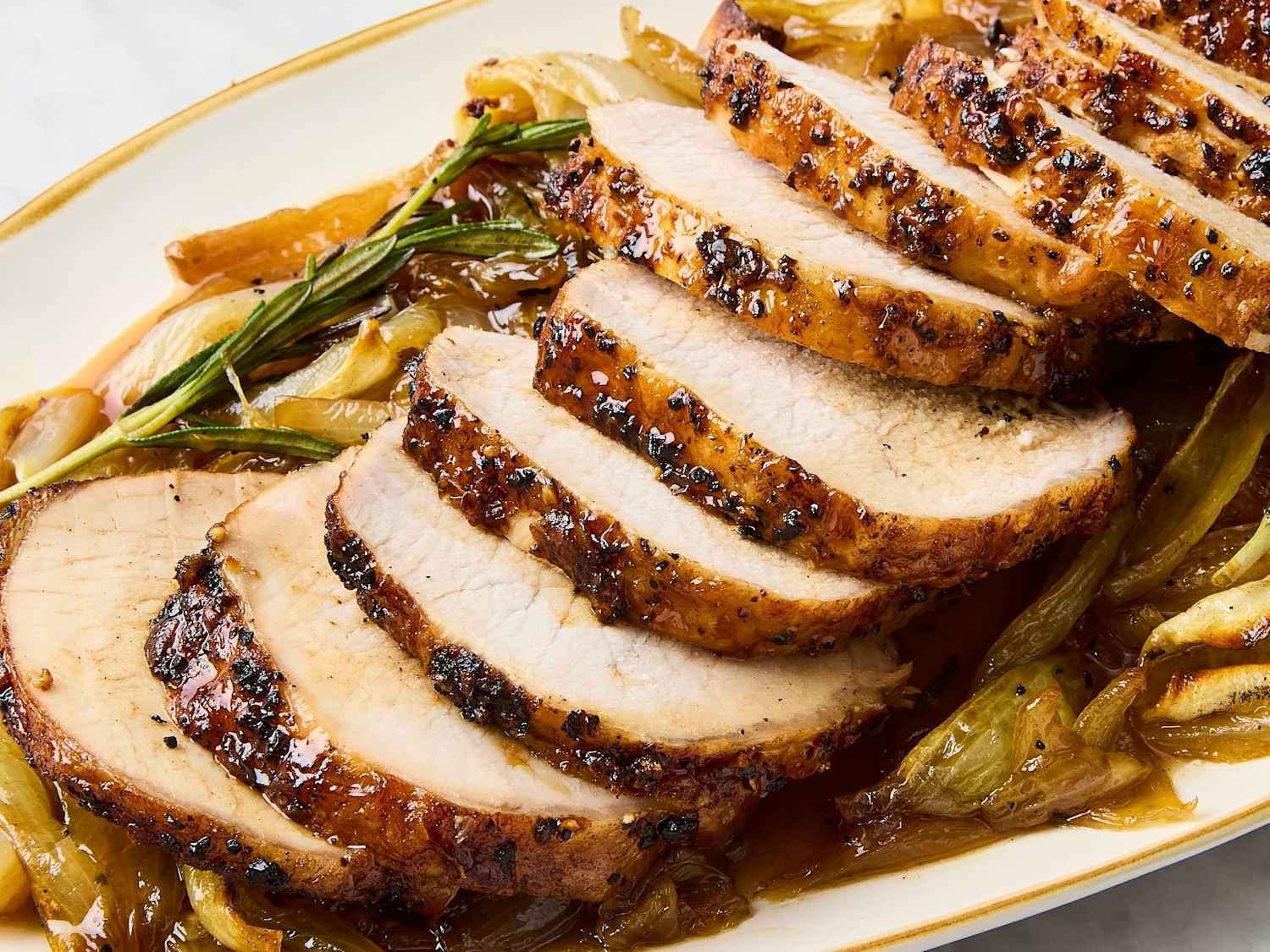
In the recipe card below, you will get a clear minutes-per-pound guideline, plus a quick pan sauce that uses the browned bits from the pan (a simple deglaze, a short simmer, then a buttery finish if you want it). One important note before you start: this method is built for a boneless pork loin roast, not tenderloin or pork chops. Pork tenderloin is much smaller and cooks faster, so consider the timing here a starting point, not a promise.
Quick timing guide
I use this as a planning tool, then I let the thermometer make the final call. Time is a guide, temperature is doneness.
- Oven temp: 375°F
- Minutes per pound: 20 to 25 minutes per pound (boneless pork loin roast)
- Pull temperature: 145°F in the thickest part (usually the center)
- Rest: 10 to 15 minutes before slicing
Tip from my notebook: if your pork loin is very thick, it often lands closer to the 25-minutes-per-pound end. If it is a long, flatter roast, it tends to cook a bit faster. Either way, start checking early, about 10 to 15 minutes before you think it will be done.
Thermometer tip: aim for the thickest part of the roast, and keep the probe off the pan. An instant-read thermometer is great, but a leave-in probe works beautifully here too if you have one.
What to serve with it
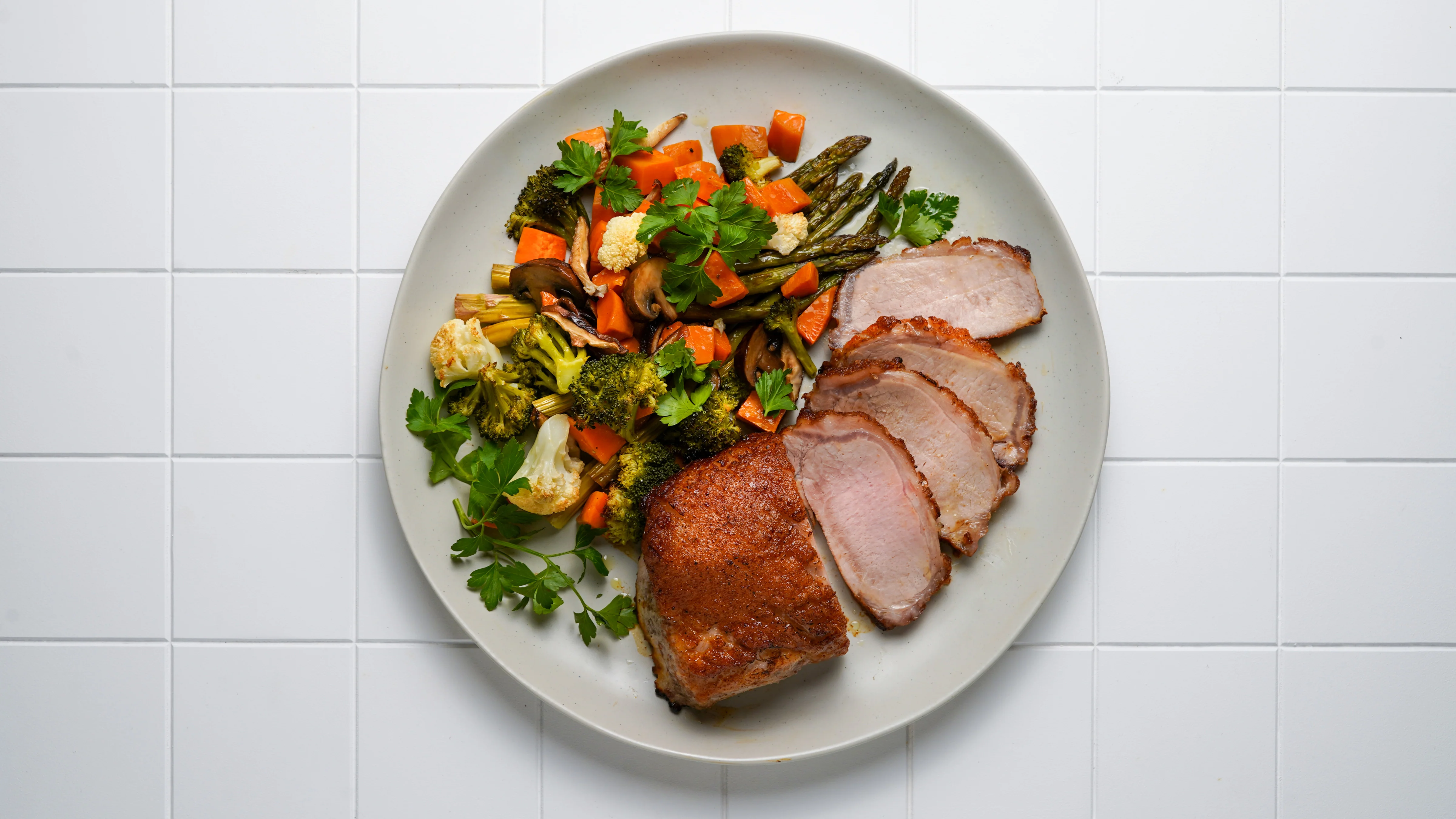
I love pairing this with something cozy and hands-off. A tray of garlic roasted vegetables can roast alongside the pork, or you can keep it classic with creamy potato salad if you want more of a picnic vibe. If you want a quick green side, try roasted Brussels sprouts.
Why it works
- High flavor, low effort seasoning: A simple rub with salt, pepper, garlic, and herbs hits all the right notes without a long marinade.
- Thermometer first mindset: Pork loin can go from juicy to dry quickly. Pulling at 145°F keeps it tender.
- The rest is not optional: Resting 10 to 15 minutes lets the juices redistribute so each slice stays moist.
- Same pan sauce: Deglazing the roasting pan turns the drippings into a fast, restaurant-style finish.
Ingredient notes
Pork loin roast
Look for a boneless pork loin roast, typically 2 to 4 pounds. Pork loin is different from pork tenderloin. Loin is thicker, larger, and benefits from this roast-and-rest approach. If yours has a fat cap, you can leave it on for extra flavor and a little built-in insurance against drying out.
Salt
Salt is doing real work here. It seasons the interior and helps the roast retain moisture. If you use Diamond Crystal kosher salt, you may need a little more than if you use Morton kosher salt.
Oil
Just enough to help the seasoning adhere and encourage browning.
Herbs and spices
Dried thyme and rosemary are weeknight-friendly, but you can swap in Italian seasoning or fresh herbs if you have them.
Broth for the pan sauce
Chicken broth keeps the sauce mild and family-friendly. If you have pork stock, it is fantastic here too.
Equipment
- Rimmed roasting pan or large oven-safe skillet
- Instant-read thermometer (this is the make-or-break tool)
- Tongs
- Cutting board
- Sharp knife for clean slices
- Small saucepan (only if you prefer making the sauce on the stove)
Pro tips
- Dry the surface first: Pat the pork dry with paper towels so it browns instead of steaming.
- Season like you mean it: Pork loin is lean. A generous rub is what keeps it from tasting flat.
- Use the thickest part for temp: Insert the thermometer into the middle of the thickest part, not touching the pan.
- Slice across the grain: It makes each bite feel more tender.
- If your roast is uneven: Position the thicker end toward the hotter side of your oven, usually the back.
Substitutes
- Herbs: Swap thyme and rosemary for Italian seasoning, oregano, or sage.
- Mustard: Dijon adds tang, but whole grain mustard also works and looks pretty in the sauce.
- Broth: Chicken broth, pork stock, or even water plus a little extra salt in a pinch.
- Butter: For dairy-free, use olive oil in the sauce and skip the butter finish.
Variations
Simple pan sauce (recommended)
While the pork rests, pour off excess fat, then deglaze the roasting pan with broth. Scrape up the browned bits, simmer briefly, then whisk in Dijon and a small knob of butter for a glossy sauce.
Garlic and herb crust
Use fresh minced garlic and chopped fresh rosemary and thyme in the rub. Keep an eye on browning in the last 10 minutes so the garlic does not get too dark.
Maple mustard finish
Whisk 1 to 2 teaspoons maple syrup into the pan sauce with the Dijon for a subtle sweet-savory vibe.
Serving ideas
- With rosemary roasted sweet potatoes and a simple green salad
- Alongside cast iron skillet cornbread for a cozy dinner
- Sliced thin for sandwiches the next day with mustard and crunchy lettuce
- Over buttered noodles with extra pan sauce for a comfort-food plate
Storage
- Refrigerate: Store sliced pork in an airtight container for up to 4 days. Keep a little sauce with it if possible to help prevent drying.
- Freeze: Freeze cooled slices, tightly wrapped, for up to 2 months.
- Reheat: Warm gently in a covered skillet with a splash of broth, or microwave at 50% power in short bursts to avoid drying it out.
Common mistakes
- Cooking to time instead of temperature: Minutes per pound is a helpful estimate, but the thermometer is the truth.
- Skipping the rest: Slicing right away is the fastest path to dry pork.
- Confusing pork loin with tenderloin: Tenderloin is smaller and cooks much faster. This method is built for pork loin roast.
- Not seasoning enough: Pork loin needs a bolder hand than fattier cuts.
FAQ
What temperature should I cook a pork loin roast at?
I like 375°F for a balance of browning and an interior that stays juicy. Lower temperatures work too, but dinner takes longer.
How many minutes per pound for pork loin roast?
A good planning range is 20 to 25 minutes per pound at 375°F for a boneless pork loin roast. Use it as a guide, then start checking early and pull at 145°F.
Is pork safe at 145°F?
Yes. The USDA’s current guidance is that whole cuts of pork are safe at 145°F with a 3 minute rest. I still prefer a 10 to 15 minute rest for juicier slices, and it usually comes up a few degrees as it rests.
Why is my pork loin roast dry?
The usual culprit is overcooking. Pork loin is lean, so even an extra 10 degrees can make it feel dry. Pull at 145°F and rest before slicing.
Should I cover a pork loin roast in the oven?
No, not for this method. Roasting uncovered helps it brown. If it is browning too fast, you can loosely tent with foil near the end.
Recipe
A juicy, well-seasoned oven pork loin roast roasted at 375°F, pulled at 145°F, and rested before slicing. Includes an optional quick pan sauce made from the drippings.
Prep Time: 10 minutes
Cook Time: 45 to 90 minutes (depending on size)
Total Time: About 1 to 2 hours (including rest)
Servings: 6 to 8
- 1 boneless pork loin roast (2 to 4 pounds)
- 1 tbsp olive oil
- 2 tsp kosher salt (see notes)
- 1 tsp black pepper
- 1 tsp garlic powder
- 1 tsp onion powder
- 1 tsp dried thyme
- 1 tsp dried rosemary
- 1 tbsp Dijon mustard (optional, for extra savory flavor)
- For the optional pan sauce: 3/4 cup chicken broth (or pork stock)
- For the optional pan sauce: 1 tsp Dijon mustard
- For the optional pan sauce: 1 tbsp unsalted butter (optional, for a glossy finish)
- Heat the oven. Preheat oven to 375°F. Position a rack in the middle of the oven.
- Prep the pork. Pat the pork loin roast dry with paper towels. Place it in a roasting pan or large oven-safe skillet.
- Season. Rub the roast all over with olive oil. In a small bowl, mix salt, pepper, garlic powder, onion powder, thyme, and rosemary. Rub the seasoning mixture over all sides of the pork. If using 1 tbsp Dijon mustard on the roast, rub it on first, then add the dry seasoning on top.
- Roast. Roast uncovered until the thickest part of the pork (usually the center) registers 145°F on an instant-read thermometer. Start checking early. A general guide is 20 to 25 minutes per pound, but temperature is what matters.
- Rest. Transfer the pork to a cutting board and loosely tent with foil. Rest for 10 to 15 minutes.
- Make the optional pan sauce. While the pork rests, carefully pour off excess fat from the roasting pan, leaving the browned bits. Set the pan over medium heat on the stove (or pour drippings into a small saucepan). Add broth and scrape up the browned bits with a wooden spoon. Simmer 2 to 4 minutes until slightly reduced. Whisk in 1 tsp Dijon mustard. Turn off heat and whisk in butter, if using.
- Slice and serve. Slice the pork loin across the grain into 1/2-inch slices. Spoon pan sauce over the top, if using.
Salt note: If you are using Morton kosher salt, you may prefer to reduce the salt slightly (for example, to about 1 1/2 tsp) since the crystals are denser than Diamond Crystal.
Doneness note: Pulling at 145°F and resting will give you juicy pork with a faint blush in the center. If you prefer more well-done pork, you can cook it longer, but expect a drier texture.