Background & Significance In culinary delights, beef tenderloin stands out as an unparalleled centerpiece for holiday meals and special occasions. It's…
Delishing
How To Cook Prime Rib

Maya Brooks
Maya Brooks is a dedicated home cook and the lead recipe developer at Delishing, where she shares practical, foolproof meals for everyday life. With over a decade of hands-on kitchen experience, she specializes in creating approachable dishes that fit a variety of dietary needs and modern cooking methods. Maya is passionate about helping busy people get delicious, stress-free food on the table without needing formal culinary training.
Prime rib has a reputation.
It’s the “holiday only” roast. The “don’t mess this up” centerpiece. The thing people whisper about like it’s going to judge you if the temperature’s off by five degrees.
But here’s the truth: prime rib is surprisingly forgiving — as long as you respect the basics and don’t rush it. You don’t need chef tricks or complicated math. You need good seasoning, steady heat, and a thermometer you trust.
This is the prime rib I make when I want something dramatic and calm. Rich, juicy, deeply beefy — without spending the entire day stressed out.
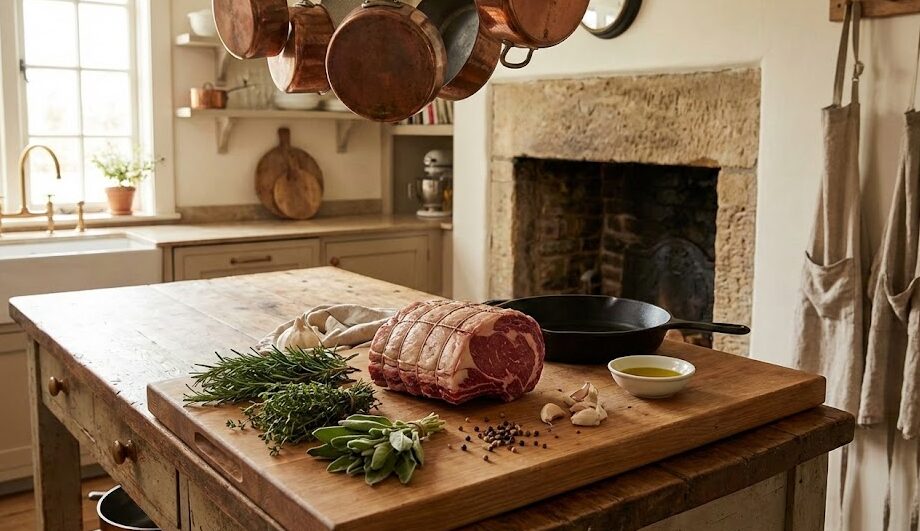
What Makes Prime Rib Different (And Worth It)
Prime rib comes from the rib section of the cow, which means:
- It’s naturally tender
- It’s well-marbled
- It tastes rich even with minimal seasoning
That’s why we keep things simple. The meat does most of the talking.
Ingredients (Short List, Big Payoff)
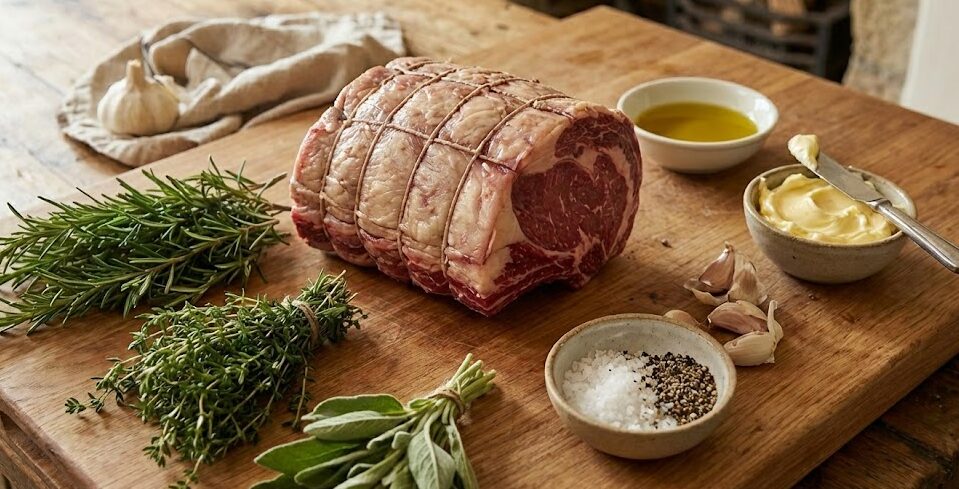
Prime rib roast (4–6 pounds)
Bone-in if you can — it adds flavor and helps insulate the meat. Boneless still works beautifully.
Kosher salt
This is not the time for a light hand.
Freshly ground black pepper
Garlic (4–6 cloves, minced)
Fresh herbs
Rosemary and thyme are classics here.
Butter or olive oil
Just enough to help the seasoning stick.
Tools You’ll Want
- Roasting pan with rack
- Instant-read thermometer (non-negotiable)
- Sharp knife
- Aluminum foil
If you have these, you’re set.
How to Cook Prime Rib Without Panicking
1. Let the Roast Warm Up
Take the prime rib out of the fridge 1–2 hours before cooking.
Cold meat goes into shock in a hot oven. Room-temperature meat cooks more evenly — and stays juicier.
2. Preheat the Oven
Set your oven to 450°F.
Yes, it sounds aggressive. We’re starting hot on purpose.
3. Season Like You Mean It
Pat the roast dry.
Rub it all over with butter or oil, then season generously with salt and pepper. Press the garlic and herbs onto the surface.
This crust is where a lot of the magic happens.

4. Roast (High, Then Low)
Place the roast bone-side down on the rack.
- Roast at 450°F for 20 minutes to develop a deep, flavorful crust.
- Without opening the oven, reduce the temperature to 325°F.
Continue roasting until the thermometer reads:
- 120–125°F for rare
- 130–135°F for medium-rare
- 140°F for medium
Insert the thermometer into the thickest part, away from bone.
5. Rest. Do Not Skip This.
Remove the roast from the oven and tent loosely with foil.
Let it rest for 20–30 minutes.
The temperature will rise slightly, and the juices will redistribute instead of spilling onto the cutting board.
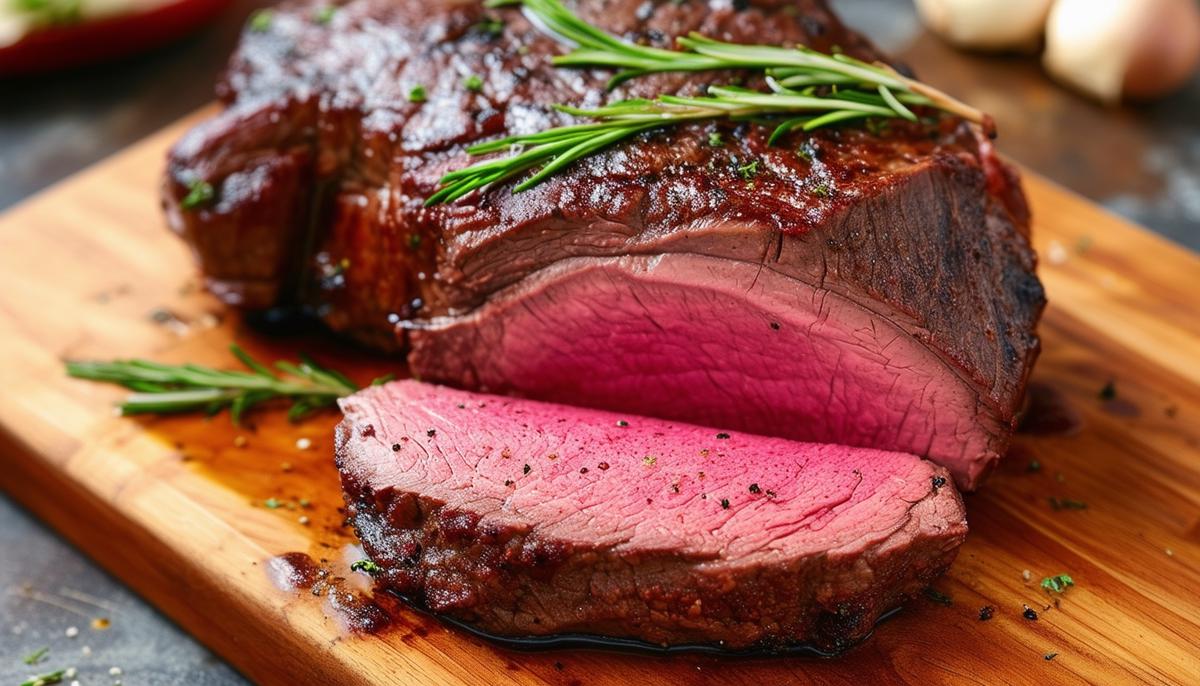
How to Slice It (So It Stays Juicy)
- Remove the bones first if using bone-in
- Slice against the grain
- Cut thick slices — this isn’t deli meat
Serve immediately.
What to Serve With Prime Rib
This roast loves simple sides:
- Mashed or roasted potatoes
- Green beans or asparagus
- Yorkshire pudding or crusty bread
- Horseradish sauce or au jus
You don’t need much. The beef is the star.

Leftovers (If There Are Any)
Wrap tightly and refrigerate for up to 4 days.
Reheat gently or slice cold for sandwiches. Avoid blasting it in the microwave unless you enjoy heartbreak.
Final Thoughts From My Kitchen
Prime rib looks impressive because it is impressive — not because it’s complicated.
Trust the thermometer. Trust the rest time. Trust yourself.
And if it’s not perfect the first time? That’s okay. It’ll still be rich, tender, and deeply satisfying — which is exactly what a great meal should be.