Delishing
Chestnuts in Red Wine

There is a very specific kind of cozy that happens when red wine reduces on the stove. It smells like the holidays, like a dinner party you did not overcomplicate, like you are about to serve something that feels a little fancy even though the method is basically: simmer, stir, and wait until it turns syrupy and glossy.
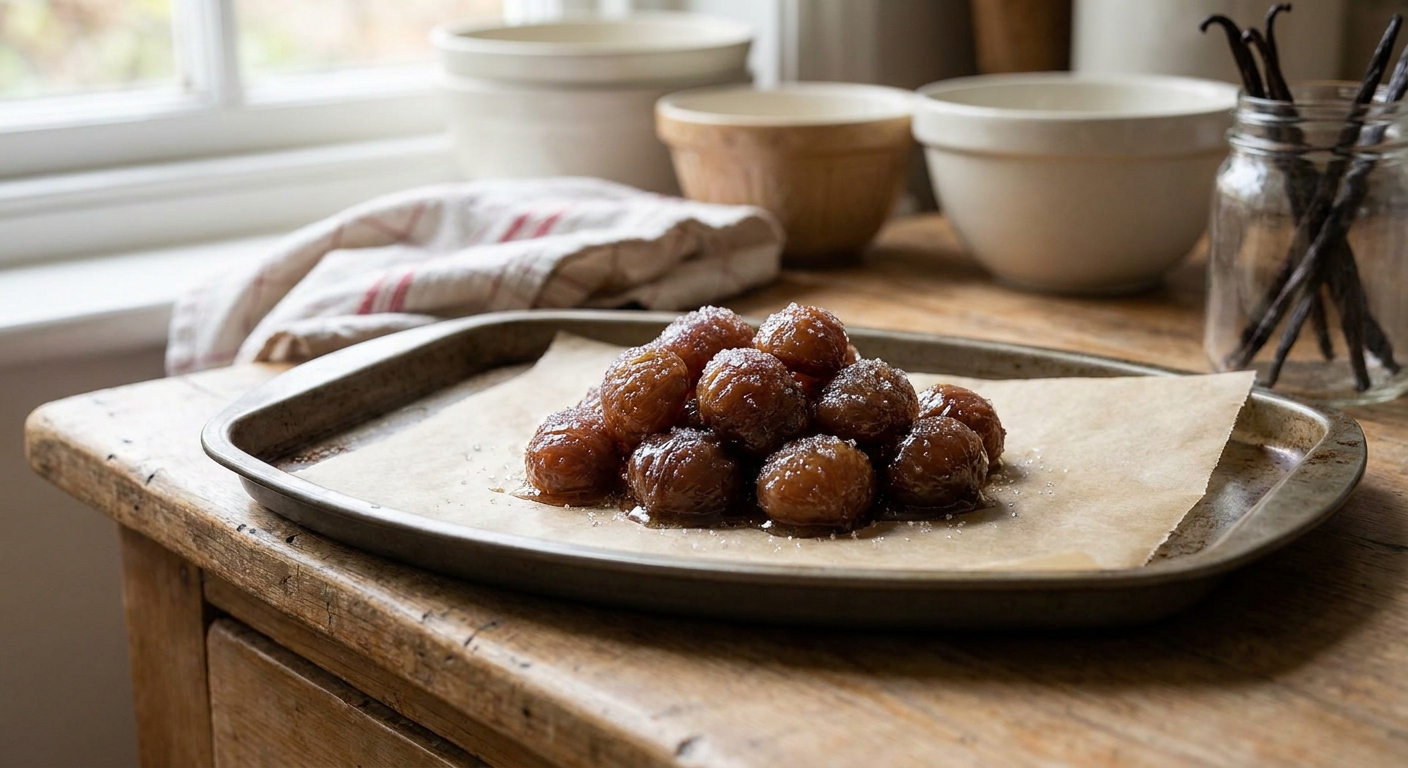
These chestnuts in red wine are exactly that. You simmer peeled chestnuts with wine, a touch of sugar, and a couple of warm spices until the nuts turn buttery-tender and the wine becomes a shiny glaze that clings to everything. The doneness cue is simple: the chestnuts should be tender all the way through when you bite one, and the pan should look more like a glaze than a sauce.
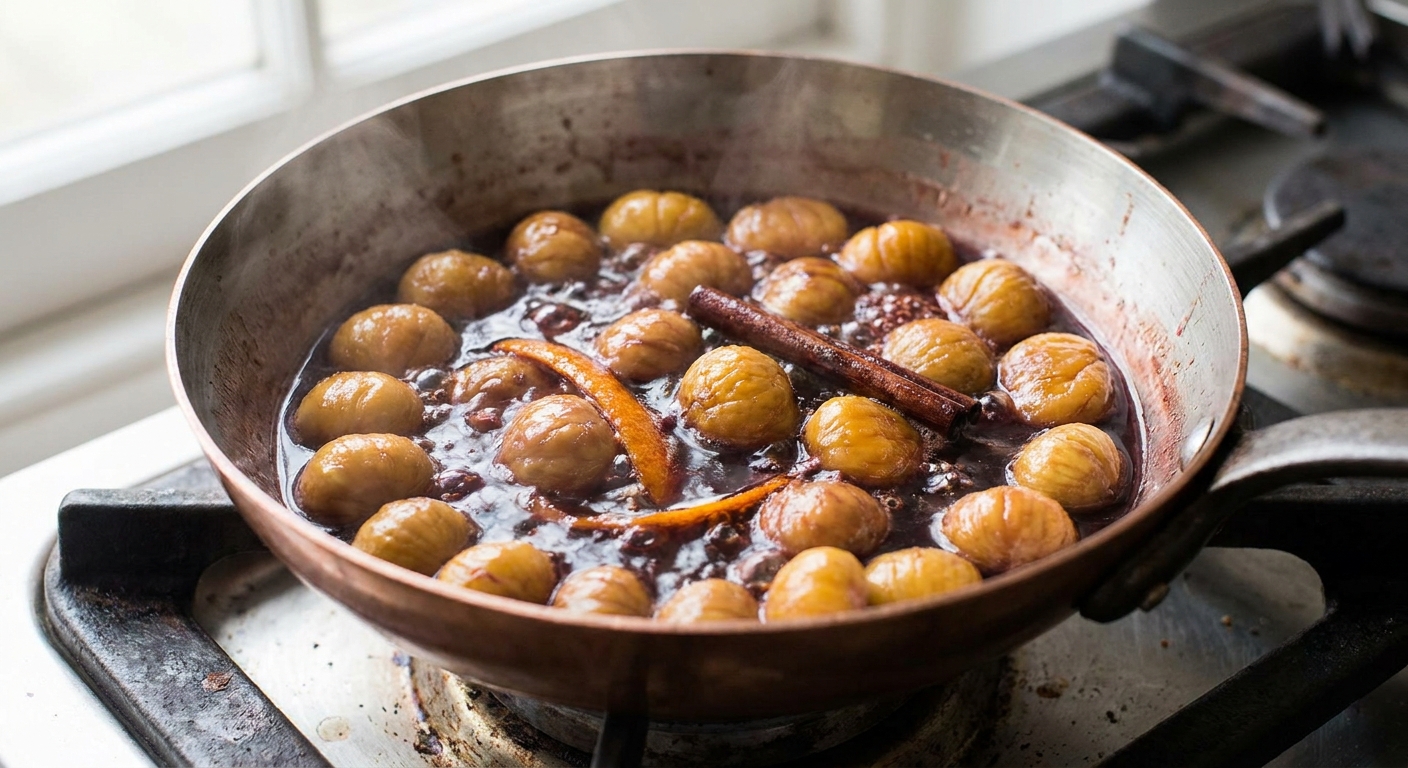
I love this recipe because it can play two roles without changing a thing. Serve it warm as a side with roasted meats, mushrooms, or a big holiday spread, or serve it as a not-too-sweet dessert with lightly sweetened whipped cream or vanilla ice cream. Either way, it is the kind of dish that makes people lean in and ask what you did.
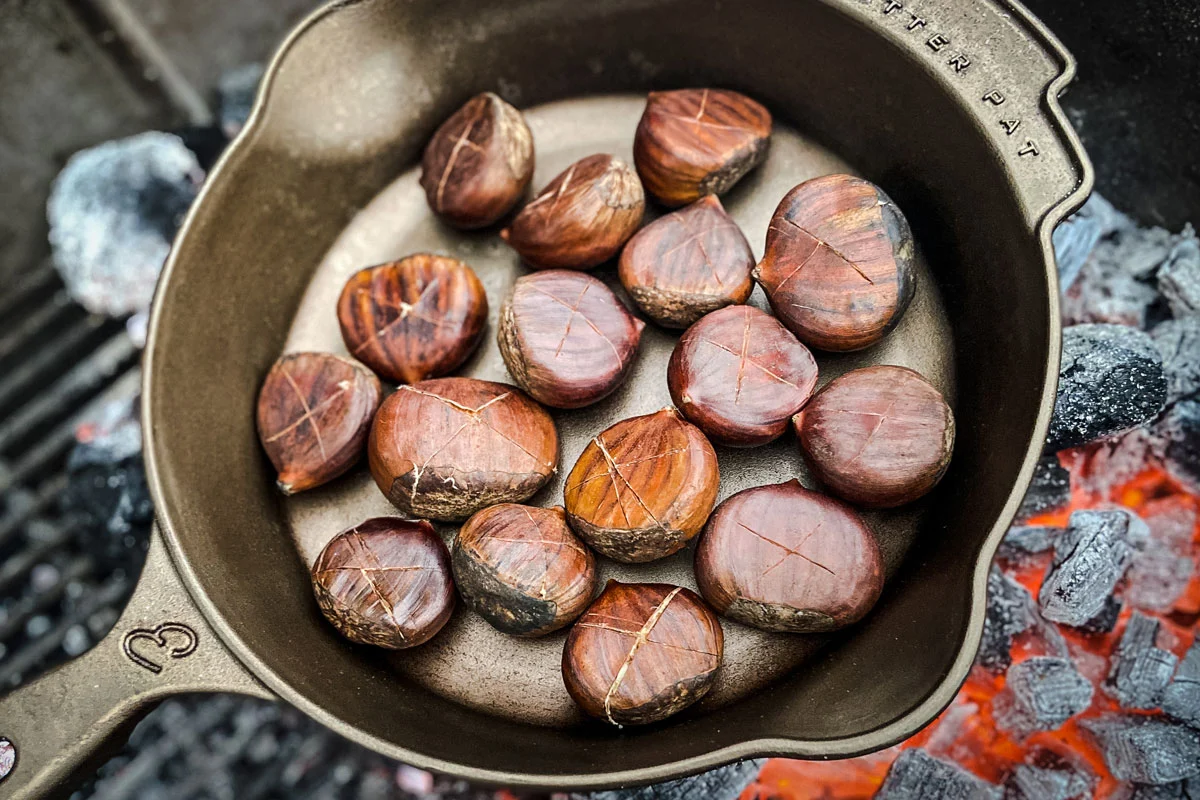
If you need help getting chestnuts peeled in the first place, start with our guide on how to roast chestnuts, or start with vacuum-packed peeled chestnuts to make this genuinely weeknight-friendly. One quick note if you are serving this to kids or anyone avoiding alcohol: reductions mellow the wine, but they do not always cook off every last bit.
Why it works
- Red wine reduction concentrates flavor fast. As the wine simmers, alcohol cooks off and the fruit and tannins mellow into a deep, jammy sauce.
- A little sugar makes a real glaze. It helps the reduction turn syrupy and gives you that glossy coat that clings to the chestnuts.
- Warm spice supports the chestnuts, not overpower them. Cinnamon, orange peel, and a tiny pinch of salt bring out their natural sweetness.
- Gentle simmer keeps chestnuts intact. Chestnuts can crumble if boiled aggressively, so a low simmer is your friend.
Ingredient notes
Peeled chestnuts
This recipe is designed for peeled, cooked chestnuts, not raw chestnuts in the shell. Vacuum-packed peeled chestnuts are the easiest option. If you are starting from fresh, roast and peel them first. (Peeling is the only fussy part, so I happily outsource it to a package when time is tight.)
Red wine
Use a dry to off-dry red you would actually drink. Merlot, Pinot Noir, and Zinfandel all work. Very tannic wines can turn a little bitter when reduced, so if your wine tastes sharp on the first sip, add an extra teaspoon of sugar.
Sugar
Granulated sugar keeps the glaze clean and glossy. Brown sugar is also delicious and gives a slightly deeper, caramel note.
Spices and aromatics
Cinnamon is classic. A strip of orange peel brightens everything. A single star anise is optional but lovely if you like a licorice note.
Butter
A small pat at the end rounds out the sauce and gives it that restaurant-style sheen. It is optional but highly recommended.
Equipment
- Wide skillet or sauté pan (10 to 12 inches): a wide surface helps the wine reduce faster.
- Wooden spoon or silicone spatula for gentle stirring.
- Microplane or vegetable peeler for orange peel (avoid the white pith).
Pro tips
- Watch the last 5 minutes. Wine goes from “a little thin” to “sticky glaze” quickly once it is close.
- Doneness cue: pull one chestnut out, cool it for 20 seconds, then bite. It should be tender and creamy, not chalky in the center.
- Glaze cue: drag a spoon through the pan. If it leaves a trail that slowly fills in, you are in glaze territory.
- Keep it at a simmer, not a hard boil. Boiling can break the chestnuts and make the reduction harsh.
Substitutes
- No orange: use 1 teaspoon orange zest, or skip it and add 1 tablespoon balsamic vinegar at the end for brightness.
- No cinnamon stick: use 1/4 teaspoon ground cinnamon, added halfway through so it does not taste dusty.
- Butter-free: finish with 1 teaspoon olive oil instead of butter for shine.
- Alcohol-free option: swap the wine for pomegranate juice or unsweetened grape juice plus 1 tablespoon balsamic vinegar. The flavor will be different, but you will still get a glossy reduction.
Variations
- Port wine chestnuts: replace half the red wine with ruby port and cut the sugar by half.
- Vanilla and bay: add 1 bay leaf and 1/2 teaspoon vanilla extract at the end for a more dessert-leaning vibe.
- Rosemary twist: add a small sprig of rosemary for the last 3 minutes, then remove. Great for savory serving.
- Chocolate finish: for dessert, stir in 1 to 2 teaspoons cocoa powder at the very end and whisk until smooth.
Serving ideas
Serve warm as a side
- Alongside roast chicken, pork loin, or steak.
- With creamy polenta or mashed potatoes so the glaze has somewhere to go.
- On a holiday table next to stuffing and roasted vegetables. If you are already in chestnut mode, our chestnut stuffing is a natural pairing.
Serve as dessert
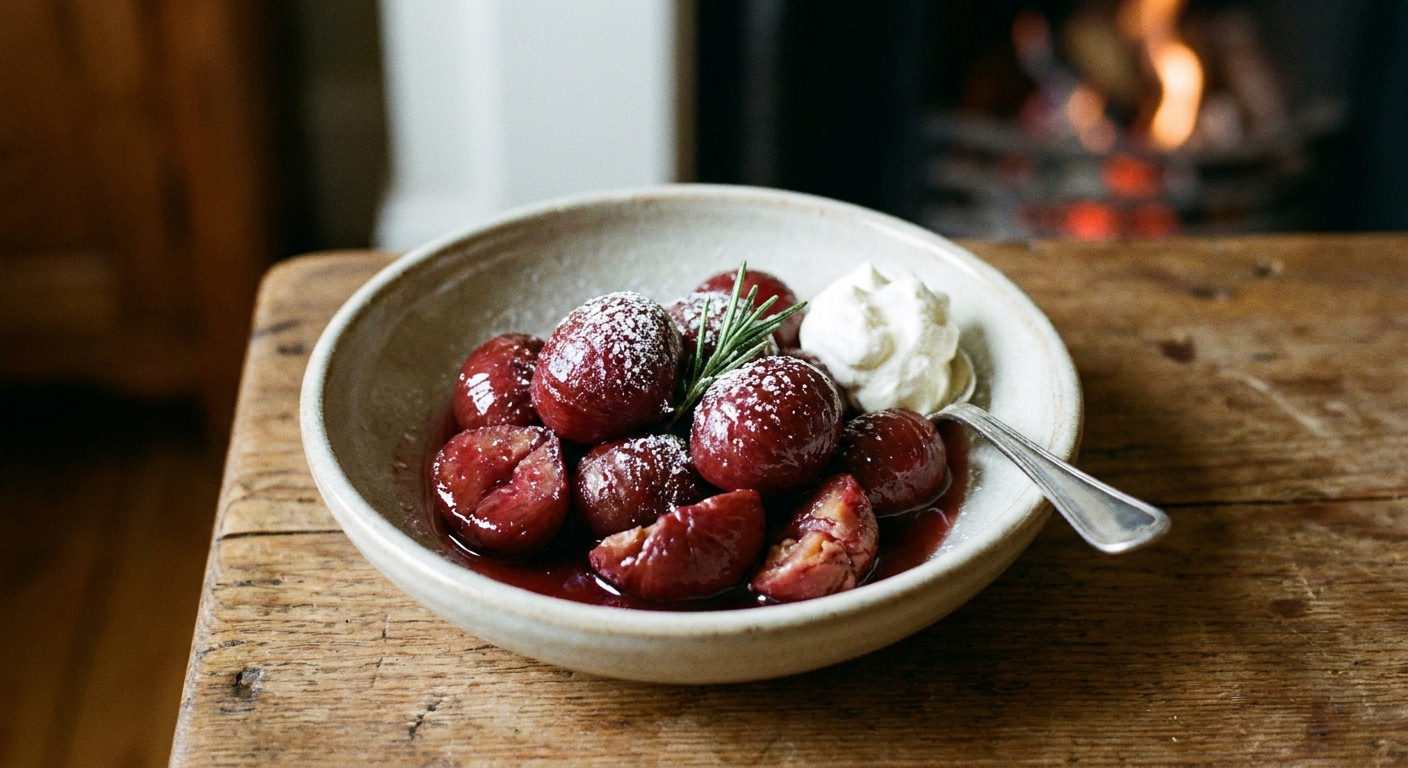
- Spoon warm chestnuts and syrup over vanilla ice cream.
- Serve with lightly sweetened whipped cream and extra orange zest.
- Add to a cheeseboard with dark chocolate and toasted nuts.
Storage
- Refrigerate: Store in an airtight container for up to 4 days.
- Reheat: Warm gently in a small saucepan over low heat with a splash of water to loosen the glaze.
- Freezing: I do not love freezing this one because the glaze can separate and the chestnuts can turn mealy, but it is workable for up to 2 months. Thaw overnight in the fridge and rewarm slowly.
Common mistakes
- Reducing on high heat. Fast boiling can make the wine taste harsh and can break the chestnuts apart.
- Using raw, unpeeled chestnuts. This recipe assumes peeled chestnuts. If you only have fresh in-shell chestnuts, roast and peel them first.
- Walking away at the end. Once the liquid gets syrupy, it can go from perfect to sticky and scorched quickly.
- Over-spicing. Chestnuts are subtle. Start with one spice (cinnamon) and add more only if you want it.
FAQ
Are these chestnuts in red wine a side dish or a dessert?
Both. Served warm, they are a beautiful savory side with roasted meats and vegetables. Served with whipped cream or ice cream, they become an easy dessert.
How do I know when the chestnuts are done?
Bite one. The center should be tender and creamy, not dry or crumbly. The sauce should be reduced enough to coat the chestnuts, not pool like broth.
What red wine is best for reducing?
A medium-bodied red with good fruit works best. Merlot and Pinot Noir are reliable. Avoid very tannic wines if you are sensitive to bitterness in reductions.
Can I make this ahead?
Yes. Make it up to 2 days ahead and reheat gently. If the glaze tightens in the fridge, loosen with a splash of water while warming.
Do I need to use fresh chestnuts?
No. Vacuum-packed peeled chestnuts are perfect here and make this recipe realistically weeknight-friendly.
Does the alcohol cook off?
Reducing wine changes the flavor and cooks off some alcohol, but it may not remove all of it. If you need an alcohol-free option, use the substitute listed below.
Chestnuts in Red Wine are simmered with sugar, orange peel, and warm spice until tender and coated in a glossy wine syrup. Serve warm as a side or as a simple dessert.
Prep Time: 5 minutes
Cook Time: 25 minutes
Total Time: 30 minutes
Servings: 6
- 12 oz (340 g) peeled cooked chestnuts (vacuum-packed or home-roasted and peeled)
- 2 cups (480 ml) dry red wine
- 3 tbsp (38 g) granulated sugar (or 2 tbsp if using a sweeter wine)
- 1 strip orange peel (about 2 inches), pith avoided
- 1 cinnamon stick
- Pinch of fine salt
- 1 tbsp unsalted butter (optional, for finishing)
- Combine and simmer. Add the chestnuts, red wine, sugar, orange peel, cinnamon stick, and salt to a wide skillet. Set over medium heat and bring to a gentle simmer.
- Reduce gently. Maintain a steady simmer, stirring carefully every few minutes, until the chestnuts are warmed through and the liquid is reduced by about half, 15 to 20 minutes.
- Glaze and check doneness. Continue simmering until the wine turns syrupy and glossy and coats the chestnuts, 5 to 8 minutes more. For doneness, pull out one chestnut, let it cool briefly, then bite. It should be tender and creamy in the center. For the glaze, the sauce should coat a spoon and the simmering bubbles will look a little slower and larger as it thickens.
- Finish. Remove the orange peel and cinnamon stick. If using, swirl in the butter off the heat until melted and shiny.
- Serve warm. Spoon chestnuts and glaze into a serving bowl. Serve warm as a side dish, or as dessert with whipped cream or vanilla ice cream.
Note: The reduction speeds up at the end. Once the sauce starts looking glossy, stay close and lower the heat if needed to prevent scorching. If you are avoiding alcohol, keep in mind that reducing wine changes the flavor, but it does not always remove all alcohol.