Delishing
Instant Pot Tri-Tip

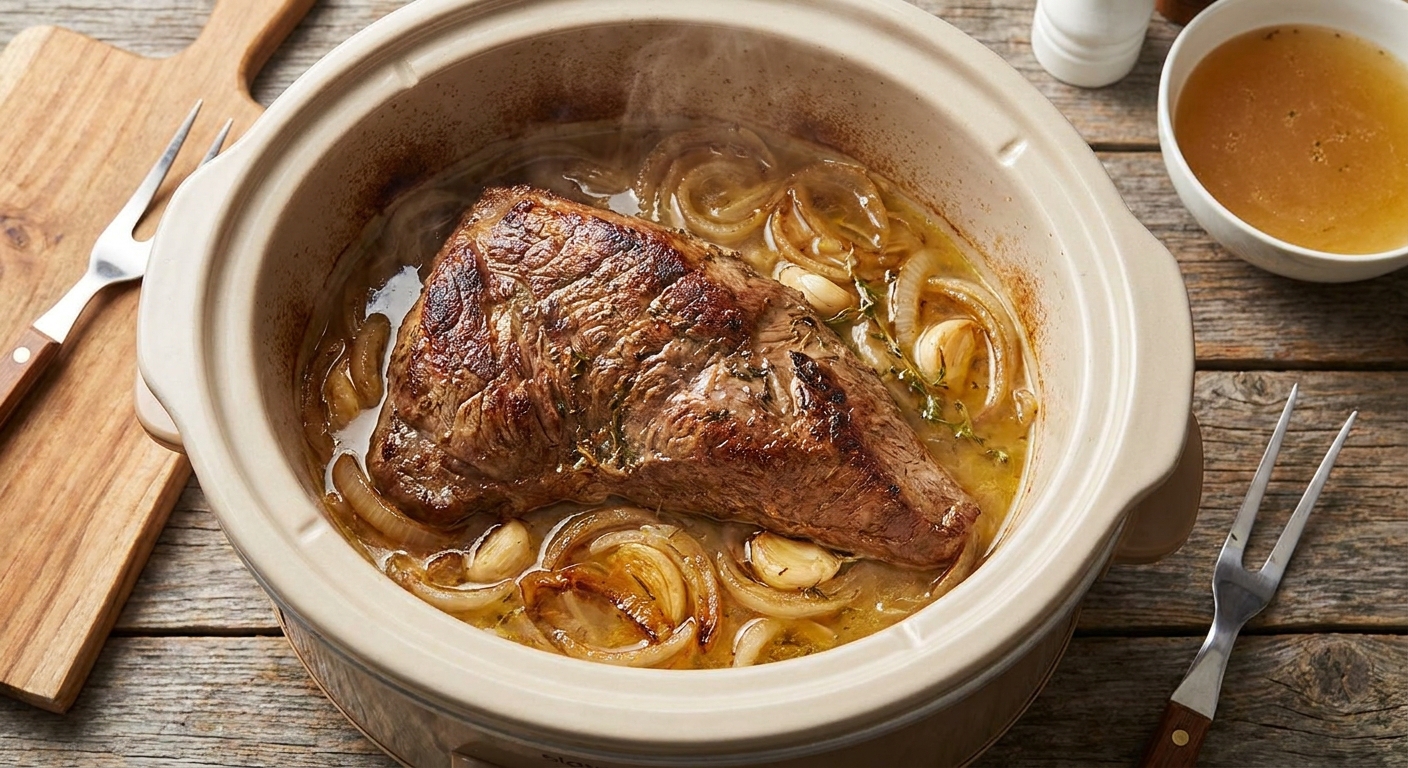
Tri-tip is one of those cuts that feels “weekend fancy” but can absolutely happen on a Tuesday, especially when the Instant Pot is doing the heavy lifting. Because tri-tip is leaner than chuck (though some roasts do come with a decent fat cap, depending on how they’re trimmed), the pressure cooker method needs a gentle touch to stay tender: enough liquid to reliably come to pressure and a natural pressure release so the pressure drops gradually. That slower release helps prevent vigorous bubbling in the pot, which can make a lean roast taste drier or tougher.
I tested this a few different ways after one too many “why is my roast both overcooked and tough?” dinners. What finally worked for me was treating Instant Pot tri-tip like a choose-your-own-adventure: a shorter setting for sliceable, roast-like beef and a longer setting for shreddable beef. Same basic steps, but the cook time and the end goal change, and that makes all the difference.
One quick expectation setter: tri-tip is traditionally at its best cooked with dry heat to a rosy medium-rare or medium. Pressure cooking nudges it more into braise territory. You can still get great results, but it helps to pick your lane upfront: if you want clean slices, you are stopping at roast-like doneness and slicing against the grain; if you want pull-apart beef, you are intentionally cooking past that point.
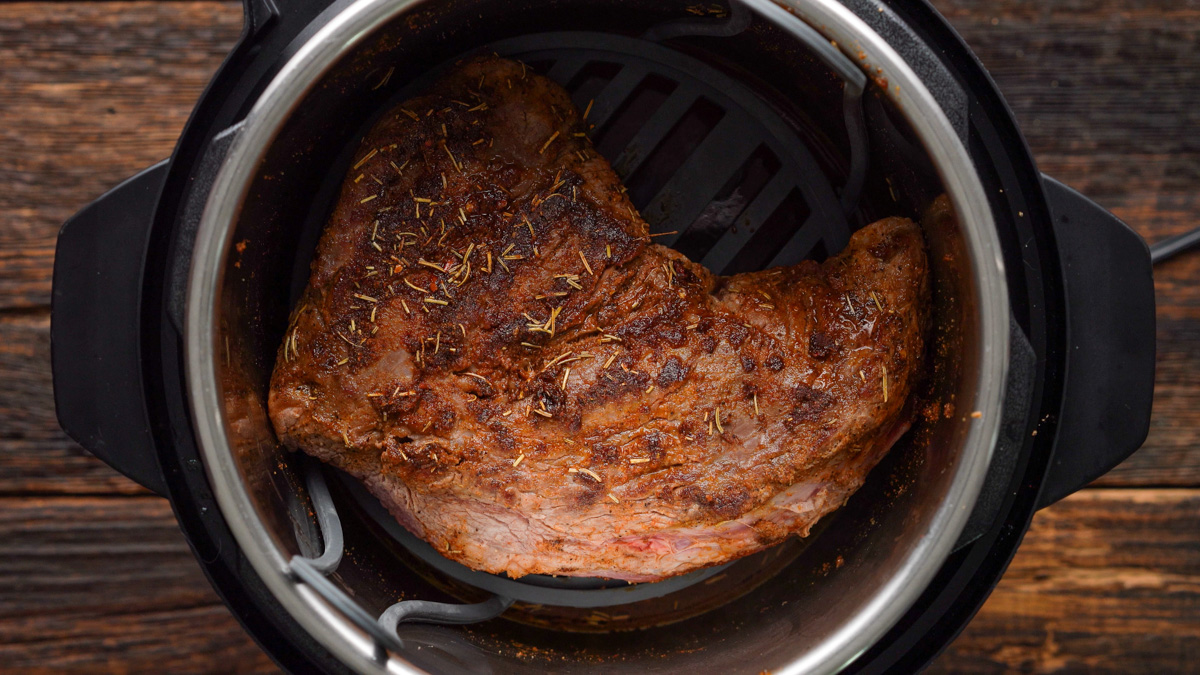
If you love tri-tip but usually cook it dry heat style, you might also like our Tri-Tip Roast page for oven-style results. For other pressure cooker dinners, browse Instant Pot recipes.
Two outcomes
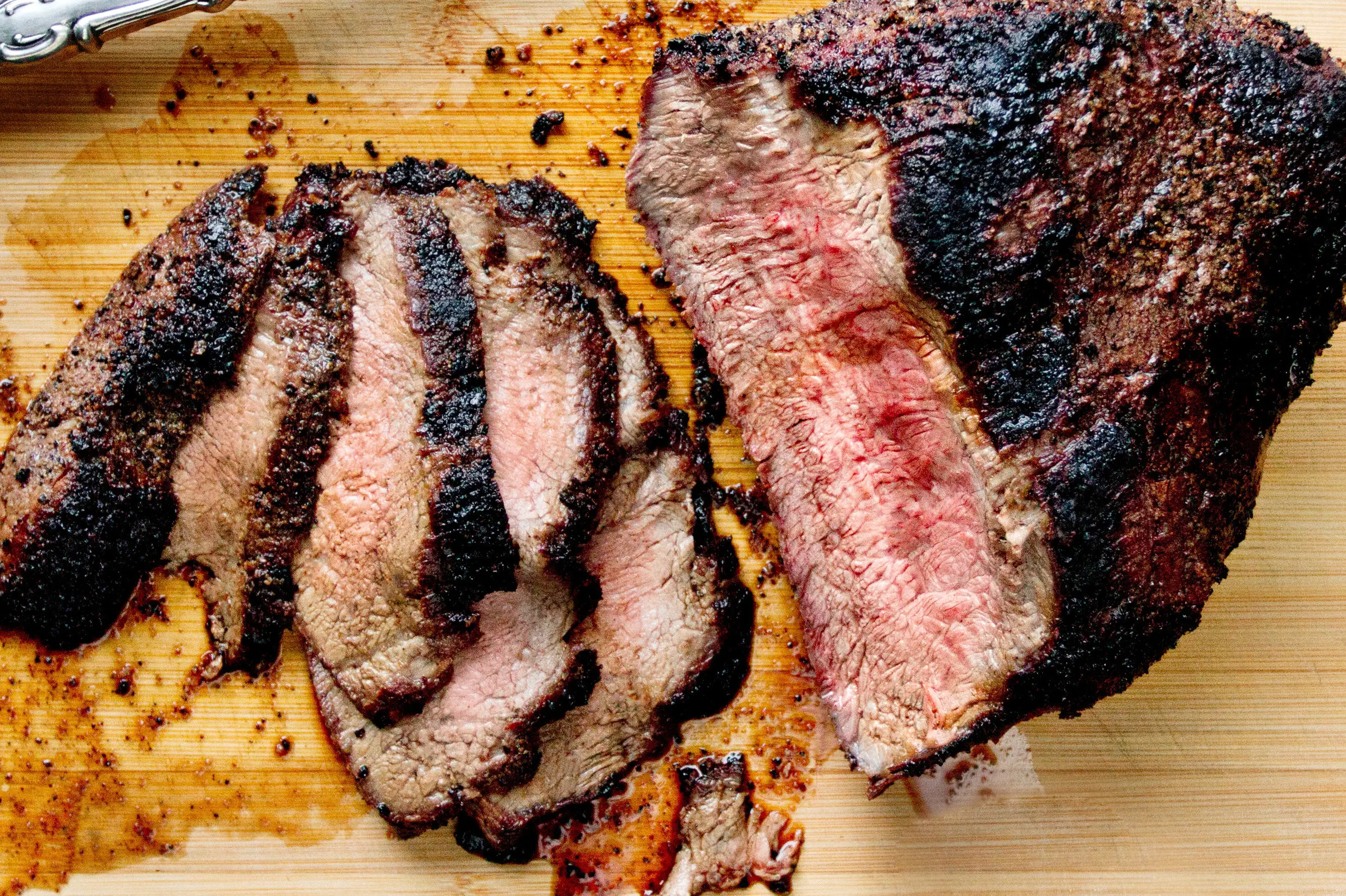
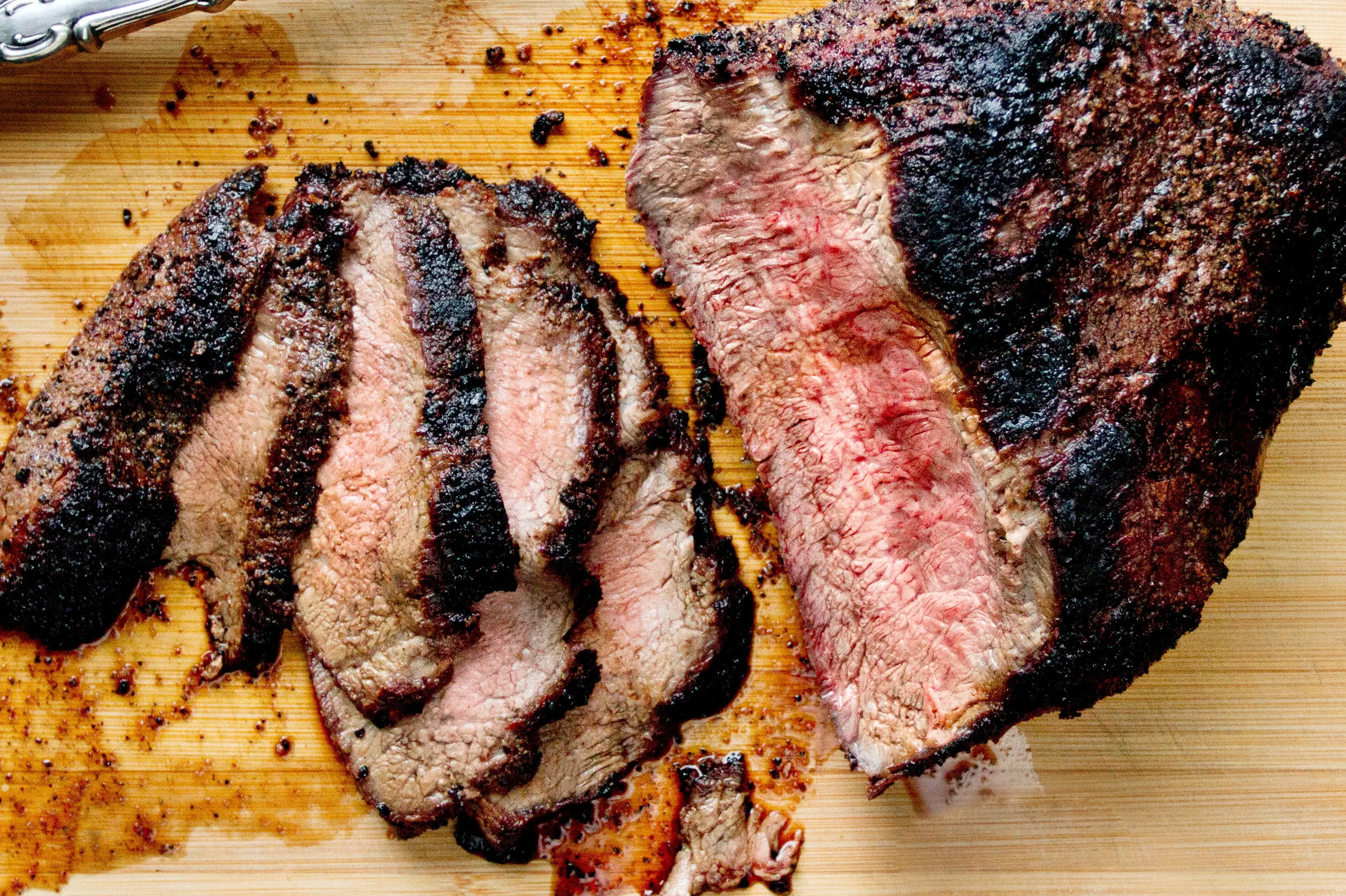
Sliceable tri-tip is what most people want when they buy this cut: beefy slices that still feel like a roast. In the Instant Pot, that means a moderate pressure time aimed at roast-like doneness, a full natural release, and a rest before slicing (and yes, slicing against the grain really matters here).
Shreddable tri-tip is not the classic move, but it is very doable if you cook it longer and lean into that juicy, braised texture. The natural release still matters, and a short rest helps it pull more cleanly.
Why it works
- Small liquid amount: Tri-tip does not need to be drowned. A cup of broth plus the roast’s own juices creates enough steam for pressure cooking without washing out flavor.
- Natural release: A gradual pressure drop is gentler on a lean roast and can help prevent moisture loss from aggressive bubbling.
- Two time tracks: Tri-tip can land in a sweet spot for slicing, or it can be taken further to shred. This recipe gives you both, based on roast weight.
- Searing first: Browning adds the roasted flavor pressure cooking cannot create on its own.
Ingredient notes
- Tri-tip roast: Most are 2 to 3 pounds. If yours is much larger, it may need to be cut in half to sit properly on the trivet.
- Beef broth: Use low-sodium if you can. You can always reduce the cooking liquid into a more intense sauce at the end.
- Garlic and onion: Optional, but they make the pot liquid taste like you tried harder than you did.
- Worcestershire and soy sauce: Small amounts boost savoriness fast. If you only have one, use it.
- Neutral oil: For searing on Sauté. Avoid butter for the sear because it can burn.
- Cornstarch (optional): Only if you want a quick gravy-style sauce.
Salt note: Because tri-tip is lean, I salt it generously. If your broth is salty, scale back the added salt and season at the end.
Equipment
- 6-quart Instant Pot or similar electric pressure cooker
- Trivet (the one that comes with the pot is perfect)
- Tongs for turning the roast
- Instant-read thermometer (highly recommended)
- Cutting board and sharp slicing knife
Pro tips
- Always do a full natural release: For tri-tip, I plan on 15 to 25 minutes. If your pot is still pressurized after 25 minutes, you can finish with a short controlled quick release.
- Slice against the grain: Tri-tip grain changes direction. Look closely and adjust your slicing angle halfway through if needed.
- Rest before slicing: Even after pressure cooking, a 10 minute rest keeps juices in the meat, not on your board.
- For sliceable beef, avoid overcooking: The Instant Pot is powerful. If you go too long, the roast can get dry and crumbly instead of juicy slices.
- Want a richer sauce: After removing the roast, simmer the liquid on Sauté for 5 to 10 minutes to concentrate flavor before thickening.
Substitutes
- Broth: Swap beef broth for chicken broth or water plus 1 to 2 teaspoons beef bouillon (if you use bouillon, watch the salt).
- Worcestershire: Use soy sauce, tamari, or coconut aminos instead.
- Garlic: Use 1 teaspoon garlic powder if you are out of fresh.
- Cornstarch: Use arrowroot starch for thickening (stir it in off heat, then bring back to a gentle simmer).
Variations
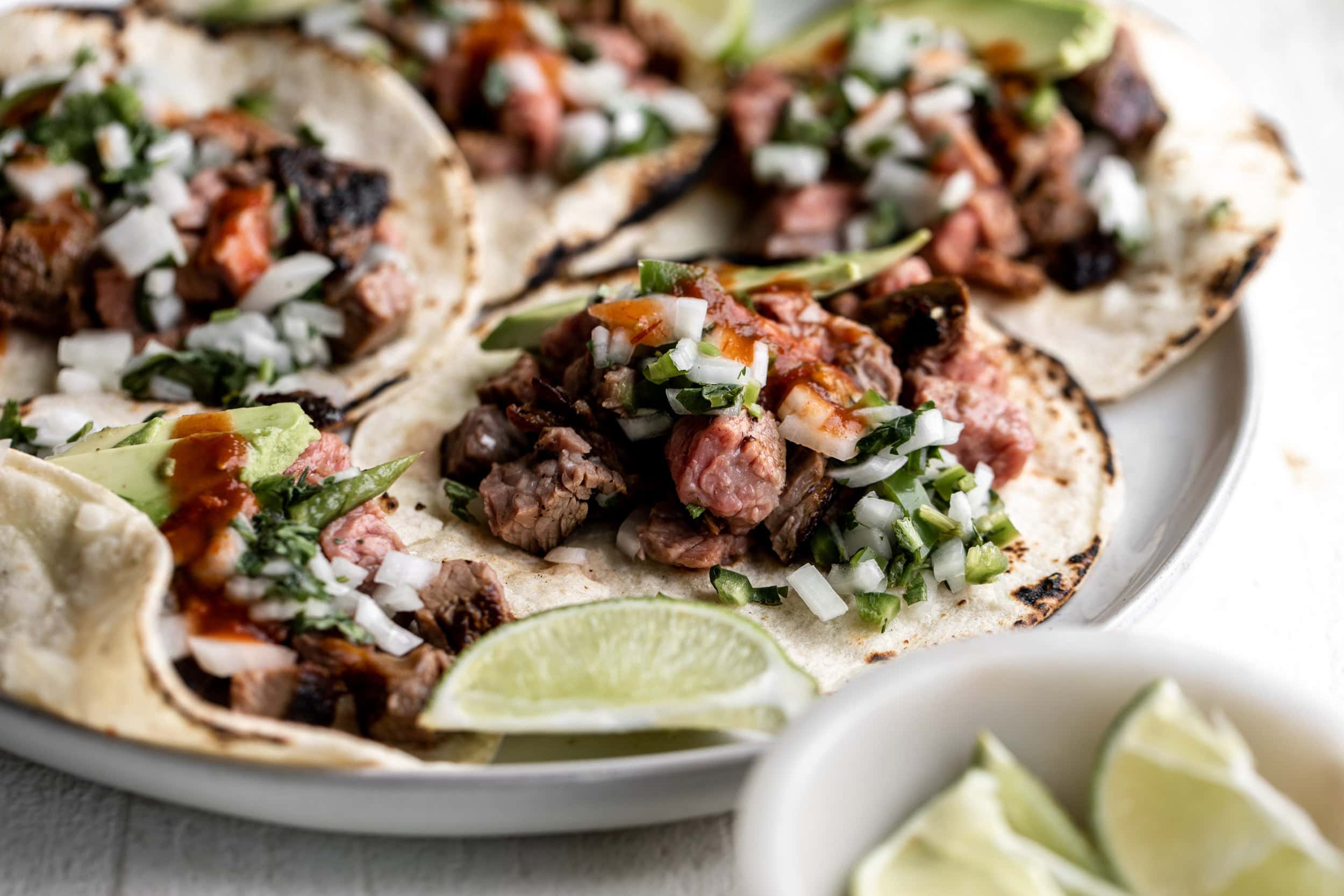
- Southwest: Add 1 tablespoon chili powder, 1 teaspoon ground cumin, and a pinch of smoked paprika to the rub. Serve shredded in tortillas.
- Italian-ish: Add 1 teaspoon dried oregano and 1 teaspoon dried basil, then finish with a squeeze of lemon.
- Garlic pepper: Double the garlic and black pepper, then make a quick pan sauce with the pot liquid.
Serving ideas
- Sliceable tri-tip with roasted vegetables like Roasted Broccoli or Roasted Brussels Sprouts
- Shreddable tri-tip stuffed into Beef Tacos with Pico de Gallo style toppings
- Tri-tip bowls with rice and black beans inspired by Burrito Bowl
- Sandwiches with melty cheese and a quick dip of the cooking juices
Storage
- Refrigerate: Store sliced or shredded tri-tip in an airtight container with a splash of the cooking liquid for 3 to 4 days.
- Freeze: Freeze for up to 2 months, ideally with some juices to protect the meat from drying out.
- Reheat: Warm gently in a covered skillet with a few tablespoons of broth or cooking liquid, or microwave in short bursts with a damp paper towel.
Common mistakes (and how to avoid them)
- Quick releasing right away: This is the fastest route to tougher, drier meat. Use a natural release.
- Not using a trivet: Keeping the roast slightly above the liquid helps it cook evenly and prevents the bottom from getting pot-roasty and stringy before the rest is done.
- Skipping the sear: You can skip it, but the flavor difference is real. Searing is where the “roast” taste comes from.
- Slicing with the grain: Even a perfectly cooked tri-tip will chew tough if you slice it the wrong way.
- Expecting brisket behavior: Tri-tip is lean. For shredding, you need more time, but there is still a point where it goes from shreddable to dry. Stick to the weight-based range.
FAQ
How much liquid do I need for tri-tip in the Instant Pot?
Use 1 cup broth or water. That is typically enough liquid for a 6-quart Instant Pot to come to pressure, and it creates a flavorful pot liquid without boiling the roast.
Do I need a natural pressure release?
Yes. For lean roasts like tri-tip, a natural release helps keep the texture tender and the juices in the meat. Plan on 15 to 25 minutes.
Can I cook tri-tip from frozen?
It is possible, but I do not recommend it for this cut if you want sliceable results. You cannot sear properly from frozen, and the outside can overcook while the center catches up. If you must, skip the sear and use the shreddable timing track, then check tenderness and add time as needed.
What internal temperature should I aim for?
For sliceable tri-tip, I like pulling it when the thickest part hits about 130°F to 135°F (medium-rare) or 140°F to 145°F (medium), then resting. For shreddable tri-tip, temperature matters less than tenderness, but you will typically be well above those numbers.
My tri-tip is tough. What happened?
Most often it is one of three things: the roast was quick released, it was sliced with the grain, or it needed either more time (for shredding) or less time (for sliceable). Use the time chart below and always slice against the grain.
Recipe Summary
Instant Pot Tri-Tip with two options: a shorter cook for sliceable roast-style beef or a longer cook for shreddable beef. Includes pressure-cooker minutes by roast weight and a natural pressure release.
Prep Time: 10 minutes
Cook Time: 35 minutes (plus pressurizing and natural release)
Total Time: About 1 hour 15 minutes
Servings: 6
- 2 to 3 lb tri-tip roast
- 2 tsp kosher salt (use 1 1/2 tsp if your broth is salty)
- 1 tsp black pepper
- 1 tsp garlic powder (or 3 garlic cloves, minced)
- 1 tsp smoked paprika (optional)
- 1 tbsp neutral oil (avocado, canola, or vegetable)
- 1 cup low-sodium beef broth (or water)
- 1 tbsp Worcestershire sauce (or soy sauce)
- 1 small onion, sliced (optional)
- 2 garlic cloves, smashed (optional)
- 1 tbsp cornstarch + 1 tbsp cold water (optional, for thickening the sauce)
- Season the roast. Pat the tri-tip dry. Season all over with salt, pepper, garlic powder, and smoked paprika (if using).
- Sear. Set the Instant Pot to Sauté (high). Add oil. When the oil is shimmering, sear the tri-tip 3 to 4 minutes per side until well browned. Sear the edges briefly if you can.
- Deglaze. Press Cancel. Pour in the beef broth and Worcestershire. Use a wooden spoon to scrape up any browned bits from the bottom of the pot.
- Set up for pressure cooking. Place the trivet in the pot. If using onion and garlic, add them to the liquid. Set the tri-tip on the trivet.
- Pressure cook (choose your outcome). Lock the lid and set the valve to Sealing.
- Sliceable: Cook on High Pressure using the time chart below.
- Shreddable: Cook on High Pressure using the time chart below.
Time chart (High Pressure):
- 1.5 lb: Sliceable 20 min, Shreddable 45 min
- 2 lb: Sliceable 24 min, Shreddable 50 min
- 2.5 lb: Sliceable 28 min, Shreddable 55 min
- 3 lb: Sliceable 32 min, Shreddable 60 min
- Natural release. When cook time ends, let the pot naturally release pressure for 15 to 25 minutes. Then carefully turn the valve to Venting to release any remaining pressure.
- Rest the meat. Transfer tri-tip to a cutting board and rest 10 minutes. For sliceable beef, check temperature with an instant-read thermometer and slice against the grain. For shreddable beef, shred with two forks.
- Optional: thicken the sauce. Set the pot to Sauté. Mix cornstarch with cold water, then stir into the simmering liquid. Cook 1 to 2 minutes until slightly thickened. Spoon over sliced or shredded beef.
Notes: Tri-tip varies in thickness. If your roast is unusually thick, lean toward the higher end of the sliceable time range. If it is thinner and flatter, start lower. Always use a natural pressure release for best texture.