The Versatility of Spaghetti Squash Spaghetti squash is the chameleon of the veggie world, masquerading as pasta. This humble-looking squash packs a…
Delishing
How To Cook Spaghetti Squash

Maya Brooks
Maya Brooks is a dedicated home cook and the lead recipe developer at Delishing, where she shares practical, foolproof meals for everyday life. With over a decade of hands-on kitchen experience, she specializes in creating approachable dishes that fit a variety of dietary needs and modern cooking methods. Maya is passionate about helping busy people get delicious, stress-free food on the table without needing formal culinary training.
Spaghetti squash looks like it has homework attached to it, but once you learn the rhythm, it becomes one of the easiest vegetables to keep on repeat. I cook it two ways depending on the night: oven roasted when I want the best texture, and microwaved when it’s 5:00 PM and I need dinner to move faster.
What you need
- 1 spaghetti squash (about 2.5 to 4 pounds)
- Salt
- Butter or olive oil (optional, for serving)
Tools: sharp chef’s knife, sturdy cutting board, spoon, fork. For roasting: sheet pan and parchment (optional). For microwaving: microwave-safe dish.
How to cut and seed it
Cutting is the only “tricky” part. Take your time and set yourself up for success.
Step 1: Soften the skin (optional but helpful)
If your squash feels rock-hard, pierce it all over with a fork or the tip of a knife (a few pokes is enough), then microwave it whole for 2 to 4 minutes to slightly soften the rind. Let it rest 2 minutes so it’s easier to handle.
Step 2: Trim for stability
Slice a very thin sliver off one long side so the squash can sit flat on the board without rolling.
Step 3: Halve it
Cut the squash lengthwise from stem to end. If you meet resistance, pull the knife out and start the cut again rather than forcing it.
Step 4: Scoop out seeds
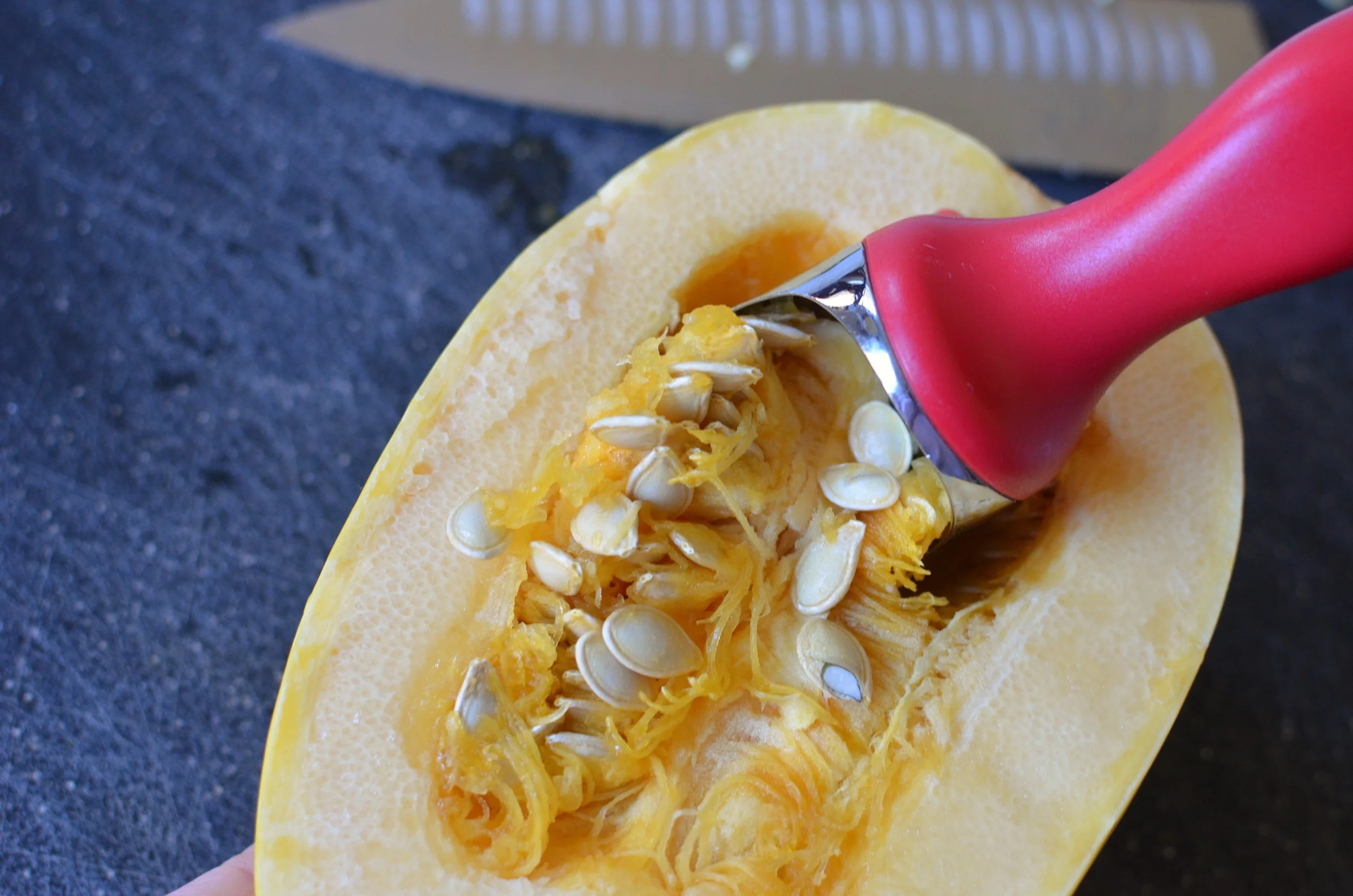
Use a spoon to scrape out the seeds and stringy bits from the center, just like you would with a pumpkin.
Method 1: Roast (best texture)
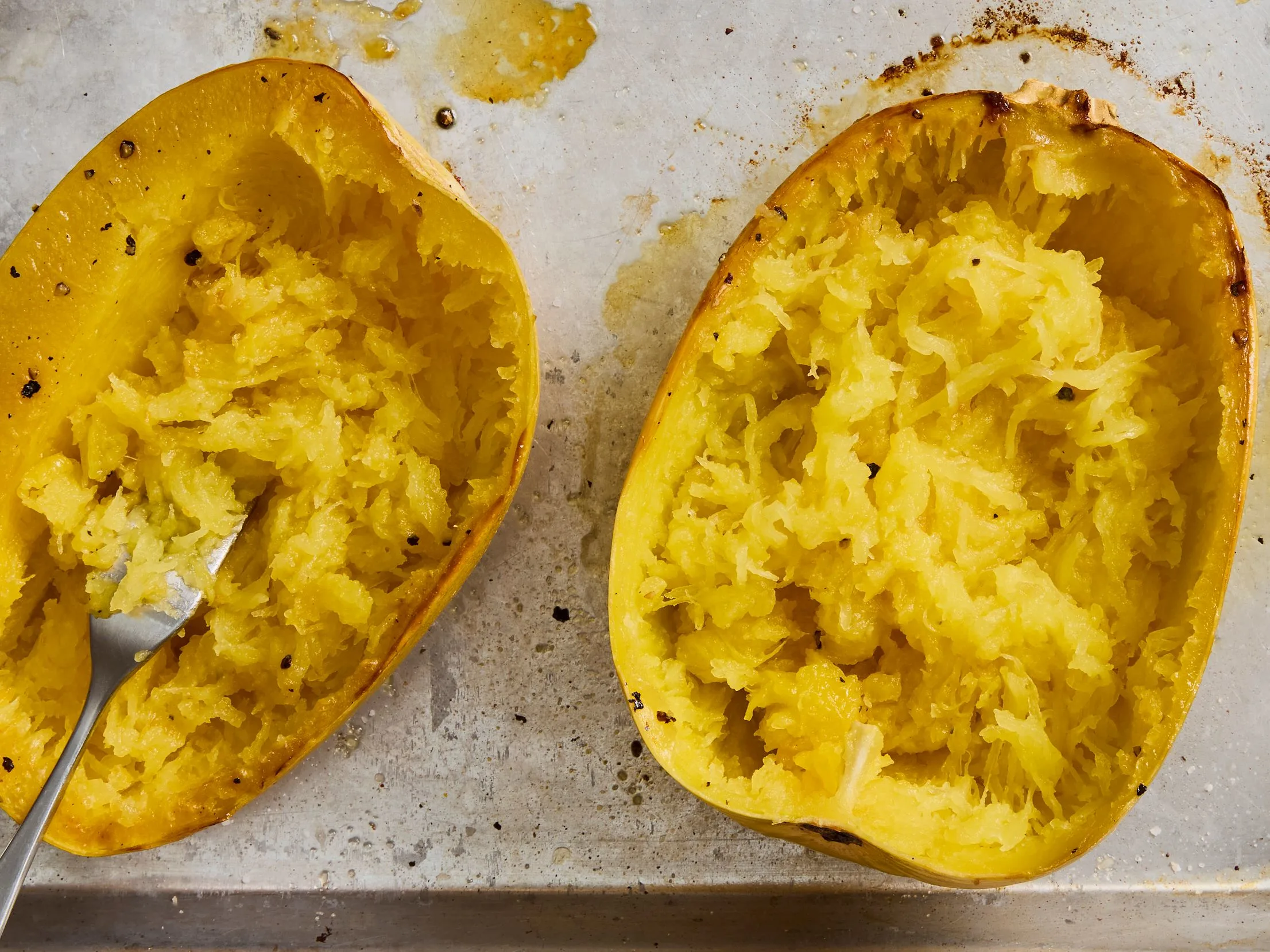
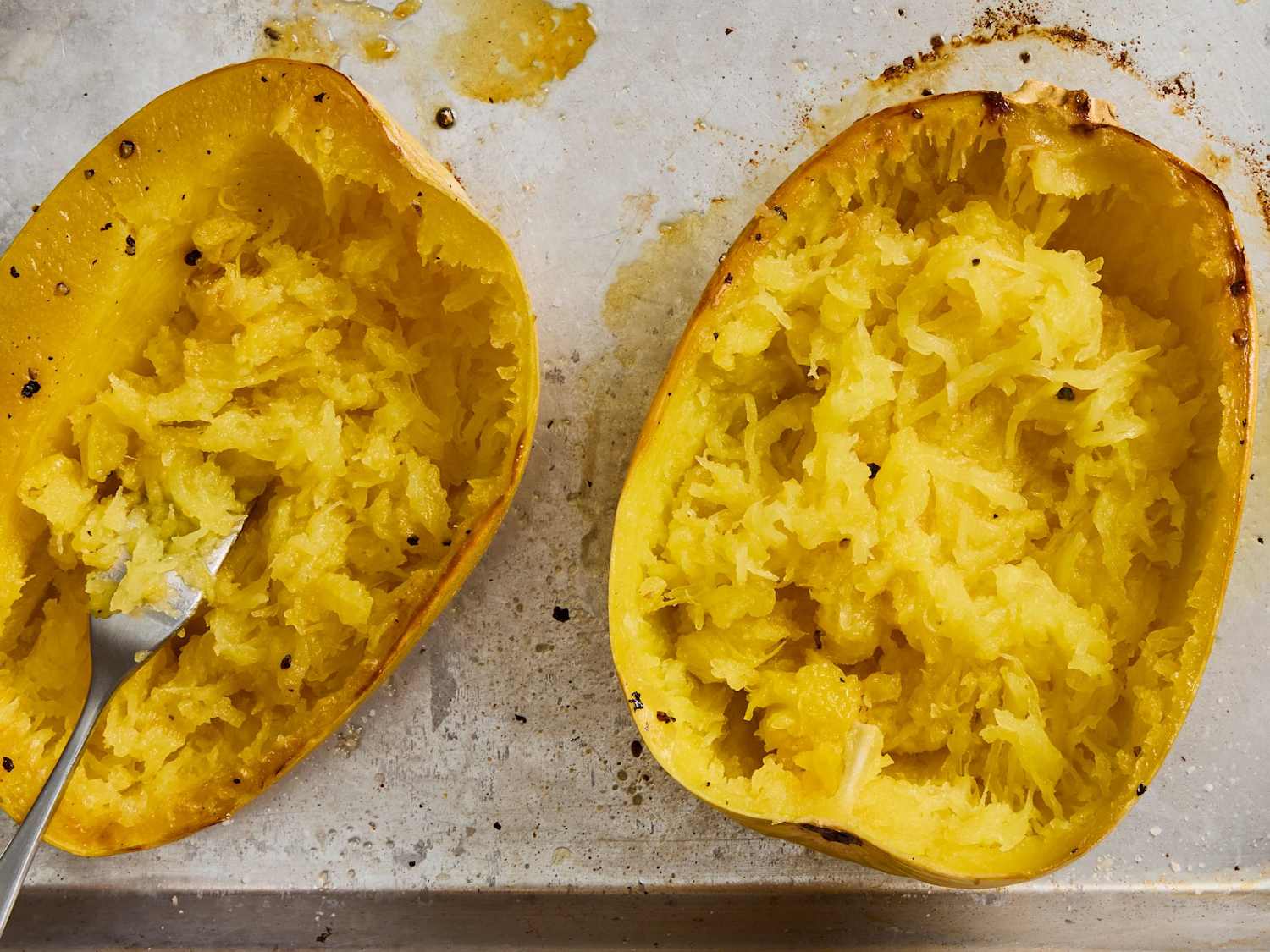
Roasting gives you drier, more separate strands and a lightly caramelized edge. This is my go-to when I have 45 minutes.
Oven temp and time
- Preheat oven to 400°F.
- Roast cut-side down for 35 to 50 minutes, depending on size.
Reality check: squash size and thickness vary a lot, so start checking around 35 minutes and use the fork-and-scrape test below to call it done.
How to roast it
- Preheat the oven to 400°F.
- Place the squash halves cut-side down on a sheet pan. (Line with parchment if you want easier cleanup.)
- Optional: If your pan runs hot or you’re worried about scorching, add 1 to 2 tablespoons water to the pan to create a little steam. It helps with tenderness, but if you want the driest strands possible, skip the water.
- Roast until tender (use the fork-and-scrape test below).
- Flip cut-side up carefully, let cool 5 minutes, then scrape into strands with a fork.
- Season with salt, then add butter or olive oil if you like.
Optional seasoning shortcut: You can lightly oil and salt the cut sides before roasting. I usually season after scraping so I can taste and adjust.
Fork-and-scrape test
Spaghetti squash is done when:
- A fork slides into the thickest part with little resistance.
- When you scrape the flesh with a fork, it separates into long strands easily.
If it feels crunchy or the strands fight you, roast 5 to 10 minutes more and test again.
Method 2: Microwave (fastest)
This method is weeknight magic. The tradeoff is slightly wetter strands, but a quick rest and a light hand with butter or oil fixes most of that.
Microwave time
- Microwave on high 10 to 14 minutes total for a 3 to 4 pound squash, depending on your microwave.
Start checking on the earlier side, especially if your squash is closer to 3 pounds or your microwave runs strong.
How to microwave it
- Halve and seed the squash.
- Place halves cut-side down in a microwave-safe dish.
- Add 2 to 4 tablespoons water to the dish (this creates steam).
- Microwave on high for 5 minutes.
- Carefully rotate the dish and microwave 5 to 9 minutes more.
- Let rest 5 minutes before handling. The steam continues cooking it.
- Use oven mitts and watch the steam when you move the dish or lift the squash. Hot steam can burn fast.
- Use the fork-and-scrape test. If strands do not pull easily, microwave in 1-minute bursts.
- Scrape into strands, season with salt, and finish with butter or olive oil if desired.
How to serve it plain
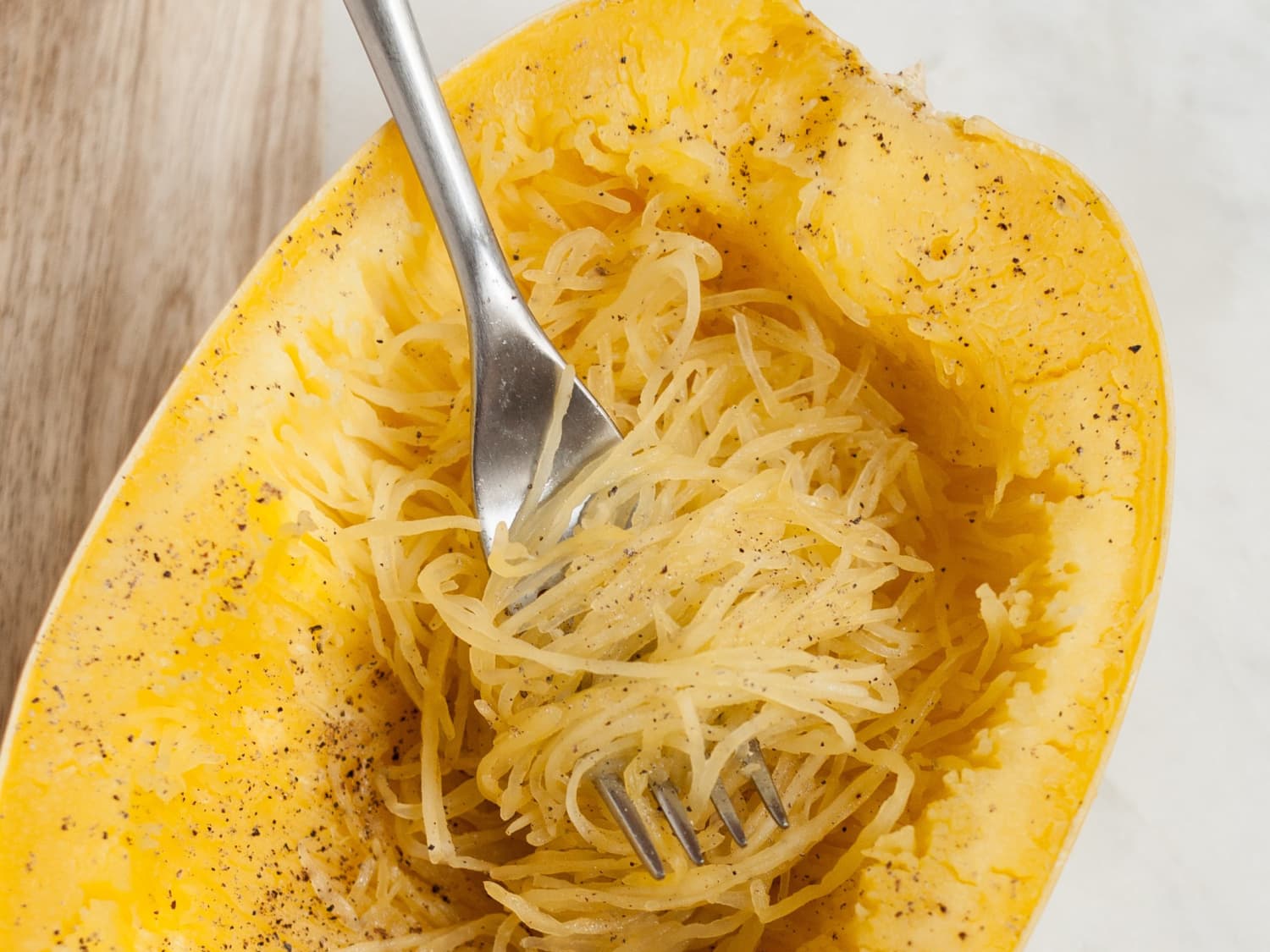
When you’re keeping it simple, the goal is to let the squash taste like itself but better.
- Salt first: Sprinkle and toss the strands, then taste. Spaghetti squash needs more salt than you think.
- Butter option: Add 1 to 2 tablespoons butter per half and toss until melted.
- Olive oil option: Drizzle 1 to 2 teaspoons olive oil per half, toss, and salt again if needed.
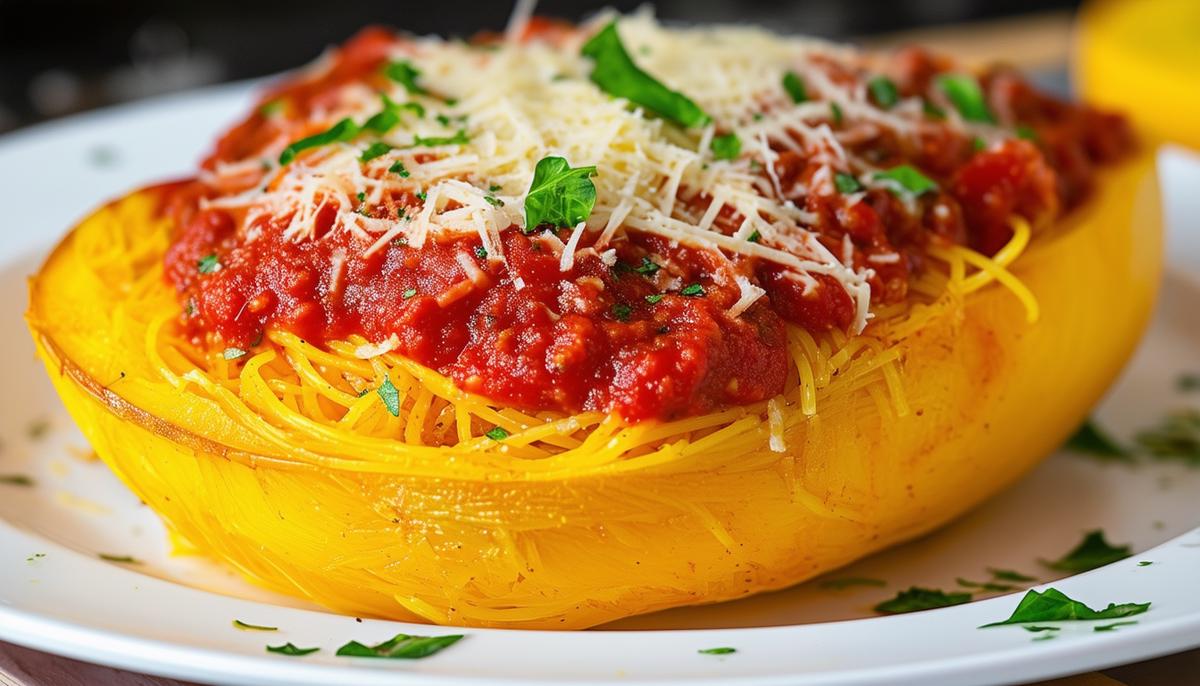
If you’re looking for a sauced, pasta-style version, I keep that recipe on my Spaghetti Squash Marinara page so this guide can stay focused on cook time and texture.
Variation: Roast in cubes
This is the option I use when I want more browned bits and less “noodle” vibe. It’s also great for meal prep.
- Preheat oven to 425°F.
- Cut and seed the squash, then cut into large wedges. Carefully cut off the rind.
- Cut into 1 to 1.5-inch cubes.
- Toss with 1 to 2 tablespoons olive oil and salt.
- Roast on a sheet pan for 20 to 30 minutes, tossing once halfway through, until browned at the edges and tender.
Common problems
My squash is watery
- Roast instead of microwave next time for drier strands.
- After cooking, let strands sit in the shells 5 minutes, then fluff and let steam escape.
- Do not overload with butter or oil at first. Add gradually.
My strands are crunchy
It’s undercooked. Cook longer in 5 to 10 minute increments (oven) or 1 minute bursts (microwave) and re-test.
My squash turned mushy
It went a bit too long. It’s still edible, just softer. Next time, start checking early and pull it when strands separate easily but still hold their shape.
Storage and reheating
Refrigerator
Store cooked strands in an airtight container for up to 4 days.
Freezer
You can freeze spaghetti squash, but it softens as it thaws. Freeze in a sealed bag or container up to 3 months.
Reheat
- Microwave: 60 to 90 seconds, then stir and heat in 30-second bursts.
- Skillet: Medium heat with a small amount of butter or oil, stirring until warmed through. This helps evaporate extra moisture.
Quick time chart
| Method | Temperature | Time | Best for |
|---|---|---|---|
| Roast (halves) | 400°F | 35 to 50 min | Best strand texture, lightly caramelized |
| Microwave (halves) | High | 10 to 14 min + 5 min rest | Fastest weeknight option |
| Roast (cubes) | 425°F | 20 to 30 min | More browned edges, less noodle-like |