Delishing
Baked Acorn Squash

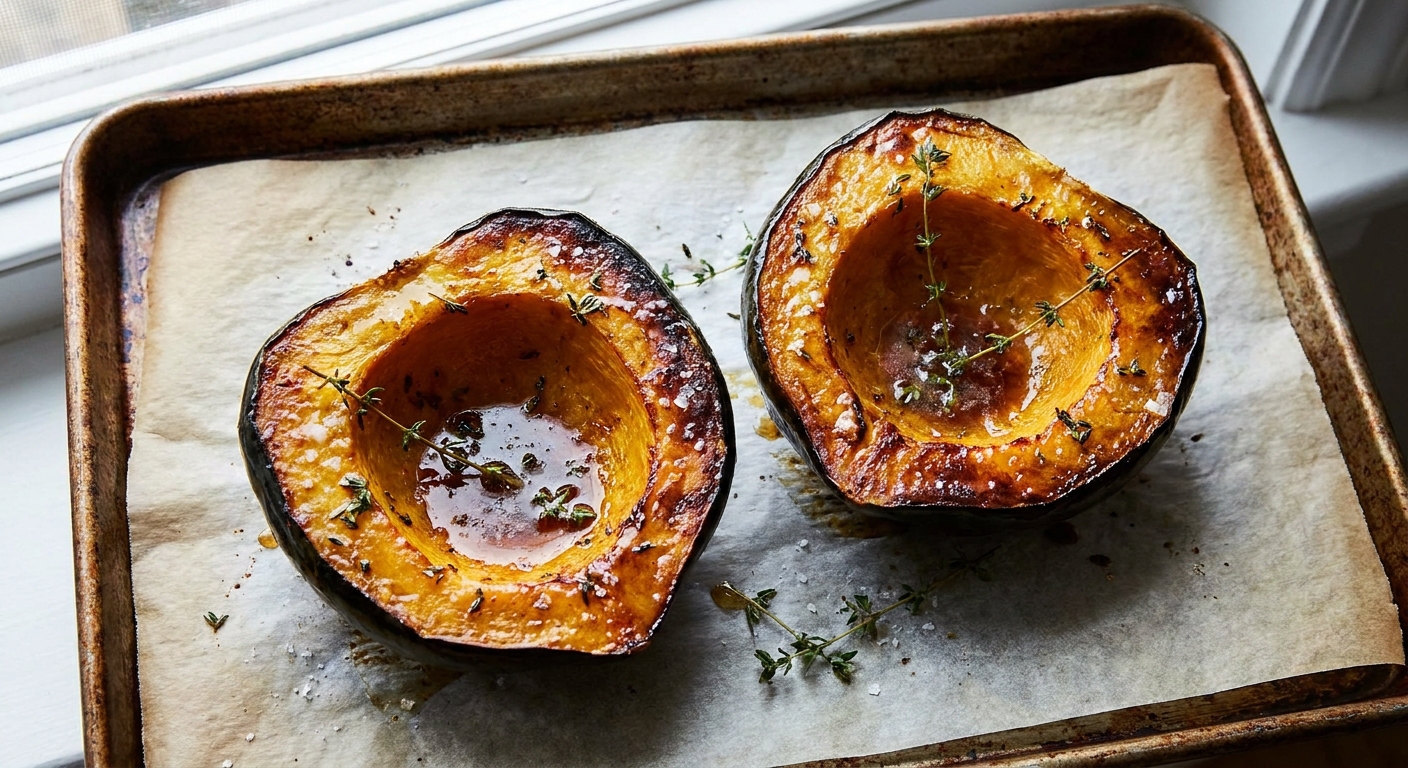
The easiest baked acorn squash, every time
Acorn squash is one of those weeknight-friendly vegetables that looks fancy but acts like a total sweetheart in the oven. When I'm staring into the fridge at 5:00 PM and need something warm, nourishing, and hard to mess up, I reach for acorn squash. Slice it, scoop it, oil it, salt it, roast it. That's it.
And yes, you can overdo it. If you forget it in the oven long enough, it can dry out around the edges. But if you keep an eye on the doneness cue, this is one of the most forgiving sides you can make.
This page sticks to acorn squash on purpose. Other winter squashes have their own quirks. Butternut is usually happiest peeled and cubed, while spaghetti squash has that stringy "noodle" texture when it's done. Different shapes, different timing, different clues.
What you'll do
You'll halve the squash, scoop out the seeds, brush it with oil and salt, then roast it until the flesh turns tender and sweet. I like roasting it cut side up because it encourages more caramelization and helps the squash taste less watery.
Once it's tender, you can finish it sweet or go savory. Maple and cinnamon is classic. Garlic and herbs make it feel like a real side dish, not just "a vegetable."
Fork-tender is the goal
Forget chasing a specific minute mark. Acorn squash is done when a fork slides into the thickest part of the flesh with very little resistance. If the fork fights you, it needs more time. If the halves start to slump a little or the surface looks wrinkly, that is often a sign you've gone a bit long. It will still taste great, especially with a saucy finish.
The only real trick is that size matters. Smaller squash halves can be ready sooner, while thicker, larger halves take longer. Start checking early, then keep going until that fork says yes.
Why this recipe works
- Cut side up roasting concentrates flavor and encourages light caramelization on the edges.
- Oil plus salt is the simplest way to make squash taste like itself, only better.
- A fork-tender cue is more reliable than the clock because squash size varies a lot.
Ingredient notes
- Acorn squash: Choose one that feels heavy for its size with dull, firm skin. A little surface scuffing is fine. Avoid soft spots.
- Olive oil: Helps the surface brown and keeps the flesh from drying out.
- Kosher salt: Seasons the squash all the way through. If you use fine table salt, start with a little less.
- Optional sweet finish: Maple syrup adds gloss and deep sweetness. Butter makes it richer, and cinnamon plays up the cozy flavor.
- Optional savory finish: Butter, garlic, and herbs make it feel like a real side dish, not just “healthy vegetables.”
Equipment
- Sturdy chef’s knife
- Cutting board (a damp paper towel underneath helps prevent slipping)
- Spoon for scooping seeds
- Rimmed baking sheet
- Parchment paper or foil (optional, for easier cleanup)
- Pastry brush or your hands for rubbing on oil
Pro tips
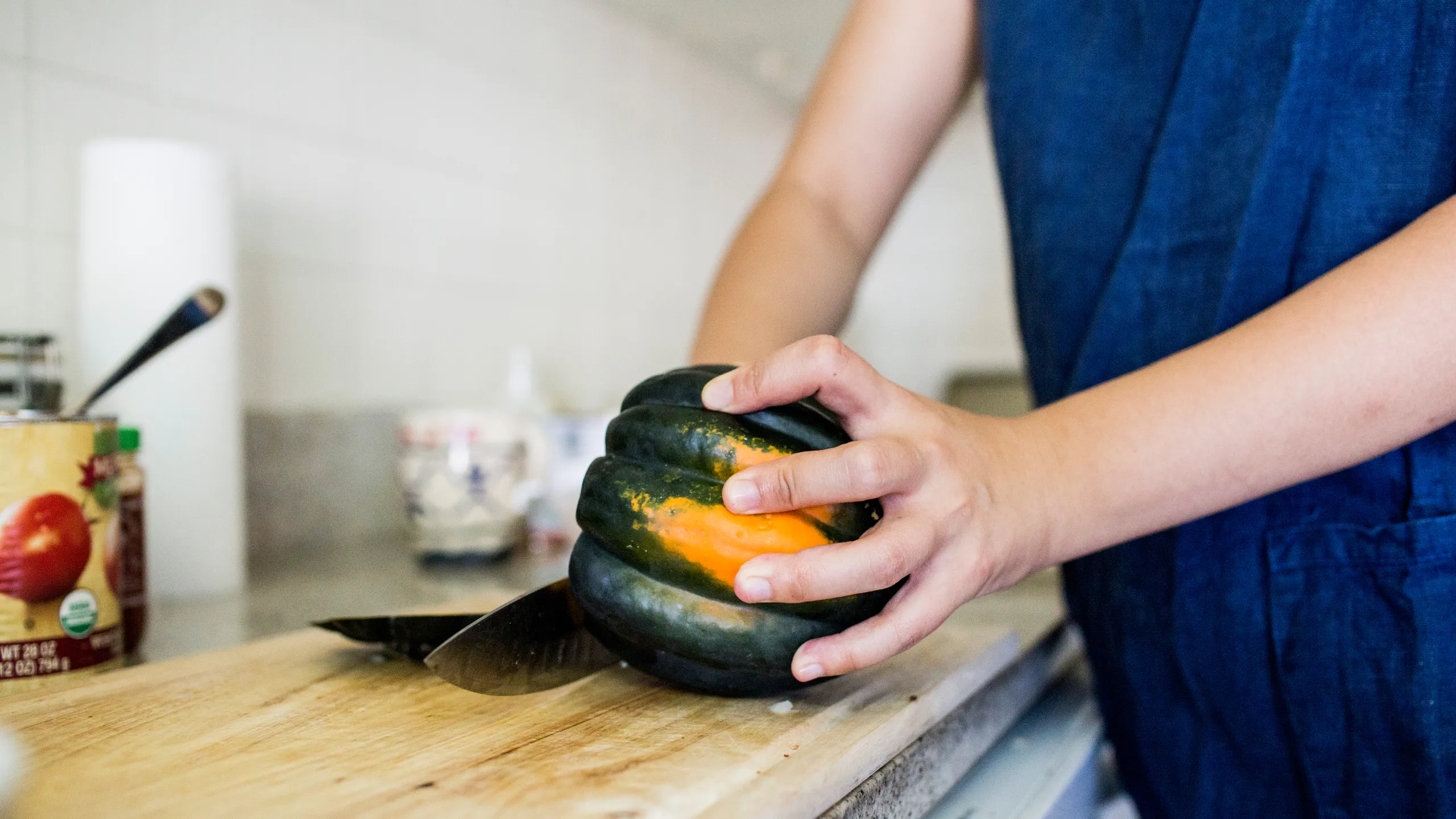
- Make it easier to cut: If your squash is rock-hard, microwave it for 1 to 2 minutes to slightly soften the skin, then try again.
- Cut safely: Trim a thin slice off the bottom only if it wobbles. A stable squash is a safer squash.
- Do not skip the salt: Squash without salt tastes oddly flat, even if you finish it sweet.
- Roast by thickness: Small squash halves can finish closer to 35 minutes. Large, thick ones can take closer to 55.
- Want deeper browning? Keep roasting until you see darker caramelized spots around the rim.
Substitutes
- Oil: Melted butter, avocado oil, or neutral oil all work.
- Maple syrup: Honey or brown sugar works similarly, but maple has the most classic flavor with squash.
- Dairy-free: Use olive oil or plant-based butter in either variation.
- Lower sugar sweet finish: Use a light drizzle of maple and lean on cinnamon and a pinch of salt to make the sweetness pop.
Variations
Sweet maple finish
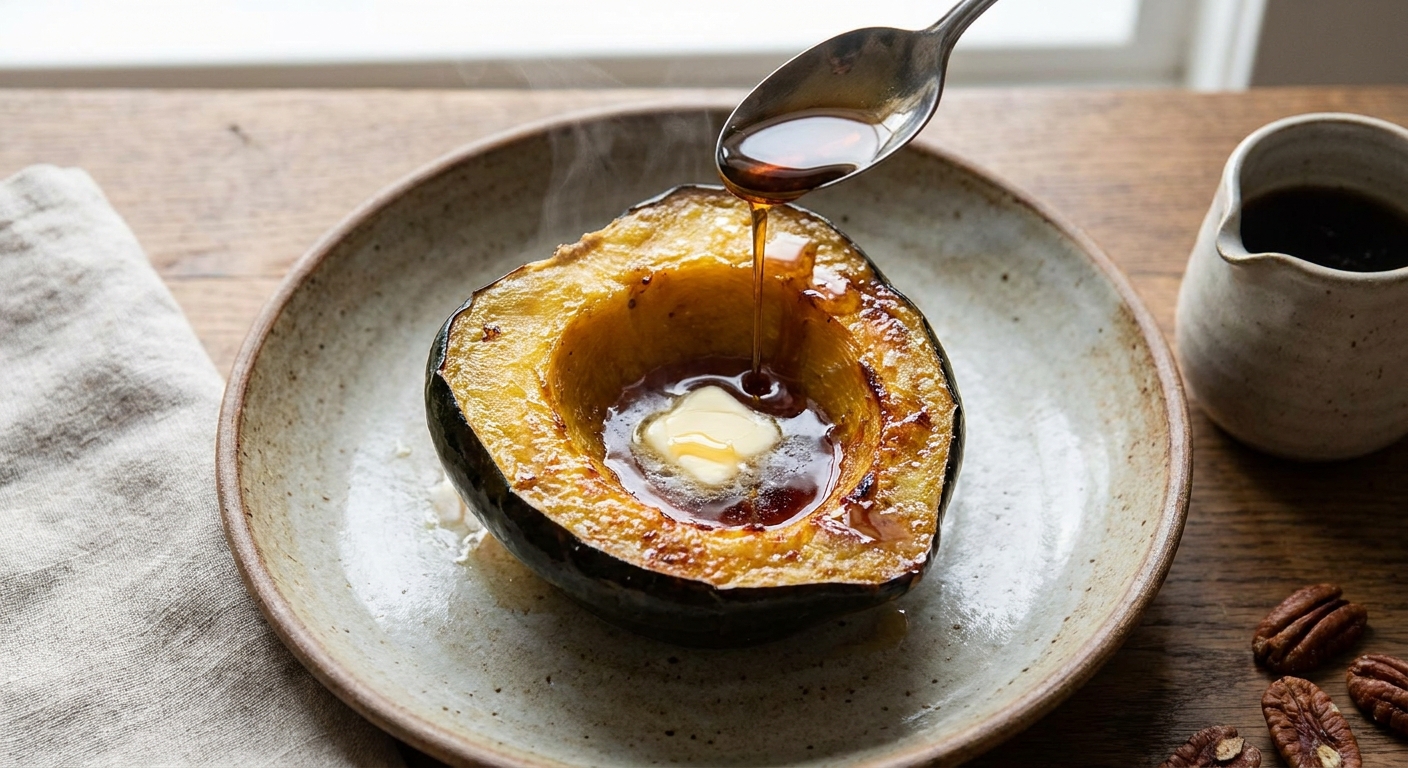
After roasting, add a small pat of butter to each hot squash half, drizzle with maple syrup, and sprinkle with cinnamon. Return to the oven for a few minutes to melt and gloss everything. Finish with a pinch of flaky salt if you have it.
Savory garlic herb finish
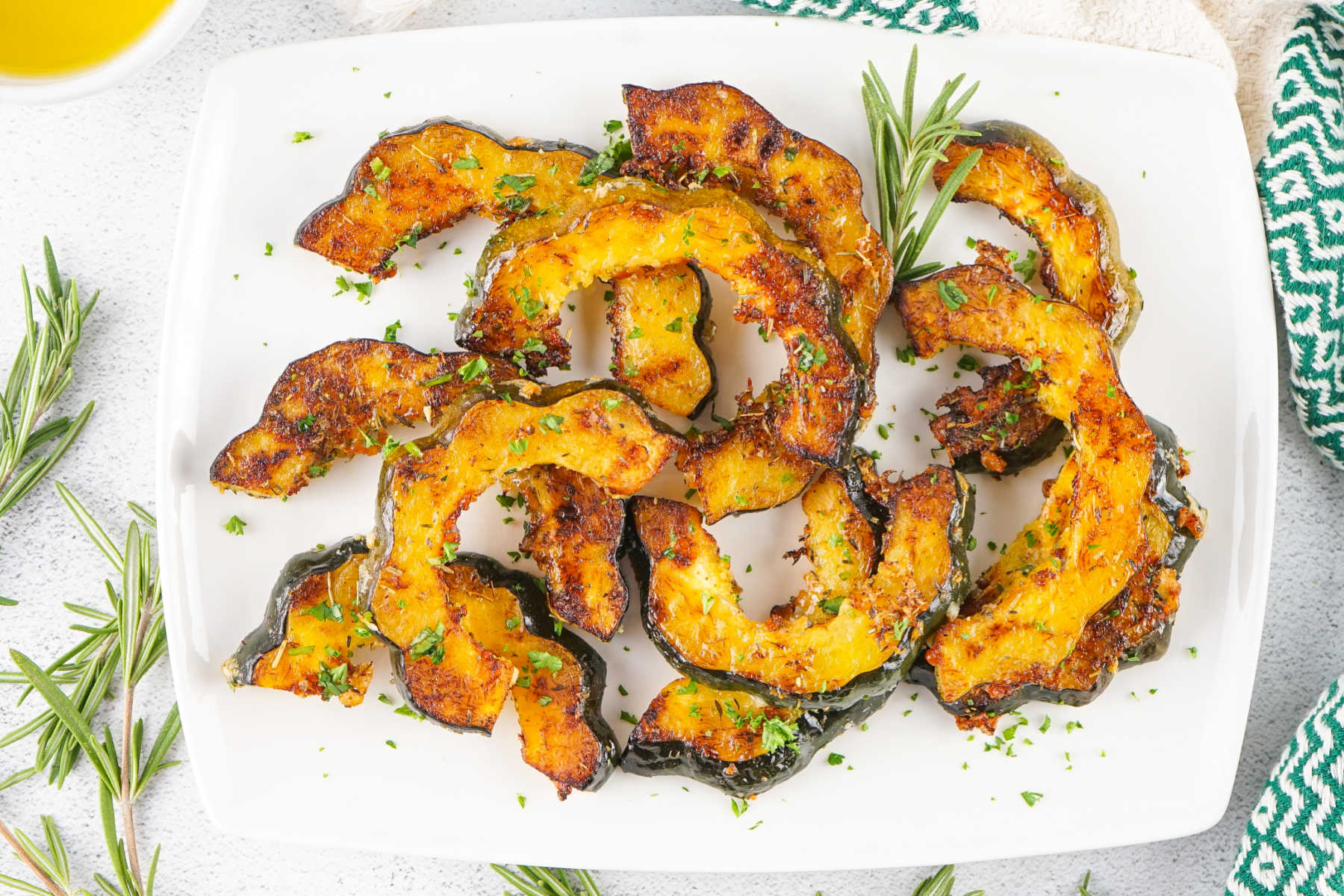
Mix softened or melted butter with minced garlic, chopped parsley or thyme, and black pepper. Dollop onto the hot roasted squash and let it melt in. For extra punch, add a squeeze of lemon.
Serving ideas
- Serve as a side with a cozy main like oven pot roast.
- Pair with a simple soup night: bowl of lentil soup plus a roasted squash half is quietly perfect.
- Turn it into a light dinner by adding a fried egg on top, plus a little hot sauce if you like heat.
- Scoop the flesh and stir into cooked grains with feta or goat cheese for an easy lunch bowl.
Storage
- Refrigerate: Store roasted acorn squash in an airtight container for up to 4 days.
- Reheat: Warm in a 350°F oven until heated through, or microwave in short bursts. The oven keeps the edges a bit drier and tastier.
- Freeze: You can freeze the cooked flesh (scooped from the skin) for up to 3 months. It is best used later in soups, purees, or baking because the texture softens.
Common mistakes to avoid
- Under-roasting: If it is chewy or fibrous, keep roasting. Acorn squash needs time to turn silky.
- Skipping oil: It will bake, but it will taste dry and a little bland.
- Not seasoning the inside: Salt goes on the cut surface, not just the skin.
- Trying to force the knife: If the squash feels unsafe to cut, soften it briefly in the microwave, then try again with a stable cutting board.
FAQ
Do I roast acorn squash cut side up or down?
For this recipe, cut side up. It makes the surface caramelize and keeps the center from steaming too much.
How do I know when baked acorn squash is done?
Use a fork in the thickest part. It should slide in easily. If there is resistance, roast 5 to 10 minutes longer and check again.
Do I need to peel acorn squash?
No. Roast it in the skin, then scoop the flesh to eat. The skin is technically edible, but it is usually tougher than the flesh.
Can I eat the seeds?
Yes. Rinse off the stringy bits, pat dry, toss with oil and salt, and roast on the same sheet pan until crisp. Keep a close eye on them because they go from pale to burnt quickly.
Baked Acorn Squash
Simple roasted acorn squash halves seasoned with olive oil and salt, roasted until fork-tender. Finish sweet with maple and cinnamon or savory with garlic and herbs.
Prep Time: 10 minutes
Cook Time: 40 to 55 minutes
Total Time: 50 to 65 minutes
Servings: 2 to 4
- 1 medium acorn squash (about 1 1/2 to 2 pounds)
- 1 tablespoon olive oil, plus more as needed
- 1/2 teaspoon kosher salt, plus more to taste
- 1/4 teaspoon black pepper (optional)
- Sweet maple finish (optional): 1 tablespoon butter, 1 to 2 tablespoons maple syrup, 1/4 teaspoon ground cinnamon
- Savory finish (optional): 1 tablespoon butter, 1 small garlic clove (minced), 1 teaspoon chopped parsley or thyme, 1 teaspoon lemon juice (optional)
- Heat the oven. Arrange a rack in the middle of the oven and preheat to 400°F. Line a rimmed baking sheet with parchment paper or foil if you want easy cleanup.
- Halve the squash. Set the acorn squash on a cutting board. If it wobbles, slice a very thin piece off the bottom to create a stable base. Using a sturdy chef’s knife, cut the squash in half from stem to tip. (If it is very hard to cut, microwave the whole squash for 1 to 2 minutes to slightly soften it, then try again.)
- Scoop out the seeds. Use a spoon to scrape out the seeds and stringy bits from the center of each half.
- Season. Place the squash halves cut side up on the baking sheet. Brush or rub the cut surfaces with olive oil, then sprinkle evenly with kosher salt and black pepper if using.
- Roast until fork-tender. Roast until the flesh is deeply tender and a fork slides easily into the thickest part, 40 to 55 minutes depending on size.
- Optional sweet maple finish. Add a small pat of butter to each hot squash half, drizzle with maple syrup, and sprinkle with cinnamon. Return to the oven for 3 to 5 minutes to melt and gloss. Taste and add a pinch more salt if needed.
- Optional savory garlic herb finish. Stir together butter, minced garlic, and chopped herbs. Spoon onto the hot roasted squash and let it melt. Finish with lemon juice if using and a pinch more salt to taste.
- Serve. Serve warm, scooping the flesh from the skins as you eat.
Note: Roast time varies widely based on squash size and thickness. The most reliable cue is fork-tender flesh in the thickest part.