Delishing
Chestnut Flour Crepes

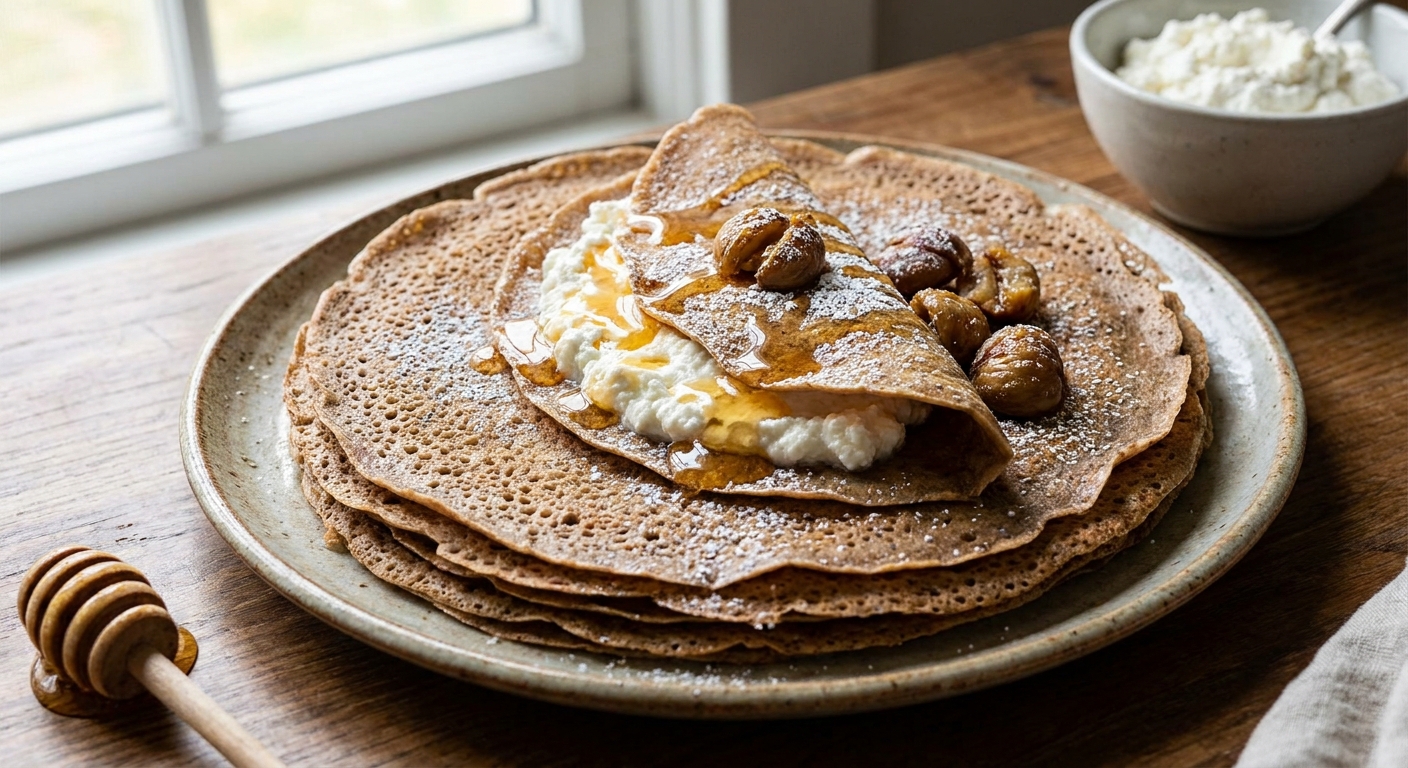
Chestnut flour crepes are my answer to those nights when I want something that feels special. But I absolutely do not have “special” energy. They cook fast in a small skillet, the flavor is cozy and faintly sweet (think fall baking without the fuss), and they work just as well for breakfast as they do for a low-effort dessert.
These crepes are inspired by Italian necci, the Tuscan chestnut-flour cakes that are often served with creamy ricotta. My version is thinner and more French-style crepe-like: flexible, foldable, and very weeknight-friendly. I love them with ricotta and honey, but they are also great with savory fillings like sautéed mushrooms and goat cheese.
One quick note if you bake for someone with celiac disease: chestnut flour is naturally gluten-free, but some brands are milled in shared facilities. If cross-contact is a concern, look for a certified gluten-free label.
I will walk you through the two make-or-break details: resting the batter so it spreads easily, and dialing in pan heat so the crepes stay pliable instead of brittle.
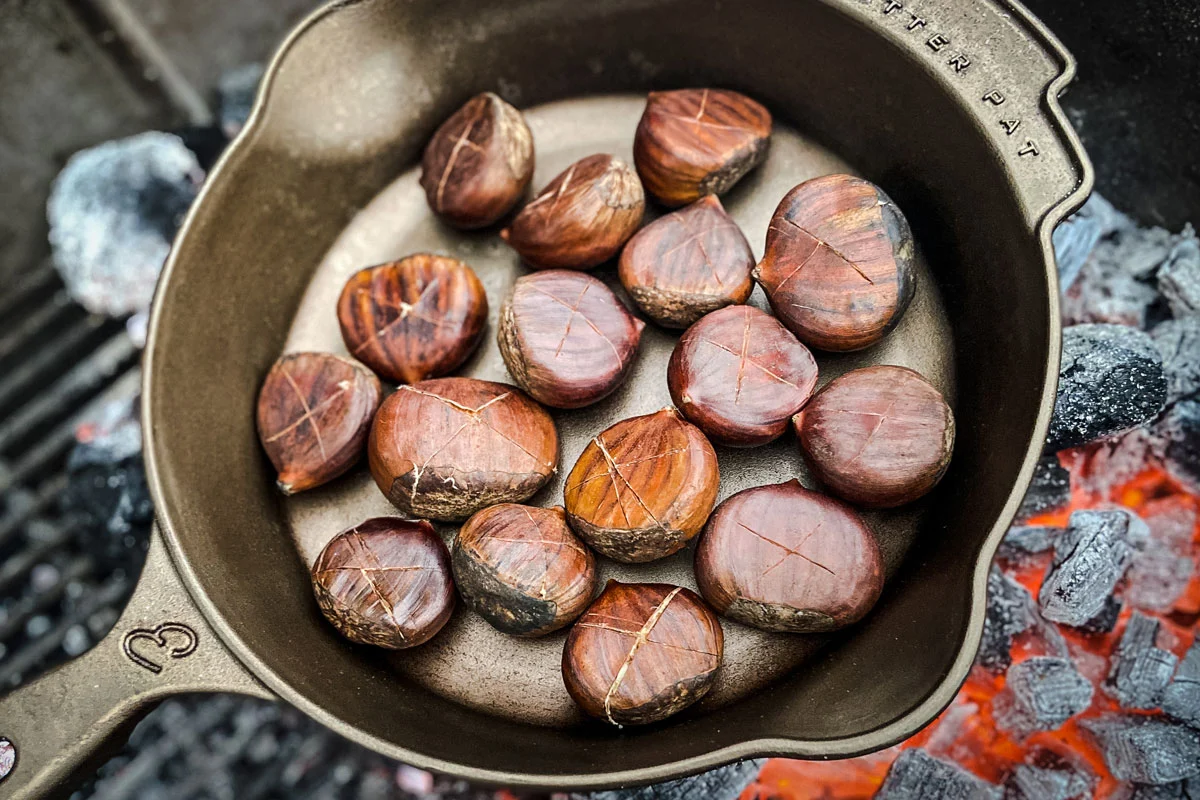
If you love cooking with chestnuts, you might also like my guides on how to bake with chestnut flour and my cozy primer on how to roast chestnuts.
Why it works
- Resting time smooths everything out. Chestnut flour hydrates more slowly than wheat flour. A rest gives you a silkier batter that spreads thinly without tearing.
- Moderate heat keeps them flexible. Too-hot pans cook the surface before the crepe can set evenly, which leads to cracking and dry edges.
- Oil in the batter adds bend. A little fat helps prevent that brittle, snaps-when-folded texture chestnut flour can sometimes lean into.
- Small skillet equals easy control. A 8 to 10 inch pan is the sweet spot for thin, manageable crepes that flip without drama.
Ingredient notes
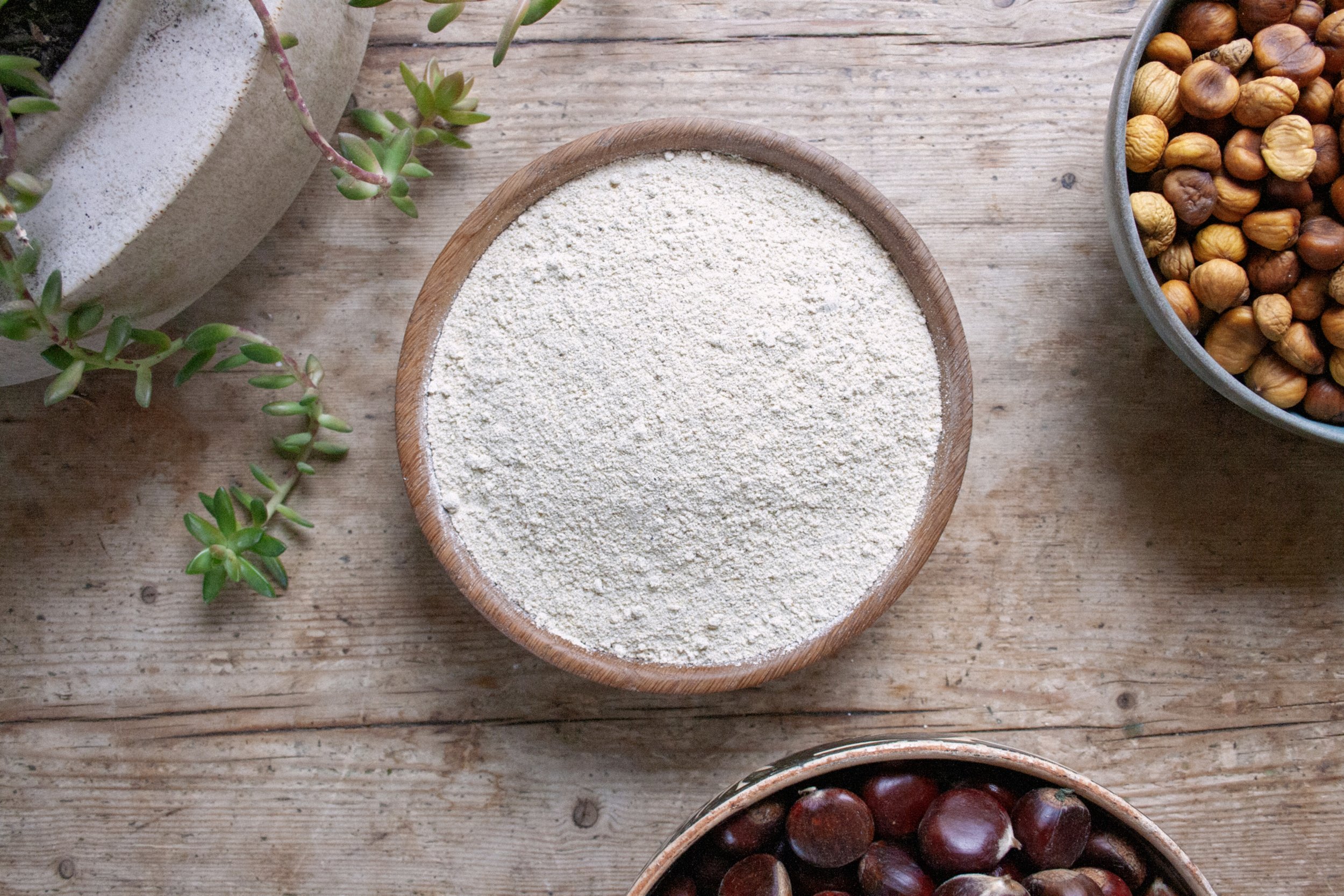
Chestnut flour
Chestnut flour is naturally sweet and nutty, and it is also naturally gluten-free. Because there is no gluten structure, the eggs do a lot of heavy lifting for flexibility. Chestnut flour can vary by brand, so pay attention to batter thickness and use the consistency cues in the recipe notes.
Eggs
Eggs provide structure so the crepes lift and flip instead of crumbling. If your eggs are very small, you may need a splash more milk to keep the batter pourable.
Milk
Whole milk makes the most tender crepe, but any milk works. If you use a thinner milk like almond, the batter may need slightly less liquid than you expect.
Ricotta and honey
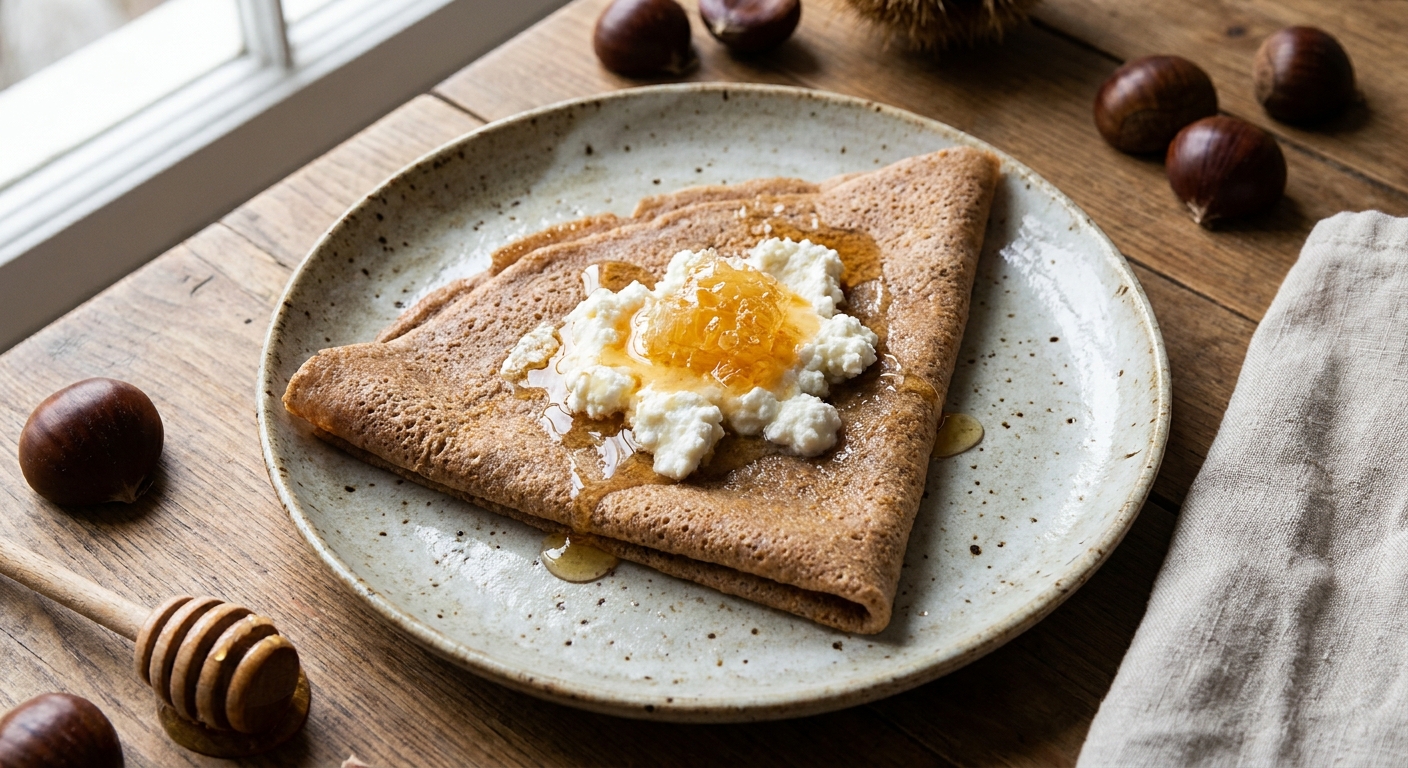
Classic necci are often filled with ricotta. I love ricotta plus honey and a pinch of salt because it tastes like dessert but eats like breakfast.
Equipment
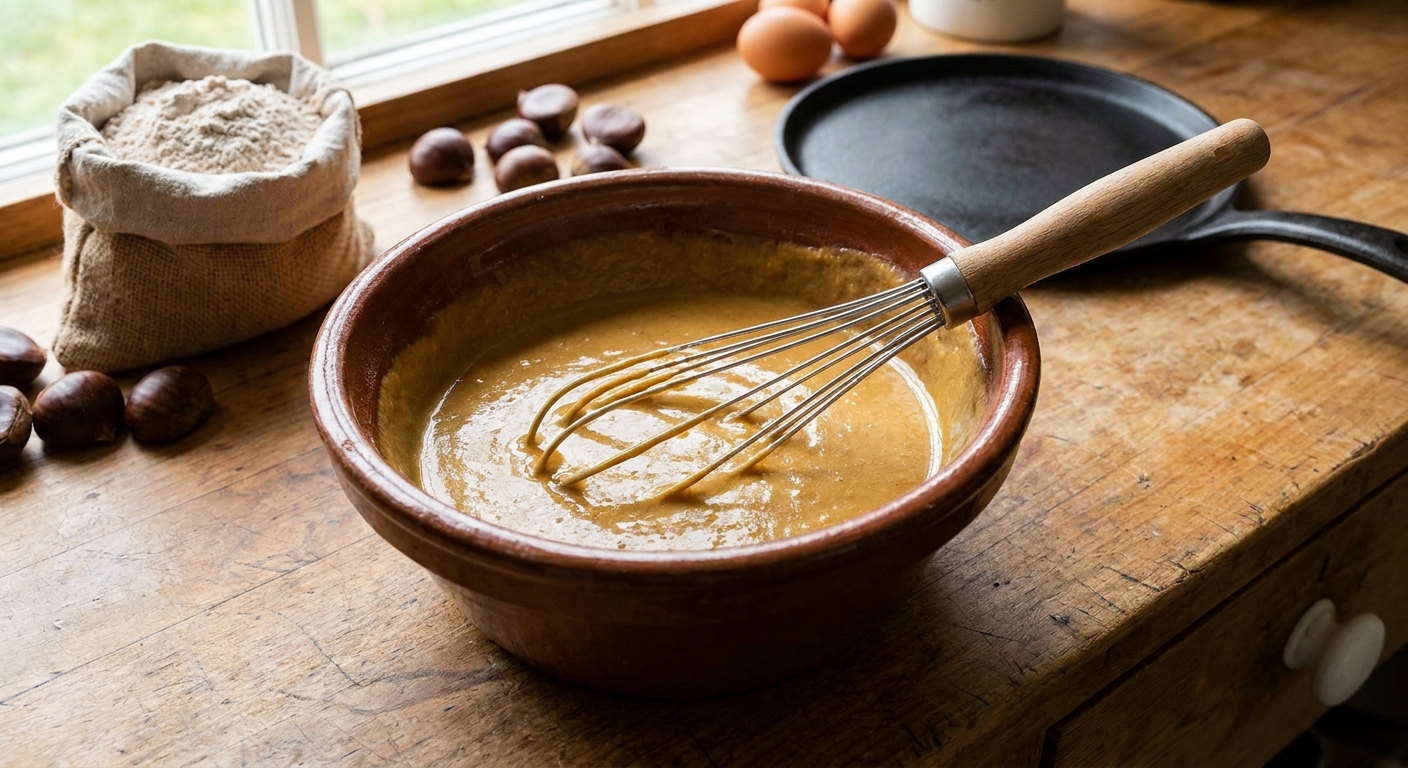
- 8 to 10 inch nonstick skillet or a well-seasoned crepe pan
- Whisk (or blender for extra-smooth batter)
- 1/4 cup measuring cup or small ladle for portioning
- Thin spatula for flipping
- Plate and a clean kitchen towel or foil to keep crepes warm
If you are curious about pan materials, my guide to nonstick pans ranked worst to best can help you pick what will be easiest for crepes.
Pro tips
- Rest the batter. I aim for 20 to 30 minutes on the counter, or cover and refrigerate up to overnight. Rested batter spreads thinner and cooks more evenly.
- Find the right heat once, then do not chase it. Medium to medium-low is usually right. If your first crepe is pale and gummy, bump the heat slightly. If it browns too fast or gets crispy edges, lower it.
- Use a light hand with oil. Too much oil fries the edges and makes crepes stiff. A quick swipe of oil or butter is enough.
- Flip when the top looks matte. You want the surface to lose its wet shine and the edges to look set before flipping.
- Keep them covered. Stack cooked crepes and cover with a towel or foil. Trapped steam keeps them soft and foldable.
Substitutes
Dairy-free
Use an unsweetened plant milk and swap the ricotta filling for a thick, unsweetened coconut yogurt or a dairy-free ricotta alternative. Honey is not vegan, so use maple syrup instead.
Sweetener
Instead of honey, try maple syrup, a spoonful of chestnut puree, or a dusting of powdered sugar.
Filling ideas beyond ricotta
- Mascarpone with a little lemon zest
- Greek yogurt with cinnamon
- Nut butter plus sliced bananas
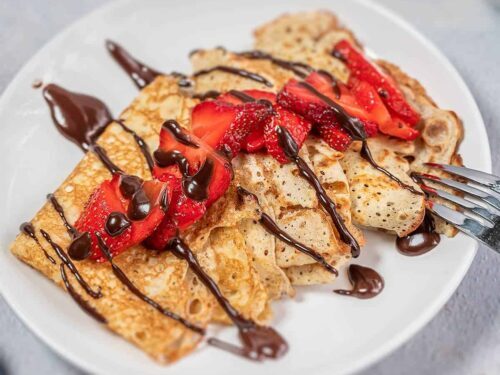
If you love the crepe-and-spread vibe, my Nutella strawberry crepes are a fun weekend option, while these chestnut ones keep things gluten-free.
Variations
Necci-style (most traditional)
Keep the crepes thin and fill with ricotta, then fold into quarters.
Breakfast crepes
Fill with ricotta, honey, and berries, or go savory with a soft scrambled egg and a handful of arugula.
Dessert crepes
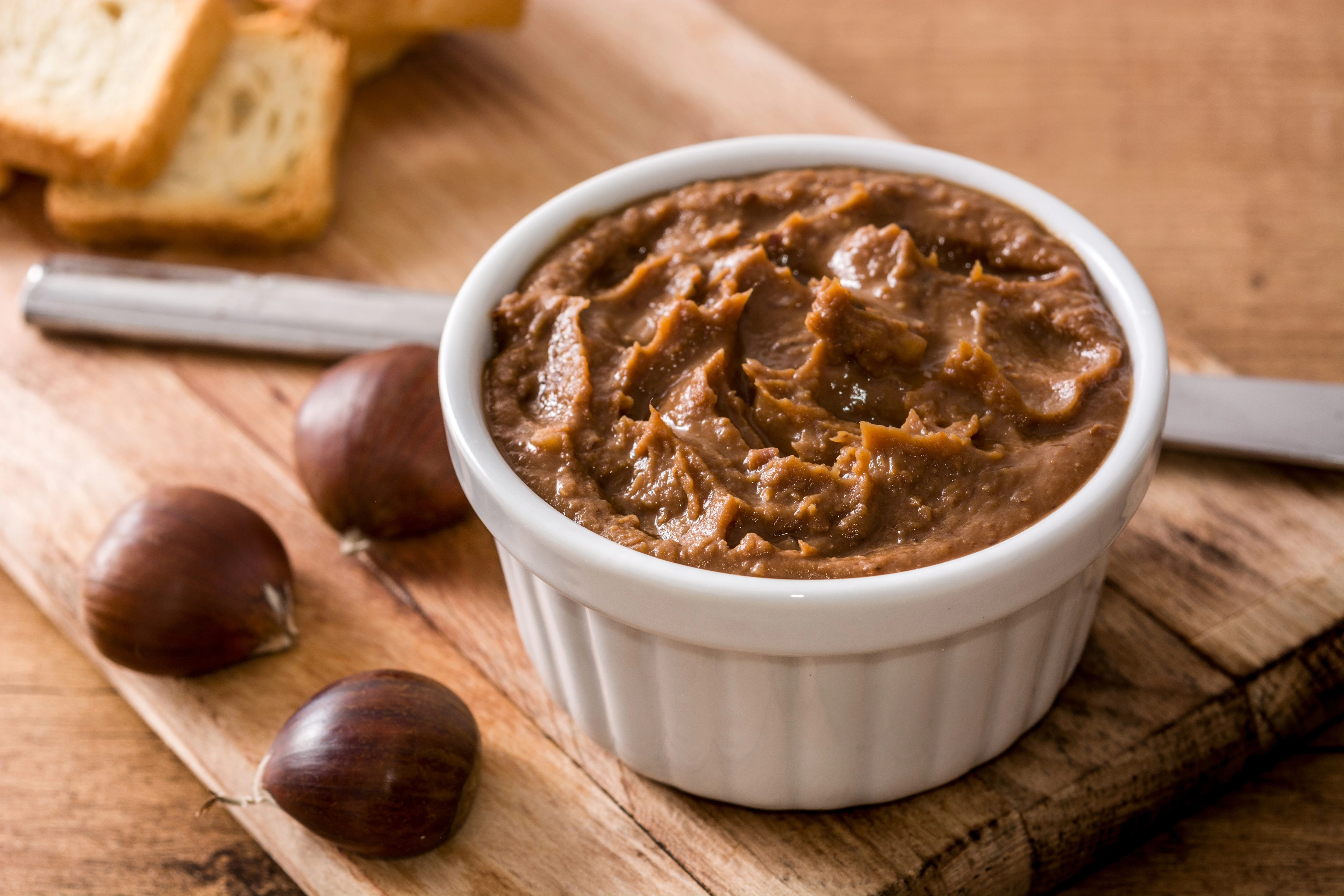
Spread with chestnut puree and add whipped cream. If you want to make your own, see chestnut puree.
Savory twist
Add a pinch of black pepper and chopped rosemary to the batter, then fill with sautéed mushrooms and a little goat cheese.
Serving ideas
- Classic: ricotta + honey + pinch of flaky salt
- Bright: ricotta + lemon zest + raspberries
- Cozy: ricotta + cinnamon + chopped toasted walnuts
- After-dinner: warm crepes with a scoop of raspberry sorbet
Storage
Refrigerator
Store cooled crepes stacked with parchment between them in an airtight container for up to 3 days.
Freezer
Freeze stacked crepes with parchment between layers in a freezer bag for up to 2 months.
Reheating
Warm briefly in a dry skillet over medium-low heat for 10 to 20 seconds per side, or microwave covered with a slightly damp paper towel in short bursts until flexible.
Common mistakes (and how to fix them)
The batter is too thick to swirl
Chestnut flour can drink up liquid as it rests. Whisk in more milk 1 tablespoon at a time until the batter pours easily and coats the pan in a thin layer.
The crepes crack when folded
This is almost always too-high heat or overcooking. Lower the heat one notch and pull each crepe as soon as it is set. Also keep finished crepes covered so they stay steamy and flexible.
The crepes stick
Make sure the skillet is fully preheated, then lightly oil it. If your pan is older nonstick, you may need a touch more fat each round.
The flavor is bitter
Chestnut flour should taste sweet and nutty. If it is bitter or stale, it may be old. Store chestnut flour tightly sealed in the fridge or freezer for best flavor.
FAQ
Are chestnut flour crepes gluten-free?
Yes, chestnut flour is naturally gluten-free. Always check your package for gluten-free labeling if you have celiac disease or need to avoid cross-contact.
How long should I rest the batter?
At least 20 minutes helps a lot. If you have time, 1 hour is even better. You can also refrigerate the batter overnight, then whisk well before cooking.
What pan temperature is best?
Medium to medium-low. You want gentle, even cooking so the crepe stays pliable. If the crepe browns in under 30 seconds, the pan is too hot.
Why do my crepes feel dry?
Dry crepes usually mean the pan is too hot or the crepe cooked too long. Pull them as soon as the top looks matte and set, then keep them covered in a stack.
Can I make these ahead for a brunch?
Definitely. Make the crepes up to 3 days ahead, refrigerate, then rewarm briefly in a skillet and fill right before serving.
Recipe
Thin, tender chestnut flour crepes inspired by Italian necci. Naturally gluten-free, lightly sweet, and perfect with ricotta and honey.
- 1 cup (120 g) chestnut flour
- 1/4 teaspoon fine salt
- 2 large eggs
- 1 1/4 cups (300 ml) milk (dairy or unsweetened non-dairy), plus more as needed
- 1 tablespoon olive oil (or melted butter), plus more for the pan
- 1/2 teaspoon vanilla extract (optional, for sweet crepes)
- 3/4 cup ricotta cheese, for serving
- Honey, for drizzling
- Flaky salt (optional), for finishing
- Mix the dry ingredients. In a medium bowl, whisk together the chestnut flour and salt.
- Add wet ingredients. Add the eggs, milk, olive oil, and vanilla (if using). Whisk until smooth. The batter should be thin and pourable, similar to heavy cream. If it looks thick, whisk in 1 to 2 tablespoons more milk.
- Rest the batter. Cover and let rest at room temperature for 20 to 30 minutes. (Or refrigerate up to overnight, then whisk well before cooking.)
- Heat the pan. Heat an 8 to 10 inch nonstick skillet over medium to medium-low heat. Lightly oil the pan with a small amount of oil or butter.
- Cook the first crepe. Pour about 1/4 cup batter into the center of the pan and immediately swirl to coat the bottom in a thin layer. Cook until the top looks mostly set and matte and the edges lift easily, 45 to 75 seconds.
- Flip. Slide a thin spatula under the crepe and flip. Cook the second side until set, about 20 to 40 seconds more.
- Keep warm and flexible. Transfer to a plate and cover with a clean kitchen towel or foil. Repeat with remaining batter, lightly oiling the pan as needed and adjusting heat so the crepes cook gently without crisping.
- Fill and serve. Spread a spoonful of ricotta on each crepe, drizzle with honey, and finish with a tiny pinch of flaky salt if you like. Fold or roll and serve warm.
Notes
- Batter thickness after resting: Chestnut flour can thicken as it sits. If swirling feels hard, whisk in more milk 1 tablespoon at a time.
- Heat cue for flexibility: If the crepes get crisp edges or crack when folded, your pan is too hot or you are cooking too long. Lower the heat and pull them earlier.
- Make-ahead: Cook crepes, cool, then stack with parchment between layers. Rewarm briefly in a dry skillet to bring back softness.