Delishing
Braised Beef Short Ribs

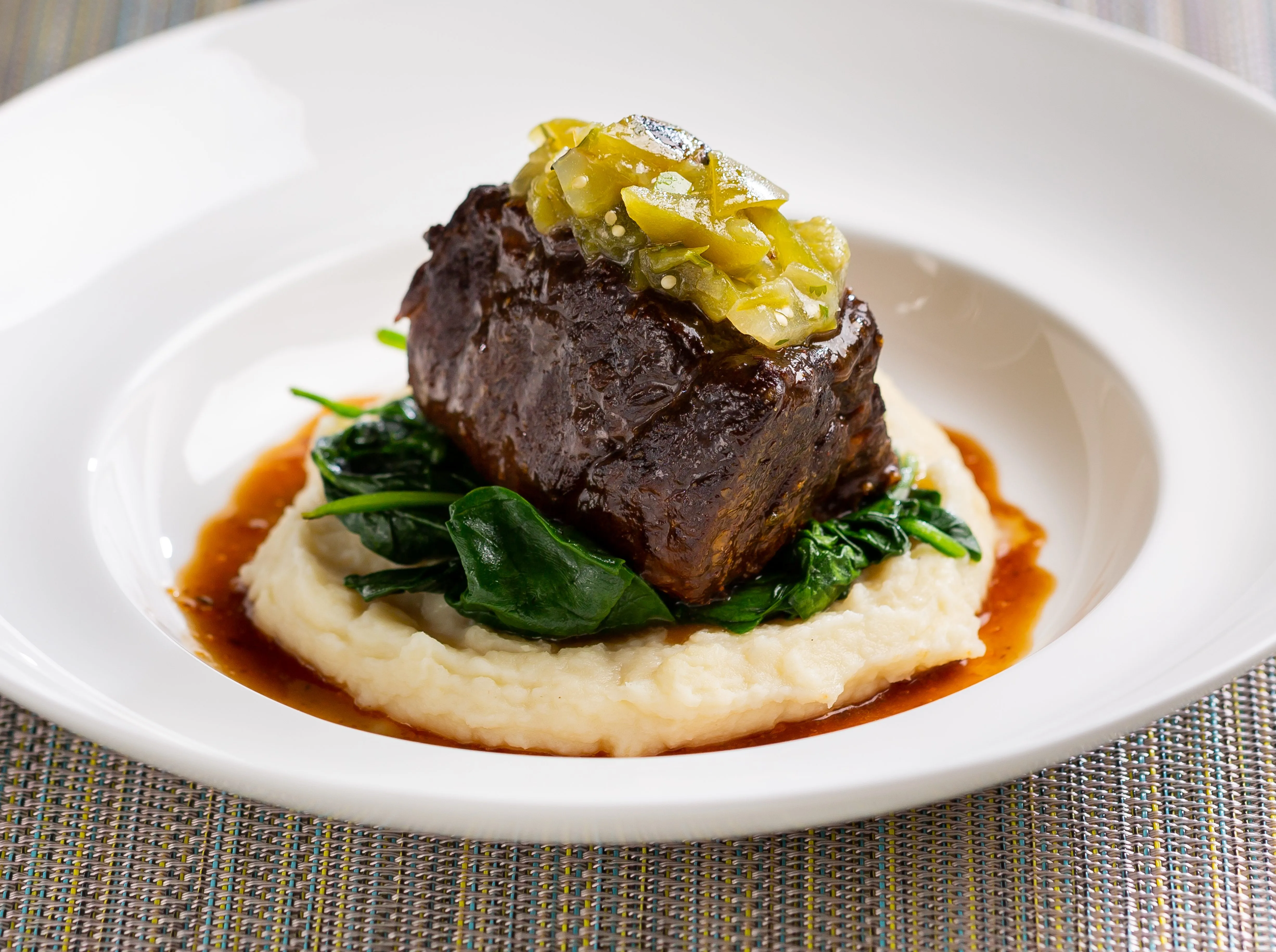
Beef short ribs are my go-to when I want a dinner that feels restaurant-level, but I still want it to be mostly hands-off once it hits the oven. The secret is not a complicated ingredient list, it is a hard sear for deep flavor, then a low, slow braise until the meat relaxes and turns spoon-tender.
Once the pot is in the oven, you can walk away, but I do like to peek once or twice to make sure the liquid is holding at a gentle simmer and has not reduced too far. After that, it is all about time and patience.
This recipe is written for classic English-cut short ribs, the thick, tall pieces most people picture. I also included clear notes for flanken-cut, the thin cross-cut strips, because they cook differently and can go from "still chewy" to "falling apart" fast if you use the same timing.
Expect a rich, savory sauce you can reduce into something silky and glossy, plus practical cues for doneness, trimming the fat cap without overdoing it, and the easiest make-ahead method for less stress at dinnertime.
For other cozy, low-effort dinners, you might also like The Coziest Oven Pot Roast or my weeknight-friendly Cozy Beef Stew.
Why this recipe works
- A hard sear builds the base flavor. Short ribs are beefy already, but browning creates the kind of depth you cannot add later.
- Low oven temperature prevents tough, stringy meat. Gentle heat gives collagen time to melt into the braising liquid.
- Covered braise, uncovered reduction. You get moist, tender meat first, then a concentrated sauce that tastes like you babysat it.
- Make-ahead friendly by design. Short ribs taste even better the next day, and chilling makes de-fatting easy.
Ingredient notes
English-cut vs flanken-cut
English-cut short ribs are cut parallel to the bone into thick blocks, usually 2 to 3 inches thick with one bone per piece. They are ideal for a long braise.
Flanken-cut short ribs are cut across the bones into thinner strips (often 1/2 to 1 inch thick) with multiple small bone cross-sections. They can be braised, but they finish much faster and are easier to overcook into dry shreds.
Wine or no wine
Dry red wine adds complexity and helps dissolve the browned bits on the pot. If you do not cook with wine, swap more beef broth and add 1 tablespoon balsamic vinegar for a similar “lift.”
Tomato paste
A small amount of tomato paste does not make the dish taste like tomato. It adds savory depth and helps the sauce turn glossy when reduced.
Fat cap trimming
Short ribs often come with a thick fat cap. Trim only the thick, hard layer down to about 1/8 to 1/4 inch. Leave some fat for flavor and moisture. You can always remove excess fat from the sauce later.
Equipment
- Large Dutch oven with a tight-fitting lid (6 to 7 quarts is ideal)
- Tongs for turning ribs
- Instant-read thermometer (optional but helpful for doneness confidence)
- Fine-mesh strainer (optional, for a smooth sauce)
- Fat separator or a spoon for skimming
Pro tips
- Dry the ribs well before seasoning. Moisture is the enemy of browning. Pat them dry, then salt.
- Do not crowd the pot. Sear in batches so you get real browning instead of steaming.
- Keep the braise at a bare simmer. In the oven, you want occasional gentle bubbles, not a rapid boil.
- Doneness is about tenderness, not temperature. A probe may read anywhere from about 190 to 205°F when tender, but the real test is: does a fork slide in easily and does the meat want to pull apart?
- Reduce the sauce after the ribs are done. If you reduce too early, you risk overcooking the meat while you chase the sauce texture.
Substitutes
- Red wine: Replace with additional beef broth plus 1 tablespoon balsamic vinegar.
- Beef broth: Use bone broth or stock. In a pinch, water plus a little extra salt works, but the sauce will be less rich.
- Fresh herbs: Swap thyme and rosemary for 1 to 2 teaspoons dried thyme (add dried early, add fresh at the end if you want a brighter note).
- Gluten-free: This recipe is naturally gluten-free as written, just confirm your broth is gluten-free.
Variations
- Garlic-forward: Add an extra head of garlic, halved crosswise, tucked into the braise.
- Asian-inspired braise: Replace wine with 1/2 cup soy sauce plus 2 cups broth, add a thumb of ginger and a spoonful of brown sugar. Reduce carefully since soy sauce concentrates quickly.
- Extra-vegetable: Add parsnips or mushrooms during the last 60 to 75 minutes so they do not turn to mush.
Serving ideas
- Classic: Over mashed potatoes, polenta, or buttered egg noodles.
- Roasty sides: Pair with Garlic Roasted Vegetables or Roasted Brussels Sprouts.
- Something green: A simple salad like Cobb Salad with Blue Cheese balances the richness.
- Sauce moment: Spoon extra reduced sauce over everything. Nobody complains.
Storage and make-ahead
Best make-ahead method (my weeknight lifesaver)
Braise the ribs fully, then cool them in the braising liquid. Refrigerate overnight. The next day, the fat rises and solidifies on top, making it incredibly easy to lift off.
Rewarm gently in a 300°F oven, covered, until heated through. Reduce the sauce after reheating, if needed.
Refrigerator
Store ribs in their sauce in an airtight container for up to 4 days.
Freezer
Freeze ribs in sauce for up to 3 months. Thaw overnight in the fridge, then reheat covered in a low oven or on the stove at a gentle simmer.
Common mistakes (and how to avoid them)
- “My short ribs are tough.” They are under-braised. Keep going. Tough means the collagen has not melted yet.
- Boiling the braise. High heat can make the meat dry and stringy. Aim for a lazy simmer.
- Skipping the sear. You will still get tender meat, but the sauce will taste flat.
- Trimming all the fat. Short ribs need some fat for flavor and texture. Trim the thick cap, not every bit of marbling.
- Reducing the sauce with the ribs in the pot. By the time the sauce is perfect, the meat can be overcooked and falling apart in a sad way. Pull the ribs out first.
FAQ
How do I know when braised short ribs are done?
They are done when a fork slides in with very little resistance and the meat is visibly pulling away from the bone. If you lift one with tongs, it should feel tender and a little “relaxed,” not stiff.
What if my sauce is greasy?
Skim fat from the surface with a spoon, or chill the sauce until the fat solidifies and lift it off. For same-day cooking, a fat separator works well.
Can I use flanken-cut short ribs in this recipe?
Yes, but treat them as a faster cook. Keep the same method, but start checking around 1 1/2 hours and expect total braise time closer to 2 to 2 1/2 hours depending on thickness. They should be tender, not shredded.
Should the ribs be fully covered by liquid?
No. For braising, you want the liquid to come about halfway to two-thirds up the sides of the meat. The covered pot traps steam that finishes the job.
Braised Beef Short Ribs
Deeply browned, slow-braised beef short ribs in a rich red wine sauce, finished by reducing the braising liquid into a glossy gravy.
Prep time: 25 minutes
Cook time: 3 hours 15 minutes
Total time: 3 hours 40 minutes
Servings: 4 to 6
- 4 to 5 lb English-cut beef short ribs (about 6 to 8 pieces)
- 2 1/2 tsp kosher salt, plus more to taste
- 1 1/2 tsp freshly ground black pepper
- 2 tbsp neutral oil (avocado, grapeseed, or canola)
- 1 large yellow onion, diced
- 2 medium carrots, diced
- 2 celery ribs, diced
- 6 garlic cloves, smashed and peeled
- 2 tbsp tomato paste
- 2 tbsp all-purpose flour (optional, for slightly thicker sauce)
- 2 cups dry red wine
- 2 cups beef broth
- 2 tbsp balsamic vinegar
- 2 sprigs fresh rosemary
- 6 sprigs fresh thyme
- 2 bay leaves
- Heat the oven: Arrange a rack in the lower third of the oven and preheat to 300°F.
- Trim and season: Pat the short ribs very dry with paper towels. Trim only the thick, hard fat cap down to about 1/8 to 1/4 inch, leaving marbling intact. Season all over with kosher salt and pepper.
- Sear hard: Heat a large Dutch oven over medium-high heat. Add oil. When the oil shimmers, sear ribs in batches, without crowding, until deeply browned on all sides, 3 to 5 minutes per side. Transfer browned ribs to a plate.
- Saute the aromatics: Reduce heat to medium. Add onion, carrots, and celery to the pot with a pinch of salt. Cook, scraping up browned bits, until softened and lightly browned, 8 to 10 minutes. Add garlic and cook 1 minute.
- Build the braise base: Stir in tomato paste and cook 1 to 2 minutes until it darkens slightly. If using flour, sprinkle it in and cook 1 minute, stirring constantly.
- Deglaze: Pour in the red wine and bring to a simmer, scraping the bottom well. Simmer 5 to 7 minutes to reduce slightly.
- Add broth and aromatics: Stir in beef broth and balsamic vinegar. Add rosemary, thyme, and bay leaves.
- Braise: Nestle the short ribs back into the pot, bone side down when possible. The liquid should come about halfway to two-thirds up the ribs. Bring just to a gentle simmer on the stovetop. Cover with the lid and transfer to the oven.
- Cook until tender: Braise until fork-tender and the meat is pulling away from the bone, about 2 1/2 to 3 1/2 hours for English-cut ribs. Start checking at 2 1/2 hours. If they are still tough, keep cooking and check every 20 to 30 minutes.
- Rest and remove ribs: Transfer ribs to a platter and tent loosely with foil. Let rest 15 minutes.
- Strain (optional) and de-fat: For a smoother sauce, strain the braising liquid through a fine-mesh strainer into a saucepan, pressing on the vegetables. For a rustic sauce, skip straining and reduce it as is. Skim excess fat from the surface.
- Reduce the sauce: Simmer sauce over medium heat until glossy and slightly thickened, 10 to 20 minutes. Taste and season with additional salt and pepper as needed.
- Serve: Spoon reduced sauce over the ribs and serve hot.
Flanken-cut note: If using flanken-cut short ribs (thinner cross-cut strips), keep the same sear and braise method, but start checking around 1 1/2 hours. Typical total braise time is 2 to 2 1/2 hours depending on thickness. They are done when tender and easy to pull apart, not dry or stringy.
Make-ahead note: Braise the ribs fully, cool in the braising liquid, and refrigerate overnight. Lift off the solidified fat the next day, then rewarm covered in a 300°F oven until hot. Reduce the sauce after reheating for the best texture.