Delishing
Pan-Seared Filet Mignon

Filet mignon is one of those dinners that feels like a restaurant flex, but it is actually a weeknight-friendly method once you know the timing and temperature cues. The biggest win is that filet mignon (filet) is naturally tender and typically leaner than many other steaks, so all we really have to do is build a deep, browned crust and keep the inside juicy.
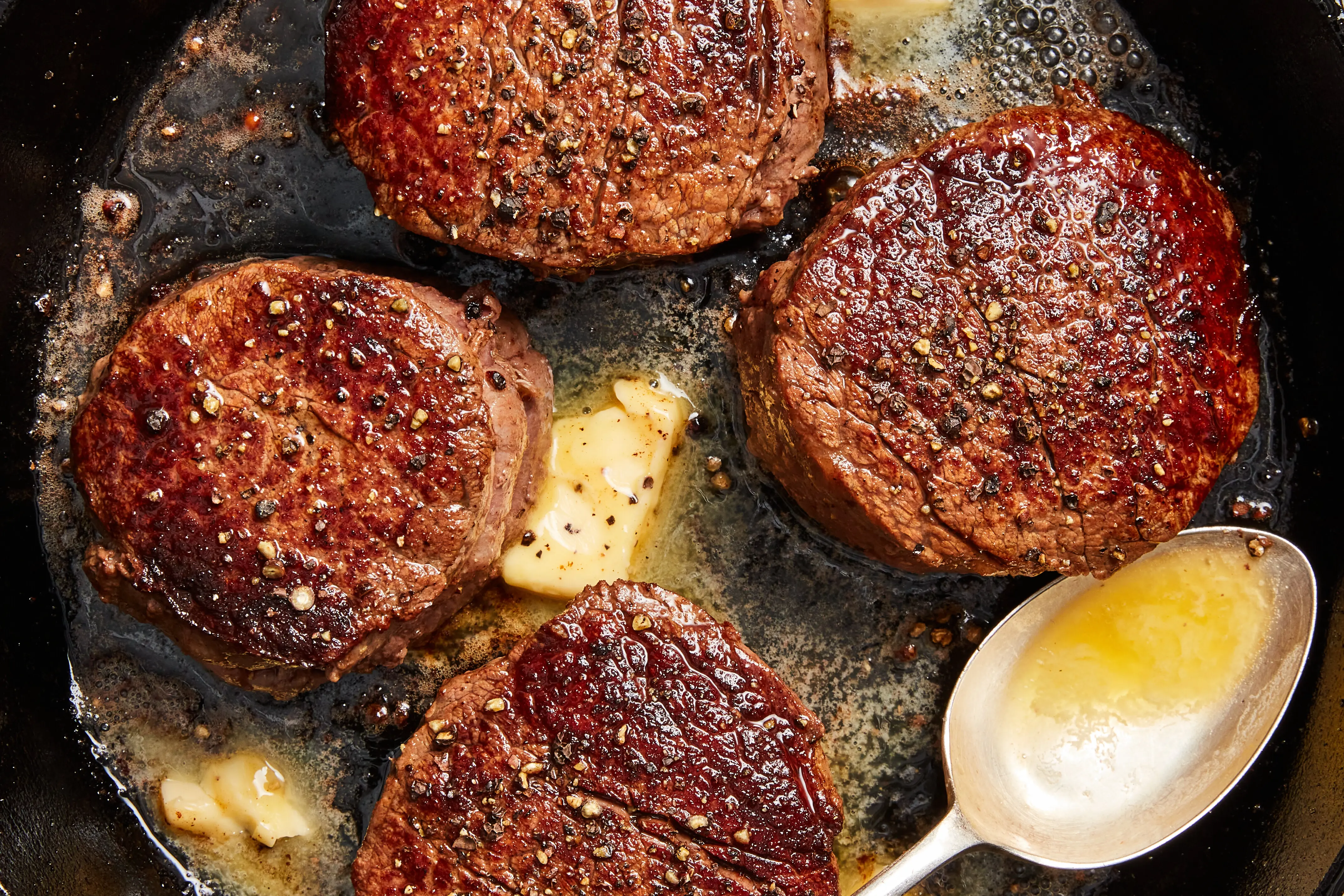
This is my go-to method when I want something reliably special: season generously, get a hard sear in a screaming-hot pan, then finish with a quick butter baste to add richness that filet does not naturally have. I also give you clear thickness guidance, plus exact pull temperatures for rare through medium, because that is what keeps filet from turning into an expensive hockey puck.
If you are craving other steak nights, keep in mind this is specifically for individual filet steaks. A whole tenderloin roast is a different cook entirely, and so is ribeye. If that is what you need, head to our Roasted Beef Tenderloin Recipe or Garlic Butter Ribeye Steak.
What to expect
- Best thickness for this method: 1.5 to 2 inches, which makes it easier to get a real crust without blowing past your target doneness.
- Cooking method: stovetop sear plus butter baste, with an optional oven finish if your steaks are thicker than 2 inches.
- Doneness targets: pull at 120 to 125 degrees F (rare), 125 to 130 degrees F (medium-rare), or 135 to 140 degrees F (medium), then rest so carryover heat can finish the job.
- Pan choice: cast iron or stainless steel gives you the best sear.
Why it works
- High heat first: Filet is leaner than many cuts, so the crust is your flavor. A hard sear delivers that savory, browned edge fast.
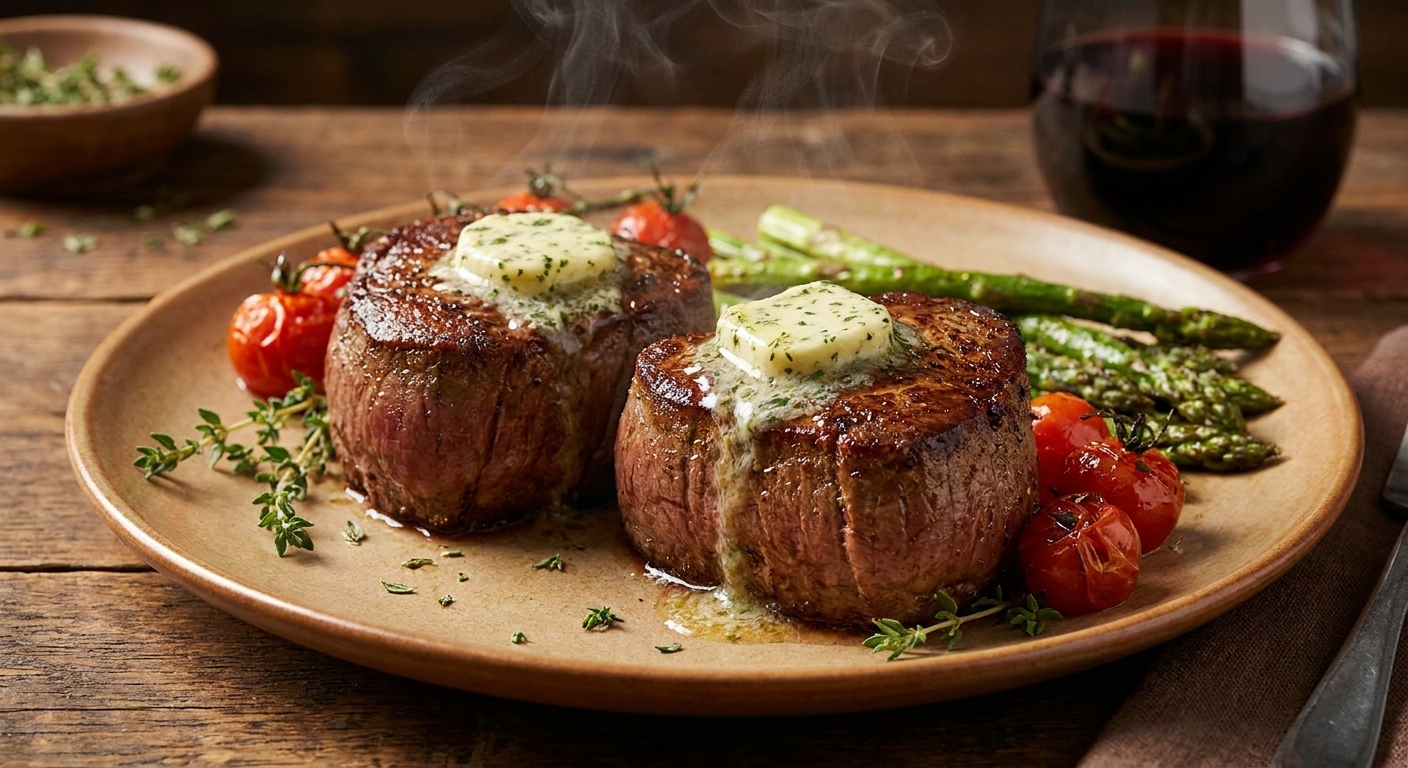
- Butter baste adds richness: Basting with butter and aromatics gives filet the luxurious finish people expect from a steakhouse.
- Temperature-based doneness: Filet overcooks quickly. Using an instant-read thermometer takes the stress out of timing.
- Resting is non-negotiable: A short rest keeps the juices in the steak instead of on your cutting board.
Ingredient notes
- Filet mignon steaks: Look for steaks that are 1.5 to 2 inches thick, about 6 to 8 ounces each. Thinner filets cook too fast to develop a great crust without overshooting your target temperature.
- Kosher salt: Filet can handle a generous season. If you only have fine table salt, use less since it is denser.
- Freshly ground black pepper: Pepper can burn at very high heat, but for filet I still like it for that classic steakhouse bite. If you are sensitive to bitterness, pepper after searing.
- High-heat oil: Avocado, grapeseed, or canola oil all work well. Save olive oil for lower heat cooking.
- Unsalted butter: Lets you control the salt level. The butter will brown slightly during basting and that is a good thing.
- Garlic and herbs: Optional but highly recommended. A couple of smashed garlic cloves plus thyme or rosemary makes the baste smell incredible and tastes even better.
Equipment
- Cast iron or stainless steel skillet: You want a pan that holds heat. Nonstick is not ideal for a hard sear.
- Instant-read thermometer: The most reliable way to nail medium-rare and medium every time.
- Tongs: For easy turning and edge-searing.
- Spoon: For basting.
- Wire rack (optional): Helpful for dry-brining or air-drying the steaks in the fridge.
Pro tips
- Dry surface equals better crust: Pat the steaks very dry. If you have 30 to 60 minutes, salt them and leave them uncovered in the fridge to dry a bit.
- Do not move the steak too soon: The first sear should be undisturbed so it can brown properly.
- Sear the edges: Filet is thick, so quickly searing the sides makes it look and taste more finished.
- Pull early: Carryover cooking is real. Pull the steak 5 to 10 degrees F before your final target.
- Butter goes in after the sear: This prevents burnt butter and keeps the flavor nutty, not bitter.
Substitutes
- Oil: Any neutral high-heat oil works. If using ghee, you can baste earlier since it is more heat-stable than butter.
- Butter: Dairy-free butter can work for basting, but watch the heat since some brands brown faster. You can also baste with olive oil and aromatics for a lighter finish.
- Herbs: Swap thyme for rosemary, or use a bay leaf in the butter for a subtle savory note.
Variations
Grill note
For 1.5 to 2-inch filets, grill over high heat to sear, then move to indirect heat to finish. Close the lid and cook to the same internal temperatures listed in the recipe card, then rest.
Broiler note
For a broiler finish, sear the filet in an oven-safe skillet, then move it under a hot broiler to reach your target internal temperature. Keep a close eye on it because filet can jump from perfect to overdone quickly.
Serving ideas
- Classic steakhouse plate: Pair with crisp roasted vegetables like our Garlic Roasted Vegetables.
- Cozy side: Spoon the pan butter over a baked potato like our Baked Potato With Sour Cream.
- Something fresh: Add a simple tomato-forward side such as Caprese Salad.
Storage
- Refrigerate: Store leftover filet mignon in an airtight container for up to 3 days.
- Reheat gently: The best way is to warm slices in a low oven (about 250 degrees F) until just heated through, or briefly in a covered skillet over low heat with a splash of broth or a small pat of butter.
- Freezing: You can freeze cooked steak, but filet is at its best fresh. If freezing, wrap tightly and freeze up to 2 months, then thaw overnight in the refrigerator.
Common mistakes
- Starting with a wet steak: Moisture steams the surface and blocks browning. Pat dry aggressively.
- Pan not hot enough: If you do not hear a loud sizzle immediately, your pan needs more heat.
- Overcooking while chasing crust: Filet is leaner than many cuts. If your steaks are thinner than 1.5 inches, reduce sear time and rely on the baste for flavor.
- Skipping the thermometer: Timing varies wildly by thickness and pan heat. Temperature is the reliable signal.
- Cutting too soon: Resting is part of the cooking. Slice early and you lose juiciness.
FAQ
What thickness is best for filet mignon?
For this pan-sear and butter-baste method, I get the most consistent results with 1.5 to 2-inch filets. They are thick enough to build a crust without overcooking the center.
What internal temperature should filet mignon be?
For medium-rare, aim to serve at about 130 to 135 degrees F. For medium, aim for about 140 to 145 degrees F. Pull the steaks from the heat about 5 to 10 degrees F early, then rest so carryover cooking can finish the job.
Should I bring filet mignon to room temperature before cooking?
You can let it sit out for 20 to 30 minutes while you prep, but do not stress about a full room-temp warm-up. The bigger factor is a dry surface and a hot pan.
Can I finish filet mignon in the oven?
Yes. If your filets are very thick or your stovetop runs hot, finishing in a 400 degree F oven for a few minutes after searing can help you cook through more gently. Use the same thermometer targets.
Do I need a sauce?
Not required, but filet loves something rich. The butter baste is often enough. If you want to go bigger, a simple pan sauce with a splash of broth or wine after cooking is great, just keep it quick so nothing burns.
Pan-Seared Filet Mignon
Thick filet mignon steaks seasoned simply, seared hard for a deep crust, then basted with butter, garlic, and herbs until perfectly rare, medium-rare, or medium. Rest before slicing for a juicy steakhouse-style dinner at home.
- 2 filet mignon steaks, 1.5 to 2 inches thick (about 6 to 8 ounces each)
- 1 1/2 teaspoons kosher salt, plus more to finish if desired
- 1/2 teaspoon freshly ground black pepper
- 1 tablespoon high-heat neutral oil (such as avocado, grapeseed, or canola)
- 2 tablespoons unsalted butter
- 2 garlic cloves, smashed (optional)
- 2 to 3 sprigs fresh thyme or 1 small rosemary sprig (optional)
- Dry and season. Pat the filets very dry with paper towels. Season all sides generously with the salt and pepper, including the edges.
- Preheat the pan. Place a cast iron or stainless steel skillet over medium-high to high heat and heat until very hot, 2 to 3 minutes. Add the oil and swirl to coat.
- Sear the first side. Add the filets to the pan and sear without moving them for 2 to 3 minutes, until a deep brown crust forms.
- Sear the second side. Flip and sear the second side for 2 to 3 minutes.
- Sear the edges. Using tongs, stand each filet on its side to sear the edges, about 30 to 60 seconds per edge.
- Butter baste. Reduce heat to medium. Add the butter, garlic, and herbs. When the butter foams, tilt the pan slightly and spoon the butter over the steaks continuously for 2 to 5 minutes, flipping once halfway through basting.
- Check temperature and pull early. Use an instant-read thermometer inserted into the thickest part. Pull the steaks when they reach: 120 to 125 degrees F for rare, 125 to 130 degrees F for medium-rare, or 135 to 140 degrees F for medium. (They will rise 5 to 10 degrees F as they rest.) If not there yet, continue basting and check every 30 to 60 seconds.
- Rest. Transfer filets to a plate and rest 5 to 10 minutes.
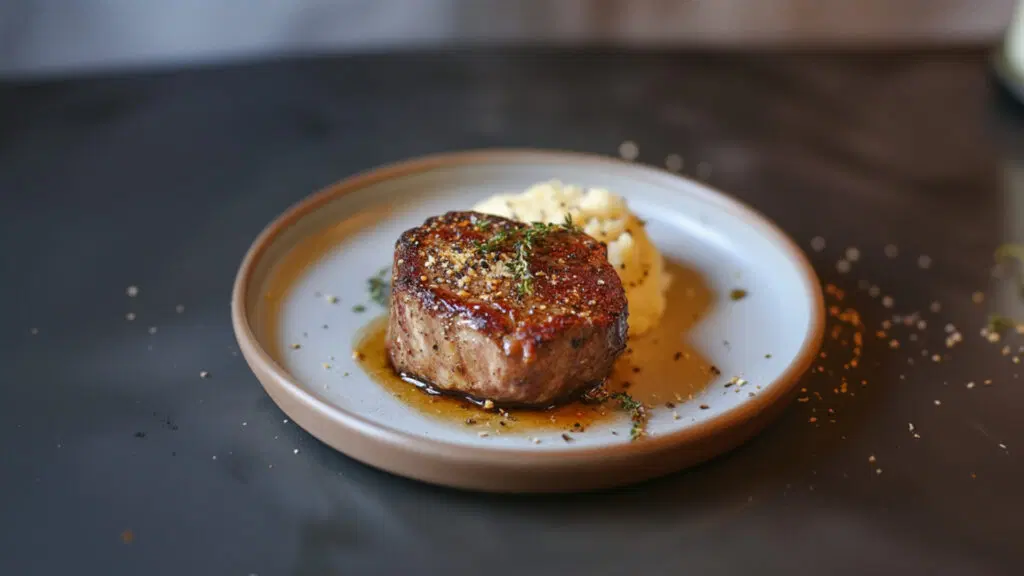
- Serve. Spoon a little of the browned butter over the top and serve whole or slice against the grain.
Doneness targets: Serve at 125 to 130 degrees F for rare, 130 to 135 degrees F for medium-rare, 140 to 145 degrees F for medium.
About timing: Exact cook time depends on thickness, starting temperature, and how hot your pan runs. For filet, the thermometer is the boss.
If your filets are thicker than 2 inches: After searing both sides, you can finish in a 400 degree F oven for a few minutes, then return to the stovetop briefly to baste with butter. Cook to temperature.
Salt timing: If you have 30 to 60 minutes, salt the steaks and leave them uncovered in the fridge to dry-brine for better seasoning and browning. If you do not, season right before cooking and you will still get a great crust.