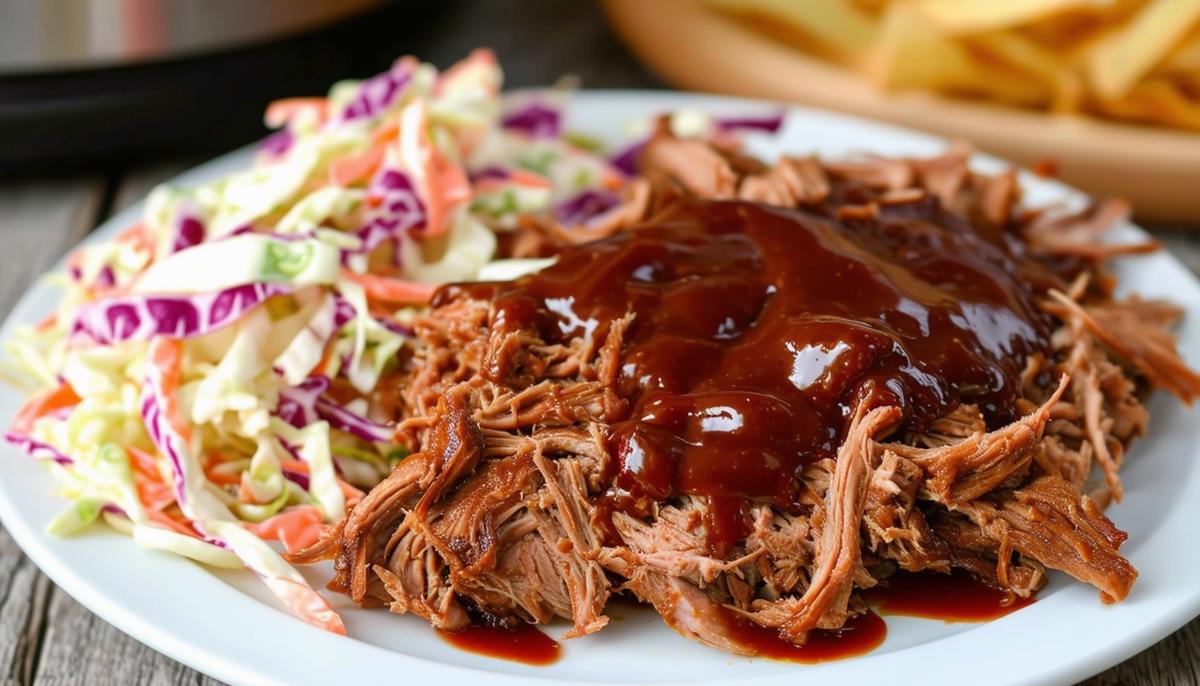
The Magic of Instant Pot Pulled Pork Let's talk about pulled pork, folks. It's not just food; it's a crowd-pleaser that brings people together. But making…
Delishing
How To Make Tamales

Maya Brooks
Maya Brooks is a dedicated home cook and the lead recipe developer at Delishing, where she shares practical, foolproof meals for everyday life. With over a decade of hands-on kitchen experience, she specializes in creating approachable dishes that fit a variety of dietary needs and modern cooking methods. Maya is passionate about helping busy people get delicious, stress-free food on the table without needing formal culinary training.
Tamales used to feel like a “someday” cooking project to me. Not because they are complicated, but because the steps are unfamiliar: hydrate masa, spread, fill, fold, steam, then trust the doneness test. Once you do it once, it clicks. This is my go-to method for a reliable batch of fluffy, tender tamales with a saucy shredded pork filling and clear checkpoints along the way.
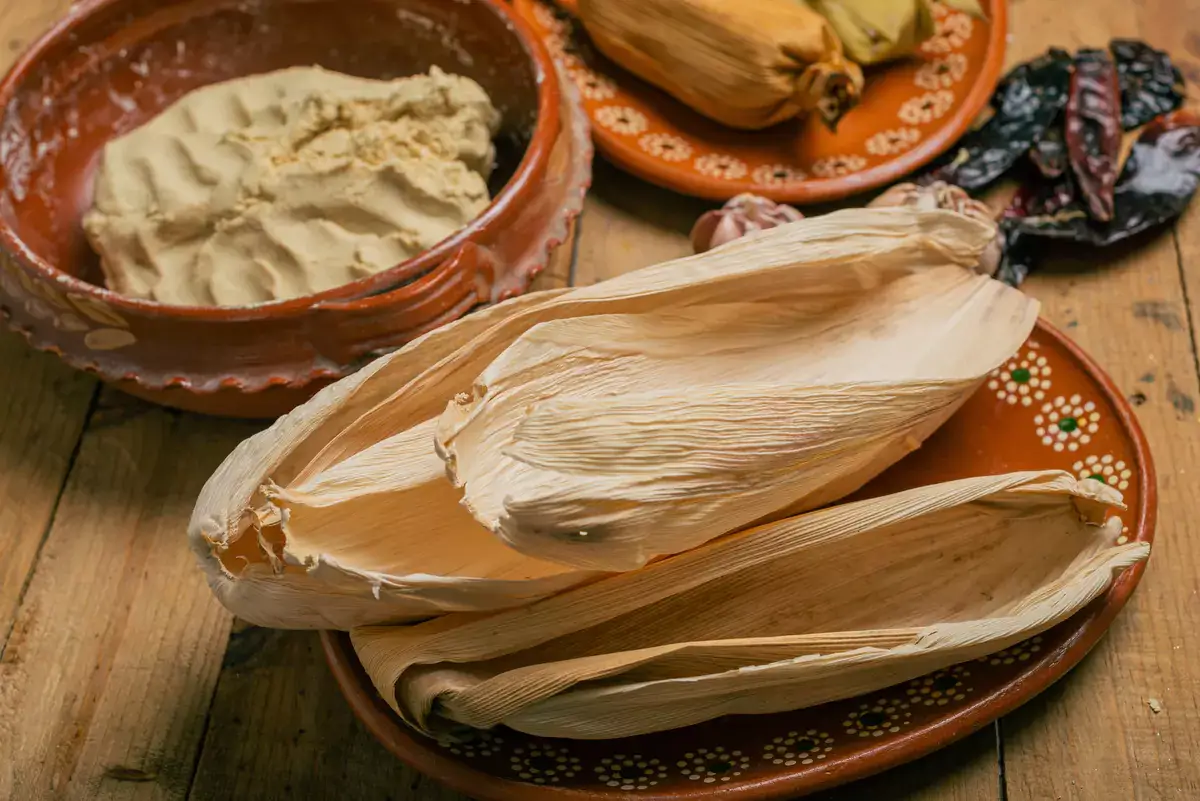
What you need (and why)
Equipment
- Large stockpot with a steamer basket or a tamalera
- Tongs for moving hot tamales
- Stand mixer or hand mixer (highly recommended for fluffy masa)
- Wide bowl or roasting pan for soaking husks
- Clean kitchen towel to cover tamales while steaming
Ingredients overview
- Dried corn husks
- Masa harina: if you can find “masa harina para tamales,” great. Regular masa harina works too, you may just need a little extra broth to reach the right texture.
- Fat: lard for classic flavor, or vegetable shortening for a good alternative
- Broth: warm chicken broth or pork broth for hydration
- Baking powder and salt for lift and seasoning
- Filling: shredded pork in a quick red chile style sauce (recipe below)
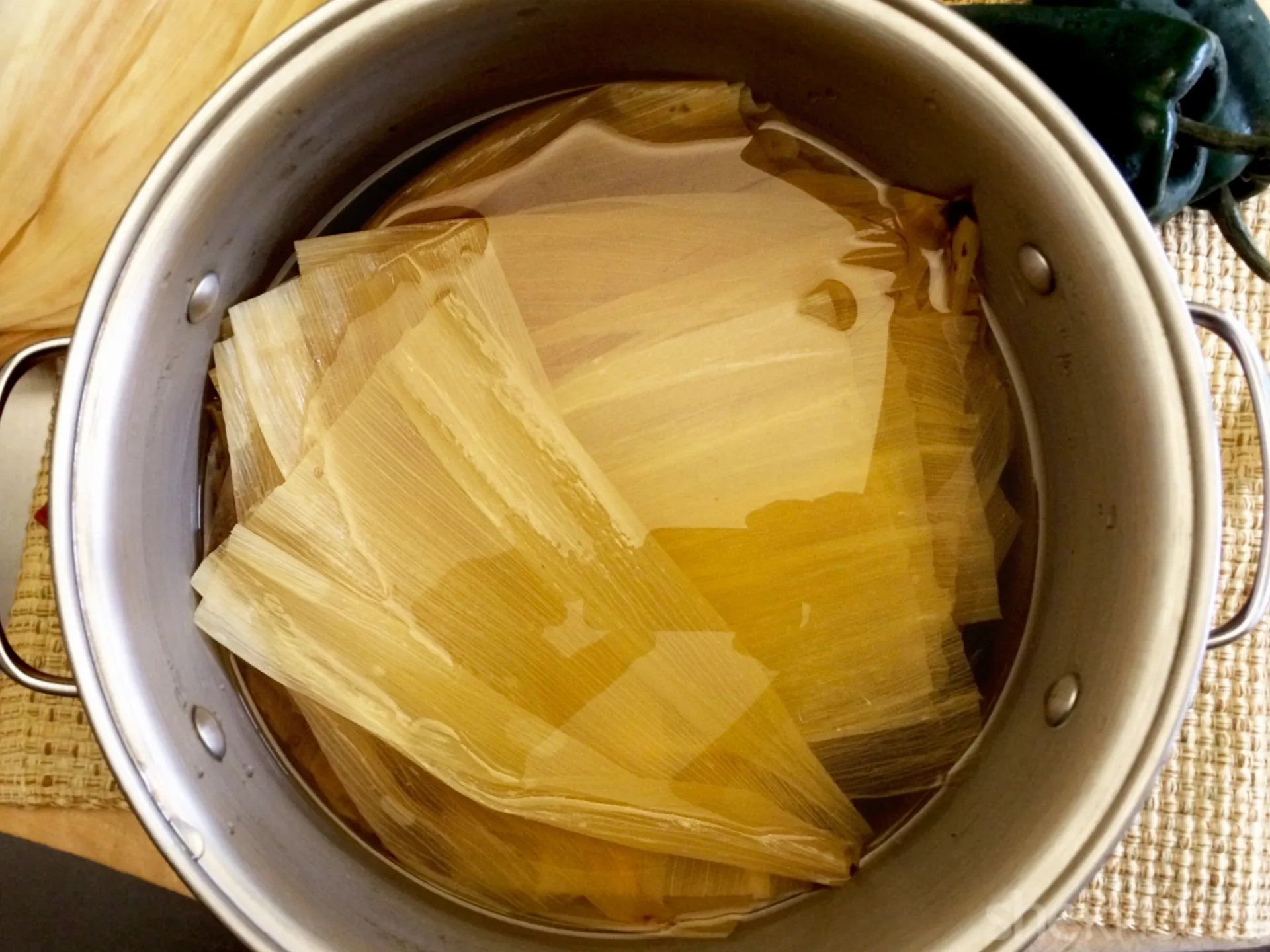
Step 1: Prep the corn husks
Plan on 30 to 45 minutes for husk soaking. This is the easiest way to prevent cracking while you fold.
- Sort husks. Pick out 24 to 30 larger, intact husks for wrapping. Set aside smaller ones to patch tears or to double-wrap.
- Soak. Place husks in a bowl or roasting pan and cover with very warm water. Weigh them down with a plate so they stay submerged.
- Rinse and drain. Swish husks in the water, then drain. Keep them covered with a damp towel while you work so they stay pliable.
- Pat dry before spreading. You do not need them bone-dry, but blotting excess water helps the masa grip the husk instead of sliding around.
Step 2: Make the filling (shredded pork)
This filling is rich, saucy, and forgiving. If your sauce ends up a little thicker or thinner, the tamales will still steam beautifully. You can make it 1 to 2 days ahead.
Note: I call this a red chile style sauce because it uses chili powder for a fast, pantry-friendly version. If you prefer a more traditional flavor, you can swap in blended dried chiles for the chili powder.
Ingredients (makes enough for about 24 tamales)
- 2 to 2 1/2 pounds pork shoulder (boneless), cut into large chunks
- 1 teaspoon kosher salt, plus more to taste
- 1/2 teaspoon ground cumin
- 1 tablespoon neutral oil
- 3 cloves garlic, minced
- 2 tablespoons chili powder (a mild blended chili powder is great here)
- 1 teaspoon smoked paprika
- 1/2 teaspoon dried oregano
- 2 tablespoons tomato paste
- 2 to 2 1/2 cups low-sodium chicken broth (or pork broth)
- 1 tablespoon apple cider vinegar or fresh lime juice
Instructions
- Season and brown. Pat pork dry. Season with salt and cumin. Heat oil in a Dutch oven over medium-high heat and brown pork on 2 sides, working in batches so it sears instead of steams.
- Build the sauce. Lower heat to medium. Add garlic and stir for 30 seconds. Stir in chili powder, paprika, oregano, and tomato paste until fragrant, about 1 minute.
- Braise. Add broth, scraping up browned bits. Bring to a simmer, cover, and cook on low until pork is very tender, 1 1/2 to 2 1/2 hours.
- Shred and return to sauce. Shred pork with two forks, then stir back into the sauce. Simmer uncovered 10 to 15 minutes to thicken slightly. Finish with vinegar or lime. Taste and adjust salt.
Filling texture target: juicy and spoonable, not soupy. If it is runny, simmer uncovered. If it is dry, add a splash of broth.
Step 3: Mix the masa
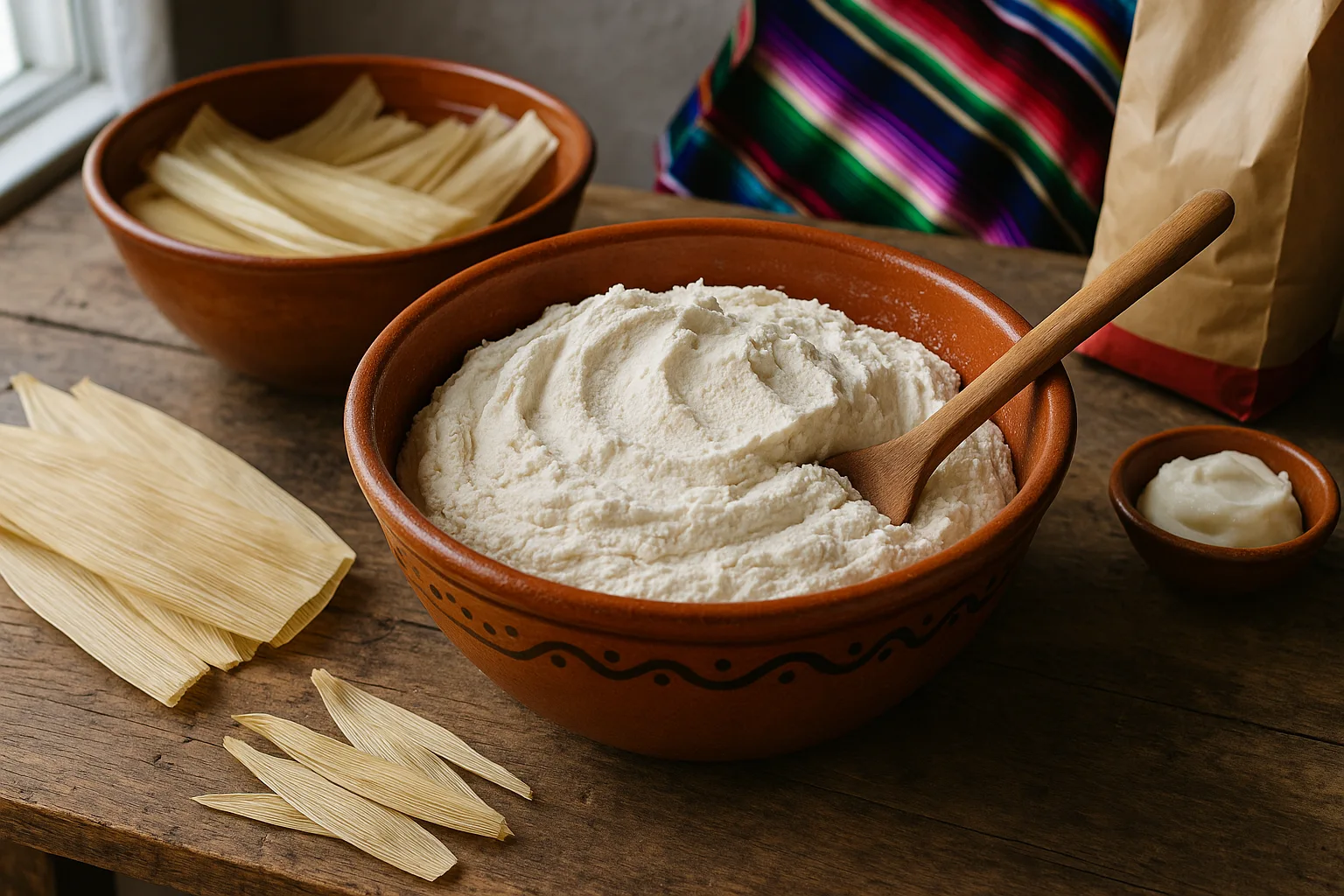
Masa is where tamales can go off track. Too dry and they crack and taste dense. Too wet and they can turn gummy or spread thin. My notebook note in big letters is: warm broth, whipped fat, and a spreadable texture like soft frosting.
One thing to expect: different brands of masa harina absorb liquid a little differently. Add broth gradually and stop when you hit that soft frosting texture, even if you do not use every drop.
Masa ingredients (for about 24 tamales)
- 4 cups masa harina (regular or for tamales)
- 2 teaspoons baking powder
- 1 1/2 teaspoons kosher salt
- 1 1/3 cups lard or vegetable shortening, at room temperature
- 3 1/2 to 4 cups warm broth (chicken or pork), divided
How to mix it
- Mix dry ingredients. In a bowl, whisk masa harina, baking powder, and salt.
- Whip the fat. In a stand mixer with the paddle attachment (or a large bowl with a hand mixer), beat lard or shortening on medium-high until lighter and fluffy, 2 to 3 minutes.
- Add masa and broth gradually. With the mixer on low, add the dry mix in 3 additions, alternating with warm broth. Scrape the bowl as needed.
- Beat for fluff. Increase speed to medium and beat 2 more minutes until the masa looks airy and smooth.
- Adjust hydration. The masa should be soft, spreadable, and hold a peak. If it feels stiff or tears when you drag a spoon through it, beat in more warm broth 2 tablespoons at a time.
Quick masa checks
- Spread test: It should spread easily on a husk without pulling the fibers.
- Pinch test: Pinch a bit between fingers. It should feel smooth and moist, not crumbly.
- Float test (optional): Drop a small piece into a cup of water. If it floats, it is usually well aerated. If it sinks, beat 1 more minute and reassess. Fat choice, fat temperature, and hydration can affect this, so treat it as a clue, not a guarantee.
Step 4: Assemble and fold
Once you get your station set up, assembly goes fast. I line up husks, then masa, then filling, then fold closed (and tie only if I need to).
Set up your station
- Soaked husks, drained, patted dry, and covered with a damp towel
- Bowl of masa with a spoon or small offset spatula
- Bowl of shredded pork filling
- A sheet pan to hold finished tamales
How much per tamale
- Masa: about 1/4 to 1/3 cup per husk
- Filling: about 1 to 1 1/2 tablespoons, centered
Folding steps
- Place the husk. Set 1 husk smooth side up, wide end closest to you.
- Spread masa. Spread masa into a rectangle about 1/4 inch thick over the upper two-thirds of the husk, leaving a 1/2 inch border along the sides and a bigger border at the bottom narrow end.
- Add filling. Spoon filling in a line down the center of the masa.
- Fold the sides. Bring one long side of the husk over the filling, then bring the other side over so the masa edges meet and seal around the filling.
- Fold the bottom up. Fold the narrow end up toward the seam. Set seam-side down on the tray.
Do you need to tie them? Not always. If your husks are wide enough and the fold holds, you can steam seam-side down. If they feel loose, tie with a thin strip of husk.
Step 5: Steam and test
Steaming is where patience pays off. Undercooked masa sticks to the husk and tastes pasty. Fully cooked masa pulls away cleanly and looks set, like a tender corn cake.
How to set up the steamer
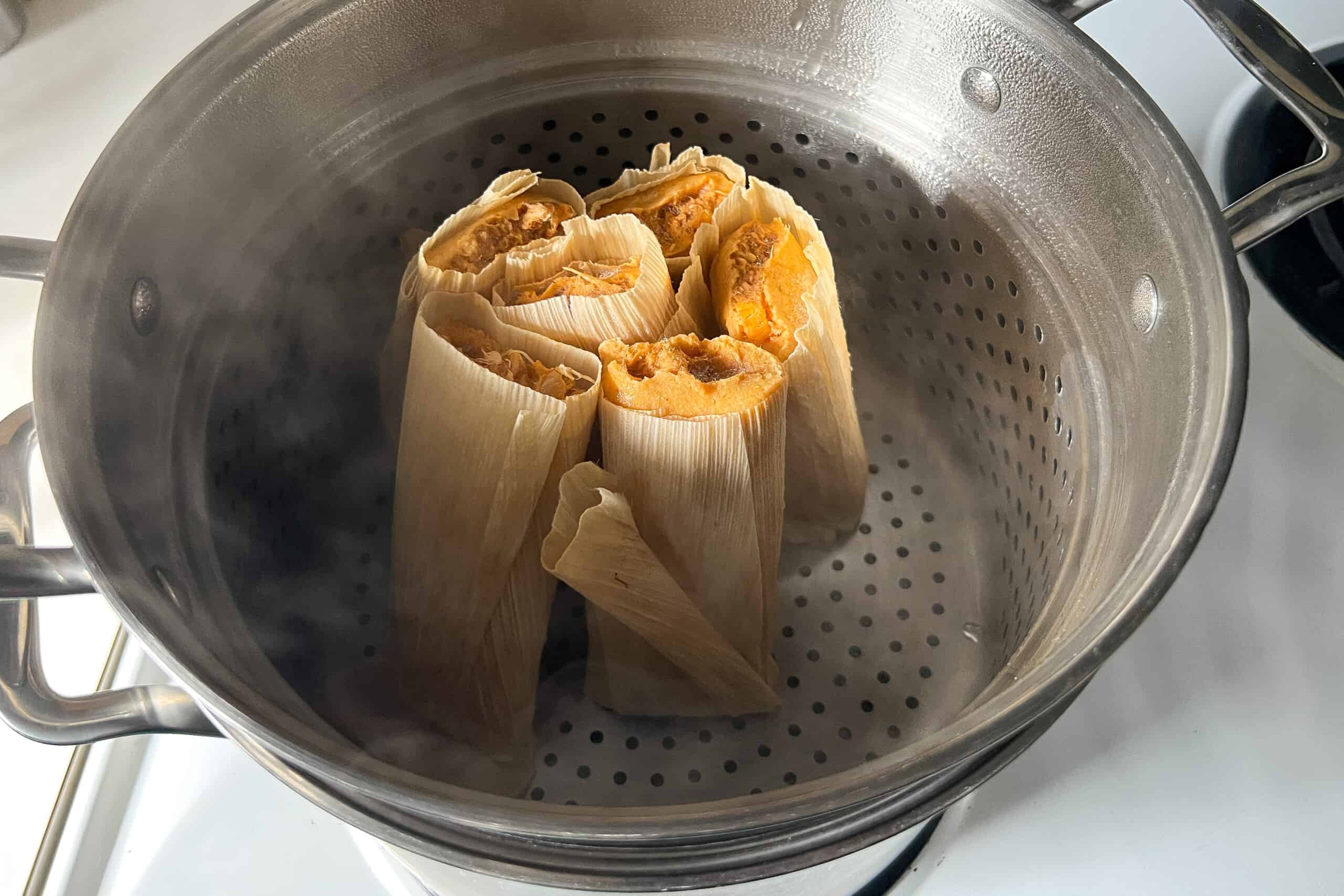
- Add water. Fill the pot with enough water that it will steam for the full cook time without drying out. In many pots that is about 1 1/2 to 2 inches, but wide pots may need more. The water should sit below the steamer basket.
- Line the basket (optional but helpful). Lay a few extra husks in the basket to keep tamales from sticking and to keep condensation gentle.
- Stand tamales upright. Place tamales open end up, packed snugly so they do not fall over. Leave a little space for steam to circulate.
- Cover with a towel, then lid. Drape a clean kitchen towel over the top of the tamales (not touching the burner), then put the lid on. The towel catches condensation so water does not drip onto the masa.
Steam time
Steam 60 to 75 minutes, maintaining a steady simmer. Check water level around the 45-minute mark and add more hot water if needed.
Real-world timing note: smaller tamales can be done closer to 45 to 60 minutes. Very large tamales, a very full pot, or higher altitude kitchens can take 90 minutes or longer. The doneness test tells the truth.
Doneness test (this is the one to trust)
- Carefully remove 1 tamale and let it rest 5 minutes.
- Unwrap the husk.
- Done: the masa pulls away cleanly from the husk, looks set, and feels springy.
- Not done: masa is sticky, wet-looking, or smears onto the husk. Rewrap and steam 10 to 15 minutes more, then test again.
My biggest reminder: tamales often “finish” in those 5 resting minutes. If you unwrap instantly, you might think they need more time when they just need a short set.
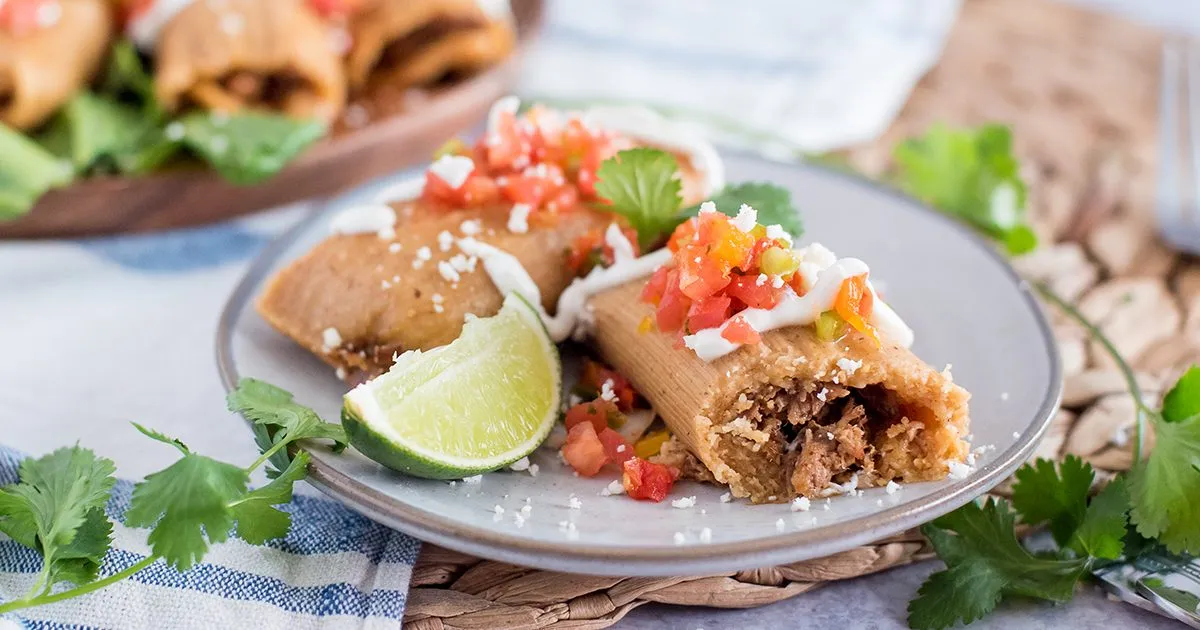
Full recipe: Pork Tamales
Yield
About 24 tamales
Time
Active: about 1 hour 15 minutes. Total: 3 to 4 hours (including filling braise and steaming).
Ingredients
- For the husks: 24 to 30 dried corn husks
- For the filling: Shredded pork in red chile style sauce (recipe above)
- For the masa: 4 cups masa harina, 2 teaspoons baking powder, 1 1/2 teaspoons kosher salt, 1 1/3 cups lard or vegetable shortening, 3 1/2 to 4 cups warm broth
Instructions
- Soak husks in very warm water 30 to 45 minutes. Drain, rinse, and keep covered with a damp towel. Pat dry before spreading.
- Make filling (or rewarm if made ahead) until spoonable and not watery.
- Mix masa by whipping fat, then beating in dry ingredients and warm broth until soft and spreadable.
- Assemble: spread 1/4 to 1/3 cup masa on each husk, add 1 to 1 1/2 tablespoons filling, fold sides to seal, fold bottom up.
- Steam upright with a towel under the lid for 60 to 75 minutes, adding hot water as needed. Start with a bit more water if your pot is wide or you know it boils off quickly.
- Test doneness: rest a tamale 5 minutes, then unwrap. Masa should release cleanly from the husk. If not, steam 10 to 15 minutes more.
- Rest before serving: Let the full batch rest 10 minutes after steaming so the masa sets.
Make-ahead, storage, and reheating
Make-ahead options
- Filling: Make up to 2 days ahead. Cool, refrigerate, then rewarm until spoonable before filling tamales.
- Masa: Best the day you steam, but you can mix it a few hours ahead. Cover tightly (press plastic wrap directly onto the surface) and keep at cool room temperature if your kitchen is not hot.
- Assembled, unsteamed tamales: Assemble, arrange in a single layer, cover well, and refrigerate overnight. Steam the next day, adding 5 to 10 minutes if they are very cold.
Storage basics
- Cool promptly: Spread cooked tamales out to cool so they do not sit steaming-hot in a tight pile.
- Refrigerate: Refrigerate within 2 hours in a sealed container.
- Fridge life: Cooked tamales keep well for about 3 to 4 days.
Freezing
- Freeze cooked tamales for best texture: let them cool completely, then freeze in a sealed bag or container.
- Freeze unsteamed tamales if needed: freeze on a sheet pan until firm, then bag. Steam from frozen, adding 15 to 25 minutes, and test doneness the same way.
Reheating (best methods)
- Steam (best overall): Steam chilled tamales 15 to 20 minutes, frozen 25 to 35 minutes.
- Microwave (fastest): Wrap 1 tamale in a damp paper towel and microwave 1 to 2 minutes, flipping halfway, until hot. Rest 1 minute before unwrapping.
- Skillet (crispy edges): Unwrap, slice in half lengthwise, and pan-sear in a lightly oiled skillet over medium heat until browned. This is great for leftovers.
Troubleshooting
Masa sticks to the husk
- Most likely: understeamed. Steam 10 to 15 minutes longer and retest after a 5-minute rest.
- Also possible: masa was too wet. Next time, hold back a little broth until you see the texture.
Tamales are dense
- You need more air in the masa. Whip the fat well, then beat the masa an extra minute.
- Check your baking powder freshness if you have had it open for a long time.
Tamales taste bland
- Salt the masa well. Masa needs more seasoning than you think because it is a big portion of the bite.
- Make sure your filling is bold and saucy, not dry shreds.
Husks keep tearing
- Soak longer.
- Double-wrap with a second husk or patch with a small piece.
What to serve with tamales
I like tamales with something bright and simple on the side. If you want a full spread, add a salad, a crunchy veggie, or a comforting soup.
- Classic hummus with sliced cucumbers and radishes (easy appetizer while tamales steam)
- Classic creamy potato salad for a potluck-style meal
- Lentil soup if you want something cozy alongside
FAQ
Can I use olive oil instead of lard or shortening?
For tamales, I do not recommend swapping in liquid oil 1:1. The whipped, solid fat is what helps create a fluffy, tender texture. If you prefer not to use lard, vegetable shortening is the closest texture match.
How full should the steamer be?
Snug is good, crammed is not. Tamales should stand upright without tipping, but steam still needs paths to rise. If you have more than your pot can comfortably hold, steam in batches.
How do I know I have enough water while steaming?
You should hear gentle simmering, not aggressive boiling, and you should see steady steam when you crack the lid briefly. Check around 45 minutes and add hot water if the level is getting low.