Delishing
Classic Hummus

Hummus is one of those back-pocket recipes that saves dinner when everyone is hungry and you don’t have the energy for anything fussy. I started making it at home because I was tired of buying a tub that was either weirdly sweet, oddly bitter, or somehow both. Once I started using my favorite smoothness trick (a little ice water or a splash of aquafaba, depending on what I need), it turned into my forever version.
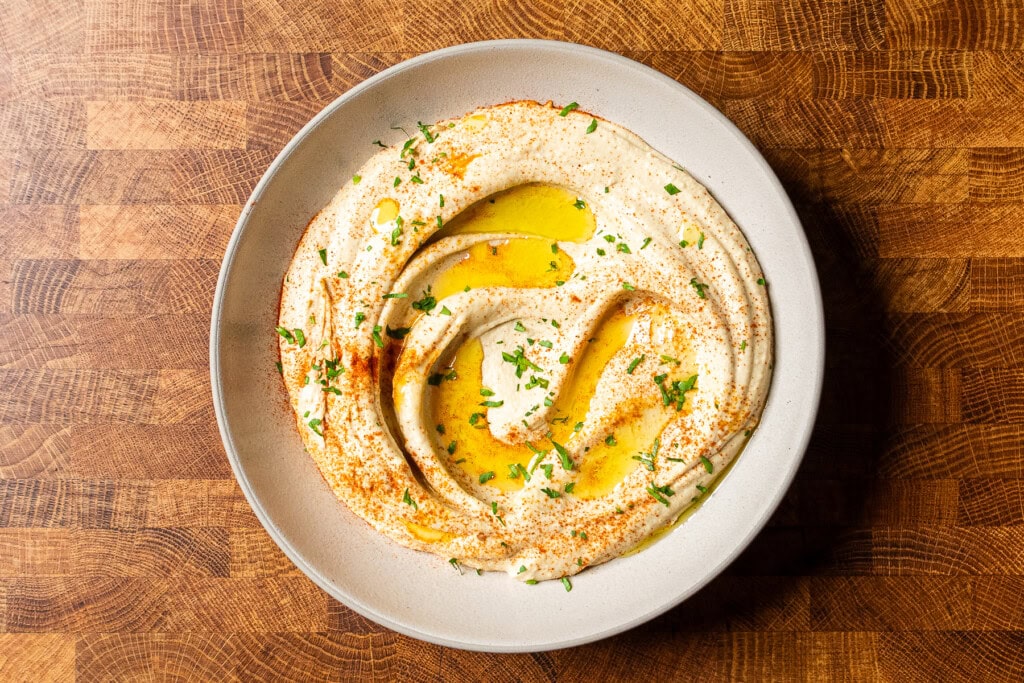
This is a classic chickpea hummus with tahini, lemon, and garlic, blended until it’s glossy and swoopable. It’s bright, savory, and works as a dip, a spread, or the anchor of a snack board. I’ll walk you through canned versus dried chickpeas, how to control thickness, and a few topping ideas that make it feel like a real spread with almost no extra work. A food processor is my go-to here, but a high-speed blender works too, you’ll just scrape more.
If you’re planning a full spread, hummus plays especially well with something crunchy and salty like my air fryer french fries.
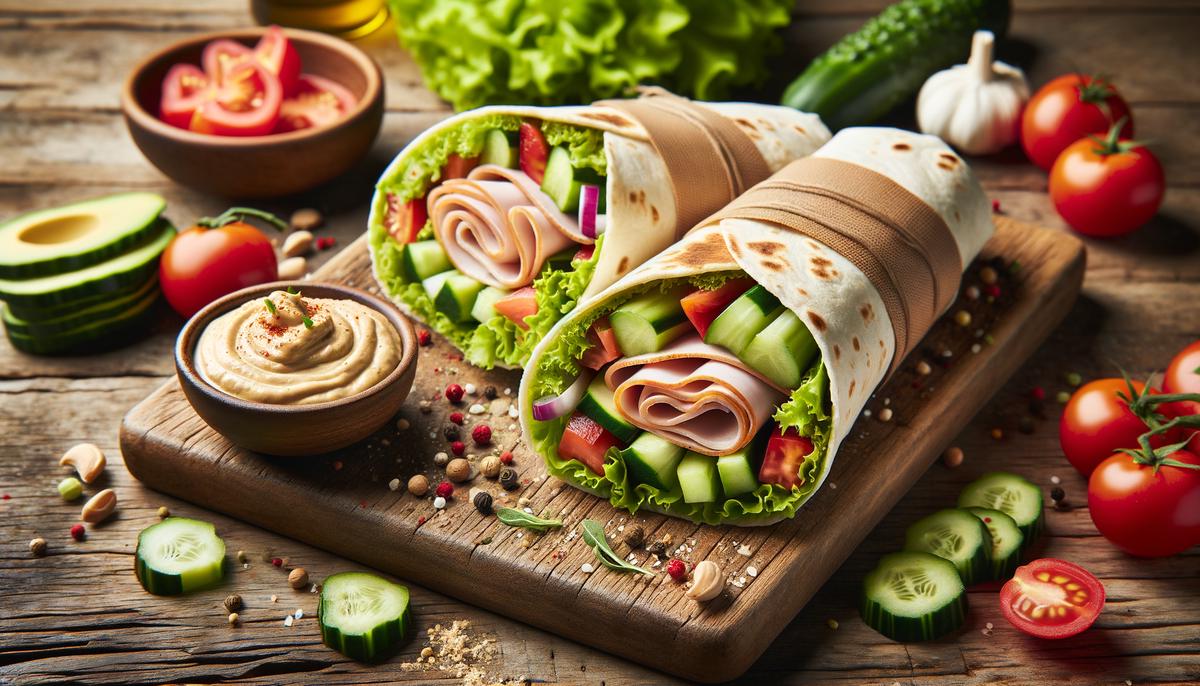
Or use it as a spread in a quick lunch like this turkey wrap with hummus.
Why it works
- The tahini first method helps emulsify the hummus so it turns fluffy instead of dense and pasty.
- Ice water or aquafaba loosens the blend while keeping it creamy, not runny. It is a simple way to push the texture toward ultra-smooth.
- Balanced acid and salt keeps it tasting bright and savory, not flat.
- Optional warm chickpeas blend faster and smoother, especially if you are using canned.
Ingredient notes
Chickpeas: canned vs dried
Canned chickpeas are my weeknight default. Rinse and drain well, and save the liquid (aquafaba) if you want to use it for the smoothness trick.
Dried chickpeas can make an extra creamy hummus, especially if you cook them until very tender. If you go this route, cook until the chickpeas are almost falling apart, then drain and reserve some cooking liquid to blend with.
Tahini
Use a tahini you like the taste of straight from the jar. If it tastes bitter or stale on its own, the hummus will taste bitter too. Stir thoroughly before measuring because tahini separates.
Lemon juice
Fresh lemon juice makes a noticeable difference. Start with less, then add more to taste after blending.
Garlic
One small clove gives a mellow hummus. Two is more punchy. If you are sensitive to raw garlic bite, mince it and let it sit in the lemon juice for 10 minutes before blending.
Ice water or aquafaba
These are two reliable ways to nudge hummus toward smoother and lighter, but they behave a little differently. Ice water usually makes it fluffier and a touch airier. Aquafaba tends to make it creamier and slightly thicker. Use whichever gets you closer to the texture you want.
Olive oil
I blend a little in for roundness, then drizzle more on top for flavor. Think of the drizzle as part of the seasoning, not just decoration.
Equipment
- Food processor: Best texture for classic hummus.
- High-speed blender (optional): Can get it even smoother, but you may need to stop and scrape more often.
- Fine mesh strainer (optional): Helpful if you want to reserve and pour aquafaba cleanly.
- Rubber spatula: For scraping down the bowl so everything emulsifies evenly.
Pro tips for ultra-smooth hummus
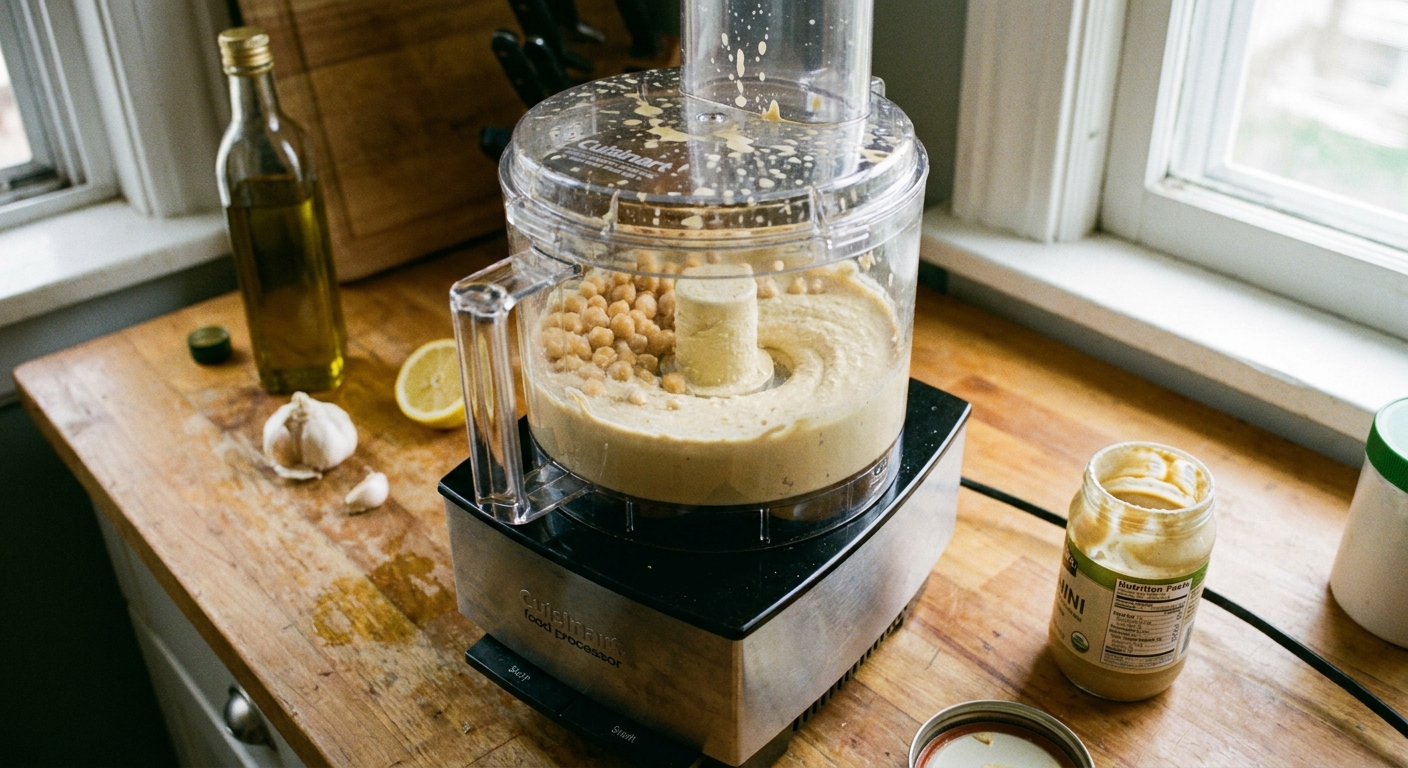
- Whip the tahini with lemon first. Blend tahini and lemon juice until it lightens and thickens before adding chickpeas.
- Use cold ice water slowly. Add 1 tablespoon at a time while the processor runs. This often helps the hummus turn fluffy.
- Warm chickpeas blend faster. If using canned chickpeas, a quick 2 to 3 minute simmer in water can help them soften, then drain well.
- Adjust thickness at the end. If it is too thick, add more ice water or aquafaba. If it is too thin, blend in a few more chickpeas.
- Taste after it rests. Hummus tastes better after 10 minutes. Garlic and lemon settle into the chickpeas.
Substitutes
- No tahini: You will lose classic flavor, but you can swap in unsweetened sunflower seed butter for a similar creamy texture. Start with less and adjust, since it can be stronger.
- No fresh lemon: Use bottled lemon juice in a pinch, but start smaller and add slowly.
- No cumin: Skip it. Classic hummus does not require cumin, but a small pinch adds warmth if you like it.
- Oil-free option: Skip the blended olive oil and use ice water or aquafaba to reach the texture you want. Finish with a sprinkle of paprika and herbs instead of an oil drizzle.
Variations
- Roasted red pepper: Blend in roasted red peppers (patted dry) for a sweeter, smoky hummus.
- Spicy: Add harissa, a pinch of cayenne, or crushed red pepper while blending.
- Herby: Blend in fresh parsley or cilantro, then finish with more on top.
- Extra lemony: Add zest plus juice for a brighter hummus.
- Super garlicky: Add a second clove, or use roasted garlic for a mellow, richer flavor.
Serving ideas
Hummus is a dip, a spread, and an instant dinner helper. A few easy ways to use it:
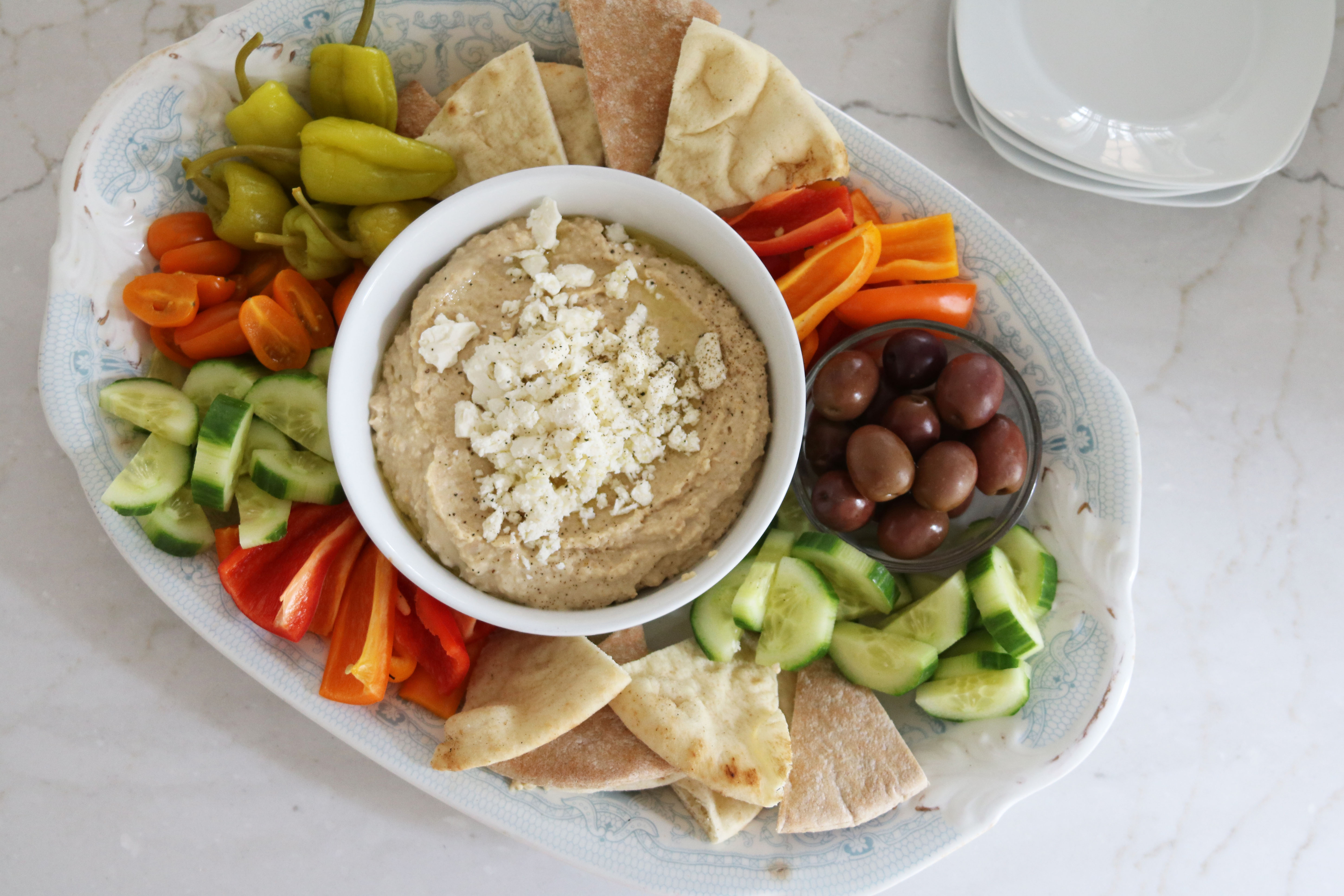
- Classic dip: pita, pita chips, cucumbers, carrots, bell peppers.
- Snacky dinner plate: hummus, olives, feta, tomatoes, and warm flatbread.
- Sandwich spread: instead of mayo on wraps or veggie sandwiches.
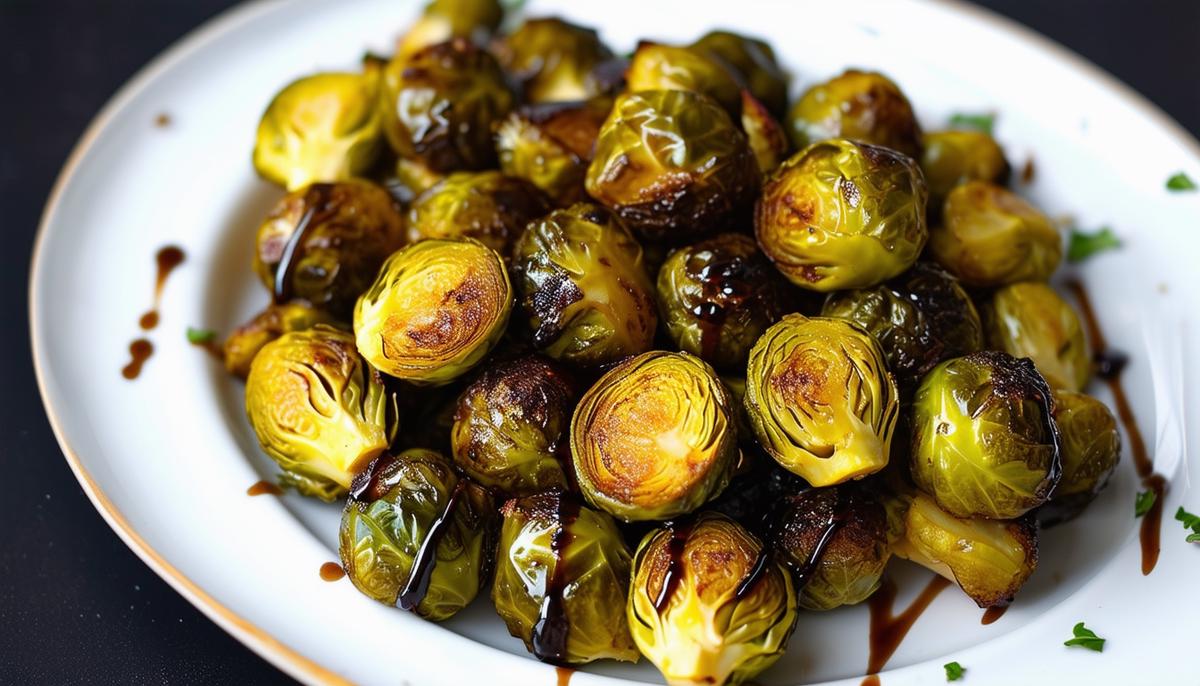
- With roasted veggies: serve under warm roasted cauliflower or roasted brussels sprouts like a creamy sauce.
- With crispy sides: dunk air fryer french fries or air fryer brussels sprouts.
Storage
- Refrigerator: Store hummus in an airtight container for up to 4 to 5 days.
- Keep it creamy: Smooth the top and drizzle a thin layer of olive oil to help prevent drying.
- Freezer: You can freeze hummus for up to 3 months. Thaw overnight in the fridge, then stir well. If the texture looks grainy, blend briefly with a teaspoon or two of water or lemon juice.
Common mistakes
- Not blending long enough: Give it time. A few extra minutes of blending makes a noticeable difference.
- Adding all the liquid at once: It is easy to overshoot. Add ice water or aquafaba slowly.
- Using bitter tahini: If your tahini tastes harsh, your hummus will too.
- Underseasoning: Chickpeas need enough salt and lemon to taste alive. Taste, adjust, taste again.
- Expecting it to taste perfect immediately: Let it sit for 10 minutes, then do your final adjustments.
FAQ
Do I have to peel chickpeas?
No. Peeling makes hummus slightly smoother, but it is time-consuming. This recipe gets very smooth without peeling by using the tahini-first method plus ice water or aquafaba.
Why is my hummus gritty?
Usually it is either under-blended, the chickpeas are not soft enough, or there is not enough liquid. Blend longer first, then add ice water or aquafaba 1 tablespoon at a time.
How do I make hummus thicker?
Use less ice water or aquafaba, or blend in a few extra chickpeas. You can also chill it for 30 minutes since hummus firms up in the fridge.
How do I make hummus thinner?
Add more ice water, aquafaba, or a bit of lemon juice while blending until it loosens to your preferred dip or spread consistency.
Can I use dried chickpeas I cooked myself?
Yes. Cook them until very tender, then use 3 cups cooked chickpeas in place of canned. Reserve some cooking liquid to use like aquafaba.
What are easy toppings for hummus?
Olive oil and paprika is the classic. From there: toasted pine nuts, sesame seeds, chopped parsley, sumac, chili crisp, whole chickpeas, or diced cucumbers and tomatoes.
Classic Hummus
Classic chickpea hummus with tahini, lemon, and garlic, blended smooth with an ice-water or aquafaba trick for a light, creamy texture.
Prep Time:
Cook Time:
Total Time:
Servings:
- 1 (15-ounce) can chickpeas, rinsed and drained (reserve 3 to 4 tablespoons aquafaba if using)
- 1/3 cup tahini, well-stirred
- 3 tablespoons fresh lemon juice, plus more to taste
- 1 small garlic clove, minced
- 1/2 teaspoon fine sea salt, plus more to taste
- 1/2 teaspoon ground cumin (optional)
- 2 to 4 tablespoons ice water, as needed (or use reserved aquafaba instead)
- 2 tablespoons extra-virgin olive oil, plus more for serving
- Paprika or smoked paprika, for serving
- Chopped parsley, for serving (optional)
- Start with tahini and lemon. In a food processor, combine tahini and lemon juice. Process for 45 to 60 seconds, until the mixture looks thicker and lighter in color. Scrape down the bowl.
- Add garlic and seasoning. Add minced garlic, salt, and cumin (if using). Process 15 seconds to combine.
- Blend in chickpeas. Add the chickpeas. Process for 1 to 2 minutes, stopping to scrape down the bowl once or twice.
- Use the smoothness trick. With the processor running, drizzle in 2 tablespoons ice water, 1 tablespoon at a time, and process for 1 minute. If using aquafaba instead, drizzle it in the same way. Add more (up to 4 tablespoons total) until the hummus is ultra-smooth and creamy.
- Finish with olive oil. With the processor running, drizzle in 2 tablespoons olive oil. Process another 30 to 60 seconds until glossy and smooth.
- Taste and adjust. Taste, then adjust with more salt and lemon juice as needed. If you want it thinner, add a bit more ice water or aquafaba and blend again.
- Serve. Spoon into a bowl and swirl the top with the back of a spoon. Drizzle with olive oil and sprinkle with paprika and parsley (if using).
Thickness notes: For a thicker dip, use less ice water or aquafaba. For a hummus you want to spread in wraps or sandwiches, add an extra tablespoon or two of liquid until it is silky and easily spreadable.
Dried chickpea swap: Use about 3 cups cooked chickpeas (very tender). Reserve cooking liquid to use in place of aquafaba.