Background and Personal Connection Vegetable stir-fried noodles are the culinary equivalent of a little black dress—versatile and perfect for any…
Delishing
Ramen Noodle Bowl with Egg

Maya Brooks
Maya Brooks is a dedicated home cook and the lead recipe developer at Delishing, where she shares practical, foolproof meals for everyday life. With over a decade of hands-on kitchen experience, she specializes in creating approachable dishes that fit a variety of dietary needs and modern cooking methods. Maya is passionate about helping busy people get delicious, stress-free food on the table without needing formal culinary training.
If you’ve ever wanted ramen that tastes like you didn’t just reheat a package in boiling water, this is your weeknight answer. Homemade ramen doesn’t need hours of simmering, mysterious ingredients, or a bazillion pots. With a few pantry staples, bold seasonings, good broth, and fresh toppings, you can make slurpable, satisfying bowls at home in about 30 minutes — ideal for when you want comfort and dinner on the table now.

I love this because it’s forgiving — imperfect cuts of veggies? Great. No fancy ramen bowls or tools? Perfect. Tweak the spice level and toppings to your mood. If a noodle sticks or the broth isn’t exactly like your favorite restaurant, that’s dinner happening, not failure.
Why This Works
- Simple ingredients, big umami splash
- Broth that tastes layered without slow simmering
- Noodles that stay springy because we cook them separately (trust me)
- Customizable toppings for everyone at the table
Restaurant ramen has a reputation, but the base principle is accessible: rich broth + chewy noodles + fresh toppings. You can absolutely make that at home.
Tools You’ll Need
- Large pot/saucepan for the broth
- Medium pot for cooking noodles (separate helps keep broth from disappearing into them)
- Sharp knife + cutting board
- Ladle and bowls for serving
No specialized gear, no bamboo steamers, no instant ramen hacks — just real comfort.
Ingredients (Serves ~2–3)
Broth & Base
- 4 cups chicken or vegetable broth (choose the one you prefer)
- 1 tbsp sesame oil
- 2–3 cloves garlic, minced
- 2 tsp freshly grated ginger (or ½ tsp ground ginger if that’s what you have)
- 1 tbsp low-sodium soy sauce (or tamari for gluten-free)
- 1 tbsp rice vinegar (or lime juice)
- 1–2 tsp chili garlic sauce (Sriracha or sambal oelek — adjust to heat preference)

Noodles & Veggies
- 2 packs ramen noodles (discard flavor packets — we’re doing real broth)
- ½ cup shredded carrots
- ½ cup sliced mushrooms or other quick-cooking veggies (bok choy, spinach, zucchini — all great)
Toppings (Optional but satisfying)
- Soft-boiled egg or tofu cubes
- Sliced scallions
- Sesame seeds
- Fresh spinach or baby bok choy
- Corn or bamboo shoots
- Extra chili sauce for drizzling
Step-by-Step Preparation
- Prep the Broth Base: Heat a medium to large pot over medium heat and add the sesame oil. Once shimmering, add the minced garlic and grated ginger and cook gently for about 1-2 minutes until fragrant. You’re not browning them — you’re waking them up.
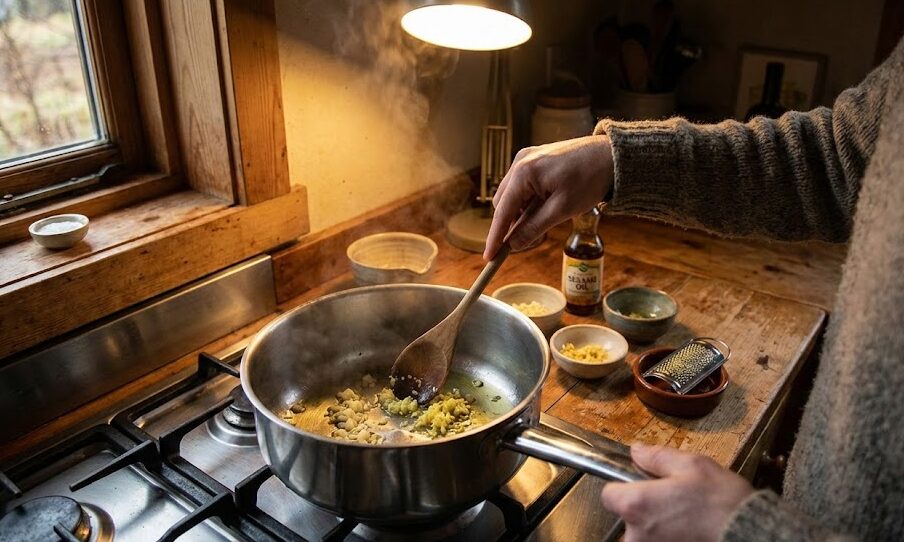
- Build the Broth: Pour in the chicken or vegetable broth, then stir in the soy sauce, rice vinegar, and chili garlic sauce. Bring it to a gentle simmer and let it sit there while you prep noodles and toppings — this will deepen the flavor without extra effort.
- Cook the Noodles Separately: In a separate pot, boil the ramen noodles according to the package directions until just tender (usually 2-3 minutes). Drain and quickly rinse under warm water to stop them from sticking. Keeping noodles separate until serving keeps your broth from disappearing into them.
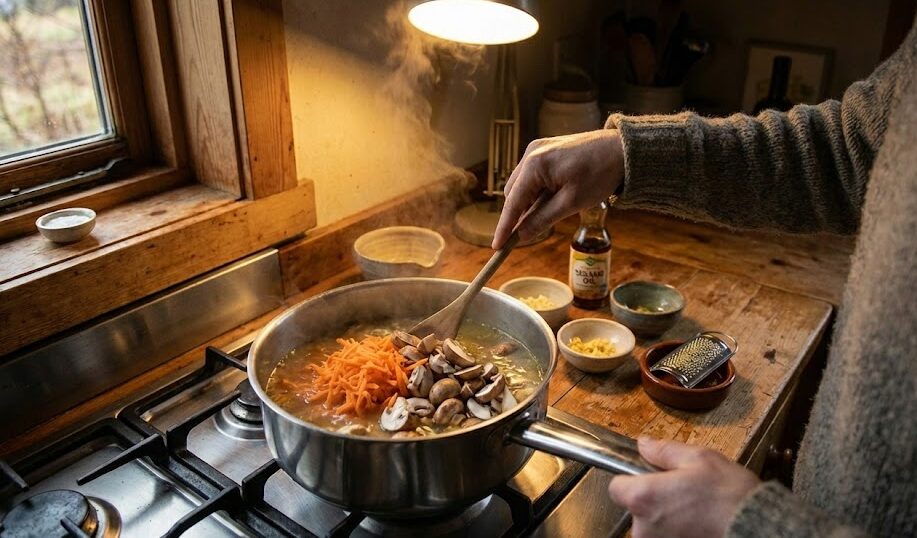
- Add Quick-Cook Veggies: About 3 minutes into simmering the broth, add shredded carrots and mushrooms (or your chosen quick cooks). Let them soften but retain a bit of bite — they’ll continue to warm in the finished bowl.
- Assemble the Bowls: Divide the drained noodles among deep serving bowls. Ladle the hot broth and veggies over the top so the noodles don’t sit in cold air.
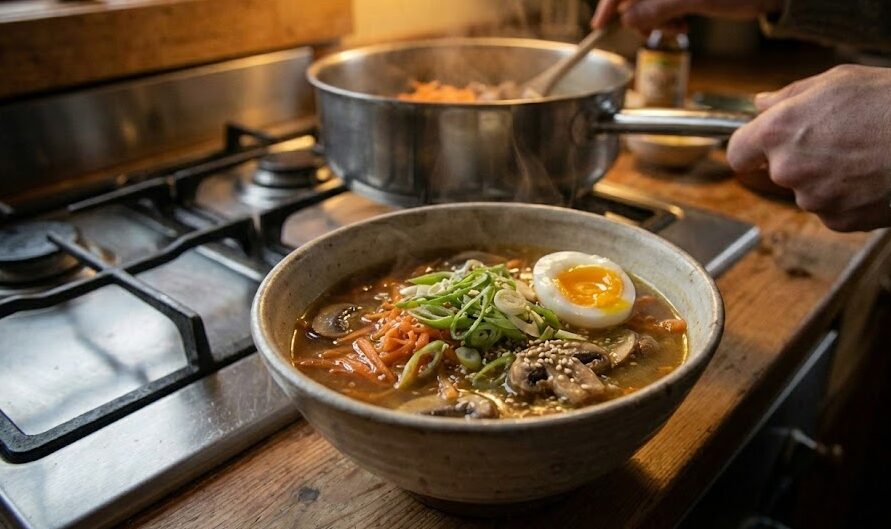
- Add Toppings: Sprinkle sliced scallions and sesame seeds. Add soft-boiled egg halves or tofu if using, a handful of fresh greens, and a little extra chili sauce if you like it spicy. Dive in while it’s hot.
Flavor Tips
- Salt & Spice: Taste your broth before serving — add a splash more soy sauce for salt or more chili sauce for heat.
- Texture: If you like more crunch, add raw spinach or bean sprouts right before serving.
- Protein: Leftover chicken, tofu, or shrimp make this a meal instead of a snack.
Why I Cook Noodles Separately
Cooking the noodles right in the broth seems efficient, but it turns broth into noodle water pretty fast. Cooking them separately keeps the soup rich and watching the noodles absorb too much of it — especially if you plan to savor that broth — feels like a cheat code for better ramen at home.
Leftover & Storage Notes
If you have leftover broth and noodles, store them separately in airtight containers for up to 3–4 days. Reheat the broth on the stove and add warm noodles at the end so they don’t get mushy