Delishing
Homemade Churros

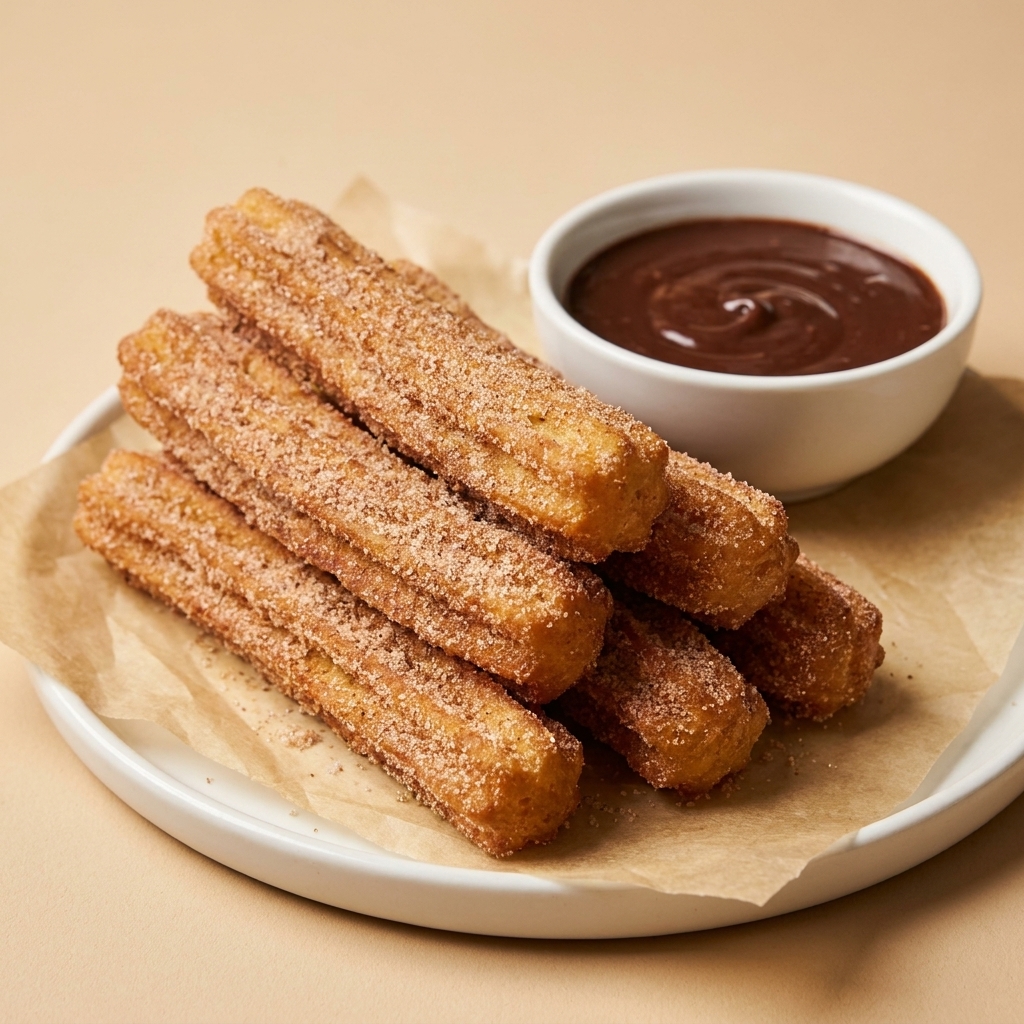
Churros are one of those treats that feel like a big deal, but the dough is surprisingly simple once you know what it should look and feel like. I started making them during a stretch of weeknights when I needed a fun dessert that did not involve chilling cookie dough or waiting for cake layers to cool. Churros quickly became my go-to because the steps are fast, the ingredient list is short, and the payoff is loud: crisp edges, a tender center, and that cinnamon-sugar crunch that somehow gets on everything (in the best way).
This version uses a choux-inspired stovetop dough: you cook it first to build structure, then let it cool briefly before adding the eggs so the dough turns smooth, glossy, and easy to pipe. If you have ever ended up with churros that go soft, taste greasy, or split open in the oil, it usually comes down to a few small adjustments. Oil temperature is a big one, but piping tip size, oil depth, overbeating, and even air pockets in the bag can matter too. The good news is that once you know what to look for, these are all very fixable.
What to expect
- Texture: crisp, deeply golden exterior with a tender, slightly chewy center
- Flavor: rich dough with warm cinnamon and just enough salt to keep it balanced
- Skill level: beginner-friendly if you use a thermometer and let the dough cool before adding the eggs
- Time: fast dough, quick fry, even quicker disappearing act
Troubleshooting
Soft or soggy churros
- What usually happened: The oil dipped below 350°F, the pot was crowded so the temperature crashed, or the churros drained on paper towels and steamed themselves soft.
- What to do next time: Aim to keep the oil in the 350°F to 365°F range and fry in smaller batches so it can recover between rounds. Drain on a wire rack in a single layer (do not stack while hot), then toss in cinnamon sugar while warm.
- Quick save: Re-crisp on a wire rack in a 375°F oven for a few minutes, then hit them with a fresh pinch of cinnamon sugar.
Greasy churros
- What usually happened: Oil temperature was too low, so the dough absorbed oil before the exterior set. This is extra common when too many churros go into the pot at once.
- What to do: Bring the oil back up to about 360°F before the next batch and avoid crowding. If your pot is small, fry fewer at a time and give the oil a minute to rebound.
Churros splitting open
- What usually happened: Oil ran a little hot, the bag had air pockets, the dough was slightly too loose (the panade did not dry enough), or piping was stop-and-start and created weak points. Overbeating after the eggs go in can warm the dough and make it slack, which can encourage splitting.
- What to do: Aim to keep the oil in the 350°F to 365°F zone and do one test churro first. Cook the panade until it forms a smooth ball and leaves a thin film on the bottom of the pot. When filling the piping bag, press the dough down to push out air pockets, then pipe with steady pressure. Pipe close to the surface of the oil and snip cleanly right at the surface as you release each churro.
Hollow centers
- What is normal: With choux-style dough, some hollowness is expected and part of the tender texture.
- When it becomes a problem: If you get a very thin shell with a big empty cave, the oil was likely running hot. Excess heat sets the outside fast, causes rapid expansion, and can exaggerate hollows.
- What to do: Nudge the oil closer to 350°F and fry a bit longer, turning occasionally, until deeply golden. Piping slightly thicker pieces can help too, especially if you were using a smaller tip.
Why it works
- Panade method: Cooking the flour in the hot butter and water mixture (the panade) gives the dough structure so it pipes cleanly and fries up crisp.
- Right dough texture cues: You are looking for a thick, smooth dough that is warm (not hot) and holds a strong peak. That helps keep churros from spreading, tearing, or splitting as they fry.
- Thermometer-driven frying: Aiming for the 350°F to 365°F zone helps the surface crisp while the inside cooks through, without over-browning.
- Immediate cinnamon-sugar coating: Tossing while warm lets the sugar adhere evenly, so you get crunch in every bite instead of patchy bare spots.
Ingredient notes
- All-purpose flour: Standard flour is perfect here. Measure by spooning into the cup and leveling for consistency.
- Butter: Adds flavor and helps with browning. Salted butter is fine, just reduce the added salt slightly.
- Eggs: Eggs give churros a tender interior and help the dough puff. Add them one at a time so the dough emulsifies instead of turning slick. If the panade is still hot, the eggs can start to set, which makes the dough harder to pipe.
- Vanilla extract: Optional but highly recommended for a more dessert-like flavor.
- Cinnamon-sugar: Mix it ahead so you can coat the moment the churros come out of the oil.
- Oil for frying: Use a neutral oil with a higher smoke point, like canola, vegetable, or peanut oil.
Equipment
- Medium saucepan for making the dough
- Wooden spoon or sturdy silicone spatula for stirring the panade
- Large piping bag (reusable or disposable)
- Large star tip (open star works well) to create ridges that crisp
- Kitchen scissors to snip dough cleanly into the oil
- Deep heavy pot or Dutch oven for frying
- Thermometer (clip-on deep fry or instant-read) for accurate oil temperature
- Wire rack and sheet pan for draining
Pro tips
- Use the V test for dough: When you lift the spoon, the dough should fall slowly and form a thick V shape. If it pours like batter, it likely needs a bit more cooking time on the stove to dry out.
- Cool the dough before adding eggs: If the dough is too hot, the eggs can start to cook instead of blending in. I aim for warm to the touch, about 5 minutes off the heat.
- Mind the size: Very thin churros can dry out and split, and very thick ones can brown before the center cooks. A classic star tip helps you land in the sweet spot.
- Do a one-churro test fry: Pipe a short piece first. If it browns too fast, lower the heat. If it sits pale and oily, raise the heat.
- Watch your oil depth: Use enough oil that the churros can float freely. Shallow oil cools faster and can brown unevenly.
- Pipe with confidence: Hold the bag at a slight angle and pipe steady pressure. Stop squeezing before you snip, so the end is cleaner.
- Do not crowd the pot: Fry in batches so the oil temperature does not crash, which is a common cause of softer churros.
- Coat while warm: Toss in cinnamon sugar right after draining for about 15 to 20 seconds. Too soon and the coating can melt. Too late and it will not stick.
Substitutes
- Butter: Plant-based butter works, but choose one that behaves like butter (not whipped). Browning may be slightly lighter.
- Milk vs water: This recipe uses water for a crisp finish. You can replace up to half the water with milk for a richer center, but watch the oil temperature closely since milk solids brown faster.
- Sugar coating: Swap in superfine sugar for a tighter, more even coating. You can also use pumpkin pie spice in place of cinnamon for a seasonal twist.
Variations
- Chocolate-cinnamon churros: Add 2 tablespoons cocoa powder to the flour (whisk together first). Expect a slightly drier dough, so add the eggs slowly and stop when glossy and pipeable.
- Orange-sugar churros: Rub orange zest into the sugar before mixing in cinnamon.
- Filled churros: After frying and cooling slightly, use a long piping tip to fill with pastry cream or chocolate sauce. (Unfilled are easiest for first-timers.)
- Baked option (different texture): Pipe onto a parchment-lined sheet and bake at 425°F until deeply golden, then briefly broil for color. They will be drier and less crisp than fried, but still tasty.
Serving ideas
- Classic: Cinnamon-sugar churros with warm chocolate sauce.
- Caramel moment: Serve with dulce de leche or thick caramel.
- Ice cream vibe: Pair with Vanilla Bean Panna Cotta on the side for a creamy contrast (not a dip, but perfect together).
- Brunch dessert: Put out churros with coffee and fruit after something savory like Breakfast Pizza With Sausage.
Storage and reheating
Churros are at their absolute best within the first hour. If you have leftovers (rare in my house), here is the least-disappointing way to keep them:
- Store: Let churros cool completely, then store in a paper towel-lined container at room temperature for up to 1 day. Avoid airtight containers, which trap steam and soften the crust.
- Re-crisp: Warm in a 375°F oven for 5 to 8 minutes until crisp. Toss with a fresh pinch of cinnamon sugar after reheating if needed.
- Freeze: I do not love freezing finished churros. If you want a make-ahead approach, pipe dough onto parchment, freeze until firm, then transfer to a freezer bag. Fry from frozen, adding 1 to 2 minutes and keeping the oil temperature steady.
Troubleshooting
Soft or soggy churros
- What might have happened: The oil dipped below 350°F, the pot was crowded so the temperature dropped, the churros were piped a bit thick, or the churros sat on paper towels and steamed themselves soft.
- What to do next time: Aim to keep the oil in the 350°F to 365°F range and fry in smaller batches so the temperature can recover between rounds. Drain on a wire rack in a single layer (do not stack), then toss in cinnamon sugar while warm.
- Quick fix for a batch you already fried: Re-crisp on a wire rack in a 375°F oven for a few minutes, then coat again with a fresh pinch of cinnamon sugar if needed.
Greasy churros
- What might have happened: Oil temperature was on the low side, so the dough absorbed oil before the outside set. This can also happen if you add too many churros at once and the oil temperature crashes.
- What to do: Bring the oil back to about 360°F before the next batch and avoid crowding the pot. If your pot is small, fry fewer at a time and give the oil an extra minute to rebound.
Churros splitting open
- What might have happened: Oil may have been a bit hot, the piping bag may have had air pockets, the dough may have been slightly too loose because the panade did not dry enough, or piping was stop-and-start and created weak points. Overbeating after the eggs are in can warm the dough and make it slack, which can encourage splitting.
- What to do: Aim to keep the oil in the 350°F to 365°F zone and do a test churro first. Cook the panade until it forms a smooth ball and leaves a thin film on the pot. When you fill the piping bag, press the dough down to push out air pockets. Pipe with steady pressure, close to the oil surface, and snip cleanly right at the surface as you release each churro.
Hollow centers
- What might have happened: A little hollowness is expected with choux-style dough. If the hollow is dramatic, think thin shell with a big empty cave, the oil may have been running hot. Excess heat sets the outside fast, then the inside expands quickly and exaggerates those hollows.
- What to do: Nudge the oil closer to 350°F and fry a bit longer, turning occasionally, until deeply golden. Piping slightly thicker pieces can help too, especially if you were using a smaller tip.
Dough too runny or hard to pipe
- If it is runny: The panade may not have cooked long enough to dry out, so the dough cannot hold ridges. Next time, cook and stir for the full 1 to 2 minutes until the film forms on the bottom of the pan. Overbeating can also warm the dough and make it slack.
- If it is stiff: The panade may have cooked a bit too long, or the finished dough cooled too much. Let it sit at room temperature briefly, then stir firmly to loosen before piping.
- If the dough looks curdled when you add eggs: The panade was likely still too hot. Let the dough cool until warm to the touch before adding the eggs, then keep mixing until it turns smooth and glossy.
FAQ
What should churro dough look like?
It should be thick, smooth, and glossy, holding its shape when piped. When you lift the spoon, it should fall slowly in a thick ribbon, not run like cake batter.
Do I need a star tip?
For classic churros, yes. The ridges increase surface area so you get more crispness and more cinnamon sugar clinging to the outside. A round tip works in a pinch, but the texture will be less crisp and they may split more easily.
What oil temperature is best for frying churros?
Aim for 350°F to 365°F. I like starting at 360°F and adjusting as needed after the first batch. Use a thermometer and give the oil time to recover between batches.
Can I make churro dough ahead of time?
You can make the dough a few hours ahead and keep it covered at room temperature, but it pipes best when slightly warm. If it stiffens too much, stir it firmly in the bowl to loosen. For longer make-ahead, freeze piped dough as noted in the storage section.
Why is my dough too stiff to pipe?
It is often either a panade that dried out a bit too much on the stove or dough that cooled down too far after the eggs were mixed in. Next time, cook just until the dough forms a ball and leaves a film on the pan, then cool briefly before adding the eggs. If it is already stiff, let it sit at room temperature for 5 to 10 minutes, then stir firmly to soften.
Are hollow churros a problem?
Not necessarily. With choux-style dough, a little hollowness is normal and part of the texture. If the hollow is extreme, it can point to oil that was running hot, which can set the outside too fast and exaggerate the expansion.
Homemade Churros
Crisp, ridged churros with a tender center, fried at the right temperature and tossed in cinnamon sugar while hot. This recipe uses a classic stovetop choux-style dough for reliable piping and crunch.
Prep Time: 20 minutes
Cook Time: 20 minutes
Total Time: 40 minutes
Servings: About 18 churros (4-inch each)
- 1 cup water
- 2 tablespoons granulated sugar
- 1/2 teaspoon kosher salt
- 6 tablespoons unsalted butter, cut into pieces
- 1 cup all-purpose flour
- 2 large eggs
- 1 teaspoon vanilla extract (optional)
- Neutral oil, for frying (such as canola or vegetable), enough for 2 to 3 inches in the pot
- 1/2 cup granulated sugar (for coating)
- 2 teaspoons ground cinnamon (for coating)
- Make the cinnamon sugar. In a shallow bowl, mix 1/2 cup sugar with 2 teaspoons cinnamon. Set aside near your cooling rack.
- Set up for frying. Place a wire rack over a sheet pan. Pour oil into a heavy pot to a depth of 2 to 3 inches. Heat to 360°F, using a thermometer to monitor.
- Cook the dough base (panade). In a medium saucepan over medium heat, combine water, 2 tablespoons sugar, salt, and butter. Bring to a simmer, stirring until butter melts. Add flour all at once and stir vigorously with a wooden spoon until a smooth dough forms. Continue cooking and stirring for an extra 1 to 2 minutes, until the dough pulls away from the sides and a thin film forms on the bottom of the pan.
- Cool slightly. Transfer dough to a mixing bowl and let it cool for about 5 minutes, until warm but not hot to the touch.
- Add eggs. Add eggs one at a time, mixing well after each addition until the dough is smooth and glossy. Mix in vanilla, if using. The dough should be thick, pipeable, and hold its shape.
- Fill the piping bag. Fit a piping bag with a large star tip. Spoon dough into the bag, pressing it down to remove air pockets, and twist the top closed.
- Pipe into the oil. Once oil is at 350°F to 365°F, pipe 4-inch lengths of dough directly into the oil, snipping with scissors to release each churro. Fry in batches to avoid crowding.
- Fry until deeply golden. Fry for 4 to 6 minutes per batch, turning occasionally, until churros are a deep golden brown and crisp on the outside.
- Drain briefly. Remove with a slotted spoon or spider and place on the wire rack for 15 to 20 seconds to let excess oil drip off.
- Toss in cinnamon sugar. While still hot, roll churros in the cinnamon-sugar mixture until evenly coated. Return to the rack and repeat with remaining dough, keeping oil temperature steady between batches.
- Serve warm. Serve immediately, with chocolate sauce, caramel, or your favorite dip if desired.
Notes
- Oil temperature matters a lot: If your churros come out greasy, the oil was likely on the cool side. If they brown too fast and stay doughy inside, the oil may have been running hot. Tip size, oil depth, and batch size can also affect frying results.
- Cool the dough before adding eggs: This is not just a piping tip. If the panade is too hot, the eggs can partially cook and the dough will not emulsify as smoothly.
- Best tip for first-timers: Do one test churro. It gives you quick feedback on dough thickness, piping pressure, and oil temperature before you commit a whole batch.
- About split churros: Splitting can happen for a few reasons, including oil that is a bit hot, air pockets in the piping bag, dough that is slightly too loose, or churros that are piped too thin. Overbeating after the eggs are added can warm the dough and make it slack. Tip size and oil depth can also play a role.
- Safety reminder: Pipe carefully and keep your hands away from the oil. Snip the dough close to the surface to reduce splashing.