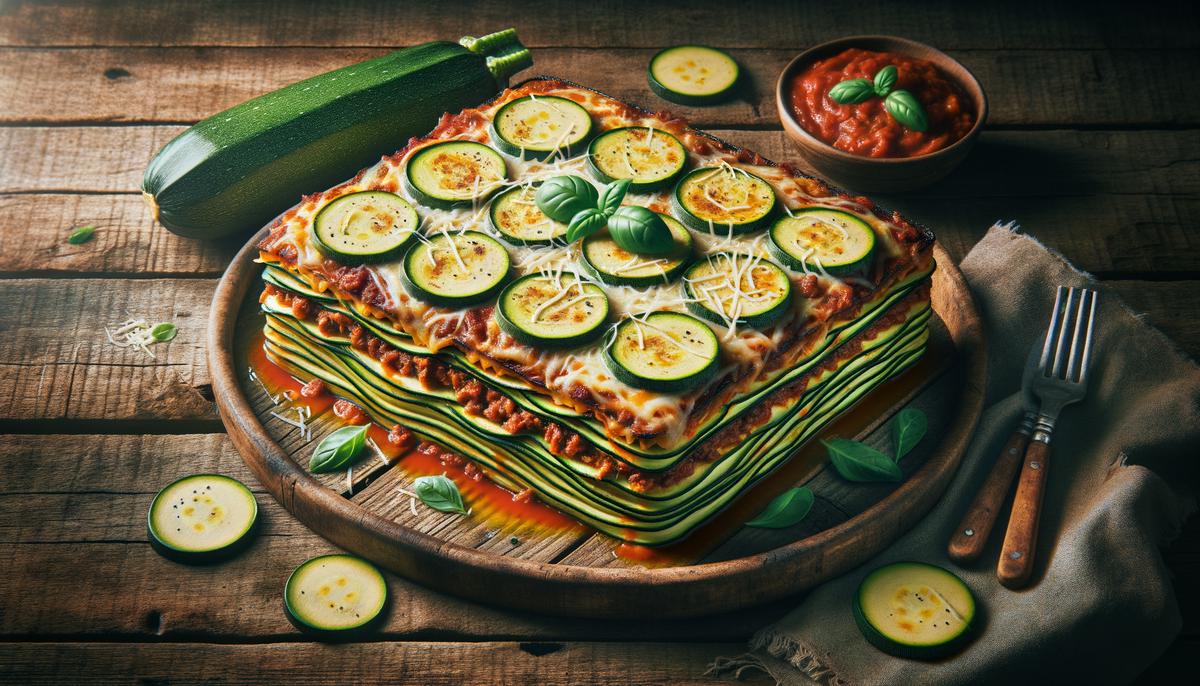
Veggie Comfort Food Revamp Who doesn't love a good old-fashioned lasagna? But let's face it, that heap of pasta isn't doing us any favors. As someone…
Delishing
Vegetarian Lasagna Recipe

Maya Brooks
Maya Brooks is a dedicated home cook and the lead recipe developer at Delishing, where she shares practical, foolproof meals for everyday life. With over a decade of hands-on kitchen experience, she specializes in creating approachable dishes that fit a variety of dietary needs and modern cooking methods. Maya is passionate about helping busy people get delicious, stress-free food on the table without needing formal culinary training.
The Comfort of Vegetarian Lasagna
Vegetarian lasagna has this magical ability to bring people together. I remember the first time I cooked it for a family gathering. My kitchen buzzed with chatter and laughter, filled with the mouthwatering scent of roasted veggies mingling with creamy ricotta and tangy marinara.
The beauty of veggie lasagna is how it adapts to any season, offering just the right mix of warmth and nourishment. Prepping for lasagna night is almost meditative - chopping bell peppers, zucchini, and carrots, then watching them sizzle to golden perfection in the skillet. I always sneak a taste - chef's privilege, you know?
Layering is my favorite part. I feel like an artist laying down those no-boil noodles, spreading rich cottage cheese, and sprinkling generous handfuls of mozzarella. Each layer is a testament to love and patience.
The comfort isn't just in the gooey, cheesy goodness. It's in the moments created around the table. Conversations sparked by memories, laughter over shared stories, and that silent satisfaction of the first bite.
Lasagna encourages us to pause and savor life's simple joys. It's often the star of family gatherings, winning over even the skeptics. My dad, once a dedicated meat-eater, changed his tune the moment he tasted my veggie-packed masterpiece.
Whether we're celebrating a holiday or just enjoying Sunday dinner, lasagna holds its place of honor at the center of the table. When the plates are clean and chairs pushed back, there's a sense of satisfaction in knowing you've brought a little more joy into everyone's lives, one comforting bite at a time.
Choosing the Best Ingredients
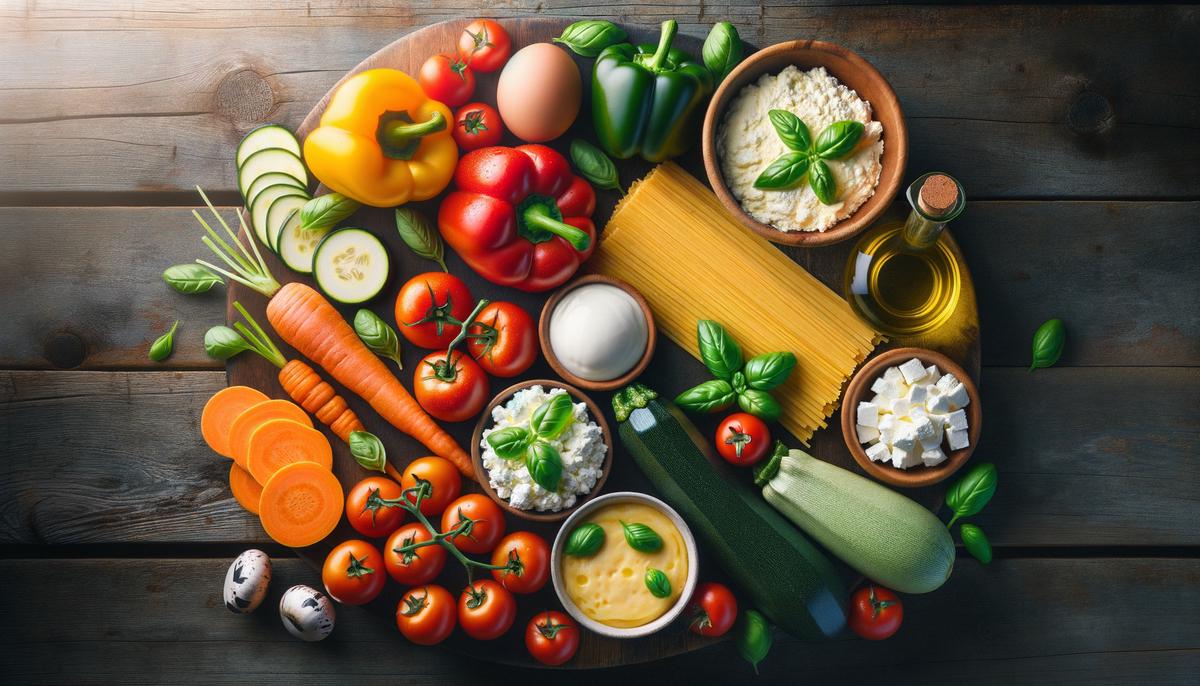
Top-notch ingredients are key to taking your veggie lasagna from good to great. Let's break it down:
Fresh vegetables are the heart of this dish. Bell peppers, zucchini, and carrots offer a perfect balance of sweetness and texture. They're the stars of the show, each shining after a turn in the skillet. Those golden edges bring an extra layer of richness.
The tomato sauce ties everything together. Whether homemade or store-bought, a good sauce blends tanginess and sweetness. A hint of fresh basil adds that garden-fresh kick that makes all the difference.
For cheese, I lean towards cottage cheese. It adds protein and subtle flavor - think of it as the creamy glue holding your layers together. Don't skimp on mozzarella though; its melty goodness is what makes lasagna, well, lasagna.
Going vegan? No worries. There are plenty of delicious cheese alternatives out there. Swap cottage or ricotta for a vegan version, and embrace plant-based mozzarella. With quality gluten-free noodles available, you can easily adapt the dish for different diets without losing any comfort or joy.
Choosing quality ingredients means each bite is a celebration of flavors working together. It's about finding joy in a well-made meal, and putting a little piece of yourself into every layer.
Preparing Perfect Layers
The magic happens when you prep the layers for your veggie lasagna. Start by preheating your oven to 425°F and lining a baking sheet with parchment. Drizzle the veggies with olive oil, sprinkle with salt and pepper, and spread them evenly. Roast until tender with golden edges, about 20-25 minutes. The aroma will have your family peeking into the kitchen.
Next, cook the lasagna noodles in salted boiling water until al dente, usually 8-10 minutes. Drain and lay them out on a clean surface, drizzling with olive oil to prevent sticking.
For the ricotta mixture, stir together ricotta cheese, lemon zest, minced garlic, salt, and pepper in a large bowl. Let it sit while you finish prepping - the flavors will deepen beautifully.
Take your time with each layer. Spread each component thoughtfully, ensuring every bite includes a bit of everything. There's something soothing about building your lasagna, knowing your efforts will pay off when it comes out of the oven. Remember, it's not about rushing - it's about enjoying the process and the reward that follows.
Mastering the Layering Technique
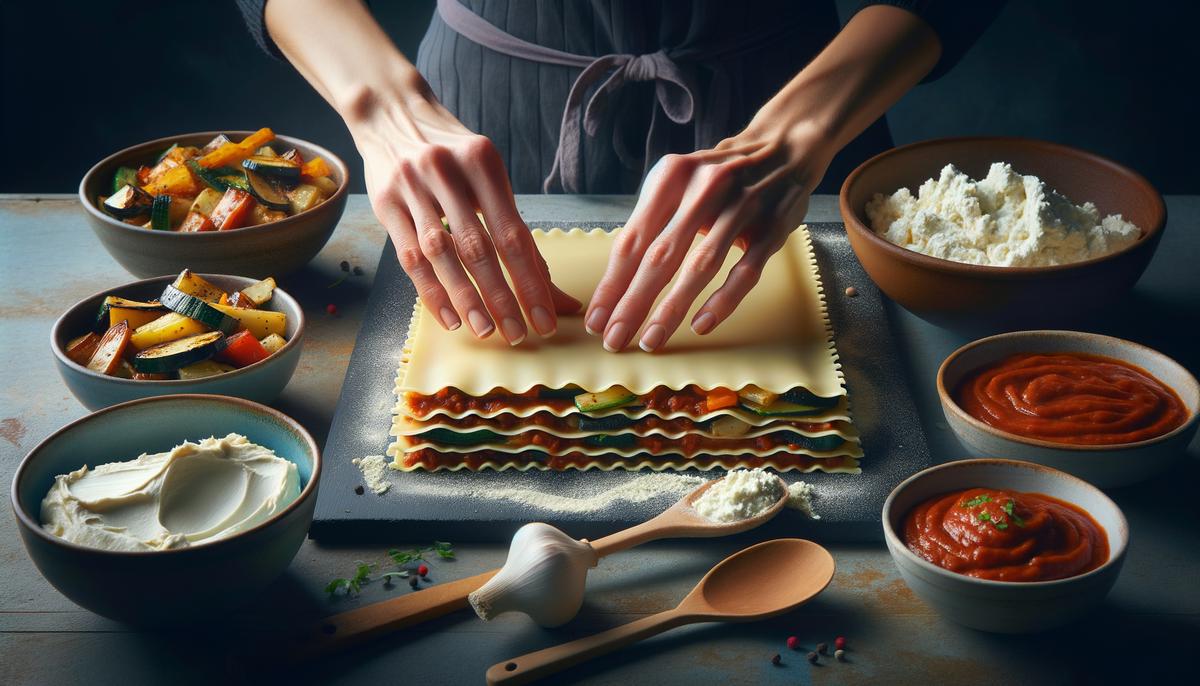
Building your veggie lasagna is like creating a delicious masterpiece. Start with a generous layer of tomato sauce at the bottom of your baking dish. This keeps the noodles from sticking and sets the stage for the flavors to come.
Lay the lasagna noodles over the sauce, slightly overlapping for full coverage. Don't worry if you need to snap the ends to fit - it'll be our little secret.
Next, dollop that luscious ricotta mixture over the noodles. Smooth it out with the back of a spoon for an even spread. This cheese layer brings comforting richness that pairs perfectly with the sauce below.
Now for those golden roasted veggies. Sprinkle them generously, making sure each bite will have its share of flavor-packed goodness. Add a few fresh spinach leaves for a burst of color and nutrients.
Repeat the layers: noodles, ricotta, veggies. The rhythm becomes a comforting ritual, each layer building towards that final, delicious result.
Finish with a combo of shredded mozzarella and parmesan. This final touch seals in the flavors and creates that inviting golden top you'll be dreaming about.
As you slide your creation into the oven, know that each carefully placed layer is about to transform into a warm, delicious dish that'll bring everyone to the table.
Baking and Serving Tips
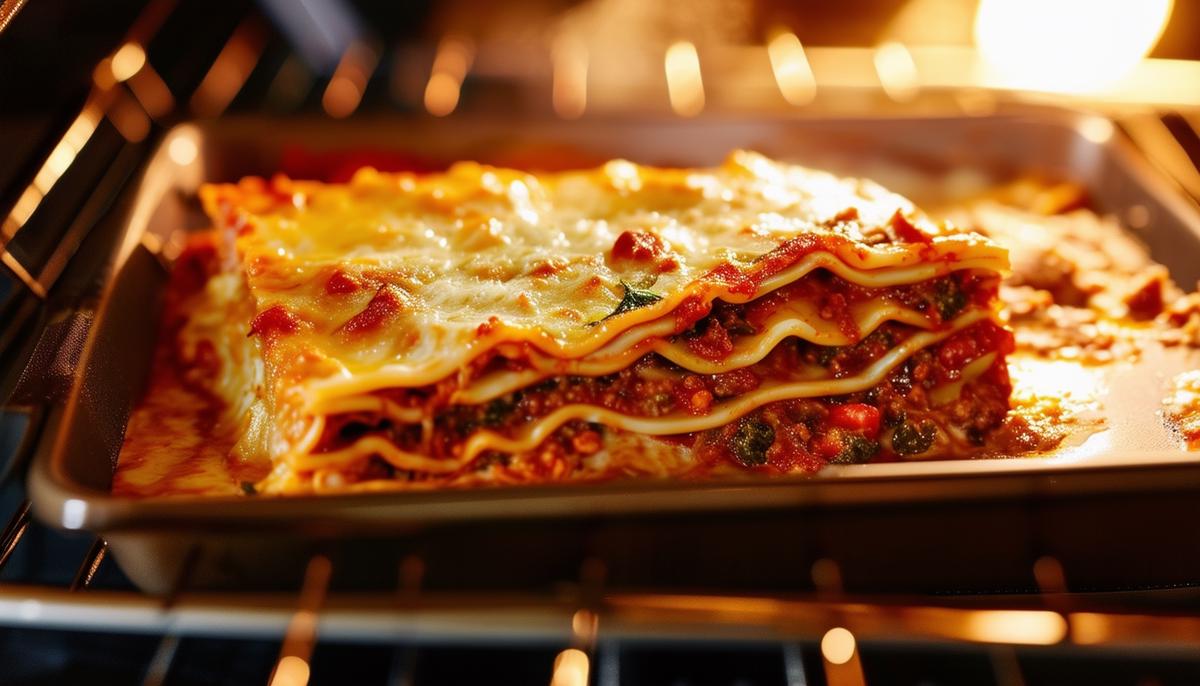
Baking your veggie lasagna to perfection is the final step in this tasty journey. Preheat your oven to 400°F. For traditional boiled noodles, bake uncovered for about 30 minutes until the cheese is bubbly and golden. If you're using no-boil noodles, cover with foil and bake for 40-50 minutes, then uncover for another 10-15 minutes to brown the top.
Let it rest for about 20 minutes after baking. I know it's tempting to dig in right away, but this helps the layers settle, making it easier to slice and serve.
While lasagna is a meal in itself, pairing it with the right sides adds balance. Try a fresh green salad or tangy kale Caesar for some crunch. Roasted broccoli or cauliflower echo the flavors in the dish. And don't forget some crispy garlic bread or buttery knots to soak up any extra sauce.
For that professional touch, garnish with fresh chopped basil or parsley. It adds a pop of color and fresh flavor. A sprinkle of extra parmesan never hurts either.
As you serve up your masterpiece, enjoy the appreciative sounds from your loved ones. It's more than just a meal - it's comfort and warmth on a plate.
Storing and Reheating Leftovers
Storing leftover lasagna is easy, and it's always a win to have another meal ready for later. Once cooled, slice it into individual portions for easier storage and reheating. In the fridge, they'll stay fresh in an airtight container for up to four days.
For longer storage, the freezer is your friend. Wrap each slice in plastic wrap, then foil to prevent freezer burn. Or use a freezer-safe container with a tight lid. It'll keep well for up to three months.
When it's time to reheat, the oven is best for maintaining that yummy flavor and texture. Preheat to 350°F, place your lasagna in an oven-safe dish, cover with foil, and bake for about 20-25 minutes. If you're in a hurry, the microwave works too. Cover with a damp paper towel and warm on medium power, checking every couple of minutes until it's just right.
These steps ensure your leftovers taste as good as day one. Whether it's dinner round two or a quick lunch, you'll get that same comforting satisfaction all over again.
Recipe
Ingredients:
- Vegetables:
- 2 tablespoons extra-virgin olive oil
- 3 large carrots, chopped (about 1 cup)
- 1 red bell pepper, chopped
- 1 medium zucchini, chopped
- 1 medium yellow onion, chopped
- ¼ teaspoon salt
- 5 to 6 ounces baby spinach
- Tomato sauce:
- 1 large can (28 ounces) diced tomatoes
- ¼ cup roughly chopped fresh basil + additional for garnish
- 2 tablespoons extra-virgin olive oil
- 2 cloves garlic, pressed or minced
- ½ teaspoon salt
- ¼ teaspoon red pepper flakes
- Remaining ingredients:
- 2 cups (16 ounces) low-fat cottage cheese, divided
- ¼ teaspoon salt, to taste
- Freshly ground black pepper, to taste
- 9 no-boil lasagna noodles
- 8 ounces (2 cups) freshly grated low-moisture, part-skim mozzarella cheese
Instructions:
- Preheat oven to 425°F.
- In a large skillet over medium heat, warm olive oil. Add carrots, bell pepper, zucchini, onion, and ¼ teaspoon salt. Cook, stirring occasionally, until veggies have golden edges (8-12 minutes).
- Add spinach to skillet in batches, cooking until wilted (about 3 minutes total). Set aside.
- For sauce, drain excess juice from tomatoes using a sieve. Blend drained tomatoes, basil, 2 tablespoons olive oil, garlic, ½ teaspoon salt, and red pepper flakes in food processor until spreadable.
- Blend 1 cup cottage cheese until smooth. Transfer to mixing bowl.
- Pulse cooked veggies in food processor until finely chopped. Add to whipped cottage cheese with remaining cottage cheese, salt, and pepper. Mix well.
- Spread ½ cup tomato sauce on bottom of 9" by 9" baking dish. Layer 3 noodles, half the cottage cheese mixture, ¾ cup sauce, and ½ cup mozzarella.
- Repeat layers: 3 noodles, remaining cottage cheese mixture, ½ cup mozzarella (no sauce this time).
- Top with final 3 noodles, ¾ cup sauce, and remaining mozzarella.
- Cover with parchment or foil (not touching cheese) and bake 18 minutes. Uncover, rotate pan, and bake 10-15 minutes more until top is spotty brown.
- Cool 15-20 minutes before garnishing with basil, slicing, and serving.
Nutritional information (per serving, assuming 6 servings):
kcal: 385
carbohydrates: 35g
protein: 23g
fat: 19g
saturated fat: 7g
cholesterol: 30mg
sodium: 780mg
fiber: 5g
sugar: 8g
- Mangels R, Messina V, Messina M. The Dietitian's Guide to Vegetarian Diets. 3rd ed. Jones & Bartlett Learning; 2011.
- Messina V. Nutritional and health benefits of dried beans. Am J Clin Nutr. 2014;100(suppl 1):437S-442S.
- Craig WJ, Mangels AR. Position of the American Dietetic Association: vegetarian diets. J Am Diet Assoc. 2009;109(7):1266-1282.