Background and Personal Connection Vegetable stir-fried noodles are the culinary equivalent of a little black dress—versatile and perfect for any…
Delishing
Vegan Pad Thai with Tofu

Maya Brooks
Maya Brooks is a dedicated home cook and the lead recipe developer at Delishing, where she shares practical, foolproof meals for everyday life. With over a decade of hands-on kitchen experience, she specializes in creating approachable dishes that fit a variety of dietary needs and modern cooking methods. Maya is passionate about helping busy people get delicious, stress-free food on the table without needing formal culinary training.
Pad Thai is one of those dishes that feels intimidating until you actually make it — and then you realize it’s mostly about timing, balance, and not walking away from the pan.
This vegan version is savory, tangy, a little sweet, and deeply satisfying without trying to “fake” anything. No fish sauce. No eggs. No specialty tools you’ll only use once and resent later.
Just noodles, vegetables, a bold sauce, and a hot pan doing its thing.
If your noodles clump the first time or your sauce tastes slightly different than the restaurant version — congratulations. You’re cooking, not copying.
Why I Love It
- The sauce hits salty + sour + sweet
- Tofu adds protein without heaviness
- Rice noodles stay light and chewy
- Everything cooks fast, so flavors stay bright
It’s weeknight-friendly but impressive enough to serve to people you want to feed well.
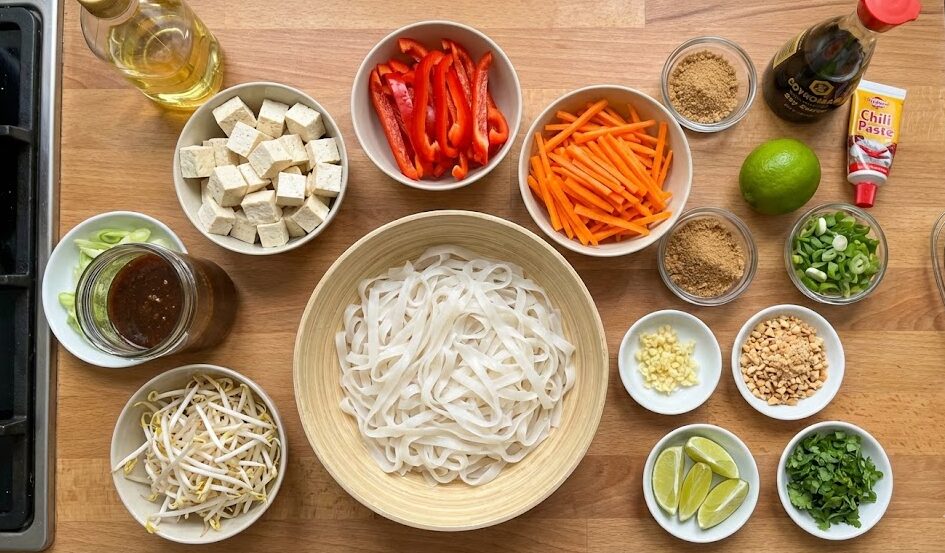
Ingredients
The Noodles
Rice noodles (8 oz)
Flat Pad Thai–style noodles work best, but any medium-width rice noodle is fine.
The Protein
Extra-firm tofu (14 oz block)
Pressed and cubed. Crispy edges = better texture.
The Vegetables
- Red bell pepper (1, thinly sliced)
- Carrots (1–2, julienned or shredded)
- Green onions (3, sliced)
- Bean sprouts (1–2 cups)
Use what you have — Pad Thai is adaptable.
The Sauce (This Is the Heart)
- 3 tbsp tamarind paste
- 3 tbsp soy sauce or tamari
- 2–3 tbsp brown sugar or coconut sugar
- 1 tbsp lime juice
- 1 tsp sriracha or chili paste (optional)
Taste it. Adjust it. Trust your tongue.
Extras
- Neutral oil (for cooking)
- Garlic (3 cloves, minced)
- Roasted peanuts (for topping)
- Fresh lime wedges
- Cilantro (optional but lovely)
Tools You’ll Need
- Large skillet or wok
- Tongs or spatula
- Mixing bowl
- Knife and cutting board
Nothing fancy. Just heat and motion.
Let’s Cook (Fast, Focused, and Fun)
1. Soak the Noodles
Place rice noodles in warm water for 20–30 minutes until pliable but not mushy. Drain and set aside.
This prevents overcooking later — trust me.
2. Make the Sauce
Whisk all sauce ingredients in a bowl until smooth.
Taste it now. It should feel bold. Slightly intense. It mellows in the pan.

3. Crisp the Tofu
Heat oil in a skillet over medium-high heat.
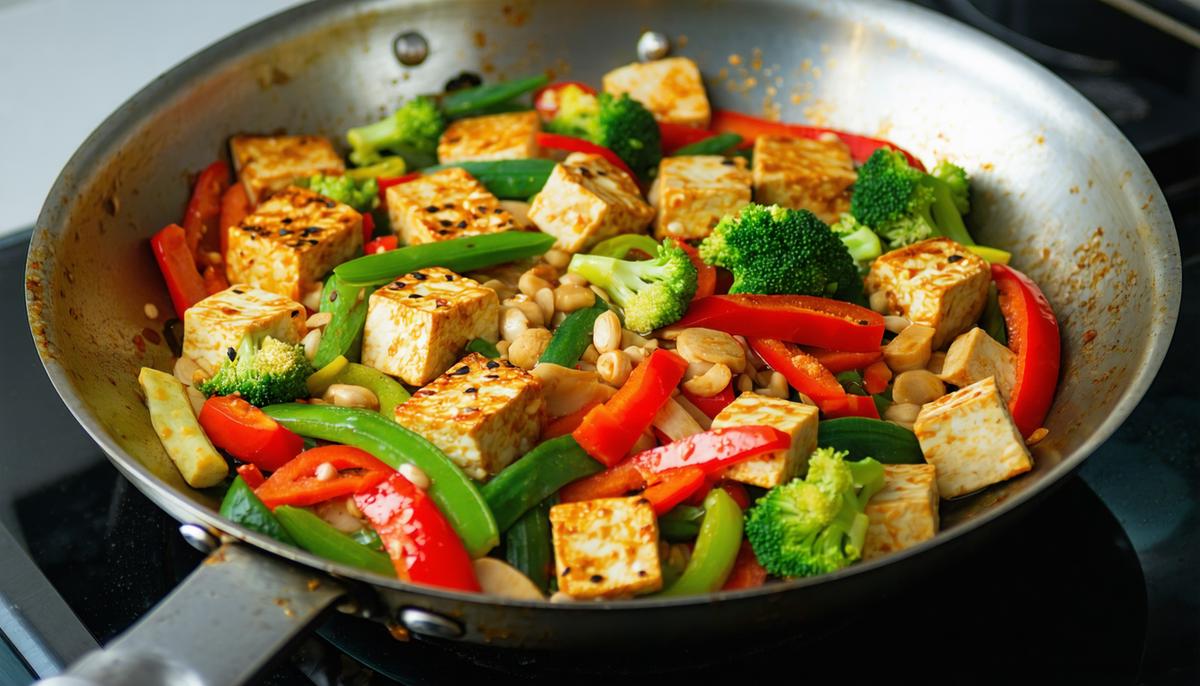
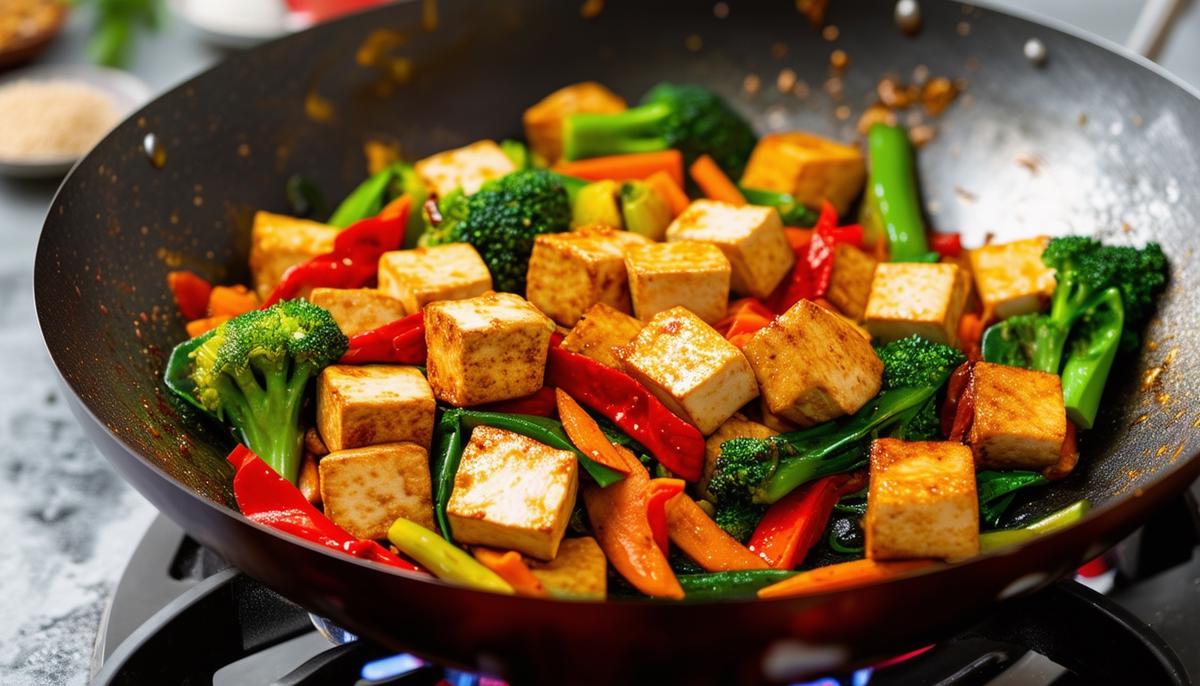
Add tofu cubes and cook until golden on multiple sides. Don’t rush — texture matters here.
Remove tofu and set aside.
4. Build the Flavor Base
Add a touch more oil if needed. Toss in garlic and cook for 30 seconds, just until fragrant.
Add bell peppers and carrots. Stir-fry for 2–3 minutes — they should soften slightly but still have bite.
5. Bring It All Together
Add drained noodles to the pan, followed immediately by the sauce.
Use tongs to toss continuously so nothing sticks. The noodles will finish cooking as they absorb the sauce.
Add tofu back in, along with green onions and bean sprouts.
Cook for 2–3 minutes, tossing gently, until everything is glossy and coated.

6. Finish and Taste
Turn off the heat. Squeeze fresh lime over the top.
Taste again. Add more lime, soy sauce, or sugar if needed.
This dish is all about balance.
How to Serve It
Top with:
- Crushed roasted peanuts
- Extra lime wedges
- Cilantro
- Chili oil if you like heat
Serve immediately. Pad Thai waits for no one.
Leftovers (Still Good, Just Different)
Store in the fridge for up to 3 days.
Reheat gently in a pan with a splash of water or oil to loosen the noodles.
Final Notes From My Kitchen
Pad Thai isn’t about perfection — it’s about rhythm.
Heat on. Ingredients ready. Taste as you go.
If the noodles break a little or the sauce leans extra tangy, that’s part of the charm. You didn’t mess it up. You made it yours.