Aromatic Foundations The aroma of onions and garlic sizzling in olive oil is pure magic—transforming my kitchen into a festival of savory goodness. This…
Delishing
One-Pot Spaghetti Recipe

Maya Brooks
Maya Brooks is a dedicated home cook and the lead recipe developer at Delishing, where she shares practical, foolproof meals for everyday life. With over a decade of hands-on kitchen experience, she specializes in creating approachable dishes that fit a variety of dietary needs and modern cooking methods. Maya is passionate about helping busy people get delicious, stress-free food on the table without needing formal culinary training.
Background and Origin
Spaghetti has long been a beloved staple, not just in Italian cuisine but across the globe. Its appeal lies in its simplicity and the comforting warmth it brings to the dinner table. Traditionally, making spaghetti might involve multiple pots and a dance around the kitchen that's reminiscent of a prima ballerina's workout. But who really has the time for that on a bustling weeknight with kids sprinting around?
One-pot spaghetti is a game changer. Picture this: a single pot, a handful of ingredients, and boom—dinner is served. The concept simplifies cooking, transforms the kitchen chaos into a serene event, and most importantly, leaves you with just one pot to wash at the end. It's a genius hack for those of us who cherish our sanity and a clean kitchen equally.
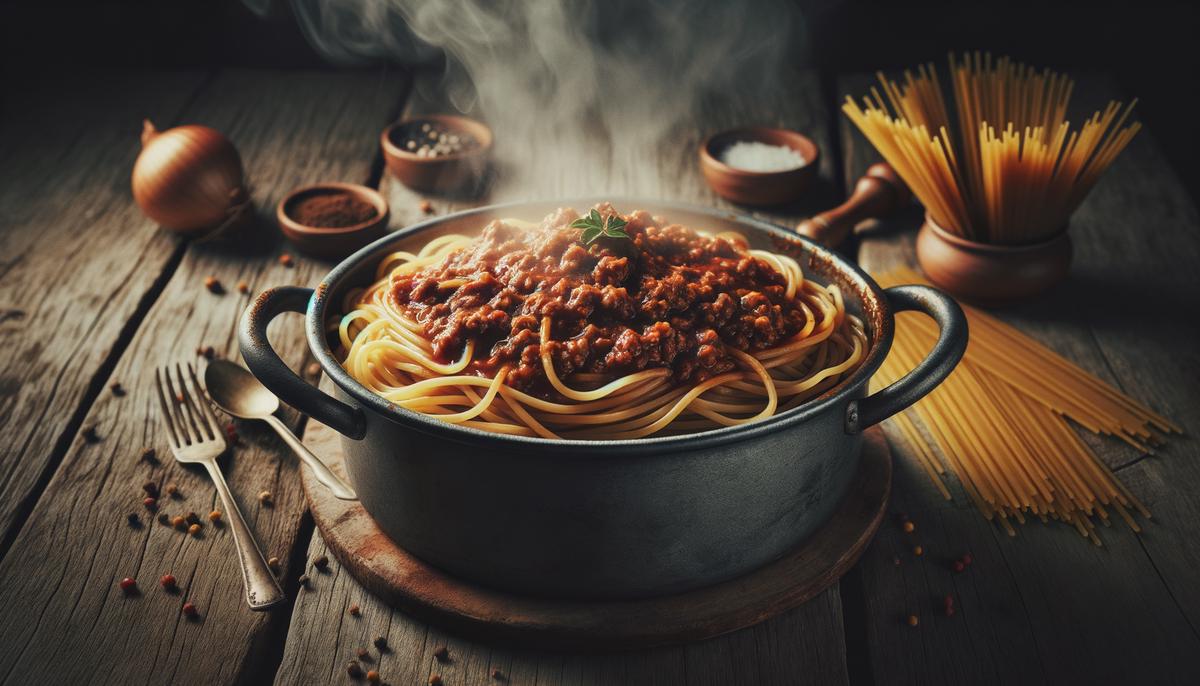
Now, whipping up a pot of spaghetti with meat sauce has become as effortless as ignoring the laundry until tomorrow. The meat, pasta, and sauce come together in a symphony of flavors without the fuss and extra cleanup.
This approach is not about reinventing the wheel but about streamlining the process. It keeps the heart and soul of spaghetti intact while adapting to our modern, busy lives. It's about embracing convenience without sacrificing taste—a truth that's as satisfying as the melody of slurping strands of perfectly cooked spaghetti.
In many ways, one-pot spaghetti brings back that rich Italian tradition of sharing stories and laughter around the table, sans the stress of a post-dinner cleanup. It's a reminder that food isn't just about sustenance; it's about creating experiences, even if it means shaking things up a bit from the way nonna used to do it.
The Magic of One-Pot Cooking
When I first stumbled upon one-pot cooking, it felt like finding a secret passage in a never-ending maze—a bit of relief wrapped in possibility. As a busy mom, I'm always on the lookout for ways to optimize time without compromising on meal quality. One-pot spaghetti is my trusty magic wand in the culinary chaos of family life. It reduces prep time to a breeze and slashes dishwashing to the bare minimum.
The beauty of one-pot cooking lies in its simplicity and adaptability. This method adds a new dimension to our beloved pasta as the noodles absorb the savory richness from the sauce, starchy goodness and all. The result? A thicker, more luscious sauce that clings to every strand like it's meant to be.
A neat trick with the one-pot technique is its flexibility for catering to family preferences. Whether you've got a household that can't get enough of spicy sausage or one that thrives on turkey for a lighter touch, the base recipe holds firm, ready to be adjusted to everyone's tastes. The type of pasta, too, can be swapped according to whatever is on hand or whichever shape your crew is currently obsessed with.
And honestly, if this means dinner gets on the table quicker, and you get to avoid a pile-up of dirty dishes, then why not choose the path of less resistance? Let's keep it real: one-pot cooking is more than just a time-saver; it's a sanity saver. As long as there's a hungry crowd to feed and a pot large enough to hold your culinary dreams, consider yourself armed and ready for any dinner skirmish.
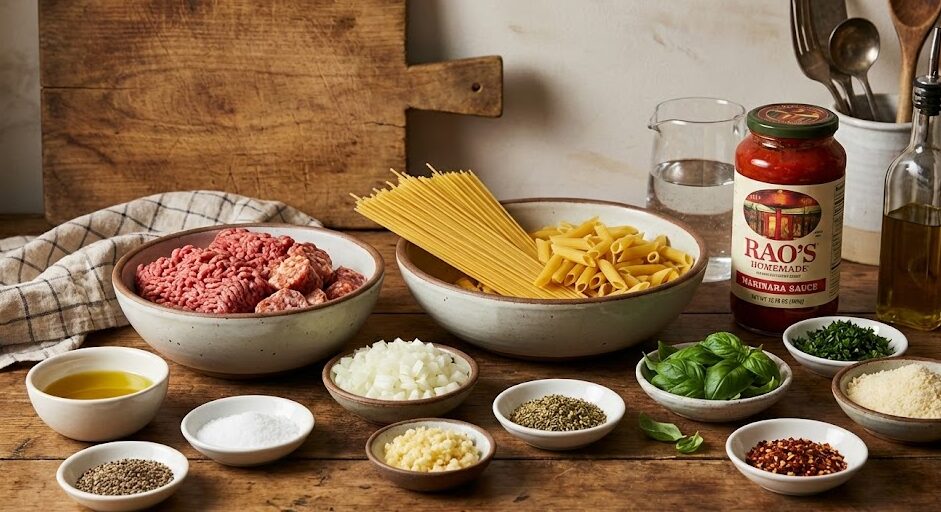
Essential Ingredients
Every spectacular spaghetti starts with the right ingredients, and one-pot spaghetti is no exception. Here's the breakdown for pulling this together with some options to tweak based on what suits your crew just right.
- Ground Meat: Your base meat is pivotal. Classic choice? Ground beef, but turkey offers a lighter twist. For a kick, Italian sausage never disappoints. Going meatless? A plant-based ground meat substitute does the trick.
- Pasta: Traditional spaghetti loves its long strands, but don't hesitate to mix it up. Gluten-free pasta steps in for dietary needs, and short cuts—think penne or rotini—offer a delightful chew.
- Marinara Sauce: You'll want a trusty jar on hand. A favorite like Rao's is spot-on for bold flavor right out of the jar. Prefer homemade marinara? That's splendid too.
- Preparation Staples: Olive oil, kosher salt, and black pepper are the backbone. They lay the foundation for flavor without overshadowing your star ingredients.
- Liquid: Water keeps it simple and lets the pasta soak up all the saucy goodness as it cooks.
- Optional Extras: Fresh garlic and diced onions introduce depth. A sprinkle of Italian seasoning or dried oregano can elevate the dish with each stir. And don't overlook the charm of fresh basil and parsley for that touch of freshness.
- Toppings: Parmesan cheese is a classic finish. A dash of crushed red pepper brings a little heat, while a drizzle of olive oil on top adds richness. These accents turn your basic dish into a finished masterpiece ready to grace any table.
Practical Cooking Tips
When you're aiming to whip up a one-pot spaghetti that's both a guaranteed hit and hassle-free, some practical tips can seriously up your game. Let's talk browning meat: it's all about patience.
Wait until your pot is hot before adding your meat. You want it to sizzle—this is how you lock in those flavors. As for achieving that perfect golden color, avoid overcrowding the pan. When meat is spread out rather than piled up, it browns more evenly.
To keep those noodles from becoming a tangled mess, make it a practice to break your spaghetti in half before adding it. This not only helps them fit better but allows for even cooking. Stir occasionally but gently, so they don't stick to each other or the pot's bottom.
Now, if you crave a more robust flavor, don't be shy about switching up seasonings. Throw in a little Italian seasoning or rosemary; they'll bring that zing you might be missing. Garlic powder and a pinch of red pepper flakes can also elevate a simple dish to weeknight favorite status.
Worried about the doneness of your pasta? The simplest method is also the best—take a noodle, give it a bite. Al dente is where you'll find that perfect chewiness. Keep in mind, though, that pasta continues to cook even after you turn off the heat, so aim for just shy of al dente if you plan on letting it sit.
Different pasta types mean different cook times. Smaller shapes might finish quicker than spaghetti strands, so keep an eye on the pot. As you switch pasta shapes or even cook in different pot sizes, you might need to tweak the liquid or timing a bit. Just be flexible and adjust as needed.
Finally, a little trick for reducing acidity in your sauce? Toss in a small pinch of sugar or a grated carrot. It takes the edge off without altering the essence of your dish.
Preparing the One-Pot Spaghetti
Grab that heavy pot or Dutch oven you trust to handle all the magic. It's gonna be your best friend for this journey, so set it over medium-high heat.
Start by browning your choice of ground meat. Whether you're going with beef, turkey, or that spicy sausage, ensure the pot is hot enough. There's something supremely satisfying when the meat hits that heat and sizzles—it's the sound of tasty times ahead. Keep stirring and breaking up the meat as it cooks. Once it's all browned and beautiful, it's time to drain off any extra grease.
Next, toss in chopped onions and garlic. Cook them until they're soft and fragrant—think an extra few minutes of patience that pays off in flavor dividends. Stir them around with the meat, letting them cozy up and become friends in the pot.
Pour in that jar of marinara sauce you picked out, add some water, and don't forget a pinch of salt and black pepper. Stir it all together and let it come to a gentle boil. Here's a little trick: use that empty jar to fetch some water, swirl it around, and pour it into the pot—getting every last bit of saucy goodness.
Time to add the pasta! Break those spaghetti strands in half before you slide them in. Submerge them as much as you can without stirring—keeping them covered helps everything cook more evenly.
Once that's set, cover the pot and bring it down to a simmer. Now let it do its thing for about 15-20 minutes, but keep an eye on it. Stir gently every few minutes; it's all about making sure nothing sticks and every bit soaks up that rich sauce. Just remember, we're aiming for al dente pasta—firm, not mushy, and full of wonderful texture.
And if there's a small hiccup along the way—like the sauce seems a tad thick, or the noodles aren't quite soft enough—just add a splash more water. A little tweak here and there is all it takes to perfect it to your taste.
Finally, serve up your one-pot masterpiece by topping with parmesan cheese or fresh herbs if you've got them. Your dinner's ready, warm and tantalizing—let your family dive in and enjoy!
Recipe
Yield: 4 servings
Prep Time: 5 minutes
Cook Time: 25 minutes
Total Time: 30 minutes
Ingredients:
- 1 lb. ground beef, turkey, or Italian sausage
- 1 tablespoon olive oil
- 1 small onion, diced
- 3 cloves garlic, minced
- 1 jar (24 oz.) marinara sauce
- 3 cups water
- 12 oz. spaghetti, broken in half
- 1 teaspoon Italian seasoning (optional)
- ½ teaspoon kosher salt
- ½ teaspoon black pepper
- Optional garnish: grated Parmesan cheese, fresh basil, or parsley
Instructions:
- Heat olive oil in a large pot over medium-high heat. Add ground meat and cook until browned, breaking it into small pieces, for about 5 minutes. Drain excess fat if necessary.
- Add diced onion and minced garlic to the pot. Sauté until softened, about 3-4 minutes.
- Pour in marinara sauce, fill the empty jar with water, and add it to the pot. Stir in Italian seasoning, salt, and pepper. Bring the mixture to a boil.
- Add broken spaghetti to the pot, submerging it in the liquid as much as possible without stirring.
- Cover the pot, reduce heat to a simmer, and cook for 15-20 minutes. Stir occasionally to prevent sticking and to ensure even cooking.
- Check for pasta doneness; it should be al dente. If needed, add a little more water and continue to cook until the desired texture is reached.
- Serve spaghetti hot, topped with Parmesan cheese, basil, or parsley if desired.
Storage:
Store leftovers in an airtight container in the refrigerator for up to 4 days. Reheat on the stove with a splash of water or in the microwave.
Nutritional information (per serving):
kcal: 520
Carbohydrates: 58g
Protein: 28g
Fat: 21g
Saturated Fat: 7g
Cholesterol: 70mg
Sodium: 780mg
Fiber: 4g
Sugar: 8g
- Jenkins DJ, Wolever TM, Taylor RH, et al. Glycemic index of foods: a physiological basis for carbohydrate exchange. Am J Clin Nutr. 1981;34(3):362-366.
- Dawson-Hughes B, Harris SS, Krall EA, Dallal GE. Effect of calcium and vitamin D supplementation on bone density in men and women 65 years of age or older. N Engl J Med. 1997;337(10):670-676.
- Willett WC, Sacks F, Trichopoulou A, et al. Mediterranean diet pyramid: a cultural model for healthy eating. Am J Clin Nutr. 1995;61(6):1402S-1406S.