 delishing
How to Make Classic Coq au Vin: A Masterclass in French Chicken Stew

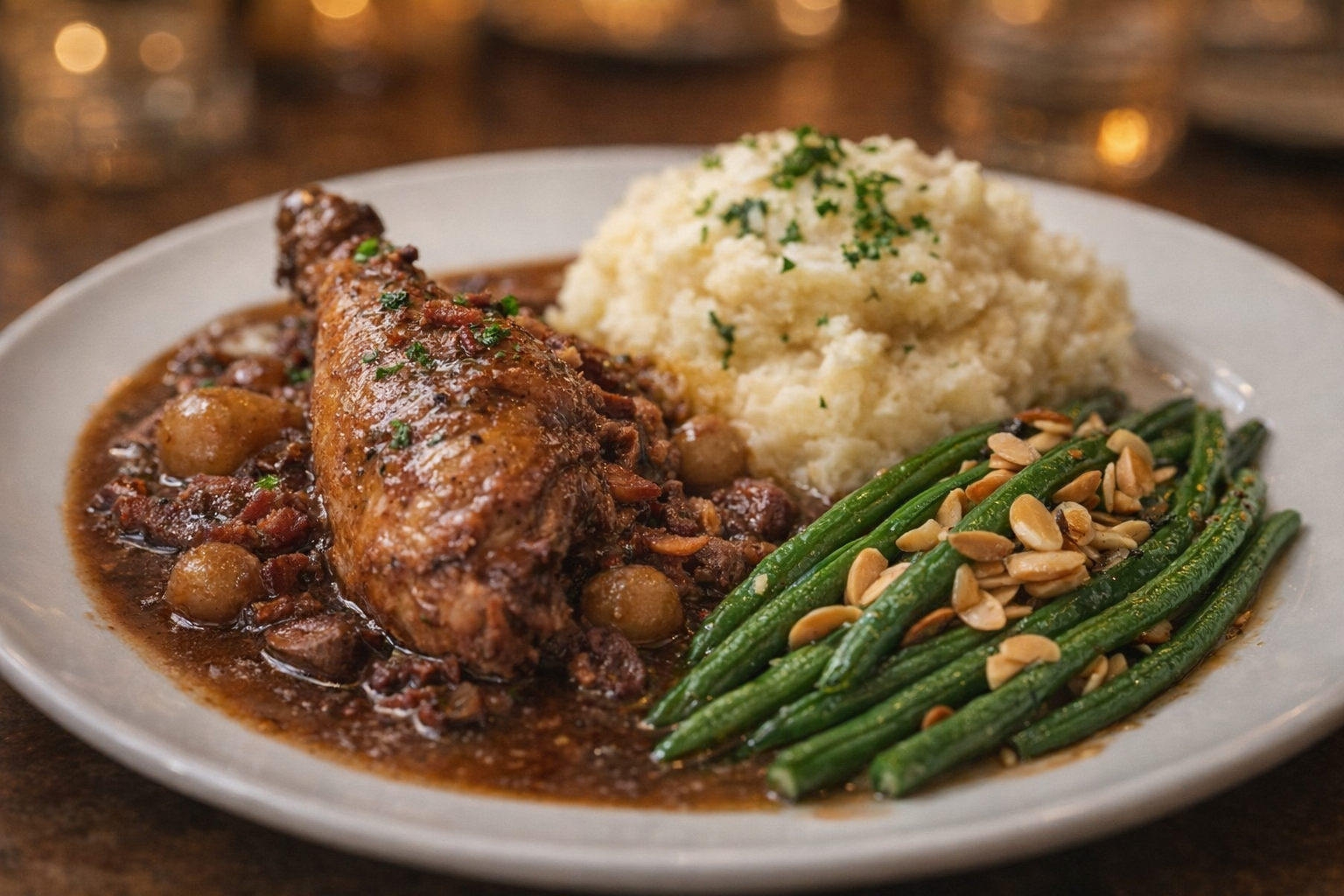
Coq au Vin, translating to "rooster in wine," is a cornerstone of French cuisine. This braised chicken dish offers a deeply savory and complex flavor profile, achieved through the slow melding of red wine, aromatic vegetables, and earthy mushrooms. The long braising process transforms humble chicken into a tender, flavorful masterpiece, perfect for a comforting weeknight dinner or an elegant special occasion.
The beauty of Coq au Vin lies in its ability to elevate simple ingredients into a symphony of flavors. The red wine not only tenderizes the chicken but also imparts a rich, fruity depth, while bacon adds a smoky undertone. Paired with the earthiness of mushrooms and the subtle sweetness of carrots and onions, Coq au Vin is a dish that truly satisfies the senses.
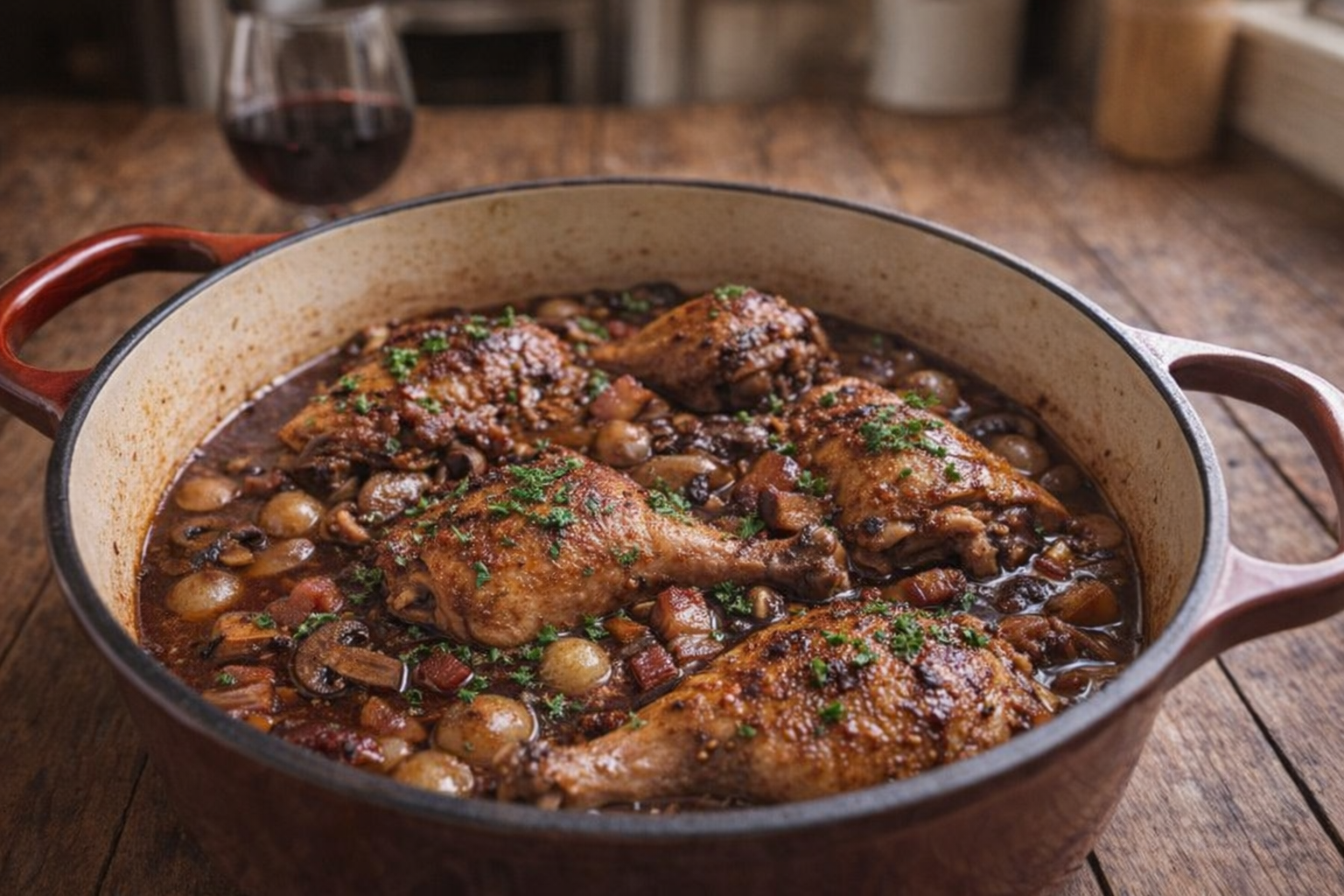
Understanding Chicken Cuts for Coq au Vin
While traditionally made with a rooster, modern Coq au Vin recipes commonly use chicken due to its availability and tenderness. You can use a whole chicken cut into 8 pieces, or a mix of bone-in, skin-on thighs and drumsticks. Bone-in pieces are preferred as they contribute more flavor and richness to the braising liquid. Skin-on pieces also add depth to the overall flavor of the dish. Avoid using only chicken breasts, as they can become dry during the long braising process. Look for chicken pieces that are plump and have a healthy pink color. Free-range or organic chicken will provide the best flavor and texture.
Why Cook Coq au Vin This Way?
- Versatility: Coq au Vin can be served with various sides, from classic mashed potatoes to more modern options like roasted root vegetables.
- Flavor: The slow braising method allows the flavors of the wine, herbs, and vegetables to fully penetrate the chicken, resulting in a deeply savory and complex dish.
- Convenience: While it requires some time, Coq au Vin is relatively hands-off once the braising process begins, making it a great option for a weekend meal.
Preparation (Mise en Place)
- If using frozen chicken, thaw it completely in the refrigerator overnight. Pat the chicken pieces dry with paper towels to ensure they sear properly.
- Chop the onion, carrots, and garlic. Slice the mushrooms. Dice the bacon or pancetta.
- Measure out the red wine, chicken broth, and tomato paste.
- Gather your herbs: fresh thyme sprigs and a bay leaf.
Essential Tools
- Dutch Oven or Heavy-Bottomed Pot: A Dutch oven is ideal for even heat distribution and retention, essential for braising. A heavy-bottomed pot can be used as a substitute.
- Large Bowl or Container: For marinating the chicken.
- Slotted Spoon: For removing ingredients from the pot without the liquid.
- Chef's Knife: For chopping vegetables.
The Cooking Method(s): Mastering the Art of Braising
We'll break down the classic Coq au Vin method into detailed steps, ensuring a perfect result every time.
Method: Classic Coq au Vin
Ingredients:
- 1.5 kg (3.3 lbs) Chicken, cut into 8 pieces, or a mix of thighs and drumsticks
- 750 ml (3 cups) Dry Red Wine (Burgundy is traditional, but Pinot Noir or Côtes du Rhône works well)
- 170g (6 oz) Bacon or Pancetta, diced
- 1 large Onion, chopped
- 2 medium Carrots, chopped
- 3 cloves Garlic, minced
- 225g (8 oz) Mushrooms, sliced
- 2 sprigs Fresh Thyme
- 1 Bay Leaf
- 470 ml (2 cups) Chicken Broth
- 2 tbsp Tomato Paste
- 2 tbsp All-Purpose Flour
- 2 tbsp Olive Oil
- Salt and Black Pepper, to taste
- Fresh Parsley, chopped (for garnish)
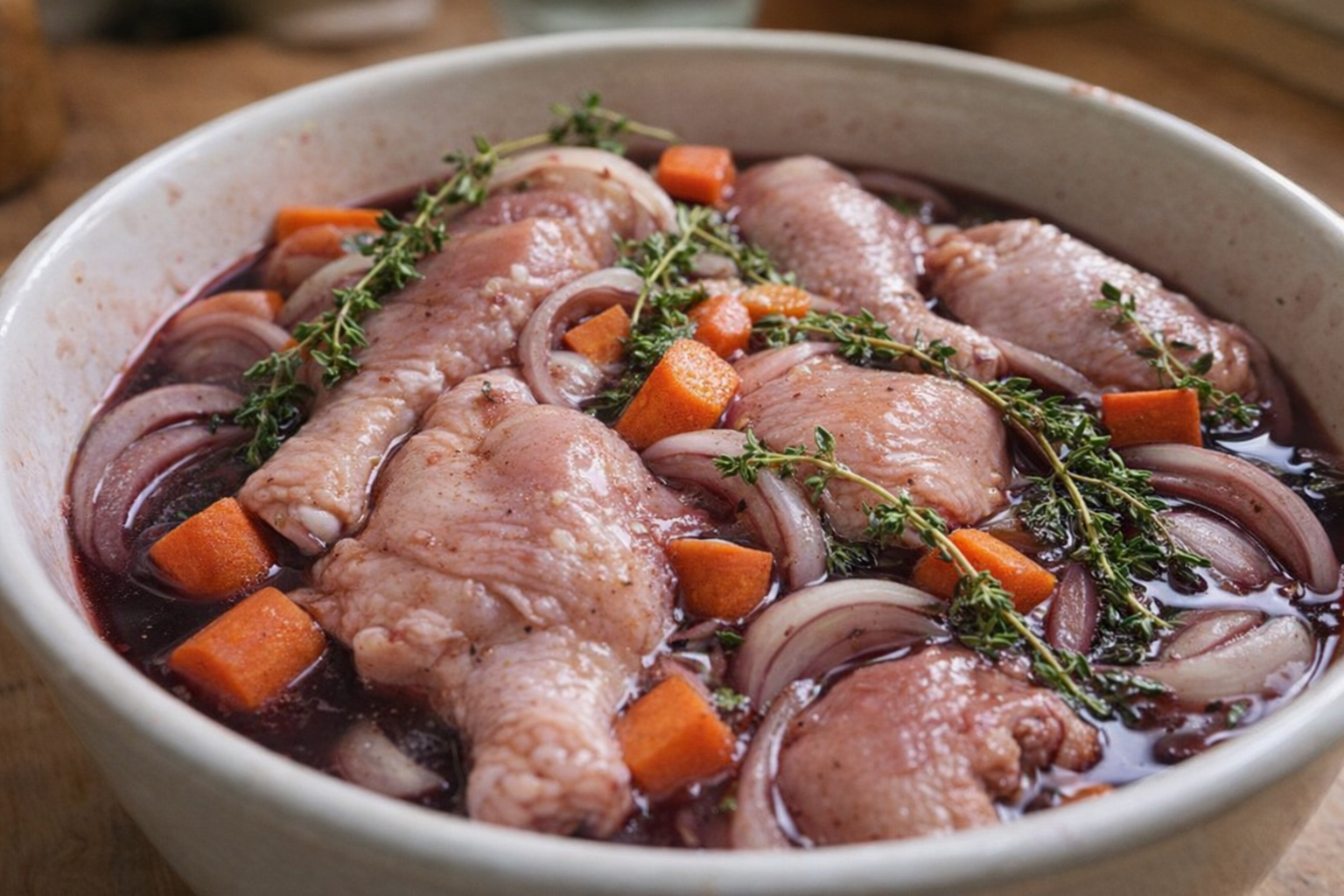
- Marinate the Chicken: In a large bowl, combine the red wine, thyme sprigs, bay leaf, chopped onion, and carrots. Add the chicken pieces, ensuring they are fully submerged. Cover and refrigerate for at least 4 hours, preferably overnight. The longer the chicken marinates, the more flavorful it will be.
- Sear the Chicken: Remove the chicken from the marinade and pat it dry with paper towels. Reserve the marinade. Season the chicken with salt and black pepper, then lightly dust with flour. In a large Dutch oven, heat olive oil over medium-high heat. Add the chicken pieces, skin-side down, and sear until golden brown on all sides, about 5-7 minutes per side. The sizzle of the chicken as it hits the hot oil should be audible, and a rich, savory aroma will fill the kitchen. Work in batches if necessary to avoid overcrowding the pot. Remove the chicken and set it aside.
- Cook the Bacon: In the same pot, add the diced bacon or pancetta. Cook until crispy, about 5-7 minutes, then remove with a slotted spoon and set aside. The rendered fat will add depth to the dish. The bacon should be fragrant and crisp, releasing its smoky aroma.
- Sauté the Vegetables: Add the chopped onions and carrots to the pot and cook for about 5 minutes until softened. Then add the minced garlic and cook for another minute until fragrant. The vegetables should soften and release their natural sweetness, creating a flavorful base for the stew.
- Create the Base: Sprinkle the flour over the vegetables and stir well to coat. Gradually pour in the reserved marinade, stirring constantly to avoid lumps. Add the chicken broth and tomato paste, stirring to combine. Return the bacon to the pot, along with the bay leaf and thyme. The sauce should begin to thicken slightly as the flour cooks.
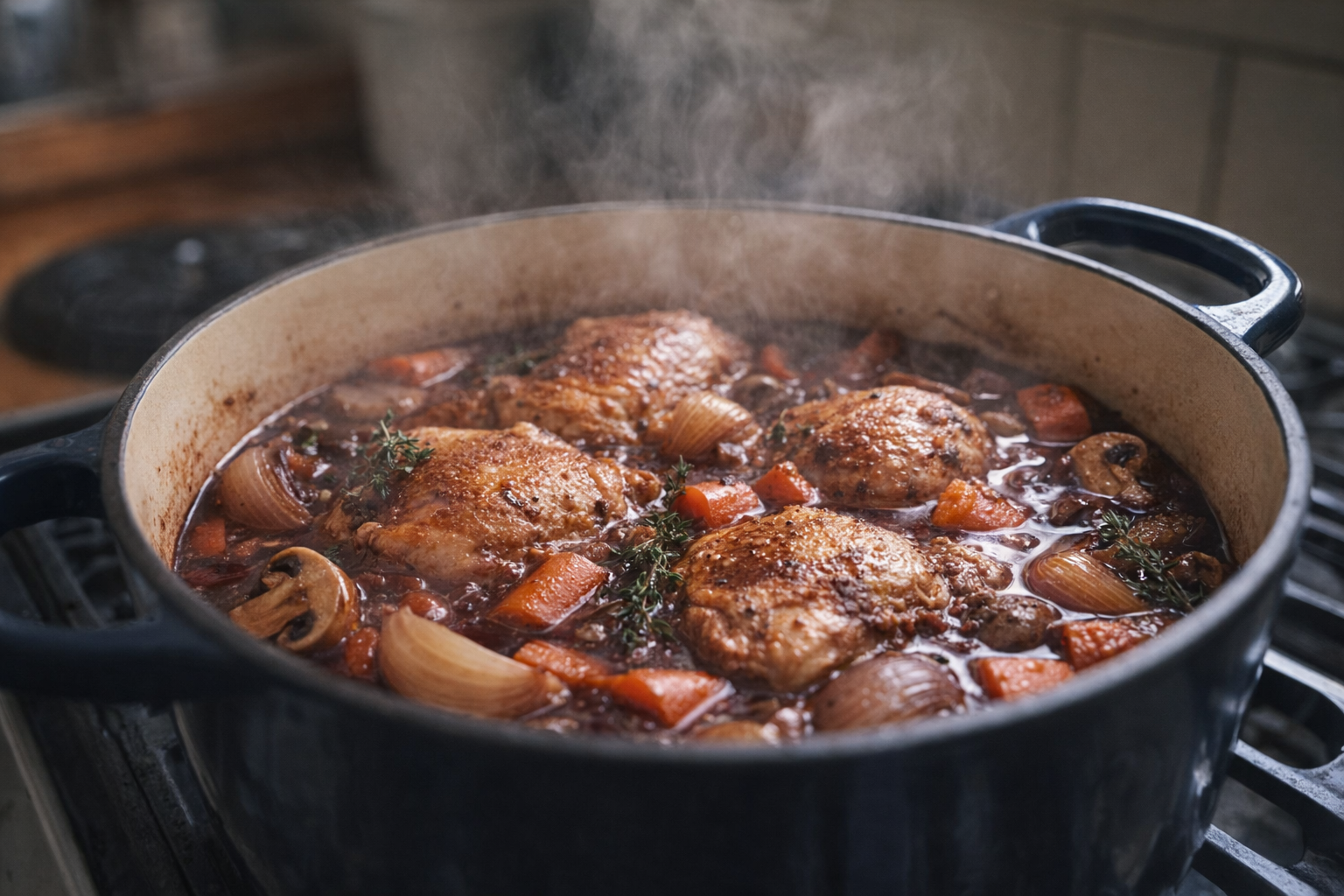
- Braise the Chicken: Return the seared chicken pieces to the pot, nestling them into the sauce. Bring the mixture to a simmer, then reduce the heat to low. Cover the pot and let it cook gently for about 45 minutes to 1 hour, or until the chicken is tender and cooked through. The aroma of the braising chicken, wine, and herbs will become increasingly intense and inviting.
- Add the Mushrooms: In a separate pan, sauté the sliced mushrooms in a bit of olive oil until they are browned and cooked through, about 5-7 minutes. Add the mushrooms to the pot during the last 15 minutes of cooking. The mushrooms should be tender and slightly browned, adding an earthy note to the stew.
- Final Touches: Taste the sauce and adjust the seasoning with salt and black pepper as needed. Remove the bay leaf from the stew before serving. Garnish with freshly chopped parsley for a touch of color and freshness.
Cooking Time & Doneness Guide
- Cooking Time: Approximately 45 minutes to 1 hour after searing and braising.
- Internal Temperature: The chicken should reach an internal temperature of 74°C (165°F) when measured with a meat thermometer inserted into the thickest part of the thigh.
Visual Cues
- The chicken should be easily pierced with a fork and the juices should run clear.
- The meat should be pulling away from the bone.
- The sauce should be rich and slightly thickened.
Tips for Perfection
- Don't overcrowd the pot when searing the chicken: Overcrowding will lower the temperature of the oil and prevent the chicken from browning properly. Work in batches if necessary.
- Use a good quality red wine: The wine is a key ingredient in Coq au Vin, so choose a dry red wine that you enjoy drinking. Avoid using cooking wine, as it can be overly salty and lack flavor.
- Don't skip the marinating step: Marinating the chicken infuses it with flavor and tenderizes the meat.
- Adjust the seasoning to your taste: Taste the sauce throughout the cooking process and adjust the seasoning as needed.
Storage & Reheating
- Storage: Leftover Coq au Vin can be stored in an airtight container in the refrigerator for up to 3 days.
- Reheating: Reheat gently in a saucepan over low heat, stirring occasionally, until heated through. You can also reheat it in the microwave, but be careful not to overcook the chicken. Adding a splash of chicken broth or red wine can help to prevent the sauce from drying out.
Serving Suggestions
- With Crusty Bread: Serve Coq au Vin with crusty French bread for soaking up the rich sauce.
- Over Mashed Potatoes: Spoon the stew over creamy mashed potatoes for a comforting and satisfying meal.
- With Buttered Egg Noodles: Toss buttered egg noodles with the stew for a classic pairing.
- Alongside Roasted Vegetables: Serve with roasted root vegetables like parsnips, turnips, and sweet potatoes for a balanced meal.
💡 Pro Tips
- Use a full-bodied dry red wine like Burgundy or Pinot Noir to ensure the sauce develops a robust and authentic French flavor profile.
- Sear the chicken pieces in the rendered bacon fat until the skin is deeply golden brown to create a rich fond at the bottom of the pot.
- Sauté the mushrooms separately in butter until they are golden and their moisture has evaporated before folding them into the stew at the end.
- Thoroughly scrape the bottom of the pan after adding the wine to incorporate the caramelized bits, which provide the dish its characteristic depth.
- If the sauce is too thin after braising, whisk in a small amount of beurre manié and simmer for a few minutes until it reaches a velvety consistency.
Frequently Asked Questions
While red wine is essential for the authentic flavor, you can substitute it with a non-alcoholic red wine or grape juice mixed with a tablespoon of red wine vinegar or balsamic vinegar for a similar tang. Be aware that the flavor profile will be altered, and it won't have the same depth.
Ensure the chicken is mostly submerged in the braising liquid (wine and broth mixture). Also, avoid using only chicken breasts, as they are more prone to drying out; bone-in, skin-on thighs and drumsticks are best for maintaining moisture.
Leftover Coq au Vin can be stored in an airtight container in the refrigerator for up to 3-4 days. Reheat it gently on the stovetop over medium-low heat, adding a splash of broth or water if needed to prevent it from drying out, or in the microwave.
Remove the chicken and vegetables from the pot. Then, bring the sauce to a simmer and let it reduce until it reaches your desired consistency. Alternatively, you can whisk together a tablespoon of cornstarch with a tablespoon of cold water and stir it into the simmering sauce until thickened.