 delishing
How To Boil Artichoke And For How Long

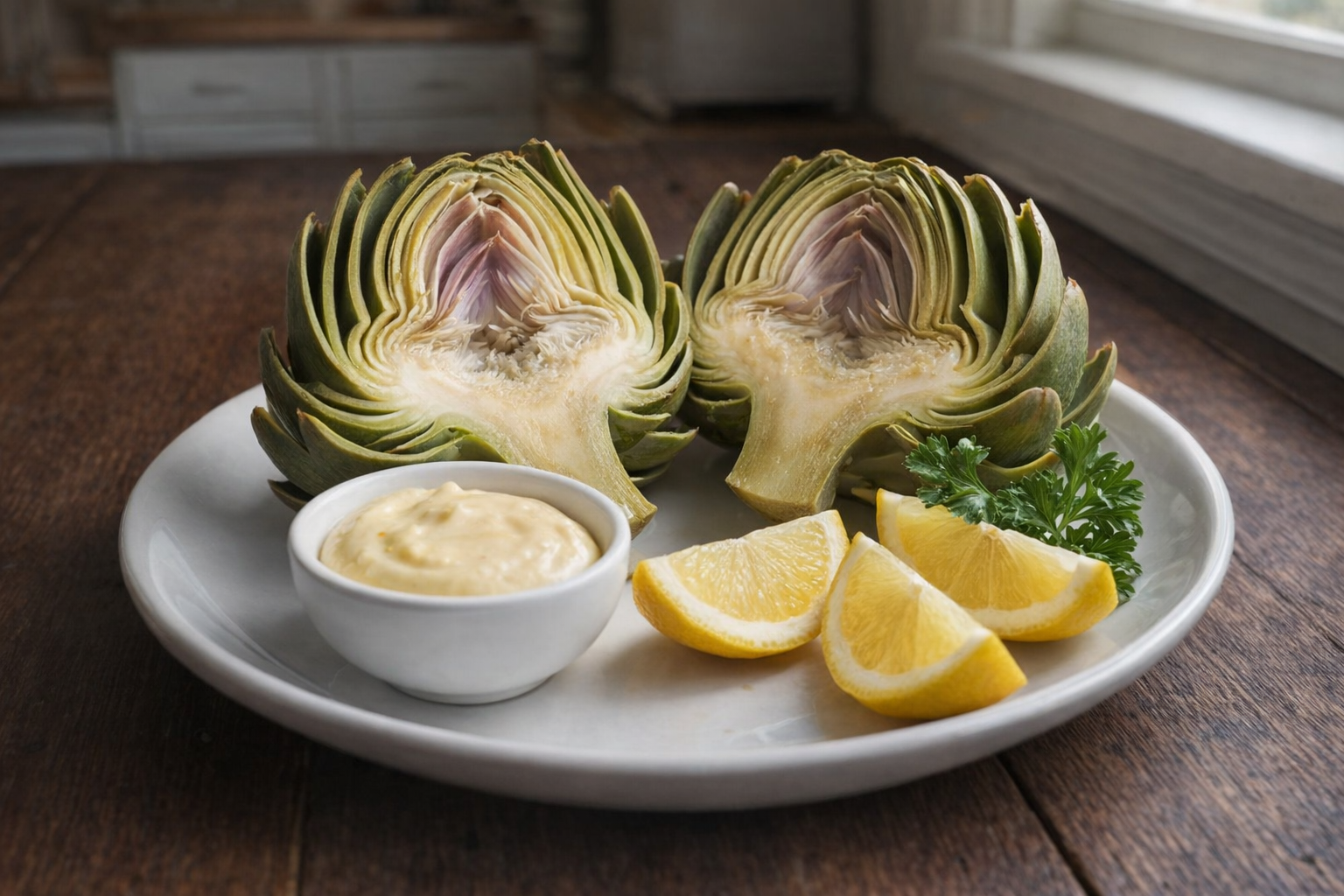
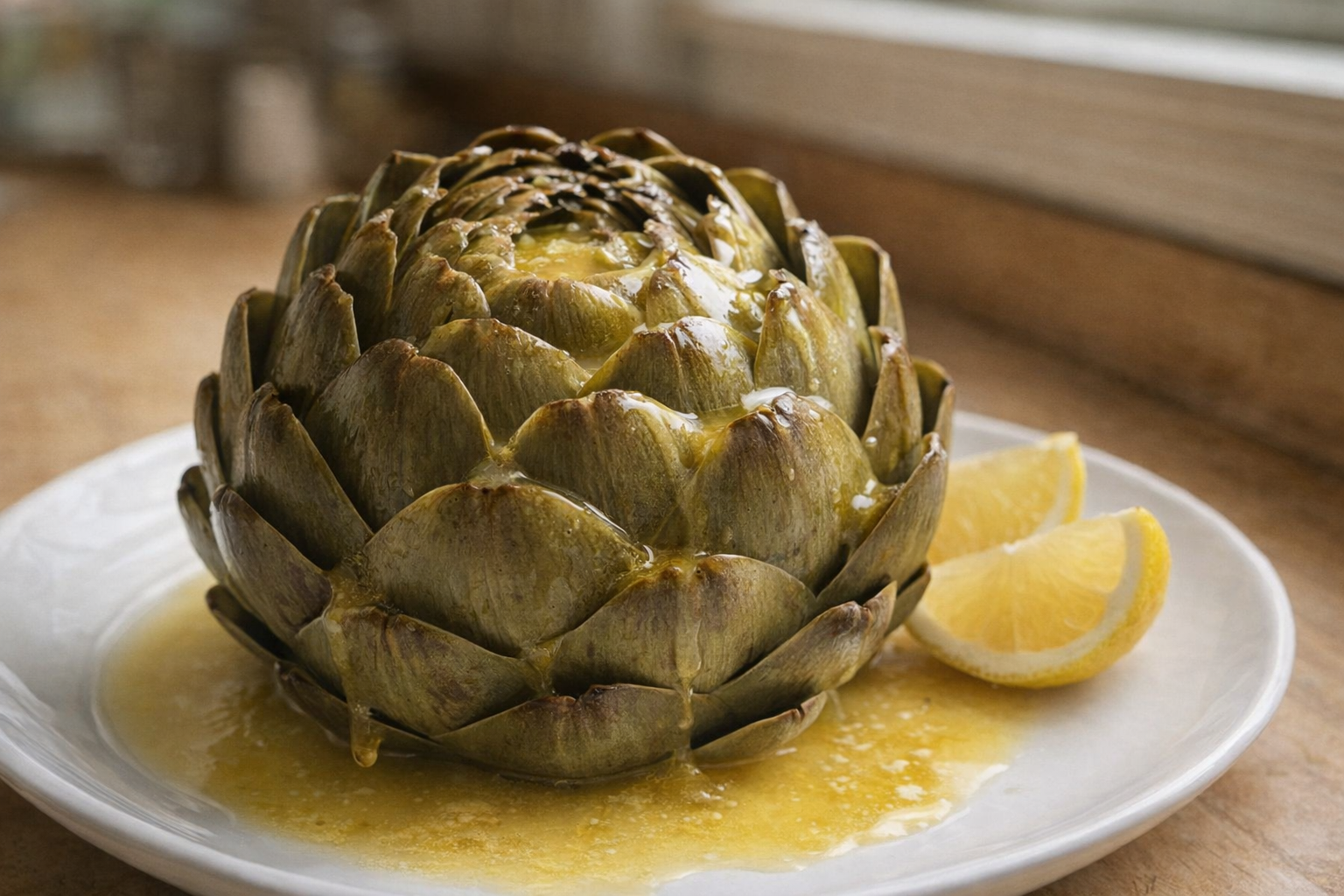
Boiled artichokes offer a unique, slightly sweet, and nutty flavor profile. The tender heart and the fleshy base of the leaves provide a delicate and satisfying taste experience. Boiling is a straightforward method that allows the natural flavors of the artichoke to shine, enhanced by subtle additions like lemon and salt.
This method of cooking artichokes is effective because it gently steams the vegetable from the inside out. This ensures that the tough exterior leaves soften, making them easier to peel and eat, while the heart becomes delightfully tender. Proper boiling also helps to retain the artichoke's nutritional value.
Understanding Artichokes
Artichokes are the edible flower buds of a thistle-like plant. When selecting artichokes, look for globes that feel heavy for their size, with tightly closed leaves indicating freshness. The most common variety is the globe artichoke, characterized by its round shape and green color. Smaller varieties, like baby artichokes, are more tender and cook faster. Avoid artichokes with brown spots or open, spreading leaves.
Why Cook Artichokes This Way?
- Versatility: Boiled artichokes can be enjoyed as a simple appetizer, a side dish, or incorporated into more complex recipes.
- Flavor: Boiling enhances the natural, subtle flavor of the artichoke.
- Convenience: This method requires minimal equipment and is relatively hands-off once the artichokes are simmering.
Preparation (Mise en Place)
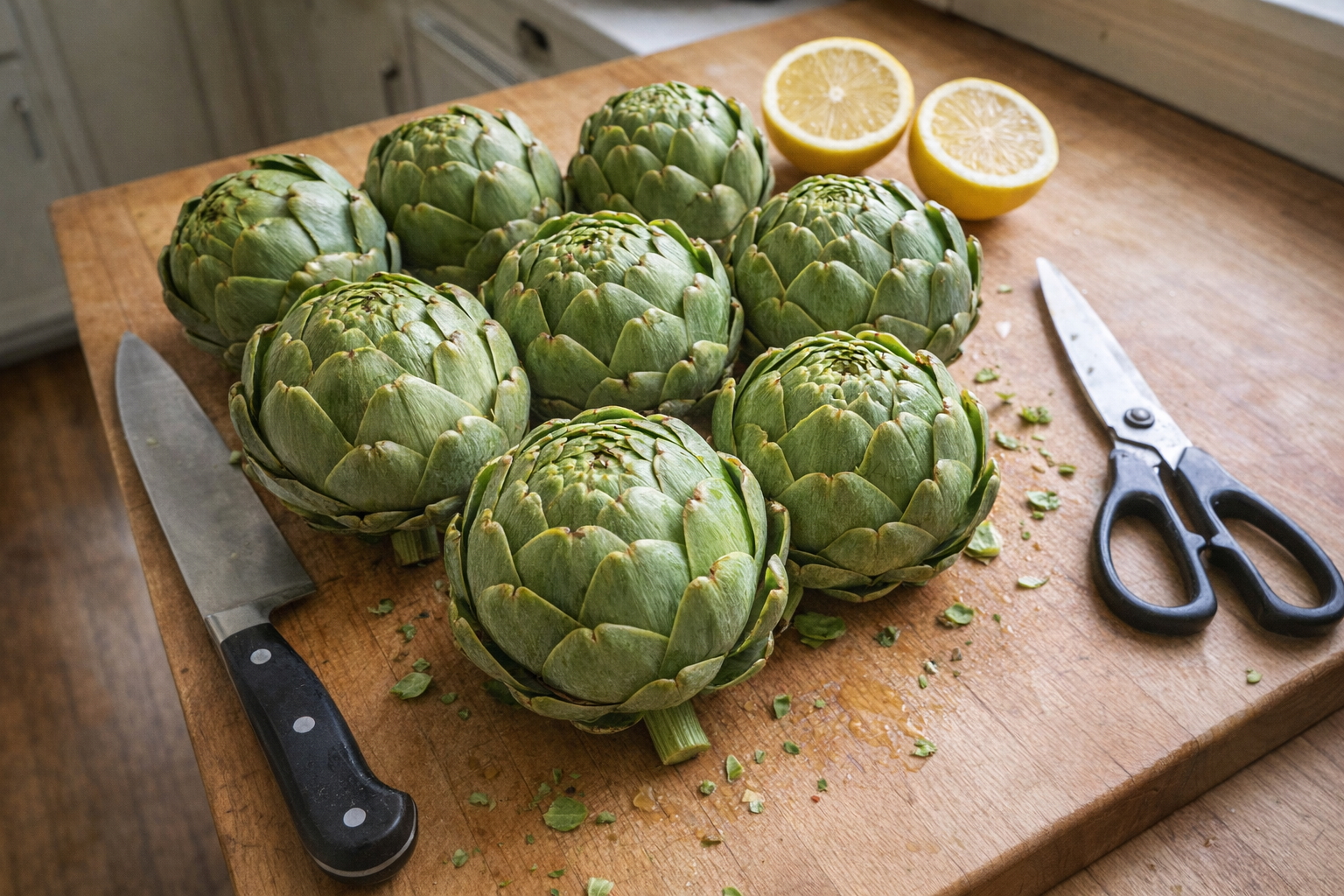
- Rinsing: Thoroughly rinse the artichokes under cold running water to remove any dirt or debris.
- Trimming: Using a sharp knife, cut off the stem close to the base, allowing the artichoke to sit upright. Then, trim about 1 inch off the top of the artichoke.
- Leaf Prep: Use kitchen scissors to snip off the sharp tips of the outer leaves. This makes them safer and more pleasant to handle.
- Prevent Browning: Rub all cut surfaces with a lemon wedge to prevent oxidation and browning.
Essential Tools:
- Large Pot: A pot large enough to accommodate the artichokes and enough water to cover them completely. A wide pot ensures even cooking.
- Sharp Knife: For trimming the stem and top of the artichoke. A sharp knife makes clean cuts, preventing tearing.
- Kitchen Scissors: To trim the sharp tips of the leaves safely.
- Tongs: For safely removing the hot artichokes from the boiling water.
- Cutting Board: To provide a stable surface for trimming and cutting the artichokes.
The Cooking Method(s)
Method 1: Classic Boiled Artichokes
Ingredients:
- 2-4 fresh artichokes
- 4-6 quarts of water (3.8-5.7 liters)
- 1-2 teaspoons of salt (5-10 grams)
- 1 lemon, sliced
Instructions:
- Water Prep: Fill a large pot with water, add salt, and lemon slices. Bring to a rolling boil over high heat. The lemon and salt enhance the flavor of the artichokes as they cook.
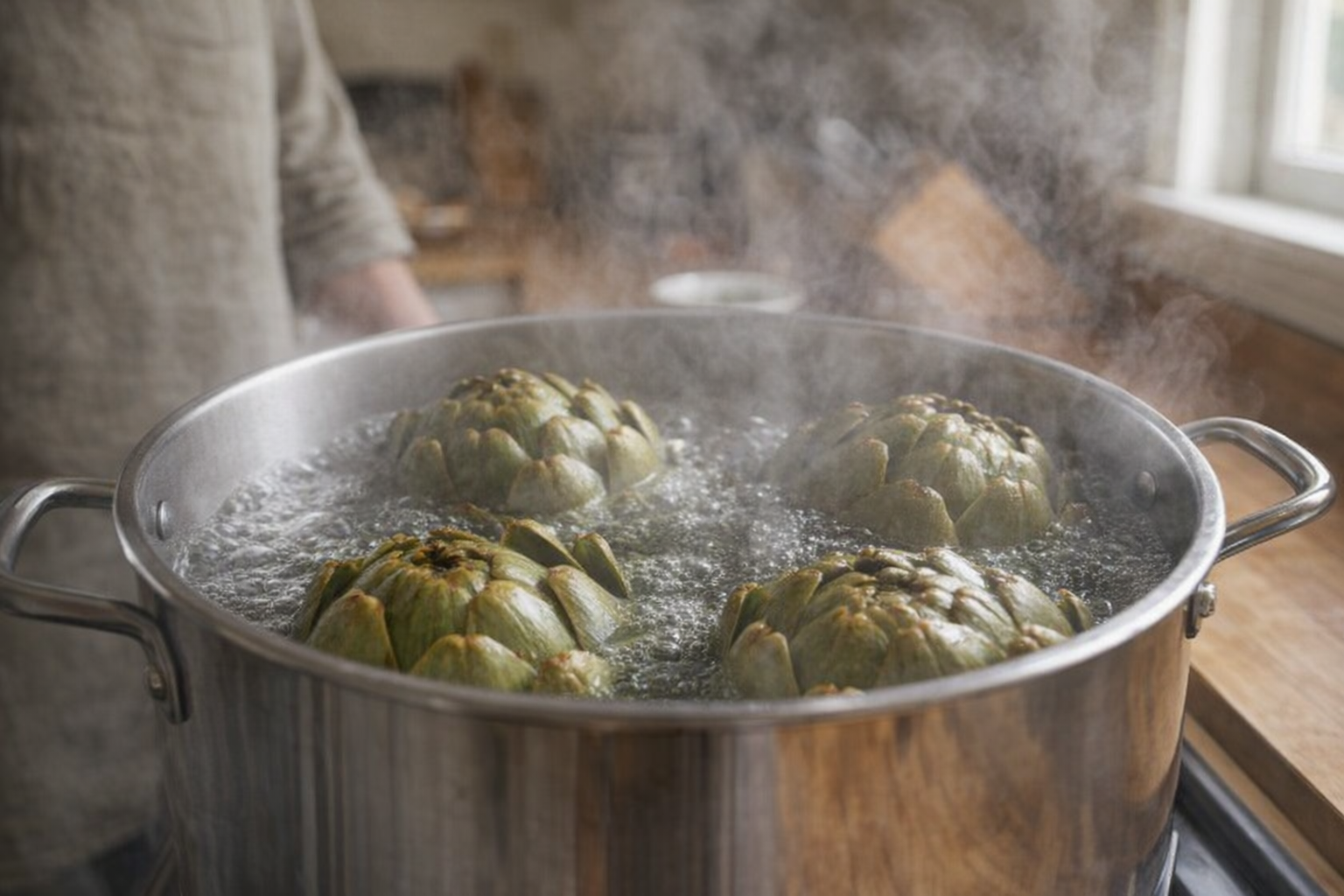
- Submerge: Carefully place the prepared artichokes into the boiling water. Ensure they are fully submerged. If they float, use a heat-safe plate or lid to weigh them down.
- Simmer: Reduce the heat to medium-low, cover the pot, and simmer for 20-40 minutes, depending on the size of the artichokes. The simmering process allows the artichokes to cook gently and evenly.
- Check for Doneness: After 20 minutes, check for doneness by pulling off a leaf. If it comes off easily and the base is tender, the artichoke is done. You can also insert a knife into the base; it should slide in easily.
- Drain: Using tongs, carefully remove the artichokes from the pot and place them upside down in a colander to drain excess water. Draining helps prevent a soggy texture.
Cooking Time & Doneness Guide
- Small Artichokes: 20-25 minutes
- Medium Artichokes: 30-35 minutes
- Large Artichokes: 40-45 minutes
Visual Cues:
- The outer leaves should easily pull away from the base.
- The base of the artichoke should be tender when pierced with a knife.
- The color of the artichoke will deepen slightly as it cooks.
Tips for Perfection:
- Even Cooking: Ensure the artichokes are fully submerged in water for even cooking.
- Don't Overcook: Overcooked artichokes will become mushy and lose their flavor.
- Lemon Essential: Rub cut surfaces with lemon immediately to prevent discoloration.
- Seasoning: Don't be afraid to add more flavor to the boiling water with garlic, herbs, or spices.
Storage & Reheating:
- Storage: Store leftover boiled artichokes in an airtight container in the refrigerator for up to 3 days.
- Reheating: To reheat, steam the artichokes for a few minutes until warmed through. Alternatively, you can microwave them for a short period, but be careful not to overcook. Avoid reheating in the microwave if you want to preserve the texture.
Serving Suggestions:
- Classic Dip: Serve with melted butter, garlic aioli, or a lemon-herb vinaigrette.
- Salad Addition: Add chopped artichoke hearts to salads for a unique flavor and texture.
- Pasta Enhancement: Toss with pasta, olive oil, garlic, and Parmesan cheese.
- Grilled Twist: Quarter and grill boiled artichokes for a smoky flavor.
💡 Pro Tips
- Trim the top inch of the artichoke and snip the thorny tips off the outer leaves with kitchen shears to make them safer and easier to handle.
- Rub all cut surfaces immediately with a fresh lemon wedge to prevent the artichoke from oxidizing and turning brown during preparation.
- Add salt, smashed garlic cloves, and a splash of olive oil to the boiling water to deeply season the artichoke heart and leaves.
- Place a heavy, heat-proof plate on top of the artichokes in the pot to keep them fully submerged for even cooking.
- Test for doneness after thirty minutes by pulling on a central leaf; it should release easily with no resistance when the artichoke is fully cooked.
Frequently Asked Questions
The artichokes are done when a leaf can be easily pulled off and the base of the artichoke heart is tender when pierced with a fork. This usually takes around 20-40 minutes depending on the size of the artichokes.
Yes, you can use any acidic ingredient like lime juice or even a vinegar solution. The acid helps to prevent oxidation and keep the artichoke from turning brown after cutting.
Store leftover boiled artichokes in an airtight container in the refrigerator. They will typically last for 2-3 days. Reheat gently by steaming or microwaving until warmed through.
While you can skip trimming the leaf tips, it's recommended for safety and comfort. If you don't have kitchen scissors, you can carefully use a sharp knife to trim the tips, but be extra cautious to avoid cutting yourself.